rifanmuazin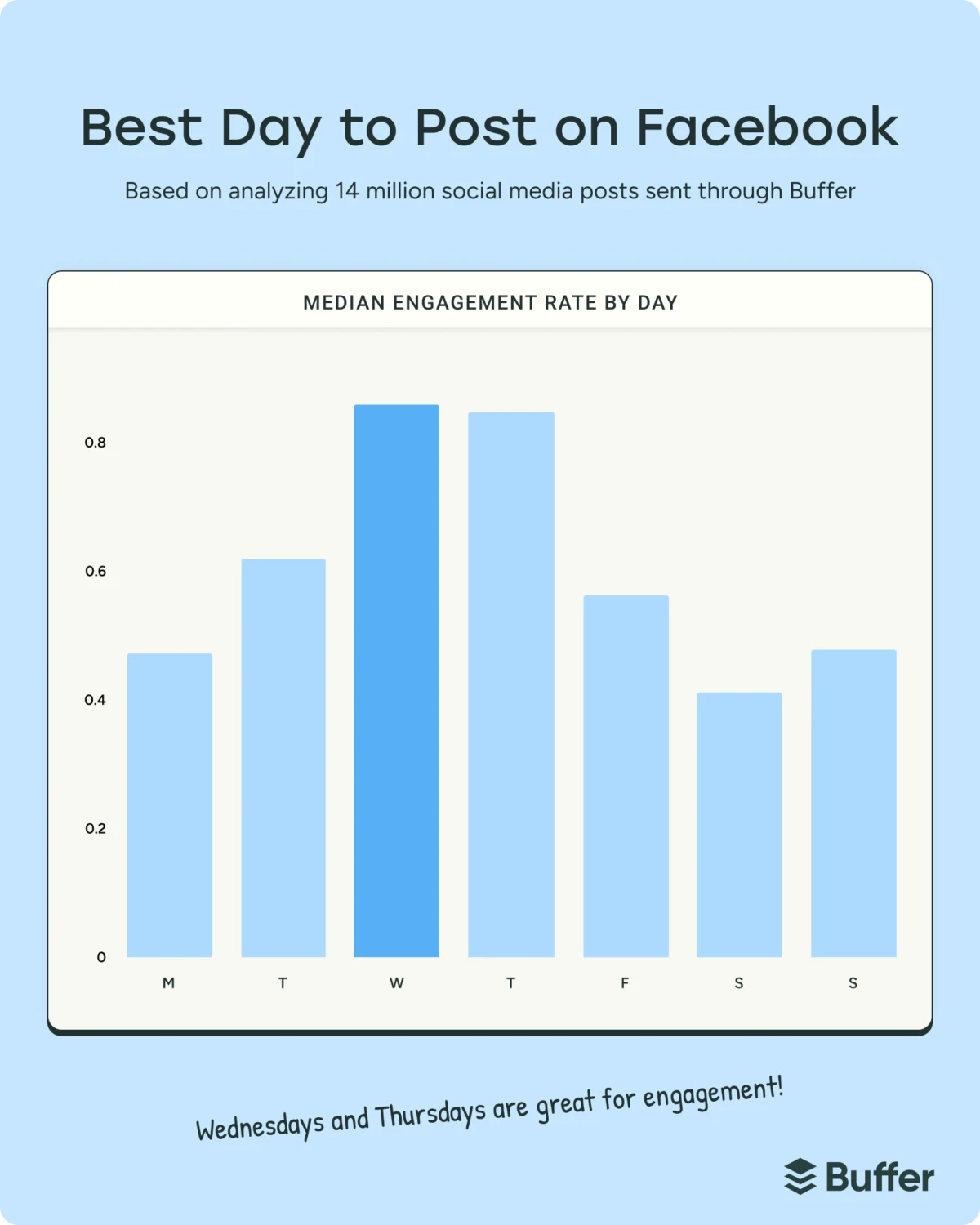
Annually, social media strategists and marketers grapple with a pivotal question: when is the optimal moment to share content for maximum impact? This year, Buffer’s comprehensive 2026 State of Social Media Engagement report provides a robust, data-backed answer, shedding light on the intricate patterns of audience activity across the digital landscape. Analyzing an unprecedented 52 million posts across seven major platforms—Instagram, Facebook, Threads, LinkedIn, YouTube, TikTok, and X—Buffer’s data scientists have meticulously identified the time slots with the highest median engagement, offering invaluable insights for refining social media marketing strategies.
This extensive analysis is not merely an academic exercise; it represents a critical benchmark for businesses and content creators striving to enhance their digital presence. While the allure of a "secret sauce" for viral content often leads to oversimplification, Buffer’s research underscores a fundamental truth: consistency remains paramount. Post timing, while a significant factor, is but one component within a complex algorithmic ecosystem that considers engagement rates, watch time, user preferences, geographic location, and a myriad of other signals. Nevertheless, for those who meticulously craft their content and seek every possible advantage, optimizing post timing offers a quantifiable boost to visibility and interaction.
Methodology and The Global Standard of Time
The sheer scale of Buffer’s 2026 report distinguishes it as a definitive industry resource. By processing over 52 million posts, the study captures a vast swathe of user behavior, providing a statistically significant foundation for its recommendations. A notable methodological refinement in this year’s report is the universal applicability of its time zone recommendations. Buffer’s data scientists have employed sophisticated mathematical adjustments to ensure that all suggested times are to be considered local to the user, irrespective of their specific time zone—be it Eastern Standard Time (EST), Pacific Standard Time (PST), or Indian Standard Time (IST). This eliminates the common pitfall of time zone conversions, streamlining the application of these insights for a global audience.
Understanding Platform Divergence: No Universal ‘Best Time’
A critical takeaway from the 2026 report is the emphatic rejection of a single, universally applicable "best time" to post across all social media platforms. Each network serves distinct purposes, caters to different user demographics, and fosters unique interaction patterns. LinkedIn, for instance, thrives during professional working hours, aligning with its function as a business networking hub. TikTok, conversely, as a platform predominantly for entertainment, sees peak engagement in after-hours and weekend slots. Facebook remains a space for personal connection and casual updates, often checked in the mornings, while X (formerly Twitter) and Threads, serving as real-time news and discussion forums, capture attention earlier in the day. The absence of significant overlap in peak engagement times across these platforms underscores the necessity of a tailored digital marketing plan, complete with a unique posting schedule for each channel. General observations, such as the poor performance of content posted in the middle of the night or the typical dip in engagement on weekends (with TikTok being a notable exception), offer broad guidance, but granular, platform-specific data is essential.
Key Findings: A Platform-by-Platform Breakdown
The following cheat sheet provides an overview of the prime posting windows, with detailed analysis following for each platform:
| Platform | Best Time to Post |
|---|---|
| 8 a.m. – 12 p.m. (weekdays) | |
| 9 a.m. and 6 p.m. (weekdays) | |
| 3 p.m. – 6 p.m. (Wed–Sun) | |
| TikTok | 6 p.m. – 11 p.m. (daily) plus weekend mornings |
| YouTube Shorts | 4 p.m. – 7 p.m. (Fri–Sat) |
| YouTube (long-form) | 6 p.m. – 10 p.m. (Sun–Tue) |
| X (Twitter) | 8 a.m. – 11 a.m. (weekdays) |
| Threads | 7 a.m. – 12 p.m. (weekdays) |
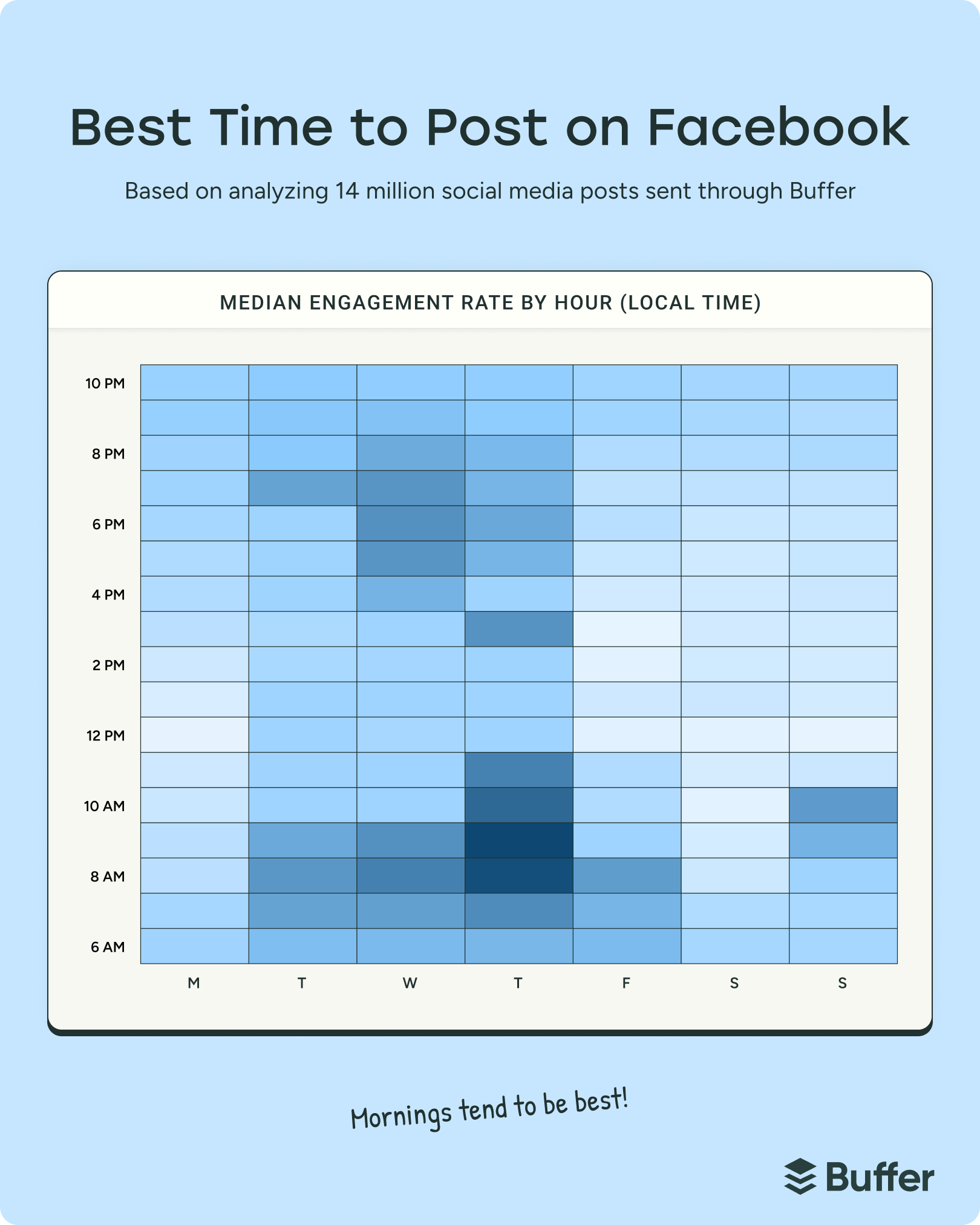
Facebook: Morning Engagement Dominates
Buffer’s analysis of Facebook engagement reveals that the morning hours consistently yield the highest interaction. Specifically, 9 a.m. on Thursday stands out as the single best time to post, with Thursday mornings generally securing the top spots. Overall engagement builds through mid-morning, reaching its zenith around midday, then gradually declining before a minor resurgence in the early evening.
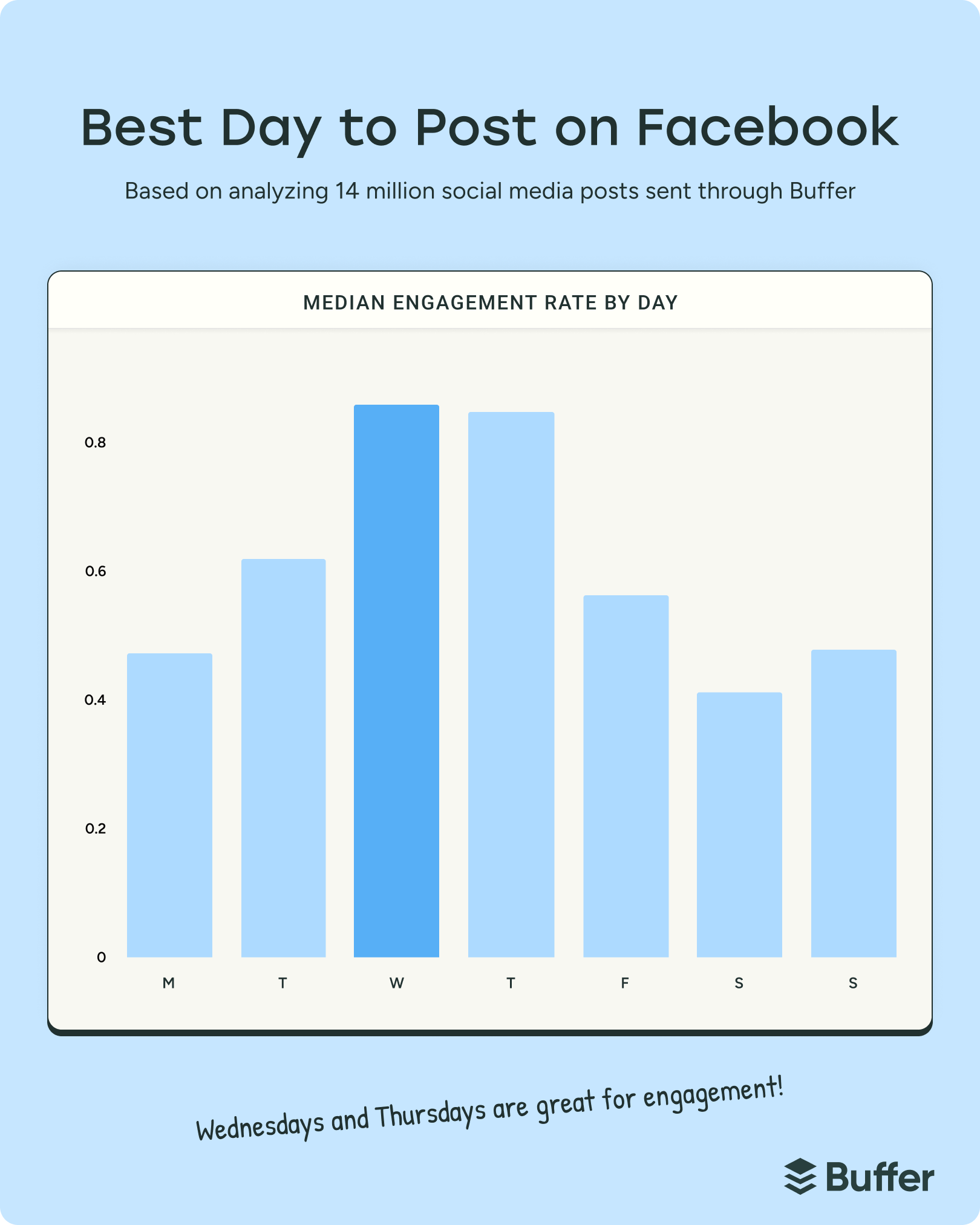
Wednesday emerges as the leading day for overall Facebook engagement, closely followed by Thursday. Weekends, particularly Saturday, demonstrate a noticeable dip in performance, suggesting that Facebook users are less inclined to engage with content during their leisure time. This pattern aligns with Facebook’s role as a platform for daily updates and casual browsing, often integrated into users’ morning routines or brief breaks during the workday.
Instagram: Weekday Mornings and Early Evenings
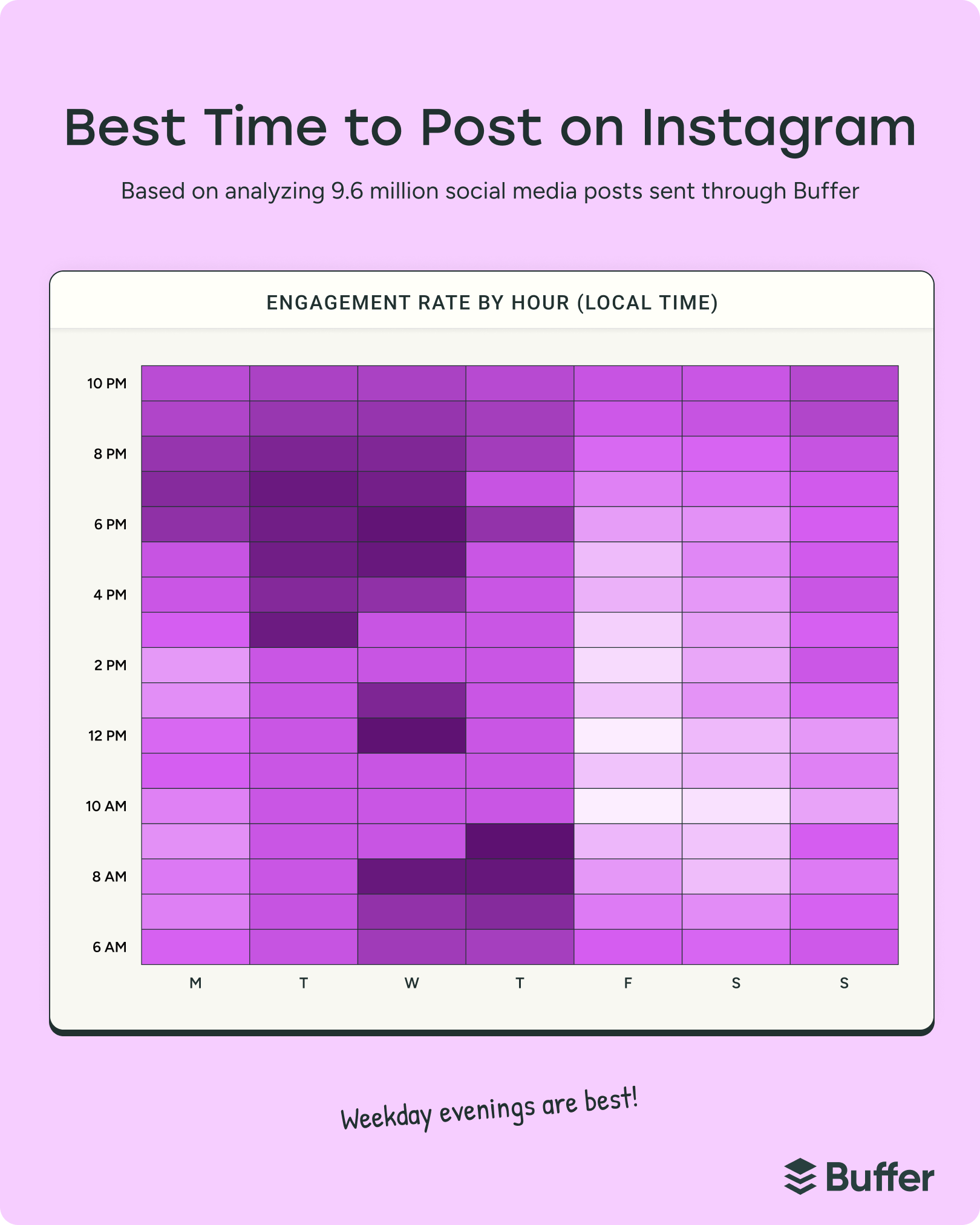
For Instagram, the data points to a striking similarity with Facebook’s peak, with 9 a.m. on Thursday identified as the best time to post, based on an analysis of nearly 10 million posts. This slot consistently achieved the highest reach. Early mornings on both Wednesday and Thursday also exhibit strong performance, complemented by another notable spike in engagement during the early evening hours on most weekdays, typically around 6 p.m.
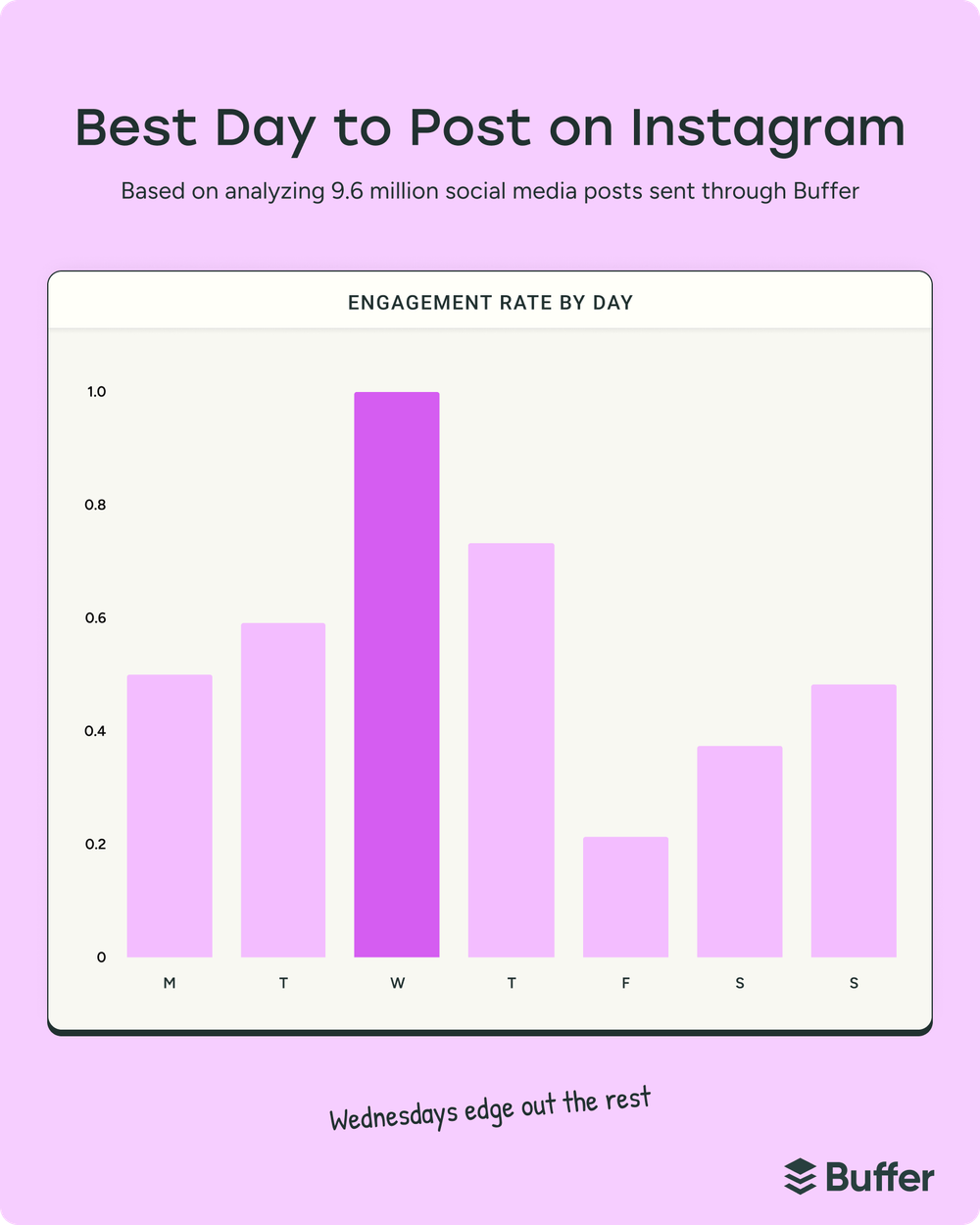
Unlike the consistent weekday strength, Instagram experiences a decline in reach on Fridays, with a slow recovery into Monday. Sundays show more activity than Saturdays, but still fall short of weekday performance. This suggests that while Instagram is a visual platform often associated with leisure, its core audience appears more active during the workweek, potentially engaging during commutes, lunch breaks, or after-work downtime. Wednesday leads the week for overall engagement, while Friday registers as the weakest day.
LinkedIn: A Shift Towards After-Hours Engagement
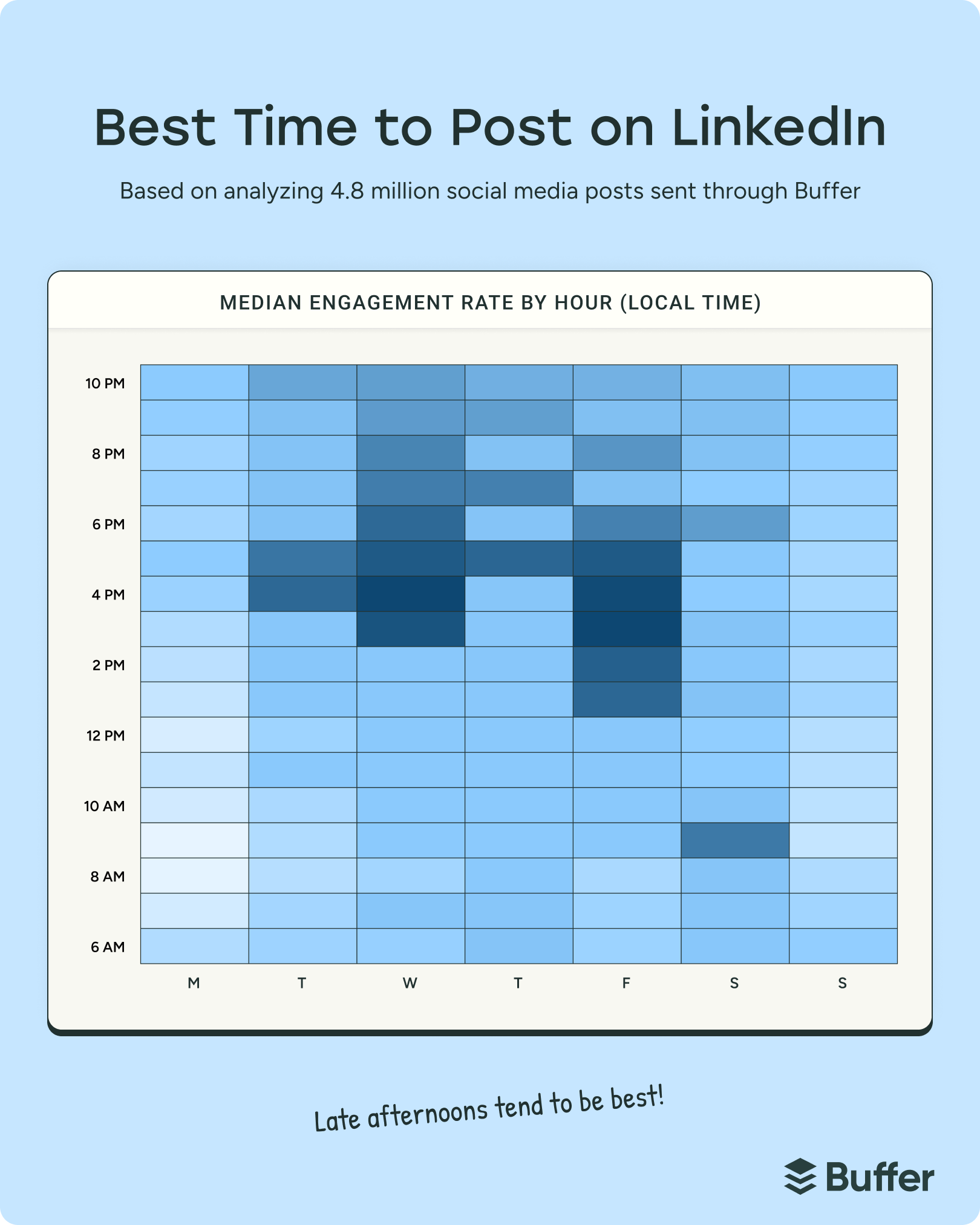
LinkedIn’s engagement patterns present a significant evolution from previous years. While traditionally a platform for professional interaction during standard business hours, the 2026 report, based on nearly 5 million posts, indicates a shift. The optimal times to post are now observed in the late afternoon and early evening: 4 p.m. on Wednesday, 4 p.m. on Friday, and 3 p.m. on Friday.
This shift suggests that LinkedIn users are increasingly engaging with content outside of strict office hours—perhaps during their commute, while unwinding in the evening, or during a quick pre-bed scroll. Engagement steadily builds in the afternoon and maintains momentum well into the evening, a relatively new trend for LinkedIn compared to other platforms where evening peaks have long been established. Conversely, early morning posts (6 a.m.–11 a.m.) now show comparatively lower engagement.
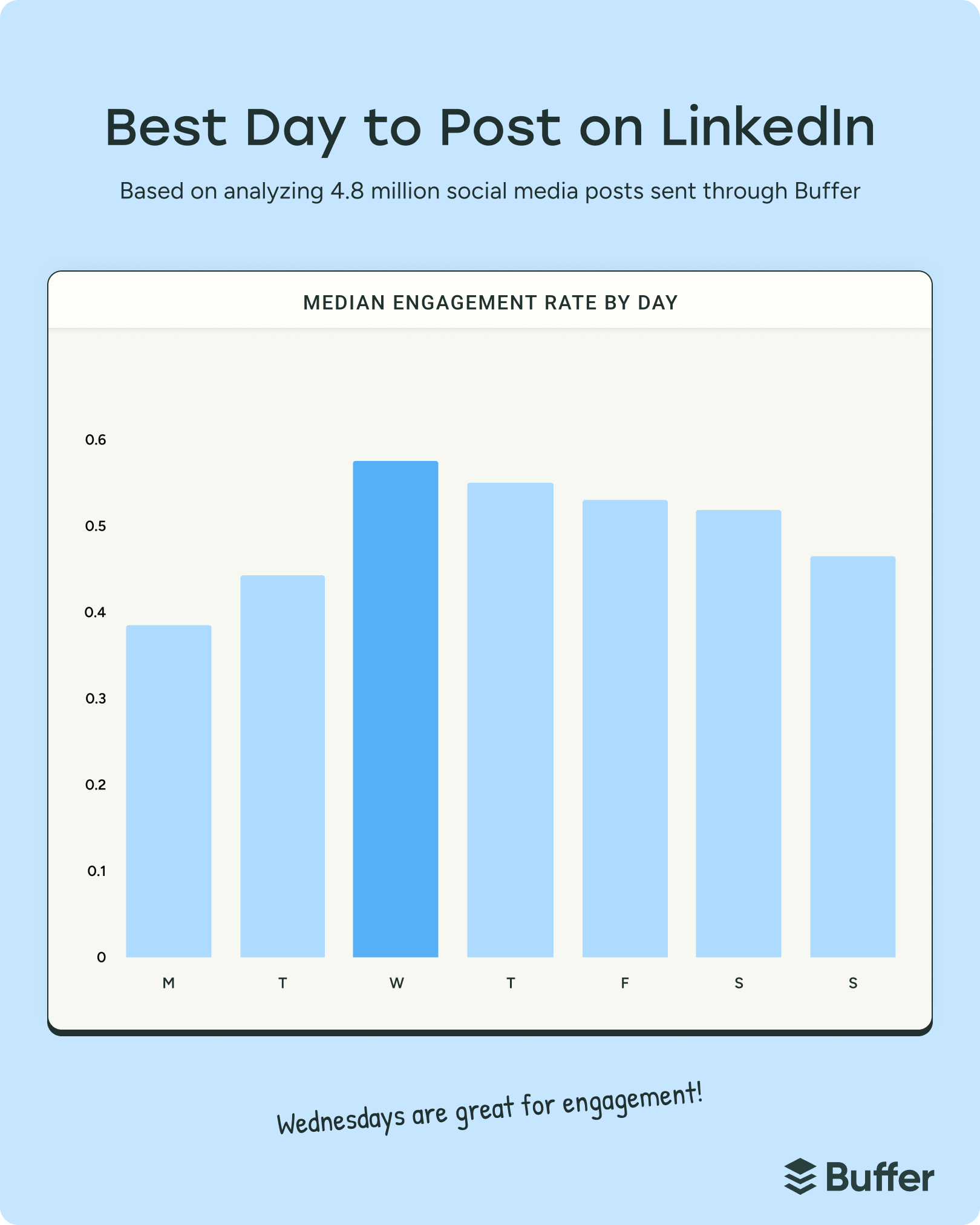
Wednesday once again leads as the best day for LinkedIn engagement, with Thursday and Friday following closely. Surprisingly for a professional network, posts shared on Saturday and Sunday demonstrate noticeably higher engagement than those published during the early weekdays. This could reflect professionals catching up on industry news or networking activities during quieter weekend periods.
TikTok: Weekend and Evening Dominance for Entertainment
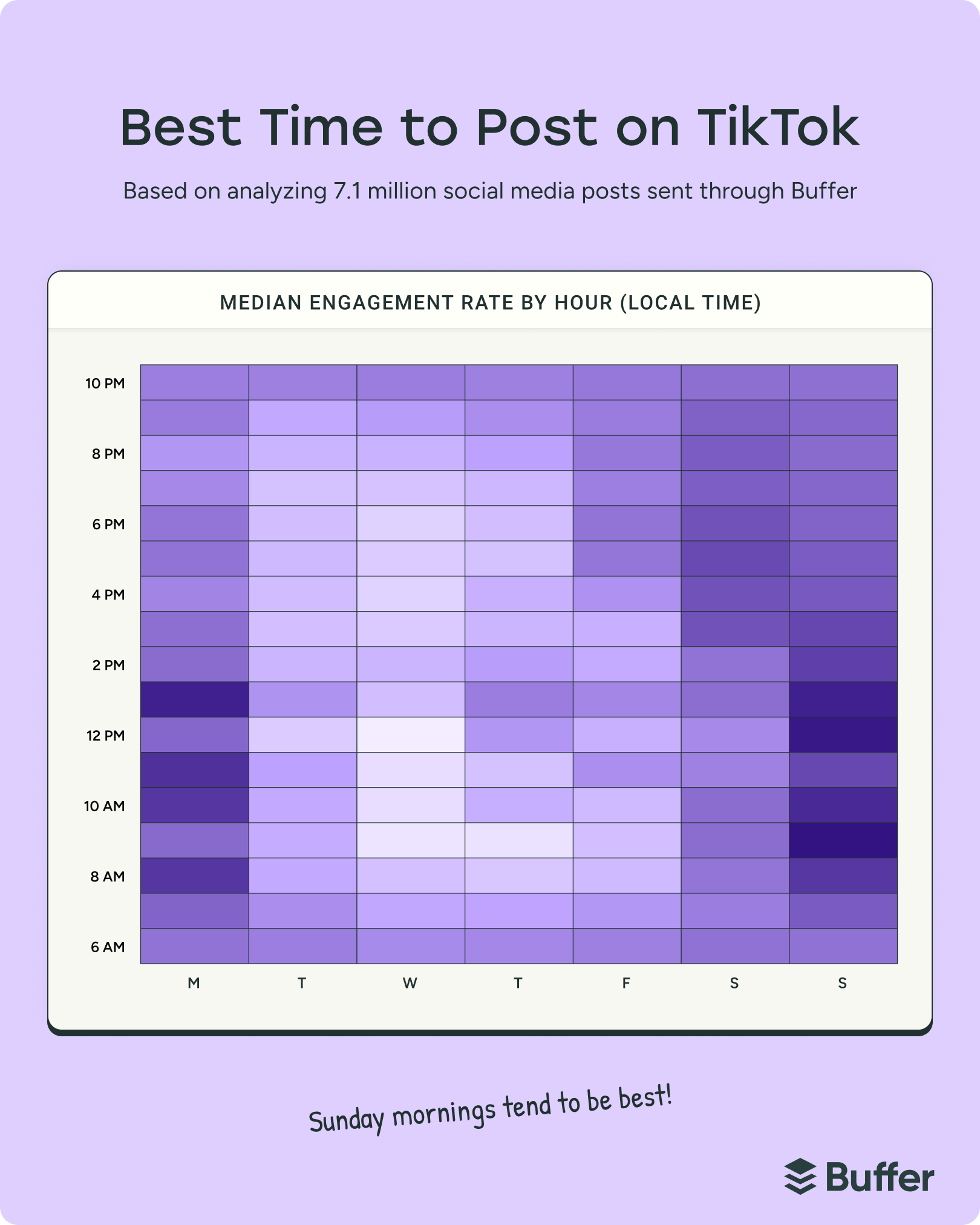
TikTok, the ephemeral video-sharing platform, stands apart from its counterparts, thriving on entertainment consumption during leisure hours. The single best time to post on TikTok is Sunday at 9 a.m., followed by Monday at 1 p.m. and Sunday at 1 p.m. Videos, carousels, and even text-based posts published during these slots consistently garnered the most views across the week.
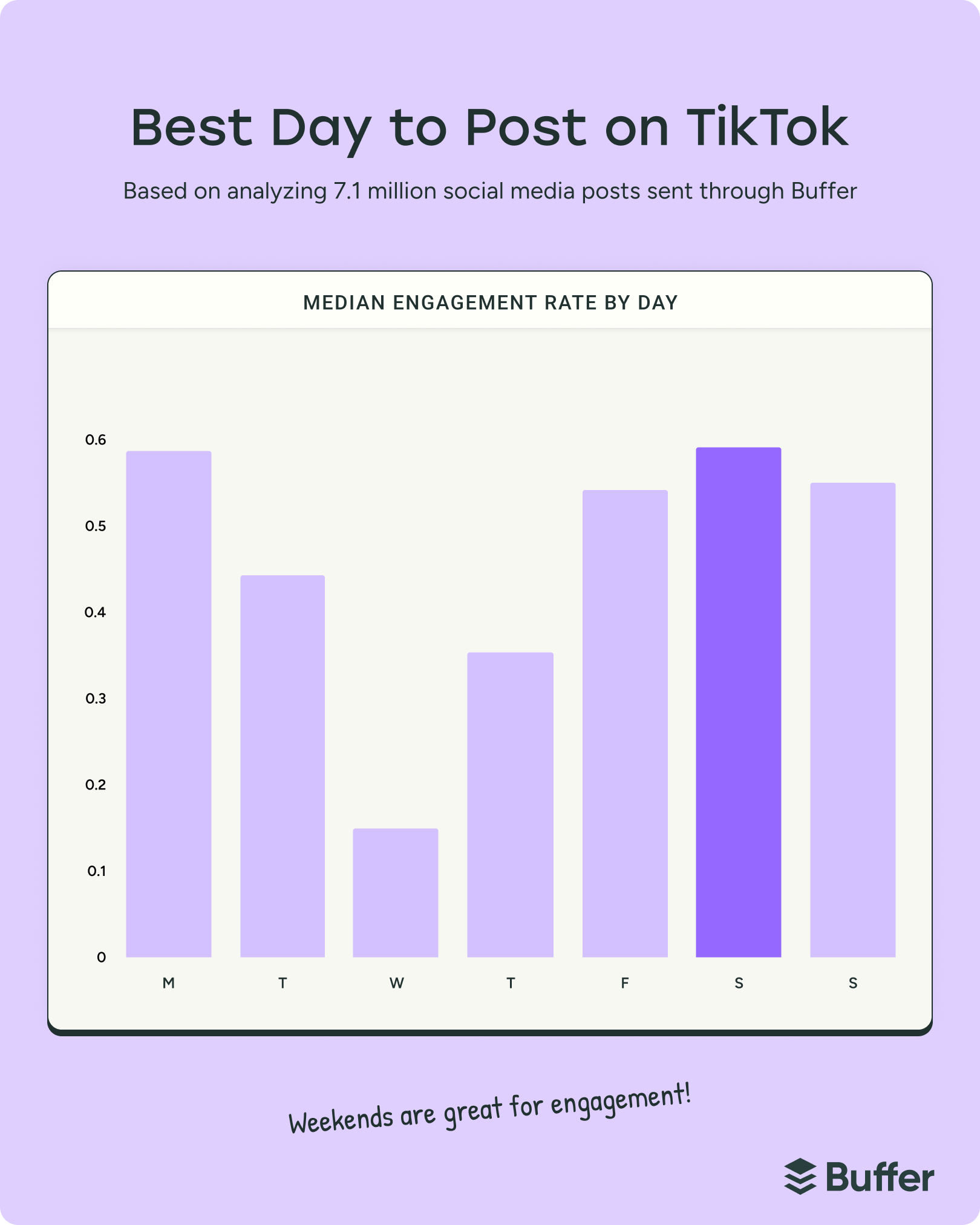
Generally, TikTok views surge in the evening, with the strongest performance observed between 6 p.m. and 11 p.m. Afternoons (12 p.m.–5 p.m.) tend to be quieter. Crucially, TikTok exhibits robust performance across Saturdays and Sundays, distinguishing it from most other platforms where weekend engagement dips. Saturday is identified as the best day to post, closely followed by Monday. In a stark contrast to other platforms, Wednesday is found to be the worst day for TikTok engagement, reinforcing the platform’s unique user behavior and content consumption habits, which lean heavily into leisure time.
YouTube: Differentiating Shorts and Long-Form Content
Recognizing the distinct consumption patterns and algorithmic treatment of YouTube Shorts versus long-form videos, Buffer’s report analyzes each format separately.
YouTube Shorts: Evening Scroll and Weekend Leisure
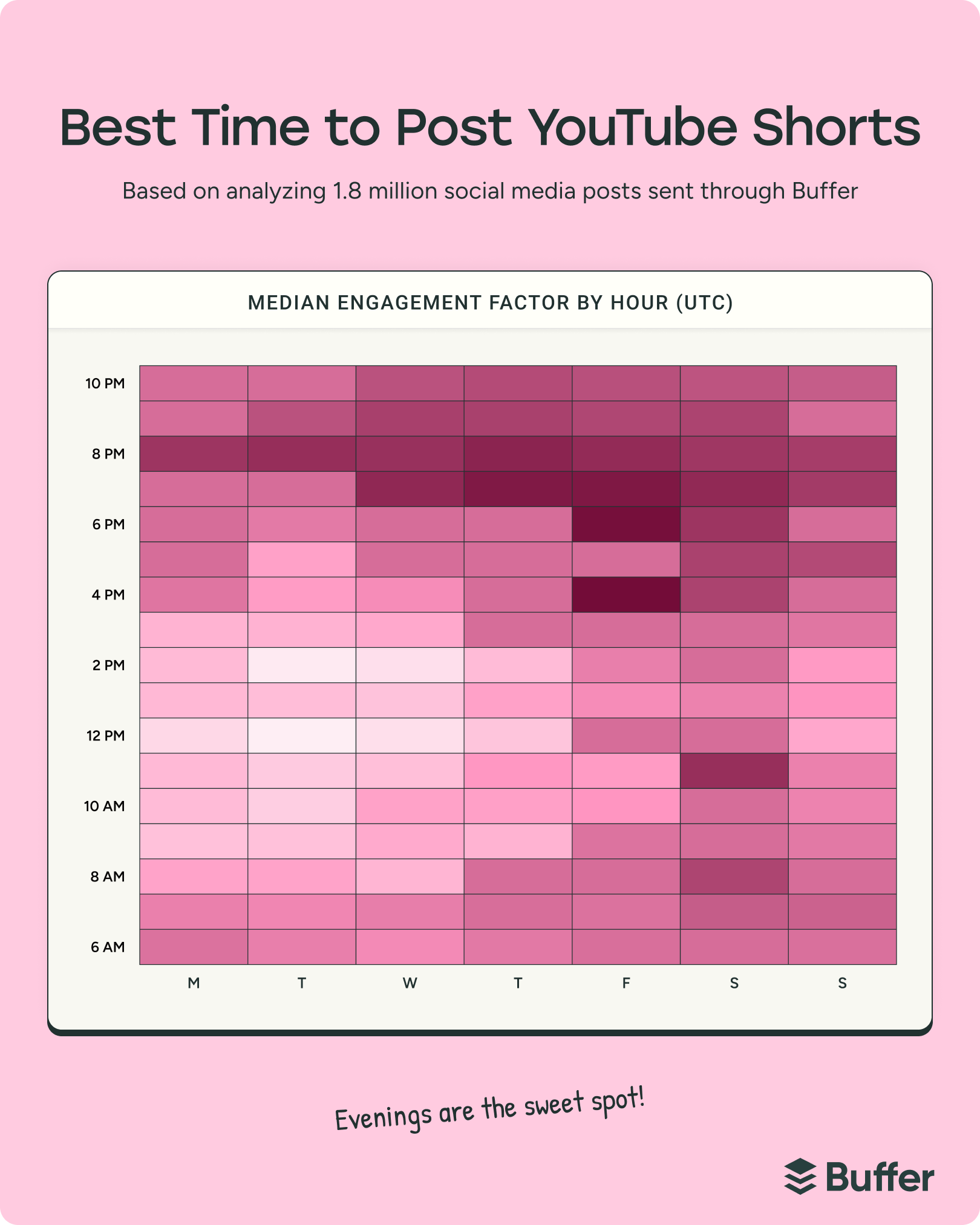
For YouTube Shorts, Friday at 4 p.m. emerges as the top time, with 6 p.m. and 7 p.m. on Fridays also performing exceptionally well. Generally, weekday evenings (6 p.m. to 11 p.m.) are when Shorts gain the most traction. This aligns with the nature of Shorts as quick, digestible content, perfectly suited for unwinding after work or during brief moments of leisure. Afternoon slots (12 p.m. to 5 p.m.) are typically quieter, with activity gradually increasing later in the day.
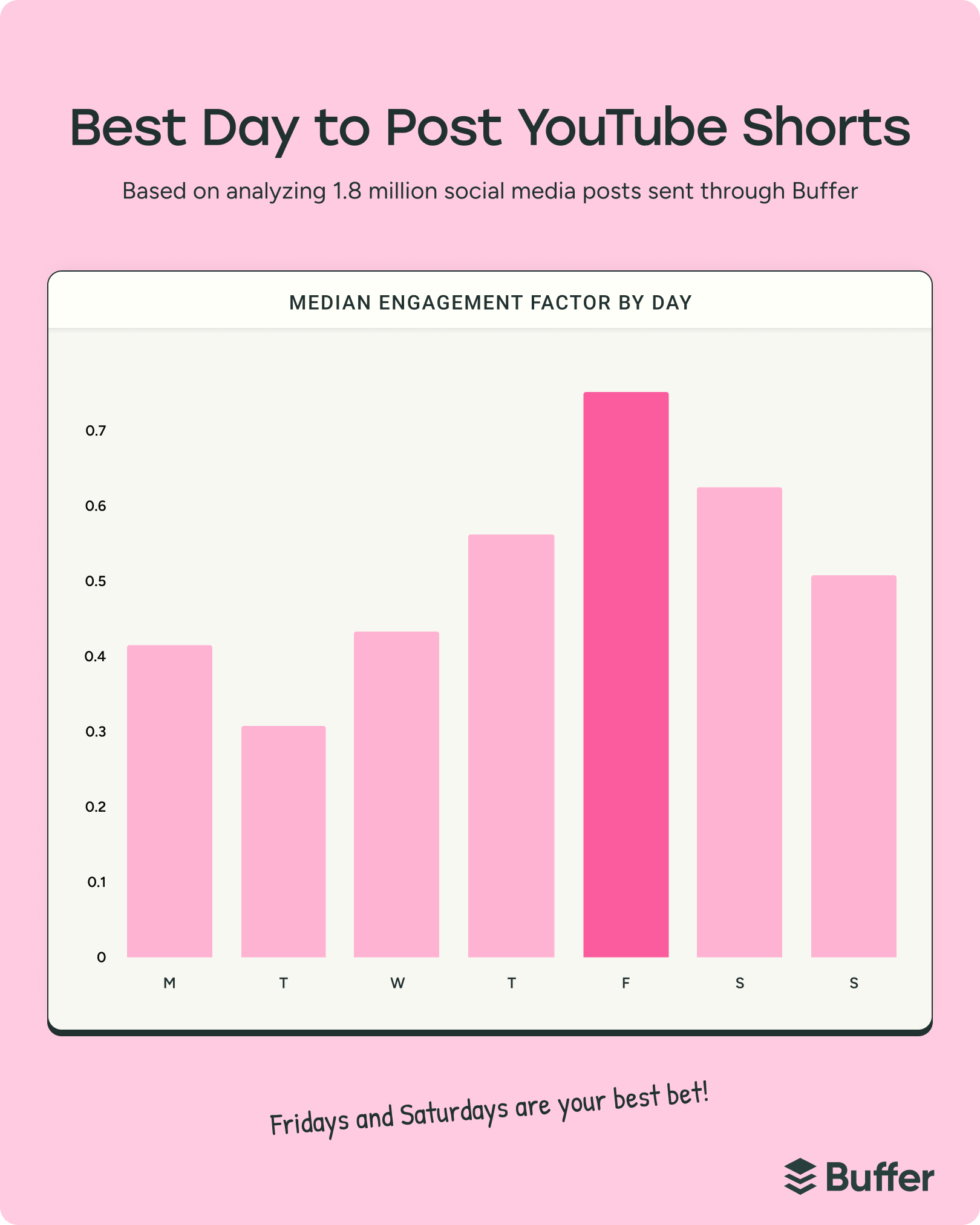
Overall, Friday, Saturday, and Thursday are the strongest days for Shorts. Friday leads, with Saturday close behind. Tuesday and Monday see the lowest engagement, suggesting a focus on mid- to late-week publishing for optimal results.
YouTube Long-Form Videos: Dedicated Weekend and Evening Viewing
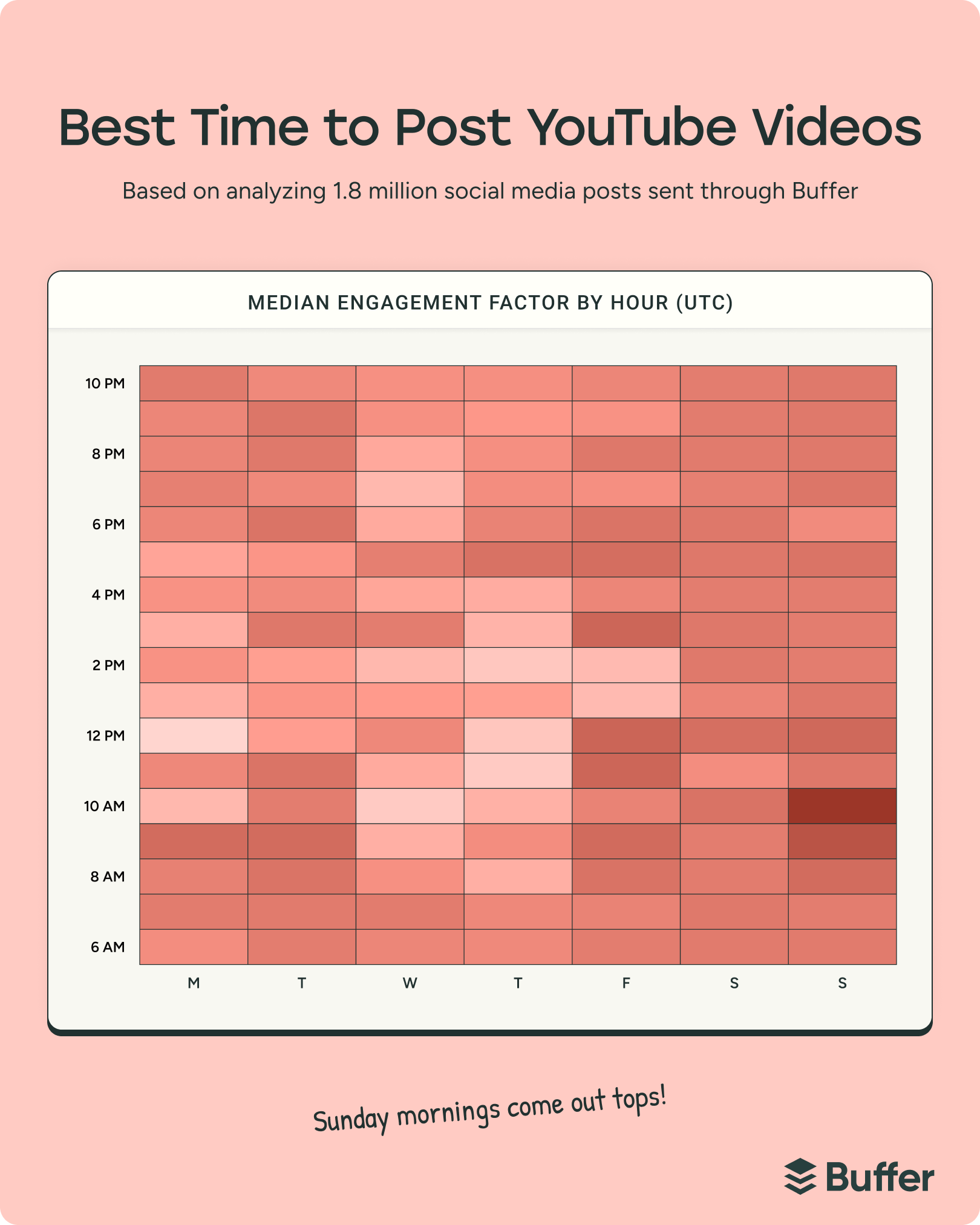
Longer YouTube videos maintain their traditional sweet spot for engagement in the evenings (6 p.m. to 10 p.m.). Unlike Shorts, long-form content demands dedicated viewing time, making evenings and weekends ideal as users are more likely to settle in for extended watching sessions. However, the data also reveals sporadic morning and midday spikes, particularly on weekends, indicating some variability in viewing habits. Midweek afternoons typically represent the weakest window, when audiences are least likely to commit to longer content.
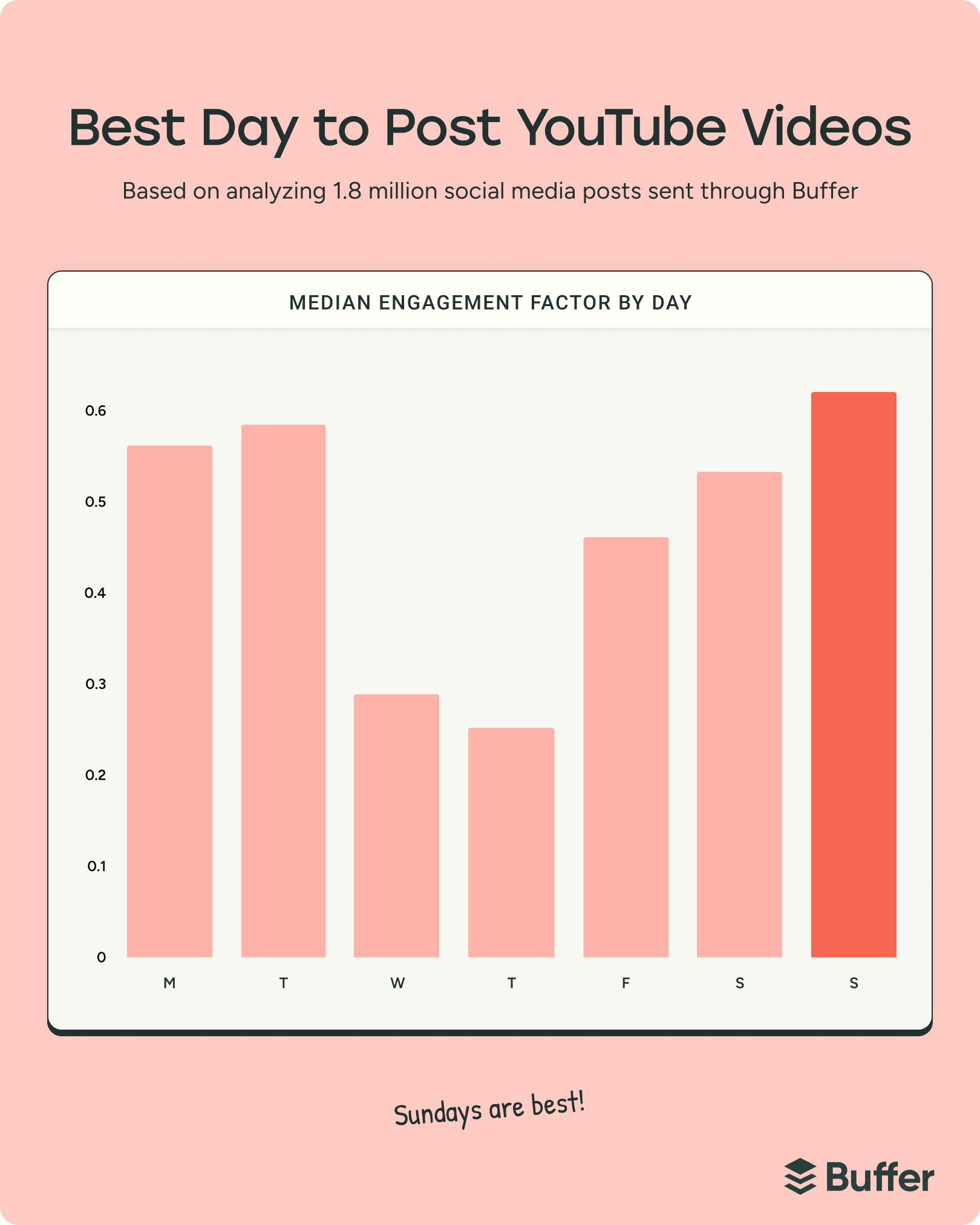
Sunday stands out as the strongest day overall for long-form videos, with consistently high engagement. Tuesday and Monday also perform well, while midweek—especially Wednesday and Thursday—tends to be quieter. The implication for creators is to target publishing toward the end of the week and over the weekend, when viewers are most likely to have the time and attention span required. Niche content, such as professional how-to guides, might still find success during weekdays, underscoring the importance of audience-specific testing.
X (formerly Twitter): The Morning News Cycle
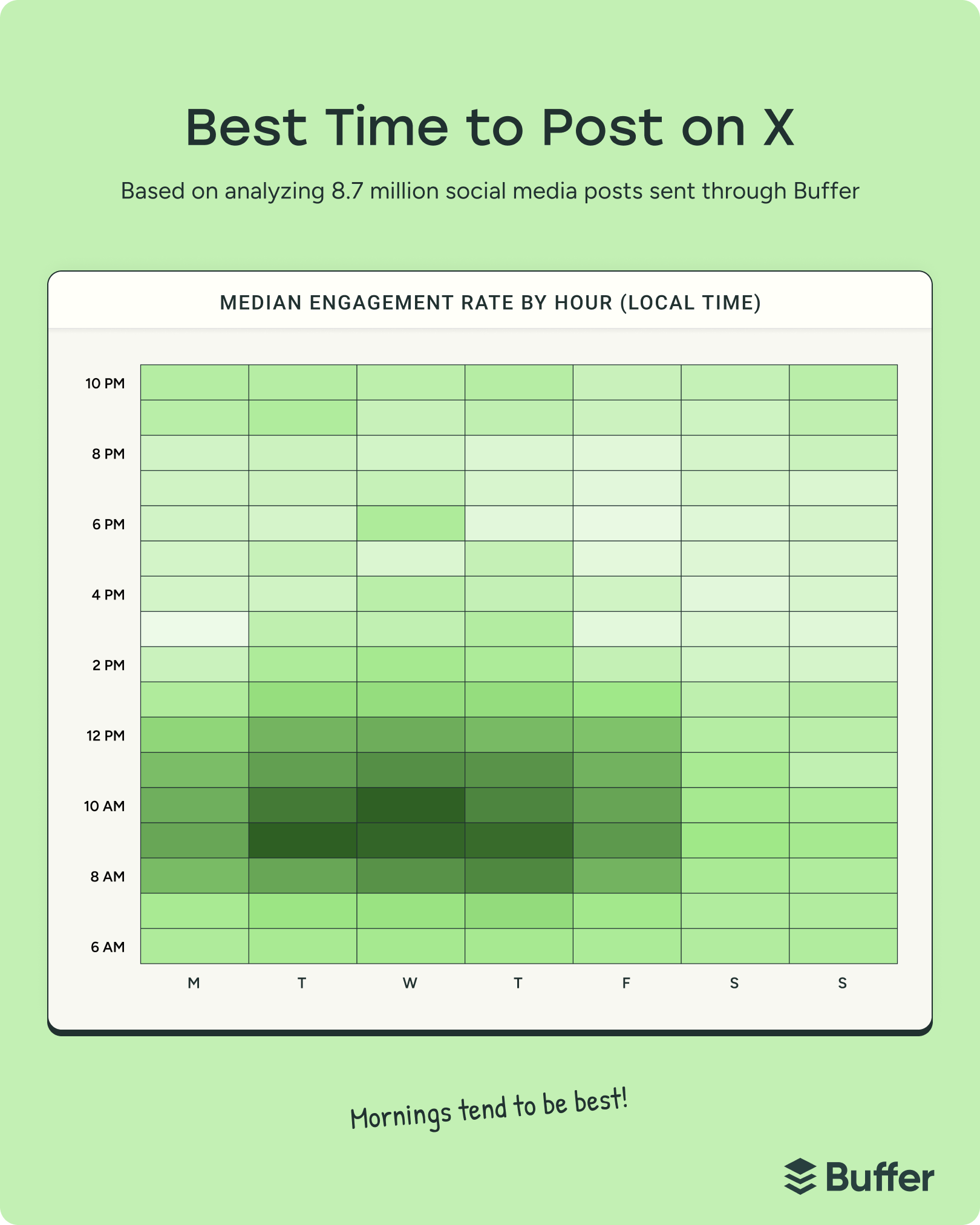
For X (Twitter), the fast-paced platform for real-time updates and discussions, 9 a.m. on Tuesday is identified as the prime posting time, according to an analysis of over 8 million posts. This slot recorded the highest engagement. Other strong contenders include Wednesday at 10 a.m. and Wednesday at 9 a.m.
Generally, weekday mornings are the most productive. Engagement begins to build around 8 a.m. and peaks between 9 a.m. and 11 a.m., gradually tapering off into the afternoon as users shift focus to other workday activities. This pattern reflects X’s role as a platform for breaking news and quick information consumption, often integrated into morning routines.
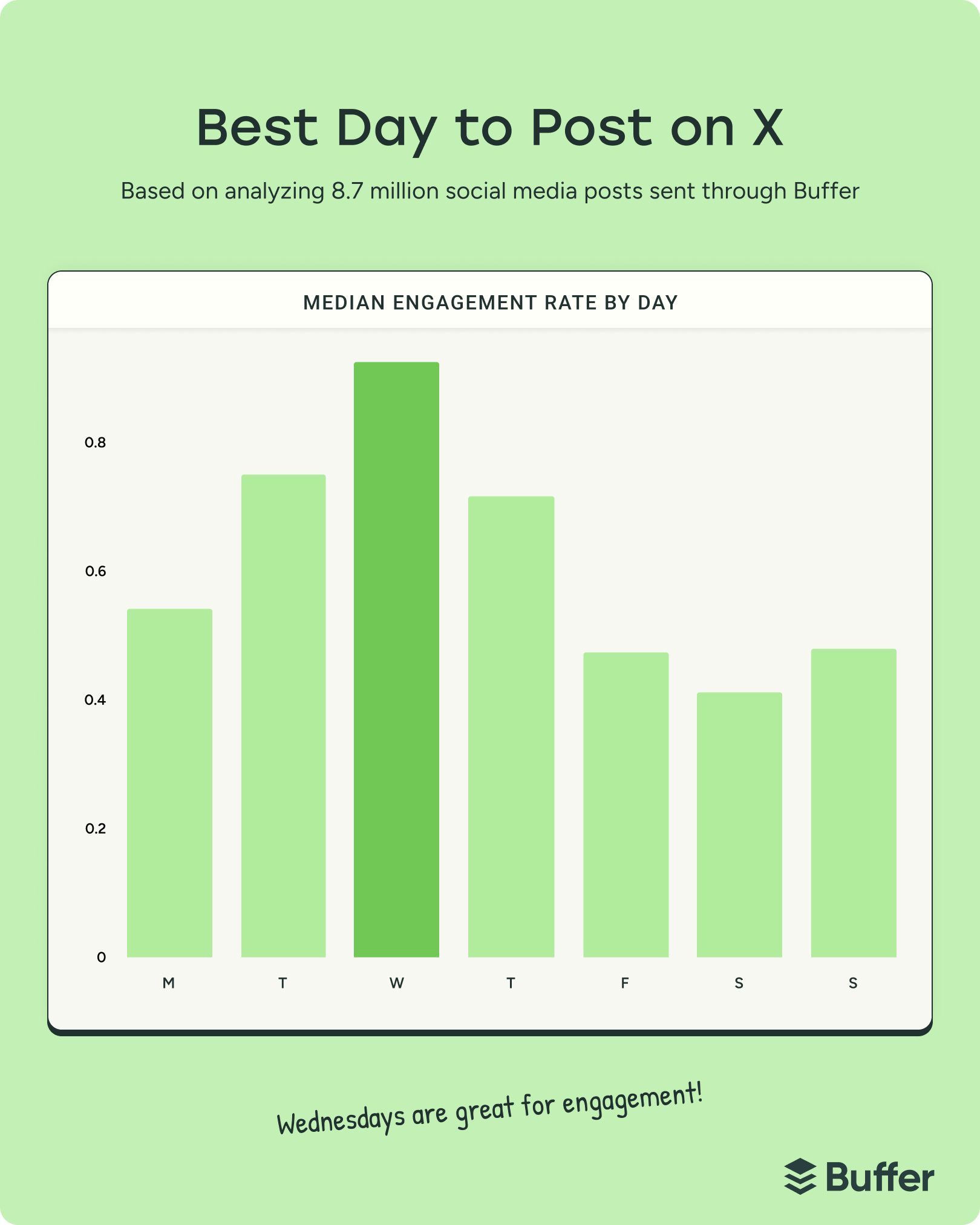
Wednesday is the best day for overall engagement on X, with Tuesday and Thursday also performing strongly. Weekends, particularly Saturday and Sunday, experience a significant drop in engagement, solidifying the mid-week as the optimal window for impactful posts.
Threads: Midweek Morning Momentum
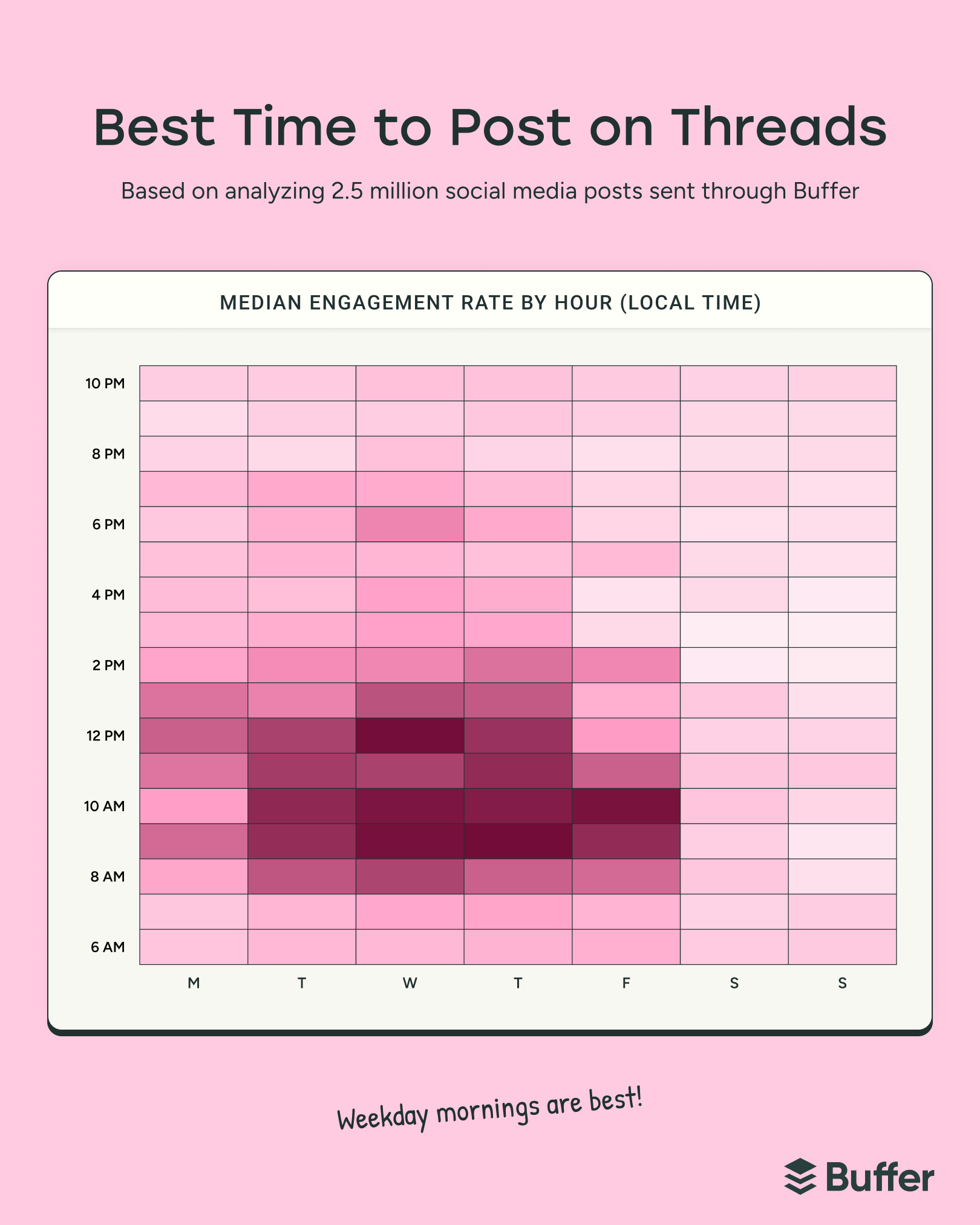
Threads, the newer text-based platform, exhibits engagement patterns similar to its established counterparts in the news and discussion space. The best time to post on Threads is 9 a.m. on a Thursday, remarkably mirroring optimal times for Facebook, Instagram, and X. This time slot yielded the highest median engagement (likes, replies, and reposts) across 2.5 million analyzed posts.
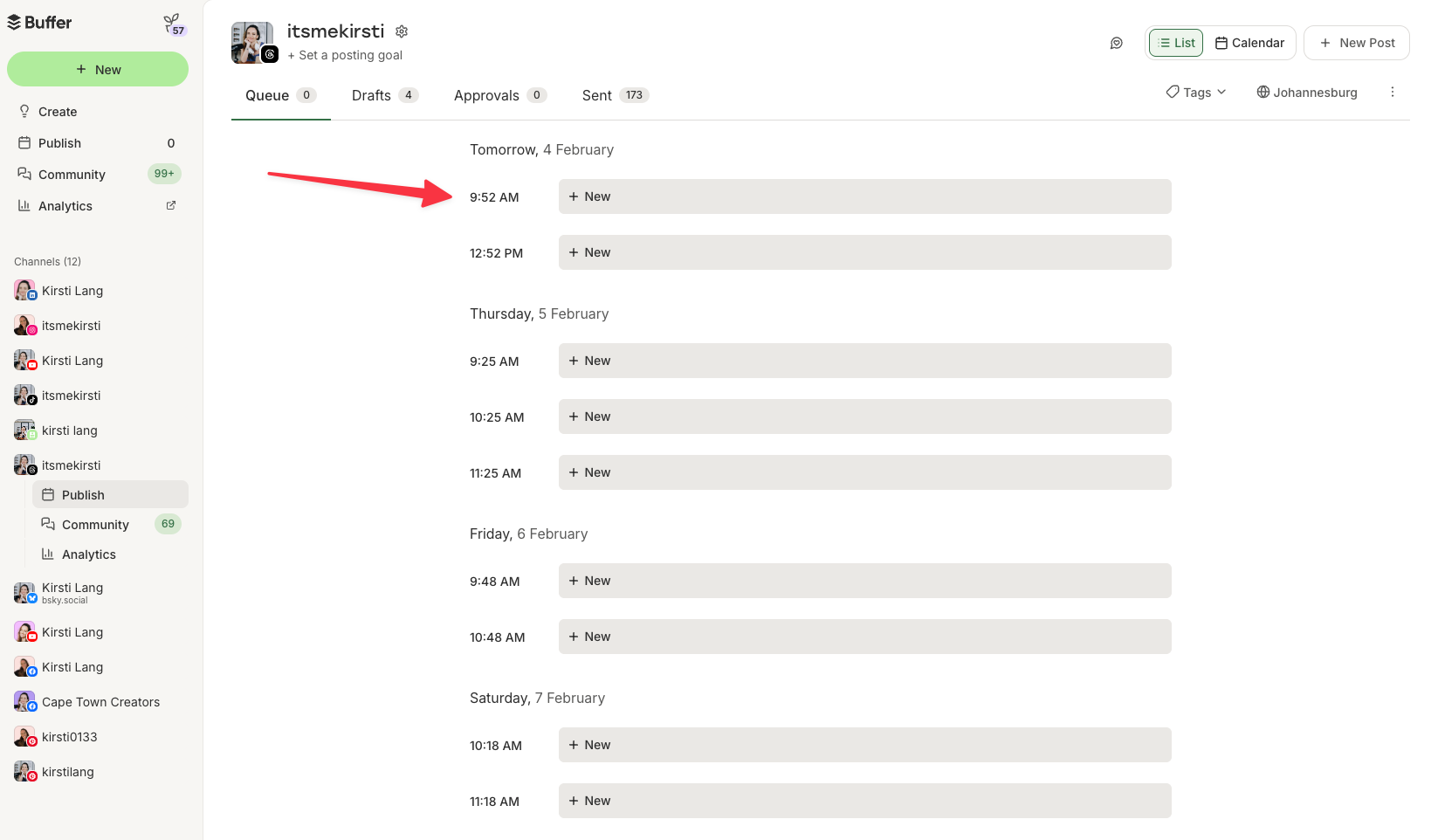
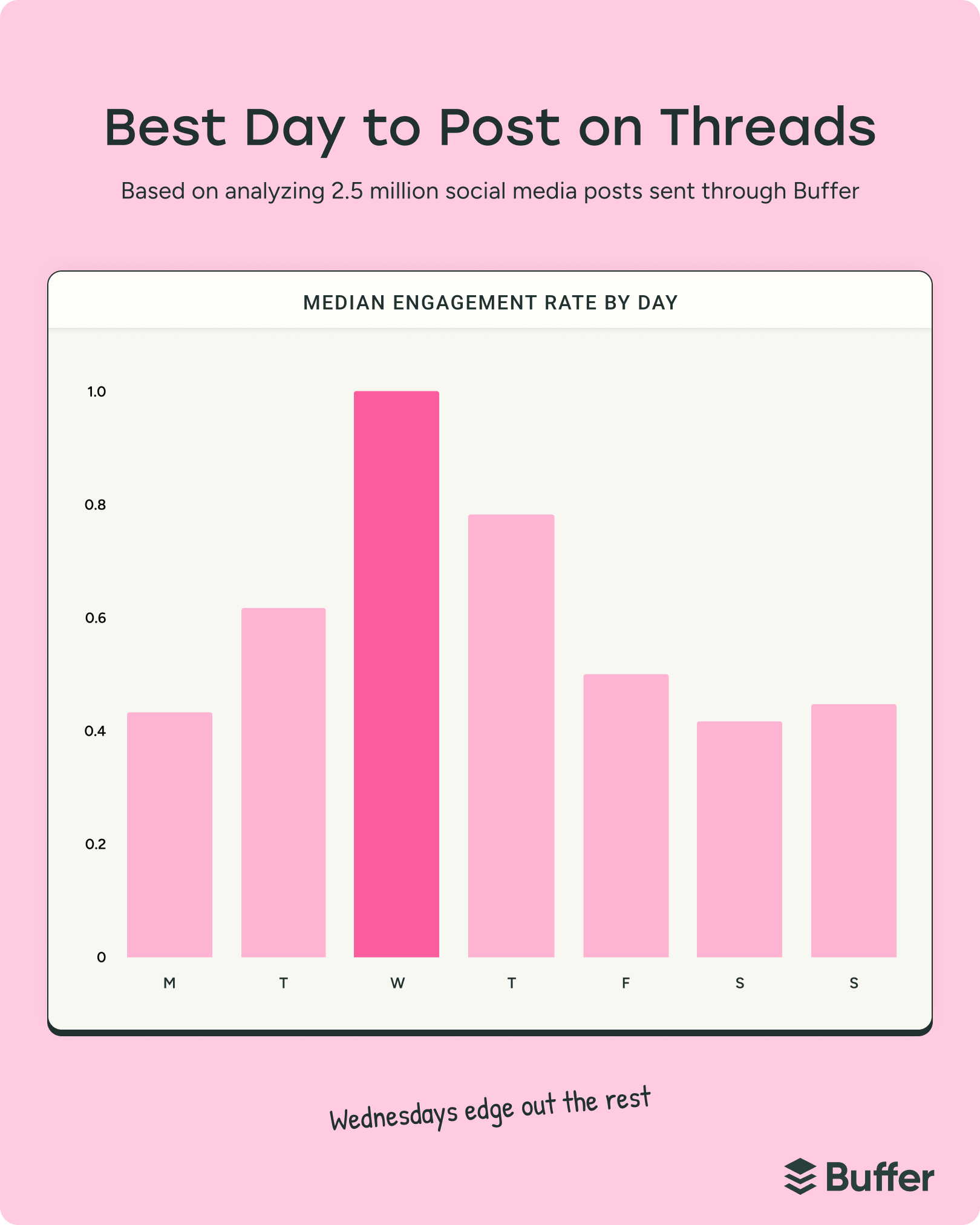
More broadly, the window between 7 a.m. and 12 p.m. on weekdays represents a strong period for Threads engagement, indicating that most weekday mornings are prime for content sharing. Wednesday is the best day for overall engagement, followed by Thursday and Tuesday, firmly establishing midweek as the most active period on the platform. Conversely, Saturday, Sunday, and Monday record the lowest engagement, suggesting content strategists should prioritize midweek publishing for maximum reach.
Strategic Implications and Leveraging Analytics
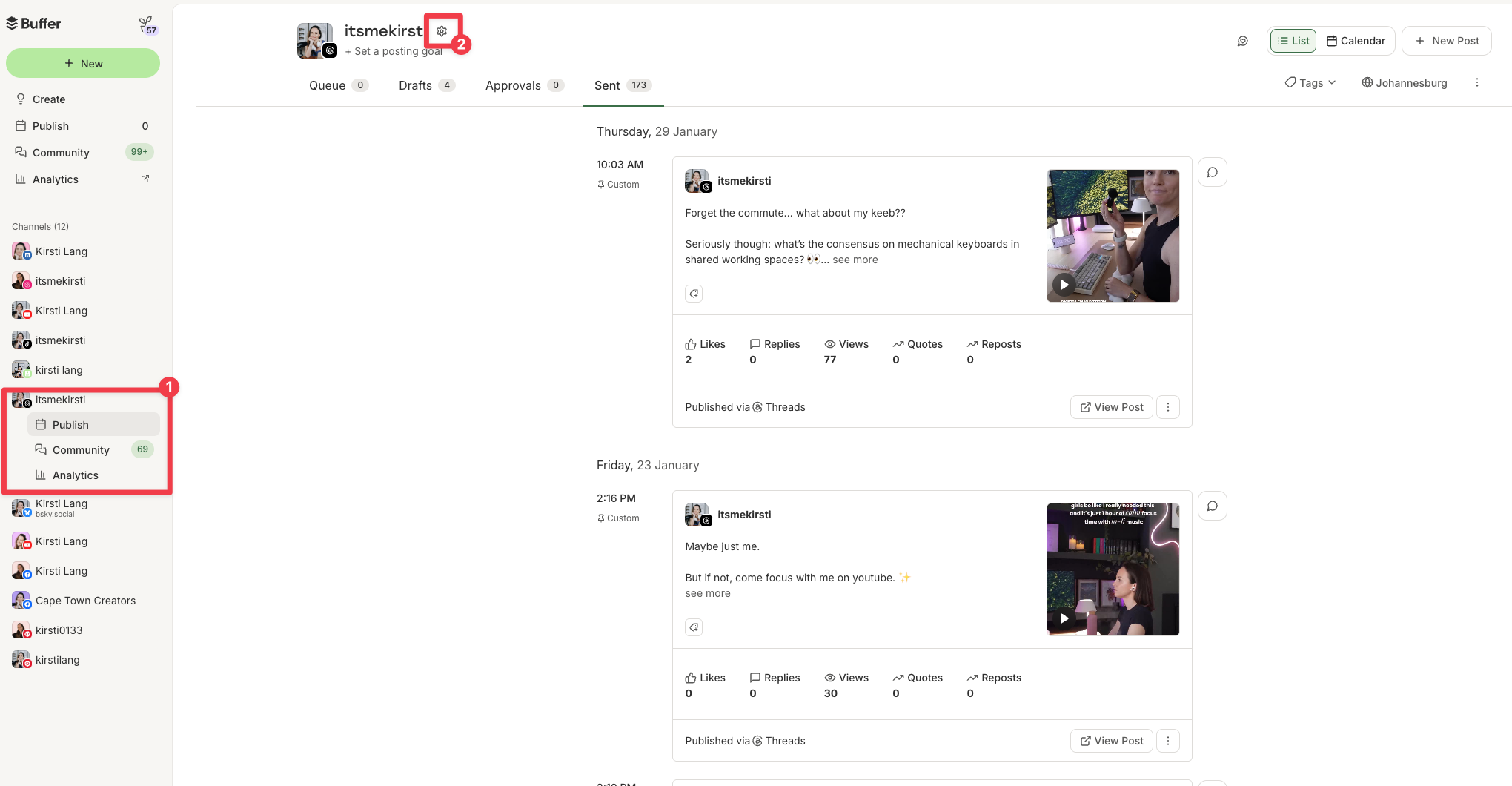
While Buffer’s 2026 report provides invaluable benchmarks, these recommendations serve as a starting point, not an immutable law. The dynamic nature of social media algorithms and the unique characteristics of every audience necessitate ongoing experimentation and personalized optimization.
Social media management tools like Buffer become indispensable in this process. Buffer’s platform offers automated features to integrate these recommended posting times directly into content calendars, simplifying scheduling and ensuring consistency. Beyond global averages, Buffer’s analytics suite provides granular insights into an individual account’s historical performance, identifying the user’s specific best times to post for Facebook, Instagram, X, and LinkedIn Pages. This personalized data, derived from a brand’s actual audience engagement, allows for fine-tuning strategies beyond generalized trends.
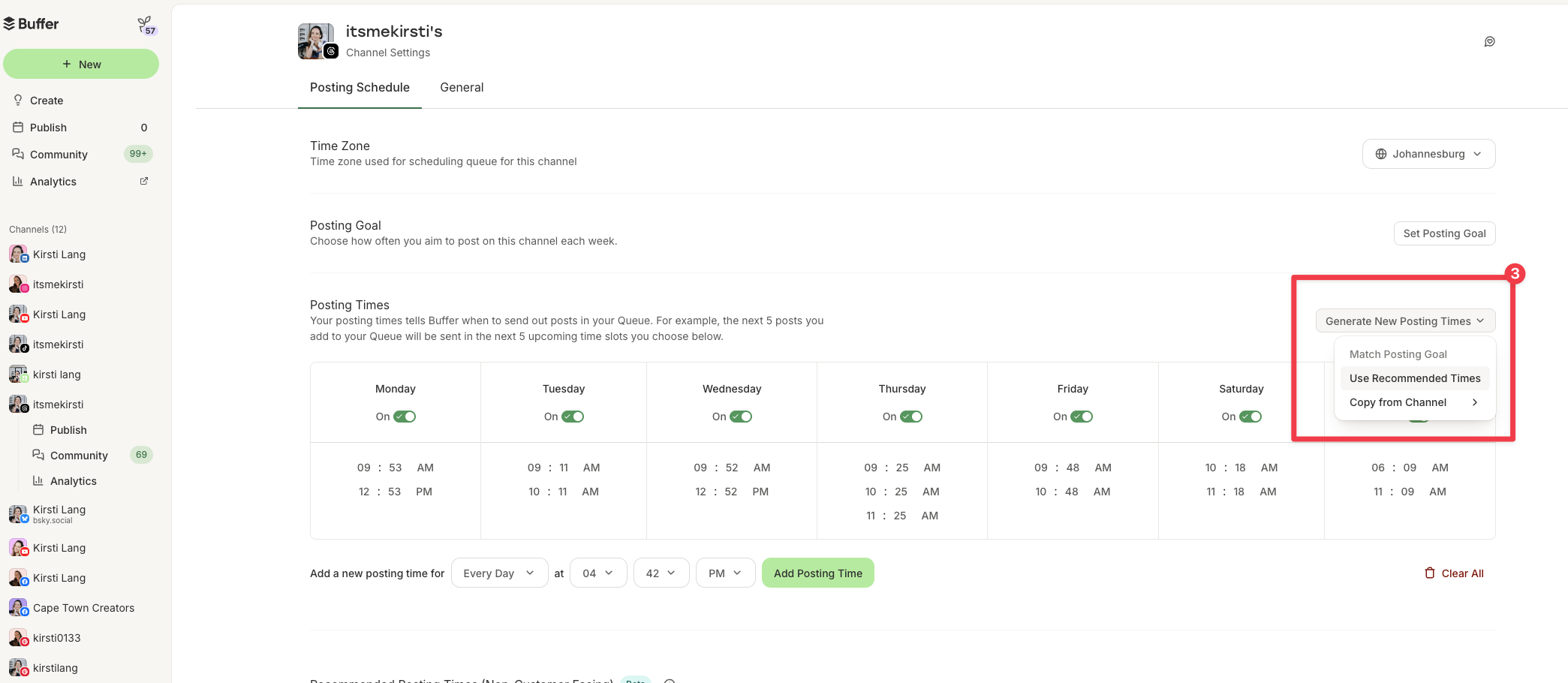
Ultimately, successful social media engagement is a multi-faceted endeavor. Optimal timing can provide a significant advantage by ensuring content reaches audiences when they are most receptive, thereby increasing early engagement signals that algorithms favor. However, this must be coupled with high-quality, relevant content that genuinely resonates with the target audience and aligns with broader social media marketing goals. Consistency in publishing, authentic engagement, and a clear understanding of audience preferences will always form the bedrock of a robust social media strategy. The 2026 State of Social Media Engagement report equips marketers with critical data, transforming guesswork into informed decisions, but the artistry of content creation and community building remains paramount.