 Ali Ikhwan
The debut of the Apple iPhone Duo, the company’s first foray into the foldable smartphone market, has been met with immediate technical scrutiny as early adopters report significant issues regarding the durability of the device’s inner display. While the $1,999 handset was initially lauded for its sophisticated hardware design and software optimization, a growing number of user reports on platforms such as Reddit have documented instances of internal screen cracking, leading some within the tech community to dub the phenomenon "Crackgate."
The reports describe a recurring failure point: the inner flexible OLED panel appears to fracture shortly after the device is opened, with some users noting that the damage occurred during the initial device configuration process. While some of these failures have been documented by independent reviewers and content creators—such as JerryRigEverything, who subjects hardware to extreme stress tests—the prevalence of consumer-reported failures suggests that the issue may not be confined to isolated incidents of extreme handling.
A Chronology of the iPhone Duo Launch
The path to the iPhone Duo’s release was marked by years of anticipation, as Apple remained a notable holdout while competitors like Samsung, Google, and Motorola iterated on foldable form factors. When Apple finally unveiled the device in September, it was marketed as a refined, high-performance evolution of the category.
- September 2026: Apple officially unveils the iPhone Duo, emphasizing its "pinnacle" material engineering and high-end display technology.
- October 2026 (Launch Week): The device becomes available to the public. Within 48 hours, the first reports of screen failures appear on social media forums.
- October 23, 2026: The term "Crackgate" gains traction across major tech news outlets, paralleling historical hardware controversies in the smartphone industry.
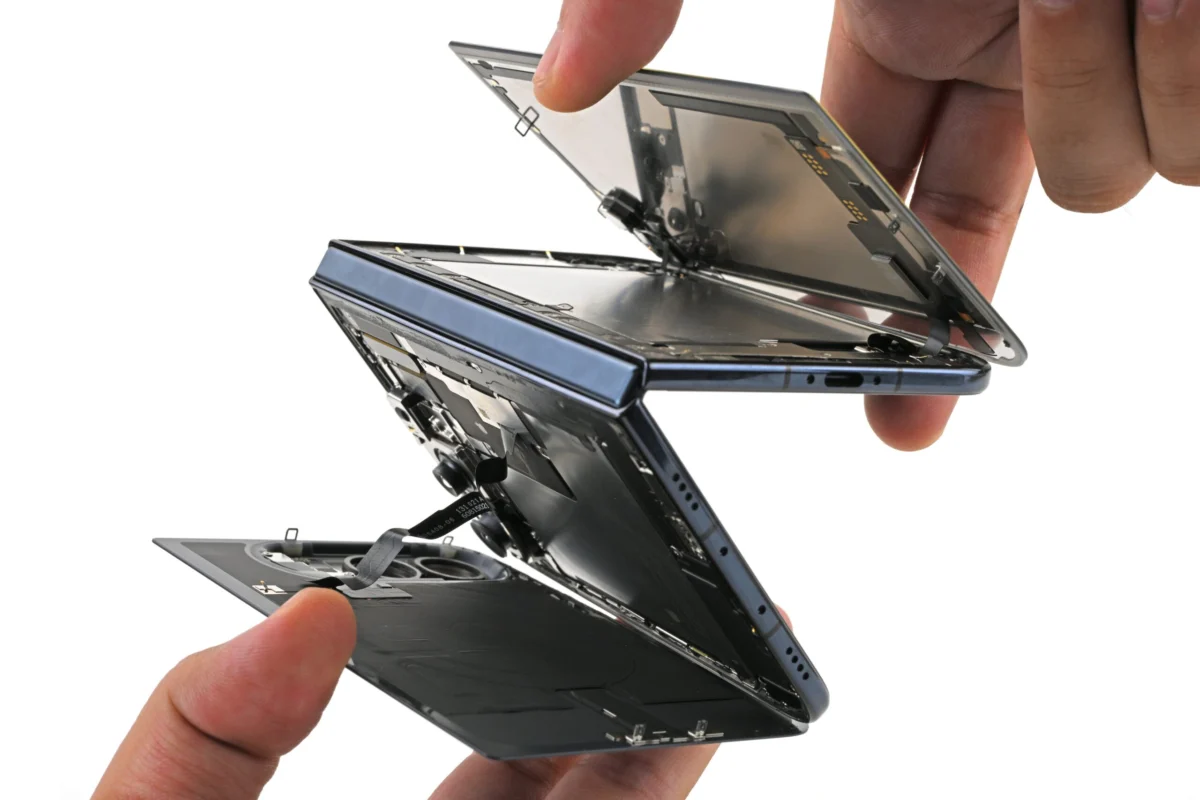
- Late October 2026: iFixit publishes its comprehensive teardown, providing the first structural analysis of the device’s hinge and display architecture.
As of this writing, Apple has not issued an official statement regarding the specific nature of these reports or whether a potential manufacturing defect is to blame. The company’s silence leaves a vacuum of information that typically fuels speculation regarding the reliability of first-generation hardware.
Technical Analysis: The Complexity of the Foldable Hinge
The primary engineering challenge for any foldable device lies in the hinge and the interface between the flexible screen and the chassis. In the case of the iPhone Duo, the display utilizes a proprietary, thin nano-texture finish layered atop an OLED panel. According to industry experts, this layer is critical to the display’s performance but is also exceptionally delicate.
iFixit’s recent teardown reveals that while the iPhone Duo is modular in several respects—allowing for the relatively straightforward replacement of the battery, back panels, and external trim—the inner display remains the most difficult component to service. To replace the internal screen, technicians must utilize heat guns to soften industrial-grade adhesives, a process that risks damaging the surrounding components.
The "crunchy" audio reported by some users upon opening or closing the device is a common symptom in foldable phones, often indicating the ingress of particulate matter. Despite Apple’s engineering efforts to seal the hinge mechanism, the reality of physics suggests that dust and microscopic debris can still penetrate the gaps between the hinge and the screen, creating localized pressure points that eventually lead to catastrophic screen failure.

Repairability and the Right to Repair
In a notable shift for Apple, the company provided a detailed, publicly accessible repair manual for the iPhone Duo at the time of launch. This move represents a significant departure from the company’s historical stance, which for years favored a closed ecosystem where only Apple-certified technicians could perform repairs.
iFixit awarded the iPhone Duo a provisional repairability score of 5/10. While this might appear modest to the average consumer, it is the highest rating ever assigned by the firm to a foldable smartphone. This score reflects the fact that, unlike its competitors, the iPhone Duo features components secured with standard screws and brackets rather than excessive amounts of permanent glue. However, the cost of an internal screen replacement remains a prohibitive $999—effectively half the cost of the device itself—raising questions about the long-term economic viability of owning such hardware.
Historical Context and Industry Implications
The challenges currently facing the iPhone Duo are not unprecedented. When Samsung introduced the original Galaxy Fold in 2019, the company was forced to delay its launch after early review units suffered from screen flickering and hinge debris issues. The industry has since learned that the "first-generation tax" is a very real factor in foldable technology.
However, Apple’s entry into this space brings a unique set of expectations. Because Apple maintains a reputation for seamless, reliable hardware, any failure of this nature carries a higher reputational cost. If the screen cracking issue is found to be systemic, the company may face pressure to initiate a replacement program or a redesign of the hinge mechanism, similar to the measures taken by its predecessors.
The implications for the broader market are substantial. As foldables transition from niche luxury items to mainstream flagship products, the industry is closely watching how Apple manages this crisis. If the company can pivot toward a solution that involves improved hinge sealing or more durable screen polymers, it may stabilize the market for foldables. If not, the iPhone Duo could serve as a cautionary tale about the limits of current display technology.
Looking Toward Future Updates
While the current discourse is dominated by these durability concerns, it is essential to note that the vast majority of units remain functional. The variability in user experience—with some devices failing in hours and others showing no signs of wear after weeks of intensive use—suggests that if there is a hardware defect, it may be limited to specific production batches or tolerance issues in the hinge assembly.
For potential buyers, the current environment necessitates caution. The standard AppleCare+ coverage, which typically includes reduced fees for accidental damage, may be the most critical accessory for an early adopter of the iPhone Duo. Meanwhile, the tech community continues to monitor whether Apple will release a firmware update—perhaps to adjust the display’s refresh rate or voltage to mitigate heat-related expansion—or if a physical recall will become necessary.
As the situation unfolds, the industry’s focus remains on the balance between innovation and reliability. The iPhone Duo is undeniably a masterpiece of industrial design, but the "Crackgate" controversy serves as a stark reminder that even the most advanced consumer electronics are subject to the unforgiving realities of material science. For Apple, the coming weeks will be a test of its support infrastructure and its commitment to the users who invested in its most ambitious hardware project to date. Whether this leads to a permanent refinement of the device’s architecture or a pivot in marketing strategy, the lessons learned from the iPhone Duo will likely dictate the design language of foldable phones for the next decade.