Hanik Kholidah
The Arab Republic of Egypt remains one of the world’s most significant cultural and historical destinations, drawing millions of international visitors annually to witness the remnants of a civilization that spanned over 3,000 years. As the home of the Great Pyramid of Giza—the only surviving member of the original Seven Wonders of the Ancient World—Egypt offers a unique intersection of archaeological grandeur and modern geopolitical importance. For the contemporary traveler, navigating the country’s vast array of monuments requires a strategic understanding of its primary hubs: the bustling metropolis of Cairo and the open-air museum of Luxor.
In recent years, the Egyptian government has undertaken massive infrastructure projects and archaeological restorations to bolster its tourism sector, which accounts for approximately 12% of the nation’s Gross Domestic Product (GDP). With the late 2025 opening of the Grand Egyptian Museum (GEM) and the continued expansion of the National Museum of Egyptian Civilization (NMEC), the country has repositioned itself as a premier destination for high-value cultural tourism.
The Evolution of Egyptian Civilization: A Chronological Context
To appreciate the sites within Egypt, one must understand the chronological divide between the Old Kingdom and the New Kingdom. The sites surrounding Cairo, such as Giza, Saqqara, and Dahshur, primarily represent the Old Kingdom (c. 2686–2181 BCE), a period characterized by the construction of massive pyramids as royal funerary monuments. Conversely, the sites in Luxor represent the New Kingdom (c. 1550–1070 BCE), an era of imperial expansion where pharaohs shifted their burial practices toward hidden rock-cut tombs in the Valley of the Kings to deter grave robbers.
This historical progression is essential for travelers, as it explains the architectural shift from the vertical dominance of the pyramids to the sprawling, horizontal complexity of the temples found in Upper Egypt.
Cairo and the Giza Plateau: The Gateway to Antiquity
Cairo serves as the primary entry point for international arrivals and is the gateway to the most iconic monuments of the Old Kingdom.
The Giza Plateau and the Great Sphinx
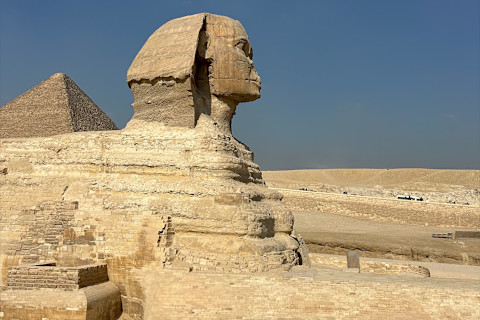
The Giza Plateau remains the centerpiece of Egyptian tourism. It houses the Great Pyramid of Khufu, the Pyramid of Khafre, and the Pyramid of Menkaure. The Great Pyramid, constructed with an estimated 2.3 million stone blocks, continues to be a subject of intense architectural and archaeological study. Adjacent to these structures is the Great Sphinx, a limestone statue with the body of a lion and the head of a pharaoh, believed to represent Khafre.
Recent data from the Ministry of Tourism and Antiquities indicates that the Giza Plateau receives the highest density of visitors in the country. To manage this, authorities have introduced electric buses and a new visitors’ center to minimize the environmental impact on the monuments.

The Evolution of the Pyramid: Saqqara and Dahshur
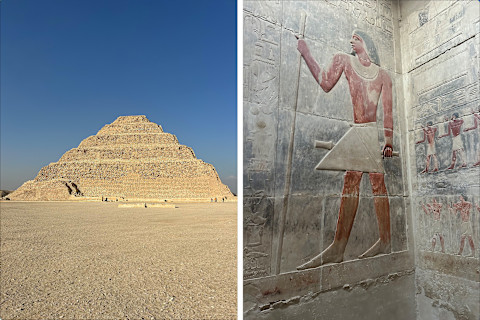
South of Giza lies Saqqara, a vast necropolis that served as the burial ground for the ancient capital of Memphis. It is home to the Step Pyramid of Djoser, designed by the architect Imhotep. Built in the 27th century BCE, it is considered the earliest large-scale cut stone construction in history. Saqqara has recently been the site of significant new discoveries, including the "mummification workshop" and dozens of intact sarcophagi, making it a focal point for modern Egyptology.
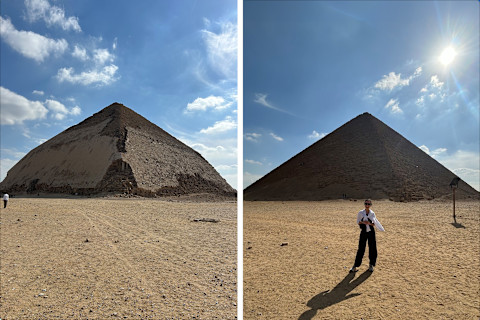
Further south is Dahshur, which offers a more tranquil experience. Here, the Red Pyramid and the Bent Pyramid demonstrate the trial-and-error process of ancient engineering. The Bent Pyramid’s unique silhouette—changing angle halfway up—illustrates the transition from step pyramids to smooth-sided structures.
The Grand Egyptian Museum and the Tahrir Museum
For over a century, the Egyptian Museum in Tahrir Square was the primary repository for the nation’s treasures. While it remains a historic site, the transition to the Grand Egyptian Museum (GEM) near the Giza pyramids marks a new era. The GEM, a $1 billion project, now houses the complete collection of King Tutankhamun’s treasures, many of which were previously held in storage. The museum’s design allows for a chronological flow, providing visitors with a comprehensive data-driven narrative of Egyptian history.
Luxor: The Epicenter of the New Kingdom
Located approximately 300 miles south of Cairo, Luxor—ancient Thebes—contains a staggering concentration of monuments. The city is divided by the Nile into the East Bank, where the living resided and temples were built, and the West Bank, the "City of the Dead."
The Valley of the Kings and Valley of the Queens
The West Bank’s Valley of the Kings is the site of 63 known tombs, including those of Ramses II and Tutankhamun. Unlike the pyramids, these tombs were carved deep into the limestone hills to protect the royal remains and treasures. The preservation of the vibrant pigments on the walls, which depict scenes from the Book of the Dead, provides invaluable data regarding ancient Egyptian theology and the afterlife.
The Valley of the Queens, specifically the Tomb of Queen Nefertari, is often cited by experts as the pinnacle of Egyptian funerary art. Although access is strictly regulated to prevent humidity damage, it remains a critical site for conservation studies.
Mortuary Temples: Hatshepsut and the Ramesseum
The Temple of Hatshepsut at Deir el-Bahari is an architectural anomaly, featuring three massive terraced levels that blend into the sheer cliffs behind them. As one of the few female pharaohs, Hatshepsut used this temple to legitimize her reign through relief carvings depicting her divine birth.
Nearby, the Ramesseum, the mortuary temple of Ramses II, serves as a testament to the pharaoh’s ego and architectural ambition. The site is famous for its fallen colossus, which inspired Percy Bysshe Shelley’s poem "Ozymandias."
The Temples of Karnak and Luxor
On the East Bank, the Karnak Temple Complex stands as the largest religious building ever constructed. Developed over 1,500 years, it was the main place of worship for the god Amun-Ra. The Great Hypostyle Hall, with its 134 massive columns, remains one of the most visited architectural sites in the world.
Luxor Temple, located in the heart of the modern city, is uniquely connected to Karnak by the recently restored Avenue of Sphinxes—a 1.7-mile path that was used for the annual Opet Festival.
Tourism Data and Economic Implications
The strategic importance of tourism to the Egyptian economy cannot be overstated. According to the Egyptian Central Agency for Public Mobilization and Statistics (CAPMAS), the number of tourists visiting Egypt reached 14.9 million in 2023, surpassing previous records set in 2010. This surge is attributed to increased flight connectivity and a diversified marketing strategy targeting Western Europe, North America, and East Asia.
The Egyptian government has set an ambitious goal of attracting 30 million tourists annually by 2028. To achieve this, the Ministry of Tourism and Antiquities has focused on:
- Digitalization: The implementation of e-visas and online ticketing for major archaeological sites.
- Infrastructure: The construction of high-speed rail links connecting Cairo to the Red Sea and Luxor.
- Restoration: Large-scale projects to clean and restore the original colors of temples in Luxor and Esna.
Professional Recommendations for Strategic Planning
For travelers and researchers, Egypt is a destination that requires meticulous logistical planning. Security and efficiency are paramount; therefore, the use of licensed Egyptologists is highly recommended. These professionals provide not only linguistic assistance but also critical historical context that is often missing from self-guided tours.
Seasonal and Logistical Considerations
The optimal window for visiting Egypt is between October and April, when temperatures are manageable for outdoor exploration. The summer months (June–August) can see temperatures in Luxor exceeding 104°F (40°C), which may pose health risks and limit the duration of site visits.
Furthermore, the Egyptian government has standardized security protocols for tourist travel. While the country is generally safe for international visitors, adhering to official transport routes and staying in registered accommodations is standard practice.
Broader Impact and Global Significance
The preservation of Egypt’s ancient sites is a matter of global heritage. UNESCO has designated several areas, including Ancient Thebes and the Memphis Necropolis, as World Heritage Sites. The ongoing challenge for the Egyptian authorities is balancing the economic necessity of mass tourism with the physical preservation of fragile limestone structures.
The "Parade of the Mummies" in 2021, which saw the transfer of royal remains to the National Museum of Egyptian Civilization, served as a symbolic reminder of Egypt’s enduring pride in its past. As the country continues to modernize, its ability to safeguard these ancient treasures will remain a benchmark for cultural heritage management worldwide.
In conclusion, a visit to Egypt is more than a leisure trip; it is an immersion into the foundation of human civilization. From the structural precision of the Giza pyramids to the artistic depth of the Theban tombs, Egypt offers a comprehensive look at how a society organized itself around the concepts of divinity, power, and eternity. With careful planning and a focus on the country’s most significant archaeological hubs, the modern visitor can witness the weight of history in a way that few other destinations can provide.