Reynand Holland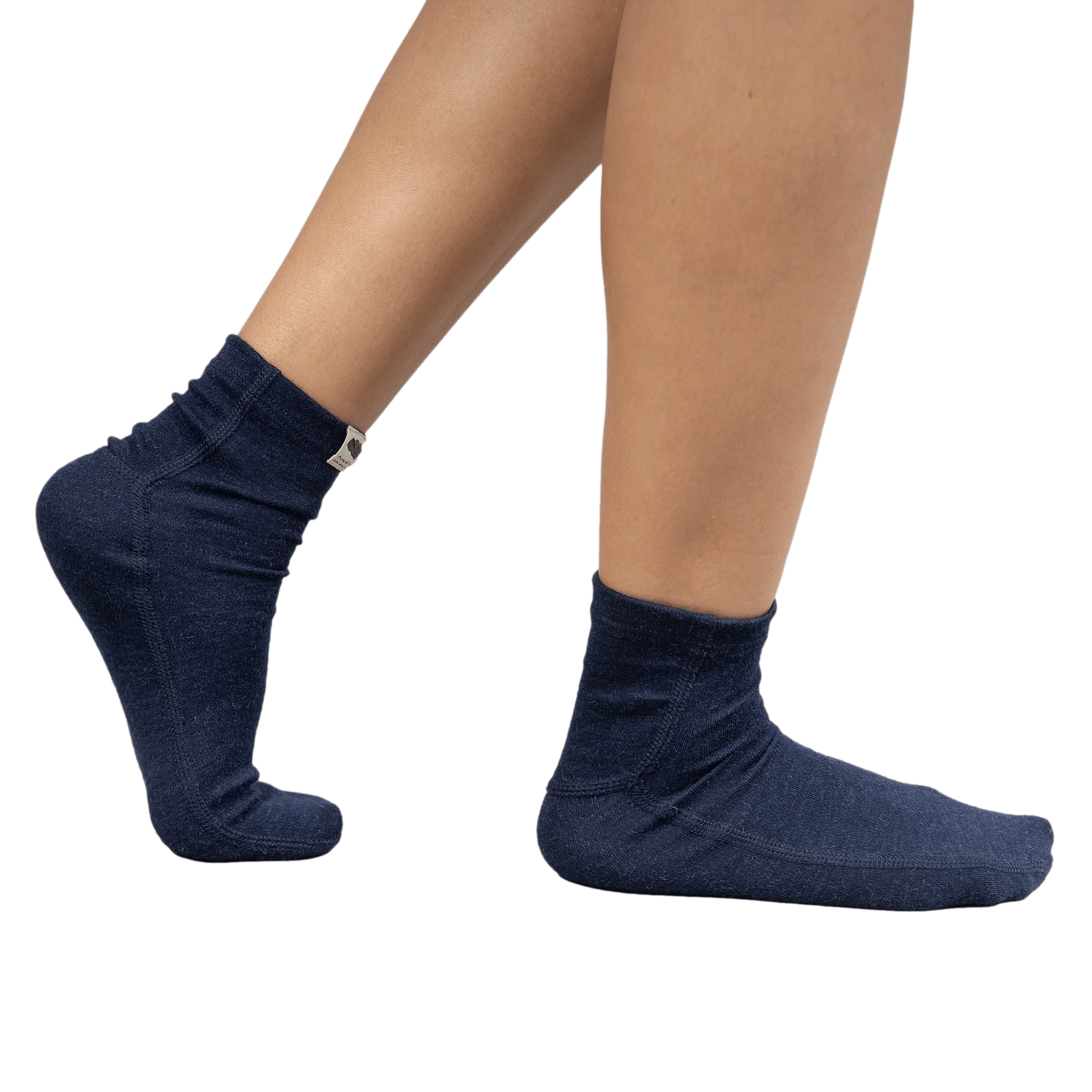
Socks, often relegated to the bottom of the sock drawer and the least considered item in a wardrobe, play a far more significant role in personal comfort and environmental impact than commonly perceived. While their primary function is to cushion and protect feet within footwear, the materials and dyes used in their production can directly influence skin health and contribute to broader ecological concerns. For individuals experiencing discomfort, such as itching, with conventional synthetic socks, a deeper dive into natural fiber alternatives and skin-safe dyeing practices reveals a path towards healthier choices and a more sustainable approach to everyday apparel.
The issue extends beyond mere odor retention. Plastic-based synthetic socks, particularly those crafted from polyester, frequently employ azo-benzene disperse dyes. Scientific research and industry reports have flagged these dyes as known skin sensitizers. Alarmingly, when absorbed through the skin – a process significantly accelerated by sweat, which is common when wearing socks – these chemicals can pose carcinogenic risks. This hidden danger underscores the importance of scrutinizing the components of even the most seemingly innocuous garments. The migration of chemicals from socks to skin, especially during periods of increased perspiration, presents a direct route for potential absorption, making the choice of sock material and dye a crucial health consideration for many.
Fortunately, the shift to non-toxic and ethically produced socks does not necessitate sacrificing personal style or the enjoyment of vibrant patterns. A growing number of brands are prioritizing natural fibers and safe dyeing processes, offering a diverse range of options that cater to varying levels of skin sensitivity and aesthetic preferences. From undyed, naturally colored yarns to boldly patterned designs achieved with eco-conscious dyes, consumers now have access to socks that are as kind to their skin as they are to the planet.
The Foundation of Comfort: Natural Materials and Their Benefits
The cornerstone of choosing healthy and comfortable socks lies in their material composition. For individuals with synthetic sensitivities or existing skin conditions, opting for socks made from 100% natural fibers is the most beneficial approach. While the inclusion of elastane for stretch is ubiquitous in modern hosiery, making entirely synthetic-free options a rarity, several brands are successfully navigating this challenge. Companies like Cottonique and Arms of Andes are notable for their commitment to producing socks with minimal or no synthetic content, prioritizing natural fibers that allow the skin to breathe and reduce the likelihood of irritation.
Beyond these exceptions, it is generally advisable to assume that most socks will contain a small percentage of synthetics. While typically not problematic for the majority of consumers, those with highly sensitive skin may wish to be aware of brands that disclose a synthetic content of 20% or more.
Exploring Premium Natural Fibers:
-
Merino Wool: Celebrated for its exceptional properties, merino wool stands out as a premier choice for socks. Its natural odor resistance and superior moisture-wicking capabilities keep feet dry and comfortable, even during strenuous activities. This natural breathability helps to mitigate the environment where odor-causing bacteria thrive. The Responsible Wool Standard (RWS) is a critical certification to look for, ensuring that the wool is sourced ethically and without the painful practice of mulesing. Mulesing involves removing a portion of a sheep’s skin to prevent flystrike, a procedure that causes significant suffering to the animal. RWS-certified wool guarantees that sheep are treated humanely throughout the shearing process.
-
Alpaca Wool: Similar to merino, alpaca wool offers remarkable warmth, softness, and natural moisture-wicking properties. Its hollow fiber structure provides excellent insulation, making it ideal for colder climates. The sustainability of alpaca farming, often practiced by indigenous communities in the Andes, adds another layer of ethical appeal.
-
Organic Cotton: When cotton is grown without synthetic pesticides and fertilizers, it becomes a much gentler and more sustainable option. Organic cotton is soft, breathable, and biodegradable. Certifications like the Global Organic Textile Standard (GOTS) ensure that the cotton is not only organically grown but also processed sustainably throughout the supply chain.
-
Tencel™ (Lyocell): Derived from sustainably sourced wood pulp, Tencel is a regenerated cellulosic fiber known for its silky smooth texture, breathability, and excellent moisture management. Its production process is recognized for its closed-loop system, which recycles water and solvents, minimizing environmental impact.
-
Linen: A durable and breathable natural fiber, linen is derived from the flax plant. It is known for its ability to wick moisture and its tendency to become softer with age. Linen’s cultivation often requires less water and fewer pesticides compared to conventional cotton.
-
Bamboo Viscose: While often marketed as an eco-friendly option, bamboo viscose requires careful consideration. The process of converting bamboo into a usable fiber often involves harsh chemicals. However, when produced using a closed-loop system and adhering to strict environmental standards, bamboo viscose can be a comfortable and breathable choice. Certifications like Oeko-Tex are essential here to ensure that harmful chemicals are not present in the final product.
For consumers who are not particularly sensitive to synthetics, blends that incorporate recycled materials like nylon and polyester can be a viable option. However, prioritizing socks with a majority of natural fibers remains the most prudent approach for optimal skin health and reduced environmental footprint.
The Art of Color: Non-Toxic Dyes and Finishes
The vibrant hues that adorn many socks can also pose a health risk if derived from toxic dyes and finishes. For individuals with sensitivities, the embrace of natural, undyed fibers is a direct solution. Many brands now offer socks in the beautiful, muted tones of the raw materials themselves, showcasing the inherent beauty of organic cotton, wool, and alpaca.
When colored socks are desired, seeking out specific certifications becomes paramount.
-
Oeko-Tex Standard 100: This globally recognized certification guarantees that a textile product has been tested for harmful substances and is therefore safe for human health. It covers various stages of production, from raw materials to finished products, ensuring that no harmful chemicals are present in the final garment.
-
bluesign®: The bluesign® system goes a step further by focusing on sustainable textile production. It aims to eliminate harmful substances from the beginning of the manufacturing process and sets standards for environmentally friendly and safe production. This holistic approach ensures that not only the final product is safe but also that the entire manufacturing process minimizes its environmental impact.
Furthermore, brands that proactively publish a Restricted Substances List (RSL) demonstrate a commitment to chemical management and transparency. An RSL outlines specific chemicals that the company prohibits or restricts from being used in their products, signaling a dedication to consumer safety and environmental responsibility.
Beyond the Product: Traceability and Ethical Supply Chains
The journey of a sock from raw material to consumer is often complex, involving multiple stages of sourcing, manufacturing, and distribution. Transparency in this supply chain is a critical indicator of a brand’s ethical and sustainable practices.
-
Supply Chain Transparency: Brands that openly share information about their suppliers, manufacturing locations, and labor practices build trust with consumers. This visibility allows individuals to make informed decisions about the origin and ethical production of their purchases. Mapping supply chains can reveal where materials are sourced, how they are processed, and under what conditions workers are employed.
-
Ethical Certifications: Several certifications provide assurance of ethical manufacturing:
- Fair Trade: This certification ensures that producers in developing countries receive fair wages and work under safe conditions, and that communities benefit from trade.
- Worldwide Responsible Accredited Production (WRAP): WRAP is an independent, non-profit organization that promotes safe, lawful, humane, and ethical manufacturing around the world.
- B Corporation (B Corp): Certified B Corps are businesses that meet the highest standards of verified social and environmental performance, public transparency, and legal accountability to balance profit and purpose.
The Final Touch: Sustainable Packaging
Even the most sustainably produced socks can have a hidden environmental cost if packaged wastefully. With the global increase in e-commerce, the amount of packaging waste generated has become a significant concern. Consumers seeking to minimize their impact should look for brands that utilize:
- Compostable or Biodegradable Packaging: These materials break down naturally, reducing landfill waste.
- Recycled and Recyclable Materials: Using post-consumer recycled content and ensuring that packaging can be recycled by the consumer further reduces the demand for virgin resources.
- Forest Stewardship Council (FSC) Certification: For paper and cardboard packaging, FSC certification ensures that the wood used comes from responsibly managed forests, protecting biodiversity and indigenous rights.
Leading the Charge: Brands Championing Health and Sustainability in Socks
A growing number of brands are demonstrating a commitment to producing socks that are not only comfortable and stylish but also prioritize human health and environmental stewardship.
1. Harvest & Mill
Harvest & Mill distinguishes itself by offering dye-free organic cotton socks, celebrating the natural hues of the fiber. Their entire production process, from growing and spinning to knitting, takes place in the U.S., significantly shortening the supply chain and supporting domestic agriculture. The brand further champions sustainability by repurposing or recycling all fabric scraps and employing compostable packaging. Sensitive skin testers have lauded their dye-free socks for their natural feel, exceptional coziness, and breathability. The crew-style socks provide ample ankle coverage without constricting cuffs, and despite their substantial cotton feel, they remain surprisingly lightweight.
- Price Range: $11-$12 for single pairs, $33-$66 for packs.
- Availability: Most countries.
2. Subset (formerly Knickey)
Subset, a Brooklyn-based brand formerly known as Knickey, has established itself as a PFAS-free leader. Their socks are Fair Trade and Oeko-Tex certified, made from organic cotton sourced from a farm in India where the entire production process, from ginning to sewing, takes place. While our sensitive skin tester found these socks to be surprisingly thin, noting they might be better suited for dressier occasions or pairing with tight-fitting shoes, they appreciated that the embedded elastic cuffs did not reach the skin, preventing irritation. It is important to note that Subset’s socks contain approximately 24% synthetics.
- Price Range: $12 per pair.
- Availability: U.S., Australia, Canada, and most European countries.
3. Paka
Paka, a certified B Corp, crafts durable yet lightweight socks using a blend of alpaca wool and Tencel. These socks are inherently moisture-wicking and odor-resistant, dyed with Oeko-Tex-certified dyes, and spun by Peruvian artisans. Paka is committed to sustainability with its use of biodegradable and compostable packaging. Testers have enthusiastically praised Paka’s socks, highlighting their thickness and ability to keep feet warm in harsh winter conditions, making them ideal for long hikes. While some mild itchiness was reported, it was attributed to the natural texture of alpaca wool rather than a chemical reaction. A notable point for consideration is that Paka’s socks can contain up to 50% recycled synthetics.
- Price Range: $20-$24 for single pairs, $48-$96 for bundles.
- Availability: Worldwide.
4. Arms of Andes
Arms of Andes stands out as one of the few brands offering socks entirely free of synthetic materials. Their 100% alpaca fiber slipper socks are crafted from free-range alpaca wool. These Oeko-Tex-certified socks are both lightweight and well-insulated, offering a soft and moisture-wicking experience. The brand maintains close relationships with co-op farmers in the Andes, overseeing the entire design and production process. Orders are shipped in compostable packaging.
- Price Range: $20-$25 for single pairs, $65 for packs.
- Availability: U.S., EU, and UK.
5. Cottonique
Cottonique is dedicated to producing 100% synthetic-free, allergy-free apparel, with a particular focus on socks. Their hypoallergenic socks are latex-free, bleach-free, and feature covered seams to prevent chafing. Collaborating closely with dermatologists, Cottonique ensures its products are safe for even the most sensitive skin. Their organic cotton is sourced from India, manufactured in the Philippines, and shipped in compostable packaging.
- Price Range: $16 for single pairs of thigh highs, $16-$21 for other packs.
- Availability: Most countries.
6. Boody
Based in Sydney, Boody offers a diverse range of sock thicknesses suitable for various activities. They utilize Oeko-Tex-certified organic bamboo viscose from India, along with organic cotton and recycled nylon. The brand adheres to a strict code of conduct and partners with WRAP-certified facilities in China, Vietnam, and India, ensuring ethical production standards.
- Price Range: $9.95-$17.95 for singles, $54 for bundles.
- Availability: U.S. and Canada.
7. Kotn
Kotn, a certified B Corp, cultivates strong relationships with local Egyptian cotton farmers through direct trade, ensuring fair prices. Their socks are made from organic cotton and dyed with Oeko-Tex-certified dyes. The brand boasts a completely traceable supply chain and utilizes recycled and recyclable packaging. Some Kotn sock pairs may contain up to 20% synthetics. Our reviewer found these socks to be both comfortable and aesthetically pleasing, capable of complementing professional attire.
- Price Range: $10-$18 for single pairs.
- Availability: Most countries.
8. Quinn
Quinn designs durable garments specifically for individuals with eczema. Their collection includes non-toxic, organic cotton socks in dye-free, lightweight, and mid-weight options. Designed in Canada and ethically manufactured in Oeko-Tex-certified factories in Portugal and Sri Lanka, Quinn socks are made to last. While the cotton is GOTS-certified, its sourcing location is not always specified. Some pairs contain up to 20% synthetics. A tester found both the undyed cotton ankle socks and mid-weight merino wool socks to be exceptionally comfortable and breathable. The ankle socks occasionally slipped, but the merino wool version, with its extra-thick heel, provided warmth and coziness for both outdoor activities and indoor relaxation.
- Price Range: $15 for singles up to $75 for packs.
- Availability: Most countries.
9. Cariloha
This certified B Corp produces hypoallergenic socks from bamboo viscose and organic cotton. Their Oeko-Tex and Fair Trade-certified bamboo is sourced from China, and they utilize FSC-certified paper packaging. The manufacturing location for Cariloha socks is not clearly disclosed.
- Price Range: $10-$15 for singles, $30-$45 for bundles.
- Availability: U.S., Australia, and Canada.
10. Dedicated
Dedicated offers Fair Trade organic cotton socks adorned with bold patterns. Their cotton suppliers are WRAP-certified, and the brand provides manufacturing location details on product pages. It’s worth noting that Dedicated’s socks contain up to 25% elastane.
- Price Range: $9-$59.
- Availability: Worldwide.
11. Darn Tough
Manufactured in Vermont at their family-owned mills, Darn Tough socks are designed for comfort and durability. They are made with RWS-certified merino wool and come in a wide array of vibrant styles. The brand adheres to Oeko-Tex standards for materials and conducts regular testing for hazardous substances against their restricted substances list. Their packaging incorporates FSC-certified recycled paper, compostable bags, and vegetable-based inks. A significant percentage, up to 50% synthetics, is present in some Darn Tough sock models.
- Price Range: $15-$35 for singles, up to $84 for packs.
- Availability: U.S., UK, and EU.
12. Nisolo
Nisolo, a certified B Corp known for its leather goods, also offers a line of comfortable and stylish socks. These socks are produced in a family-owned mill in North Carolina using upcycled cotton, linen, wool, and recycled polyester. Nisolo prioritizes supply chain traceability and aims to ensure living wages for all workers. Their packaging is made from recycled materials. A notable characteristic of Nisolo socks is their high synthetic content, which can reach up to 70%.
- Price Range: $15-$20 for single pairs.
- Availability: U.S., Australia, Canada, and most European countries.
13. Swedish Stockings
Swedish Stockings produces knee-high and ankle socks in various styles, including classic, supportive, colorful, and patterned designs. Manufactured in Italy, their socks are made with Oeko-Tex-certified materials such as bamboo viscose, organic cotton, organic wool, recycled polyester, and both virgin and recycled elastane. Some of their socks are entirely synthetic.
- Price Range: $19 for ankle sock bundles, $22-$45 for single knee highs, and $50-$90 for knee-high bundles.
- Availability: Most countries.
In conclusion, the seemingly minor choice of socks carries substantial weight in terms of personal well-being and environmental responsibility. By understanding the implications of synthetic materials and toxic dyes, and by actively seeking out brands committed to natural fibers, ethical production, and sustainable packaging, consumers can make a tangible difference, one step at a time. The evolution of the sock industry towards greater transparency and conscious production offers a promising outlook for a future where comfort, health, and sustainability are woven into the very fabric of our everyday lives.