 Reynand Holland
When temperatures drop and the winter season sets in, few household items offer the reliable comfort of a well-crafted blanket. Whether braving sub-zero temperatures, enduring long holiday travel schedules, or resting beside a hearth, a warm throw or quilt remains a staple of domestic life. Yet, beneath the surface of this seasonal necessity lies a complex manufacturing industry with significant environmental and health implications. As consumer awareness shifts toward conscious purchasing, the market for home textiles has undergone a profound transformation, steering away from fast-fashion home goods toward transparent, ethical, and skin-safe alternatives.
The global shift toward sustainable home furnishings is not merely a passing lifestyle trend; it is a calculated response to mounting environmental and public health data regarding textile production. Synthetic fibers—such as conventional polyester, acrylic, and nylon—dominate the low-cost blanket market. However, these petroleum-derived textiles carry hidden costs. According to textile industry researchers, synthetic blankets are frequently treated with immuno-sensitizing azo-benzene disperse dyes. These chemical agents not only pose direct contact dermatitis risks when pressed against the skin during sleep or relaxation, but they also degrade over time, shedding microscopic particles into household dust. Consequently, families risk inhaling and ingesting hazardous substances even without direct oral contact.
Compounding the health concerns is the environmental footprint of conventional blanket manufacturing. Synthetic materials shed microplastics during routine machine laundering, which pass through municipal water treatment plants and enter marine and freshwater ecosystems. Furthermore, the extraction of fossil fuels required to produce virgin polyester generates millions of metric tons of greenhouse gases annually. In contrast, natural fibers—including certified organic cotton, alpaca, merino wool, linen, Tencel, and hemp—offer superior thermal regulation, breathability, and biodegradability. When processed using non-toxic methods, these fibers mitigate both environmental degradation and domestic toxin exposure.
To navigate the saturated marketplace, discerning consumers increasingly rely on rigorous third-party certifications to verify sustainability claims. Certifications such as Oeko-Tex Standard 100 and bluesign ensure that finished textile products are free from harmful levels of toxic chemicals and heavy metals. Meanwhile, ethical labor practices within the supply chain are verified through organizations like Fair Trade USA and the World Fair Trade Organization (WFTO). These credentials guarantee that the artisans crafting these home goods receive living wages, operate in safe working conditions, and utilize responsibly sourced raw materials.
The evolution of the sustainable blanket market reflects a broader timeline of corporate accountability in the textile sector. Over the past decade, demand for traceable supply chains has forced heritage brands and direct-to-consumer startups alike to overhaul their sourcing operations. Where opaque supply networks once concealed exploitative labor and chemical mismanagement, modern enterprises increasingly highlight farm-to-loom transparency. Brands now publish detailed origin maps, naming the specific cooperatives, ateliers, and indigenous artisan groups responsible for hand-weaving their inventories.
The economic and logistical impact of this transparent manufacturing model is substantial. By eliminating intermediaries and partnering directly with small-batch producers and agricultural cooperatives, sustainable brands help preserve traditional craftsmanship that might otherwise be lost to mass-produced industrial looms. For example, traditional wool processing requires meticulous scouring, spinning, and hand-finishing—skills maintained by historic mills and generational artisans. Investing in these practices supports rural economies and encourages regenerative agricultural methods, such as rotational grazing for wool-bearing livestock, which can sequester carbon in soils and restore degraded ecosystems.
Industry analysts observe that while sustainable home goods typically carry a higher initial price point than mass-market synthetic alternatives, their total cost of ownership is often more favorable due to enhanced durability. Natural fibers like wool possess inherent anti-microbial and anti-odor properties, requiring significantly less frequent washing than synthetic counterparts. Combined with timeless aesthetic designs that resist seasonal obsolescence, high-quality organic blankets are engineered to last for decades, transforming a seasonal purchase into a generational heirloom.
Evaluating the Current Marketplace: Leading Sustainable Blanket Brands
Pendleton
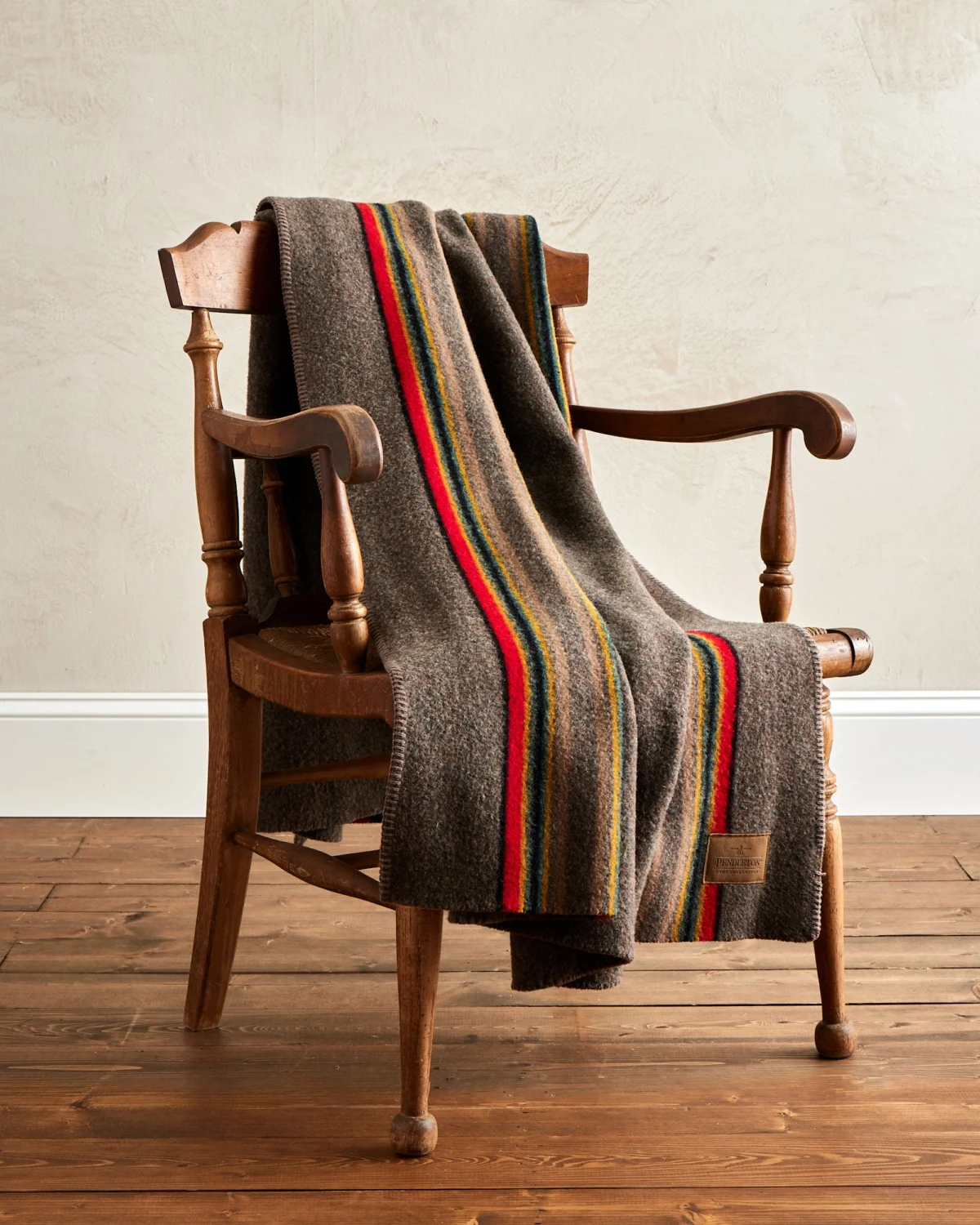
Established in 1909, Pendleton represents a cornerstone of American textile history. Operating two of the remaining historic woolen mills in the United States, the brand maintains rigorous oversight over its production cycle, managing the scouring, dyeing, spinning, weaving, and hand-finishing processes locally. Pendleton’s Oeko-Tex-certified wool and cotton blankets are produced through long-standing relationships with domestic wool growers and indigenous artists. These partnerships ensure that traditional iconography and geometric patterns are honored, while the artisans are compensated equitably. Pricing for Pendleton blankets ranges from $60 to $529, with availability primarily across the United States.
Minna
Operating as a certified B Corporation and queer-led enterprise out of Upstate New York, Minna approaches home textiles through a lens of modern design and social equity. The brand’s collection features minimalist aesthetics and abstract patterns, constructed in small batches using alpaca, Oeko-Tex-certified cotton, and merino wool. Minna maintains direct relationships with artisan cooperatives across Central and South America, explicitly identifying the makers behind each product to promote radical transparency. Minna blankets are priced between $165 and $398 and are available internationally.
April Notes
Specializing in earth-friendly, low-waste home linens, April Notes designs its collections using linen, cotton, and merino wool. To combat the overproduction endemic to the textile industry, the brand operates on a made-to-order manufacturing schedule, thereby minimizing surplus waste. April Notes partners exclusively with a boutique atelier in Lithuania, ensuring fair wages, safe working conditions, and adherence to high European craftsmanship standards. Its textiles are certified free from harmful chemical additives and synthetic dyes, making them naturally hypoallergenic and breathable. Retailing between $149 and $180, April Notes products are distributed widely across North America, Europe, the United Kingdom, Australia, and select global markets.
Avocado
Headquartered in Los Angeles, Avocado is a certified B Corporation widely recognized for its sustainable sleep and bedding systems. The company’s extensive line of throw blankets incorporates Oeko-Tex-certified organic cotton, alpaca wool, cashmere, merino wool, and recycled cotton. Notably, Avocado features an un-dyed alpaca wool throw that utilizes naturally occurring animal fleece colors, bypassing chemical dyeing processes entirely. The remainder of the collection relies strictly on azo-free dyes. Avocado sources its wool through audited supply chains in Northern India, with price points ranging from $39 to $349 within the U.S. market.
Coyuchi
Coyuchi focuses on high-end home goods designed for minimal ecological disruption. Its blanket catalog utilizes organic cotton and wool originating from India, which are subsequently woven within Fair Trade-certified manufacturing facilities in Turkey, Portugal, and Germany. To assist buyers in navigating its diverse inventory—ranging from lightweight gauze throws to heavy thermal weaves—the brand provides a comprehensive digital blanket guide. Coyuchi products retail between $58 and $478 and are available throughout the United States.
Savvy Rest
As a certified B Corporation specializing in organic bedding, Savvy Rest offers an un-dyed, 100% organic cotton blanket line spanning dimensions from standard throws to king sizes. Both the cultivation of the raw cotton and the subsequent weaving processes occur domestically within the United States, keeping the transport carbon footprint comparatively low. Savvy Rest blankets are priced from $89 to $198 and are available to U.S. consumers.
Under the Canopy
Under the Canopy produces intentional, durable home textiles utilizing Oeko-Tex-certified low-impact dyes. Sourcing raw materials globally, the brand uses Argentinean merino wool and Turkish organic cotton, with manufacturing operations distributed across India, Pakistan, Turkey, and China. Built for long-term domestic use, Under the Canopy blankets are priced between $178 and $212 and are available in the U.S. market.
Boll & Branch
Operating as a Fair Trade Certified enterprise, Boll & Branch places heavy emphasis on non-toxic processing methods to ensure safety and tactile softness. Its luxury throws are handcrafted by artisan networks in India, Turkey, and Pakistan, utilizing fully traceable, Oeko-Tex-certified organic cotton and alpaca fiber. Reflecting its premium positioning, Boll & Branch blankets range from $149 to $699, with shipping available in the United States and Canada.
Bearaby
Bearaby is widely recognized for pioneering sustainable weighted blankets designed to alleviate sleep anxiety and promote relaxation. The brand diverges from conventional heavy synthetic beads by using heavier organic and recycled yarns. Its product range incorporates Austrian Tencel, Indian organic cotton, and Oeko-Tex-certified recycled polyester, available in varied weight configurations and structural knit patterns. Bearaby blankets retail between $149 and $309 within the United States.
Cold Picnic
Cold Picnic bridges the gap between functional home goods and fine art through domestically designed, Brooklyn-conceived collections. The brand utilizes Oeko-Tex-certified recycled cotton, working alongside a family-owned U.S. manufacturer for small-batch woven pieces, while its decorative quilts are handcrafted by artisans in India. Buyers should note that certain items incorporate minor blends of synthetic polyester, necessitating a review of material tags prior to purchase. Cold Picnic items range from $130 to $560 and are available globally.
Parachute
As a direct-to-consumer home goods brand, Parachute emphasizes clean, modern design paired with durable construction. Its catalog of throws incorporates Oeko-Tex-certified natural materials, including cotton, alpaca wool, and linen. Parachute partners with audited Fair Trade manufacturers located in Portugal and Turkey to sustain its ethical commitments. Similar to Cold Picnic, selected items may feature trace amounts of polyester blended into the weave. Parachute blankets are priced between $99 and $289, with availability in the U.S. and Canada.
The Citizenry
The Citizenry operates on a direct-to-artisan model, partnering with international craft communities to produce warm and lightweight blankets, quilts, and throws. Its collections are fabricated from ethically sourced, Oeko-Tex-certified materials such as alpaca wool, mohair, linen, and cotton. The brand emphasizes complete supply chain visibility, featuring specific artisan profiles and geographic origin data for each item on its e-commerce platform. Certain designs may include minor polyester content for structural elasticity. Retailing between $189 and $299, The Citizenry ships to customers across the United States and Canada.
Made Trade
Functioning as a curated ethical online marketplace, Made Trade enforces strict verification protocols to ensure that all listed inventory meets high standards of sustainability and transparency. The platform allows consumers to filter searches by specific ethical values—such as domestically manufactured (USA Made), artisan-handcrafted, or Fair Trade certified—as well as by preferred fiber types, including organic cotton, recycled polyester, hemp, linen, and merino or alpaca wool. While the platform offers robust sustainable filters, buyers must selectively navigate the catalog to exclude synthetic options. Prices span widely from $40 to $719, with international shipping available to the U.S., Canada, Australia, the U.K., and major European and Asian territories.