 Reynand Holland
Socks are frequently overlooked as an insignificant component of a daily wardrobe, yet they play a critical role in foot comfort, temperature regulation, and overall dermatological health. When individuals experience persistent foot itching, irritation, or unexplained rashes, the culprit is often not a foot condition, but rather the synthetic fabrics and chemical treatments utilized in mass-market hosiery. As consumer awareness shifts toward holistic wellness, the spotlight is increasingly turning away from conventional petroleum-based garments and toward natural, skin-safe alternatives.
Background and Material Science of Conventional Socks
The mass production of modern socks has historically prioritized cost-efficiency, durability, and vibrant color retention over human health and environmental sustainability. Consequently, the vast majority of commercial socks are manufactured using synthetic fibers such as polyester, nylon, and acrylic, blended with elastane to provide stretch.
Beyond leaving shoes prone to severe odor retention—a result of synthetic materials trapping moisture and bacteria—these plastic-based textiles present hidden health risks. Chemical processing relies heavily on azo-benzene disperse dyes, particularly for vibrant polyester fabrics. According to dermatological and toxicological research, these synthetic dyes function as potent skin sensitizers. When combined with human perspiration, which accelerates the migration of chemical residues from fabric to skin, these compounds can be absorbed transdermally and are classified as potential carcinogens.
The physiological mechanics of feet exacerbate this issue. Feet contain a high concentration of sweat glands, and the friction generated within closed footwear creates an ideal environment for the breakdown of synthetic fibers and the leaching of residual finishing chemicals into the epidermis. For consumers suffering from eczema, contact dermatitis, or general chemical sensitivities, wearing conventional socks can trigger chronic discomfort.
The Evolution of the Non-Toxic Hosiery Market
The market for chemical-safe and non-toxic socks has evolved significantly over the past decade, driven by broader movements in sustainable fashion, supply chain transparency, and stringent chemical management certifications.
Historically, consumers seeking hypoallergenic undergarments faced a stark compromise: sacrificing aesthetic variety for health safety by settling for plain, undyed, medical-grade cotton socks. Today, advancements in natural textile processing and organic farming have allowed brands to merge safety with style. The modern non-toxic hosiery sector offers everything from minimalist, unbleached organic cotton designs to richly patterned merino wool and alpaca hiking socks.
However, achieving complete safety requires navigating complex textile supply chains. While finding 100% natural fiber socks—entirely devoid of synthetic elastane—remains exceptionally rare due to the technical requirements of elasticity, a select group of manufacturers has successfully engineered garments using purely organic materials. For the broader market, transparency regarding synthetic content, chemical treatments, and ethical labor practices has become the gold standard.
Key Material Classifications in Sustainable Hosiery
Navigating the landscape of non-toxic socks requires an understanding of the fibers, dyes, and manufacturing standards that separate genuinely eco-friendly products from corporate greenwashing.
Natural Fibers and Their Properties
Merino and alpaca wool represent top-tier choices for durable, high-performance hosiery. Naturally moisture-wicking and odor-resistant, these animal fibers excel in temperature regulation. To ensure ethical sourcing, consumers look for the Responsible Wool Standard (RWS) certification, which guarantees that wool is harvested without practices like mulesing—a surgical procedure used to prevent parasitic fly strikes in sheep.
Organic cotton, Tencel, linen, and bamboo viscose offer breathable alternatives ideal for everyday wear. Organic cotton cultivation avoids the heavy pesticide loads associated with conventional cotton farming, while Tencel and bamboo viscose utilize closed-loop or certified low-impact processing methods. When synthetic blends are necessary for structural integrity, sustainable brands increasingly incorporate recycled nylon and polyester rather than virgin plastics.
Non-Toxic Dyes and Chemical Management
For individuals sensitive to chemical residues, dye-free options utilizing the natural hues of unbleached cotton or undyed wool provide the ultimate protection. For dyed hosiery, rigorous third-party certifications are essential. Oeko-Tex Standard 100 and bluesign certifications verify that textiles have been tested for over 100 harmful substances, ensuring that dyes, bleaches, and softeners do not contain hazardous chemical loads. Additionally, brands that implement a strict Restricted Substances List (RSL) demonstrate proactive chemical management throughout their manufacturing processes.
Supply Chain Ethics and Environmental Impact
True sustainability extends beyond raw material sourcing to encompass fair labor practices and waste reduction. Certifications such as Fair Trade, Worldwide Responsible Accredited Production (WRAP), and B Corporation status indicate that a brand maintains high ethical standards for workers across its supply chain. Furthermore, sustainable packaging—utilizing compostable bags, recycled paperboard, and Forest Stewardship Council (FSC) certified materials—minimizes the environmental footprint of the final product.
Leading Brands in the Sustainable and Non-Toxic Sock Market
Harvest & Mill
Harvest & Mill specializes in dye-free, organic cotton socks produced entirely within the United States, significantly shortening its supply chain to support domestic agriculture. By utilizing unbleached cotton in its natural states, the brand eliminates chemical dye exposure for sensitive skin. The company reinforces its environmental commitment by recycling or repurposing all textile waste and shipping orders in compostable packaging.
Subset
Formerly known as Knickey, this Brooklyn-based brand produces Fair Trade and Oeko-Tex-certified organic cotton socks sourced from organic farms in India. Operating completely PFAS-free, Subset integrates elastic core components deep within the fabric architecture to prevent direct skin contact with synthetic rubber. While containing approximately 24% synthetic fibers for structural stretch, the hosiery offers a sleek, dress-sock profile suitable for tighter footwear.
Paka
Certified as a B Corporation, Paka manufactures durable, thermal hosiery utilizing a blend of alpaca wool and Tencel. Hand-spun by Peruvian artisans using Oeko-Tex-certified dyes, these socks are engineered for extreme weather conditions and heavy-duty outdoor use. Paka utilizes biodegradable and compostable packaging, though consumers should note that certain designs incorporate up to 50% recycled synthetics to enhance durability.
Arms of Andes
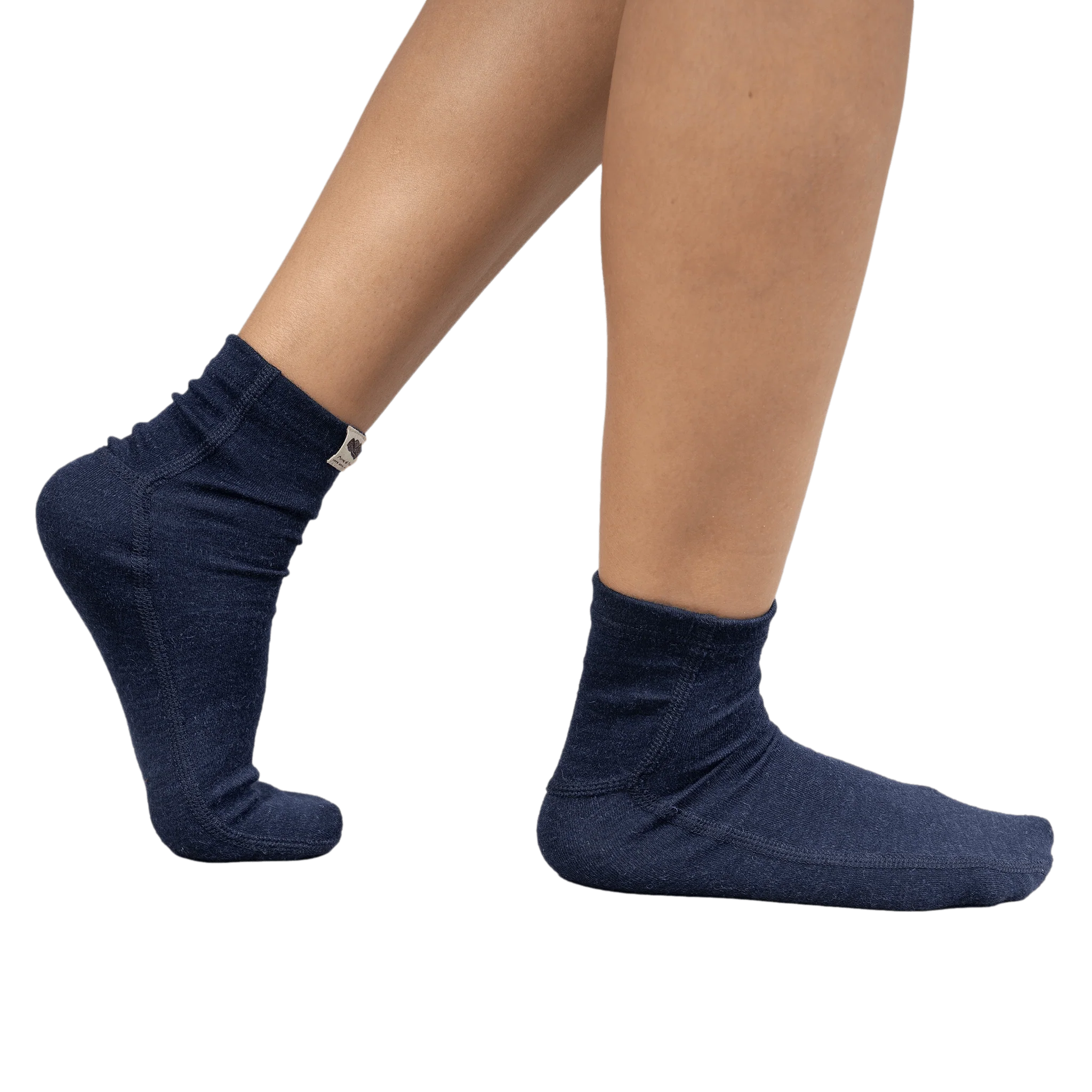
Arms of Andes stands out as a rare pioneer in synthetic-free hosiery, offering slipper socks constructed from 100% free-range alpaca fiber. Sourced, designed, and sewn in close collaboration with Andean co-op farmers, these lightweight yet highly insulated garments are Oeko-Tex certified and delivered in compostable packaging, making them an ideal choice for individuals requiring complete avoidance of synthetic polymers.
Cottonique
Designed specifically for consumers with severe dermatological conditions, Cottonique produces 100% cotton, latex-free, and bleach-free hosiery. Working in collaboration with dermatologists, the brand employs covered seams to eliminate physical friction and sources its organic cotton from India for manufacturing in the Philippines. Cottonique remains one of the few global suppliers of completely synthetic-free, hypoallergenic socks.
Boody
Operating out of Sydney, Australia, Boody utilizes Oeko-Tex-certified organic bamboo viscose, organic cotton, and recycled nylon to produce a versatile range of everyday socks. The brand adheres to a strict code of conduct and partners exclusively with WRAP-certified manufacturing facilities located across China, Vietnam, and India.
Kotn
A certified B Corporation, Kotn maintains direct-trade relationships with local Egyptian cotton farmers, ensuring fair compensation and traceability within its supply chain. Its socks are manufactured using organic cotton and colored with Oeko-Tex-certified dyes, complemented by recycled and recyclable product packaging.
Quinn
Engineered specifically for individuals managing eczema and chronic skin sensitivities, Quinn offers a curated selection of GOTS-certified organic cotton and merino wool socks. Designed in Canada and manufactured in certified European and Sri Lankan facilities, the brand provides both undyed minimalist styles and mid-weight wool options featuring reinforced, cozy heel construction.
Cariloha
As a certified B Corporation, Cariloha specializes in hypoallergenic hosiery derived from bamboo viscose and organic cotton blends. Sourced from Oeko-Tex and Fair Trade-certified suppliers in China, the brand pairs its sustainable textiles with FSC-certified paper packaging to minimize consumer waste.
Dedicated
Dedicated focuses on expressive, patterned hosiery produced from Fair Trade organic cotton. Emphasizing radical transparency, the brand allows consumers to trace the specific manufacturing origin of each product line through WRAP-certified supply chain partners, balancing bold aesthetics with ecological accountability.
Darn Tough
Manufactured in family-owned mills in Vermont, Darn Tough produces high-performance merino wool hosiery backed by rigorous quality standards. Utilizing RWS-certified wool and Oeko-Tex-certified materials, the company enforces a strict restricted substances list. Its operational footprint is further minimized through the use of FSC-certified recycled paper packaging, vegetable-based inks, and compostable shipping materials.
Nisolo
Known primarily for sustainable footwear, certified B Corp Nisolo offers a complementary line of socks manufactured in a family-owned North Carolina mill. Utilizing upcycled cotton, linen, wool, and recycled polyester, the brand provides complete supply chain traceability with a stated commitment to paying living wages throughout its manufacturing network.
Swedish Stockings
Specializing in hosiery, knee-highs, and ankle socks, Swedish Stockings produces Italian-made garments utilizing Oeko-Tex-certified materials, including bamboo viscose, organic cotton, organic wool, and recycled synthetics. The brand offers options ranging from classic everyday wear to specialized supportive wear, addressing a major gap in the sustainable undergarment market.
Implications and Future Outlook for the Hosiery Industry
The growing demand for non-toxic, transparently produced hosiery reflects a broader structural shift in consumer goods. As scientific research continues to highlight the dermatological and environmental hazards associated with petrochemical textiles, regulatory bodies and consumers alike are placing increased scrutiny on supply chain chemistry.
For apparel manufacturers, the transition toward organic fibers, non-toxic dyes, and ethical labor standards is no longer merely a niche market strategy, but a necessary adaptation to evolving consumer expectations. While challenges remain in entirely eliminating synthetic elastane without compromising the functional elasticity expected by modern consumers, innovations in natural textile engineering point toward a future where everyday wardrobe essentials prioritize human health just as much as style and durability.