
 Ali Ikhwan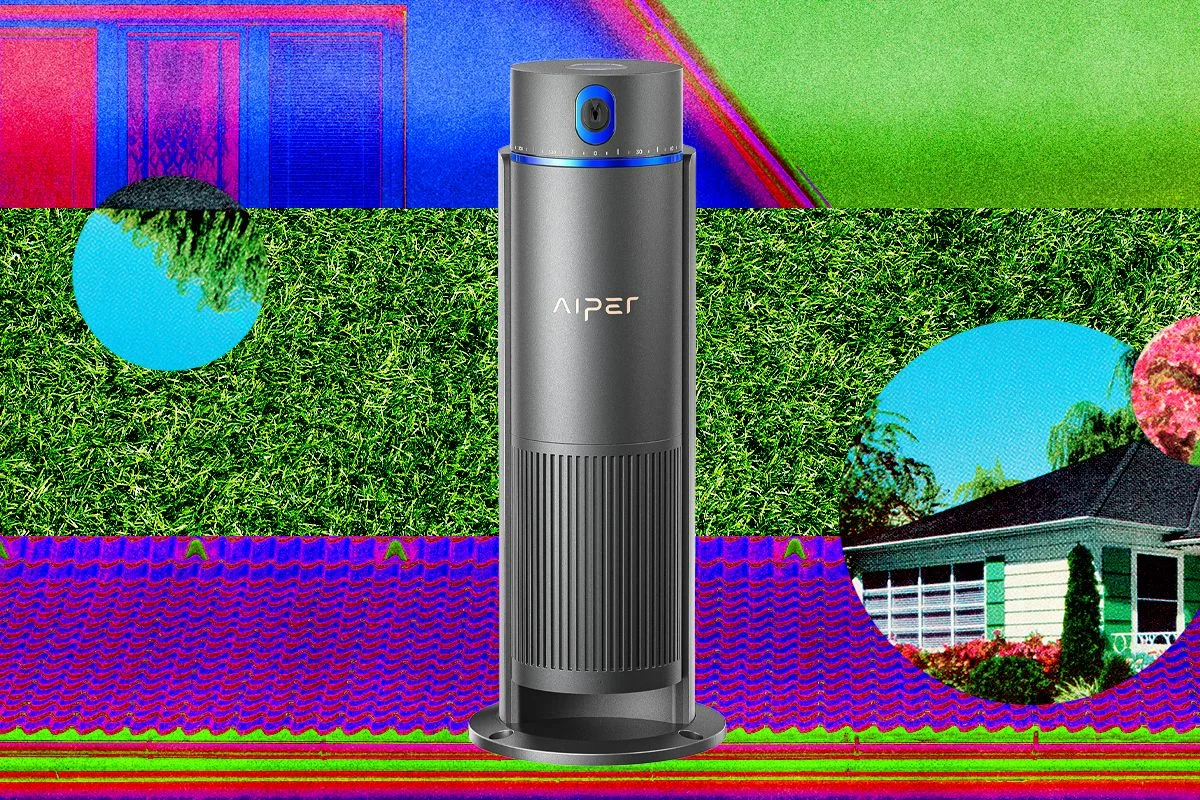
The landscape of residential yard maintenance is undergoing a significant technological transformation, moving away from static, timer-based systems toward intelligent, data-driven solutions. At the forefront of this shift is the Aiper IrriSense 2, a smart irrigation system designed to provide precision watering through advanced app-based mapping and volumetric control. By replacing traditional oscillating sprinklers with a system that understands the specific geometry of a property, the IrriSense 2 aims to maximize water efficiency while maintaining the health of diverse lawn layouts. The device represents a growing category of "smart yard" tools that leverage mobile connectivity and remote-control hardware to solve the age-old problem of overwatering and uneven distribution.
The Evolution of Smart Irrigation and the Mapping Process
For decades, homeowners relied on mechanical timers or simple smart plugs to manage their watering schedules. These systems, while functional, lacked the ability to account for the unique shapes of modern landscaping, often leading to water being wasted on sidewalks, driveways, or fences. The Aiper IrriSense 2 addresses this by introducing "Area Mode," a feature that requires the user to digitally define the boundaries of their watering zone. This process mirrors the setup of high-end robotic vacuum cleaners, utilizing a combination of hardware feedback and software visualization.
To initiate the setup, users utilize the dedicated Aiper smartphone application to engage the mapping mode. The process is tactile and interactive: as the sprinkler begins to emit water, the user employs a remote-control interface within the app to adjust the water pressure. By increasing or decreasing the flow, the user aims the stream at the precise edge of the yard. Once the water reaches the desired boundary—carefully avoiding obstacles like fences or structures—the user "drops a pin" in the app to record that specific coordinate. The nozzle then rotates a few degrees, and the user repeats the process. This cycle continues through a full 360-degree rotation until a digital perimeter of the entire yard is established.
Technical Specifications and Coverage Capacity
The IrriSense 2 is engineered to handle substantial residential spaces, boasting a maximum supported area of 4,800 square feet. This coverage is achieved through a high-pressure nozzle system capable of projecting a water stream up to 39 feet from the base unit. This range places the device in direct competition with professional-grade inground systems, but with the added benefit of being a portable, "plug-and-play" solution.
The hardware utilizes a rotary mechanism that allows for infinite adjustments within its circular path. This flexibility is crucial for properties with irregular shapes, such as L-shaped lawns or yards with integrated flower beds. By allowing the user to set unique pressure levels for every few degrees of rotation, the system ensures that the water reach is customized for every segment of the circle, theoretically eliminating the "dead zones" common in traditional hardware.

Software Integration and User Experience Challenges
Central to the IrriSense 2 experience is the Aiper mobile app, which provides a real-time visual representation of the mapping process. As pins are dropped, the software connects the dots to form a polygonal map of the watering zone. While the interface is largely intuitive, technical evaluations have noted a persistent challenge in the "closing" of the 360-degree circuit.
In several test scenarios, the software struggled to perfectly align the final coordinate with the starting point, often leaving a "tiny sliver" of unmapped area. This gap, while small in terms of square footage, represents a software-side limitation in the geometric calculation of the watering zone. Despite manual adjustments and "finagling" by users, the system sometimes fails to recognize the completion of a perfect circle, highlighting the complexities of translating physical hardware positioning into a digital map.
Volumetric Irrigation: Shifting from Time to Depth
One of the most significant departures from traditional irrigation logic found in the IrriSense 2 is its use of "water consumption limits" rather than run-time durations. In most traditional systems, a user sets a sprinkler to run for 20 or 30 minutes. However, because water pressure fluctuates and nozzle efficiency varies, it is difficult to know exactly how much water the soil has received.
The Aiper system allows users to define irrigation in terms of inches of water applied to the soil. This volumetric approach is more aligned with agricultural best practices, where moisture depth is the primary metric for plant health. While it remains difficult for the average consumer to verify the pinpoint accuracy of these measurements without specialized rain gauges, qualitative testing suggests the device’s estimates are consistent with the expected saturation levels. This shift toward depth-based watering encourages more sustainable consumption patterns, as it prevents the common mistake of running sprinklers for excessive periods during high-pressure cycles.
Mechanical Execution and Pressure Modulation
In operational "Area Mode," the IrriSense 2 delivers water through a rotating jet. The device moves clockwise through its programmed 360-degree map, adjusting pressure dynamically to match the distance of the pins dropped during setup. Once it completes a full rotation, it reverses direction, moving counter-clockwise to ensure even coverage. This cycle repeats until the user-defined irrigation depth (in inches) has been achieved.
A critical observation of the system’s mechanics involves the nature of the spray. While the manufacturer describes the output as a "gentle mist," the reality of reaching a 39-foot range requires a high-velocity jet. This creates a physics-based challenge common to all rotary sprinklers: the "terminus effect." Water tends to accumulate more heavily at the furthest point of the spray’s reach than in the area immediately surrounding the sprinkler head.

To mitigate this, Aiper has programmed the IrriSense 2 to perform pressure modulation. The system does not maintain a constant high-pressure blast. Instead, as the rotations continue, the device gradually reduces the pressure. The final passes of a watering cycle are often little more than a trickle, targeting the soil just a few inches away from the unit. This multi-layered approach aims to balance the distribution, though users are cautioned that canceling a watering run early will result in the outer edges of the yard being saturated while the center remains dry.
Market Context and the Push for Conservation
The release of the IrriSense 2 comes at a time when water conservation is becoming a legal and ethical priority for homeowners, particularly in the Western United States and other drought-prone regions. According to data from the Environmental Protection Agency (EPA), residential outdoor water use accounts for nearly 9 billion gallons of water per day in the U.S. alone. Experts estimate that as much as 50% of this water is wasted due to evaporation, wind, or runoff caused by inefficient irrigation methods.
The smart irrigation market, valued at approximately $1.5 billion in 2023, is expected to grow at a compound annual growth rate (CAGR) of over 15% through 2030. Products like the IrriSense 2 are key drivers of this growth. By providing users with granular control over where every drop of water lands, these systems offer a pathway to reducing utility costs and environmental impact without sacrificing the aesthetic appeal of a well-maintained lawn.
Broader Implications for the Future of Landscaping
The Aiper IrriSense 2 is more than a simple gardening tool; it is a manifestation of the "Internet of Things" (IoT) moving into the outdoor space. The integration of remote control, real-time mapping, and volumetric sensors suggests a future where lawn care is entirely automated and data-dependent.
However, the "last-mile" issues—such as the software glitch in closing the 360-degree map—indicate that the transition from mechanical to digital landscaping still faces hurdles. For smart irrigation to become the standard, manufacturers must ensure that the software is as robust as the hardware. The discrepancy between the "mist" marketing and the "jet" reality also highlights a need for clearer consumer education regarding the physics of water distribution.
As municipalities continue to implement stricter watering restrictions, the ability of a device to prove its efficiency through precise mapping will become its most valuable feature. The Aiper IrriSense 2, despite its minor software idiosyncrasies, represents a significant step toward a more responsible and technologically sophisticated approach to residential water management. For the tech-savvy homeowner, it offers a glimpse into a future where the garden hose is replaced by a digital perimeter, and the guesswork of lawn care is replaced by the precision of a pin-drop.







