Cintya Tara Annisa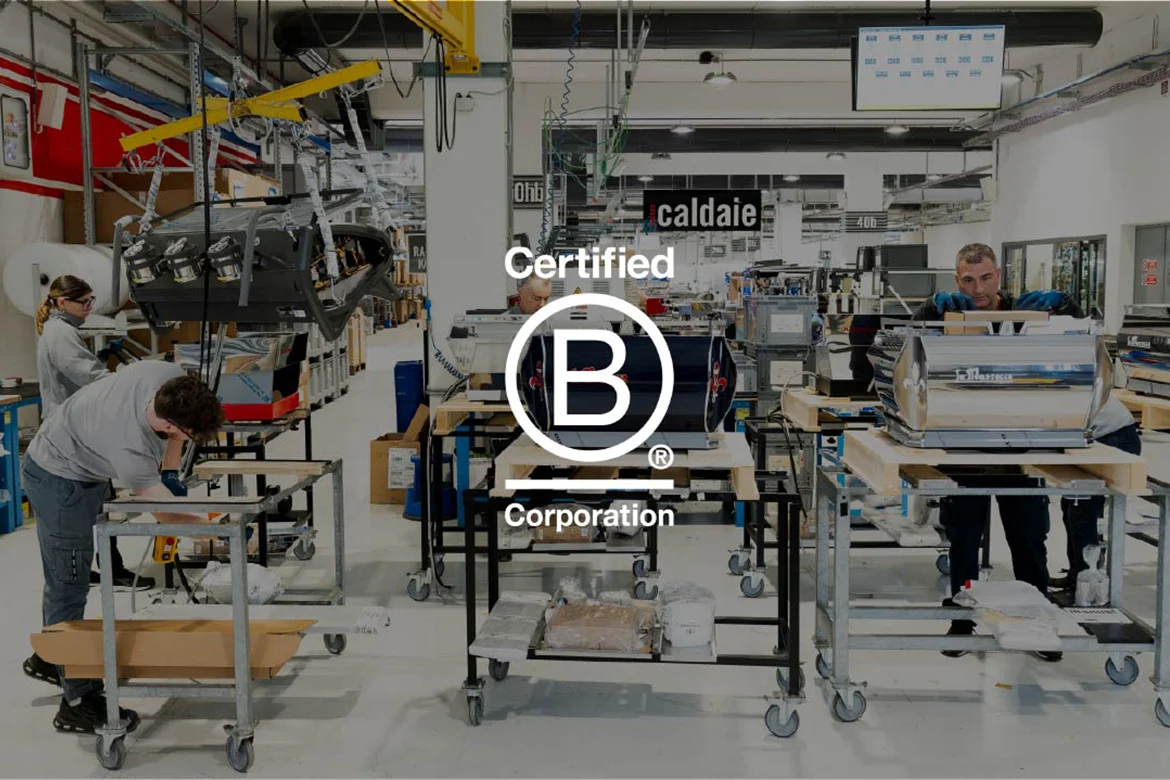
The global coffee industry reached a significant sustainability milestone recently as La Marzocco, the storied Italian manufacturer of handmade espresso machines, officially announced its certification as a B Corporation. This achievement marks a pivotal shift in the coffee equipment sector, as La Marzocco becomes the first major espresso machine manufacturer to join the ranks of businesses meeting the highest verified standards of social and environmental performance, transparency, and accountability. While the coffee industry has seen a steady rise in B Corp certifications among roasting and importing entities, the inclusion of a heavy-machinery manufacturer signifies a new level of maturity in the industry’s approach to the "triple bottom line"—prioritizing people and the planet alongside profit.
The Evolution of B Corp Certification in the Coffee Sector
The B Corp movement, managed by the non-profit B Lab, has become a gold standard for ethical business. To achieve certification, a company must undergo a rigorous B Impact Assessment (BIA), which evaluates operations across five core categories: Governance, Workers, Community, Environment, and Customers. A minimum score of 80 points is required to qualify, a threshold that many companies fail to meet on their first attempt due to the depth of the audit.
In the specialty coffee world, B Corp status has traditionally been the domain of roasters and green coffee importers. Notable names such as Onyx Coffee Lab, Coffee Collective, Prolog, Olympia Coffee, Cloud Picker, and Equator Coffees have paved the way, using the certification to validate their direct-trade models and carbon-offsetting initiatives. Importers like Cafe Imports and Caravela have also utilized the framework to bring transparency to the complex global supply chain.
A recent standout in this category is Massachusetts-based Dean’s Beans Coffee, which recently secured a B Corp score of 168.5. This figure represents the highest score ever recorded by a coffee company, setting a high bar for environmental stewardship and social equity. However, until La Marzocco’s certification, the hardware side of the industry—the manufacturers responsible for the energy-intensive production of steel, copper, and electronic components—remained absent from the B Corp directory.
Analyzing La Marzocco’s Performance and Impact Score
La Marzocco earned its certification with a total B Impact Assessment score of 84.4. While this sits comfortably above the 80-point qualification threshold, the breakdown of the score provides insight into the company’s specific operational strengths. According to the B Lab data, La Marzocco’s highest marks were found in the "Workers" category (27.2 points) and the "Environment" category (19.8 points).
The high score in the Workers category reflects the company’s long-standing commitment to its workforce at its headquarters in Scarperia, near Florence, Italy. As a manufacturer of premium, artisanal equipment, La Marzocco relies heavily on skilled labor and specialized craftsmanship. The B Corp assessment evaluates factors such as wage equity, health and safety protocols, employee benefits, and opportunities for professional development. For a manufacturer, maintaining high standards in these areas is often more capital-intensive than for service-oriented firms, making the 27.2 score particularly noteworthy.
In the Environment category, the score of 19.8 highlights the company’s efforts to mitigate the ecological footprint of industrial production. Manufacturing espresso machines involves significant energy consumption, the sourcing of raw metals, and complex logistics for international distribution. La Marzocco’s inclusion in the B Corp community suggests that the company has implemented robust systems for waste reduction, energy efficiency in its factory, and perhaps most importantly, a sustainable approach to the lifecycle of its products.
Leadership Vision and the Interdependence of Technology
The transition to B Corp status was overseen by La Marzocco CEO Lorenzo Carboni, who emphasized that the certification is not merely an award but a framework for the company’s future operations. In a statement following the announcement, Carboni noted that the company has always pursued excellence, and the B Corp framework provides the ideal environment in which to operate. He further elaborated that the commitment across the five Impact Areas reflects a deep-seated interdependence between the company’s technology, its people, and the broader environment.
This philosophy of "interdependence" is a core tenet of the B Corp movement. It suggests that a company’s success cannot be isolated from the well-being of the society in which it operates or the health of the planet. For La Marzocco, this means that the precision engineering of a Linea PB or a GS3 is inextricably linked to the ethical sourcing of its components and the fair treatment of the technicians who assemble them.

A Chronology of Sustainability Initiatives
La Marzocco’s path to B Corp certification did not happen in a vacuum; it is the culmination of several years of incremental sustainability efforts. The company has historically been a leader in the "Songwa Estates" project, a non-profit initiative in Tanzania aimed at educating coffee professionals about the realities of coffee farming while investing in local community infrastructure.
In recent years, the manufacturer has also focused on technical innovations to reduce the energy consumption of its machines. Espresso machines are notorious for their high energy draw, as they must maintain stable water temperatures over long periods. La Marzocco’s development of insulated boilers and "eco-mode" software has been a direct response to the growing demand for more efficient cafe operations.
The timeline of their commitment reached a new peak with the announcement of a decarbonization pathway. The company has publicly committed to achieving net-zero greenhouse gas emissions across its entire value chain by 2050. This goal includes not only the emissions from its own factories (Scope 1 and 2) but also the indirect emissions from its supply chain and the electricity used by its machines in cafes around the world (Scope 3).
Broader Implications for the Coffee Equipment Industry
The certification of La Marzocco is expected to have a ripple effect across the coffee equipment manufacturing sector. Historically, manufacturers have focused on performance, durability, and aesthetics. However, as specialty coffee consumers and cafe owners become more conscious of their environmental footprint, the demand for ethically produced hardware is rising.
By becoming the 261st coffee-related company to achieve B Corp status—and the first in the hardware category—La Marzocco has established a competitive advantage that goes beyond technical specifications. For cafe owners who are themselves B Corp certified or who prioritize ESG (Environmental, Social, and Governance) criteria, the ability to source equipment from a certified manufacturer simplifies their own compliance and reinforces their brand values.
Furthermore, this move puts pressure on other major espresso machine manufacturers in Italy and abroad. Industry giants such as Simonelli Group, Cimbali Group, and Breville (which owns Baratza and Lelit) may now face increased scrutiny regarding their own social and environmental disclosures. If La Marzocco can prove that the rigorous requirements of B Corp certification are compatible with the high-precision demands of Italian manufacturing, it sets a new baseline for the industry.
The Challenges of Manufacturing and the Road to Net-Zero
The commitment to net-zero by 2050 is perhaps the most ambitious aspect of La Marzocco’s post-certification roadmap. For a manufacturer, the "value chain" encompasses everything from the mining of ores used to create stainless steel to the end-of-life disposal of a machine.
To reach this goal, industry analysts suggest that La Marzocco will need to focus on several key areas:
- Circular Economy: Implementing programs for refurbishing and recycling older machines to prevent them from ending up in landfills.
- Renewable Energy: Transitioning the Scarperia factory and global offices to 100% renewable power sources.
- Supply Chain Transparency: Working with suppliers to ensure that the raw materials used in boilers, frames, and electronics are sourced with minimal environmental impact.
- Energy Efficiency: Continuing to innovate in boiler design and thermal stability to reduce the kilowatt-hour consumption of machines during their 10-to-15-year operational lifespan.
Conclusion
La Marzocco’s achievement of B Corp certification represents a landmark moment for the global coffee trade. It bridges the gap between the ethical aspirations of coffee roasters and the industrial reality of the equipment they use. With a score of 84.4, the Italian manufacturer has demonstrated that even complex, energy-intensive industrial processes can be aligned with rigorous social and environmental standards.
As the company looks toward its 2050 net-zero goal, the B Corp framework will serve as a roadmap for continuous improvement. For the broader industry, La Marzocco has signaled that the future of coffee is not just about the quality of the brew, but the integrity of the machines that make it possible. This certification ensures that the company will remain under the oversight of B Lab, requiring recertification every three years and mandating a level of transparency that was previously rare in the world of professional espresso equipment manufacturing.