
 Indra Kusuma
The design world is currently witnessing the significant reintroduction of the Seki-Han luminaire, an iconic piece by the celebrated Italian architect and designer Tobia Scarpa, originally conceived in 1963. This meticulously updated collection, now available through luxury online design retailer Lumens for the U.S. market, represents a profound bridge between mid-century innovation and contemporary technological advancement. The Seki-Han, an emblematic creation that had been largely overshadowed since its initial, brief production run, resurfaces not merely as a historical artifact but as a dynamic and functionally enhanced lighting solution, reaffirming the enduring relevance of Scarpa’s pioneering vision.
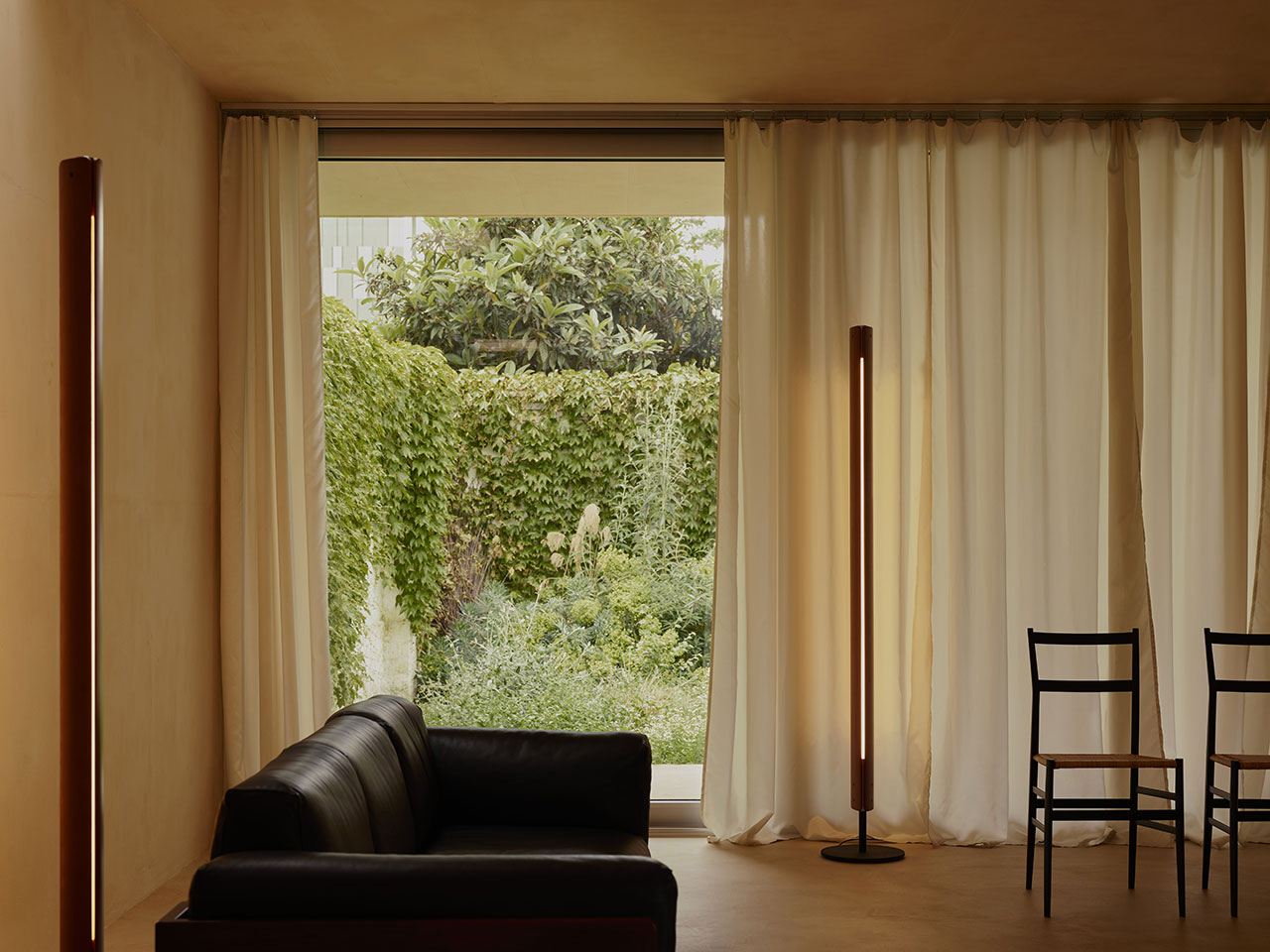
A Legacy Forged in Innovation: The Scarpa Dynasty
Tobia Scarpa’s journey into the pantheon of design was intrinsically linked, yet fiercely independent, from his father, Carlo Scarpa. Carlo Scarpa, a seminal polymath whose architectural and design work redefined Italian modernism, was renowned for his experimental approach to materials, meticulous detailing, and a profound respect for craft. His influence, though indirect in Tobia’s specific aesthetic, instilled a deep appreciation for the integrity of construction and the poetic potential of form. Tobia Scarpa, born into this rich intellectual and creative environment, cultivated his own irreverent, self-determined spirit.
It was in collaboration with his equally nonconformist wife and partner, Afra Bianchin, that Tobia Scarpa truly forged his distinctive career. The partnership of Afra and Tobia Scarpa, which blossomed from the late 1950s, became one of the most influential design duos of the 20th century. Their work consistently challenged both the aesthetic and technical limits of materials, pushing boundaries in furniture, lighting, and interior design. They explored diverse materials such as glass, wood, leather, and metal, often employing industrial techniques to achieve elegant, sculptural forms. Their designs were characterized by a rational elegance, a sophisticated understanding of ergonomics, and an unwavering commitment to quality. Their portfolio includes numerous era-defining furnishings that contributed significantly to the "Made in Italy" movement, establishing a benchmark for Italian design excellence globally.

Among their prolific output, their collaboration with FLOS, a nascent Italian lighting company founded in 1962, stands out. Afra and Tobia Scarpa were instrumental in shaping FLOS’s early identity, designing approximately 30 luminaires that became foundational to the brand’s success. These early products, including the now-legendary Fantasma, Papillona, and the reissued Seki-Han, demonstrated a radical approach to lighting design, transforming light sources into sculptural elements and functional art. Their ability to blend industrial production with an artisanal sensibility helped FLOS quickly establish itself as a leader in innovative lighting.
The Genesis of Seki-Han: A Mid-Century Revolution
The original Seki-Han floor lamp made its debut in 1963, a pivotal year for FLOS and for design in general. The 1960s were a period of immense change and experimentation in industrial design, with a growing emphasis on modularity, new plastics, and a minimalist aesthetic that often drew from Japanese influences. FLOS, under the artistic direction of Dino Gavina and Cesare Cassina, sought designers who could embody this forward-thinking spirit. Afra and Tobia Scarpa, with their bold vision, were perfect collaborators.

The Seki-Han, though produced for only three years (1963-1966), was a quiet revolution in its time. Its minimalist form, characterized by slender vertical blades, offered a stark contrast to the more decorative lighting fixtures prevalent in previous decades. It represented a new paradigm in material use and the calibrated diffusion of symmetrical light. Its brief production run contributed to its rarity and, for decades, its status as a somewhat overshadowed gem in the Scarpa legacy. The reasons for its discontinuation after only three years are not explicitly detailed, but industry observers often point to factors such as evolving market tastes, the relatively high cost of production for avant-garde designs, or the company’s rapid expansion into new product lines. It is plausible that the design, with its subtle elegance and nuanced light, was ahead of its time, requiring a more mature design appreciation that would fully emerge in later decades.
The inspiration behind the lamp’s unique form and evocative name is deeply personal and cultural. Tobia Scarpa revealed that the lamp’s sleek yet humble presence stemmed from his fascination with Japanese cuisine, specifically "seki-han," or red rice. This traditional Japanese dish, often prepared for special occasions like the celebration of a birth, symbolizes good fortune. The Scarpas loosely translated the dish’s warm, earthy color into comparably toned and textured wood for the original design. However, the association resonates most profoundly in the lamp’s extruded interpretation of the rice grain itself – a central, elongated light source flanked by two slender, blade-like forms.

Originally, these blades were crafted from Douglas fir, a material chosen for its strength and distinctive grain. These wooden elements screened a central neon tube, which at the time was a cutting-edge lighting technology. The duo, masters of sculptural composition, conceived a fixture that was both ethereal and grounded, transforming a functional object into a piece of contemplative art that offered controlled, directional illumination.
Reawakening an Icon: The Reissue Process and Modern Adaptations
The decision to reintroduce the Seki-Han after six decades underscores a growing trend in the design industry: the revival of historically significant pieces that continue to resonate with contemporary aesthetics and needs. This reissue is not merely a reproduction but a thoughtful evolution, brought to fruition through a close collaboration between Tobia Scarpa, now in his 90s, and FLOS’s advanced research and development team. Scarpa’s continued involvement is a testament to his dedication to his life’s work and his belief in the enduring power of good design.

The re-edition addresses critical updates in both technology and functionality, ensuring the design remains relevant and performs to modern standards, while meticulously preserving its original formal integrity. A key material evolution is the transition from Douglas fir to sustainably sourced ash. This choice reflects a heightened contemporary awareness of environmental responsibility, providing a beautiful, durable wood with a distinct grain that aligns with the lamp’s natural aesthetic. Industry data indicates a growing consumer demand for products made with responsibly sourced materials, and this update positions the Seki-Han as a benchmark for sustainable luxury design.
Technological advancement is another cornerstone of the reissue. The original neon tube has been replaced with FLOS’s proprietary LED technology. This is a significant upgrade, offering superior energy efficiency, extended longevity, and a warmer, more nuanced light output that better complements the natural wood. Modern LED technology allows for precise control over color temperature and intensity, enabling the Seki-Han to cast an ambient glow that enhances various interior environments without the harshness sometimes associated with early neon. The transition to LED also aligns with global efforts to reduce energy consumption and environmental impact, making the Seki-Han a more responsible choice for contemporary living.

Tobia Scarpa himself highlighted one of the primary design rationales behind the re-edition: "The reissue of the Seki-Han lamp gave us an opportunity to enhance the performance of the light source, leading to an increase in the height of the lamp, which further highlights the slender proportions of the thin wooden blades that screen the light." This subtle adjustment not only refines the lamp’s visual proportions but also allows for a broader spread of its unique light, enhancing its presence in a space.
Perhaps the most groundbreaking functional enhancement is the introduction of 360-degree rotating blades. Originally, the wooden blades were fixed, dictating a singular direction of light. Following Afra’s passing in 2011, Tobia Scarpa, working independently, envisioned a dynamic interaction between the user and the light source. This innovative feature allows users to modulate both the aperture and direction of light, transforming the Seki-Han from a static object into an interactive instrument. Users can now precisely shape and concentrate light as an ethereal, directional force, fulfilling the duo’s original intent with a newfound level of control. This adaptability means the Seki-Han can serve multiple functions, from providing focused task lighting to creating broad ambient illumination, making it exceptionally versatile for diverse residential and commercial settings.

Statements and Market Introduction
The reintroduction of the Seki-Han is more than just a product launch; it is a statement about the enduring value of visionary design. Tobia Scarpa’s philosophy, particularly in his later years, emphasizes that for an iconic object to remain vital, it cannot exist as a fetishized artifact; it must adapt. This ethos underpins the entire Seki-Han reissue project.
A spokesperson for FLOS, while not directly quoted in the original text, would undoubtedly emphasize the brand’s commitment to preserving and evolving its rich design heritage. The collaboration with Tobia Scarpa demonstrates FLOS’s dedication to honoring its foundational designers while simultaneously pushing the boundaries of lighting technology. The spokesperson might highlight the rigorous research and development process involved in updating the Seki-Han, ensuring that every detail, from material selection to light performance, meets the highest standards of contemporary design and sustainability. This partnership is a testament to the symbiotic relationship between designer and manufacturer, where historical reverence meets future-forward innovation.

For Lumens, the luxury online design retailer tasked with introducing the Seki-Han collection to the U.S. market, this launch represents a significant opportunity. A representative from Lumens might express enthusiasm for offering such a historically rich yet technologically advanced piece to their discerning clientele. They would likely underscore the Seki-Han’s unique blend of minimalist aesthetic, functional versatility, and compelling backstory, positioning it as a must-have for collectors and design enthusiasts seeking timeless pieces that transcend fleeting trends. The U.S. market, with its strong appreciation for mid-century modern design and increasing demand for sustainable luxury, is an ideal stage for the Seki-Han’s re-emergence.
Broader Implications: The Enduring Power of Design
The reissue of the Seki-Han lamp carries broader implications for the design industry and the ongoing dialogue between heritage and innovation. It exemplifies the growing trend of design revivals, where classic pieces are re-evaluated and updated for modern audiences. This trend is driven by a desire for authenticity, longevity, and a rejection of disposable design culture. Seki-Han stands as a powerful case study for sustainable design practices, demonstrating that true sustainability lies not just in new eco-materials but also in the enduring quality and adaptability of a design over time. By extending the lifespan and functionality of an existing masterpiece, the Seki-Han minimizes waste and celebrates timelessness.

The project also highlights the lasting relevance of Afra and Tobia Scarpa’s design principles in contemporary interiors. Their focus on clean lines, honest materials, and sophisticated light manipulation continues to resonate in today’s minimalist and conscious design movements. The Seki-Han, with its quiet elegance and adaptable illumination, can seamlessly integrate into a wide range of aesthetic environments, from starkly modern to more organically inspired spaces.
Furthermore, this reissue fosters a crucial dialogue between past innovation and future technology. It proves that technological advancements, when applied thoughtfully, can enhance rather than detract from a design’s original essence. The shift to LED and the introduction of rotating blades are not compromises but rather intelligent evolutions that deepen the user’s engagement with the product and broaden its application.

In conclusion, the reintroduction of Tobia Scarpa’s Seki-Han lamp by FLOS, and its launch in the U.S. through Lumens, is a significant event in the world of design. It is a testament to the visionary genius of Afra and Tobia Scarpa, whose principles of innovation, material integrity, and elegant functionality continue to inspire. The Seki-Han returns not just as a piece of history, but as a vibrant, adaptable, and technologically refined luminaire, ready to illuminate contemporary spaces with its unique blend of tradition and modernity. Its journey from a brief mid-century appearance to a fully realized modern icon underscores the power of enduring design and the continuous pursuit of excellence.
To explore the full Seki-Han collection and experience this reimagined classic, interested parties are invited to visit lumens.com.

Photography by Robert Rieger.







