
 Indra Kusuma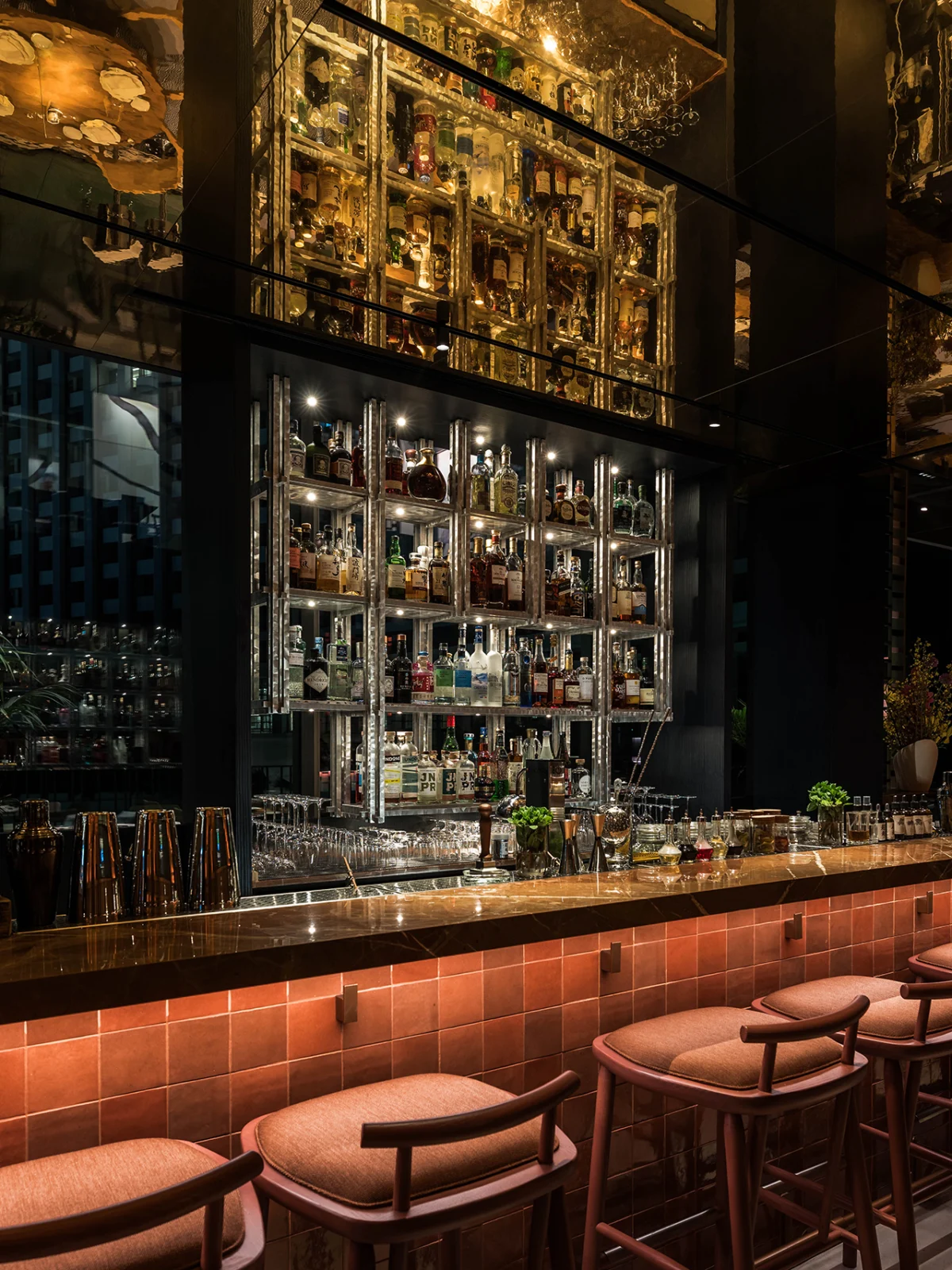
The newly unveiled Onuki Restaurant, nestled within Athens’ innovative Ilisian destination, represents a profound exploration of cultural synthesis, brought to life by the internationally acclaimed design firm Yabu Pushelberg. While Japan and Greece might appear disparate at first glance, the Toronto and New York-based practice, renowned for its four-decade legacy of distilling and reinterpreting distinctive cultural touchpoints, has meticulously crafted a venue that underscores the transcendent connections between these two ancient civilizations. This comprehensive fit-out at Ilisian transcends mere aesthetics, celebrating a shared appreciation for meticulously crafted cuisine and thoughtfully orchestrated dining experiences, characteristic of both nations.
Yabu Pushelberg’s Legacy of Cultural Interpretation
For over forty years, Yabu Pushelberg has distinguished itself as a global leader in design, adept at navigating diverse typologies from grand residences and luxury hotels to bespoke furniture. Their hallmark lies in an unparalleled ability to research, understand, and then subtly blend the essence of various cultures into coherent, contemporary narratives. This design philosophy is particularly evident in projects that demand a sensitive approach to historical context and cultural nuance. Their portfolio, which includes iconic establishments like the Four Seasons, Park Hyatt, and Bergdorf Goodman, consistently demonstrates a sophisticated interplay of materials, light, and form, always with an underlying respect for the genius loci. The firm’s co-founders, George Yabu and Glenn Pushelberg, have built a reputation for creating spaces that are not only visually stunning but also deeply resonant, fostering a sense of place and belonging. This extensive experience positioned them uniquely to undertake the ambitious task of designing Onuki, where the subtle yet profound similarities between Japan and Greece could be artfully expressed.
Athens’ Ilisian: A New Urban Oasis
The choice of location for Onuki Restaurant, within the fresh-format Ilisian destination, is integral to its conceptual success. While specific details about the Ilisian project are still emerging, it is understood to be a significant urban development poised to become a vibrant "oasis-within-the-city." Such developments typically aim to redefine urban living and leisure, offering a curated environment that combines hospitality, retail, and possibly residential elements. For Athens, a city steeped in millennia of history, the emergence of modern, sophisticated hubs like Ilisian signals a dynamic evolution, balancing its ancient heritage with contemporary aspirations. The integration of Onuki within such a context implies a vision for a destination that offers refined experiences, attracting both discerning locals and international visitors seeking cultural immersion and culinary excellence. The Ilisian provides a canvas for Onuki to present its unique fusion concept within a setting that champions innovation and high-quality design.
Bridging Ancient Worlds: Japan and Greece
The seemingly unlikely pairing of Japanese and Greek cultures forms the conceptual bedrock of Onuki. Yet, upon closer examination, Yabu Pushelberg has identified profound parallels that transcend superficial differences. Both cultures boast exceptionally rich and enduring histories, marked by philosophical depth, artistic sophistication, and a reverence for craft. In Japan, the aesthetic principles of wabi-sabi—finding beauty in imperfection and transience—and shibui—subtle, unobtrusive beauty—have shaped its art, architecture, and daily life. Similarly, ancient Greece pioneered ideals of harmony, proportion, and enduring beauty in its classical architecture, sculpture, and philosophy.
Beyond aesthetics, both cultures share a deep-seated tradition of hospitality. The Japanese concept of omotenashi emphasizes anticipating a guest’s needs without being intrusive, offering heartfelt service from the depths of one’s heart. Greece’s philoxenia, literally "love of strangers," is a foundational cultural value, welcoming visitors with generosity and warmth. These shared values extend to their culinary traditions, where respect for ingredients, meticulous preparation, and the communal experience of dining are paramount. Yabu Pushelberg’s design for Onuki endeavors to coalesce these abstract yet powerful cultural threads, creating an environment that feels simultaneously familiar and novel, celebrating a shared humanistic approach to life’s finer pleasures.
An Architectural Narrative: Light, Shadow, and Form
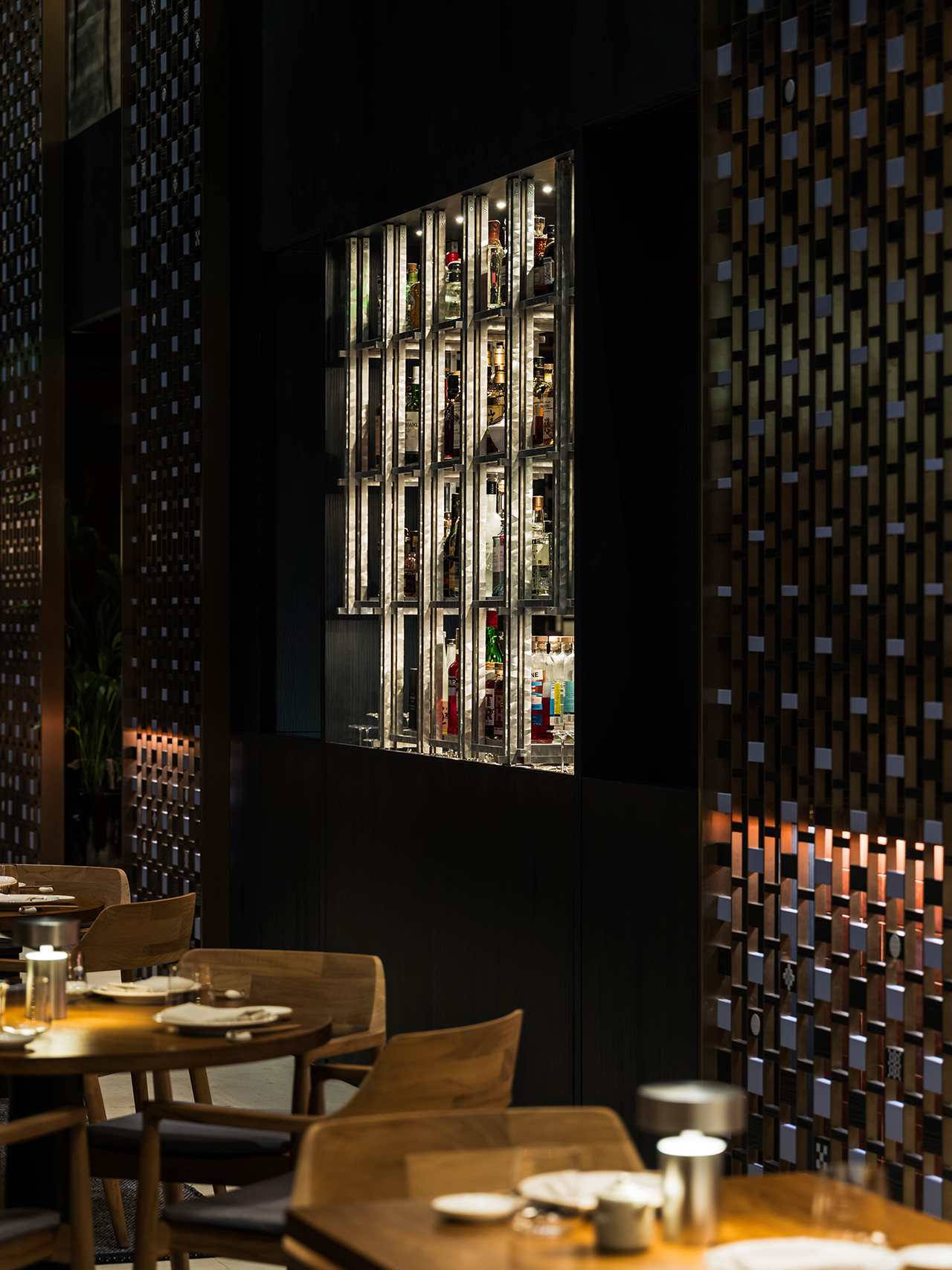
The interior design of Onuki is a masterclass in spatial storytelling, meticulously orchestrated to reflect the dual cultural narrative. George Yabu articulates this intention: “Within the realm of Japanese cuisine and refined hospitality, Onuki implies integrity, consistency of craft, and a depth of precision. These attributes carry through the design, the food, and the service, all working in unison. The precision inherent in the chef’s creations and the subtly attentive service is reinforced by an interior that’s crafted with the same level of intention.”
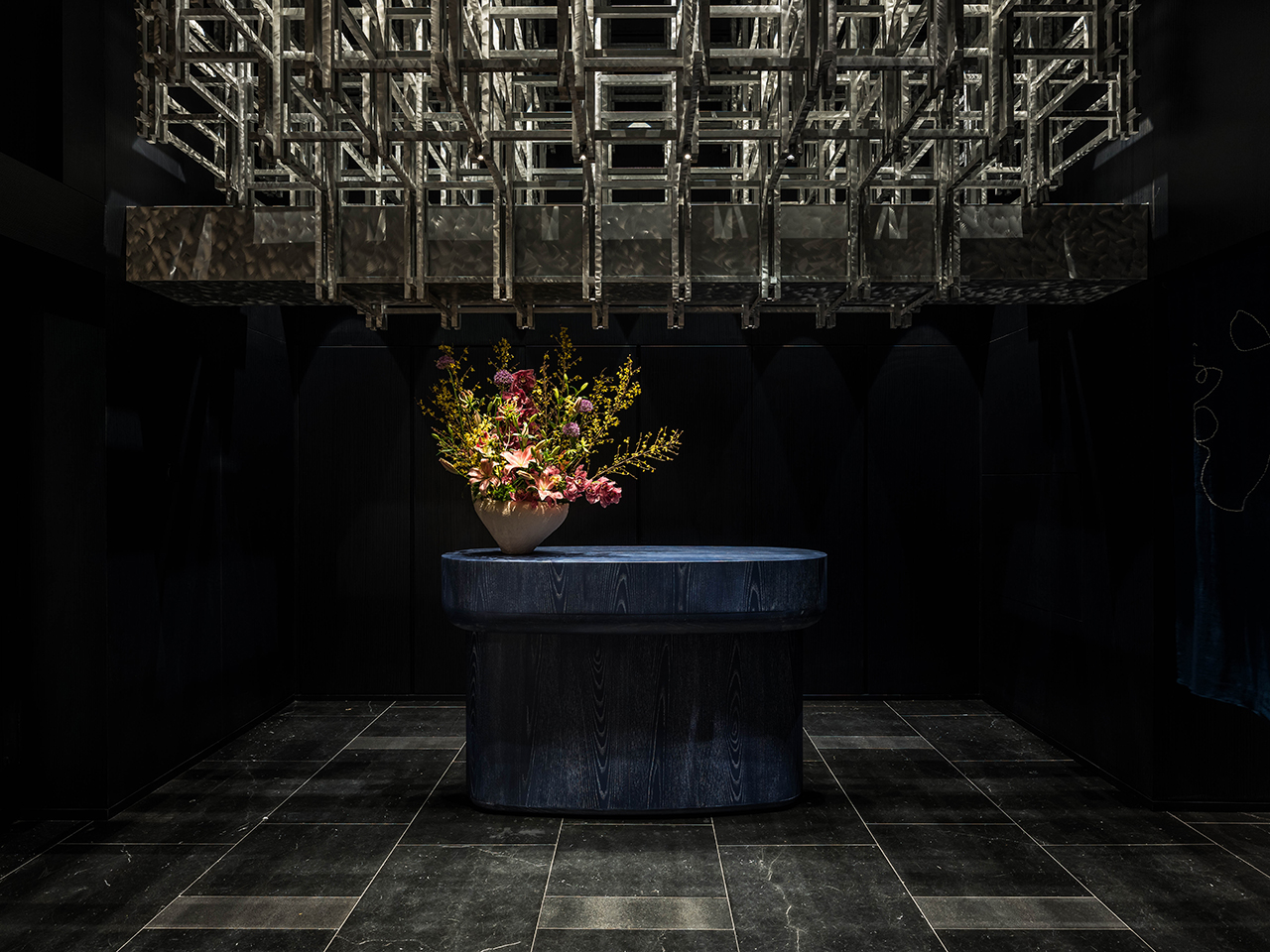
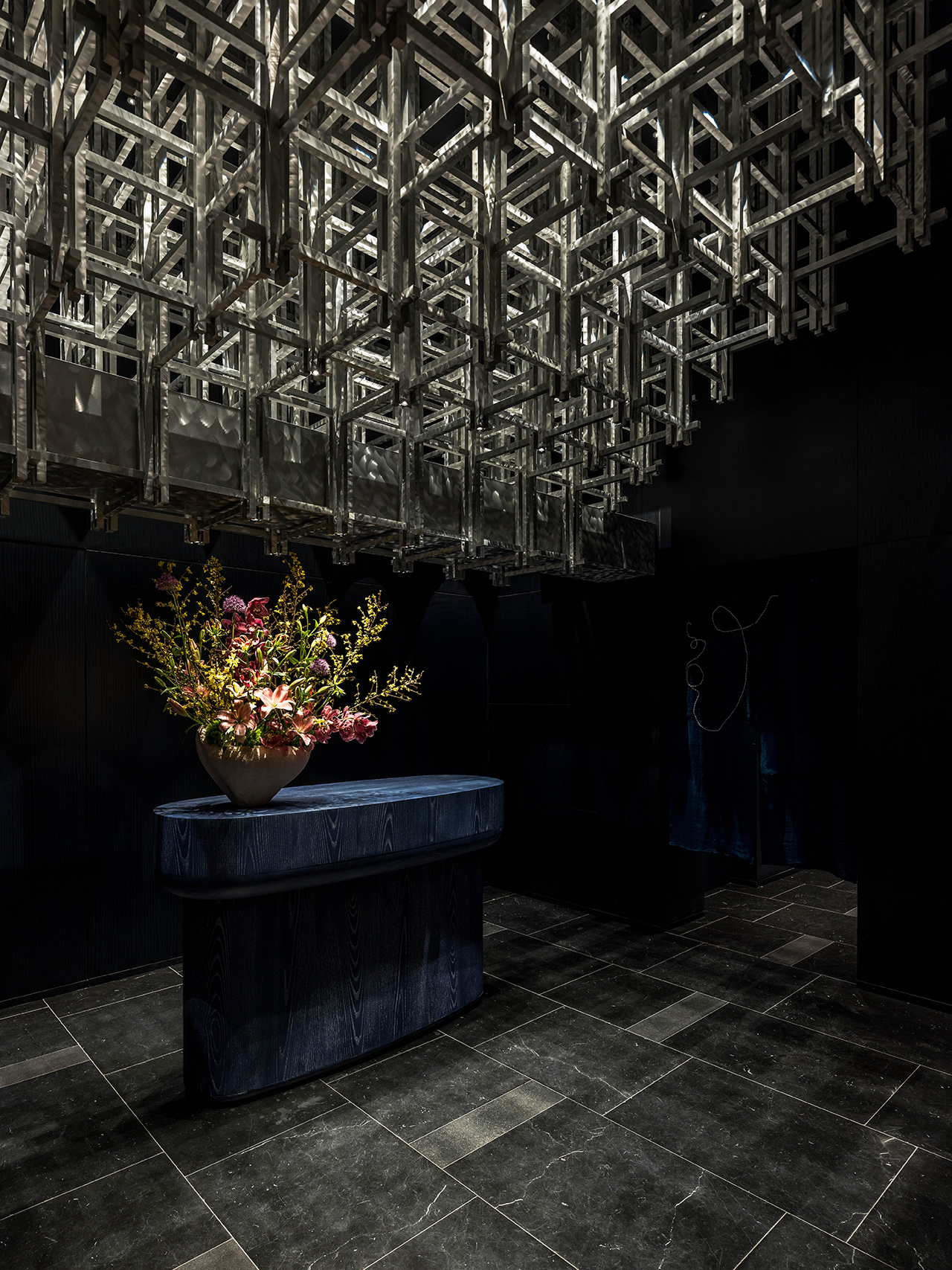
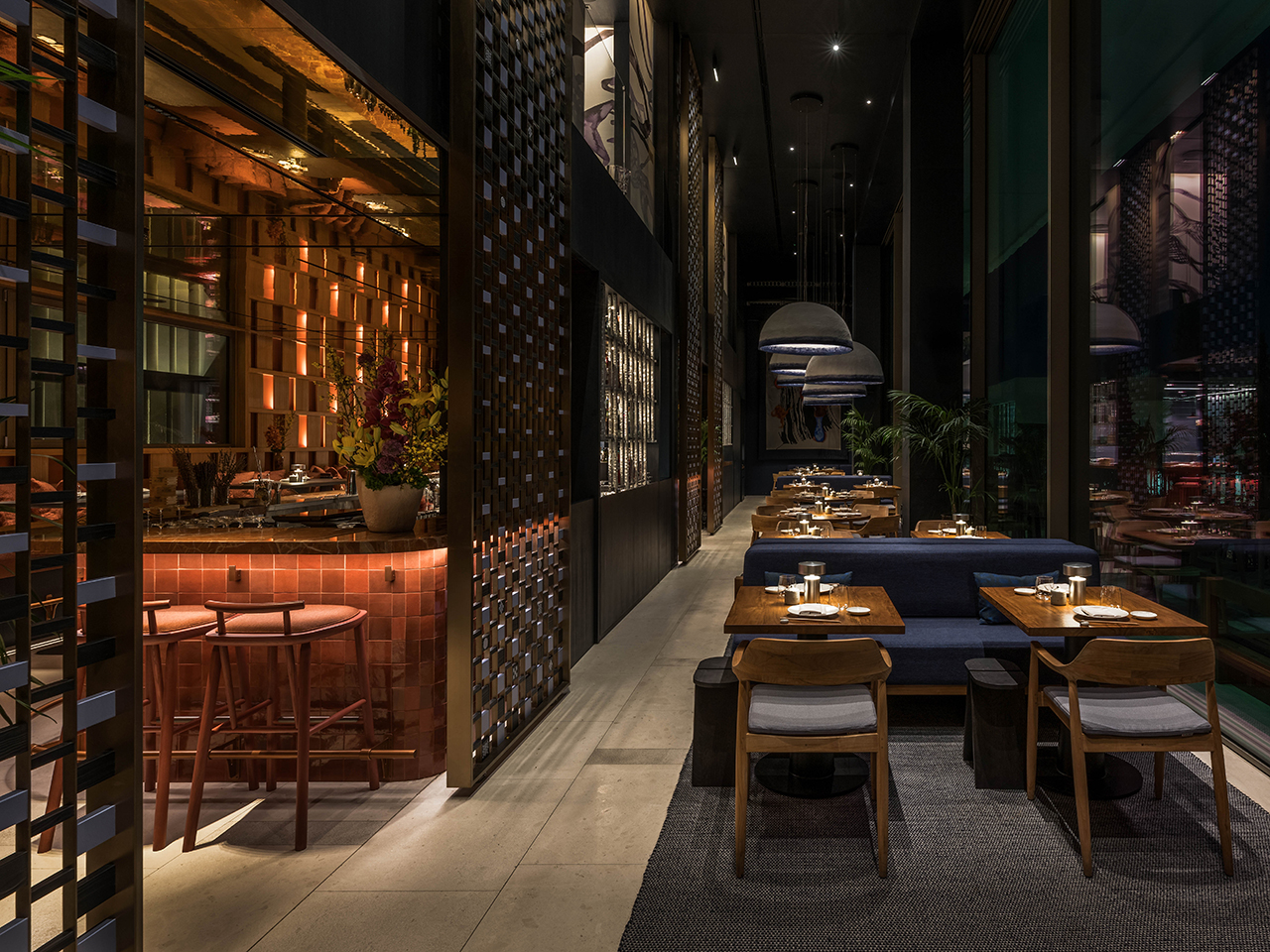
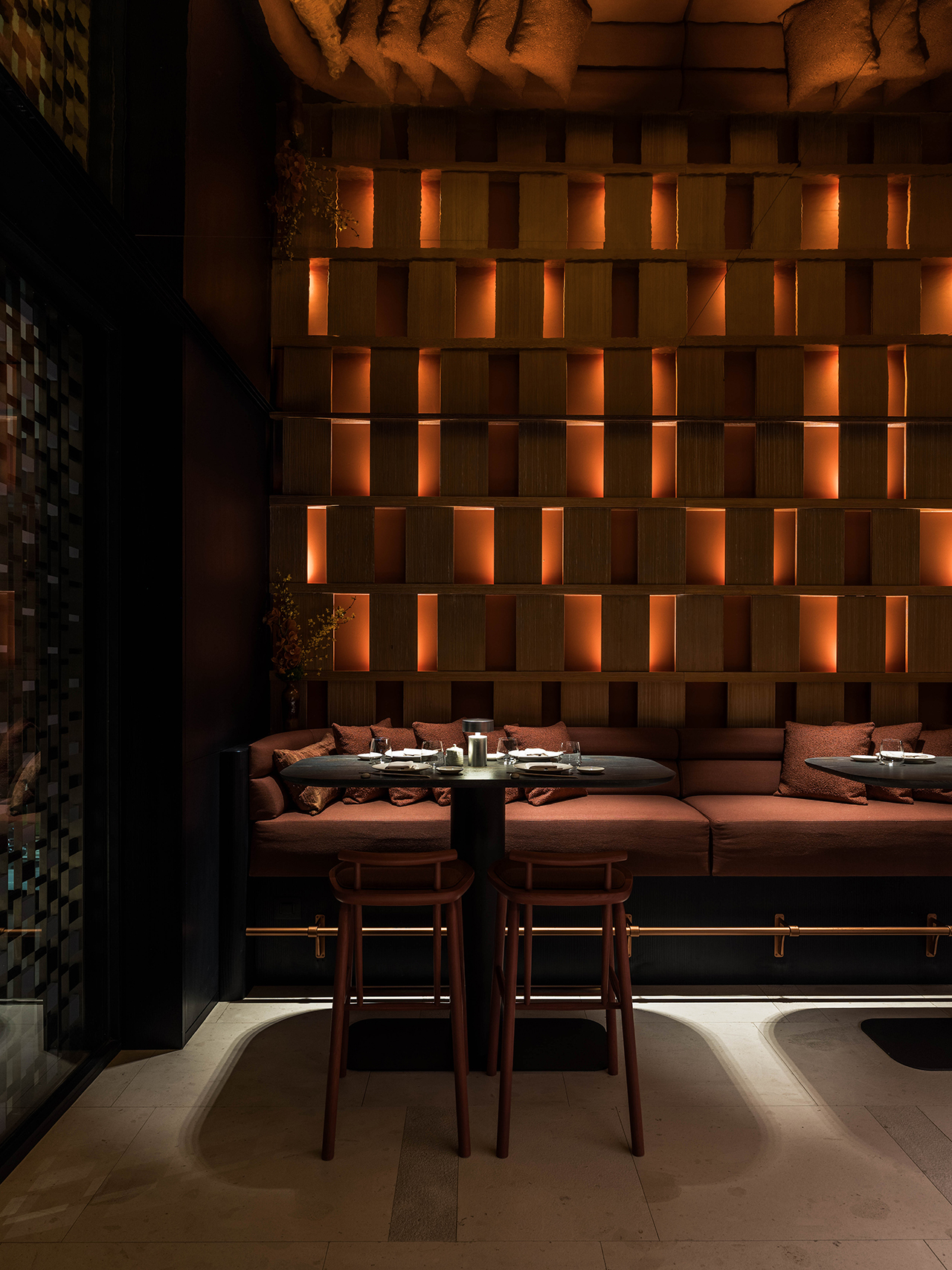
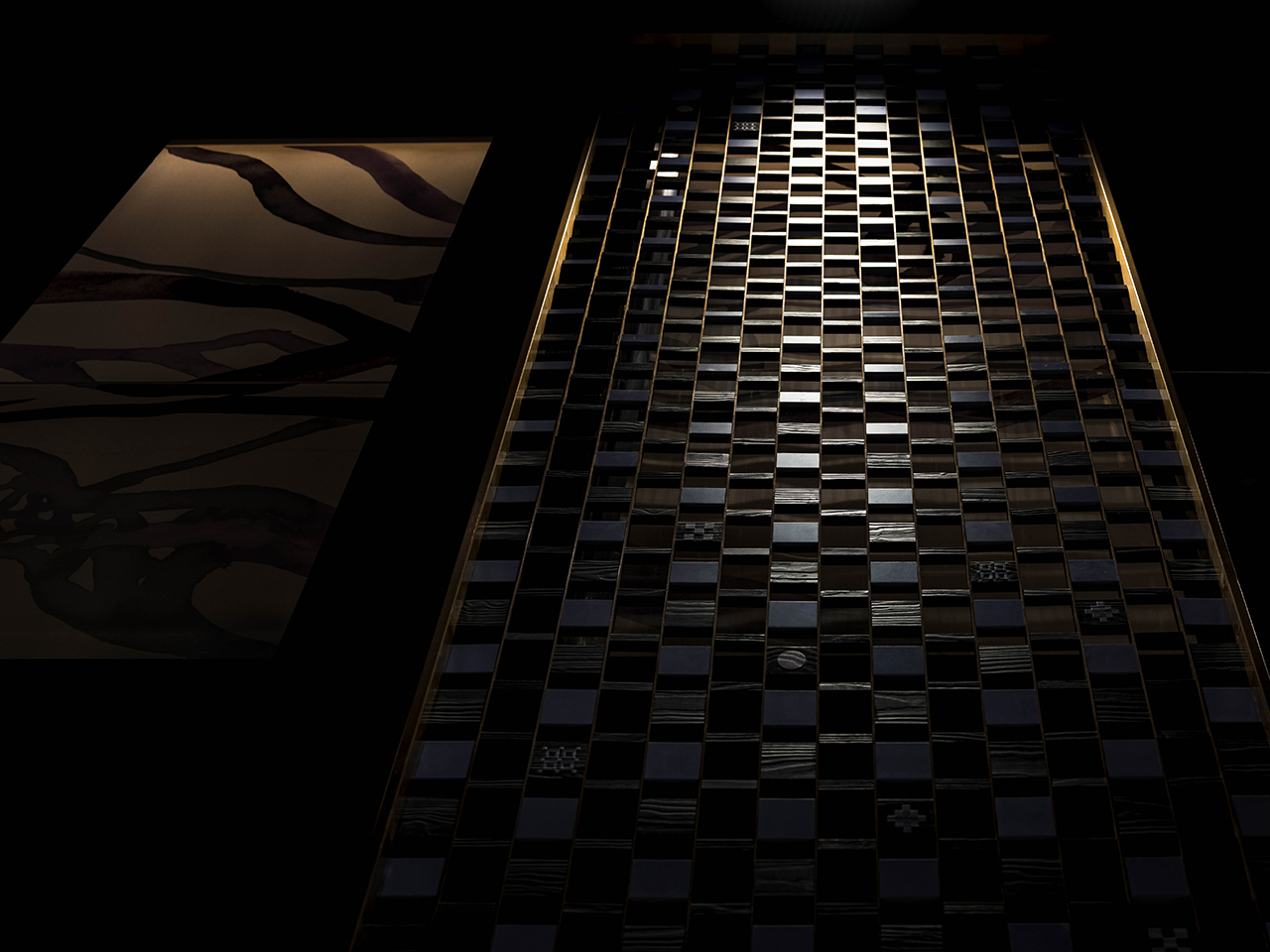
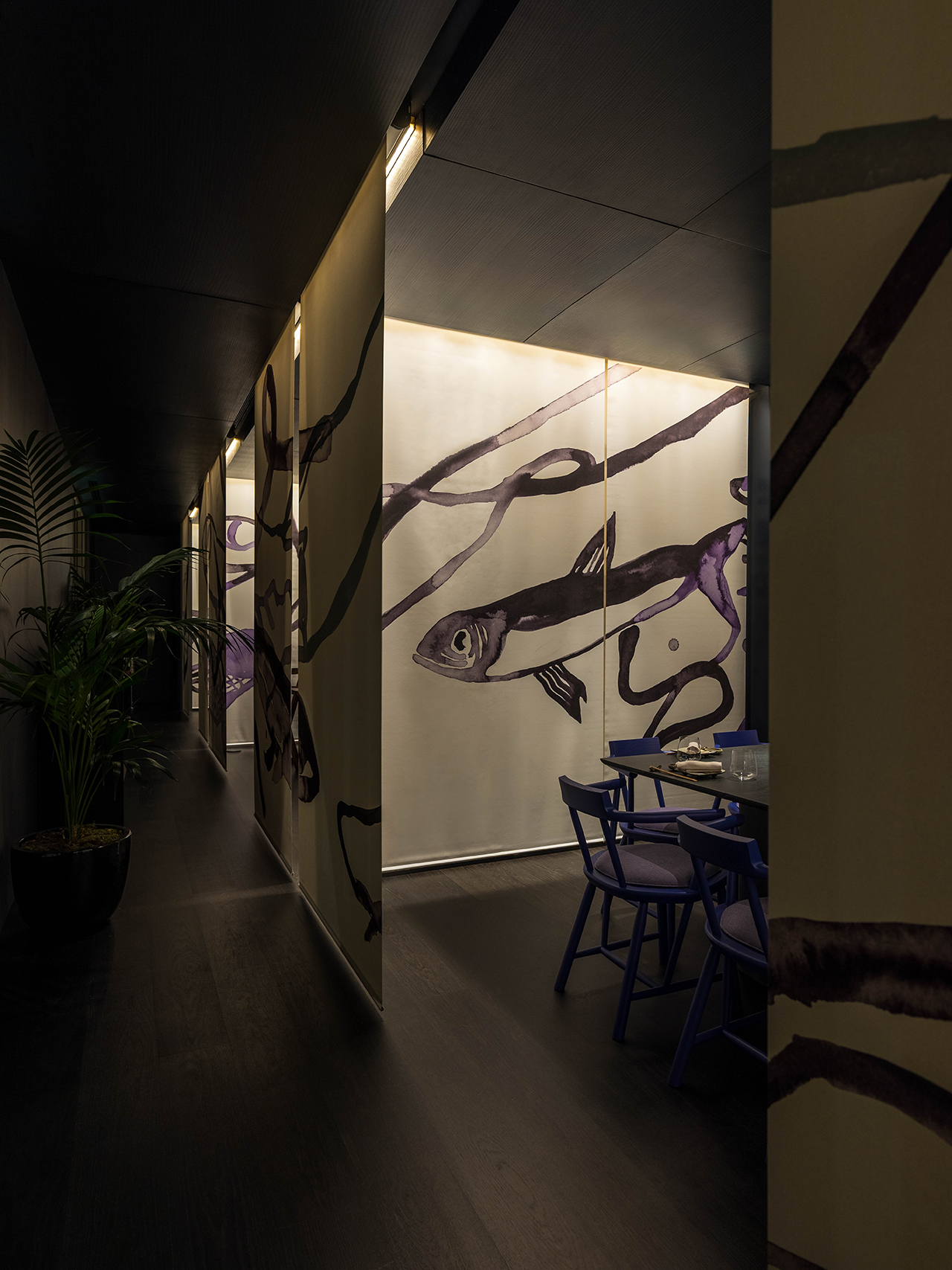
This "same level of intention" manifests in a delicate balance of past and present, structure and fluidity, refined articulation and tactile texture. Light and shadow become active participants in the design, moving through intricately interlaced screens reminiscent of Japanese shoji and traditional Greek latticework. These elements, combined with sculptural drop-ceilings and strategically placed mirrored surfaces, create a near-cinematic effect, transforming the dining experience into a dynamic, evolving narrative. The journey through Onuki is intentionally theatrical, beginning with an entrance where bright geometric luminaires cast intriguing patterns on dark-wood detailing, immediately signaling a departure from the ordinary.
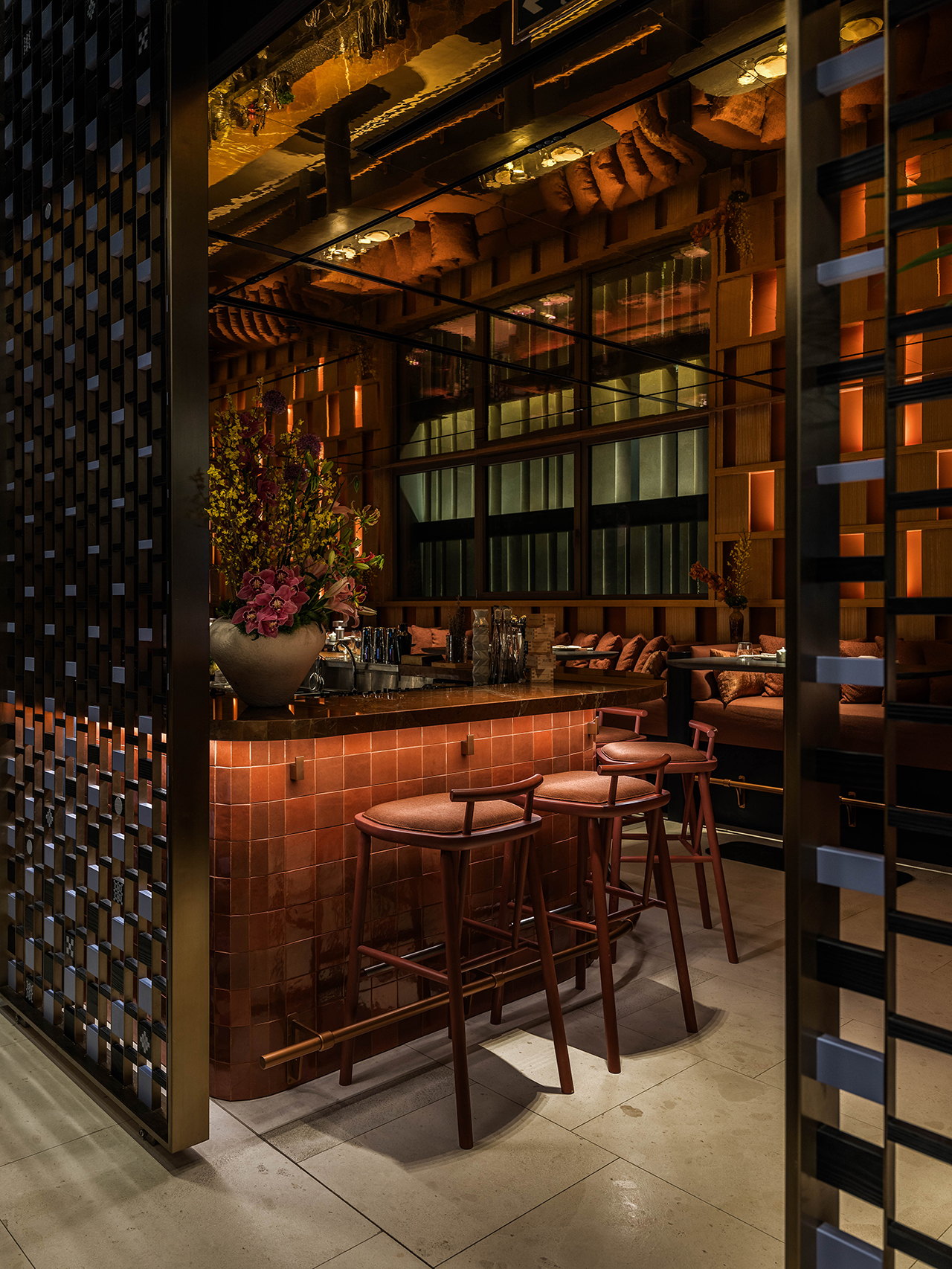
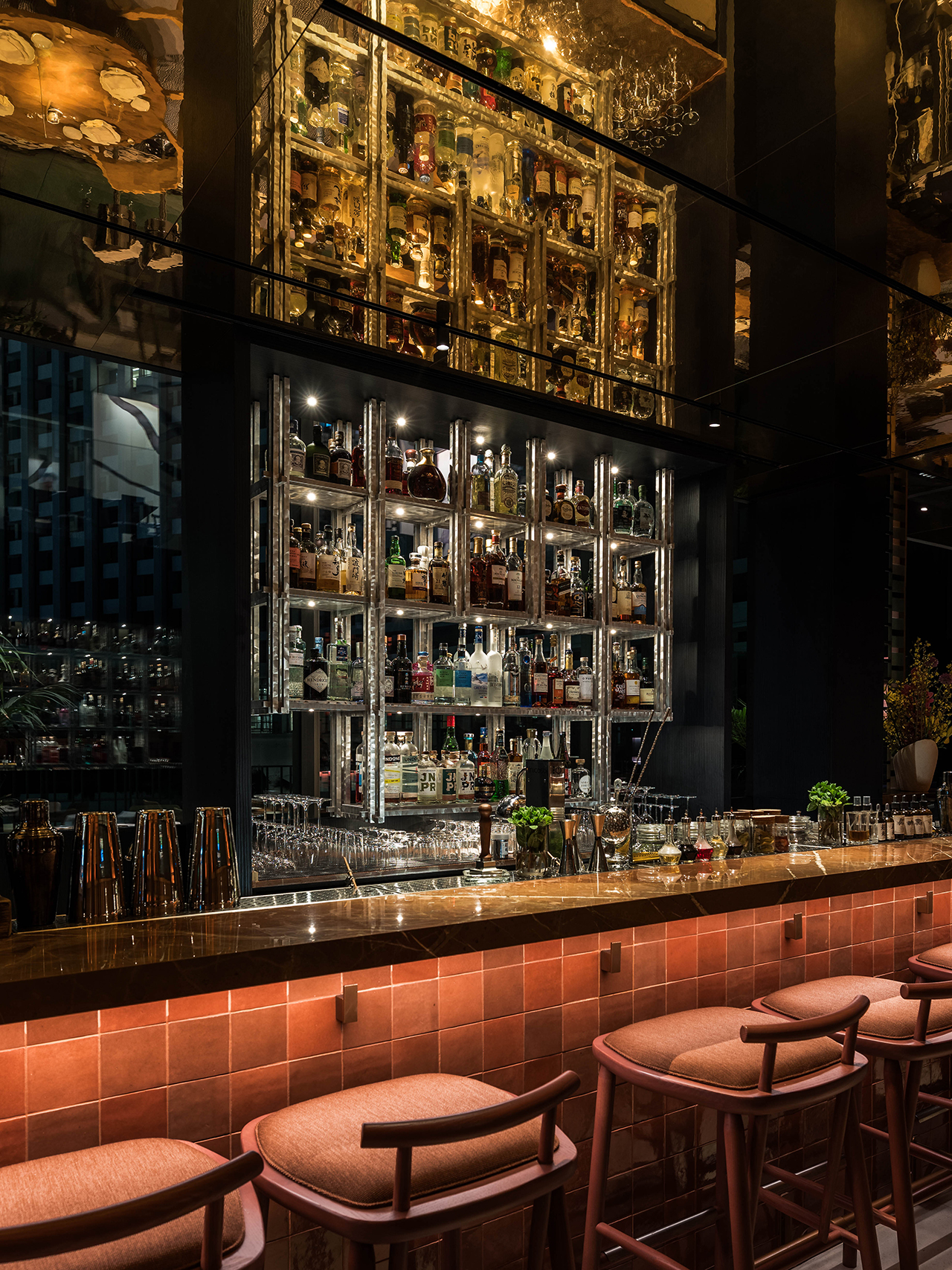
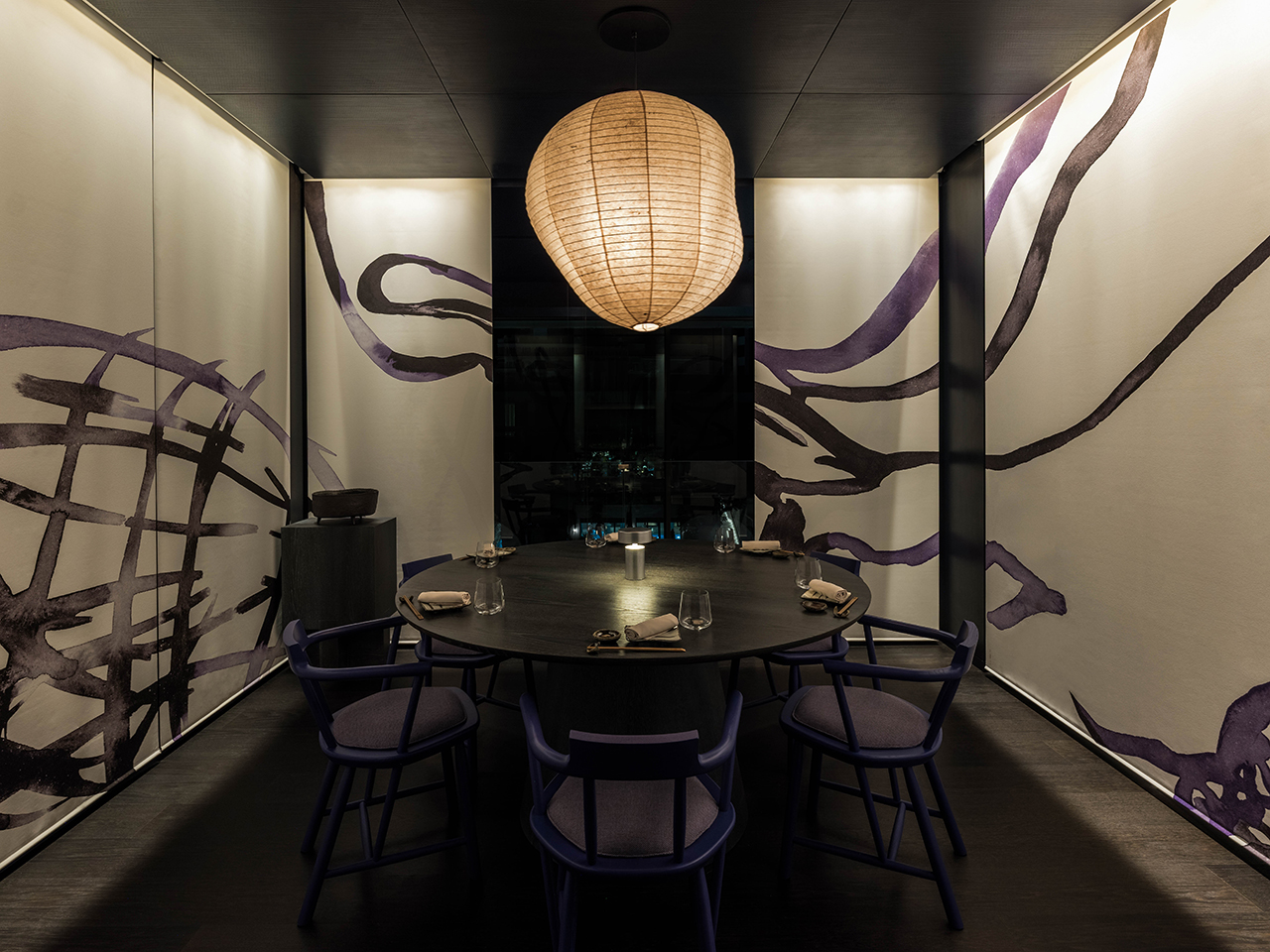
Materiality plays a crucial role in grounding the design in both cultural contexts. Tile motifs, a common thread in both Japanese and Greek architectural traditions, are deployed throughout the space. A striking near-orange terracotta wraps the bar, evoking the sun-baked hues of the Mediterranean landscape and traditional Greek pottery. This warm, earthy tone is juxtaposed with cool indigo accents, a color deeply rooted in Japanese textile arts and natural dyes, and pale limestone, a quintessential material of Hellenic architecture. The seamless integration of these elements extends from the vibrant open kitchen, allowing guests a glimpse into the culinary craft, out to a gracefully integrated poolside terrace, and up to the secluded second-level private dining rooms, each offering a distinct ambiance.
The design details further reinforce the fusion. For instance, the curvilinear forms of seating and reception desks might subtly nod to natural elements often found in Japanese gardens or the organic shapes of ancient Greek amphorae. The geometric metallic ceiling installations could be interpreted as modern abstractions of traditional Japanese woodworking patterns or the structured linearity of classical Greek temples. Even the large floral arrangements, often seen in both cultures as symbols of beauty and reverence, are thoughtfully integrated, adding organic softness to the structured environment. The dim lighting, prevalent in the restaurant interiors, cultivates an intimate and sophisticated atmosphere, allowing the food and the subtle nuances of the design to take center stage.
Chef Stamatis Skriapas’s Culinary Vision and the Spirit of "Kizuna"
The design’s integrity finds its perfect counterpart in the culinary philosophy spearheaded by chef and co-owner Stamatis Skriapas. His ever-evolving menu at Onuki interprets various Japanese staples, but with a distinctly Athenian twist: predominantly umami-flavored ingredients sourced from the surrounding region of Athens. This commitment to local produce, while maintaining the spirit of Japanese cuisine, mirrors the design’s blend of global influences with local context. This innovative approach to gastronomy offers a fresh perspective on fusion, moving beyond simple hybridization to a thoughtful reinterpretation.
Central to Onuki’s ethos, both in design and cuisine, is the Japanese concept of Kizuna. This powerful word signifies "the enduring connection" or "bond"—a deep, emotional tie. At Onuki, Kizuna manifests in multiple dimensions: the profound connection between chef and guest, built on trust and mutual respect; the seasonal bond between nature and plate, reflecting a reverence for ingredients and their natural cycles; and the seamless blending of tradition and contemporaneity, where ancient wisdom informs modern expression. This holistic approach ensures that every aspect of the Onuki experience—from the first visual impression to the final taste—is imbued with intention and a sense of deep connection.
Broader Implications for Global Design and Hospitality
The opening of Onuki Restaurant by Yabu Pushelberg at the Ilisian in Athens carries significant implications for the global design and hospitality sectors. It exemplifies a growing trend towards highly bespoke, culturally sensitive luxury experiences. In an increasingly interconnected world, guests seek authentic narratives and immersive environments that transcend generic luxury. Onuki demonstrates how sophisticated design can serve as a powerful medium for cross-cultural dialogue, challenging conventional notions of fusion by uncovering shared human values rather than simply juxtaposing disparate elements.
This project further solidifies Yabu Pushelberg’s position at the forefront of this movement. Their ability to synthesize complex cultural briefs into elegant, functional, and emotionally resonant spaces positions them as key influencers in shaping the future of high-end hospitality design. For Athens, Onuki adds another jewel to its burgeoning culinary and design landscape, signaling the city’s emergence as a sophisticated destination capable of hosting world-class establishments that push creative boundaries. It also highlights the potential for new urban developments like Ilisian to foster unique cultural experiences, drawing international attention and setting new benchmarks for integrated luxury environments.
The success of Onuki will likely inspire other designers and restaurateurs to explore deeper, more nuanced cultural connections in their projects, moving beyond superficial themes to genuinely understand and interpret the philosophies and traditions that underpin different societies. This thoughtful approach ensures that such establishments contribute not only to local economies but also to a richer, more diverse global cultural tapestry.
In conclusion, Onuki Restaurant is more than just a dining establishment; it is a meticulously crafted testament to the enduring power of cultural connection. Through the visionary design of Yabu Pushelberg and the innovative culinary artistry of Chef Stamatis Skriapas, it offers an unparalleled journey that unites the profound legacies of Japan and Greece, inviting guests to experience a dining narrative steeped in integrity, precision, and the beautiful spirit of Kizuna.







