Muhammad Hendra
Inner calm, often perceived as a fleeting state of relaxation after a yoga session or a luxurious massage, is fundamentally a profound human capacity. It represents our intrinsic ability to disengage from attachments and automatic reactions to life’s myriad events, thereby fostering a sustained state of ease and clarity. This deeper understanding moves beyond superficial tranquility, positioning inner calm as a critical skill for navigating the complexities and pressures of contemporary existence.
The Roots of Tranquility: Mindfulness as a Foundation
The concept of inner calm is intricately linked to the principles of mindfulness, a practice rooted in ancient contemplative traditions, particularly Buddhism, spanning millennia. While its origins are spiritual, mindfulness gained significant scientific and mainstream traction in the Western world through the pioneering work of Dr. Jon Kabat-Zinn, who founded the Mindfulness-Based Stress Reduction (MBSR) program at the University of Massachusetts Medical School in the late 1970s. Kabat-Zinn defined mindfulness as "paying attention in a particular way: on purpose, in the present moment, and non-judgmentally."
Within this framework, inner calm emerges as a refined mindfulness skill, cultivated through an understanding of impermanence – the ever-changing nature of our thoughts, emotions, and desires. In moments of perceived urgency or reactivity, the simple yet profound reminder, "This too shall pass," serves not to deny the current feeling but to introduce a crucial pause, effectively applying brakes to accelerated emotional responses. This pause allows for a return to an inner stillness, from which one can observe the genesis and transient nature of their reactivity. It is this intimate observation, this non-attached witnessing, that offers genuine liberation.
As a practical discipline, inner calm is the deliberate art of stopping, observing, and releasing. This three-part process is engaged for the explicit purposes of healing and achieving mental clarity. It manifests as both physical composure and mental tranquility, acting as a soothing balm for the soul – akin to a cool breeze on a sweltering day. Its benefits permeate both body and mind; physical composure is experienced as relaxed muscles and an overall sense of ease, while mentally, inner calm creates the expansive space necessary to hold all experiences without attachment or resistance. Conversely, the absence of this cultivated calm often presents as physical restlessness and mental agitation or heightened reactivity.
The Paradox of Pursuit: Releasing the Desire for Calm
One of the most profound insights into achieving inner calm lies in a seemingly contradictory truth: genuine calm is often realized when the desire for it is relinquished. This presents a unique "catch-22" for many seekers. Consider the case of a client struggling with chronic anxiety who embraced meditation with the explicit hope of finding peace and improving sleep. Ironically, his initial foray into meditation left him more anxious. During a body scan meditation, he became acutely aware of his body’s restlessness, leading to frustration that exacerbated his sleep problems rather than alleviating them.
The crucial lesson derived from this experience highlights the counterproductive nature of expectation. To find peace, he first had to release his expectations around finding peace. This required him to recognize three common hindrances to mindfulness: a restless mind (running in circles), the act of striving (pulling for a specific outcome like sleep), and the frustration of resistance (pushing against his restlessness). Through consistent practice, he learned to accept his restless mind without judgment, which softened his striving and diminished his frustration. This acceptance paved the way for ease, allowing him to eventually find sleep, even when initial restlessness persisted. This narrative underscores a fundamental principle: true letting go is not about suppressing or evading challenging situations, but rather an organic release that occurs when one comprehends the ephemeral nature of emotions.
The Ninety-Second Rule: Unpacking Emotional Physiology

A cornerstone of understanding emotional transience is the "Ninety-Second Rule," a concept brought to prominence by neuroscientist Dr. Jill Bolte Taylor in her seminal book, My Stroke of Insight: A Brain Scientist’s Personal Journey. Dr. Bolte Taylor’s research reveals that the physiological lifespan of an emotion—the initial biochemical cascade and its processing in the body—has a definitive beginning, middle, and end, all occurring within approximately 90 seconds from its first emergence.
This scientific revelation offers a powerful perspective: inner calm is not about suppressing, denying, or avoiding emotions. Instead, it involves cultivating the capacity to stay with unpleasant sensations, knowing that these physiological responses will naturally arise and dissolve. Just as happiness triggered by external events is transient, so too are negative emotions. The common experience of prolonged negative emotions, sometimes lasting for days, weeks, or even years, is largely attributed to our cognitive narratives. We continue to fuel these feelings with stories, judgments, and rumination, effectively re-triggering the biochemical response long after the initial 90-second window.
If we can pause and allow the emotion to move through the body without attaching a narrative, we create mental space. This space enables us to better understand what the emotion is communicating, rather than suppressing it or using superficial positive thinking to bypass the experience. By forming an alliance with our feelings, we can uncover their underlying purpose—whether they are trying to protect us, address unmet needs, or draw attention to new information in our environment. While the 90-second rule is a helpful reminder to ride the waves of emotion, it acknowledges that emotions can sometimes be so overwhelming that they temporarily hijack rational thought processes. In these moments, recalling their ancient, evolutionary origins—our ancestors’ responses to genuine threats like lurking predators—can help contextualize their intensity.
Navigating Modern Threats: Inner Calm and the Amygdala Hijack
Modern life, despite its comforts, is replete with perceived threats to our identity, careers, and relationships. These psychosocial stressors, while rarely life-threatening in the primal sense, can trigger the same ancient fight-flight-freeze responses that evolved to protect our hunter-gatherer ancestors. However, these automatic, unconscious reactions are often unhelpful in navigating the nuanced challenges of the contemporary world, which typically demand clarity, creativity, and considered problem-solving.
When emotions are so intensely triggered that clear thought becomes impossible, we experience what emotional intelligence expert Daniel Goleman popularized as an "amygdala hijack." The amygdala, a small almond-shaped region deep within the brain, serves as its emotional center and alarm system. Its primary function is to constantly scan the environment for potential threats. Upon perceiving a threat—whether a genuine danger or a psychological affront—it sends an immediate, urgent signal to release stress hormones, primarily adrenaline and cortisol. This rapid biochemical surge initiates an emergency response: blood flow is redirected from vital organs to the limbs, preparing the body for immediate fight or flight. Simultaneously, the prefrontal cortex, the brain region responsible for executive functions, rational thought, and decision-making, temporarily shuts down. In a perceived life-or-death situation, there is no time for analysis; instantaneous reaction is prioritized.
During an amygdala hijack, an individual’s IQ is said to temporarily drop by ten to fifteen points. This physiological reality explains the common post-reaction regret: "What was I thinking when I said that?" The answer is, quite literally, that rational thinking was temporarily suspended. This state also compromises memory, making it difficult to recall positive aspects of a person during conflict or locate keys during a panic attack. Furthermore, a sustained state of fight or flight, common in our chronically stressed society, compromises the integrity of other crucial bodily systems, including immunity and digestion, contributing to a myriad of modern health issues. According to the American Psychological Association’s 2023 "Stress in America" survey, a significant percentage of adults report experiencing high levels of stress, impacting their physical and mental health. This pervasive stress underscores the urgent need for effective coping mechanisms.
Strategic Interventions: Cultivating Calm in the Face of Stress
Cultivating inner calm is a vital strategy for preventing the amygdala hijack, enabling individuals to maintain clear thought even in highly charged situations. Practices specifically designed to promote inner calm, such as focused breath awareness, are incredibly effective. Concentrating on the breath helps to slow escalating emotions and activate the parasympathetic nervous system—the body’s "rest-and-digest" system—allowing the prefrontal cortex to regain its cognitive function. This physiological shift is mediated by the vagus nerve, which connects the brain to many vital organs, and its activation through deep, slow breathing can rapidly induce a state of relaxation.
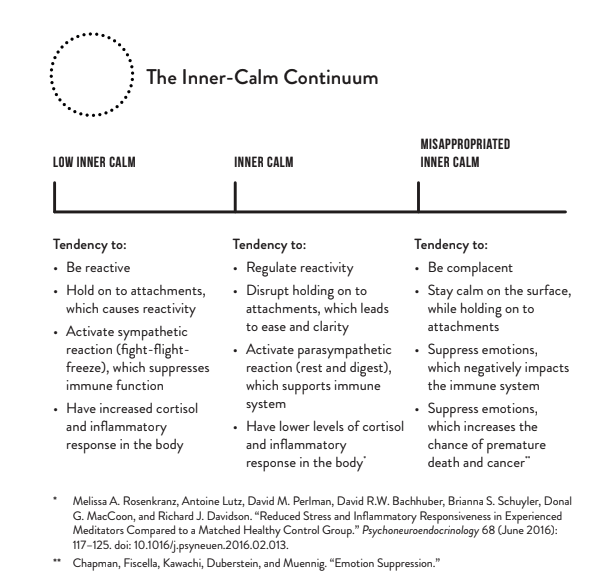
Another powerful technique is "noting" or "labeling" emotions. This simple act of mentally identifying an emotion (e.g., "anger," "anxiety," "frustration") engages the prefrontal cortex, re-establishing healthy communication with the amygdala and effectively bypassing the hijack. As Dr. Daniel Siegel, a clinical professor of psychiatry, often emphasizes, "Name it to tame it." This cognitive recognition helps to create a psychological distance from the intense emotion, allowing for a more measured response. Inner calm thus offers opportunities for profound learning and self-improvement, fostering a deeper understanding of the "what" and "why" behind our actions. It allows us to replace tension and misunderstanding with harmony and insight, making it an indispensable skill for building resilience in relationships and life in general. Recognizing one’s position on an "Inner Calm Continuum"—from highly reactive to consistently serene—can serve as a valuable self-assessment tool, guiding personal practice and growth.
Beyond the Individual: Societal and Organizational Resilience
The implications of widespread inner calm extend far beyond individual well-being. On a societal level, a populace capable of greater emotional regulation and clarity is better equipped to engage in constructive dialogue, resolve conflicts peacefully, and make more informed collective decisions. This can lead to stronger community bonds, reduced social friction, and a more empathetic public discourse. In an increasingly polarized world, the ability to respond thoughtfully rather than react impulsively becomes a civic virtue.
Within organizational contexts, cultivating inner calm among employees and leaders can significantly enhance productivity, foster healthier work environments, and improve strategic decision-making. Leaders who can remain composed under pressure, avoid amygdala hijacks, and think clearly during crises are invaluable. Companies investing in mindfulness and stress-reduction programs report benefits such as decreased employee turnover, reduced absenteeism due to stress-related illness, and improved team collaboration. A 2016 study published in the journal Mindfulness found that workplace mindfulness interventions led to significant reductions in perceived stress and improvements in well-being and emotional regulation among employees. This highlights the economic as well as human benefits of promoting inner calm.
Integrating Calm: Daily Practices for Sustained Well-being
Strengthening one’s capacity for inner calm is an ongoing journey, accessible regardless of external circumstances. The first step involves developing heightened self-awareness: paying attention to moments of both calm and agitation. Subsequently, noticing the specific causes and conditions that promote calm, versus those that disrupt it, provides invaluable insight. By intentionally cultivating habits that calm the mind and body, individuals can progressively enhance their ability to access this inner sanctuary more quickly and effortlessly.
A highly effective and accessible daily practice is the "One-Minute Rest," a simple yet profound technique for integrating moments of stillness throughout the day. As poet David Whyte eloquently states, "Rested, we care again for the right things and the right people in the right way." The practice involves taking intentional breaks, several times a day if possible, to "empty your cup" and create mental and physical space for what truly matters. This can be done very quickly by simply checking in with your body: notice your posture, the sensations of your breath, and any areas of tension, then gently release. This micro-practice can be integrated into personal routines, shared with family members, or even adopted by teams before meetings or activities, fostering a collective sense of presence and readiness.
Such consistent, small interventions accumulate over time, building neural pathways that favor calm over reactivity. This habitual calming transforms the ability to access inner peace from a struggle into an inherent capacity, profoundly impacting one’s overall well-being and effectiveness.
Conclusion: The Enduring Power of Inner Stillness
Inner calm is far more than a transient pleasant feeling; it is a foundational skill for resilience, clarity, and effective functioning in the modern world. By understanding its scientific underpinnings, particularly the transient nature of emotions and the mechanics of the "amygdala hijack," individuals are empowered to shift from automatic reaction to conscious response. Through practices like mindfulness, breath awareness, and emotional labeling, it is possible to cultivate a deep-seated stillness that supports not only personal healing and growth but also healthier relationships and more effective contributions to society. As the demands of contemporary life continue to escalate, the cultivation of inner calm stands as an essential, transformative practice for navigating complexity and fostering a richer, more meaningful existence.