Muhammad Hendra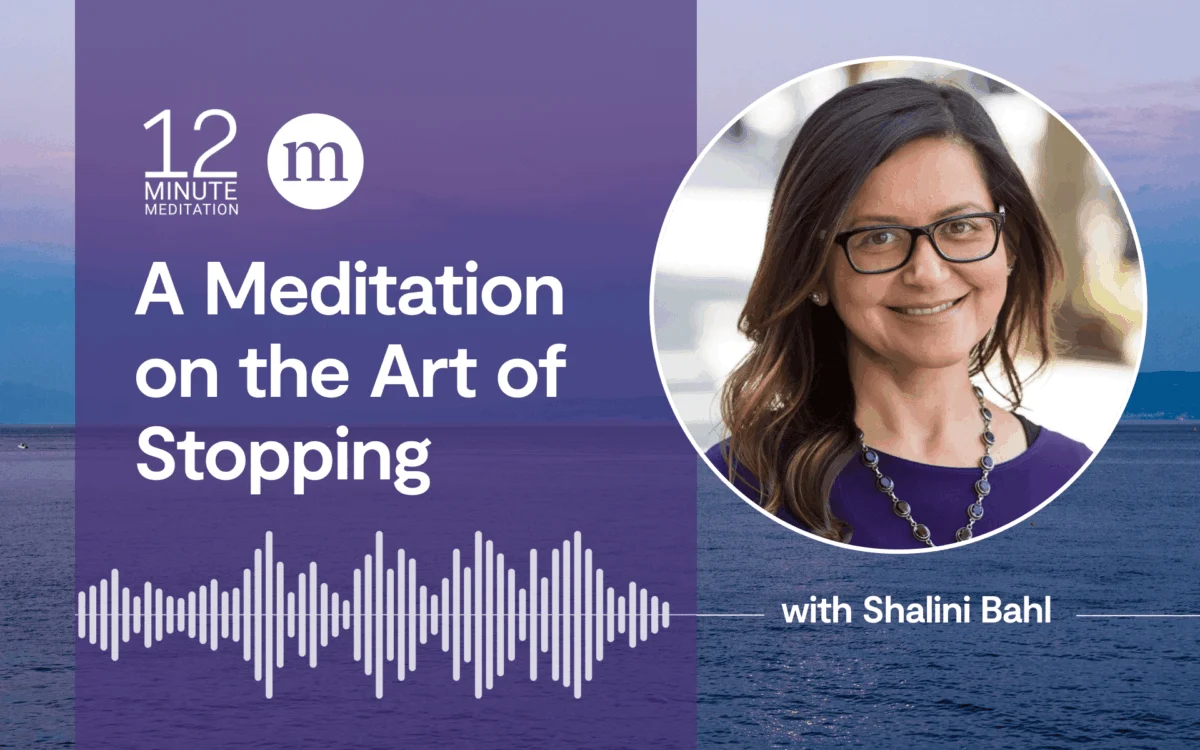
In an increasingly demanding world, the concept of mindfulness often appears as a daunting commitment, reserved for lengthy retreats or dedicated meditation sessions. However, leading practitioner Shalini Bahl offers a refreshing and profoundly accessible perspective, reminding us that at its essence, mindfulness is simply about stopping. This fundamental act—stopping to notice, to breathe, and to gently interrupt the ingrained habits of thought with our quiet presence—forms the bedrock of her teachings, challenging conventional notions of what constitutes a mindful practice.
Bahl’s insights, prominently featured in her recent guided practice, redefine mindfulness and meditation not as sustained, drawn-out exercises, but rather as a cumulative collection of "micro-moments." These brief, intentional pauses involve stopping, breathing, truly noticing one’s own body and life, acknowledging distraction, and then gently returning to the present moment, over and over again. This iterative process, she argues, is where the true power of mindfulness lies, making it an attainable and sustainable practice for anyone, regardless of their daily schedule or perceived lack of time. As Bahl articulates, her current guided practice is dedicated to "the art of stopping," encouraging individuals to release the mind’s habitual patterns of pushing, pulling, and running in circles, and instead, to simply be for a moment. This particular offering includes an extended practice for deeper immersion, complemented by a bonus micro-practice version specifically designed for integration into busy days, underscoring its practical applicability. Further elaborating on this crucial bridge between formal meditation and daily life, Bahl has also contributed an insightful article on Mindful.org, detailing how micro-practices can profoundly influence our everyday choices.
The Foundational Principle: Deconstructing "Stopping"
Bahl’s emphasis on "stopping" is more than a mere cessation of activity; it is an active, intentional engagement with the present. In a society that often glorifies constant productivity and multitasking, the act of pausing can feel counterintuitive or even unproductive. Yet, Bahl posits that this very act is the gateway to greater awareness and mental clarity. "Stopping to notice" involves consciously directing attention to sensory experiences—the sounds around us, the feeling of our breath, the sensations within our bodies—rather than allowing the mind to be swept away by thoughts about the past or future. This simple redirection can break the cycle of automatic reactions and unconscious living that characterizes much of modern existence.
Furthermore, "stopping to breathe" highlights the central role of breath in mindfulness. The breath serves as an anchor, a constant and immediate point of focus that is always available. By consciously bringing attention to the inhale and exhale, individuals can regulate their nervous system, reduce physiological stress responses, and ground themselves in the present moment. This physiological shift is well-documented in scientific literature, where controlled breathing techniques are recognized for their ability to activate the parasympathetic nervous system, promoting relaxation and calm.
The third component, "gently interrupting our engrained habits of thought with our quiet presence," addresses the pervasive nature of mental rumination and automatic thought patterns. Our minds are often on autopilot, replaying past events or rehearsing future scenarios, often with a negative bias. Bahl’s approach encourages a gentle, non-judgmental observation of these thoughts, rather than engaging with or suppressing them. This quiet presence acts as a witness, creating a space between the thought and the reaction, thereby fostering a greater sense of agency over one’s mental landscape. This interruption is not about forceful eradication but about subtle redirection, a gentle return to the present moment whenever the mind wanders.
The Genesis of Mindfulness: From Ancient Roots to Modern Application
While Shalini Bahl’s teachings resonate deeply with contemporary challenges, the principles of mindfulness are rooted in ancient contemplative traditions, particularly Buddhism, dating back over 2,500 years. Early practices emphasized insight meditation (Vipassanā) and focused attention, aimed at cultivating wisdom and compassion through sustained awareness.
The secularization and mainstreaming of mindfulness in the West gained significant momentum in the late 1970s, primarily through the work of Dr. Jon Kabat-Zinn. A molecular biologist, Kabat-Zinn developed Mindfulness-Based Stress Reduction (MBSR) at the University of Massachusetts Medical Center. His pioneering work involved stripping away the religious and cultural trappings of traditional meditation, presenting mindfulness as a universal human capacity for paying attention in a particular way: on purpose, in the present moment, and non-judgmentally. MBSR programs quickly demonstrated efficacy in reducing chronic pain and stress, paving the way for mindfulness to be adopted in diverse sectors, including healthcare, education, corporate wellness, and even the military.
The last two decades have witnessed an exponential growth in mindfulness research and application. Institutions like Mindful.org, established as a dedicated platform for exploring and promoting mindfulness, have played a crucial role in disseminating accessible practices and information to a global audience. Through articles, guided meditations, and expert insights from practitioners like Shalini Bahl, Mindful.org bridges the gap between scientific understanding and practical application, making sophisticated concepts digestible for everyday individuals seeking to enhance their well-being. This historical trajectory underscores a continuous evolution, adapting ancient wisdom to meet the specific needs and pace of modern life, culminating in approaches like Bahl’s micro-moments.
The Power of Micro-Moments: Accessibility and Cumulative Impact
The concept of "micro-moments" is perhaps one of the most transformative aspects of Bahl’s teaching, directly addressing the common barrier of time scarcity. Many individuals feel overwhelmed by the prospect of committing to 20-30 minute daily meditation sessions, leading to a perception that mindfulness is beyond their reach. Bahl’s framework dismantles this misconception by asserting that effectiveness does not solely reside in duration. Instead, it flourishes through consistency and intentionality, even in fleeting instances.
A micro-moment can be as brief as a few seconds: pausing before opening an email, taking three conscious breaths while waiting for coffee, or noticing the sensation of feet on the ground while walking to another room. The genius of this approach lies in its inherent accessibility. It integrates seamlessly into the fabric of daily life, transforming mundane activities into opportunities for mindful awareness. This accessibility dramatically lowers the entry barrier, encouraging individuals to start small and build momentum.
The cumulative effect of these micro-moments is profound. While a single ten-second pause might seem insignificant, hundreds of such pauses throughout a day, or thousands over weeks and months, fundamentally alter neural pathways and habitual responses. Neuroplasticity, the brain’s ability to reorganize itself by forming new neural connections, is continually at play. Each micro-moment of intentional presence strengthens neural circuits associated with attention, emotional regulation, and self-awareness, while weakening those linked to reactivity and mind-wandering. This gradual yet persistent rewiring leads to a sustained shift in an individual’s baseline state, fostering greater calm, clarity, and resilience over time. It’s akin to building a strong financial portfolio through consistent, small investments rather than waiting for a single, large windfall; the consistent small deposits yield significant returns.
Scientific Validation: The Evidence Behind Mindful Stopping
The efficacy of mindfulness, and by extension, the benefits of "stopping" and micro-practices, is robustly supported by a burgeoning body of scientific research. Studies across neuroscience, psychology, and medicine consistently demonstrate the positive impacts of mindfulness on both mental and physical health.
Neurological Benefits: Research using functional magnetic resonance imaging (fMRI) has shown that regular mindfulness practice can lead to structural and functional changes in the brain. For instance, studies indicate an increase in gray matter density in regions associated with learning, memory, emotion regulation, and perspective-taking, such as the hippocampus and the prefrontal cortex. Conversely, there’s often a decrease in gray matter density in the amygdala, the brain’s fear center, suggesting reduced reactivity to stress. A 2011 study published in Psychiatry Research: Neuroimaging by Sara Lazar and colleagues at Harvard Medical School provided early evidence of these structural changes.
Psychological Benefits: Mindfulness has been proven effective in reducing symptoms of anxiety, depression, and chronic stress. A meta-analysis published in JAMA Internal Medicine in 2014, reviewing over 47 trials with 3,515 participants, concluded that mindfulness meditation programs showed moderate evidence of improving anxiety, depression, and pain. It enhances emotional regulation, allowing individuals to respond to challenging situations with greater calm and less impulsivity. Furthermore, it improves attention span, focus, and working memory, critical cognitive functions for navigating complex modern environments.
Physiological Benefits: Beyond mental well-being, mindfulness practices have been linked to various physiological improvements. These include lower blood pressure, improved sleep quality, and enhanced immune function. The reduction in stress hormones like cortisol, achieved through mindfulness, contributes to these systemic health benefits. The American Psychological Association (APA) regularly publishes findings and recommendations, highlighting mindfulness as a valuable tool for stress management and overall psychological health.
The implications of these findings are profound. They provide a scientific rationale for Bahl’s accessible approach, suggesting that even brief, intentional moments of stopping can contribute to these macro-level changes, thereby making well-being practices attainable for a wider population struggling with the pervasive challenges of modern life.
Shalini Bahl’s Approach in the Broader Mindfulness Discourse
Shalini Bahl’s articulation of "the art of stopping" and the power of micro-moments positions her as a pragmatic voice within the contemporary mindfulness movement. Her emphasis aligns with a growing consensus among leading practitioners and researchers that for mindfulness to be truly impactful, it must be integrated into the rhythms of everyday life, not confined to isolated practice sessions.
This perspective resonates with the insights of other influential figures. For instance, Dr. Rick Hanson, a neuropsychologist and author, frequently discusses "taking in the good," which involves briefly savoring positive experiences to hardwire them into the brain—a concept that mirrors the intentionality of micro-moments. Similarly, numerous psychologists and mental health experts advocate for "mindful breaks" or "mini-meditations" during the workday to combat burnout and enhance focus. The consensus highlights that consistency, even in short bursts, often yields more sustainable results than infrequent, lengthy sessions that are difficult to maintain.
Bahl’s contribution is particularly significant in demystifying mindfulness. By framing it as simple "stopping," she strips away any perceived esoteric or spiritual connotations, presenting it as a practical skill for managing the mind. This pragmatic stance makes mindfulness more palatable to individuals who might otherwise be skeptical or intimidated, reinforcing its identity as a universal tool for enhancing human experience rather than a niche spiritual practice. Her article on Mindful.org, which elaborates on how micro-practices act as a "bridge between your meditation and your choices," further underscores this practical application, showing how these brief pauses can directly influence decision-making, foster more conscious responses, and ultimately lead to a more intentional and fulfilling life.
Broader Implications and Future Trajectories
The widespread adoption of mindfulness, particularly through accessible frameworks like Shalini Bahl’s micro-moments, carries significant implications across various societal domains.
Individual Well-being: At the individual level, the ability to integrate "stopping" into daily life offers a potent antidote to chronic stress and burnout. In an era marked by digital overload and constant connectivity, the capacity to pause, reflect, and reset can significantly improve mental health outcomes, fostering greater emotional resilience and personal agency. This shift empowers individuals to navigate challenges with more equanimity and less reactivity.
Workplace Productivity and Culture: In corporate settings, the promotion of micro-practices can lead to a healthier, more productive workforce. Employees who regularly engage in brief mindful pauses may experience reduced stress, improved focus, enhanced creativity, and better interpersonal communication. Companies that integrate mindfulness training often report lower rates of absenteeism, higher job satisfaction, and a more positive organizational culture. The return on investment for such programs, though sometimes intangible, can be substantial in terms of human capital and overall business performance.
Education and Youth Development: Introducing mindfulness concepts, including micro-practices, into educational curricula can equip children and adolescents with essential self-regulation skills from an early age. Learning to "stop" and notice can help young people manage emotions, improve concentration, reduce test anxiety, and foster empathy, laying a foundation for lifelong well-being and academic success. Programs like Mindful Schools are already pioneering this integration globally.
Public Health: On a broader public health scale, the widespread adoption of accessible mindfulness practices could contribute to a reduction in mental health crises and an improvement in overall societal well-being. By offering practical tools for stress management and emotional regulation, mindfulness can serve as a preventative measure, lessening the burden on healthcare systems and fostering a more compassionate and aware society.
Challenges and Future Outlook: Despite its widespread benefits, the mindfulness movement faces challenges, including the risk of commodification or superficial understanding. As mindfulness gains popularity, there’s a danger that its core tenets might be diluted or misrepresented. However, the emphasis on foundational principles, as championed by practitioners like Bahl, helps to maintain its integrity. The future of mindfulness likely involves continued scientific validation, further integration into mainstream institutions, and an ongoing refinement of accessible, practical techniques that resonate with the realities of modern life. The micro-practice approach, in particular, is poised to become an increasingly vital component of this evolving landscape, offering a sustainable path to inner calm and conscious living in a world that rarely stops.
In conclusion, Shalini Bahl’s eloquent articulation of mindfulness as "the art of stopping" offers a vital and timely message. By reframing meditation as a collection of accessible micro-moments, she empowers individuals to cultivate inner peace and presence amidst the chaos of daily life. This approach, deeply rooted in ancient wisdom yet perfectly adapted for contemporary challenges, is not just a technique but a fundamental shift in how we relate to our experiences—a gentle invitation to pause, breathe, and simply be, transforming the ordinary into opportunities for profound self-awareness and well-being.