Cintya Tara Annisa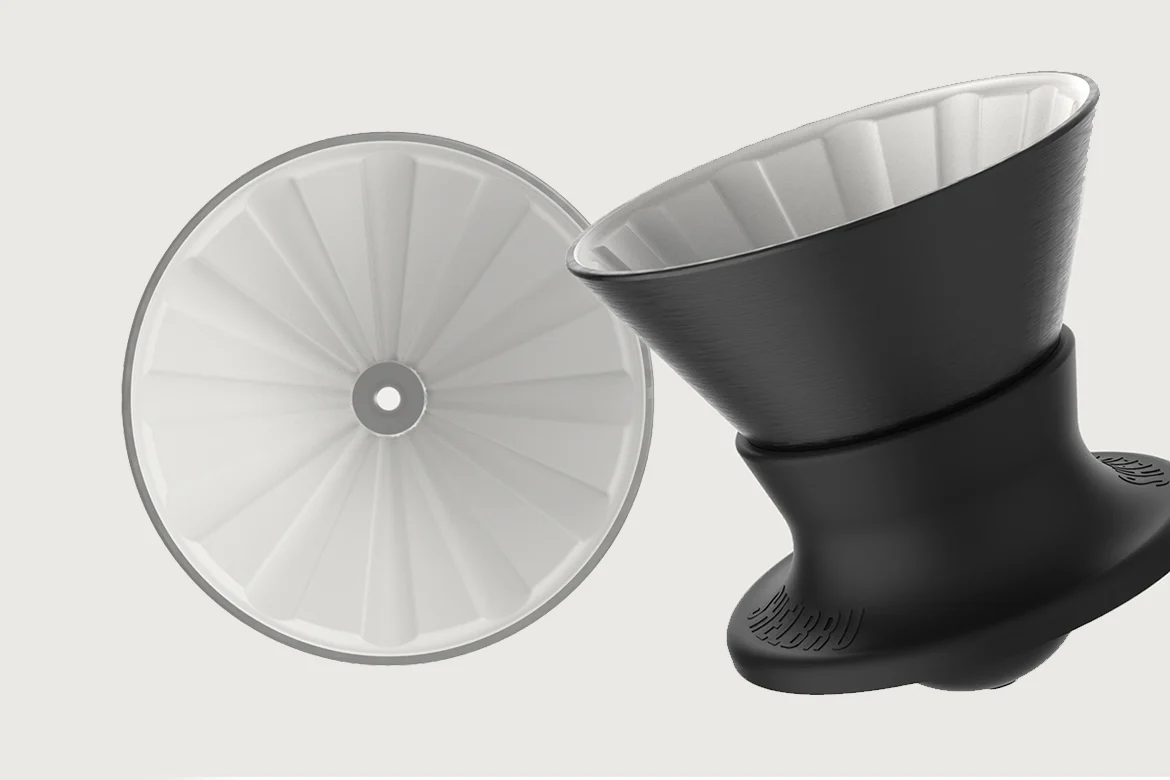
The evolution of specialty coffee equipment has historically been characterized by incremental refinements rather than radical departures from established forms. In the niche of manual pour-over brewers, where the conical V60 and flat-bottom Kalita Wave have long dictated the industry standard, innovation typically manifests in the subtle adjustment of ridge heights, the recalibration of wall angles, or the modification of drainage hole patterns. However, a new entry into the market, the June dripper by Shelbru, seeks to transcend these minor iterations by addressing one of the most persistent challenges in manual brewing: thermal instability. Developed by Stanley Chang, the founder of the acclaimed Taiwanese roaster-cafe Coffee Stopover, the June dripper introduces vacuum-insulated, double-walled stainless steel technology to the pour-over process, a design choice that promises to standardize extraction temperatures in a way previously unseen in the category.
The Challenge of Thermal Management in Manual Brewing
To understand the significance of the June dripper, one must first examine the thermodynamics of coffee extraction. When hot water is introduced to a bed of coffee grounds, the temperature of the resulting "slurry" is the primary driver of extraction efficiency. Traditional materials used in dripper construction—ceramic, glass, and single-walled metal—act as significant heat sinks. Ceramic brewers, for instance, require extensive pre-heating to prevent them from absorbing the thermal energy of the brewing water, which otherwise leads to a rapid drop in temperature and an uneven extraction.
According to technical data released by Shelbru during their product development phase, the disparity between traditional materials and vacuum-insulated technology is stark. In controlled testing environments, glass drippers exhibited a temperature drop of approximately 9°C from the post-bloom stage to the four-minute mark. Single-walled metal drippers performed even more poorly due to the high thermal conductivity of the material, losing roughly 11°C over the same period. In contrast, the June dripper’s vacuum-insulated construction maintained a near-constant temperature, showing only a 1–2°C fluctuation throughout the entire brewing cycle. This level of stability ensures that the solubility of the coffee remains consistent, allowing the brewer to more accurately target specific flavor profiles without the interference of ambient temperature loss.
Engineering the June: Concave Ribs and Airflow Dynamics
Beyond its thermal properties, the June dripper introduces a significant departure from conventional interior geometry. Most contemporary brewers utilize convex ribs—protrusions that stick out from the inner wall of the device. These ribs are designed to keep the paper filter from adhering to the walls, thereby facilitating airflow and preventing the flow of water from stalling. However, convex ribs can sometimes create bypass channels where water escapes around the coffee bed rather than through it, leading to a weaker, under-extracted cup.
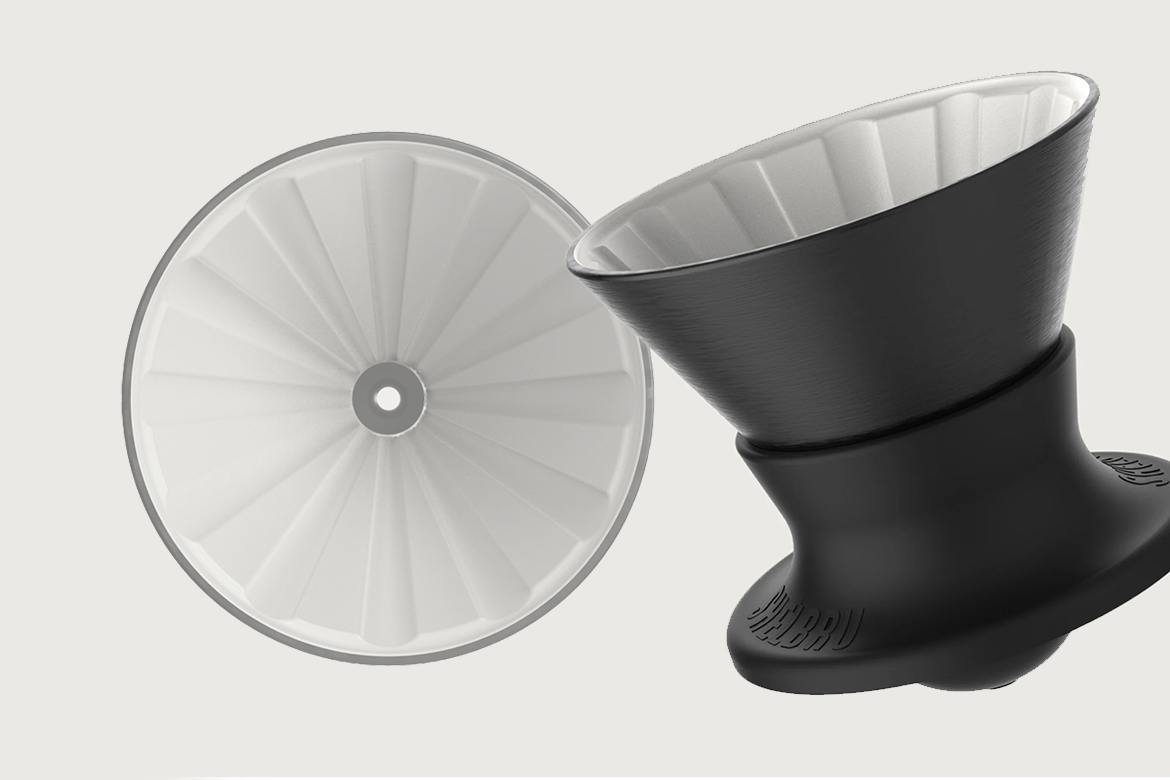
Stanley Chang’s design for the June utilizes 12 concave indentations rather than convex ridges. These "valleys" are engineered to manage airflow with greater precision. By allowing air to circulate consistently in and out of the brewer through these recessed channels, the June maintains a stable extraction flow. This design aims to mitigate the risk of "clogging" or "stalling," a common issue in conical brewers where fine coffee particles migrate to the bottom and restrict drainage. The result is a more predictable "draw-down" time, which is essential for baristas seeking to replicate precise recipes in high-volume cafe environments.
The Aroma Flow System and Aeration Science
One of the more specialized features of the June system is the "Aroma Flow" output. This attachment, located at the base of the brewer, is designed to center the stream of brewed coffee as it exits the device. While this may seem like a cosmetic addition, it serves a functional purpose when paired with advanced carafes, such as Icosa’s Avenci Cyclone.
The Aroma Flow centers the coffee stream onto the "punt"—the indentation at the bottom of the carafe—which facilitates aeration. In the context of sensory analysis, aeration serves to release volatile organic compounds (VOCs) that are responsible for the coffee’s aroma. By focusing the stream and encouraging a controlled splash and swirl, the system enhances the olfactory experience of the coffee. This emphasis on aroma reflects a broader trend in the specialty coffee industry where the sensory experience of the beverage is treated with the same level of technical scrutiny as the extraction itself.
Versatility through Modular Design
Recognizing the growing popularity of hybrid brewing methods, Shelbru has designed the June with a modular base. The dripper’s housing is removable and is specifically engineered to be compatible with the Hario Switch, a popular immersion-based brewer. This compatibility allows users to swap the June’s insulated cone into the Switch’s valve base, enabling vacuum-insulated immersion brewing.
This level of cross-brand compatibility is a strategic move in an increasingly crowded market. By allowing the June to function as both a standard pour-over dripper and an immersion tool, Shelbru appeals to the "prosumer" demographic—enthusiasts who experiment with complex brewing variables such as "steep-and-release" methods. This versatility ensures that the device remains relevant even as brewing trends shift.
Chronology of Development and Market Reception
The journey of the June dripper began in the laboratories and tasting rooms of Coffee Stopover in Taiwan. Stanley Chang, a veteran of the Asian specialty coffee scene, sought to create a tool that bridged the gap between professional-grade consistency and home-brewing simplicity. After several rounds of prototyping, the final design was integrated into the Shelbru ecosystem.
The product was launched on the crowdfunding platform Kickstarter in mid-2024. The market response was immediate and overwhelming. Within a short period of its debut, the campaign surpassed its modest $3,000 funding goal by more than 600%, netting over $18,000 with a full month remaining in the campaign. This rapid funding suggests a high level of consumer demand for thermal-focused brewing solutions.
As of the latest updates, Shelbru is offering various reward tiers for early adopters. The "Launch Week Special" priced the brewer at $61, representing a 39% discount from the projected manufacturer’s suggested retail price (MSRP). More comprehensive packages, which include the Icosa Avenci system and a separate cold brew module, are being offered at approximately $135. The company has announced a production timeline that expects rewards to begin shipping to backers in September 2024.
Broader Implications for the Specialty Coffee Industry
The introduction of the June dripper arrives at a time when the specialty coffee industry is moving away from "artisan" guesswork toward "precision" brewing. The focus on thermal stability aligns with the findings of various coffee science researchers who argue that temperature is the most overlooked variable in manual brewing.
While traditionalists may argue that the slight temperature decline in a ceramic V60 adds a desirable complexity to the cup by changing the extraction rate as the brew progresses, the modern trend favors control. For professional competitors in events like the World Brewers Cup, the ability to lock in a temperature within a single degree of variance is a significant advantage. The June dripper effectively democratizes this level of precision, bringing technology usually reserved for high-end commercial batch brewers to the kitchen counter.
Furthermore, the success of the June on Kickstarter highlights the continuing role of crowdfunding as the primary incubator for coffee innovation. Platforms like Kickstarter allow independent designers like Stanley Chang to bypass traditional distribution hurdles and speak directly to a global audience of enthusiasts. As the "months" series of drippers—April, December, and now June—continues to expand, it signals a robust and competitive era for manual brewing equipment, where every inch of innovation is backed by data and designed for the pursuit of the perfect cup.
In conclusion, the Shelbru June is more than just another addition to a crowded shelf of coffee gear. It represents a sophisticated synthesis of materials science, fluid dynamics, and sensory enhancement. By addressing the fundamental issue of heat loss and rethinking the geometry of airflow, it sets a new benchmark for what manual brewers can achieve in terms of consistency and quality. As shipping commences in the fall, the global coffee community will be watching closely to see if this "new era" of pour-over truly delivers on its promise of thermal perfection.