Cintya Tara Annisa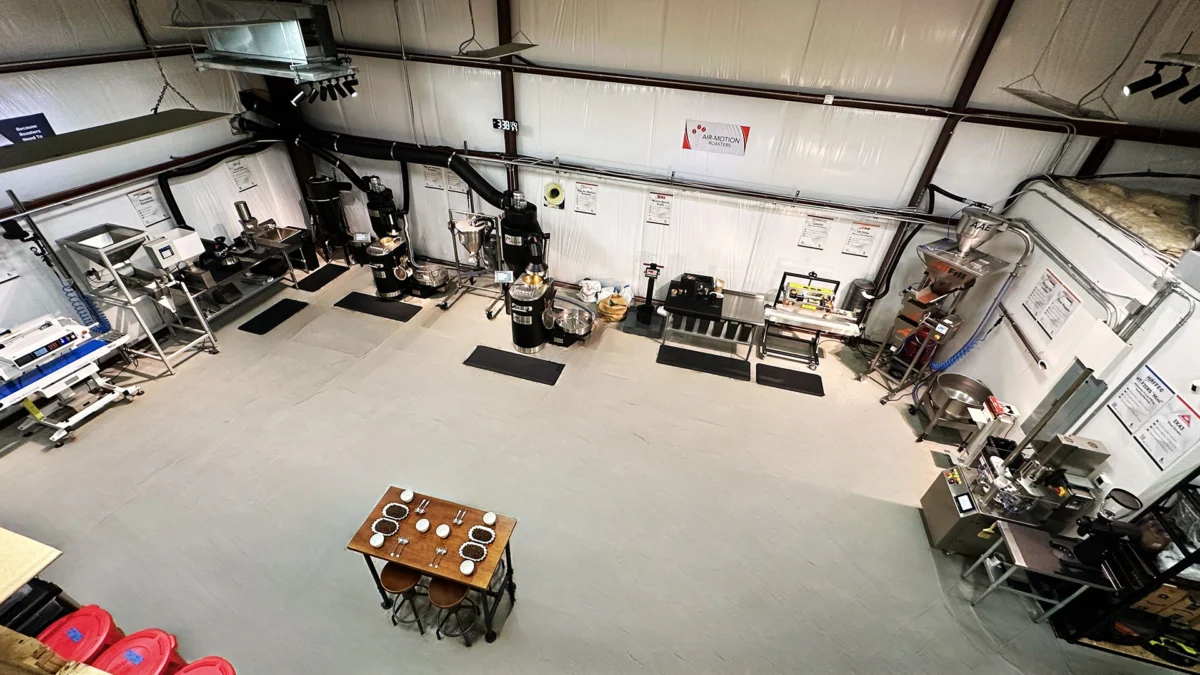
The specialty coffee industry continues to evolve as technological advancements and shifting environmental priorities reshape the landscape of roasting operations. Coffee Equipment Pros, a prominent North American online marketplace and equipment partner, has officially introduced its new showroom and hands-on demonstration facility in Spicewood, Texas. Situated in the scenic Texas Hill Country just outside of Austin, this facility marks a significant expansion for the company, moving beyond the digital marketplace to provide a physical hub for education, equipment testing, and workflow optimization. Featured as part of the 2026 Build-outs of Coffee series, the project represents a growing trend in the industry where equipment distributors offer immersive, "working laboratory" environments rather than traditional static showrooms.
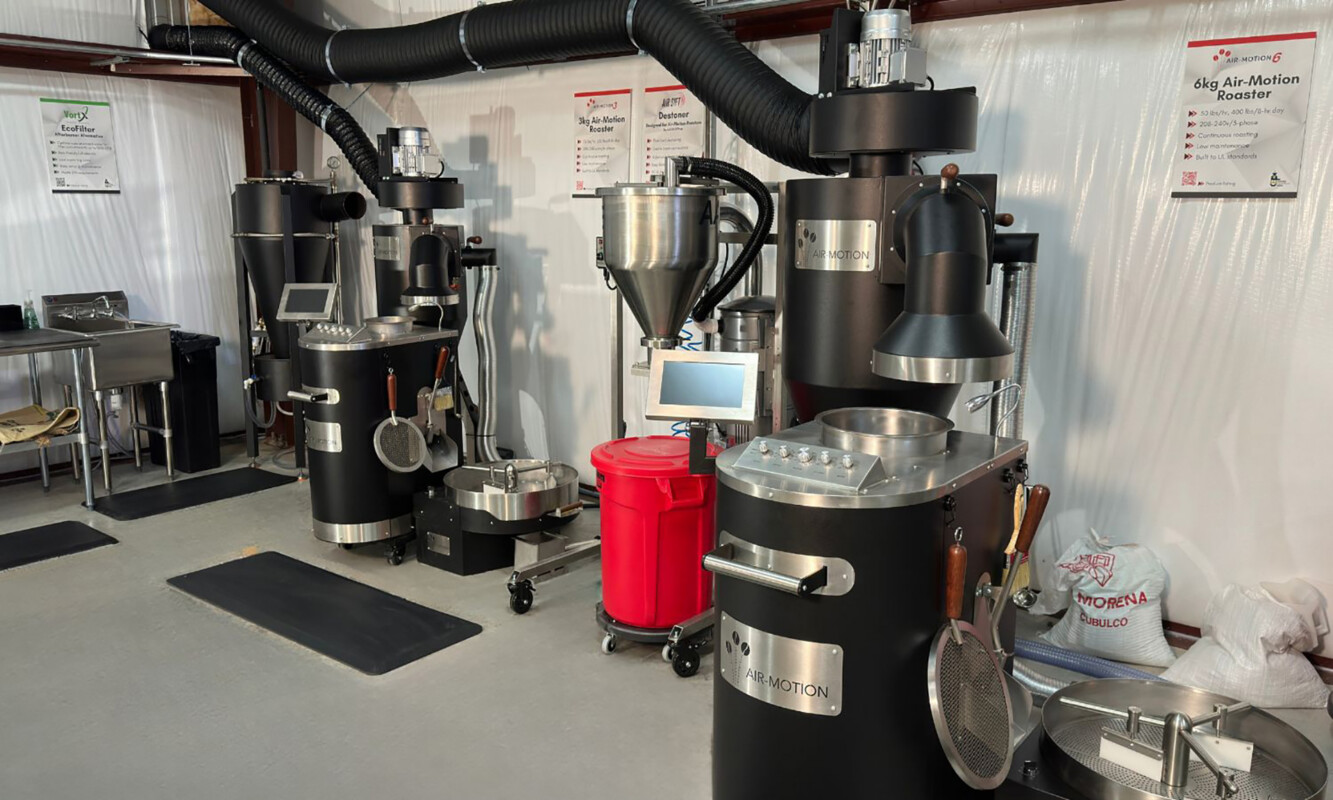
The Spicewood facility is designed to serve coffee roasteries of various scales, from boutique retail operations to high-volume wholesale producers. By offering a space where potential buyers can engage directly with machinery before making substantial capital investments, Coffee Equipment Pros aims to eliminate the uncertainty often associated with procuring high-end roasting technology. The centerpiece of this new location is the Air-Motion Roaster (AMR), for which Coffee Equipment Pros serves as the exclusive North American distributor. The facility currently houses the AMR3 and AMR6 models, allowing visitors to experience the nuances of air-roasting technology in a real-world production setting.
A New Paradigm for Equipment Evaluation
The traditional model for purchasing commercial coffee equipment often relies on specifications sheets, video demonstrations, and industry testimonials. However, for roastery owners, the transition to a new system—particularly one utilizing different heat transfer methods—carries significant financial and operational risks. The Spicewood facility addresses these challenges by prioritizing transparency and direct experience. Kristi Anderson, representing Coffee Equipment Pros, notes that the space is intended to be a "working environment" where clients can roast, cup, and compare systems side-by-side.
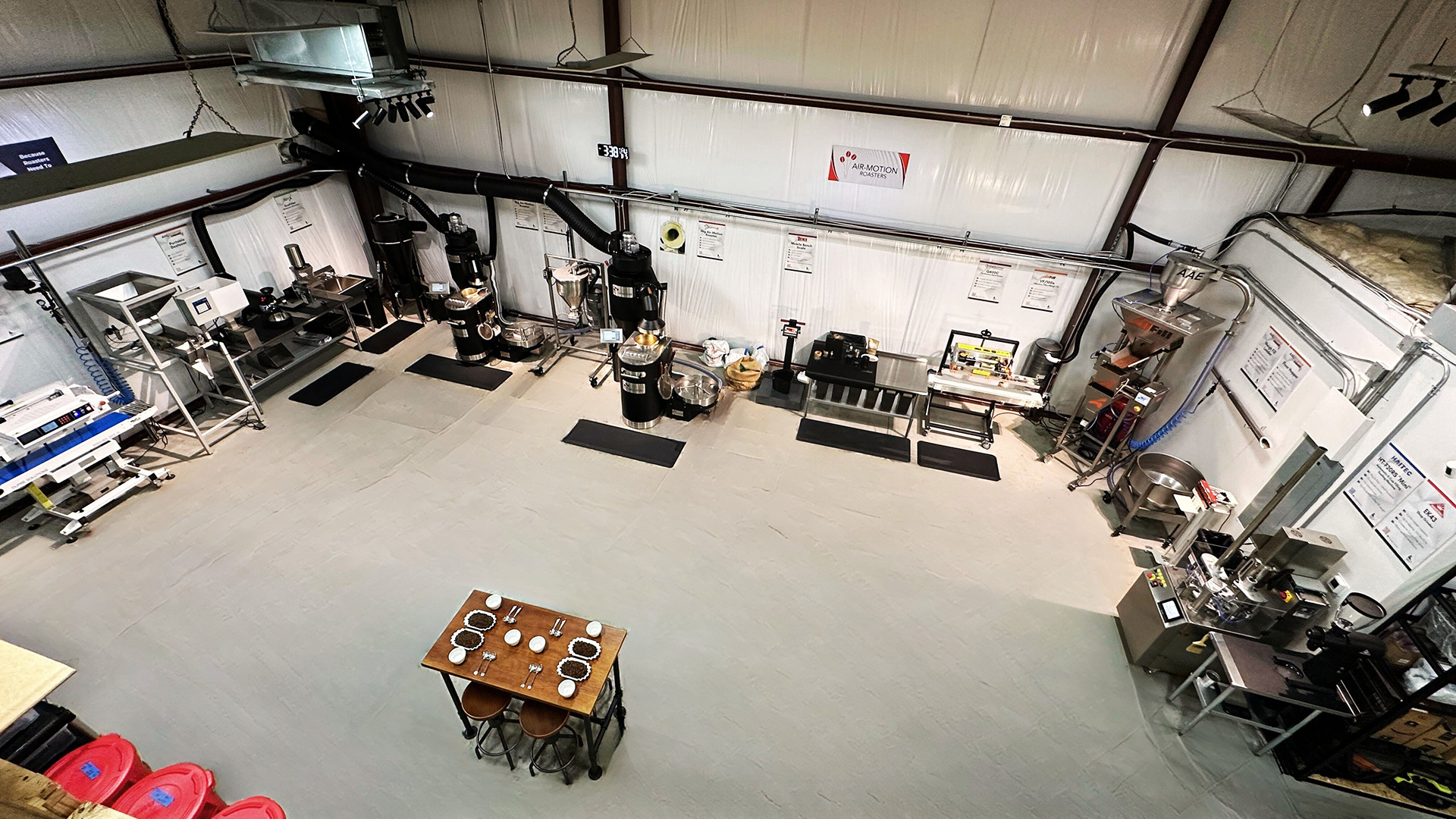
This hands-on approach is critical given the complexity of modern roasting workflows. Beyond the roasters themselves, the facility features nearly 20 additional pieces of equipment that encompass the entire production cycle. This includes destoners, weigh-fill systems, industrial scales, bean analyzers, heat sealers, and precision grinders. By demonstrating a complete end-to-end production line, Coffee Equipment Pros provides a holistic view of roastery management, allowing operators to identify potential bottlenecks and optimize their specific workflows before committing to a purchase.
Technological Context: The Rise of Air-Motion Roasting
The focus on Air-Motion Roasters at the Spicewood facility highlights a broader shift within the industry toward fluid-bed roasting technology. Unlike traditional drum roasters, which rely on a combination of conductive, convective, and radiant heat, air roasters use a high-velocity stream of heated air to levitate and tumble the coffee beans. This method is often cited for its ability to produce a cleaner cup profile by minimizing the risk of scorching or "tipping" caused by contact with a hot metal drum.
Furthermore, air-roasting systems are increasingly favored for their consistency and responsiveness. The ability to make rapid adjustments to air temperature and flow allows roasters to achieve precise roast profiles with high repeatability. As the specialty coffee market becomes increasingly competitive, the demand for equipment that offers both flavor clarity and operational efficiency has surged. The Spicewood showroom serves as a primary touchpoint for North American roasters to evaluate whether this technology aligns with their specific brand identity and production goals.
The Roastery of the Future: Sustainability and Electrification
One of the most significant aspects of the Spicewood project is its commitment to an all-electric workflow. Termed the "Roastery of the Future" by the company, the facility operates without reliance on traditional gas infrastructure. This strategic choice reflects a growing movement toward decarbonization within the global coffee supply chain. According to industry data, coffee roasting is one of the most energy-intensive stages of coffee production, traditionally dependent on natural gas or propane.

The shift toward electric roasting offers several advantages beyond carbon footprint reduction. In many urban environments, installing gas lines can be prohibitively expensive or restricted by building codes and environmental regulations. Electric roasters provide a more flexible solution for roasteries located in modern commercial spaces or areas with infrastructure limitations. By showcasing a fully electric, high-performance workflow, Coffee Equipment Pros is positioning itself at the forefront of the industry’s transition to more sustainable energy sources. This focus on sustainability extends to the efficiency of the systems themselves, which are designed to reduce heat loss and lower overall energy consumption per batch.
Regional Growth and the Texas Coffee Scene
The selection of Spicewood, Texas, as the location for this facility is a strategic move that taps into the rapidly expanding specialty coffee market in the Greater Austin area. Austin has long been a hub for innovation and entrepreneurship, and its coffee scene has seen exponential growth over the last decade. By establishing a presence in the Texas Hill Country, Coffee Equipment Pros provides a destination for roasters across the Southern United States and beyond.
The regional economic impact of such a facility is noteworthy. As a hub for education and consulting, the Spicewood location attracts industry professionals to the area, fostering a community of practice centered around roasting technology. The facility’s "by appointment" model ensures that visitors receive dedicated, one-on-one technical support, further establishing Central Texas as a key node in the North American coffee equipment landscape.
Chronology and Development
The development of the Spicewood facility follows a period of significant growth for Coffee Equipment Pros as a digital marketplace. Recognizing the need for a physical space to complement their online operations, the company began planning the showroom to bridge the gap between digital browsing and physical implementation.
- Phase 1: Concept and Selection: The company identified the need for a North American hub for Air-Motion Roasters and selected the Spicewood location for its proximity to Austin’s logistics and coffee community.
- Phase 2: Infrastructure and Installation: The facility was outfitted with a fully electric grid capable of supporting multiple commercial roasters and industrial packaging equipment simultaneously.
- Phase 3: Operational Launch: The space transitioned into a "working showroom," beginning with appointment-based demonstrations and moving toward a broader role as an educational and co-roasting center.
Currently, the facility is in active use, hosting roasters who wish to test specific green coffee lots on AMR systems. The upcoming months are expected to see an expansion of these services, including more formal educational workshops and technical training sessions.
Industry Implications and Analysis
The opening of the Coffee Equipment Pros showroom carries several implications for the broader specialty coffee industry. First, it underscores the importance of "try-before-you-buy" models in high-stakes capital investments. As roastery equipment becomes more sophisticated and expensive, the value of a neutral, hands-on testing ground increases.
Second, the emphasis on a complete workflow demonstration highlights a shift toward integrated systems. Roasters are no longer looking for just a roasting machine; they are looking for integrated solutions that include data logging software, precision packaging, and quality control tools. By presenting these components as a unified system, Coffee Equipment Pros is catering to a more professionalized and efficiency-minded class of roastery owners.
Finally, the project serves as a proof-of-concept for the viability of gas-free roasting operations. As more cities move toward "all-electric" building mandates, the Spicewood facility provides a blueprint for how a modern roastery can thrive without fossil fuels. This move is likely to influence other equipment distributors and roastery designers to prioritize electric alternatives in their future projects.
Conclusion and Future Outlook
The Coffee Equipment Pros facility in Spicewood represents a forward-thinking approach to coffee industry infrastructure. By combining a diverse marketplace of new and used equipment with a state-of-the-art demonstration space, the company is addressing the practical needs of modern roasters. The focus on Air-Motion technology and electric workflows aligns with the industry’s dual goals of quality excellence and environmental responsibility.
As the facility moves into its next phase of operation, it is poised to become a vital resource for the North American roasting community. Whether for a startup looking to design its first production floor or an established roastery seeking to transition to more sustainable technology, the Spicewood showroom offers a glimpse into the future of coffee production. The 2026 Build-outs of Coffee, presented by Pacific Barista Series, DONA, and La Marzocco, continues to highlight such innovative projects that push the boundaries of what is possible in the world of specialty coffee. Through transparency, education, and technological leadership, Coffee Equipment Pros is helping to define the next era of the roastery experience.