Cintya Tara Annisa
The installation of Pope Leo XIV, formerly Cardinal Robert Francis Prevost of Chicago, marks a series of historic firsts for the Roman Catholic Church, including the ascension of the first American to the Chair of Saint Peter. While his papacy has been noted for its modernization efforts and his public affinity for the Chicago White Sox and digital word games, a specific cultural nuance has captured the attention of both the culinary world and diplomatic circles: his disciplined preference for traditional Peruvian coffee preparation. This preference, rooted in his decades of service in South America, offers a window into the intersection of personal history and the global coffee trade, highlighting the traditional "gota a gota" method that remains a staple of Peruvian domestic life.
The Papal Preference: Essence of Coffee and the Gota a Gota Method
During his tenure as the Bishop of Chiclayo in northern Peru, Pope Leo XIV developed a rigorous standard for his morning beverage, eschewing modern espresso machines in favor of the cafetera gota a gota, or "drop by drop" coffeemaker. This method is distinct from the rapid extraction processes common in Western specialty coffee shops. The device consists of two chambers: an upper vessel where hot water is introduced and a lower chamber that collects a highly concentrated liquid known as escencia de café, or the essence of coffee.
The technical execution of the gota a gota method bears similarities to the Vietnamese phin filter and the traditional Neapolitan flip pot. Gravity drives the water through a porous upper chamber onto a densely packed bed of coffee grounds. The resulting concentrate is estimated to be up to four times stronger than standard drip coffee. According to Eduard Montoya Altamirano, the proprietor of Trébol, a restaurant in Chiclayo where the Pope was a regular patron during his time as Bishop, the Pontiff’s preference was characterized by a "less is more" approach regarding dilution. While the escencia is typically tempered with hot water to the drinker’s liking, Pope Leo XIV was known to favor a high-strength ratio, consistently declining the addition of milk.
Chronology of Robert Francis Prevost’s Journey to the Papacy
The path of Pope Leo XIV from the South Side of Chicago to the Vatican is a narrative defined by internationalism and administrative rigor. Born Robert Francis Prevost in 1955, his formative years were spent in the Chicago area, where he became a lifelong supporter of the White Sox—a devotion that remains a point of public interest following the team’s resurgence in the mid-2020s.
In 1977, Prevost joined the Order of Saint Augustine, beginning a trajectory that would take him from the United States to the heart of the Peruvian Andes. He was ordained to the priesthood in 1982 in Rome, but it was his assignment to the missions in Peru that would define his pastoral identity. He served as the Prior Provincial of the Augustinian Province of Chicago before being elected Prior General of the entire order in 2001.
In 2014, Pope Francis appointed him as the Apostolic Administrator of the Diocese of Chiclayo, Peru, and he was later consecrated as its Bishop. It was during this period, spanning nearly a decade in the Lambayeque region, that his culinary and social habits became intertwined with Peruvian traditions. His elevation to the College of Cardinals and his subsequent appointment as the Prefect of the Dicastery for Bishops placed him in the upper echelon of Vatican governance, eventually leading to his election as Supreme Pontiff.
The Science and Economics of Peruvian Coffee Production
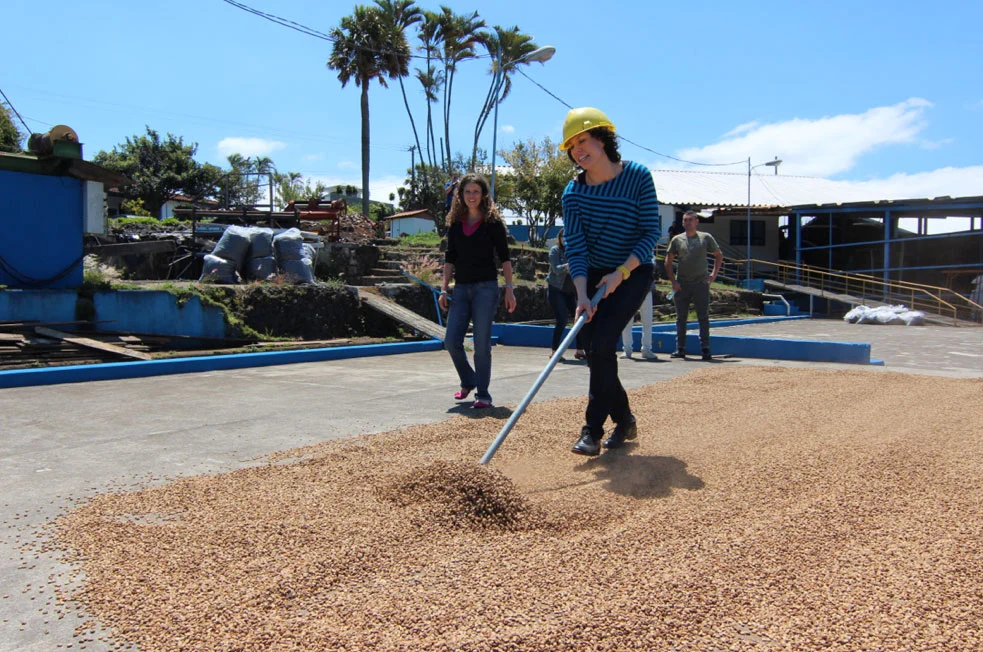
The Pope’s preference for Peruvian coffee highlights a significant sector of the global agricultural economy. Peru is currently one of the world’s top ten coffee producers and is the leading exporter of organic coffee globally. The Lambayeque region, and specifically the areas surrounding Chiclayo, serves as a vital hub for the processing and distribution of beans grown in the northern highlands of the Andes.
Data from the Peruvian Ministry of Agriculture and Irrigation (MINAGRI) indicates that coffee accounts for approximately 25% of the country’s agricultural exports, supporting more than 220,000 families. The "essence" method favored by the Pope is more than a culinary quirk; it is a practical adaptation to the high-altitude environments of Peru, where maintaining consistent water temperature for brewing can be challenging. By creating a shelf-stable essence that can be diluted with hot water at the point of service, Peruvian households have maintained a consistent coffee culture that dates back to the 19th century.
Transnational Influence: The Peruvian Presence in the Vatican
The transition of a Pope’s personal habits into the fortified walls of Vatican City often involves a complex logistical operation. While the Vatican is historically associated with the Italian espresso tradition—symbolized by the proximity of iconic Roman roasting houses—Pope Leo XIV has reportedly maintained a Peruvian atmosphere within the papal apartments.
Observers within the Holy See note that the Pope’s household staff, including his primary secretary and the religious sisters who manage the residence, are predominantly of Peruvian origin. This cultural cohort provides the necessary infrastructure to maintain the gota a gota tradition within Rome. While some have speculated that the Pope might eventually adopt the Neapolitan coffeemaker—given that Naples is a short distance from the Vatican—the continued presence of his Peruvian inner circle suggests a commitment to the "essence of coffee" that defined his years in Chiclayo.
Analysis of the Chicago Coffee Market and Papal Roots
The Pope’s identity as a Chicagoan raises questions regarding his relationship with the city’s contemporary specialty coffee industry. When Robert Francis Prevost left Chicago for his international assignments in the early 1980s, the city’s coffee landscape was dominated by large-scale commercial roasters. He missed the "Second Wave" and "Third Wave" coffee movements that saw Chicago emerge as a global leader in specialty roasting.
Industry analysts suggest that his preference for the syrupy, high-development profiles of the gota a gota method would likely align him with specific Chicago roasters today. While contemporary brands like Intelligentsia or the high-concept aesthetics of Dayglow might not align with his traditionalist palate, the "80s-vibe" and robust profiles found at establishments like The Wormhole—which utilizes Halfwit Coffee Roasters—offer a more logical connection to his past. The heavy body and sweetness characteristic of Halfwit’s roasts mirror the sensory experience of the escencia de café found in northern Peru.
Broader Implications for Cultural Diplomacy and the Church
The visibility of Pope Leo XIV’s coffee habits serves as a form of "soft power" in cultural diplomacy. By championing a traditional Peruvian brewing method, the Pope provides a global platform for South American agricultural traditions. This is consistent with the broader shift in the Catholic Church toward the "Global South," recognizing that the majority of the world’s Catholics now reside in Latin America and Africa.
The Pope’s choice to eschew the luxury of modern espresso technology in favor of a humble, traditional method resonates with his pastoral emphasis on simplicity and local engagement. This alignment of personal habit and ecclesiastical message is a hallmark of his papacy thus far. As the Church navigates the complexities of the 21st century, the image of an American Pope, rooted in Chicago but shaped by the traditions of Peru, drinking a cup of gota a gota coffee, serves as a potent symbol of a truly globalized institution.
In conclusion, while the theological and administrative decisions of Pope Leo XIV will ultimately define his legacy, his daily ritual of coffee consumption offers a rare, humanizing glimpse into the life of the Pontiff. It bridges the gap between the South Side of Chicago and the highlands of Peru, ultimately finding a home in the heart of Rome. For the coffee industry, the "Papal Seal of Approval" on the gota a gota method may spark a renewed interest in traditional extraction techniques, proving that even in the highest offices of the world, the "less is more" strategy remains a powerful philosophy.