rifanmuazin
A pioneering social media creator, diagnosed with ADHD and Level 1 autism, has developed a bespoke system for consistent content production, offering a compelling case study that challenges conventional productivity advice and provides actionable strategies for a broader audience, including neurodivergent individuals and those struggling with creative consistency. The creator’s journey highlights the critical need for personalized approaches to workflow management, particularly in demanding fields like the burgeoning creator economy.
The Genesis of a Tailored System: Overcoming Neurodivergent Challenges
The individual embarked on their social media creation journey six months ago, immediately confronting significant hurdles rooted in their neurodivergence. Traditional advice, emphasizing "consistency" and "showing up every day," proved counterproductive for a brain wired differently. Diagnosed with ADHD in 2019 and Level 1 autism in 2020, the creator found that standard guidance failed to account for the executive dysfunction, task initiation difficulties, and cognitive overwhelm often associated with these conditions. The inherent challenge lay in translating broad directives into concrete, manageable daily actions, a process that their neurodivergent brain struggled to perform naturally. This realization prompted a pivot from adhering to generalized advice to constructing a system specifically engineered to leverage their cognitive strengths and mitigate their challenges.
The creator’s experience resonates with a significant portion of the global population. According to the World Health Organization, ADHD affects approximately 2.5% of adults worldwide, while autism spectrum disorder impacts about 1-2% of the population. Individuals with these conditions often face unique challenges in professional environments, including difficulties with time management, organization, task switching, and managing sensory input. The creator economy, valued at over $100 billion and projected to grow further, places immense pressure on individuals to maintain a constant, high-quality online presence, making robust and personalized productivity systems more crucial than ever.
Strategic Minimization and Iterative Scaling: The Foundation of Consistency
One of the foundational principles of the creator’s system is the concept of "lowering the starting bar" – a direct counterpoint to the overwhelming pressure to achieve perfection from the outset. Initially, the creator adopted a literal interpretation of "staying consistent," attempting daily posts across multiple platforms. This led to rapid burnout before any significant momentum could be built.
In response, a two-pronged strategy was implemented:
- Platform Focus: Limiting initial efforts to a single platform, TikTok, with a commitment to just one video post per week. Expansion to additional platforms, such as LinkedIn, only occurred once the primary platform’s routine felt effortless.
- Perfectionism Mitigation: Actively relinquishing the pursuit of "perfect" content. As a self-described "raging perfectionist with ADHD," the creator often scrapped content or delayed posting due to an inability to meet an impossibly high internal standard. By prioritizing completion and regular posting over flawless execution, a significant barrier to consistency was removed.
This iterative scaling approach, where frequency and platform count increase only as the current workload becomes routine and "boring," is a critical mechanism for preventing overwhelm and fostering sustainable growth. It stands in contrast to the common creator advice of "go big or go home," instead advocating for a gradual, mastery-based progression. This method aligns with psychological principles of habit formation, where small, achievable steps are more likely to lead to long-term adherence than ambitious, overwhelming goals.
Dynamic Idea Capture and Development Protocols
A significant challenge for individuals with ADHD is the fleeting nature of ideas. The creator described their brain as a "railroad crossing with a train of thoughts," where ideas arrive rapidly and can be lost just as quickly if not captured. Recognizing that inspiration often strikes at inconvenient times – during showers, while driving, or before sleep – a robust idea capture system became indispensable.
The evolution of this system involved:
- Initial Digital Notes: Utilizing the iPhone’s native Notes app for quick jotting, later transferring these to a Google Doc for more structured development.
- Voice Memos for Rapid Input: The discovery of voice memos was a "game-changer," allowing for the rapid articulation of thoughts, mirroring the speed of the creator’s brain.
- AI-Powered Transcription: Implementing Otter.ai to capture and transcribe voice notes, ensuring that no nuances were lost and ideas were readily available for processing.
This multi-modal capture strategy addresses the unique cognitive flow of neurodivergent individuals, providing flexible entry points for creative input. The subsequent phase involves dedicated "content creation time" where these raw ideas are refined into solid concepts and, depending on the platform, full scripts. This structured approach to idea management transforms transient thoughts into actionable content.

Optimized Content Batching for Enhanced Focus
The traditional model of daily content creation, demanding constant "context switching" between ideation, production, and scheduling, proved highly taxing for the creator. The need to "get in the zone" for creative tasks, coupled with daily distractions, made consistent daily output unsustainable.
Inspired by content creation strategies shared by other neurodivergent creators, the individual adopted a "batch content creation" routine. This involves dedicating specific, concentrated blocks of time to produce multiple pieces of content in a single sitting. Initially, one morning per week was allocated to create five to six pieces of content. As this routine solidified, a second morning was added, focusing on three to four pieces. The remainder of the week is then dedicated to scheduling posts and engaging with the community.
This batching approach offers several benefits:
- Reduced Context Switching: Minimizes the cognitive load associated with transitioning between different types of tasks, a particular challenge for individuals with ADHD.
- Deep Work Facilitation: Allows for sustained periods of focused creative output, leveraging the brain’s ability to concentrate when in a flow state.
- Enhanced Efficiency: Streamlines the creative process by grouping similar tasks, such as recording or writing, leading to higher output per unit of time.
Experts in productivity often advocate for batching as a method to improve efficiency for all individuals, but its benefits are particularly pronounced for neurodivergent individuals who may struggle more with task initiation and shifting mental gears.
Structured Flexibility: Themed Content Calendars
The interplay between ADHD and autism presented a unique challenge: the autistic brain’s desire for a plan clashing with the ADHD brain’s tendency to deviate from rigid schedules. The solution devised was a "flexible framework" rather than an inflexible schedule.
This framework materialized as a simple content calendar in Google Sheets, employing "themed days" instead of specific content assignments. For a TikTok calendar, this might include recurring themes such as "carousel days," "gaming tips and tricks," "cat video day," or "CapCut memes."
The advantages of this themed approach are multifaceted:
- Reduced Decision Fatigue: By pre-determining the type of content for a given day, the creator avoids the paralysis of a blank slate, only needing to decide on the specific topic within that format.
- Predictability and Structure: Provides the autistic brain with a predictable rhythm and framework, reducing anxiety associated with uncertainty.
- Flexibility within Structure: Allows the ADHD brain creative freedom within established boundaries, preventing the feeling of being overly constrained.
This innovative blend of structure and flexibility offers a robust model for managing creative output while accommodating diverse cognitive needs.
Leveraging Templates for Streamlined Production
The initial hurdle of "starting from scratch" for every piece of content was a significant source of overwhelm and paralysis. To combat this, the creator implemented the use of templates.
The strategy involved:
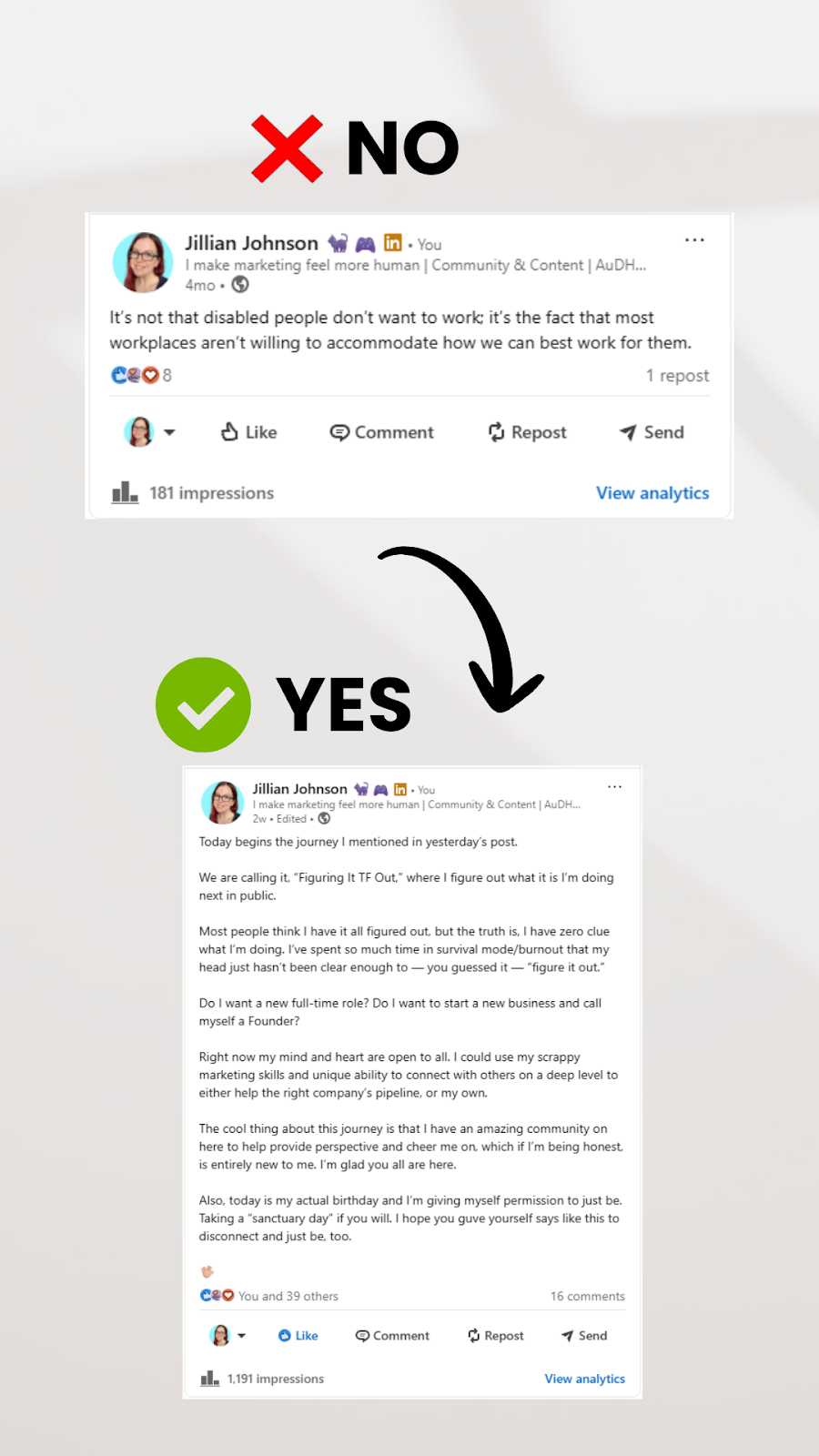
- Platform-Specific Templates: Developing a primary template for gaming videos in CapCut and another for LinkedIn posts.
- Framework-Based Templates: The LinkedIn template was built around a consistent "Hook, Story, Lesson, CTA" framework. This structure ensures that every post effectively grabs attention, personalizes the message, provides value, and directs the reader to a clear next step.
Templates significantly reduce cognitive load by providing a pre-existing structure to fill in, rather than requiring content to be built from the ground up. This approach mitigates decision fatigue, enhances consistency in content quality and format, and allows the creator to focus energy on the core message rather than the structural mechanics. The recommendation is to start with one template for the most common content type and expand as content patterns become clearer.
Automation for Sustained Engagement
Forgetfulness, a common symptom of ADHD, posed a critical threat to content consistency. The creator frequently produced high-quality content only to forget to post it for days or even weeks. This issue underscored the unreliability of relying solely on memory for crucial operational tasks.
The solution was comprehensive automation:
- Scheduling Tools: Utilizing platforms like Buffer to schedule content across LinkedIn and TikTok immediately after batch creation sessions. This ensures that posting occurs independently of the creator’s memory or executive function on any given day.
- Integration with Workflow: Scheduling is integrated directly into the batching process, leveraging the "content mode" state to complete all related tasks efficiently.
Automation serves as an externalized executive function, ensuring that the fruits of creative labor are consistently delivered to the audience. This strategy is vital for neurodivergent individuals who may experience significant variability in their ability to perform routine tasks, effectively "bulletproofing" the posting schedule against cognitive fluctuations.
Resilience and Adaptive Recovery Protocols
Acknowledging that "falling off track" is an inevitable part of being neurodivergent, the system incorporates a crucial element of forgiveness and adaptive recovery. Previous experiences involved abandoning calendars and ghosting accounts entirely after missing posts. The current system is designed to facilitate re-engagement without guilt or overwhelming catch-up efforts.
Key principles for recovery include:
- No Catch-Up Pressure: When a week is missed, there is no attempt to compensate by posting double the next week.
- Simple Re-entry: The strategy is to simply pick up where the system left off – "One post, one platform, one day."
This forgiving approach recognizes that neurodivergent brains have "worst brain days" and that a sustainable system must be resilient enough to absorb these periods without collapsing. It emphasizes consistent effort over perfect adherence, fostering a long-term relationship with the content creation process rather than promoting self-defeating cycles of perfectionism and burnout.
Broader Implications for the Creator Economy and Inclusive Productivity
The system developed by this neurodivergent creator transcends a personal solution; it offers valuable insights for anyone grappling with consistency in content creation or any demanding professional field. The principles of strategic minimization, dynamic idea capture, batching, structured flexibility, templating, automation, and adaptive recovery are universal in their applicability, though they hold particular significance for neurodivergent individuals.
This case study underscores the importance of:
- Personalized Productivity: Recognizing that "one-size-fits-all" advice is often ineffective, and that systems must be tailored to individual cognitive profiles.
- Inclusive Design in Professional Tools: Highlighting the need for tools and workflows that accommodate diverse neurological wiring, moving beyond neurotypical assumptions.
- Destigmatizing Neurodivergence in the Workplace: Showcasing how neurodivergent traits, when understood and supported by appropriate systems, can lead to innovative and effective solutions.
As the creator economy continues its rapid expansion, fostering an environment where all individuals can thrive requires a deeper understanding of diverse working styles and a commitment to flexible, adaptive strategies. The journey of this neurodivergent creator provides a powerful blueprint for building sustainable creative practices, proving that with the right system, consistency is not just achievable, but a pathway to success. For those feeling overwhelmed by the demands of the digital landscape, the message is clear: start small, build incrementally, and design a system that works with your brain, not against it.