Cintya Tara Annisa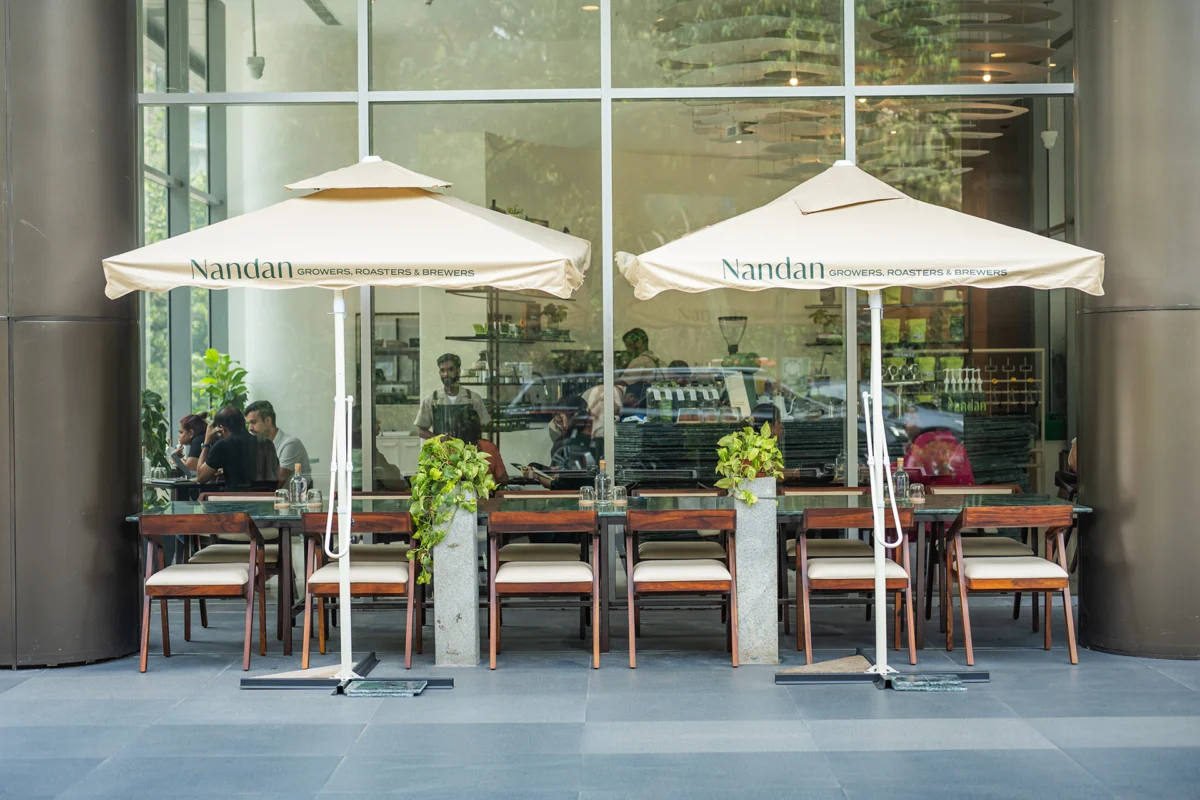
The landscape of Indian specialty coffee reached a significant milestone in early 2026 with the opening of Nandan Coffee’s flagship location at Embassy One on Bellary Road in Bangalore. This expansion represents a sophisticated convergence of traditional South Indian coffee heritage and modern architectural design, positioning the brand as a leader in the nation’s burgeoning "farm-to-cup" movement. Unlike the traditional retail model where coffee is sourced from disparate third-party producers, Nandan Coffee operates on a vertically integrated model, overseeing every phase of production from the organic cultivation of beans at the Nandanvan Estate in Kodaikanal to the final pour in the heart of Karnataka’s capital. Led by third-generation steward Yahvi Mariwala, the new 3,500-square-foot facility serves as both a high-end cafe and an educational hub, designed to bridge the geographic and conceptual gap between the remote coffee plantations of the Palani Hills and the urban consumers of India’s technological epicenter.
The Evolution of Nandan Coffee: From Estate to Urban Flagship
The origins of Nandan Coffee trace back to the early 1990s, when founders Hansraj and Hansa Mariwala established the Nandanvan Estate in the biodiversity-rich region of Kodaikanal, Tamil Nadu. Over the course of three decades, the estate has evolved from a private family venture into a certified organic powerhouse. A pivotal moment in the company’s history occurred in 2001, when the estate committed to fully organic farming practices, a move that predated the global surge in demand for sustainable and chemical-free agricultural products. This commitment to the environment has allowed the estate to function as a sanctuary for local wildlife, maintaining an unfenced perimeter that permits the natural movement of fauna through the coffee groves.
The transition to the third generation under Yahvi Mariwala has seen Nandan Coffee pivot toward a more consumer-facing identity. While the brand has long been respected for its green coffee production, the 2026 opening in Bangalore marks a strategic effort to showcase the nuances of a single-estate profile. By controlling the roasting process at the origin and managing the retail experience in the city, the company ensures that the "provenance" of the bean—a term often used in the wine industry to denote history and ownership—is preserved with absolute transparency. This model is increasingly rare in a global market where specialty beans often pass through multiple brokers, exporters, and roasters before reaching the consumer.
Architectural Narrative: Bringing the Palani Hills to Bangalore
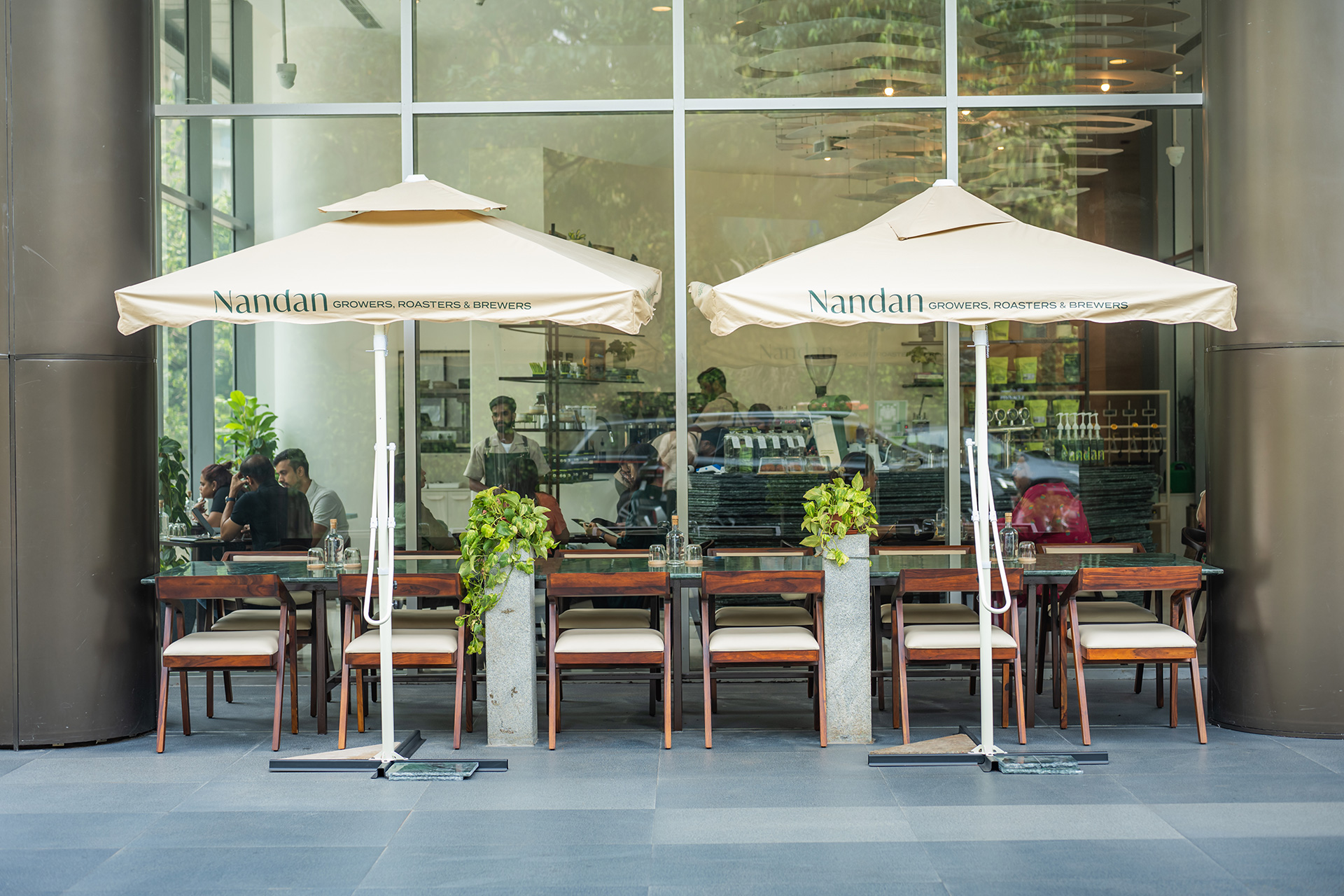
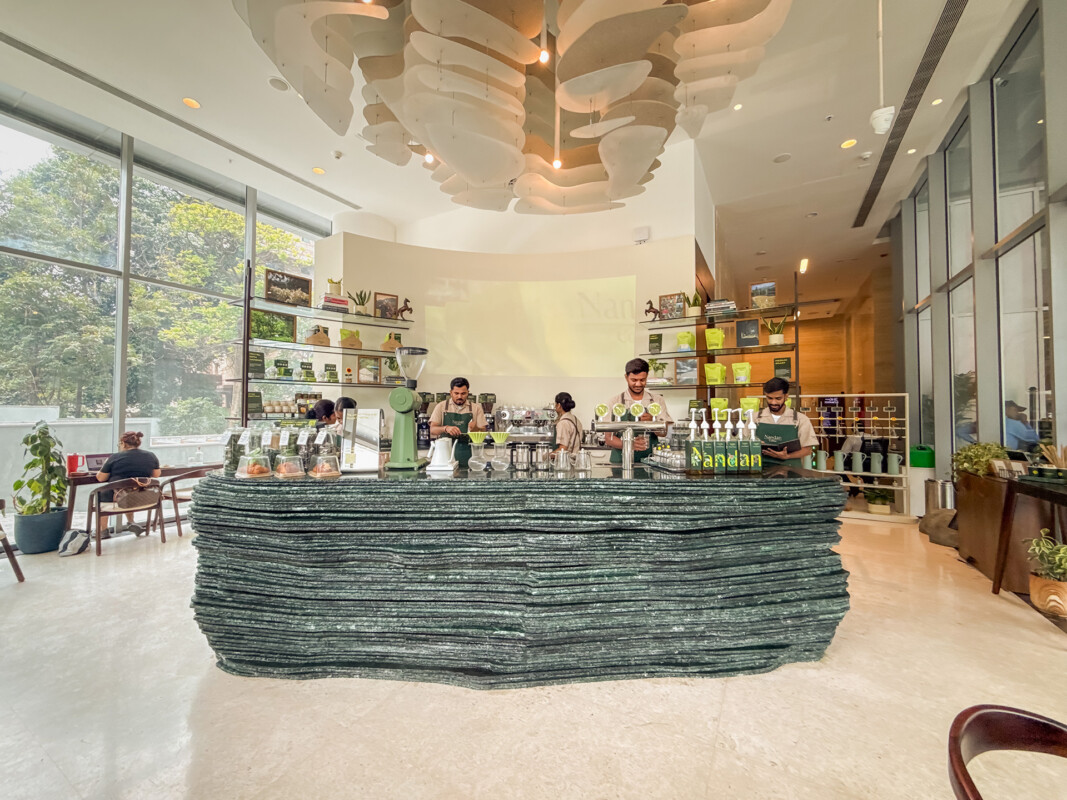
The design of the Bangalore flagship was a collaborative effort between Farida Mariwala Interiors and architect Faizan Khatri. The primary objective was to translate the rugged, verdant atmosphere of the Kodaikanal highlands into a sleek, urban environment. The result is a space characterized by 17-foot-high ceilings and expansive three-sided glazing that invites natural light, creating an airy, greenhouse-like atmosphere that references the open canopies of the Nandanvan Estate.
The centerpiece of the cafe is a sculptural, open island coffee bar. Clad in layered Baroda Green marble, the bar’s aesthetic is inspired by the topographical contours of the Palani Hills. This design choice is not merely decorative; it serves a functional purpose by removing the traditional barriers between the barista and the customer. By utilizing an island layout, the preparation of coffee becomes a visible, performative art. This transparency is intended to foster a sense of discovery, encouraging guests to engage in conversations about brewing techniques and bean origins. Complementing the stone elements is a custom lighting installation designed to mimic the dappled sunlight found in a forest canopy, further grounding the urban space in its rural roots.
Technical Specifications and the Coffee Program
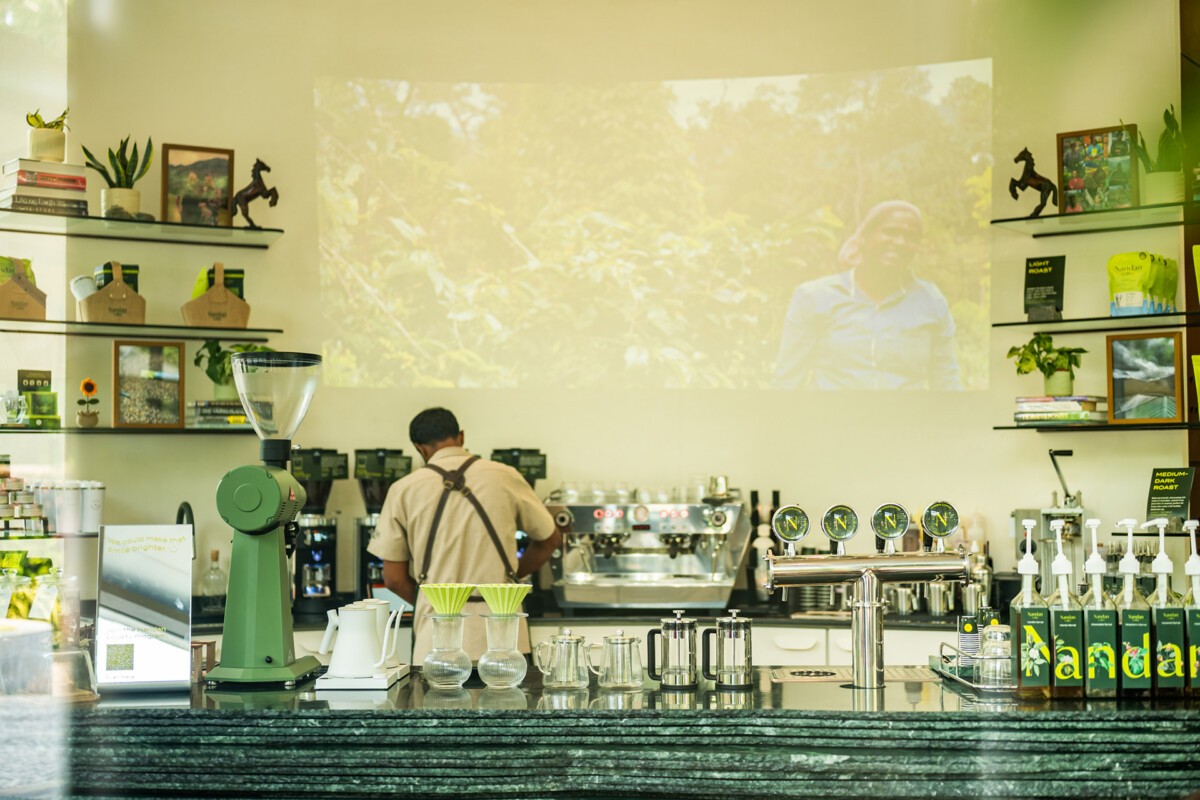
To support its ambitious coffee program, Nandan Coffee has equipped the Bangalore flagship with industry-leading technology. The espresso program is anchored by the La Marzocco KB90, a machine renowned for its thermal stability and ergonomic "straight-in" portafilter design, which enhances speed and consistency in high-volume environments. Supporting the KB90 is a suite of four Mahlkönig E65S GBW (Grind-by-Weight) grinders. Each grinder is dedicated to a specific roast profile, allowing the staff to switch between different expressions of the estate’s beans without compromising on the precision of the grind.
The menu is designed to cater to a diverse spectrum of coffee drinkers, ranging from the traditionalist to the experimentalist. A dedicated "Filter Kaapi Bar" pays homage to the local coffee culture of Southern India, serving the classic chicory-free, frothed milk beverage that has been a staple of the region for generations. Conversely, the manual brewing station offers pour-overs and French press options for those looking to explore the acidity and floral notes of light-roast organic beans.

Innovative additions to the beverage program include Cold Brew and "Cold Kaapi" served on tap, reflecting a global trend toward nitrogen-infused and chilled coffee beverages. The space also features a sensory bean discovery station, where customers can interact with the raw and roasted product, utilizing their sense of smell and sight to understand the impact of different processing methods before making a purchase.
The Indian Specialty Coffee Market: Context and Data
The launch of Nandan Coffee’s flagship comes at a time of explosive growth for the Indian coffee industry. While India has historically been the world’s seventh-largest producer of coffee, the majority of its high-quality Arabica and Robusta crops were traditionally earmarked for export to Europe and North America. However, the last decade has seen a dramatic shift in domestic consumption patterns.
Market data suggests that the Indian specialty coffee segment is growing at a Compound Annual Growth Rate (CAGR) of approximately 12-15%. This surge is driven by a young, urban demographic with increasing disposable income and a growing interest in the "third wave" coffee movement, which prioritizes quality, sustainability, and origin story. In Bangalore, often referred to as the "Coffee Capital of India," the competition is fierce, with both international chains and local boutique roasters vying for market share. Nandan Coffee’s advantage lies in its "farm-to-cup" vertical integration, which allows it to offer a premium product while maintaining higher margins and better quality control than competitors who must navigate the complexities of the global supply chain.
Sustainability as a Core Business Pillar
Sustainability at Nandan Coffee is treated as a foundational element of the business rather than a marketing afterthought. The Nandanvan Estate’s organic certification is a testament to a long-term commitment to soil health and ecological balance. By avoiding synthetic pesticides and fertilizers, the estate preserves the local water table and ensures the safety of the workers and the surrounding ecosystem.
The brand’s approach to sustainability also extends to its social and economic impact. By processing and roasting coffee at the origin, the company retains more of the value chain within the local community in Kodaikanal. In the Bangalore cafe, this philosophy is reflected in the use of handcrafted ceramicware and the offering of coffee-paired chocolates, often sourced from local artisans who share the brand’s commitment to quality and ethical sourcing. This holistic approach to sustainability—covering environmental, social, and economic factors—is becoming a prerequisite for luxury brands in the modern Indian market.
Broader Implications and Industry Impact
The opening of the Nandan Coffee flagship is a bellwether for the future of the Indian coffee industry. It signals a move away from the "commodity" mindset toward a "terroir-based" approach, similar to that seen in the global wine and chocolate industries. As more Indian estates begin to develop their own retail identities, the traditional power dynamics of the coffee trade are likely to shift, giving more agency to the growers.
Furthermore, the integration of high-end design with agricultural heritage in a location like Embassy One—a premier mixed-use development—elevates the status of Indian coffee on the global stage. It demonstrates that Indian coffee brands can compete with international giants not just on the quality of the bean, but on the sophistication of the retail experience and the depth of the brand narrative.
The project also highlights the importance of the "experience economy." By including retail sections that sell brewing equipment and hosting educational sessions, Nandan Coffee is positioning itself as more than a service provider; it is an educator. This is crucial in a market where many consumers are still transitioning from instant coffee to specialty brews.
Conclusion: A New Benchmark for the Bangalore Coffee Scene
The successful launch of Nandan Coffee at Embassy One sets a new benchmark for what a farm-to-cup experience can look like in an urban setting. By blending the history of the Mariwala family’s estate with the cutting-edge technology of modern espresso preparation and the aesthetic sensibilities of contemporary Indian design, the flagship offers a comprehensive look at the potential of Indian coffee.
As the brand moves forward from its April 2026 opening, its focus will likely remain on refining the dialogue between the farm and the city. In an era where consumers are increasingly skeptical of "greenwashed" marketing, Nandan Coffee’s decades-long history of organic farming and direct ownership provides a rare and authentic narrative that resonates with the modern, conscious consumer. The Bangalore flagship is not just a place to buy a cup of coffee; it is a physical manifestation of a thirty-year journey from a remote mountain estate to the forefront of India’s specialty coffee revolution.