rifanmuazin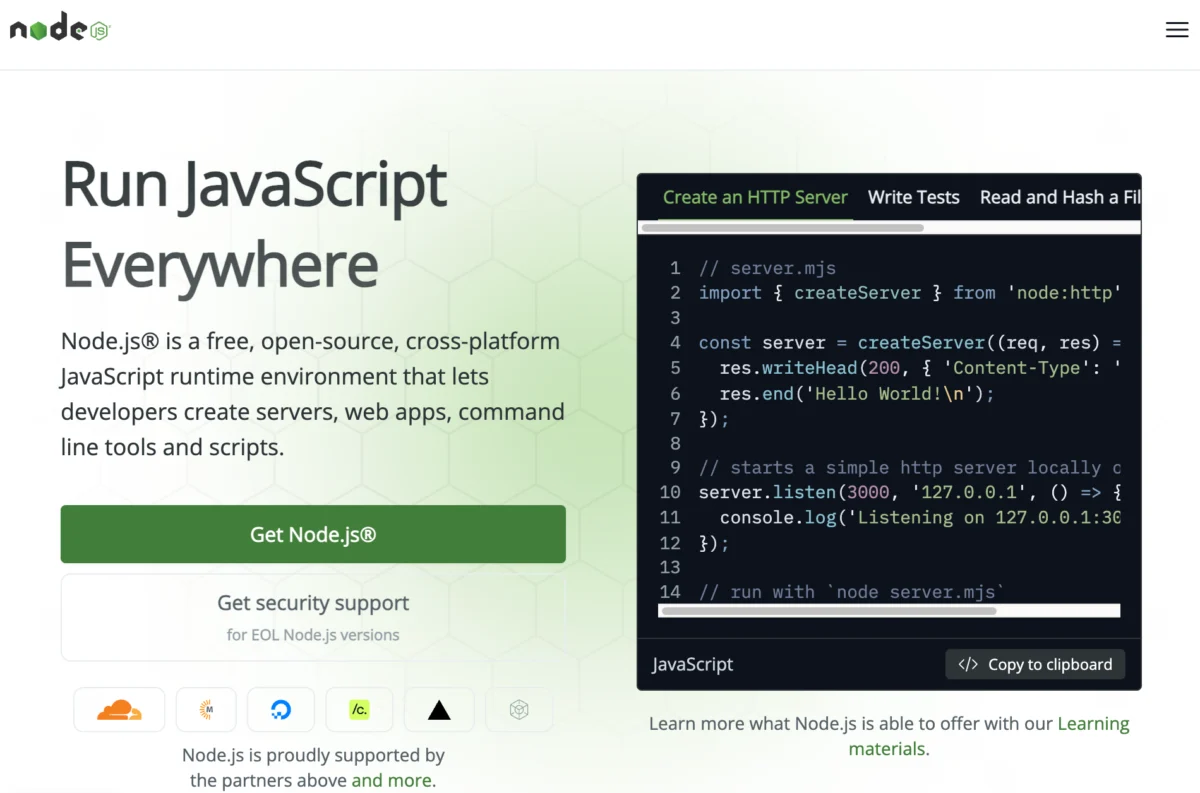
The digital marketing landscape is witnessing a transformative shift as artificial intelligence increasingly integrates into core operational workflows, promising unprecedented levels of efficiency and strategic agility. A significant recent development in this evolution is the deep integration between Buffer, a leading social media management platform, and Claude, Anthropic’s advanced AI assistant. This collaboration, facilitated by a sophisticated Model Context Protocol (MCP) or direct API, empowers users to conceptualize, draft, schedule, and refine social media content across a multitude of platforms directly from the AI’s chat interface, fundamentally altering traditional content creation and scheduling paradigms. This synergy is designed to minimize context-switching, accelerate content velocity, and allow marketers and content creators to reclaim valuable time previously spent navigating disparate tools.

The Dawn of Integrated AI: Streamlining Social Media Workflows
Social media management, for all its strategic importance, often entails a fragmented and labor-intensive workflow. Content creators, marketers, and community managers frequently juggle multiple applications—from brainstorming tools and drafting environments to scheduling platforms and analytics dashboards. This constant switching between interfaces not only consumes significant time but also breaks concentration, hindering productivity and creative flow. Buffer has long served as a vital solution for consolidating social media scheduling and analytics across numerous platforms, offering a centralized hub for content distribution. However, the advent of powerful conversational AIs like Anthropic’s Claude presents an opportunity to elevate this efficiency to new heights.
Claude, known for its advanced natural language understanding, generation capabilities, and ethical AI development, has proven adept at assisting with a wide array of text-based tasks, from generating creative copy to summarizing complex information. Its integration with Buffer marks a strategic move to transition AI from merely answering questions to actively executing tasks within external applications. This partnership addresses the critical need for a more unified and intelligent workflow, allowing users to leverage Claude’s generative power for content creation and then seamlessly push that content directly into Buffer’s scheduling queues. This signifies a pivotal moment where AI assistants evolve into proactive "co-pilots," deeply embedded in the operational fabric of digital marketing.

Understanding the Model Context Protocol (MCP) and API Integration
At the heart of this transformative integration lies the concept of a Model Context Protocol (MCP). An MCP is more than a simple API; it represents a sophisticated, secure connector that enables an AI assistant like Claude to communicate with and perform actions within other software tools, all with explicit user permission. Unlike traditional APIs, which often require specific technical commands, an MCP allows for natural language interaction, translating user requests into actionable commands for the integrated application. It acts as an intelligent intermediary, understanding the context of the user’s intent within Claude and translating it into the appropriate actions within Buffer, such as scheduling a post, retrieving queue information, or editing existing content. This secure, permission-based communication ensures data privacy and user control remain paramount.
For users seeking to connect Buffer to Claude, two primary methods are available, catering to different levels of technical control and preference:

Connecting via the Buffer MCP to Claude
The most straightforward method involves directly connecting the Buffer MCP to Claude. This process is designed for simplicity and rapid deployment, often taking less than five minutes. Users typically navigate within Claude’s settings to add a new tool or integration. Here, they provide a name for the integration (e.g., "Buffer" or "Buffer MCP") and a specific Remote Server URL, which serves as the secure endpoint for the Buffer MCP. This method leverages Buffer’s pre-configured protocol, making it accessible even for users without extensive technical knowledge. Once connected, Claude gains the ability to interact with Buffer functionalities using plain English commands, transforming the AI chat window into a dynamic social media command center.
Connecting the Buffer API to Claude for Enhanced Control
For users desiring a more granular level of control, including the ability to name and manage specific API keys, set expiration policies, and monitor usage through Buffer’s developer dashboard, connecting via the Buffer API offers a robust alternative. This method, while still designed for ease of use, provides advanced users with greater oversight. The process involves several key steps:

- Generate a Personal API Key in Buffer: Users access Buffer’s Integrations settings to generate a unique personal API key. This key acts as a secure credential, identifying Claude’s access to the user’s Buffer account. Naming the key (e.g., "Claude Integration") helps in future management and auditing.
- Install Node.js 18 or Higher: The Buffer MCP and its underlying infrastructure rely on Node.js. Ensuring that Node.js version 18 or higher is installed on the user’s system is a prerequisite. This provides the necessary runtime environment for the integration to function correctly.
- Add Buffer to Claude Desktop Configuration: Buffer provides a specific configuration snippet. This snippet is then pasted into Claude Desktop’s developer settings (accessed via "Settings -> Developer -> Edit Config"). After pasting the configuration and restarting Claude, the API connection is established.
To confirm successful integration, users can issue a simple command like "List my Buffer channels" within Claude. A successful response, detailing the connected social media profiles, signifies that the MCP or API is fully operational, ready to streamline daily social media tasks. This dual approach underscores Buffer’s commitment to flexibility, catering to both quick-start users and those requiring deeper customization.
A New Paradigm in Content Creation: Daily Use Cases and Efficiency Gains
The practical implications of the Buffer-Claude integration are far-reaching, fundamentally altering the daily workflows of social media professionals. The shift from fragmented tools to a unified AI-powered interface promises significant gains in productivity and creative output.

Real-time Content Ideation and Drafting
One of the most impactful applications is in the initial stages of content creation. Brainstorming and drafting often involve pulling together disparate pieces of information—a half-formed thought from a personal note, a relevant screenshot, a quote, or an inspiring video. Previously, collating these elements and translating them into publishable content was a manual, multi-step process. With Claude connected to Buffer, this entire phase can be streamlined. Users can paste rough ideas, share links to multimedia content that sparked an idea, or even dictate thoughts using voice-to-text tools like Wispr Flow. Claude then leverages its advanced generative capabilities, often enhanced by custom "skills" or "foundations" trained on the user’s unique tone and voice, to transform these nascent ideas into fully fleshed-out drafts. This capability drastically reduces the time from inspiration to initial draft, ensuring that creative impulses are captured and developed while still "hot."
Seamless Scheduling and Repurposing
Once a draft is refined, the integration simplifies the scheduling process to an unprecedented degree. Instead of manually copying and pasting content into Buffer, selecting channels, and setting times, users can simply instruct Claude to schedule the post. This includes specifying target platforms (e.g., "Schedule this LinkedIn post for tomorrow morning") or saving it as a draft for later review. Furthermore, the integration excels at content repurposing. A single piece of content, once scheduled for one platform, can be effortlessly adapted for others. A follow-up command such as "Give me a version for X (formerly Twitter)" or "Rewrite this for Instagram with relevant hashtags" prompts Claude to intelligently reformat and tailor the content to the specific conventions and audience expectations of the requested platform, maximizing content mileage with minimal additional effort. This adaptability is crucial in today’s multi-channel digital environment.

Dynamic Post Editing and Optimization
The ability to edit scheduled posts directly within Claude represents another significant leap in workflow efficiency. It is common for content creators to revisit scheduled content, whether to refine an opening line, adjust a call-to-action (CTA), or correct a minor oversight. Traditionally, this required navigating back to Buffer, locating the specific post, making edits, and then saving the changes. With the MCP, these modifications can be requested directly from Claude. A user might ask, "Change the CTA in my LinkedIn post scheduled for Friday to ‘Learn more on our blog.’" Claude processes this request, identifies the relevant post, and applies the edit. Moreover, Claude can offer intelligent feedback, as demonstrated by an instance where the AI highlighted a mismatch between a post’s topic and a hastily added CTA, showcasing its capacity for subtle content optimization and quality control. This functionality ensures that content remains dynamic and responsive, even after initial scheduling.
Comprehensive Workflow Oversight
Beyond content creation and modification, the integration significantly enhances workflow oversight and daily planning. For many social media professionals managing multiple brands or personal and professional accounts, gaining a quick, comprehensive overview of scheduled content across diverse platforms can be a time-consuming chore. Traditional methods often involve logging into the Buffer dashboard, navigating between different organizational accounts, and individually reviewing each channel’s queue and calendar. This constant context-switching fragments attention and consumes valuable time. The Buffer-Claude MCP bypasses this inefficiency entirely. Users can initiate a simple query within Claude, such as "What’s on the schedule for my personal accounts this week?" or "Provide an overview of upcoming posts for [Company Name] across all channels." Claude then intelligently processes this request, leveraging its connection to Buffer to compile and present a consolidated, easily digestible report. This report typically includes details like the specific social media channel, scheduled day and time, and a concise summary of each post. This streamlined daily check-in not only saves minutes that quickly accumulate into hours but also provides an immediate snapshot of content pipeline health, enabling proactive adjustments or further content generation as needed, all without ever leaving the AI’s conversational interface.

Broader Industry Implications and Expert Perspectives
This integration is not merely a feature update; it signals a broader trend in the digital landscape. The global market for AI in marketing is projected to grow substantially, with estimates placing it from tens of billions to over a hundred billion dollars in the coming years. This growth is fueled by the increasing demand for automation, personalization, and data-driven decision-making in marketing efforts.
The Rise of AI Agents and Autonomous Workflows
The Buffer-Claude partnership exemplifies the shift towards AI agents that can perform complex, multi-step tasks rather than just answering queries. This move from "AI as an oracle" to "AI as an actor" represents a significant step towards more autonomous workflows, where AI proactively manages routine tasks, freeing human professionals for strategic thinking, creative oversight, and interpersonal engagement. Industry analysts suggest that such integrations will become the norm, with AI copilots becoming indispensable tools across various professional domains.

Competitive Landscape Shift
This kind of deep integration places both Buffer and Anthropic at the forefront of innovation in their respective fields. For Buffer, it reinforces its position as a forward-thinking social media management platform, differentiating it from competitors who may offer AI features but lack such seamless, chat-driven workflow capabilities. For Anthropic, it demonstrates Claude’s versatility and its potential to be embedded as a core intelligence layer within a wide ecosystem of productivity tools, challenging other AI models in the race for enterprise integration.
A Buffer spokesperson, commenting on the strategic significance, stated, "This integration marks a pivotal moment for social media professionals. By embedding advanced AI directly into our workflow, we’re not just saving time; we’re unlocking new levels of creativity and strategic focus for our users. Our goal is to empower creators to do more with less effort, and this partnership with Anthropic’s Claude is a major leap in that direction." Similarly, an Anthropic representative added, "Our collaboration with Buffer showcases Claude’s expanding utility as a true workflow agent. We’re moving beyond mere information retrieval to enabling tangible actions within critical business applications. This integration underscores our commitment to developing AI that is not only powerful but also seamlessly integrated into daily professional life, always prioritizing security and user control through protocols like MCP."

Empowering Content Professionals
The most profound impact is on the content professional. Social media managers often report spending up to 20-30% of their time on repetitive tasks like scheduling, minor edits, and platform-specific formatting. By automating these aspects, the Buffer-Claude integration allows these professionals to reallocate their time towards higher-value activities: developing innovative campaigns, analyzing performance data, engaging with communities, and fostering deeper connections. This leads to not only increased efficiency but also a more fulfilling and strategically impactful role for human talent.
Challenges and Best Practices
Despite the immense benefits, the increasing reliance on AI in content creation necessitates careful consideration of challenges. Maintaining a unique brand voice, ensuring authenticity, and preventing the spread of misinformation are critical. Human oversight remains indispensable. Best practices will involve using AI as a powerful assistant for drafting and scheduling, while retaining human control over final approval, strategic direction, and ethical considerations. The emphasis will be on leveraging AI to augment human capabilities, not to replace critical human judgment and creativity.

Conclusion: The Future of Productivity in the Digital Sphere
The integration of Buffer and Claude represents a significant milestone in the evolution of digital productivity tools. By dissolving the barriers between AI-powered content generation and multi-platform social media scheduling, it offers a glimpse into a future where context-switching is minimized, and creative workflows are significantly accelerated. Users can expect to reclaim hours previously lost to manual processes, allowing them to focus on the strategic and creative aspects that truly drive engagement and growth.
For those already utilizing Buffer, the setup process is remarkably swift, requiring only a few minutes to unlock these advanced capabilities. New users interested in harnessing this powerful synergy can initiate a free Buffer account and configure the Claude integration in a single session, effectively gaining a sophisticated AI-powered scheduling assistant by the end of an afternoon. This synergistic integration is not just about making tasks easier; it’s about fundamentally reshaping the way digital content is created and disseminated, marking a new era of intelligent, integrated workflows in the digital sphere. The promise of less administrative burden and more focused creative work is now a tangible reality for social media professionals worldwide.