rifanmuazin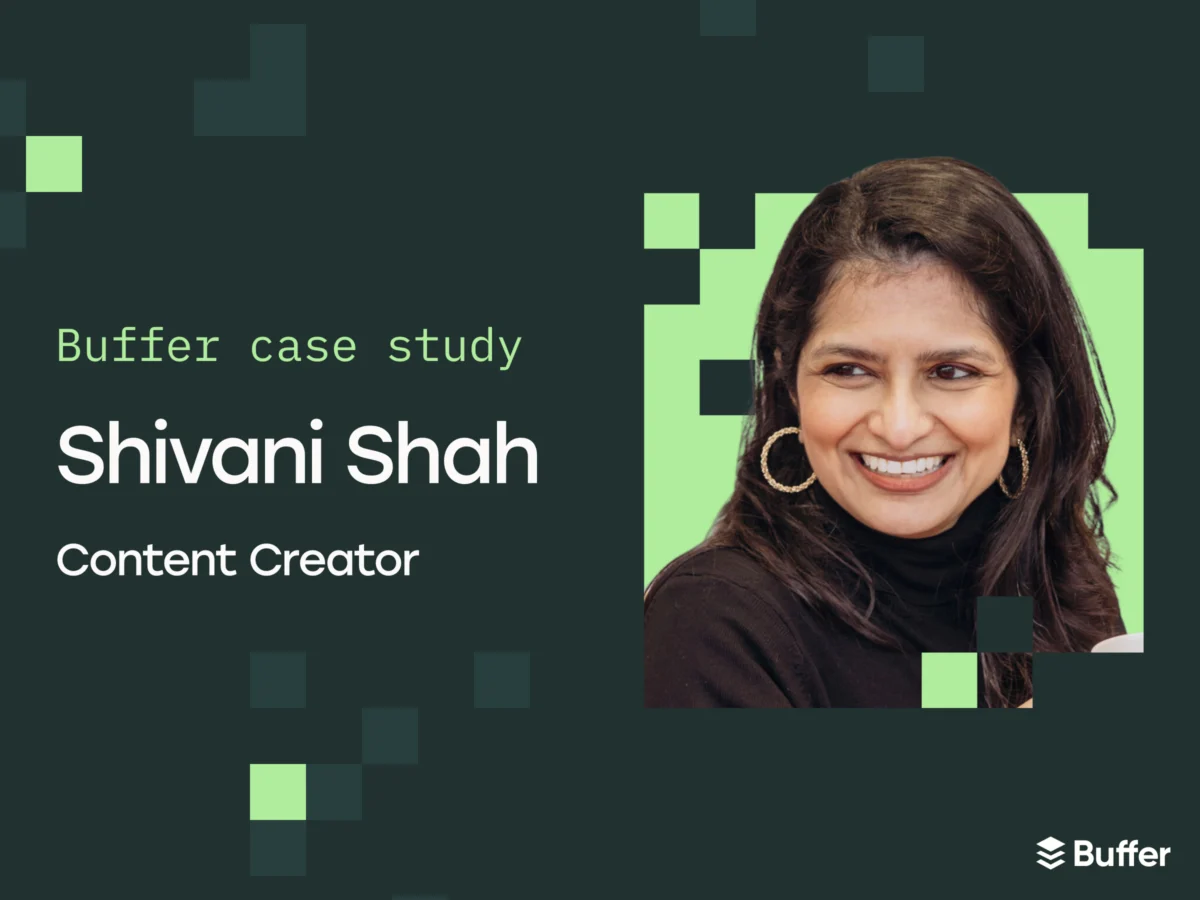
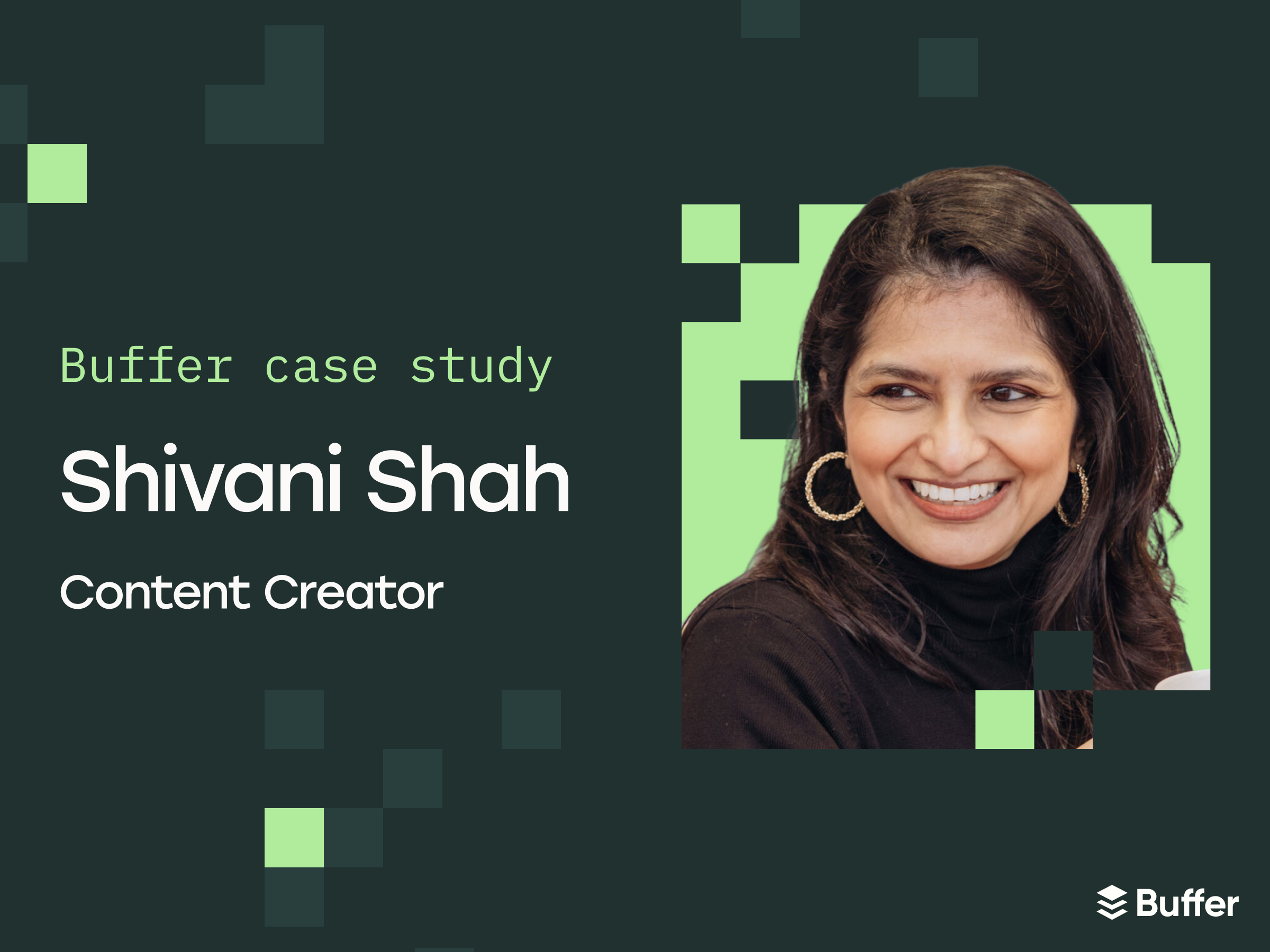
In an increasingly competitive global economy where independent professionals are constantly seeking an edge, Shivani Shah, a prominent freelance professional, has emerged as a beacon of innovation, demonstrating how a strategic blend of artificial intelligence (AI) and powerful application programming interfaces (APIs) can transform traditional workflows. Shah, known for her meticulous, keyboard-first approach to digital tasks and her penchant for automation, has engineered a suite of personalized tools that not only streamline her operations but also redefine the boundaries of what non-developers can achieve with modern technology. Her journey, from initial Mac automation to developing sophisticated AI-assisted applications for social media management, offers a compelling case study in the democratization of tech for enhanced productivity.
The Foundation of Efficiency: A Proactive Approach to Automation
Shah’s operational philosophy has long been rooted in maximizing efficiency. Before venturing into API-driven development, her digital workspace was already a testament to advanced personal automation. Tools like Hazel, a Mac folder-automation utility, automatically sort incoming invoices and documents into their correct directories upon download, eliminating manual filing errors and saving invaluable time. Her reliance on Alfred, a keyboard-driven launcher, allows her to access any file or application with a keyword command, bypassing the traditional Finder interface entirely. This commitment extends to bespoke solutions, such as a custom Shortcut she developed to generate her entire annual folder structure – a complex array of 14 financially-year-aligned folders – in a single click, eradicating the tedious and error-prone manual process she previously endured every April. Even her recreational pursuits reflect this mindset, having built a personalized swim tracker app to counter the overly goal-oriented nature of existing solutions, prioritizing enjoyment and personalized insights. This established pattern of seeking out and building solutions to enhance her daily life laid the groundwork for her more ambitious ventures into API integration.
Identifying the Need: The Freelance Imperative for Consistent Branding
The transition from individual automation hacks to leveraging APIs began when Shah recognized a critical challenge inherent in freelance work: maintaining a consistent and impactful online presence. For many independent professionals, platforms like LinkedIn are not merely networking sites but vital conduits for client acquisition and professional branding. Shah, acutely aware that a significant portion of her freelance clientele originates from LinkedIn, established a personal goal of posting twice a week. However, manually tracking her progress, recalling past content ideas, and scheduling future posts across different platforms consumed valuable time and mental energy.
It was against this backdrop that she encountered Buffer’s team actively discussing user innovations with their API on LinkedIn. The revelation sparked a profound realization: "I can do this. It may not be easy, but I can do it." This moment marked a pivotal shift, as Shah, despite never having built with an API before, saw an opportunity to apply her automation philosophy to a more complex, externally-facing challenge. Her objective was clear: to create an intelligent system that would not only ensure her LinkedIn posting consistency but also provide actionable insights into her content strategy, all while minimizing manual effort.
The First Leap: A Friday Morning Accountability Partner via Slack
Shah’s initial foray into API development centered on addressing her LinkedIn consistency goal. Drawing inspiration from her previous in-house content team experience, where weekly Slack updates fostered accountability and collaboration, she envisioned a similar mechanism for her freelance life. The ideal solution would be a Slack-based bot that would provide a weekly recap of her LinkedIn activity, integrated seamlessly into her existing workday communication platform. This system needed to automatically check her posting frequency, compare it against her target, and provide a clear overview of upcoming content, all without requiring her to open multiple applications or manually collate data.
The development process for this "Friday morning accountability partner" marked a significant departure from traditional coding. Shah turned to Claude, an advanced AI assistant, as her co-developer. Her methodology was remarkably straightforward: she provided Claude with Buffer’s comprehensive API documentation and articulated her desired outcome: "Can I build a Slack workflow that recaps my week?" Claude’s affirmative response initiated a collaborative, step-by-step development journey. The AI assistant guided her through the technical intricacies, advising on API endpoints, data retrieval, and message formatting. This conversational approach allowed Shah to construct a sophisticated solution without writing code from scratch, leveraging her understanding of logical flows and user experience.
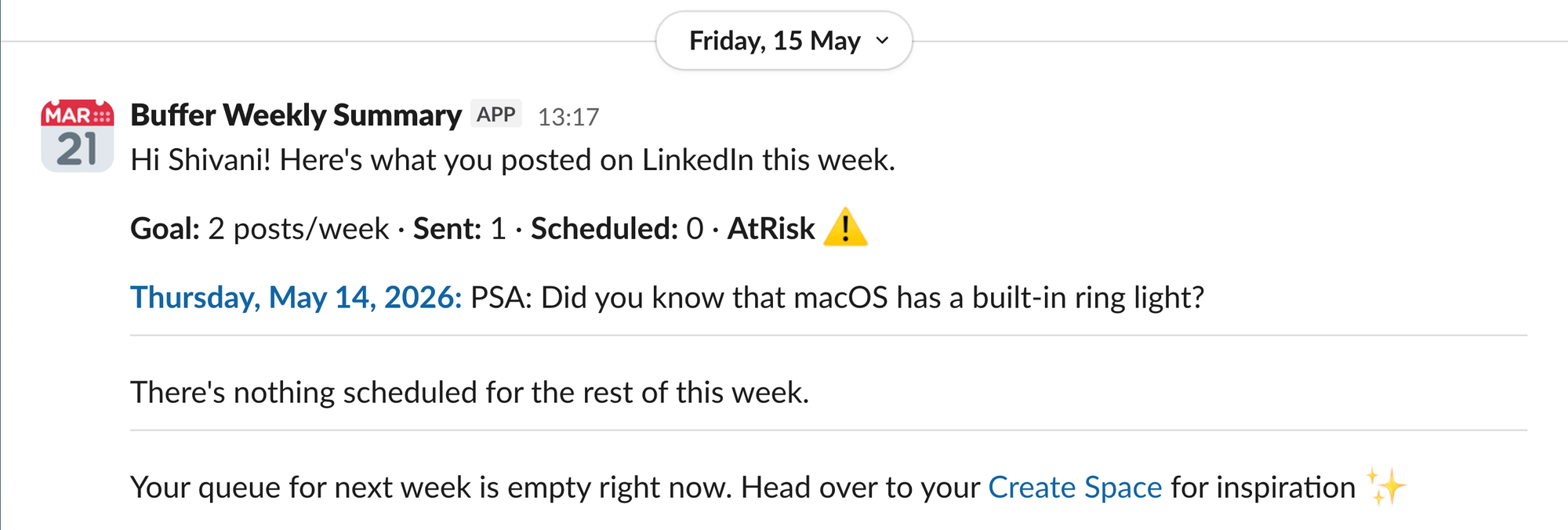
The culmination of this collaboration is a highly effective Slack message that arrives precisely at 10:30 a.m. every Friday. This automated report details the number of LinkedIn posts published that week, instantly indicating whether she has met her two-post objective. It also provides a forward-looking perspective, displaying scheduled posts for the current and subsequent weeks, complete with short previews and direct links back to Buffer for easy access. Crucially, the bot incorporates a dynamic goal-tracking feature powered by Buffer’s backend calculations; if she has one post published and another scheduled, she is "on track." If her queue for the following week is empty, the message alerts her to the "at risk" status and conveniently provides a link to her Buffer Create Space, prompting her to replenish her content pipeline before the weekend. This timely and context-rich feedback loop ensures consistent engagement, and as Shah attests, the recurring thrill of seeing the automated message still resonates, blurring the line between a programmed function and a genuine accountability partner.
Building a Personal Command Centre for LinkedIn Content
Beyond accountability, Shah recognized another critical need: a comprehensive system to manage and analyze her historical LinkedIn content. Over years of posting, her Buffer Create Space had accumulated numerous "half-formed ideas" – snippets of thoughts that lacked context or easy retrieval. The ability to search, filter, and analyze her past posts was essential for identifying content patterns, understanding performance trends, and generating new ideas grounded in actual engagement data.
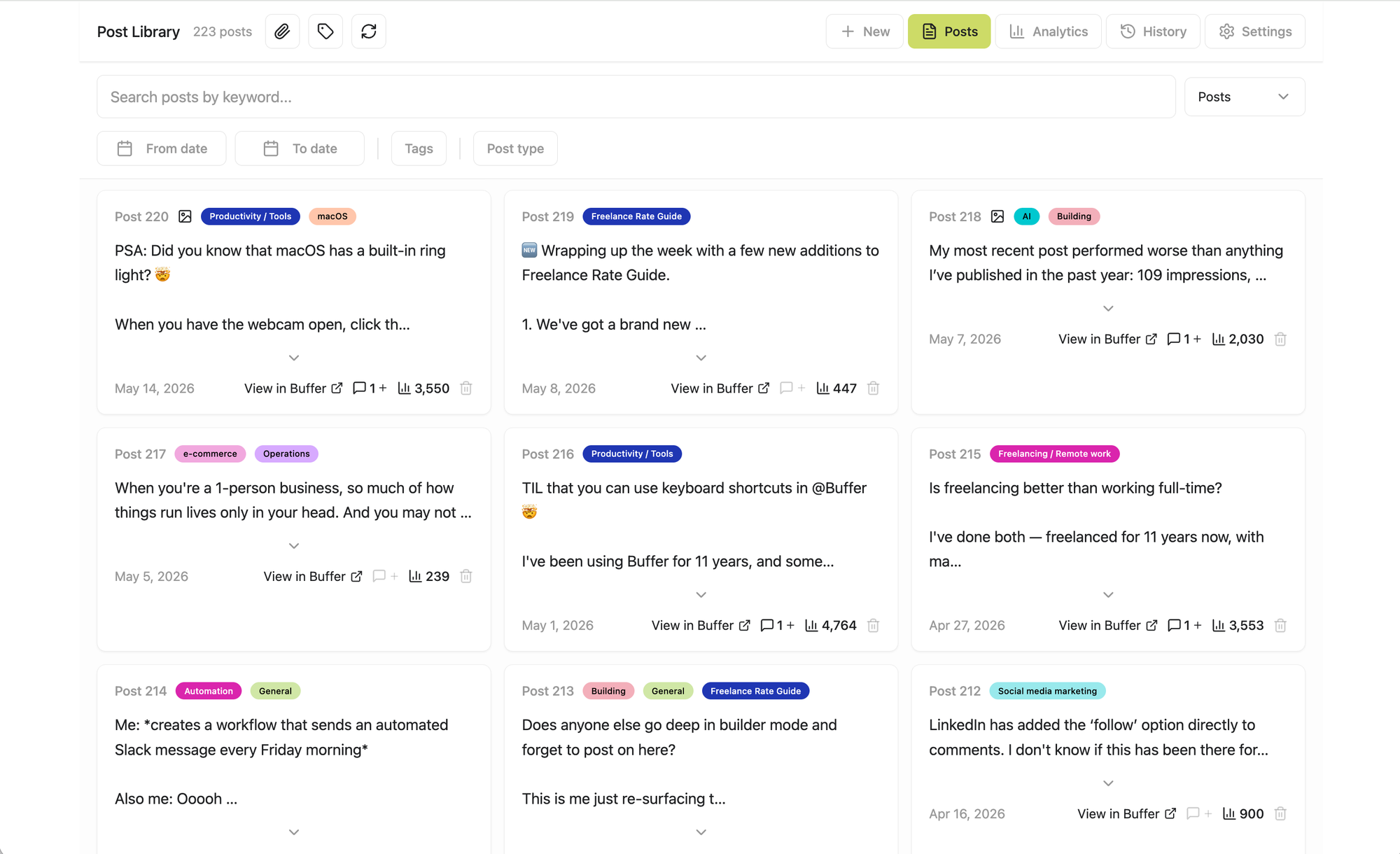
To address this, Shah embarked on her second major project, developing what she informally calls the "LinkedIn Content Library & Analyzer." For this, she utilized Lovable, a platform designed for building custom applications through conversational AI. Her initial setup involved pulling her last 100 posts from Buffer’s API, followed by a request to Lovable to backfill an additional 50 older posts, extending her archive back to 2023. This content library dynamically syncs new posts automatically each time she accesses the application, ensuring an always-current repository.
The Content Library offers robust functionality: users can search across posts and associated notes by keyword, apply filters based on tags and date ranges, and add personal comments to any entry. While the search function alone resolved her primary challenge of retrieving past content, the integrated AI chat feature has proven unexpectedly valuable. Users can select specific posts and pose analytical questions, such as "What topics do I post about most?" or "Are there any gaps in my content?" The AI processes only the selected data, providing targeted insights. The chat history is saved, enabling her to revisit and continue past analytical threads at any time.
Shah explored alternative solutions, including integrating Zapier with Notion, but found limitations in its ability to import historical posts. While Claude Code was a consideration, connectivity issues with her VS Code extension at the time presented a hurdle. Lovable emerged as the ideal choice, offering not only the capability to ingest her extensive backlog of content but also providing a full, interactive interface for her to work with. The platform’s ability to create a custom application tailored precisely to her analytical needs underscored its utility.
The AI-Powered Development Paradigm: No Code, Just Conversation
A striking aspect of Shivani Shah’s achievements is that both the Slack bot and the Lovable app were developed by an individual who had no prior experience with APIs or traditional coding. Her process exemplifies a paradigm shift in software development, heavily reliant on AI assistants as co-creators. For the Slack bot, the journey was a direct conversation with Claude: presenting the Buffer API documentation, articulating the desired functionality, and then iteratively following Claude’s instructions – "Go here, do this, go here, do that." Shah refined the Slack message format, eventually leveraging Slack’s Block Kit Builder for sophisticated layout, all without writing a single line of code from scratch. Her assessment is succinct: "Claude literally walked me through everything. It really wasn’t that hard."
The development of the Lovable app followed a similar trajectory, albeit with Lovable handling more of the underlying code generation. Shah describes this as "more AI coding or vibe coding than no-code." Her interaction involved conversational prompts, explaining her requirements to Lovable, which then formulated a development plan, executed it, and facilitated iterative refinements. This approach underscores the growing power of generative AI in democratizing software creation, empowering individuals with strong problem-solving skills but no formal programming background to build custom applications. It highlights a future where technical literacy might increasingly involve effective communication with AI rather than mastering complex syntax.
Iterative Growth and Future Aspirations
Since their initial deployment, Shivani Shah has continuously enhanced her custom applications. The Lovable app, in particular, has seen significant additions. It now incorporates an analytics component alongside the post library and AI chat. While not fully automated yet – requiring manual CSV uploads of LinkedIn data and pasting in metrics like saves, sends, reposts, and follower counts – the AI chat seamlessly integrates this data into its analysis. This allows the system to generate content ideas directly inspired by her top-performing posts, turning raw data into actionable insights. Furthermore, a "save-to-Buffer" feature has been added, enabling her to instantly transfer promising content ideas surfaced by the AI chat directly into her Buffer Create Space queue, maintaining a seamless workflow.
Shah’s wishlist for future enhancements speaks to her relentless pursuit of efficiency. High on her list is the full automation of the analytics component, contingent on future API support, which would eliminate the need for manual data uploads. She also envisions pulling content ideas from specific columns within her Buffer Create Space directly into her Friday Slack message, further minimizing context switching. Ultimately, Shah harbors aspirations of making her application publicly available. Currently a bespoke solution for her personal use, she recognizes its broader utility for any professional seeking a searchable, analytical archive of their own content. "I would have loved to make this app available to people," she states, expressing a desire to share her innovative solution with a wider audience.
Broader Implications for Freelancers and SMEs
Shivani Shah’s innovative approach carries significant implications for the broader landscape of freelancing and small to medium-sized enterprises (SMEs). Her work demonstrates that advanced digital tools, once the exclusive domain of developers or large corporations, are now accessible to individuals through AI and user-friendly APIs. This democratization of technology empowers freelancers to operate with a level of sophistication and efficiency previously unattainable, enabling them to compete more effectively with larger entities.
The ability to automate administrative tasks, gain deep insights into content performance, and maintain consistent client-facing communication directly translates into increased productivity, reduced operational costs, and enhanced strategic decision-making. Industry reports consistently highlight the challenges freelancers face in balancing client work with administrative and marketing responsibilities. Solutions like Shah’s directly address these pain points, potentially saving several hours per week that can be redirected towards client projects or business growth. Furthermore, her success underscores the evolving nature of digital literacy, where conversational AI tools are becoming powerful enablers for non-technical users to build custom software solutions tailored to their unique needs. This trend suggests a future where personalized applications, built by users for users, become increasingly commonplace, fostering a more agile and responsive digital ecosystem.
Buffer’s Role in Empowering Innovation
Central to Shah’s success is the accessibility and robustness of Buffer’s API. By providing a well-documented and open interface, Buffer has actively fostered a community of innovation, enabling users like Shah to extend the platform’s functionality in ways that cater specifically to individual workflows. This commitment to an open API strategy aligns with a broader industry trend of empowering users and third-party developers, recognizing that the most creative and impactful applications often arise from the diverse needs of a user base. Buffer’s role as a catalyst in this narrative highlights the strategic advantage of platforms that embrace extensibility, turning their core offerings into springboards for user-driven creativity and problem-solving.
Shivani Shah’s journey from an automation enthusiast to a developer of sophisticated AI-powered tools represents a compelling vision for the future of work. Her ability to harness AI assistants and open APIs to build custom solutions, despite lacking a traditional coding background, is a testament to the democratizing power of modern technology. Her "personal command centre" for LinkedIn and her Friday accountability bot are more than just productivity hacks; they are pioneering examples of how freelancers and small businesses can leverage cutting-edge tools to achieve unprecedented levels of efficiency, strategic insight, and professional growth. As AI continues to evolve and APIs become more ubiquitous, Shah’s story serves as an inspiring blueprint for anyone looking to extend their digital capabilities and reshape their professional landscape. Buffer’s API is now available, inviting more innovators to follow in Shivani Shah’s footsteps and build the tools that perfectly fit their unique working styles.