rifanmuazin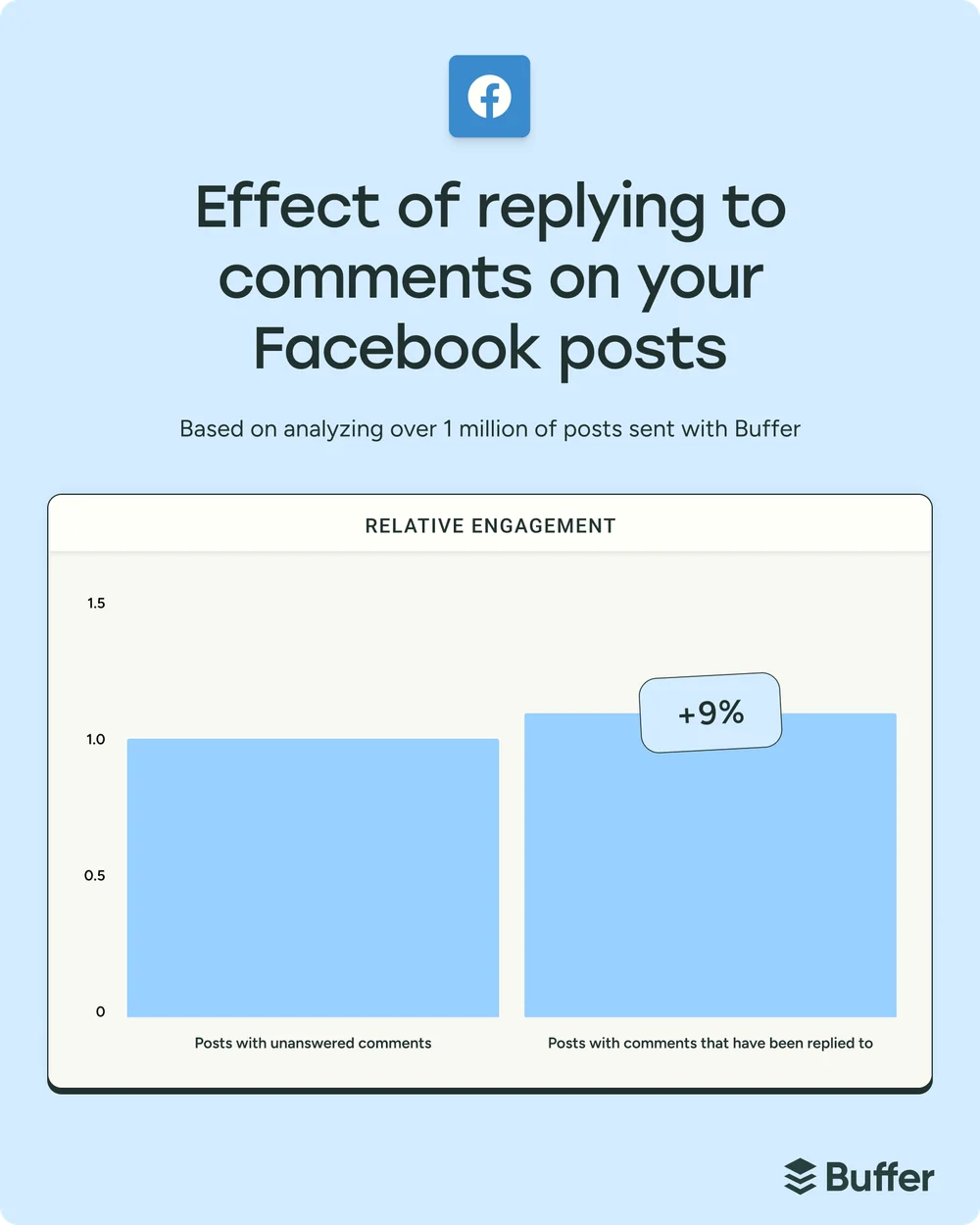
A groundbreaking analysis of over one million Facebook posts has uncovered a statistically significant correlation between creator engagement in comment sections and increased post reactions. The comprehensive study, conducted by Buffer’s senior data scientist Julian Winternheimer, indicates that posts where creators actively reply to comments receive approximately 9.5% more reactions on average compared to those where they do not. This finding, while seemingly modest when placed against engagement lifts observed on newer platforms like Threads or LinkedIn, represents a substantial opportunity for creators, small business owners, and marketers operating within Facebook’s colossal ecosystem.
Facebook, despite its reputation as a mature social media platform, continues to command an unparalleled reach, boasting over three billion monthly active users globally. This immense scale, however, also presents a unique set of challenges for content creators striving for visibility amidst a deluge of daily content. In an environment where organic reach has become increasingly elusive, understanding the nuanced dynamics of algorithmic prioritization is paramount. The platform itself has undergone significant transformations, evolving from a primary social networking site to a complex digital marketplace and content hub, continually refining its algorithms to prioritize what it terms "meaningful interactions." This shift underscores the importance of fostering genuine engagement, moving beyond passive consumption towards active participation.
Understanding Facebook’s Algorithmic Landscape and Creator Economy
For years, content creators and businesses have grappled with the complexities of the Facebook algorithm, which dictates how widely and to whom their content is distributed. Historically, the algorithm has favored content that generates active discussions and sustained interaction, as these signals suggest higher relevance and user satisfaction. The recent emphasis on supporting creators, reflected in new features and monetization tools launched over the past few months, further highlights Facebook’s strategic imperative to maintain a vibrant content ecosystem. This push is part of a broader industry trend where social media platforms are competing fiercely to attract and retain top talent in the burgeoning creator economy, estimated to be a multi-billion dollar industry.
However, even with these advancements, many creators report a "hit-and-miss" performance, struggling to cut through the noise and connect with a mere fraction of the platform’s vast user base. Daily content uploads are staggering, and user attention spans are fleeting. It is within this challenging context that Buffer’s research offers a clear, actionable pathway to improved content performance. The study’s genesis was rooted in a curiosity to determine whether direct interaction—specifically, replying to comments—could serve as a practical lever for boosting engagement. Previous studies on other platforms hinted at similar effects, but Facebook’s unique characteristics, including its maturity, diverse user base, and established content consumption patterns, warranted a dedicated investigation. The question was not merely whether engagement occurs, but whether active participation by the creator could drive that engagement, particularly in the form of reactions (likes, loves, hahas, wows, sad, angry).
Rigorous Methodology Unearths Key Insights
To precisely isolate the impact of creator replies, Julian Winternheimer developed a robust analytical framework. The study meticulously examined around one million Facebook posts that had received at least one comment, drawing data from nearly 97,427 diverse Facebook profiles spanning various sizes and niches. This massive dataset provided a comprehensive look at real-world engagement patterns across a wide spectrum of content creators.
A critical aspect of the methodology was the deployment of a fixed-effects regression model. This sophisticated statistical approach did not compare large Facebook Pages to small ones directly, which could yield misleading results due to inherent differences in audience size, content strategy, and resources. Instead, the model compared each individual account’s performance against its own historical data. By holding constant intrinsic factors such as audience demographics, content niche, geographic location, and posting frequency, the fixed-effects model effectively eliminated confounding variables. This allowed researchers to answer a more precise question: "Does this specific Facebook Page perform better when it replies to comments versus when it does not?" This internal comparison method significantly enhances the reliability of the findings, attributing observed changes directly to the presence or absence of creator replies rather than external factors.
As a secondary validation, a Z-score analysis was also performed. This technique measured how far above or below an account’s "normal" performance level each post landed, providing an additional layer of confidence in the initial regression results. Both analytical methods converged, pointing definitively towards the same conclusion regarding the positive impact of creator replies. It is important to note, as the researchers themselves acknowledge, that while the study establishes a strong correlation, it does not definitively prove causation. It is plausible that posts performing well organically might naturally attract more comments, thereby motivating creators to reply. However, the consistent pattern across a massive dataset and multiple analytical approaches strongly suggests a significant causal link that warrants strategic consideration.
Furthermore, the study specifically measured "reactions" (likes, loves, etc.) rather than a broader "total engagement" metric that might include comments. This deliberate choice prevented circularity in the data, ensuring that the metric being tested (the effect of replies) was not artificially inflated by the very act of commenting itself. The cross-platform consistency of similar findings across six different social media platforms analyzed by Winternheimer, with lifts ranging from 5% to 42%, further bolsters the credibility of these specific Facebook results, suggesting a universal principle of digital engagement.
The Data-Backed Advantage: A 9.5% Reaction Boost
The core finding from this extensive analysis is clear: Facebook posts where creators replied to comments experienced an average increase of 9.5% in reactions. This effect was statistically significant (p < 0.001), a strong indicator that the observed boost is unlikely due to random chance. The Z-score analysis further supported this, revealing that approximately 53.8% of Facebook Pages showed improved performance when they engaged with comments. This means posts with creator replies tended to perform slightly above their account’s typical engagement levels, whereas posts without replies hovered closer to the baseline.
It is noteworthy that this 53.8% figure represents a slimmer majority compared to what was found on platforms like Instagram (63%) or LinkedIn (83%). This nuance underscores Facebook’s unique engagement landscape, where the effects, while statistically significant, are more modest. This aligns with the platform’s broader, more mature user base and diverse content consumption patterns, where users might be less prone to immediate, reciprocal engagement compared to more professionally oriented or niche-focused networks.
An interesting point highlighted by the study’s authors concerns the initial raw median numbers. A superficial glance at the unadjusted data might suggest the opposite, with posts without creator replies sometimes showing slightly higher median reactions (22) than those with replies (16). However, as explained, this raw comparison is misleading because it fails to account for the vast disparities in page sizes and activity levels. Once the fixed-effects model controlled for these critical differences, comparing each account against its own historical performance, the true positive impact of replying to comments became evident. This illustrates the power of sophisticated statistical analysis in uncovering deeper truths beneath seemingly contradictory surface data, providing actionable insights for social media professionals.
Why Replies Matter: Fueling Facebook’s Algorithmic Engine
The 9.5% reaction lift, while not as dramatic as the 42% observed on Threads, holds profound implications due to Facebook’s immense scale. Even a single-digit percentage increase, when applied across billions of interactions, translates into significantly more visibility and engagement. This impact is fundamentally linked to how the Facebook algorithm functions.
The algorithm actively seeks out and prioritizes "meaningful interactions." A back-and-forth exchange in a comment section serves as one of the strongest signals of such interaction. When a creator replies to a comment, they are not just engaging with an individual; they are signaling to the algorithm that their content is sparking genuine discussion and fostering community. This engagement is then rewarded through several key mechanisms:
- Extended Visibility: Each reply revitalizes the comment thread, effectively extending the post’s active lifespan in the feed. The algorithm interprets ongoing conversation as a sign of continued relevance, potentially resurfacing the post for the original commenter’s connections and other users who have previously engaged with the page. This prolonged visibility can lead to more opportunities for new users to discover and react to the content, maximizing impressions.
- Relationship Signals: Facebook’s sophisticated system tracks interaction history between users and pages. Consistent replies from a creator to an individual’s comments strengthen that digital connection. Over time, these micro-interactions build a relationship signal, making it more probable that the creator’s future posts will be shown to that engaged user. This cultivates a loyal audience more likely to react and engage further, creating a virtuous cycle of engagement.
- Social Proof and Authenticity: An active comment section, especially one where the creator or brand is visibly participating, projects an image of authenticity and responsiveness. Users are more inclined to stop scrolling and engage with content when they perceive a real, human presence behind the page. This social proof can encourage others to join the conversation, leading to a natural increase in reactions and overall engagement, as the content appears more credible and valuable.
Implications for Creators and Businesses
For social media managers, content creators, and small business owners navigating the demanding landscape of multiple platforms, consistently engaging with comments can feel like an additional full-time job. However, the study’s findings underscore that this effort is a high-yield investment. The good news is that implementing a comment reply strategy requires no new tools, significant budget, or complex overhauls. It’s about optimizing existing practices and recognizing the value of direct audience interaction.
For individual creators, this means a tangible, low-cost method to expand their reach and solidify their community, turning passive followers into active participants. For small businesses, it translates into an opportunity to build stronger customer relationships, enhance brand perception, and potentially drive sales through increased visibility and trust. Marketers can leverage this insight to refine client strategies, emphasizing genuine engagement as a core performance metric beyond mere follower counts.
Strategic Recommendations for Enhanced Engagement
To effectively leverage comment engagement on Facebook, here are strategic approaches derived from best practices and the study’s findings:
- Time Blocking for Replies: Instead of attempting to respond to every comment as it arrives, which can be disruptive and unsustainable, dedicate specific time blocks each day for comment engagement. Two 10-to-15-minute windows—perhaps mid-morning and early evening—can be highly effective. This allows creators to catch comments from different time zones and user activity peaks, ensuring a consistent and manageable workflow without sacrificing productivity elsewhere.
- Prioritize Meaningful Conversations: While a simple "thank you" is polite, it rarely ignites further engagement. The goal should be to foster ongoing dialogue. Prioritize replies that pose follow-up questions, offer additional insights, or elaborate on a point made in the original post. For example, responding with "That’s a great observation; have you considered X?" or "You’ve hit on a key point, our data also shows Y…" can transform a single comment into a burgeoning conversation thread, which is highly valued by the algorithm.
- Reply While the Post is Fresh: Facebook’s algorithm, like many others, places a premium on early engagement. Responding to comments within the first few hours of a post’s publication can significantly amplify its initial distribution. This early interaction sends strong signals to the algorithm about the content’s relevance, potentially pushing it to a wider audience. Strategic scheduling of posts during times when creators are available to engage can therefore become a crucial advantage, aligning content release with creator availability.
- Leverage Centralized Management Tools: For those managing multiple social media accounts, bouncing between native apps can be inefficient and distracting. Tools like Buffer’s Community tab, or similar social media management dashboards, consolidate comments from various platforms into a single interface. This allows creators to respond directly without getting pulled into the distracting feeds of individual platforms. Some tools also offer features like "Comment Scores" or reply consistency trackers, gamifying the process and helping users build a consistent engagement habit, making it easier to track progress and maintain discipline.
Broader Industry View and Future Outlook
The insights gleaned from this extensive study transcend mere numerical lifts; they reinforce a fundamental truth about social media: human connection remains at its core. In an era dominated by sophisticated algorithms and data-driven strategies, the most effective tactic can often be the simplest act of showing up for one’s audience. The 9.5% reaction lift on Facebook, while not a universal guarantee for every single page (as approximately 54% of profiles in the study saw positive effects), significantly tilts the odds in favor of creators willing to invest the time in genuine interaction.
This modest, consistent boost, accumulated over time on a platform with Facebook’s unparalleled reach, can translate into tangible growth in audience, brand loyalty, and ultimately, content impact. The study serves as a compelling reminder that success on social media is not solely about cracking complex algorithmic codes or chasing fleeting trends. Instead, it often hinges on cultivating authentic relationships and demonstrating responsiveness to the community that has chosen to engage. This human-centric approach stands as a counterpoint to purely data-driven strategies, suggesting a balanced methodology yields the best results.
For social media strategists, this data provides a clear directive: integrate active comment management as a foundational pillar of any Facebook content strategy. It’s a low-cost, high-impact approach that capitalizes on existing user interest and leverages the platform’s algorithmic preferences for meaningful, two-way communication. As the digital landscape continues to evolve, the value of genuine interaction will likely only increase, making studies like Buffer’s crucial for guiding effective online engagement strategies. These findings collectively paint a picture of a social media environment where authentic dialogue is not just good practice, but a quantifiable driver of success, underscoring that even on the largest and most mature platforms, personal connection remains a powerful currency.