
 Ali Ikhwan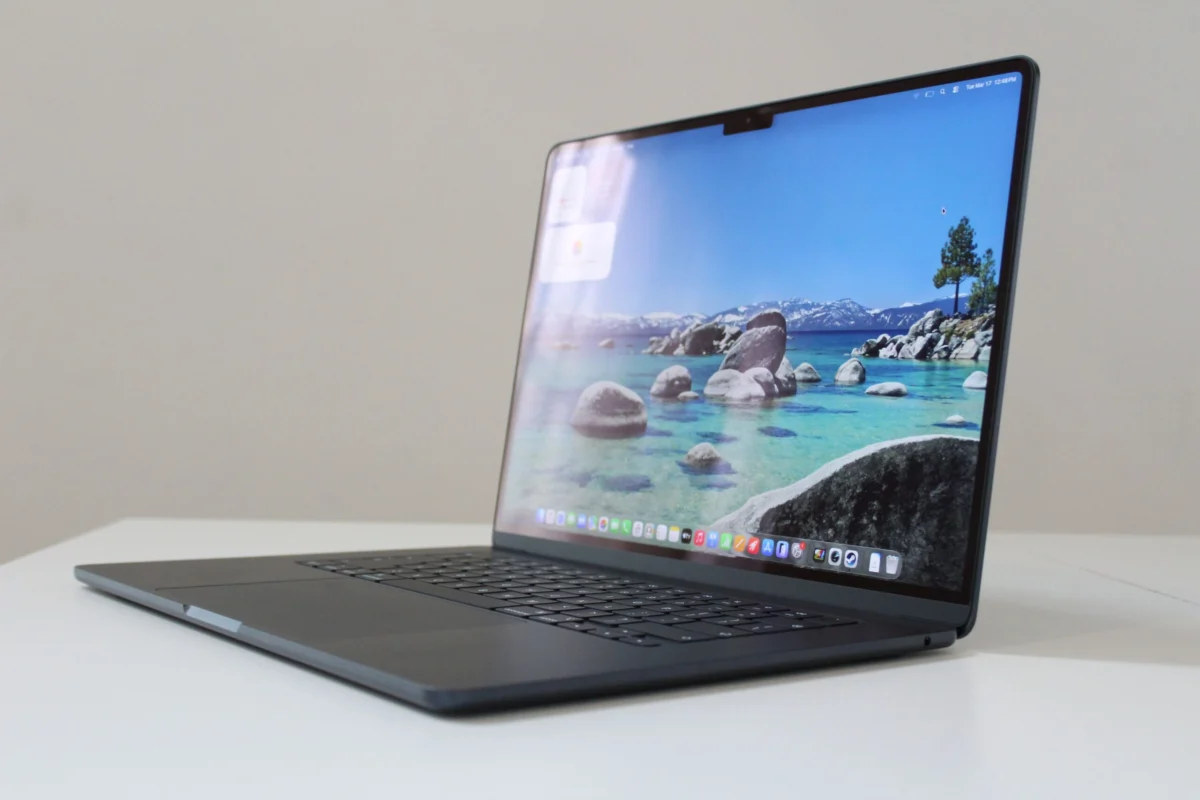
The global personal computing market has entered a pivotal era in 2026, defined by a tripartite competition between traditional x86 architecture, the maturation of Apple’s silicon ecosystem, and the aggressive expansion of ARM-based Windows devices. As hardware cycles compress and consumer expectations for battery longevity and artificial intelligence (AI) integration reach new heights, the distinction between "budget" and "premium" devices has blurred. Current industry data suggests that while the average consumer expenditure on a laptop remains approximately $750, the performance floor has risen significantly, driven by breakthroughs from Intel, AMD, and Qualcomm. This report evaluates the current technological landscape, examining the hardware that defines the current standard for portable computing across various price points and professional use cases.
The Evolution of the Computing Landscape: A 2024–2026 Chronology
The trajectory of the laptop market over the last 24 months has been characterized by the "efficiency wars." In mid-2024, Qualcomm’s Snapdragon X series disrupted the Windows ecosystem by offering battery life and thermal performance that finally rivaled Apple’s M-series chips. This forced a rapid response from Intel and AMD. By late 2025, Intel’s "Panther Lake" (Core Ultra Series 3) architecture began shipping, emphasizing a massive leap in integrated graphics and Neural Processing Unit (NPU) capabilities.
Simultaneously, Apple transitioned to the M5 generation in early 2026. This move was not merely incremental; it integrated AI accelerators into every GPU core, effectively turning the consumer-grade MacBook Air into a machine capable of handling tasks previously reserved for the MacBook Pro. This chronology reflects a broader industry shift where "AI PCs" are no longer a marketing niche but a baseline requirement for modern operating systems.

Flagship Consumer Standards: The MacBook Air M5 and Surface Laptop 7
At the center of the consumer market are two devices that represent the gold standard for the average user: the Apple MacBook Air (M5, 2026) and the Microsoft Surface Laptop (7th Edition).
The MacBook Air M5, starting at $1,099, remains the industry benchmark for thin-and-light design. Technical analysis reveals that the M5’s GPU performance now equals that of the M3 Pro, a significant achievement for a fanless chassis. This allows for seamless 4K video rendering and entry-level gaming without the thermal throttling that plagued earlier generations. Its ability to maintain identical performance levels whether plugged into a wall or running on battery remains a primary competitive advantage.
In the Windows ecosystem, the Surface Laptop 13.8-inch (7th Edition) serves as the primary rival. Utilizing Qualcomm’s Snapdragon X architecture, it offers a high-resolution 120-Hz touchscreen with a 3:2 aspect ratio—a format favored by productivity professionals for its vertical screen real estate. While the MacBook Air is marginally thinner, the Surface Laptop provides superior port versatility, including a legacy USB-A port, addressing a common critique of modern ultraportables.
The Disruption of the Budget Tier: $500 to $800
One of the most significant shifts in 2026 is the quality of hardware available under the $800 threshold. Historically, this segment was characterized by poor display quality and plastic build materials. However, the introduction of the Apple MacBook Neo at $599 has forced Windows manufacturers to improve their entry-level offerings.
-Front-Open-Reviewer-Photo-(no-border)-SOURCE-Christopher-Null.jpg)
The HP OmniBook 5 has emerged as a price-to-performance leader. Frequently discounted to $500, it features a Snapdragon X processor, 16 GB of RAM, and—most notably—an OLED display. Industry analysts note that providing an OLED panel at this price point was unthinkable two years ago. Similarly, the Dell 14 Plus, priced at approximately $650, utilizes Intel’s Core Ultra chips to deliver a 2560 x 1600 resolution display, offering a sharper visual experience than many devices costing twice as much.
For the education and ultra-budget sectors, Chromebooks continue to hold a niche, though their market share is under pressure from discounted Windows machines. The Acer Chromebook Plus 516 remains the dominant choice for users with a sub-$300 budget, providing a stable, 16-inch platform for web-centric workflows.
High-Performance Computing and Professional Workstations
For creative professionals, engineers, and data scientists, the hardware requirements shift from portability to sustained peak performance. The 16-inch MacBook Pro (M5 Max), retailing for upwards of $3,899, represents the apex of this category. The M5 Max architecture features a 40-core GPU and enhanced memory bandwidth, specifically designed for large-scale AI model training and complex 3D simulations.
In the Windows professional space, the Dell XPS 14 has taken a unique approach by utilizing Intel’s X9 chip (B390). By optimizing integrated graphics to match the performance of discrete GPUs like the NVIDIA RTX 4050, Dell has managed to reduce heat and power consumption while maintaining professional-grade power. This "polish-first" philosophy seeks to capture the creative demographic that traditionally gravitates toward Apple’s ecosystem.

Gaming Hardware Trends: Portability vs. Raw Power
The gaming laptop market in 2026 has bifurcated into two distinct philosophies: the "desktop replacement" and the "minimalist powerhouse."
- Entry-Level Gaming: The Lenovo LOQ 15 has redefined the $1,000 gaming segment. Despite its utilitarian aesthetic, it delivers high frame rates in demanding titles like Cyberpunk 2077, proving that thermal management and power delivery are more critical than chassis materials for gaming performance.
- Premium Gaming: The Razer Blade 14 and 16 continue to dominate the high-end market. Often referred to as the "MacBooks of gaming," these devices command a premium for their CNC-milled aluminum chassis and vapor-chamber cooling. They represent a growing trend of "crossover" laptops—devices powerful enough for competitive gaming but aesthetic enough for a boardroom.
Market Dynamics and Brand Analysis
According to recent global shipment data, Lenovo remains the world’s largest PC manufacturer, a position it has secured through a diverse portfolio ranging from the experimental Yoga "rollable" designs to the reliable ThinkPad enterprise line. Asus has followed closely, gaining significant ground in the consumer space with its Zenbook S 16. The Zenbook S 16 is notable for its use of "Ceraluminum," a high-tech ceramic-aluminum hybrid material that provides durability and a unique aesthetic at a weight comparable to the MacBook Air.
Dell and HP have recently undergone significant rebranding efforts to simplify their consumer offerings. HP’s transition to the "OmniBook" name replaces the long-standing Spectre and Envy brands, while Dell has consolidated its focus back onto the XPS line after a brief period of brand experimentation.
Technical Specifications: The New Baseline for 2026
As software becomes more resource-intensive, the industry has established new minimum specifications for a "viable" laptop:

- RAM: 16 GB has become the absolute minimum for Windows devices, with 32 GB recommended for longevity. Apple continues to offer 8 GB on its entry-level Neo, a point of contention among tech analysts, though the efficiency of macOS memory handling partially mitigates this.
- Storage: 512 GB SSDs are the standard, with NVMe speeds now exceeding 5,000 MB/s in mid-range devices.
- Connectivity: Wi-Fi 7 and Bluetooth 5.4 are now standard features in the premium and mid-range segments, ensuring compatibility with the next generation of high-speed networking hardware.
- Displays: The industry has moved away from 1080p. The new baseline is 1200p (HD+), with 1600p and 3K OLED panels becoming common in devices over $700.
Broader Impact and Future Implications
The current state of the laptop market reflects a broader societal shift toward hybrid work and the democratization of high-performance computing. The rise of repairable hardware, led by the Framework Laptop 13, signals a growing consumer interest in sustainability and the "Right to Repair." Framework’s modular design, which allows users to replace the CPU and motherboard independently of the chassis, challenges the "planned obsolescence" model that has dominated the industry for decades.
Furthermore, the integration of dedicated AI hardware across all price points suggests that the next generation of software will rely heavily on on-device processing rather than cloud-based solutions. This has profound implications for data privacy and local computational autonomy.
In conclusion, the laptop market in 2026 is more competitive and diverse than at any point in the last decade. Whether for a student on a $500 budget or a professional with $4,000 to invest, the current offerings provide unprecedented levels of efficiency, power, and display quality. The ongoing battle between Intel, Apple, and Qualcomm ensures that this innovation curve is likely to continue through the end of the decade.







