rifanmuazin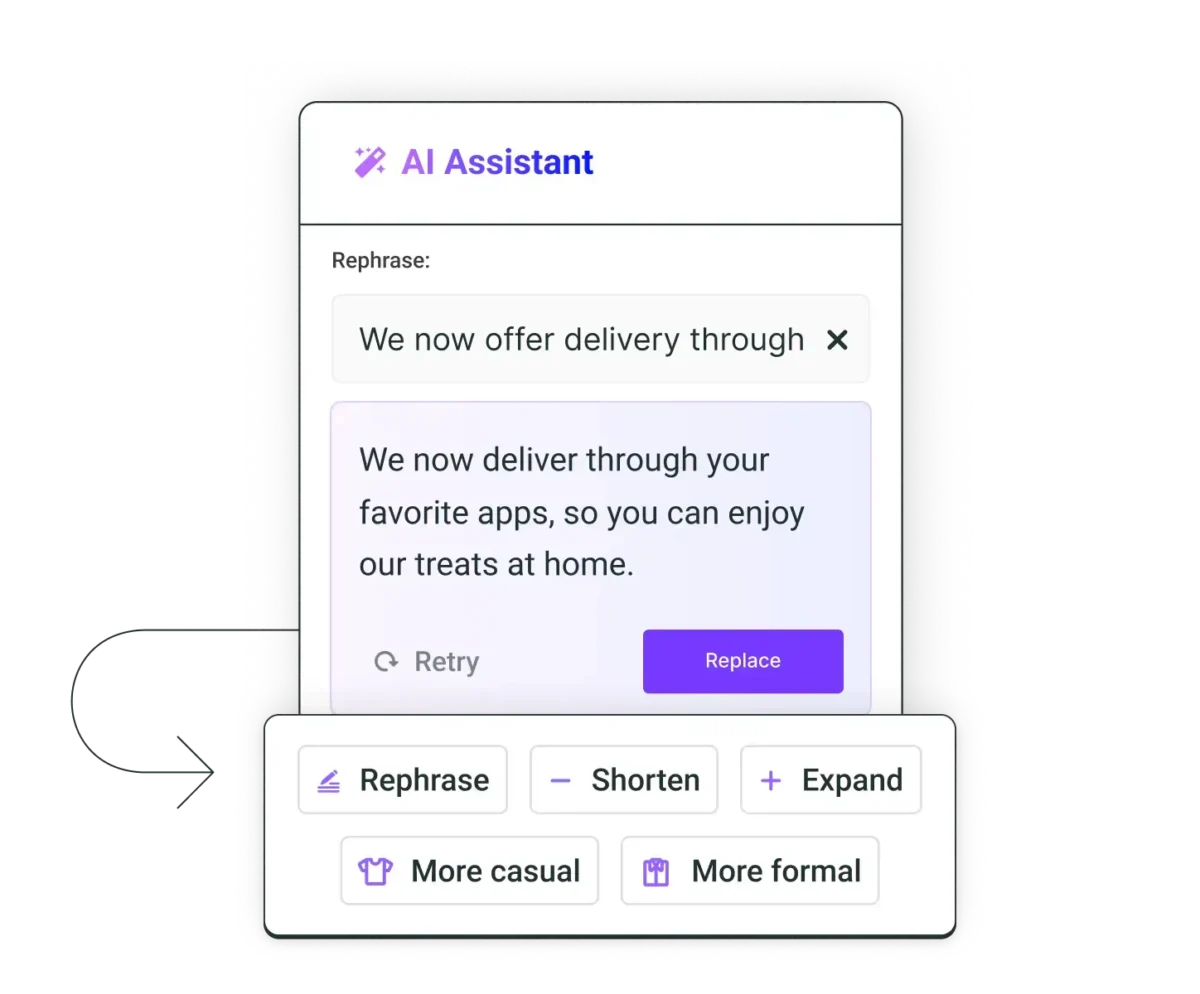
The landscape of content creation has undergone a profound transformation with the widespread adoption of Artificial Intelligence (AI) writing tools. Once a niche concept, these sophisticated platforms have become integral to workflows for creators, marketers, and businesses, significantly streamlining tasks ranging from initial brainstorming and outline generation to crafting social media captions, developing scripts, and repurposing existing content. While current AI technologies do not fully replicate the nuanced voice, unique perspective, or lived experience that imbues human writing with its distinct character, they serve as invaluable accelerators, effectively combating the pervasive challenge of "blank page syndrome" and boosting productivity across the board. The market for AI writing assistants has exploded in recent years, with forecasts indicating continued exponential growth, driven by the increasing demand for high-volume, diverse content and the imperative for efficiency in digital communication strategies.
The Evolution of AI in Content Creation
Just a few years ago, AI writing tools were experimental, often producing stilted or unconvincing text. Today, they are seamlessly integrated into virtually every major software ecosystem, from collaborative suites like Google Workspace and Notion to specialized content management systems. This rapid advancement is largely attributed to the development of powerful Large Language Models (LLMs) such as OpenAI’s GPT series and Anthropic’s Claude. These foundational models, trained on colossal datasets, enable AI tools to understand context, generate coherent text, and even mimic various writing styles. The transition from rudimentary text generators to sophisticated conversational and analytical AI assistants marks a pivotal shift, making these technologies accessible and practical for a broad user base. The global AI in content creation market, valued at approximately $2.1 billion in 2023, is projected to reach $11.5 billion by 2030, underscoring its pivotal role in future content strategies.
Understanding the Technology: Models vs. Tools
A crucial distinction in the AI writing ecosystem lies between the underlying AI model and the user-facing AI tool. An AI model, often referred to as the "engine under the hood," is the core technology trained on vast datasets to learn patterns, relationships, and logic necessary for tasks like text generation, summarization, or translation. For instance, GPT-4 is an AI model that powers various applications, including ChatGPT Plus, while Claude Opus powers Anthropic’s Claude interface.

AI tools, conversely, are the applications that users interact with directly. They encapsulate an AI model within a specific interface, workflow, or set of features tailored to simplify particular tasks. While multiple tools might leverage the same foundational AI model (e.g., GPT), their user experience can vary dramatically due to differences in interface design, integrated workflows, and specialized functionalities. This explains why an AI tool might feel like an indispensable sidekick in one context, yet merely another unhelpful browser tab in another, even if they share similar underlying intelligence. The emphasis for users, therefore, shifts from the raw power of the model to the practical utility and seamless integration offered by the tool.
Applications and Transformative Benefits
The utility of AI writing tools extends across a wide spectrum of content creation processes. For professional writers, marketers, and small business owners, these tools serve as powerful assistants rather than replacements. Common applications include:
- Brainstorming and Idea Generation: Overcoming creative blocks by rapidly generating diverse ideas for blog posts, social media campaigns, video scripts, or marketing copy.
- Drafting and Outlining: Creating initial drafts or structured outlines for long-form content, saving significant time in the preliminary stages of writing.
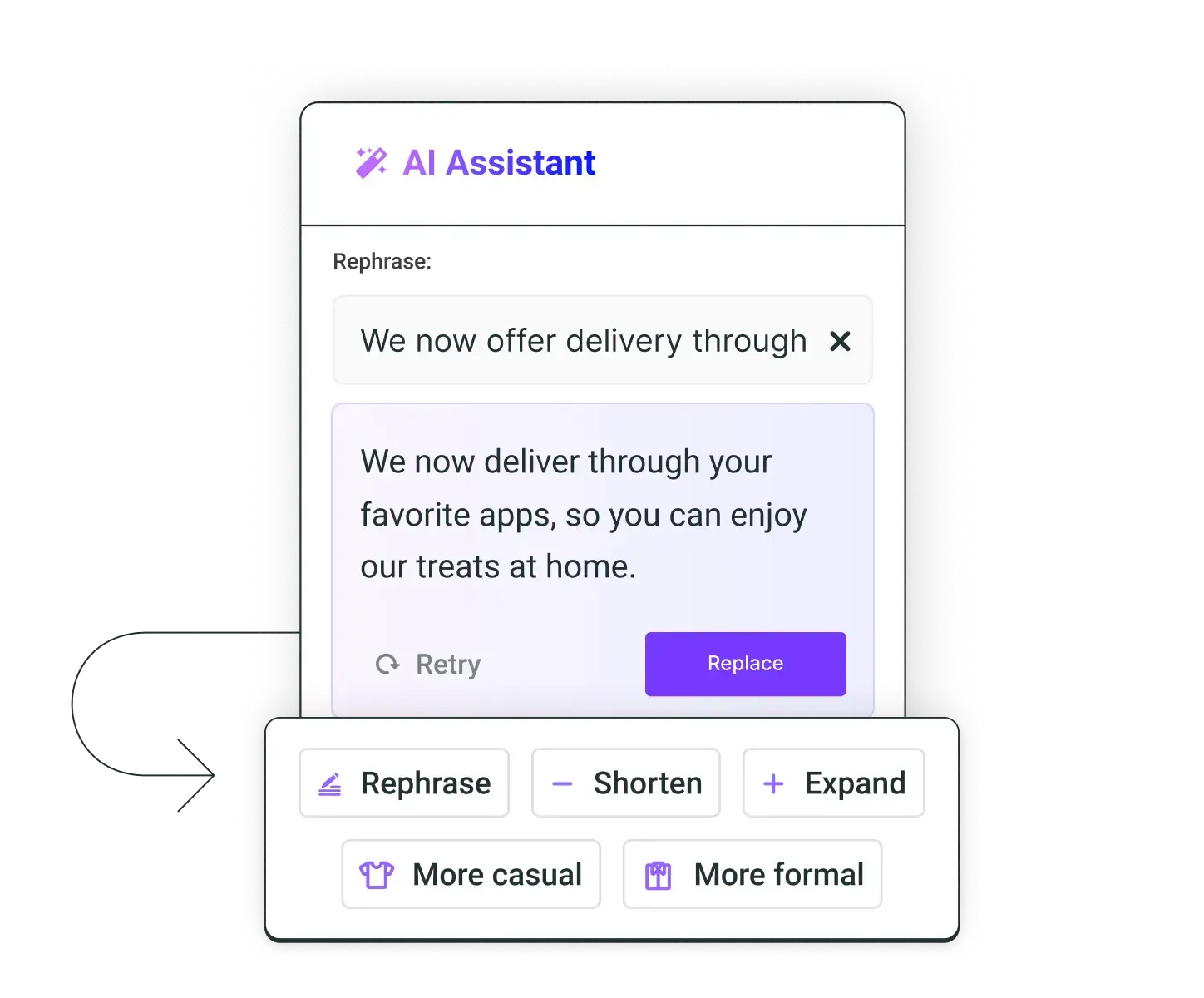
- Refining and Editing: Polishing existing text by improving grammar, clarifying sentence structure, adjusting tone, shortening or expanding content, and identifying logical gaps.
- Repurposing Content: Adapting content for different platforms or audiences, ensuring consistency while optimizing for platform-specific nuances (e.g., transforming a blog post into multiple social media captions).
- SEO Optimization: Generating content optimized for search engines, including keyword integration, meta descriptions, and structured data, to improve online visibility.
- Multilingual Content: Facilitating translation and localization of content, broadening audience reach.
Industry data suggests that businesses leveraging AI in content creation report up to a 40% increase in content output and a significant reduction in content production costs. A 2023 survey by HubSpot found that 89% of marketers using AI tools reported increased productivity, underscoring the tangible benefits these technologies offer.
Strategic Selection: Key Considerations for Adopters
With the proliferation of AI writing tools, selecting the right one can be challenging. Key factors for individuals and organizations to consider before investing include:
- Specific Use Case: Is the primary need for social media content, long-form articles, creative writing, or technical documentation? Tools are often specialized.
- Integration with Existing Workflows: How well does the AI tool integrate with current content management systems, social media schedulers, or other productivity software?
- Customization and Brand Voice: Can the tool be trained or prompted to adhere to a specific brand voice, tone, and style guide?
- Accuracy and Fact-Checking Capabilities: For factual content, how reliable are the information retrieval and synthesis features? Does it cite sources?
- Ease of Use and Interface: An intuitive interface can significantly impact adoption and efficiency.
- Pricing Structure: Understand the cost model (subscription, credit-based, per-user) and evaluate against budget and expected usage.
- Underlying AI Model: While not the sole determinant, knowing if the tool uses a cutting-edge model (e.g., GPT-4, Claude Opus) can indicate higher quality output.
- Privacy and Security: For sensitive content, assess the tool’s data handling policies and security protocols.
Featured AI Writing Tools for Diverse Needs
The market offers a diverse array of AI writing tools, each with unique strengths tailored to specific content creation demands. The following selection highlights prominent examples, chosen for their utility and distinct capabilities rather than a hierarchical ranking:
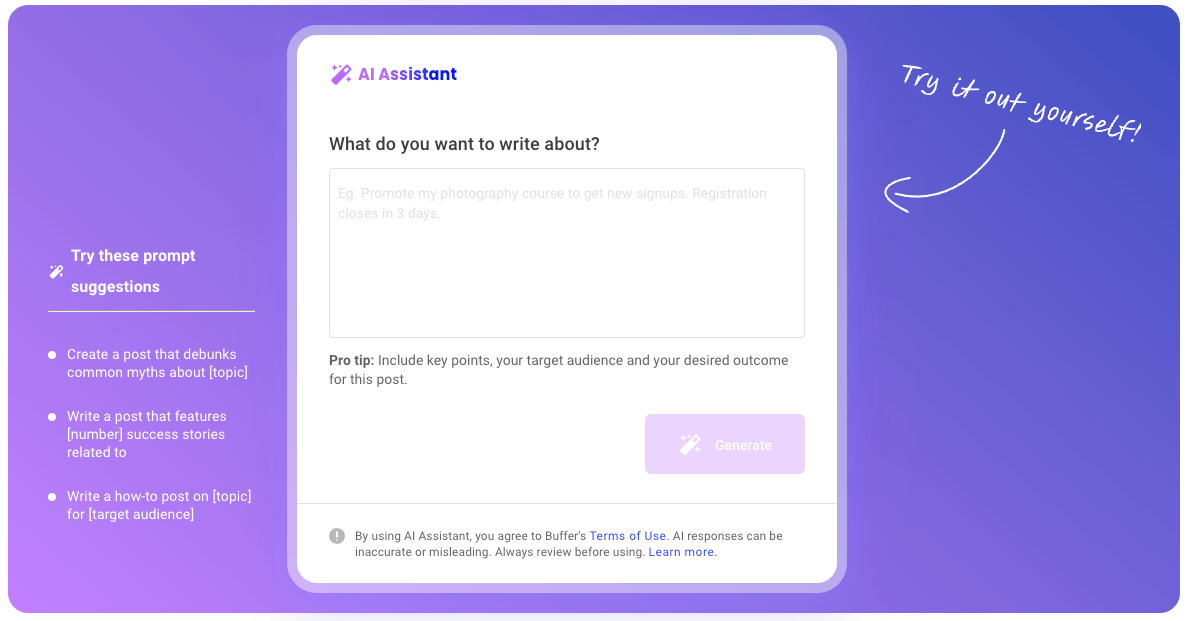
1. AI Assistant in Buffer (Best for Social Media Content and Scheduling)
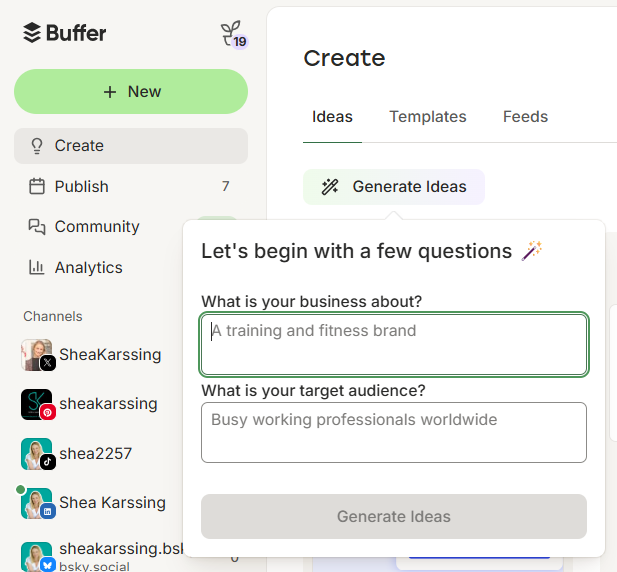
Buffer’s AI assistant is meticulously designed for social media content creation and integration within a robust scheduling workflow. It automatically adapts content to character limits and platform-specific tones (e.g., professional for LinkedIn, playful for Instagram), eliminating manual adjustments during crossposting. Features include one-click editing (shorten, expand, change tone) and advanced functionalities like personalized post ideas based on audience and business prompts, as well as efficient content repurposing. Notably, Buffer’s AI assistant operates on a limitless, credit-free basis, even on its free-forever plan, allowing extensive use without additional costs. A standalone Social Media Post Creator is also available for those not requiring the full Buffer suite.

2. Claude (Best for Structured Writing and Deep Reasoning)
Developed by Anthropic, Claude stands out for its superior contextual understanding and reasoning capabilities, making it ideal for complex, long-form content. While competitive with ChatGPT for basic tasks, Claude excels in parsing intricate ideas and generating natural-sounding, coherent narratives for blog posts, in-depth articles, and video scripts spanning thousands of words. It also functions as an astute editor, identifying argumentative gaps and suggesting areas for deeper exploration, and can be effectively guided to adhere to specific brand voices with detailed prompts. Claude offers a free plan with paid tiers starting at $20/month for advanced features.
3. Jasper (Best for Marketing Teams and Campaigns)
As an early innovator in AI writing, Jasper has evolved into a comprehensive AI marketing platform. It provides specialized tools for various marketing needs, including generating ad copy, sales emails, and blog content tailored to specific campaigns. Jasper’s strength lies in its ability to maintain brand voice consistency across multiple content types and channels, a critical feature for marketing teams managing extensive campaigns. It also integrates with other marketing tools and offers collaboration features, making it suitable for team environments. Plans begin at $69/month per seat, with a 7-day free trial.
4. Wordtune (Best for Polishing and Paraphrasing)
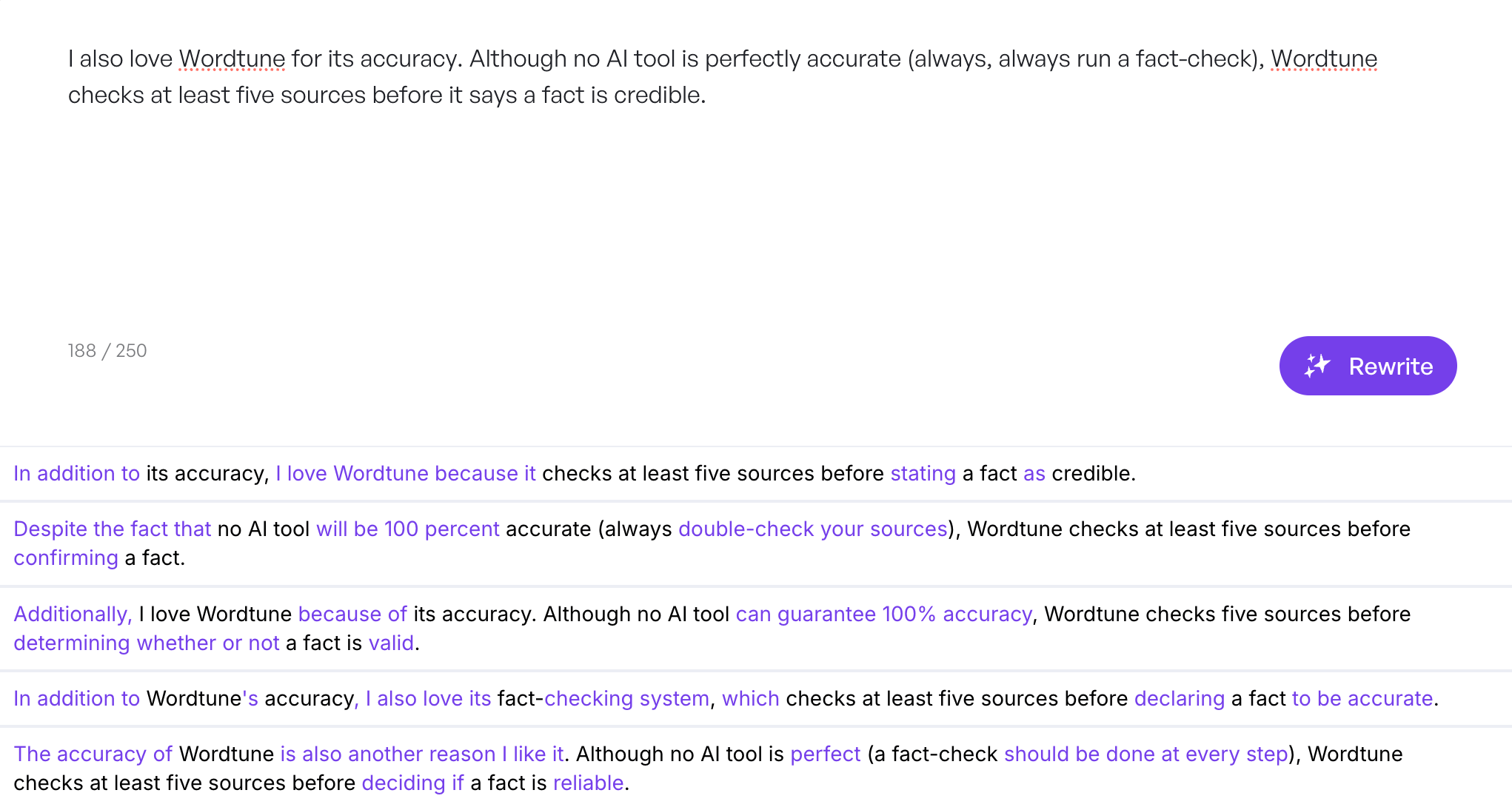
Wordtune is a highly effective writing assistant focused on refining and enhancing existing text rather than generating content from scratch. It leverages AI to rewrite sentences for clarity, conciseness, or a different tone, providing multiple suggestions to improve flow and impact. Additionally, it can summarize long texts, check for grammar and spelling errors, and expand on ideas. Wordtune is particularly useful for writers who prioritize human-driven content but seek AI assistance for stylistic improvements and efficiency in editing. A free plan offers limited rewrites, with paid plans starting at $6.99/month.
5. Lex (Best for Professional Copy and Editing)
Lex presents itself as a streamlined, intelligent document editor, often described as "Google Docs 2.0." Its minimalist interface belies powerful AI capabilities focused on generating and refining professional copy. While it can draft content from prompts, Lex truly shines as an AI editor, offering suggestions for improvement, identifying logical inconsistencies, and helping writers craft polished, impactful text. It includes lightweight formatting and collaboration features, positioning it as a robust tool for professional writers and editors who value clean design and powerful editing assistance. Lex offers a free version with basic AI models, and a paid plan at $24.99/month.
6. Koala (Best for SEO Articles)
Koala is specifically designed for generating SEO-optimized articles, leveraging both ChatGPT and Claude models. Its key differentiators include deep research capabilities to produce factual content and specialized SEO features. These include generating outlines based on target keywords, integrating secondary keywords for comprehensive coverage, analyzing competitor content, and ensuring optimal article structure for search engine visibility. Koala caters to content marketers and publishers aiming to scale their SEO content production efficiently. Paid plans start at $9/month, with a free trial offering 5,000 word credits.
7. Sudowrite (Best for Creative Writing and Fiction)
For novelists, screenwriters, and creative writers, Sudowrite offers a unique AI-powered toolkit. It features its own proprietary AI model, Muse, specifically optimized for fiction. Sudowrite assists with brainstorming plot points, developing characters, generating descriptive language, and even suggesting dialogue. Its "Shrink" feature summarizes text, "Visualize" creates imagery from descriptions, and "Rewrite" offers different stylistic variations. Sudowrite functions as a creative partner, helping writers overcome blocks and enrich their storytelling. Plans start at $19/month for 225,000 credits, with a free trial providing 10,000 credits.
8. Type (Best for Long-Form Professional Drafts)
Type is an AI writing assistant optimized for long-form professional content. It provides three core features: an AI writing assistant for generating drafts and outlines, an AI chat function for conversational interaction and content refinement, and an AI-powered editor that reviews grammar, structure, and readability. Type aims to streamline the entire long-form writing process, from initial conception to final polish, making it a valuable asset for authors, journalists, and content strategists. Plans start at $12/month, with a free trial offering limited features.
9. ChatGPT (Best for Conversational and Fast Writing)
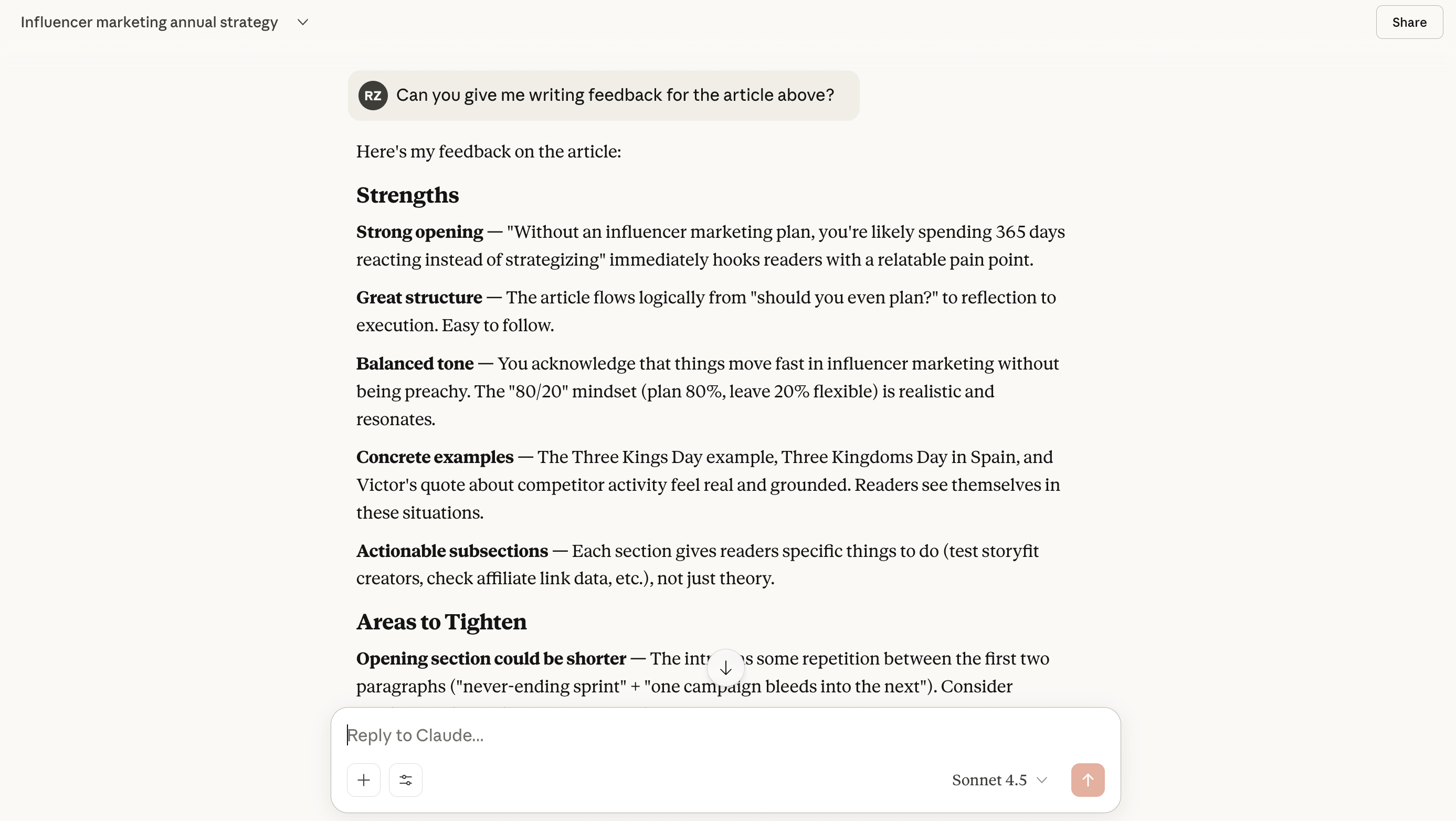
OpenAI’s ChatGPT, built on the widely recognized GPT model, remains a foundational and highly versatile AI writing tool. Its conversational interface makes it excellent for rapid idea generation, simplifying complex sentences, finding synonyms, and drafting short-form content like emails, social media posts, and basic articles. While many specialized tools build upon its capabilities, ChatGPT’s free version offers significant utility for everyday writing tasks and serves as an accessible entry point into AI-assisted content creation. Paid plans, starting at $4/month, unlock access to newer, more advanced models and higher usage limits.
Ethical Implications and Best Practices

The integration of AI into writing raises important ethical considerations. While AI tools are powerful, they are not infallible. Issues such as "hallucinations" (generating factually incorrect information), inherent biases from training data, and concerns about content authenticity necessitate human oversight. The debate around AI content detection tools is ongoing; while many can flag heavily AI-generated text, none are perfectly accurate, and human editing significantly reduces detectability.
The consensus among industry experts and leading content teams, including Buffer’s, is to treat AI as a powerful assistant rather than a ghostwriter. Best practices dictate that AI-generated content should always undergo thorough human review, editing, and fact-checking before publication. This "human-in-the-loop" approach ensures accuracy, maintains brand voice, and imbues the content with the unique perspective and critical thinking that only a human writer can provide. This approach not only mitigates risks but also ensures the ethical and responsible use of AI in content creation.
The Future Landscape of AI-Assisted Writing
The trajectory of AI writing tools points towards increasingly sophisticated and seamlessly integrated solutions. Future advancements are expected to bring greater customization, allowing AI to learn and perfectly emulate individual or brand voices. Enhanced fact-checking and source citation capabilities will address current limitations, fostering greater trust in AI-assisted content. Furthermore, multimodal AI, combining text generation with image, video, and audio creation, will likely unlock entirely new dimensions of content production.
Ultimately, AI is poised to become an indispensable component of the content creation toolkit, freeing human creators from repetitive and time-consuming tasks. This shift will allow writers to focus on higher-order creative thinking, strategic planning, and infusing their work with genuine insight and originality. The era of AI-assisted writing is not about replacing human creativity but augmenting it, enabling content creators to produce more impactful, diverse, and engaging content than ever before.