Ali Ikhwan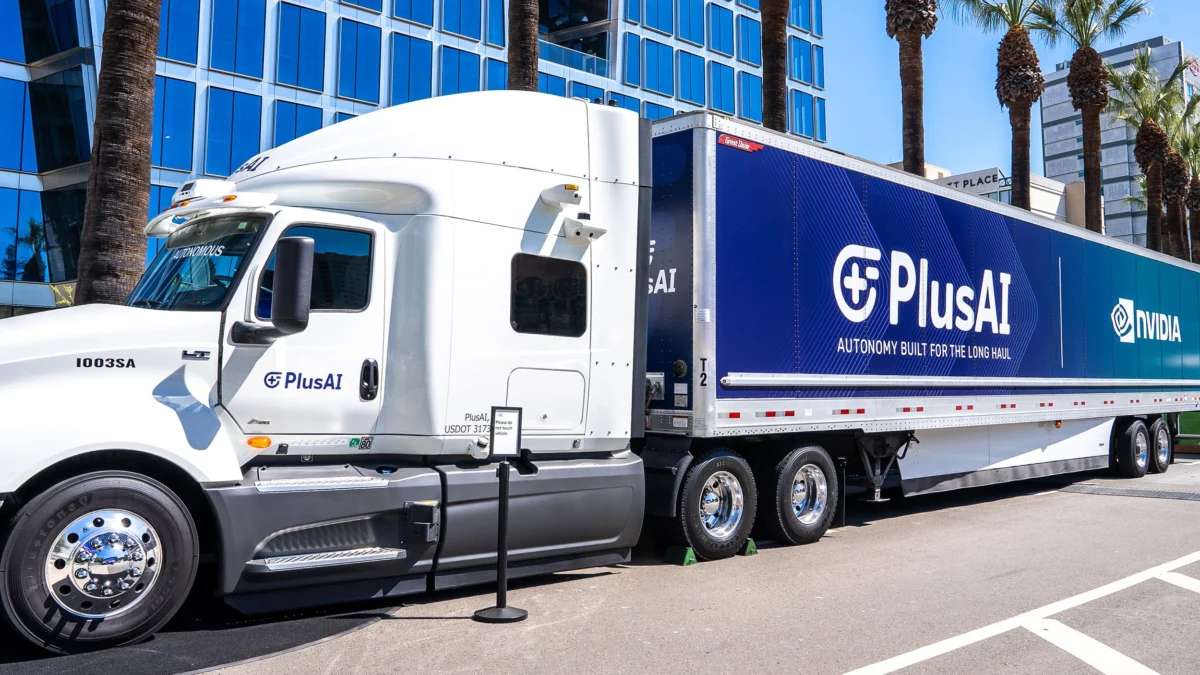
On a typical Thursday morning in Newark, California, the quiet routine of a local industrial park was disrupted by an unexpected discovery that blurred the line between high-stakes corporate espionage and a botched criminal enterprise. A senior executive at PlusAI, a developer specializing in autonomous trucking technology, received an unsolicited congratulatory text from an acquaintance who happened to be working nearby. The message, seemingly innocuous, noted the pride the acquaintance felt seeing the company’s branded trucks on the road. The problem, however, was that those trucks were not scheduled to be in transit; they were supposed to be securely docked at a company warehouse. This discrepancy triggered a rapid investigation that would eventually lead police to a bizarre recovery mission involving tens of thousands of pounds of industrial-grade sand.
A Chronology of the Incident
The sequence of events began when the PlusAI executive realized the discrepancy between the text message and the company’s internal logistics logs. By the time the executive verified the location of the fleet, it was clear that an unauthorized party had breached the warehouse perimeter. The trailers, clearly emblazoned with the logos of both PlusAI and its strategic partner Nvidia—the global leader in artificial intelligence hardware—had been detached from their secure dock and moved approximately half a mile away.
Upon notification, the Fremont Police Department was dispatched to the scene. According to official statements, the suspects had utilized their own tractor cabs to hook onto the trailers, effectively bypassing the security measures guarding the sophisticated autonomous vehicle components typically housed within the facility. However, the criminals’ assumption that they had struck gold proved to be a significant miscalculation. After breaking the hand locks and forcing entry into the trailers, the thieves discovered that the haul consisted entirely of 20,000 pounds of sand per trailer.
The trailers were abandoned shortly after the discovery of the cargo. By Thursday afternoon, the Fremont Police Department confirmed that the equipment had been recovered and returned to the custody of PlusAI. No arrests have been made, and the investigation remains active as authorities review surveillance footage and physical evidence left at the scene.
The Role of Simulated Loads in Autonomous Development
The presence of 40,000 pounds of sand in trailers marked with the logos of two of the most significant companies in the AI space is not a case of mistaken identity, but rather a standard procedure in the research and development of autonomous trucking. Lauren Kwan, a spokesperson for PlusAI, confirmed that the company utilizes "simulated loads" to test the performance of its self-driving systems under real-world weight conditions.
In the development of autonomous freight technology, sensors, LIDAR, and AI algorithms must be calibrated to account for the physics of heavy-duty hauling. A trailer carrying 20,000 pounds of sand mimics the center of gravity, braking distance, and acceleration curves of a fully loaded commercial freight vehicle. By utilizing these heavy, inert materials, engineers can collect high-fidelity data on how the autonomous driving software handles momentum and road instability without the risk of damaging expensive or volatile cargo. This process is essential for achieving the safety benchmarks required for the eventual deployment of driverless trucks on public highways.
A Growing Trend of Targeted Cargo Theft
While this specific incident resulted in a comical failure for the thieves, it highlights a much more sinister trend in the logistics and technology sectors. The rise of artificial intelligence has led to an unprecedented demand for specialized computing hardware, particularly high-performance graphics processing units (GPUs). Because these components are compact, portable, and carry an extreme resale value on the black market, they have become a primary target for organized retail crime rings and sophisticated cargo thieves.
Data from organizations like Verisk CargoNet suggest that the theft of "high-value electronics" has reached critical levels across the United States. In August, reports surfaced detailing incidents in California where thieves employed tactical precision to intercept shipments of AI hardware. In these cases, criminals utilized decoy vehicles to strike the security escorts trailing the cargo, forcing the trucks to stop before hijacking them. Unlike the Newark incident, these operations resulted in the loss of millions of dollars in equipment, much of which remains unrecovered.
Beyond AI chips, the logistics industry has seen a spike in the theft of high-density battery packs, such as those manufactured by Tesla, and specialized equipment used in cryptocurrency mining operations. The common denominator in these crimes is the transition of these goods from industrial components to high-liquid-asset commodities.
Institutional and Economic Implications
The vulnerability of the supply chain is no longer limited to consumer goods; it now extends to the very foundation of the technological revolution. For companies like Nvidia, which is currently the most valuable company in the world by market capitalization, the security of its hardware supply chain is a matter of national and global strategic importance. When infrastructure and research equipment become targets, the cost of innovation rises.
Insurance premiums for logistics firms handling high-tech components have surged by an estimated 15% to 20% over the last eighteen months, according to industry analysts. This cost is ultimately passed down to consumers and partners, effectively acting as a "theft tax" on the development of new technologies. Furthermore, the psychological impact on companies conducting research in urban areas creates a chilling effect, forcing firms to invest heavily in private security, hardened storage facilities, and real-time GPS tracking that goes beyond standard fleet management software.
Security Posture and Future Outlook
As the Fremont Police Department continues its investigation, the incident serves as a stark reminder that even the most advanced companies remain susceptible to traditional forms of physical theft. The fact that the thieves were able to break the hand locks on the trailers indicates that while the software inside the warehouse may be cutting-edge, the physical security of the perimeter and the trailers themselves remains a human-factor challenge.
In the wake of this event, industry experts expect a shift toward more robust locking mechanisms, such as electronic seals that trigger silent alarms if tampered with, and more rigorous background checks for those operating within the logistics chain. The intersection of "old-school" cargo theft and "new-school" AI technology has created a new risk profile for logistics managers.
For PlusAI, the return of their sand-laden trailers marks the end of a bizarre chapter, but the broader industry is likely to view the event as a warning. As long as the components powering the artificial intelligence revolution remain in high demand, the trucks that carry them—or the trailers that pretend to—will remain prime targets for those looking to capitalize on the digital gold rush. Whether through improved vehicle-to-everything (V2X) communication or more sophisticated surveillance, the imperative to protect the supply chain has never been more urgent. For now, the 40,000 pounds of sand remains a testament to the grit required to build the future of transport, and the vigilance required to protect it.