Muhammad Hendra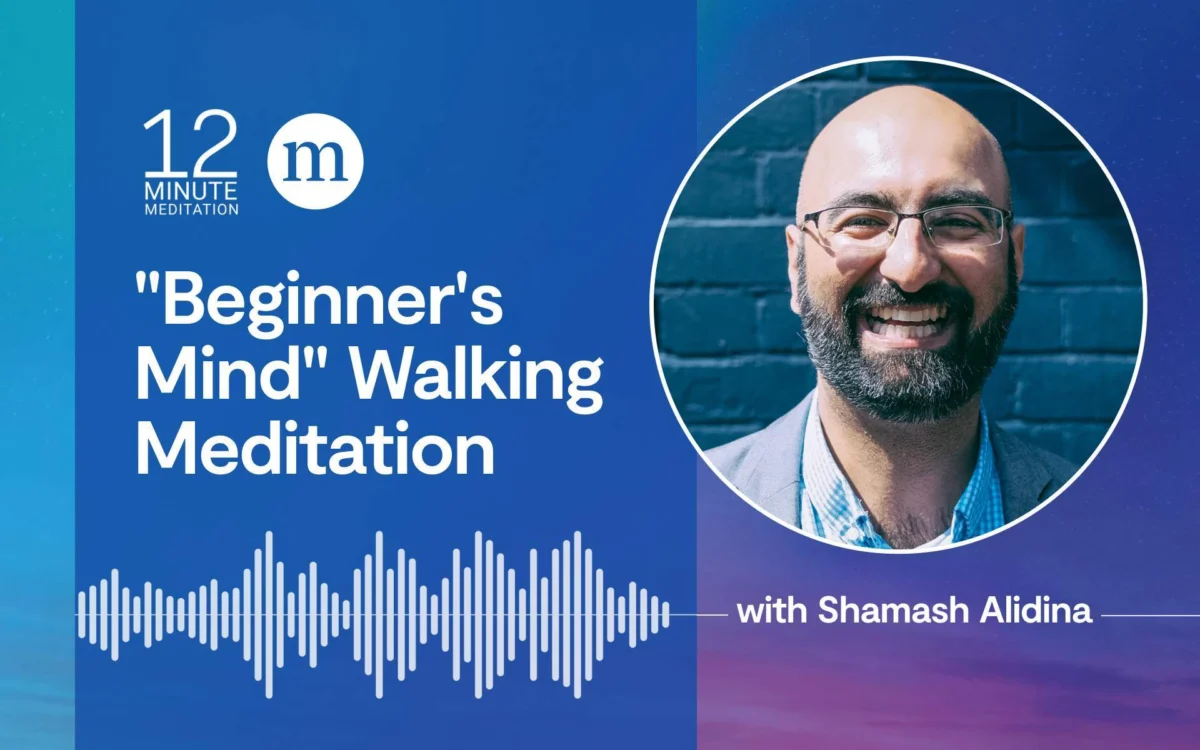
The modern urban environment often encourages a state of automatic pilot, wherein individuals navigate familiar streets, workspaces, and daily routines with minimal conscious awareness. Recent behavioral health studies indicate that adults spend nearly half of their waking hours thinking about something other than what they are currently doing, a psychological phenomenon known as mind-wandering that frequently contributes to stress, fatigue, and a diminished appreciation of everyday life. In response to these growing concerns regarding mental burnout and urban sensory overload, mindfulness practitioners and educators are increasingly turning to targeted cognitive techniques designed to recalibrate human perception. Among these interventions, the concept of the "beginner’s mind"—a Zen Buddhist principle popularized in the West by philosopher and meditation teacher Shunryu Suzuki—has gained significant traction within clinical and wellness frameworks. This week, prominent mindfulness teacher and author Shamash Alidina introduced a structured, evidence-informed application of this principle through a specialized walking meditation designed to dismantle rigid cognitive patterns and foster heightened situational awareness.
Background Context and Psychological Framework
To understand the mechanics of Alidina’s walking meditation, one must examine the psychological construct of cognitive entrenchment. Neuroscientists and cognitive psychologists have long established that the human brain relies heavily on categorization and heuristic processing to conserve metabolic energy. When an individual repeatedly traverses the same geographic route or engages in habitual tasks, the prefrontal cortex essentially creates a mental shortcut, labeling environments as fully understood and dismissing incoming sensory data as redundant. Consequently, familiar surroundings are filtered out, leading to a dulling of curiosity and a disconnection from the immediate physical environment.
Alidina’s approach posits that cultivating a beginner’s mind does not require feigned ignorance or the eradication of existing knowledge; rather, it demands a deliberate, intentional suspension of assumptions. By actively pausing to interrogate whether preconceptions about people, spaces, and objects remain accurate, individuals can reactivate dormant neural pathways associated with exploratory learning and sensory processing. The integration of this cognitive reset with a physical activity like walking creates a dual-anchor system, utilizing bodily movement to ground the wandering mind while sensory exploration provides fresh data to stimulate cognitive flexibility.
Chronology and Implementation of the Practice
The rollout of Alidina’s guided walking meditation follows a meticulously structured sequence, blending traditional mindfulness tenets with modern behavioral psychology protocols. The practice is broken down into sequential phases that systematically guide the practitioner from physical stabilization to expansive environmental awareness.
Phase One: Environmental Preparation and Grounding
The protocol begins with the selection of a secure environment and the adoption of a stationary posture. Unlike seated meditations that prioritize stillness within a controlled indoor space, Alidina’s method incorporates dynamic movement. Practitioners are instructed to choose a safe walking path—such as a quiet neighborhood sidewalk, a park trail, or an undisturbed hallway—and to maintain an ambient audio volume if listening via headphones, ensuring total situational awareness of the surrounding environment. The session commences with the practitioner standing completely still, sensing the point of contact between their feet and the ground, and taking a single, intentional breath without attempting to alter their natural physiological state.
Phase Two: The Cognitive Reset and Sensory Engagement
Once grounded, the practitioner is directed to view their surroundings through the hypothetical lens of a newly arrived visitor from another planet—someone completely devoid of linguistic labels or cultural constructs regarding their location. This exercise in perceptual defamiliarization effectively bypasses the semantic memory centers of the brain that automatically label objects (e.g., identifying a maple leaf simply as "a leaf"). Following this mental reset, the individual initiates a walk slightly slower than their habitual pace. This deceleration provides the temporal space necessary to register micro-sensions: the lifting, forward propulsion, and landing of each foot, as well as the textural interplay between the soles and the pavement.
Phase Three: Expansion and Defamiliarization
As the walk progresses, the methodology introduces specific cognitive challenges designed to dismantle habitual observation. Practitioners are tasked with identifying three distinct environmental features they have never consciously noticed before, ranging from microscopic architectural flaws and unusual leaf formations to overlooked chromatic variations in nearby structures. Furthermore, participants are encouraged to practice "seeing without naming," actively suppressing the urge to categorize visual stimuli and instead resting in the raw, unmediated visual data. This technique is mirrored in the auditory domain, where individuals listen to ambient noises—traffic, distant speech, avian calls, wind resistance—with heightened fidelity, noting both volume and proximity while attempting to catch subtle acoustic details that typically evade conscious perception.
Supporting Data and Behavioral Implications
While mindfulness interventions have historically been evaluated primarily in clinical settings for anxiety and depression management, emerging public health data underscores their broader utility in daily cognitive maintenance. According to longitudinal studies conducted by psychological research institutions, adults who regularly practice mindfulness techniques exhibit measurable improvements in attentional control, working memory capacity, and emotional regulation.
Data concerning urban walking specifically indicates that even short bouts of deliberate, slow-paced ambulation combined with sensory attention can significantly lower salivary cortisol levels—a primary biomarker for stress. When participants engage in exercises that require them to actively notice novel elements within a familiar landscape, functional magnetic resonance imaging (fMRI) scans reveal increased activation in the default mode network and areas associated with visual attention and cognitive flexibility. Alidina’s structured inclusion of potential psychological obstacles—such as boredom, impatience, or the internal narrative of "I already know this place"—aligns with evidence-based cognitive behavioral strategies that teach individuals to observe internal resistance without yielding to avoidance behaviors. By reframing boredom not as a failure of the meditation, but as a novel sensory experience in its own right, the practice fosters psychological resilience against monotony.
Official Responses and Expert Analysis
Mental health professionals and somatic educators have responded favorably to Alidina’s accessible framework, noting its high degree of practical applicability for individuals who struggle with traditional, sedentary meditation practices.
"Many people find the prospect of sitting silently for twenty minutes deeply intimidating, often because their minds race or they feel physical discomfort," notes Dr. Elizabeth Vance, a cognitive behavioral researcher specializing in urban psychology. "By integrating mindfulness into a routine physical action like walking, and by turning it into a game of discovery rather than a rigid discipline, practitioners lower their affective filter. Alidina’s method effectively leverages the brain’s innate exploratory drive, turning a mundane commute or a routine stroll into an active neurological reset."
Furthermore, occupational health analysts suggest that incorporating such short-duration mindfulness practices into the workday can mitigate the cognitive fatigue associated with screen-based labor. When employees take brief intervals to experience their immediate physical surroundings without linguistic labeling, they report a subsequent enhancement in problem-solving capabilities and a reduction in decision fatigue.
Broader Impact and Societal Implications
The widespread dissemination of techniques like Shamash Alidina’s beginner’s mind walking meditation reflects a broader cultural shift toward proactive mental health maintenance and sensory reclamation in an increasingly digitalized society. As urban populations expand and digital interfaces increasingly mediate human interaction, the capacity for direct, unmediated sensory engagement is frequently compromised.
By offering a scalable, equipment-free intervention that can be executed during routine daily transit, practices of this nature democratize access to mental wellness tools. They challenge the societal imperative for constant productivity and speed, suggesting instead that profound psychological benefits can be derived from slowing down and re-evaluating the immediate environment. Ultimately, as longitudinal data continues to validate the physiological and psychological rewards of mindfulness-based cognitive shifts, structured exercises in perceptual curiosity are poised to become a staple of preventive healthcare and holistic lifestyle management.