rifanmuazin
The digital landscape has fundamentally transformed how businesses and individuals connect with their audiences, making consistent engagement on platforms like LinkedIn, Facebook, Instagram, and X a cornerstone of modern communication strategies. What once appeared to be a perplexing dichotomy between wildly successful posts and those that barely registered, has, for many, found its clarity through the lens of social media analytics. This critical discipline provides the empirical evidence necessary to dissect content performance, optimize outreach, and ultimately, achieve strategic objectives. Without a systematic approach to data, content creators and marketers often operate in a void of speculation, unable to discern the underlying mechanisms of audience engagement. The revelation for many comes when they transition from anecdotal observation to rigorous data monitoring, identifying patterns such as the most effective "hooks," optimal posting times, and ideal content lengths. This data-driven enlightenment is not exclusive; the clues are universally available within the analytics dashboards provided by each platform, yet accessing and synthesizing this information across multiple channels presents a significant logistical challenge.
The Evolution and Imperative of Social Media Analytics

The journey from early social media platforms, primarily designed for personal connections, to the sophisticated marketing ecosystems of today, has been marked by an exponential increase in data generation. Initially, content creators and businesses relied on rudimentary metrics like "likes" or "follower counts" to gauge success. However, as social media matured into a vital component of the marketing mix, the demand for deeper, more actionable insights grew. This shift was fueled by the need to demonstrate tangible return on investment (ROI) for social media efforts, moving beyond vanity metrics to quantifiable business outcomes such as lead generation, sales conversions, and brand sentiment.
Native analytics, offered directly by platforms like LinkedIn, Instagram, and Facebook, represented an initial step towards empowering users with data. These dashboards provide essential information such as post reach, engagement rates, and basic audience demographics. However, their utility is often constrained by several factors. Firstly, the lack of a unified view across multiple platforms necessitates laborious manual compilation and comparison, consuming valuable time. Secondly, native dashboards frequently present frustrating "blind spots." For instance, LinkedIn’s historical data often lacks specific timestamps for past posts, making it challenging to precisely identify peak engagement hours. This limitation forces marketers into a guessing game rather than a data-informed strategy. Furthermore, these built-in tools typically offer limited historical data retention, lack advanced features like sentiment analysis or competitive benchmarking, and provide minimal customization for reporting.
This evolving landscape created an undeniable demand for third-party social media analytics tools. These specialized software solutions are engineered to aggregate data from diverse platforms into a single, cohesive dashboard, providing a panoramic view of performance. More importantly, they offer advanced analytical capabilities that native tools often lack, transforming raw numbers into strategic insights. These tools enable users to answer questions far beyond simple engagement metrics, delving into audience demographics, sentiment analysis, competitive positioning, and the overall efficacy of content pillars.

Defining the Analytical Landscape: Tools and Their Functions
Social media analytics fundamentally refer to the quantitative and qualitative data that illustrates how posts and campaigns perform across various platforms. This extends beyond merely counting likes to understanding audience behavior, content resonance, and strategic impact. For example, analytics can illuminate:
- Which content formats (e.g., video, carousel, text-only) achieve the highest reach or engagement.
- The specific demographic segments most responsive to particular messages.
- Optimal days and times for posting to maximize audience interaction.
- The sentiment surrounding brand mentions or specific campaigns.
- Competitive performance benchmarks and industry trends.
These insights are crucial for measuring performance against predefined social media goals, allowing for continuous optimization of strategy. The social media analytics market is a dynamic and expanding sector; industry reports suggest the global social media analytics market is projected to reach approximately $19.8 billion by 2030, growing at a compound annual growth rate (CAGR) of around 24.6%. This growth underscores the increasing recognition among businesses of all sizes that data-driven decisions are paramount for digital success.
The ecosystem of social media analytics software can be broadly categorized into two main types: dedicated social media analytics tools and comprehensive social media management software. Dedicated analytics tools focus exclusively on performance measurement, offering deep dives into data and sophisticated reporting functionalities. Social media management software, on the other hand, provides an all-encompassing suite that integrates analytics with other essential functions such as post scheduling, audience engagement, content ideation, and even social listening.
For many social media managers and individual creators, a one-stop social media management tool with robust analytics capabilities is often the preferred choice due to its convenience and efficiency. Consolidating multiple functions into a single platform streamlines workflows and reduces the cognitive load associated with managing disparate tools. However, there are specific scenarios where standalone social media analytics tools prove more advantageous. These include:
- Organizations requiring highly specialized analysis, such as in-depth market research, advanced sentiment analysis, or detailed competitive intelligence, which may not be fully addressed by broader management suites.
- Large enterprises or agencies that already utilize a separate social media scheduling or engagement platform and only need to augment their capabilities with specialized analytics.
- Users focusing on niche platforms or specific types of analysis (e.g., purely comment-based insights or ad performance) for which a dedicated tool offers unparalleled depth.
The following curated list explores eleven leading social media analytics tools, organized by their optimal use cases, to assist creators, marketers, small businesses, and enterprises in selecting the most suitable solution for their unique needs.
Leading Social Media Analytics Platforms: A Detailed Review
1. Buffer: The Agile Partner for Creators and Small Teams
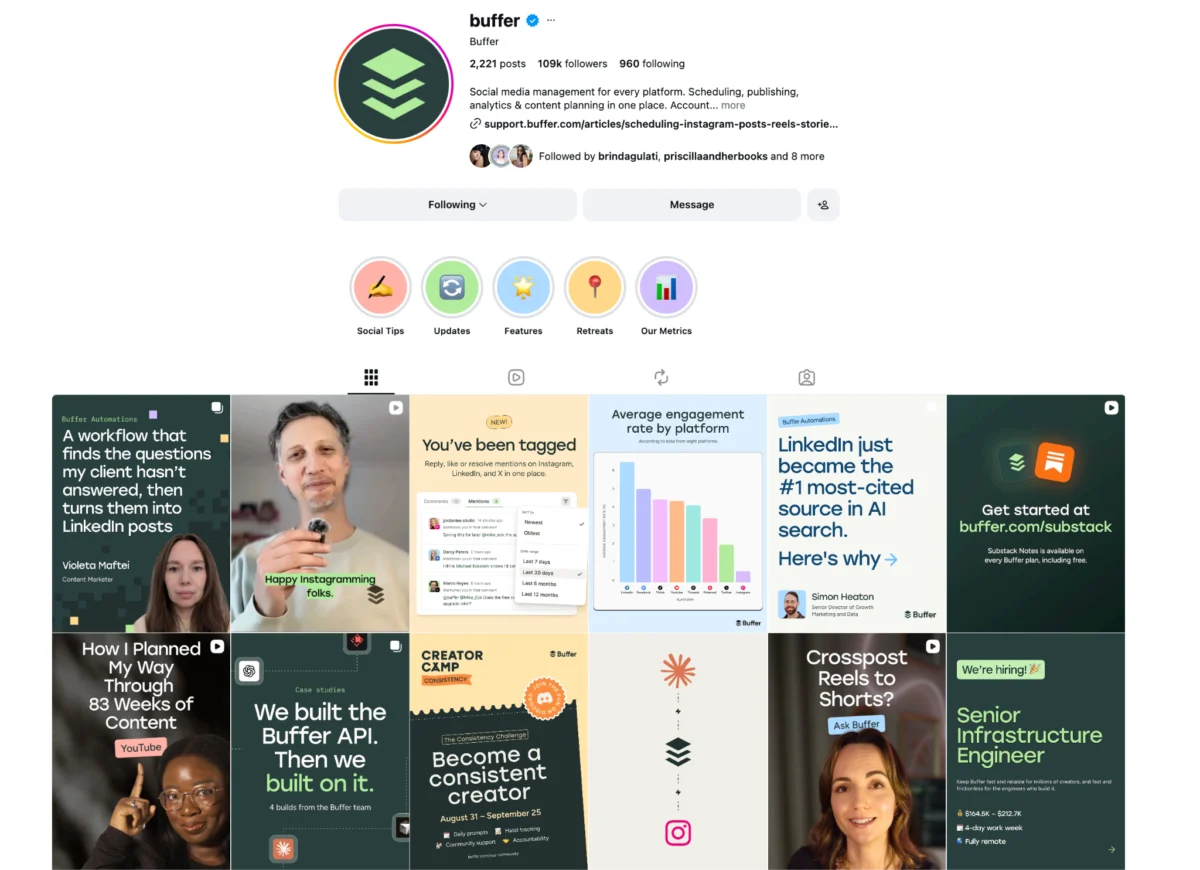
Buffer has long been lauded as a versatile social media toolkit, offering scheduling, engagement management, and content ideation alongside its analytics capabilities. Its strength lies in its intuitive design, making complex data accessible even for users without extensive analytical backgrounds. Upon accessing the Buffer dashboard, users are greeted with a clear overview of key performance indicators, best posting times, and content recommendations tailored to improve engagement. Crucially, Buffer moves beyond simply presenting numbers; it contextualizes the data, providing actionable insights that are invaluable for time-constrained creators and small social media teams. Users can delve into raw data, examining metrics such as total reach, impressions, follower growth, clicks, and engagement rates. The platform also facilitates the creation of visually appealing, branded reports with minimal effort, eliminating the tedious process of manual data extraction and formatting.
- Price: Free plan for up to three social media platforms (10 posts per channel); paid plans with advanced analytics start at $6 per month.
- Supported Platforms: Bluesky, Facebook, Google Business, Instagram, LinkedIn, Mastodon, Pinterest, Threads, TikTok, X, YouTube.
2. Rival IQ: Strategic Intelligence for Large Agencies
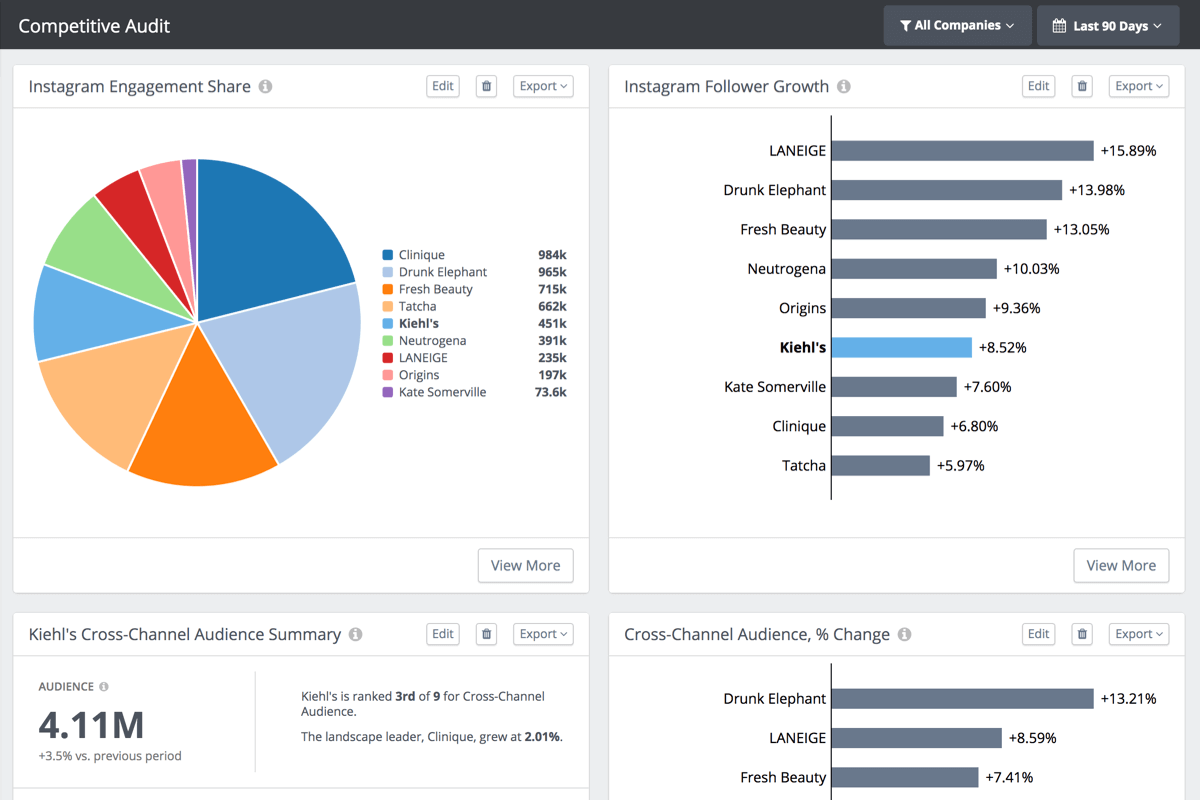
Rival IQ distinguishes itself as a premier dedicated social media analytics tool, particularly suited for large social media agencies. Its core offering is deeply integrated with competitive analysis and social listening functionalities, eliminating the need for agencies to juggle multiple platforms for these interconnected tasks. Rival IQ’s pricing structure reflects its enterprise-grade capabilities, focusing on comprehensive competitive benchmarking. It excels at identifying key competitors, tracking their content performance, analyzing their audience engagement, and providing detailed insights into their social media strategies. For agencies, this capability is paramount, enabling them to inform client strategies with data-driven competitive intelligence and produce robust performance reports that highlight market positioning.
- Price: Plans start at $239 per month; free 14-day trial available.
- Supported Platforms: Facebook, Instagram, LinkedIn, TikTok, X, YouTube.
3. Keyhole: Unlocking Market Research through Historical Data
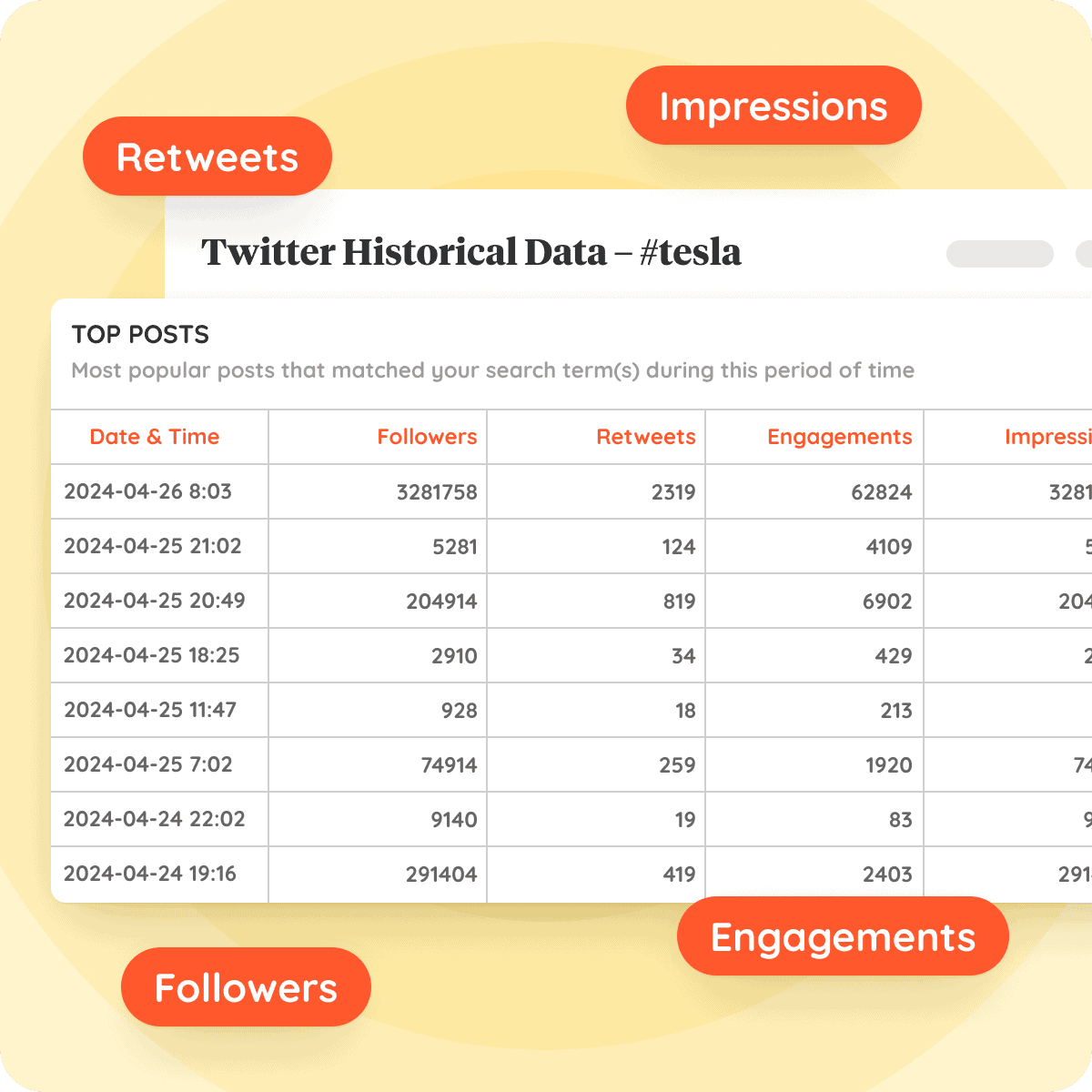
Keyhole stands out among dedicated analytics tools for its powerful combination of historical insights and market research capabilities. While it offers competitive analysis and even influencer marketing features, its unique strength lies in its ability to analyze historical data, particularly for X (formerly Twitter). This feature allows users to track the evolution of hashtags, keywords, and topics over extended periods, providing invaluable insights into long-term trends, shifts in public discourse, and the enduring relevance of content pillars. This historical perspective can be instrumental in product development, content strategy refinement, and understanding the longevity of marketing campaigns. However, a notable limitation is that these deep historical insights are predominantly available for X, with other platforms offering more limited historical depth.
- Price: Not publicly available; historical reports incur additional costs starting from $50.
- Supported Platforms: Facebook, Instagram, LinkedIn, TikTok, X, YouTube.
4. Social Status: Bridging Organic and Paid for Small Businesses
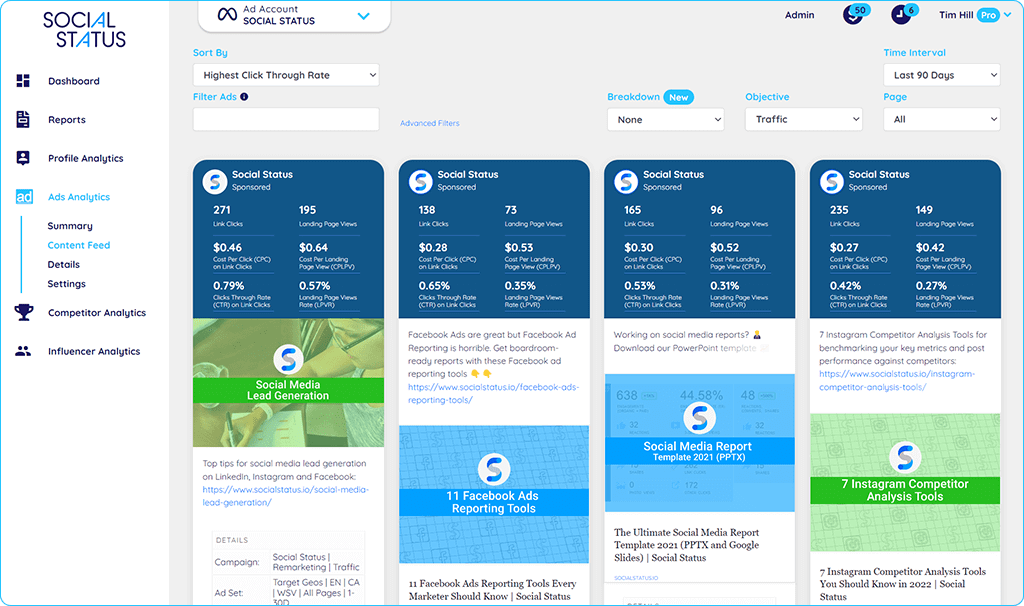
For small businesses navigating the complexities of both organic social media and paid advertising campaigns, Social Status offers a streamlined analytics platform. It consolidates key performance indicators (KPIs) from both organic posts and ad campaigns, providing a unified view of overall social media efficacy. Beyond standard metrics like likes, impressions, and comments, Social Status provides crucial insights into ad performance, influencer partnership ROI, and the effectiveness of user-generated content. This holistic approach simplifies the often-fragmented reporting process for small business owners and marketers who juggle diverse responsibilities across their social media strategy.
- Price: Free plan available; paid plans start at $99 per month.
- Supported Platforms: Facebook, Instagram, LinkedIn, TikTok, X, YouTube.
5. Siftsy: The Deep Dive into Comment Sentiment
Siftsy addresses a critical gap in many analytics tools: the qualitative insights embedded within user comments. Recognizing that comments often reveal the "why" behind quantitative data, Siftsy leverages AI to analyze sentiment across multiple social channels. Users upload CSVs of post URLs, tag their campaigns, and Siftsy’s AI processes the comments, identifying overall sentiment (positive, negative, neutral), key themes, and emerging trends. This capability is invaluable for:
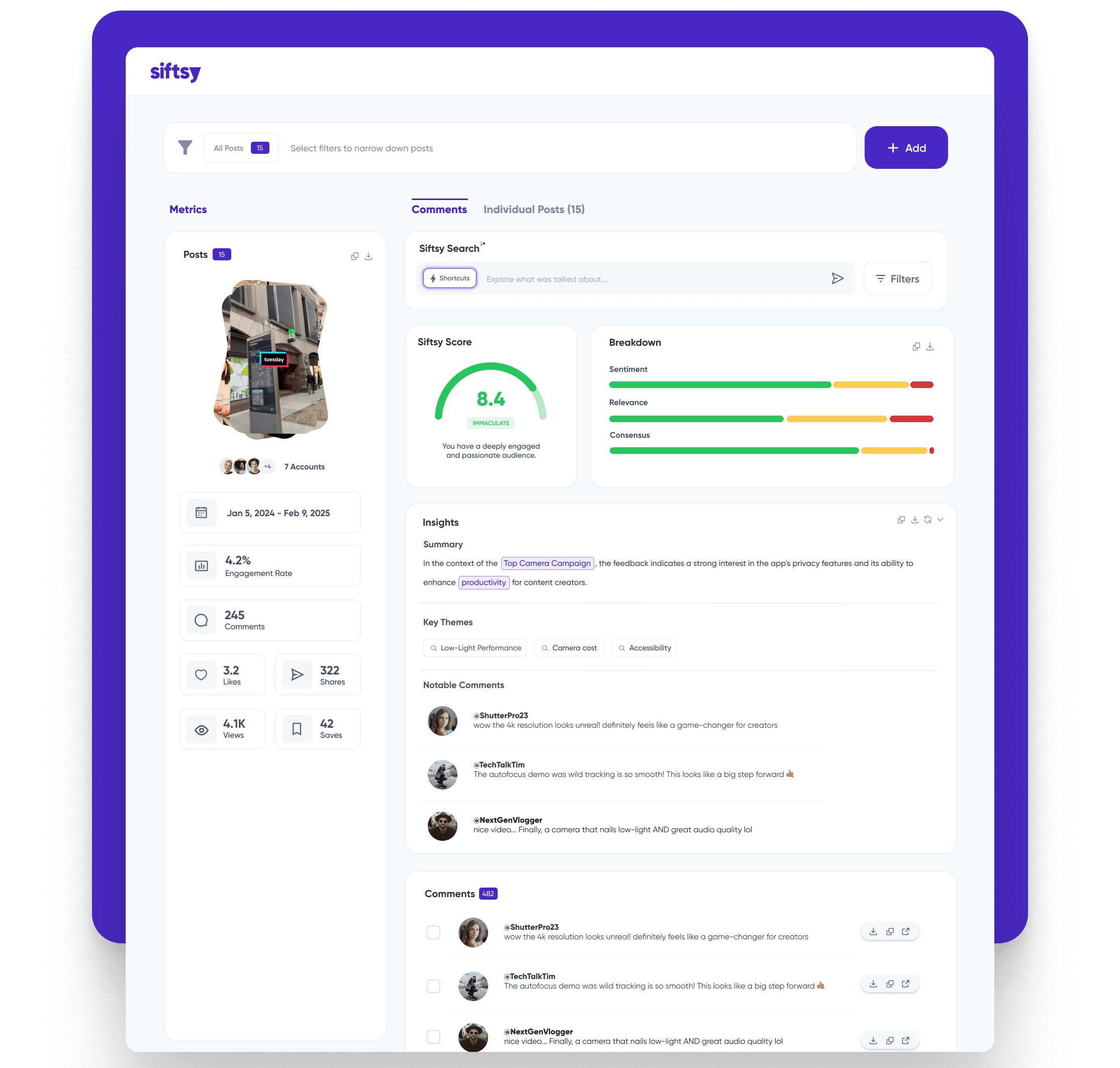
- Identifying pain points: Uncovering customer dissatisfaction or product issues.
- Sourcing content ideas: Discovering topics that genuinely resonate with the audience.
- Detecting crisis signals: Early identification of negative sentiment or potential PR issues.
- Understanding campaign reception: Gauging the emotional response to marketing efforts.
The tool’s ability to summarize key takeaways and highlight specific valuable conversations makes it a powerful complement to traditional numeric analytics. - Price: Not publicly available.
- Supported Platforms: Instagram, LinkedIn, TikTok, X, YouTube.
6. Vista Social: Holistic Reputation and Social Management
Vista Social extends beyond traditional social media analytics by integrating robust review management capabilities with a comprehensive social media management suite. This platform allows businesses not only to schedule posts, manage comments, and practice social listening but also to centralize feedback from various review sites into a single dashboard. This integration enables businesses to:
- Monitor brand reputation: Track star ratings and customer sentiment across platforms.
- Streamline customer service: Respond to reviews efficiently from one interface.
- Identify areas for improvement: Analyze feedback to enhance products or services.
- Leverage positive reviews: Identify opportunities for testimonials and social proof.
By combining social media performance with online reputation management, Vista Social offers a powerful tool for brands focused on holistic digital presence. - Price: Plans start at $79 per month; free 14-day trial available.
- Supported Platforms: Apple Play Store, Bluesky, Facebook, Google Business, Google Play Store, Instagram, LinkedIn, OpenTable, Pinterest, Reddit, Snapchat, Threads, TikTok, TripAdvisor, Trustpilot, Tumblr, X, Yelp, YouTube, and more.
7. Typefully: Mastering Text-Centric Social Media
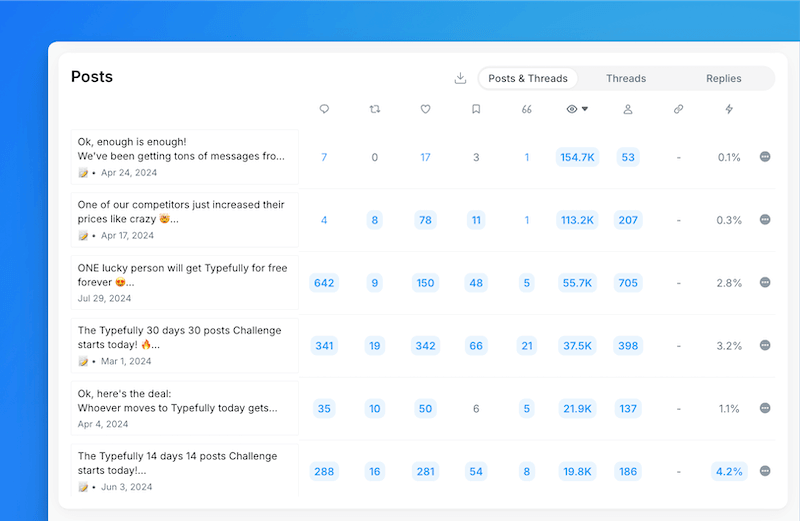
Typefully shines as a specialized analytics tool for text-dominant social media platforms, particularly X (formerly Twitter). While it supports other channels like LinkedIn and Threads, its interface and metrics are optimized for the nuances of microblogging. The platform excels at facilitating the creation of X threads, offering a user-friendly experience and inspiration from "viral thread hooks." Typefully provides X-specific metrics, such as referring to comments as "replies," aligning with the platform’s terminology. A standout metric is the "profile conversion rate," which tracks how many profile visitors convert into followers. This data point offers critical insights into:
- The effectiveness of profile optimization (bio, pinned posts).
- The resonance of recent content in attracting new followers.
- The overall magnetism of a creator’s presence on X.
Combined with essential metrics like impressions, follower growth, and profile visits, Typefully empowers users to refine their content strategy specifically for text-heavy social networks. - Price: Free plan for 15 posts per month; paid plans start at $16 per month (compulsory yearly billing).
- Supported Platforms: Bluesky, LinkedIn, Mastodon, Threads, X.
8. Tailwind: The Pinterest Powerhouse
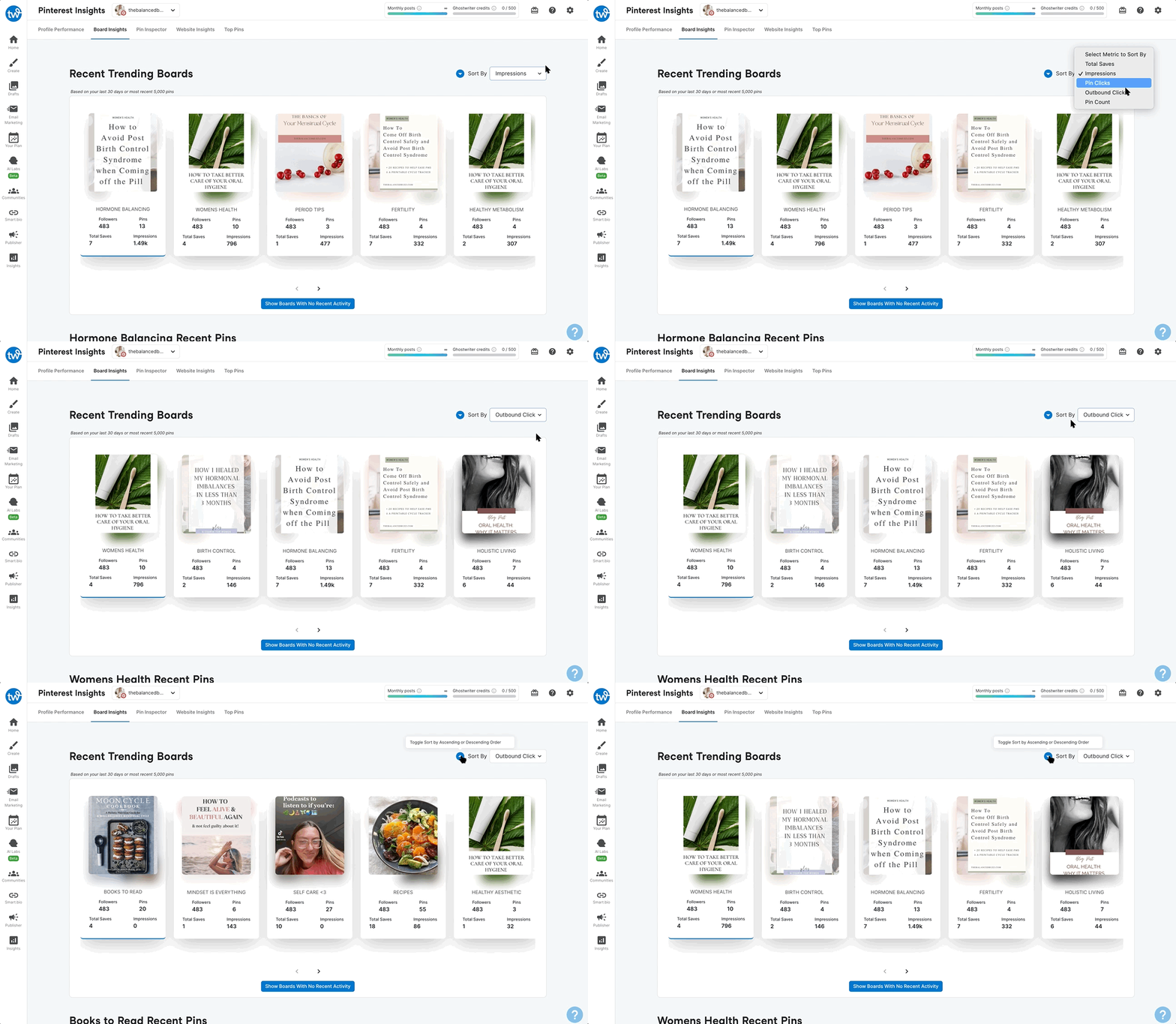
Tailwind is an indispensable tool for businesses and creators who leverage Pinterest as a primary driver of traffic and sales. Recognizing Pinterest’s dual nature as a social media platform and a visual search engine, Tailwind’s analytics are specifically designed to optimize performance within this unique ecosystem. A key differentiator is its integration with Google Analytics, allowing users to precisely track which Pinterest pins are most effective in driving traffic to their websites. This direct attribution empowers users to replicate successful strategies and maximize their ROI from Pinterest marketing. Tailwind provides a comprehensive suite of Pinterest-specific KPIs, ranging from high-level board performance to individual pin analytics, including impressions, saves, clicks, and follower growth, ensuring every aspect of a Pinterest strategy is measurable.
- Price: Free plan for five posts per month; paid plans begin at $29.99 per month.
- Supported Platforms: Facebook, Instagram, Pinterest.
9. DashThis: The Unified Marketing Dashboard
DashThis serves as a powerful marketing software with integrated social media reporting, ideal for teams managing a comprehensive marketing strategy. Its strength lies in its ability to consolidate data from over 30 integrations, including Google Analytics, Ahrefs, HubSpot, and various ad platforms (TikTok Ads, Meta Business Suite, Google Ads). This allows social media marketers to demonstrate how their efforts contribute to broader marketing goals and to present a combined report of organic and paid strategies. While it provides essential social media metrics (audience insights, engagement, reach), its primary value is in its cross-platform data aggregation for a holistic marketing overview. With unlimited users and data sources across all plans, DashThis is particularly well-suited for large marketing teams with complex tech stacks.
- Price: Plans begin at $49 per month; 15-day free trial available.
- Supported Platforms: Facebook, Instagram, LinkedIn, Pinterest, TikTok, YouTube.
10. Socialinsider: AI-Driven Insights for Content Pillars
Socialinsider offers an advanced social media analytics platform that leverages AI to provide deep insights into content pillars. This feature allows users to analyze the performance of specific content themes, understanding which topics resonate most effectively with their audience. Higher-tier plans include AI-driven competitor analysis, enabling users to benchmark their content pillars against competitors and identify successful strategies for adaptation. The platform’s post-tagging feature is particularly valuable for monitoring the collective performance of grouped posts, making it ideal for tracking specific social media campaigns or content series. While Socialinsider’s advanced features offer significant strategic advantages, their pricing structure can be prohibitive for individual creators and smaller teams, reserving the most powerful tools for higher-tier subscriptions.
- Price: Plans start at $99 per month; all plans include a 14-day free trial.
- Supported Platforms: Facebook, Instagram, LinkedIn, TikTok, X, YouTube.
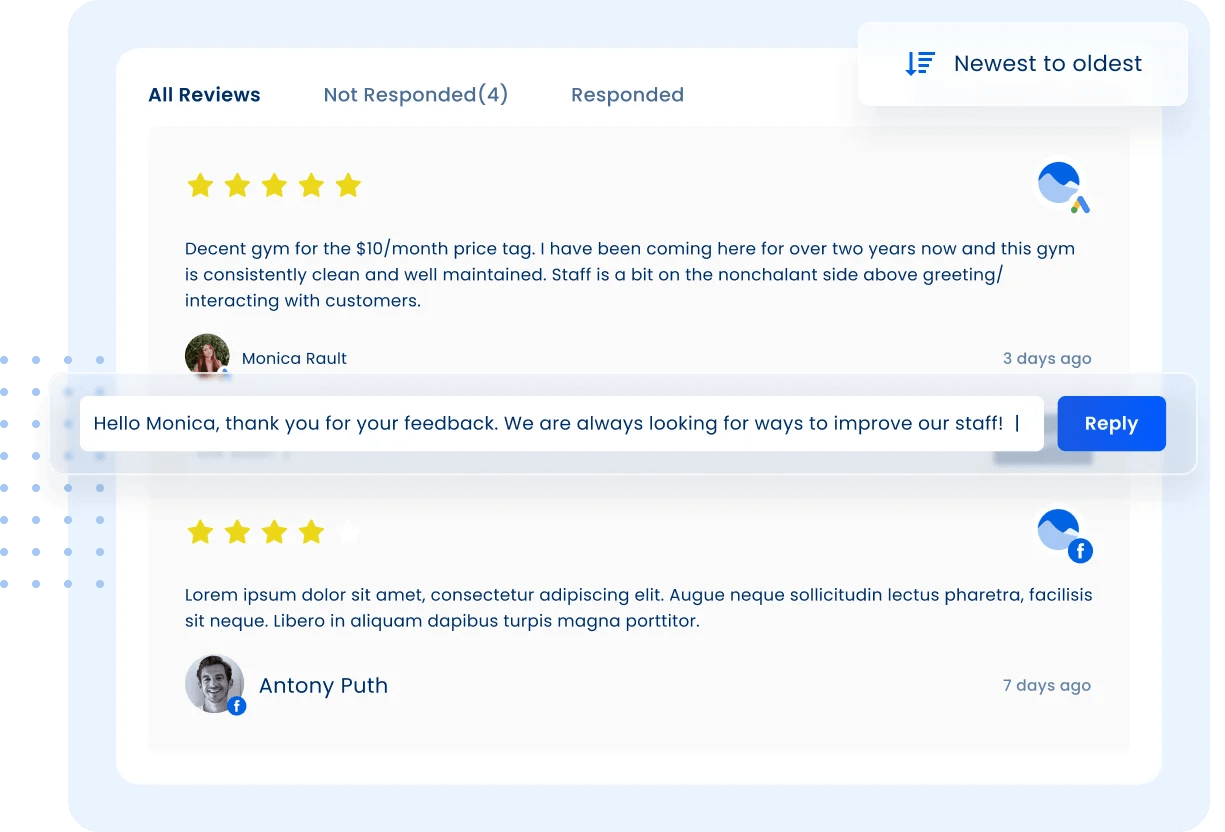
11. Talkwalker: In-Depth Audience Insights and Brand Intelligence
Talkwalker stands as a sophisticated analytics tool primarily focused on social media monitoring and in-depth audience insights. Its standout capabilities include the ability to pull insights from diverse data sources, such as customer calls, support tickets, and online communities, to paint a comprehensive picture of audience interests and pain points. This robust data aggregation is a goldmine for discovering new content ideas and understanding evolving consumer needs. Talkwalker also excels in audience segmentation, allowing brands to analyze data based on various demographics, which is especially valuable for global brands targeting diverse markets. The platform features an AI assistant, Yeti, to facilitate quick queries and access relevant insights. With Hootsuite’s acquisition of Talkwalker in 2024, its advanced analytics features are now integrating into a broader social media management ecosystem, offering a more complete solution for scheduling, engagement, and performance measurement, albeit primarily within Hootsuite’s higher-tier plans.
- Price: Not publicly available (typically enterprise-level pricing).
- Supported Platforms: Facebook, Instagram, YouTube, Pinterest, X, and more.
The Broader Impact and Future of Social Media Analytics
The adoption of sophisticated social media analytics tools signifies a paradigm shift in how digital marketing is conceived and executed. Moving beyond mere presence, businesses are now strategically leveraging data to refine their messaging, optimize their spending, and build more meaningful connections with their target audiences. The implications are profound:
- Enhanced Strategic Planning: Analytics provide the foundation for evidence-based decision-making, allowing marketers to allocate resources more effectively and set realistic, measurable goals.
- Improved Content Efficacy: By understanding what resonates, creators can produce content that is more engaging, relevant, and impactful, leading to higher audience retention and growth.
- Competitive Advantage: Tools offering competitive benchmarking enable businesses to stay abreast of industry trends, identify competitor strengths and weaknesses, and carve out unique market positioning.
- Optimized Resource Allocation: Detailed performance data allows for better budget management, ensuring that investments in social media campaigns yield the highest possible ROI.
- Proactive Crisis Management: Sentiment analysis and real-time monitoring capabilities facilitate early detection of negative trends or potential PR crises, enabling timely and informed responses.
Looking ahead, the field of social media analytics is poised for further innovation. The integration of Artificial Intelligence and Machine Learning is becoming increasingly sophisticated, moving beyond basic sentiment analysis to predictive analytics that can forecast content performance, identify emerging trends before they peak, and even suggest optimal content creation strategies. The demand for deeper integration with other business intelligence and CRM systems will continue to grow, aiming for a truly unified view of the customer journey across all touchpoints. Furthermore, as data privacy concerns escalate, analytics tools will need to evolve to provide robust insights while adhering to stringent ethical guidelines and regulatory frameworks.
Ultimately, the choice of a social media analytics tool is a strategic decision that depends on an organization’s specific needs, scale, and budget. Whether opting for a comprehensive management suite or a specialized analytics platform, the underlying objective remains consistent: to transform raw data into actionable intelligence. This empowers marketers and creators to spend less time on manual data collection and more time on creative strategy, audience engagement, and continuous improvement. The ability to quickly generate polished, share-worthy reports allows for efficient communication of results and a clearer understanding of social media’s contribution to overall business success. For those seeking an intuitive, cost-effective, and highly functional solution to kickstart their data-driven journey, platforms like Buffer offer a compelling starting point with their accessible free plans and scalable advanced features. The era of informed social media strategy is here, and analytics tools are the compass guiding the way.