
 Indra Kusuma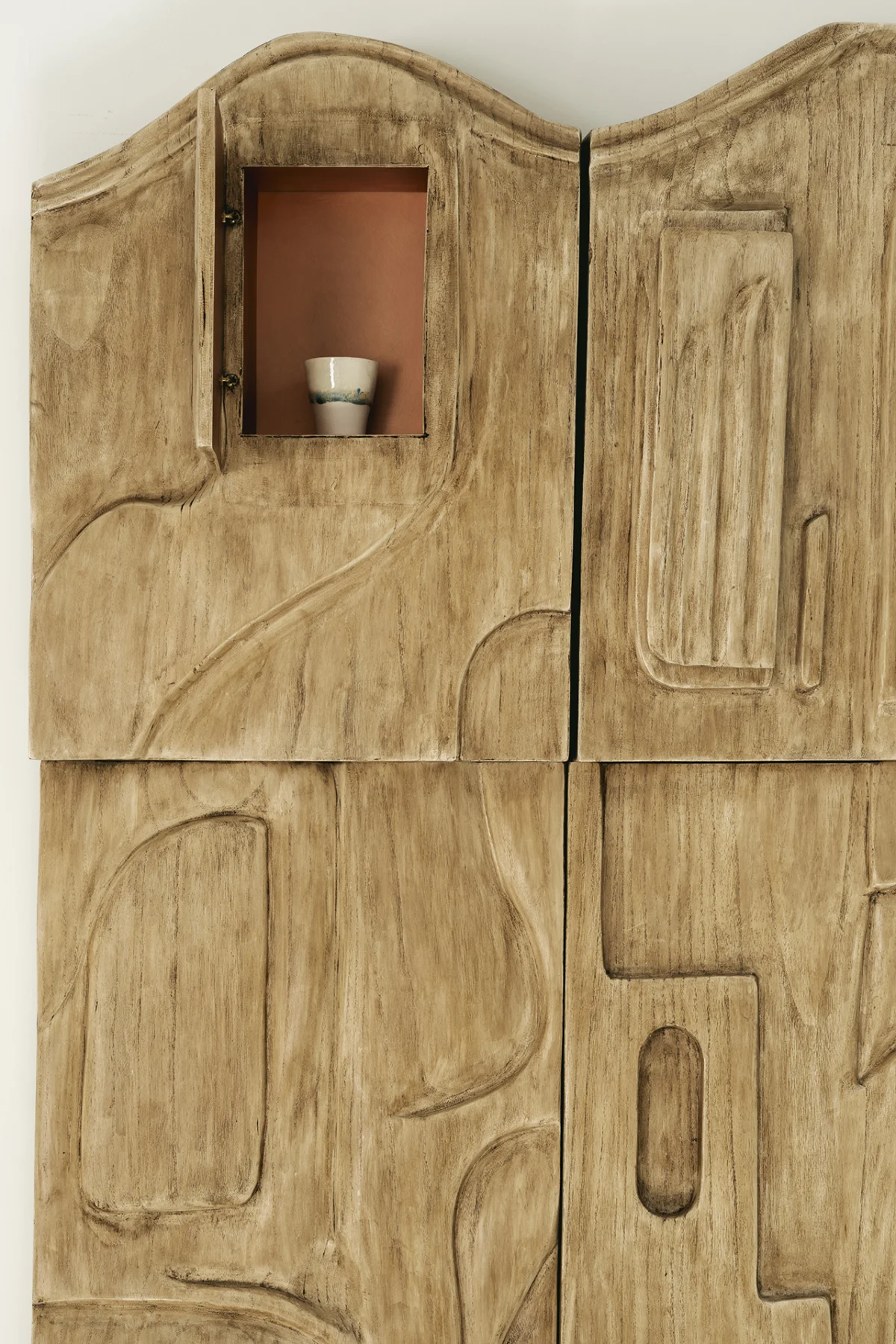
Belgian polymathic artist Katrien Van Der Schueren is currently captivating audiences with her new wall-sculpture series, "The Ark of Us," at Onna House in East Hampton. This innovative collection offers a profound reinterpretation of the historical wunderkammer, or cabinet of curiosity, transforming an ancient practice of elite display into a deeply personal and accessible exploration of memory and material culture. The exhibition, titled "In Her Hands: From Marble to Wood," invites viewers to engage with art that is both primeval in its aesthetic and distinctly contemporary in its conceptual resonance, pushing the boundaries of craft and artistic expression.
The Enduring Legacy of the Wunderkammer
To fully appreciate Van Der Schueren’s contemporary vision, it is essential to delve into the rich history of the wunderkammer. Emerging prominently throughout Renaissance Europe, these "cabinets of curiosity" were far more than mere collections; they were meticulously curated microcosms of the known world, serving as conspicuous displays of wealth, knowledge, and power. Typically found in the reserves of particularly learned rulers, aristocrats, high-ranking clergy, and scholarly scientists, these encyclopedic assemblages housed an eclectic array of objects, from rare natural elements and exotic specimens to religious relics, antiquities, and era-distinctive examples of material culture.
These early wunderkammers were not simply rooms filled with objects; they were often holistically themed environments, sumptuously adorned to enhance the sensory and intellectual experience. Patrons like Rudolf II, Holy Roman Emperor, whose Prague collection was legendary, or the Danish physician Ole Worm, whose museum catalog Museum Wormianum (1655) became a foundational text, meticulously categorized their holdings into distinct sections: naturalia (natural history), artificialia (man-made objects), scientifica (scientific instruments), exotica (objects from distant lands), and mirabilia (marvels). These collections were critical to the burgeoning scientific inquiry of the time, fostering observation, classification, and the early development of disciplines such as botany, zoology, geology, and ethnography. They served as early museums, accessible primarily to a select few, offering glimpses into a world rapidly expanding through exploration and trade.
The very act of collecting and displaying these diverse objects was a statement about one’s mastery over knowledge and the physical world. For a Renaissance prince, a wunderkammer underscored his intellectual prowess and his ability to command resources from across the globe. For a scholar, it provided the raw material for research and the intellectual tools to understand the universe. The meticulous arrangement and thematic coherence of these rooms were as much a part of their artistic and intellectual value as the individual items themselves.
The Evolution from Rooms to Intricate Cabinets
As centuries progressed, the grand, room-sized wunderkammer began to undergo a significant transformation. The sprawling, encyclopedic ambition of the Renaissance gradually gave way to more focused, and spatially reduced, manifestations of curiosity. This shift was partly a response to changing architectural styles, the rise of specialized scientific disciplines, and a broadening interest in collecting among a wider, albeit still affluent, populace. The act of considered hoarding, once requiring entire dedicated chambers, migrated into more portable and domestic furnishings: the intricately compartmentalized cabinet.
These "cabinets of curiosity," often elaborately crafted pieces of furniture, became miniature versions of their grand predecessors. They featured numerous drawers, hidden compartments, and display sections designed to house smaller, precious objects. While still embodying the spirit of collection and display, they emphasized a more intimate, personal relationship between the collector and their treasures. This transition reflected a move towards greater specialization in scientific inquiry and a more refined aesthetic sensibility in domestic interiors. These cabinets were still repositories of wonder, but on a more manageable, personal scale, allowing for a concentrated exploration of specific themes or types of objects, rather than attempting to encompass the entire cosmos. They represented a bridge between the public spectacle of the wunderkammer and the private, reflective act of personal curation.
Katrien Van Der Schueren: A Contemporary Visionary
It is against this rich historical backdrop that Katrien Van Der Schueren, a Brussels-born, New York-based artist known for her multidisciplinary approach, returns to this age-old paradigm. Van Der Schueren’s artistic practice is characterized by her ability to bridge disparate fields, from design and sculpture to conceptual art, earning her the moniker "polymathic." Her work consistently demonstrates a deep engagement with material exploration and a unique ability to imbue inanimate objects with profound narrative and emotional depth.
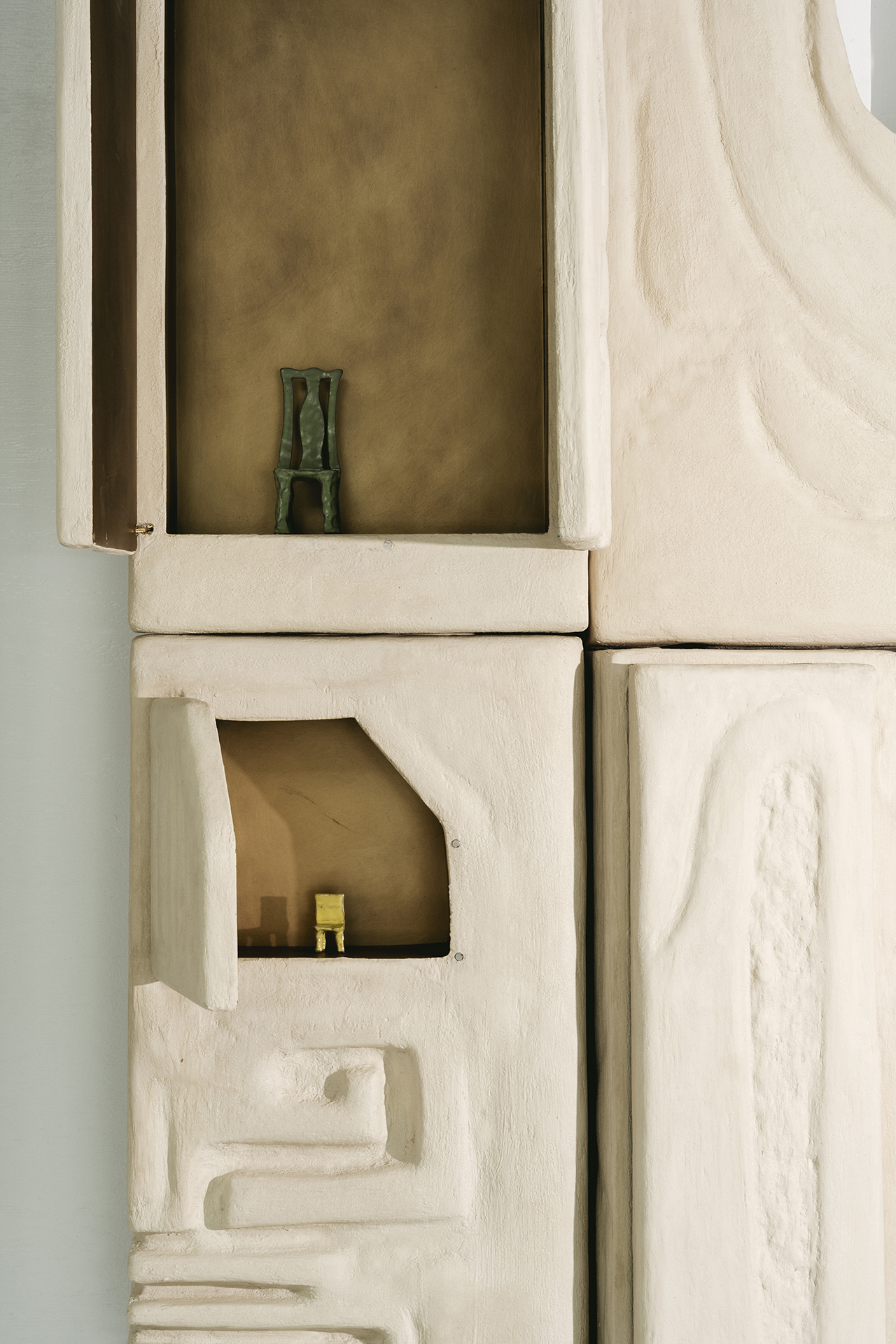
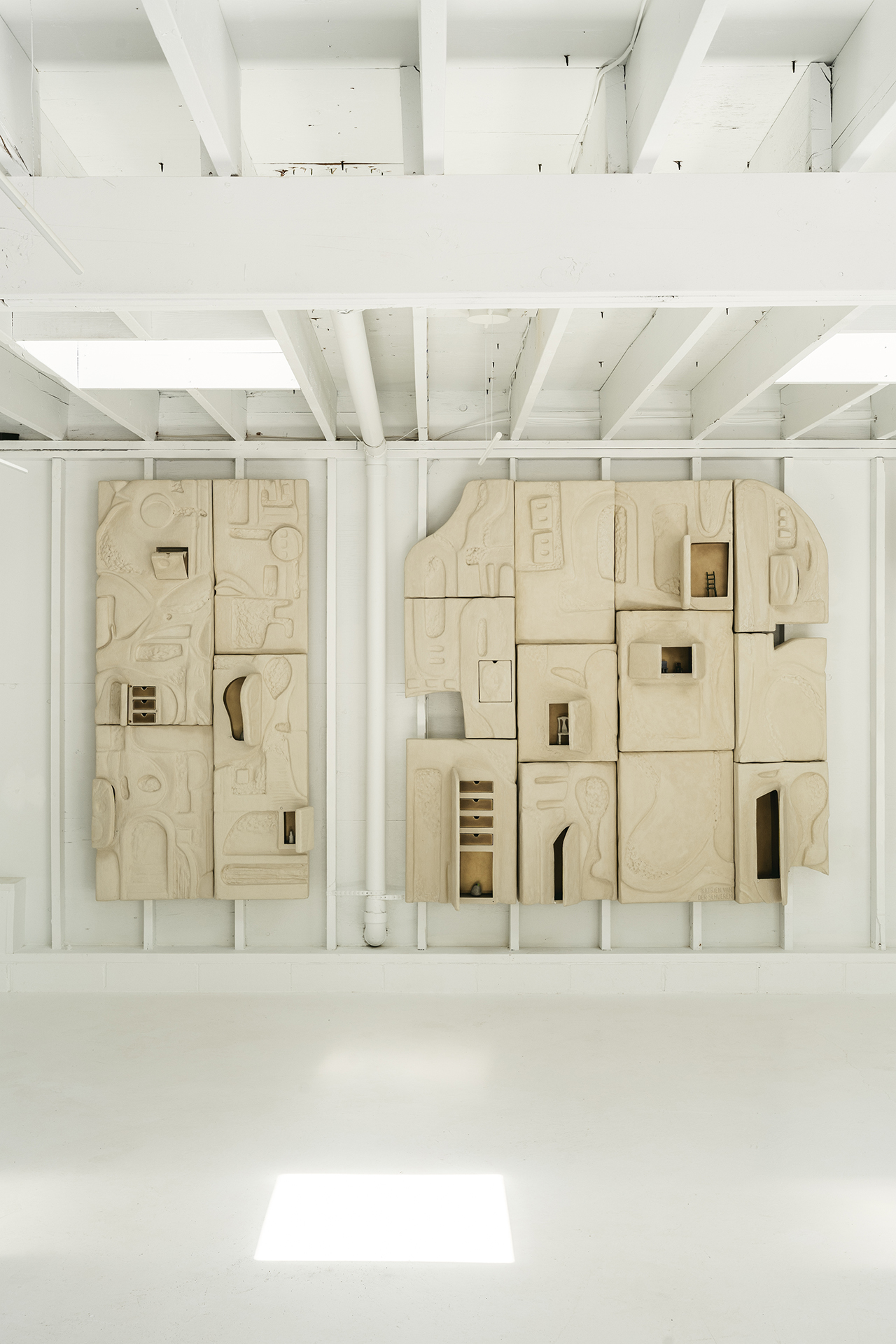
With "The Ark of Us," Van Der Schueren masterfully reinterprets the historical cabinet of curiosity, not merely as a decorative object, but as a conceptual vessel for contemporary introspection. She consciously plays up the historical shift from grand rooms to intimate furnishings, pushing the concept further by transforming the traditional idea of a physical cabinet into a wall-mounted sculpture. In doing so, she evolves the traditionally elite and often ostentatious wunderkammer practice into one that feels more widespread, accessible, and discreetly personal. Her work democratizes the act of collecting and reflecting, inviting viewers to consider what personal "oddities" or "natural elements" define their own lived experiences.
Deconstructing "The Ark of Us": Form, Material, and Narrative
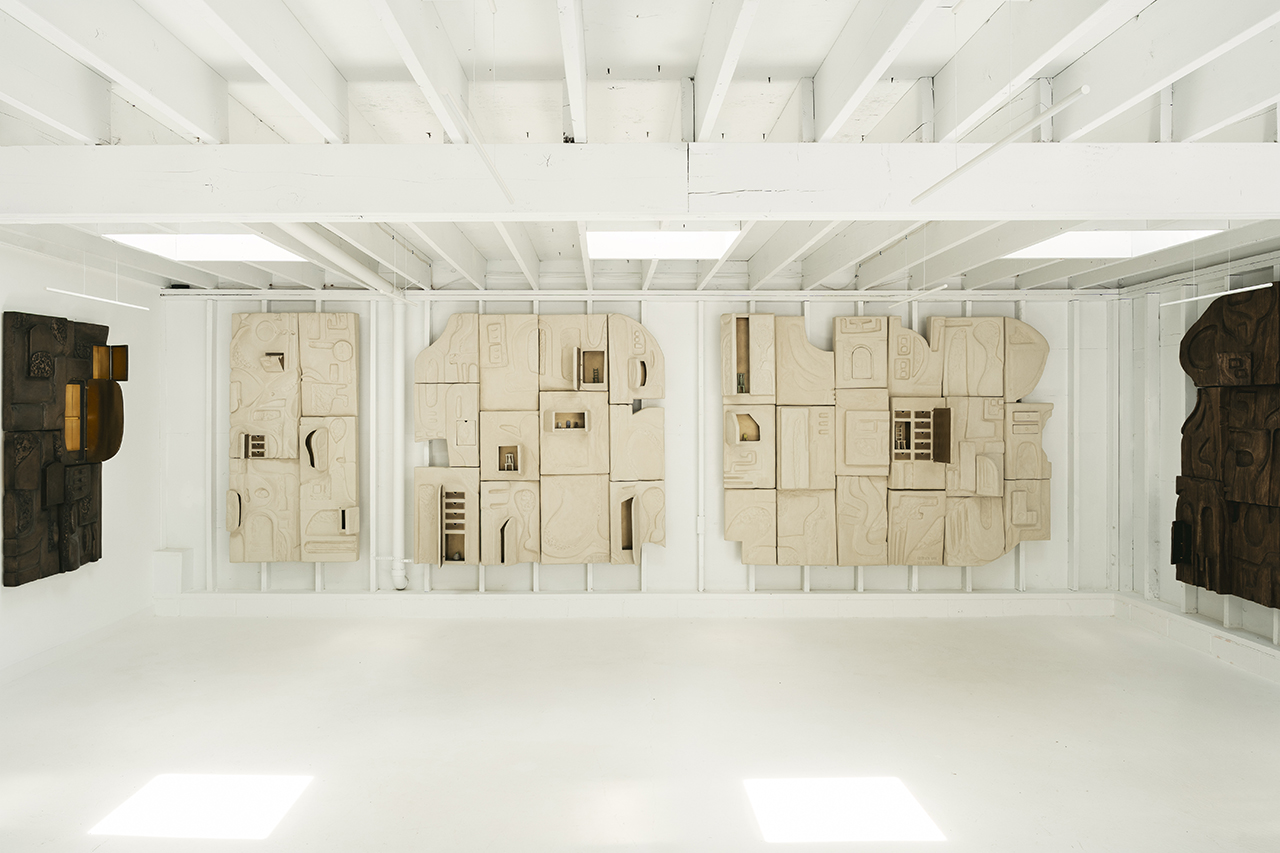
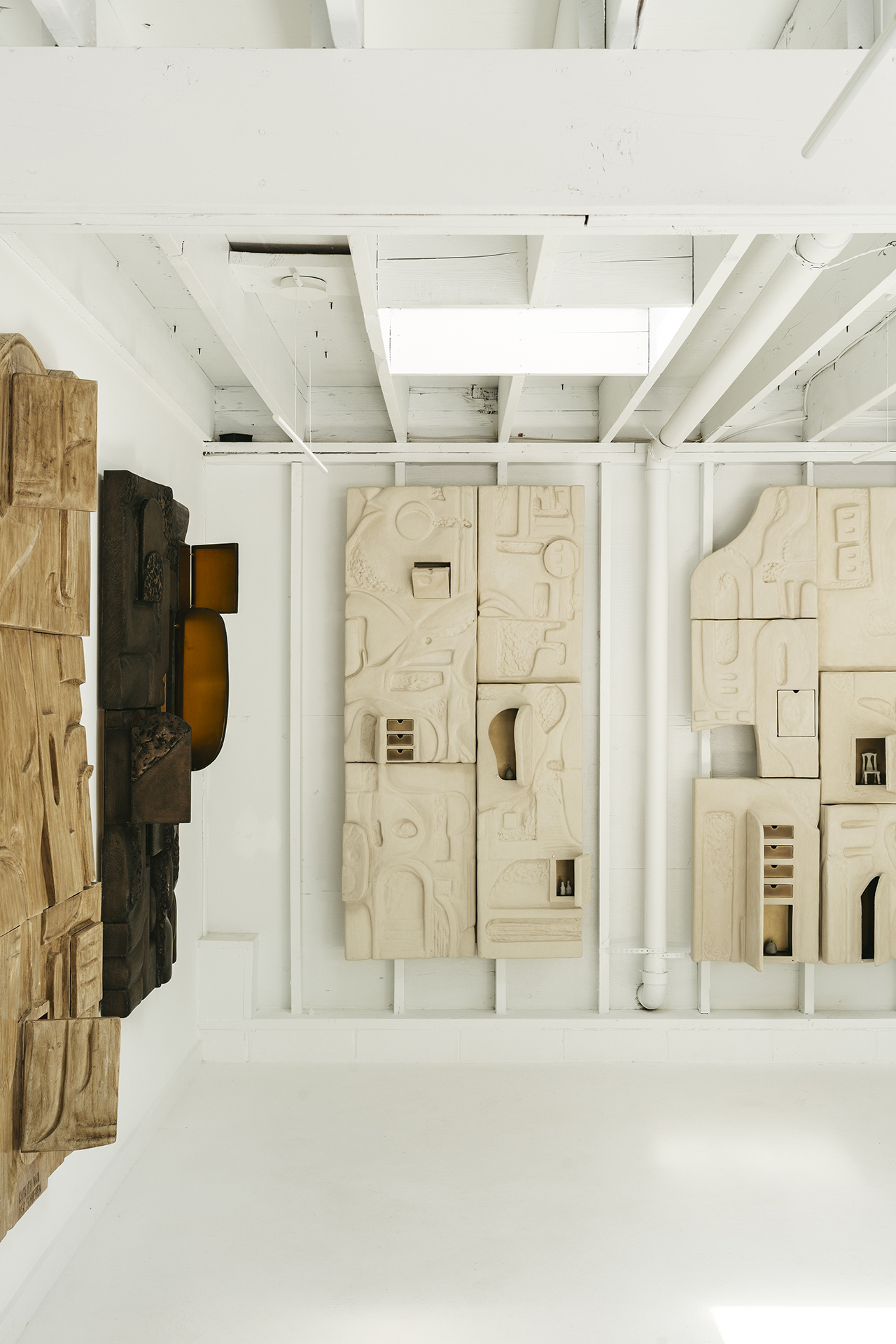
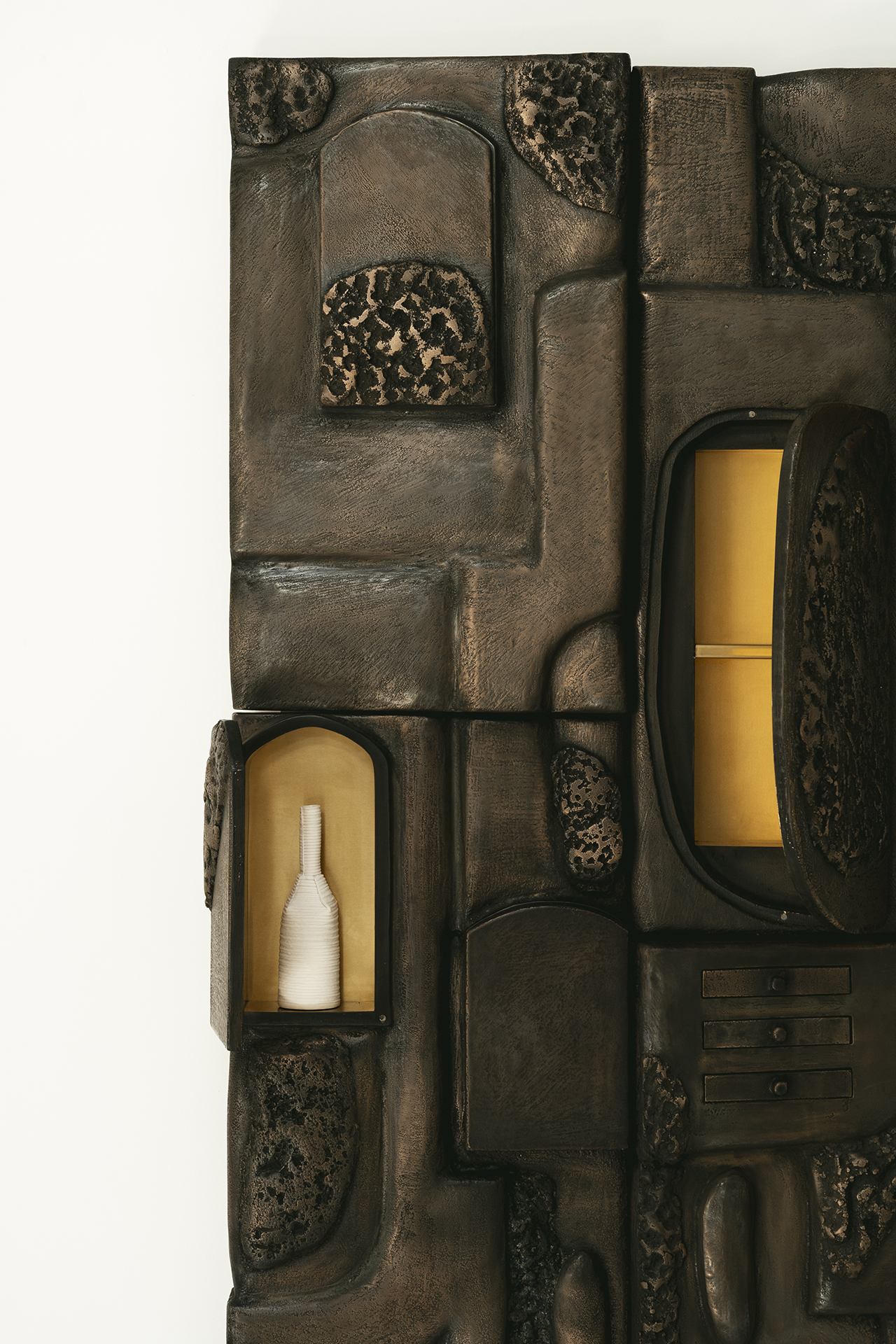
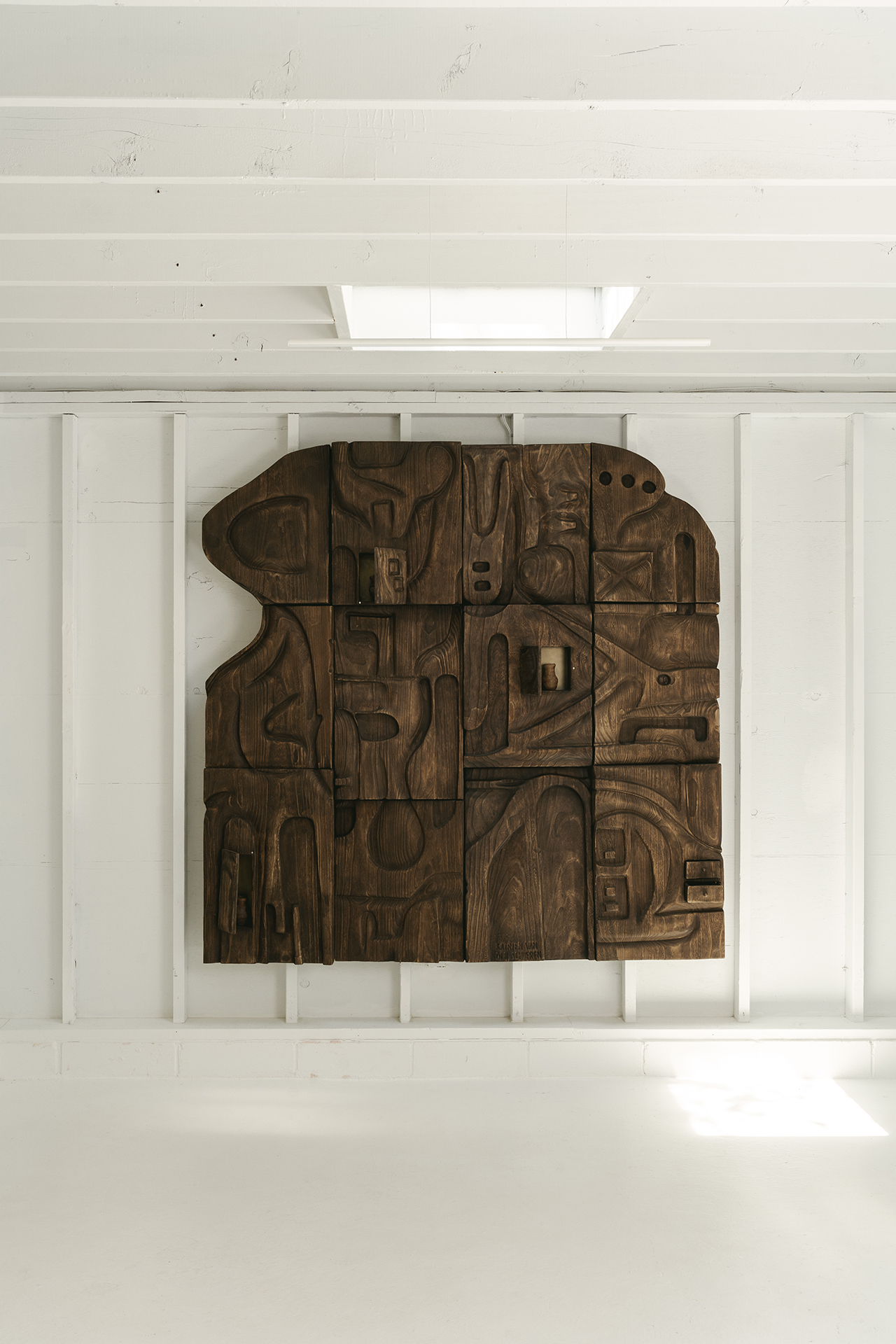
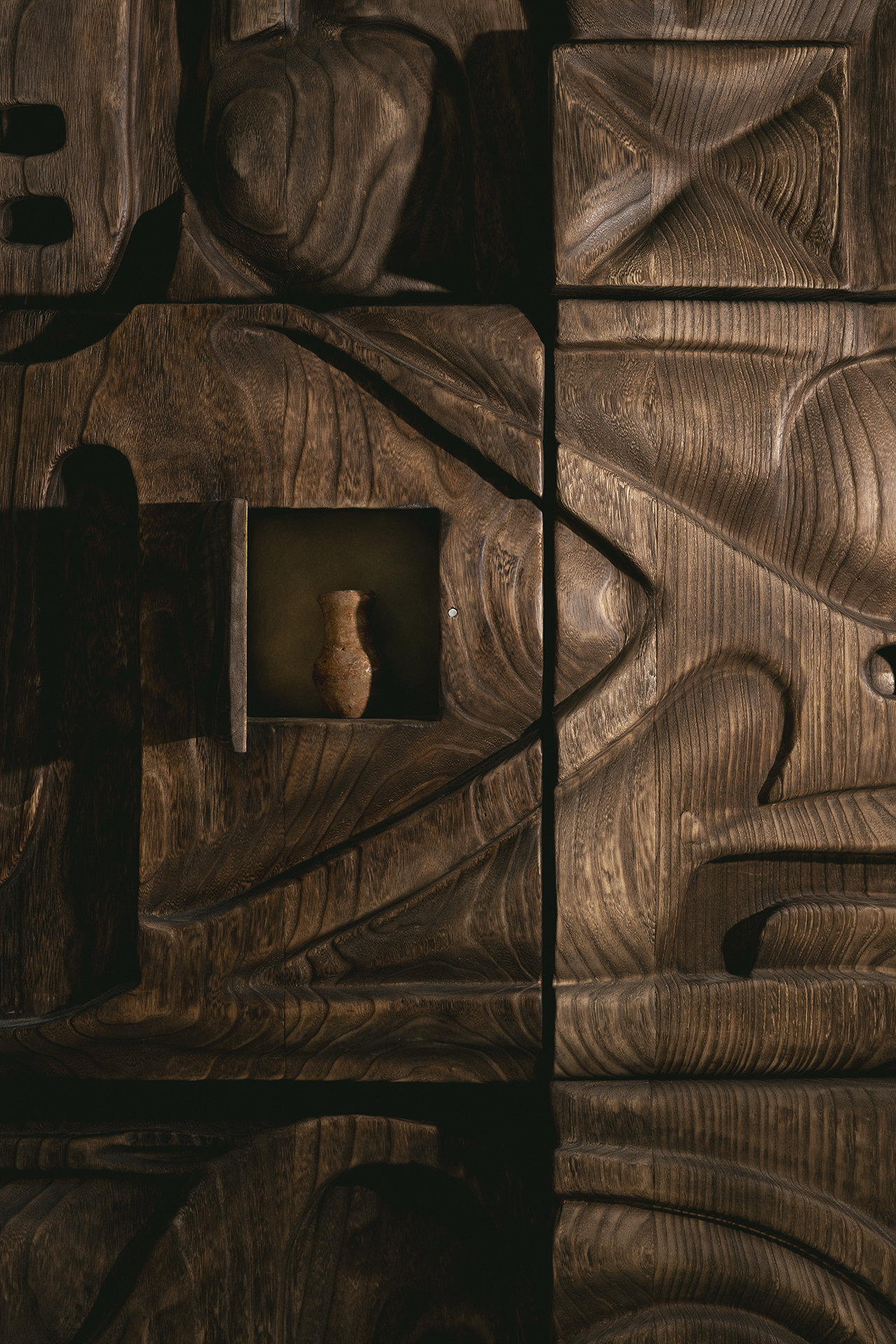
Van Der Schueren’s "The Ark of Us" series comprises large-scale wall sculptures rendered in her idiosyncratic, hand-carved fragments. Though decidedly maximalist in their aesthetic and formation, these puzzle-like reliefs conceal secret chambers and recessed niches. These hidden spaces are perfectly suited to hold anything meaningful one might wish to store away for safekeeping – a modern-day repository for personal relics, cherished mementos, or symbolic tokens. Each mural, a sum of many intricate parts, conceptually becomes a portrait, composed not of painted features but of the held artifacts that collectively represent a different lived experience, a unique personal narrative.
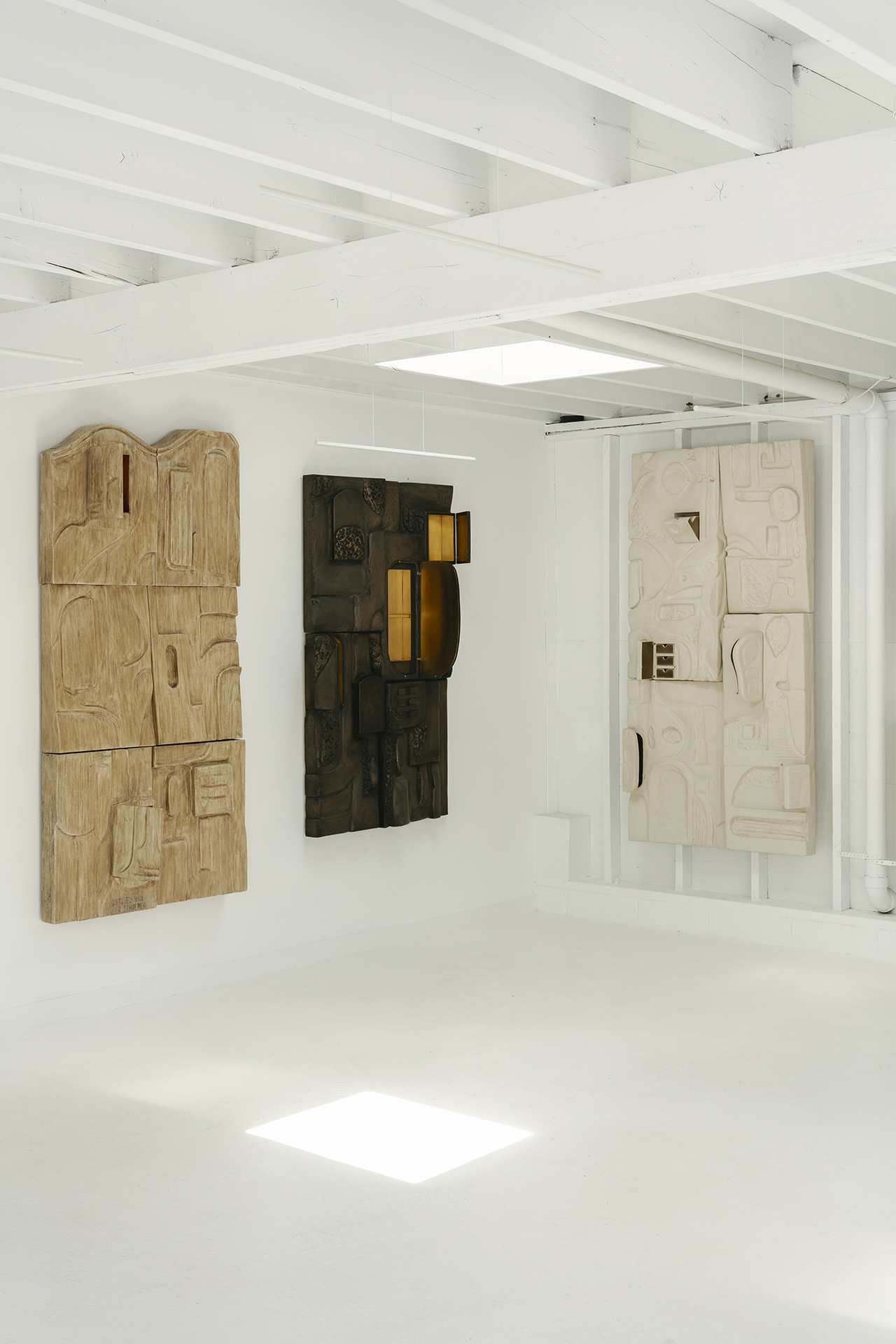
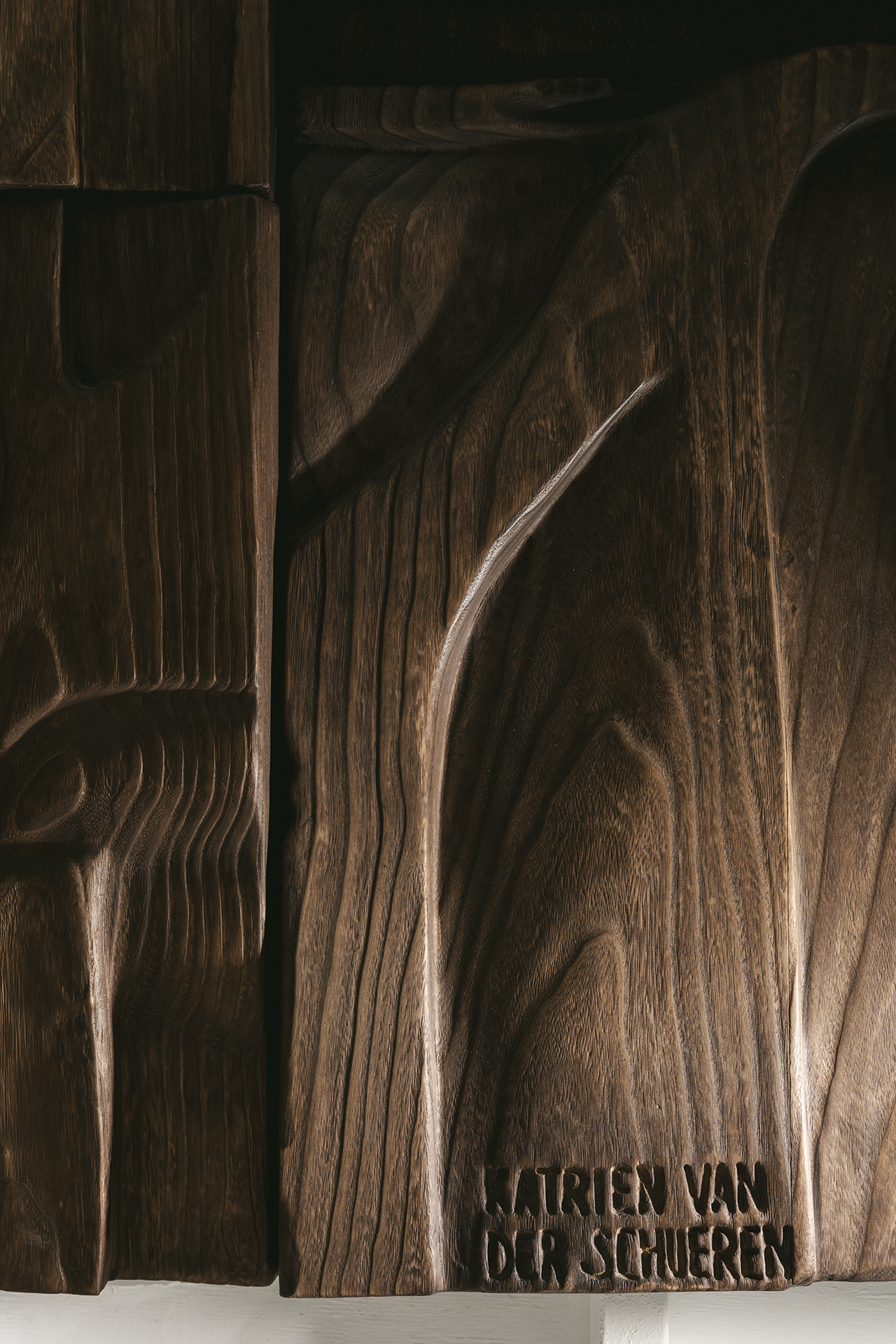
The tactile quality of the sculptures is paramount. Van Der Schueren creates these unified, almost fossil-like compositions by physically cohering a diverse range of natural materials: wood, stone, metal, plaster, resin, and pigment. This material eclecticism is not arbitrary; it speaks to the elemental and enduring nature of human experience and memory. The artist’s process involves pushing the conventional limits of traditional craft techniques, resulting in complexly detailed topographies. These surfaces are not merely decorative; they are "worlds in and of themselves," inviting close inspection and tactile engagement. The interplay of rough and smooth textures, organic and geometric shapes, and varied material densities creates a dynamic visual language that evokes both ancient geological formations and intricate mechanical structures.
The "architectonic and molten" qualities noted in the original description highlight a fascinating tension within the work. The "architectonic" elements suggest structure, order, and perhaps the deliberate construction of identity or memory. In contrast, the "molten" aspects imply fluidity, transformation, and the organic, often chaotic, flow of life and experience. This duality reinforces the idea of the ark – a vessel designed to contain and preserve, yet also subject to the forces of time and change. The chosen materials, with their inherent textures and colors, further enhance this duality, creating pieces that feel simultaneously grounded and ethereal.
Onna House: A Modern Sanctuary for Artistic Dialogue
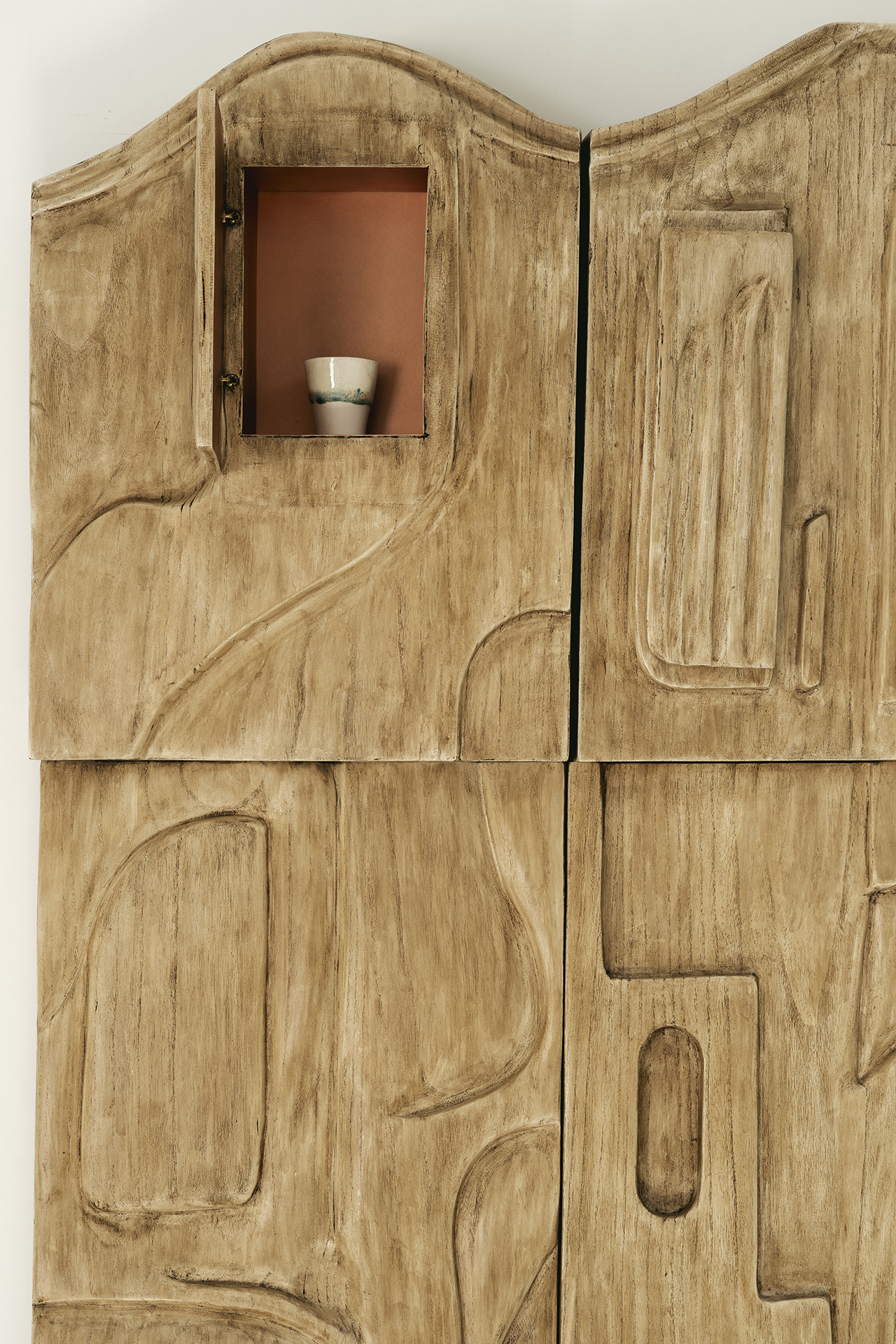
The exhibition of "The Ark of Us" at Onna House provides a particularly compelling context for Van Der Schueren’s work. Founded by former fashion entrepreneur Lisa Perry, Onna House is a distinctive residential gallery concept located in East Hampton, New York. Perry’s vision for Onna House extends beyond a traditional gallery space; it is an immersive environment designed to showcase and celebrate the work of women artists, fostering a deeper, more personal connection between art and viewer within a domestic setting. This unique approach aligns perfectly with Van Der Schueren’s reinterpretation of the cabinet of curiosity, shifting it from public display to personal introspection.
The modernist interior of Onna House, characterized by its stark white walls, exposed beams, and minimalist aesthetic, creates an ideal backdrop for Van Der Schueren’s intricately adorned panels. The contrast between the sculptures’ rich textures and complex forms and the gallery’s clean lines is striking, allowing each piece to command attention and reveal its subtle details. The space is further enhanced by natural light, which floods in through expansive floor-to-ceiling windows and large skylights. This abundant natural illumination plays a crucial role in animating the sculptures, highlighting their varied surfaces, casting dynamic shadows, and revealing the depth of their carved forms throughout the day. The changing light interacts with the materials, making the "fossil-like compositions" appear to shift and breathe, underscoring their organic essence.
"In Her Hands: From Marble to Wood" – A Collective Narrative
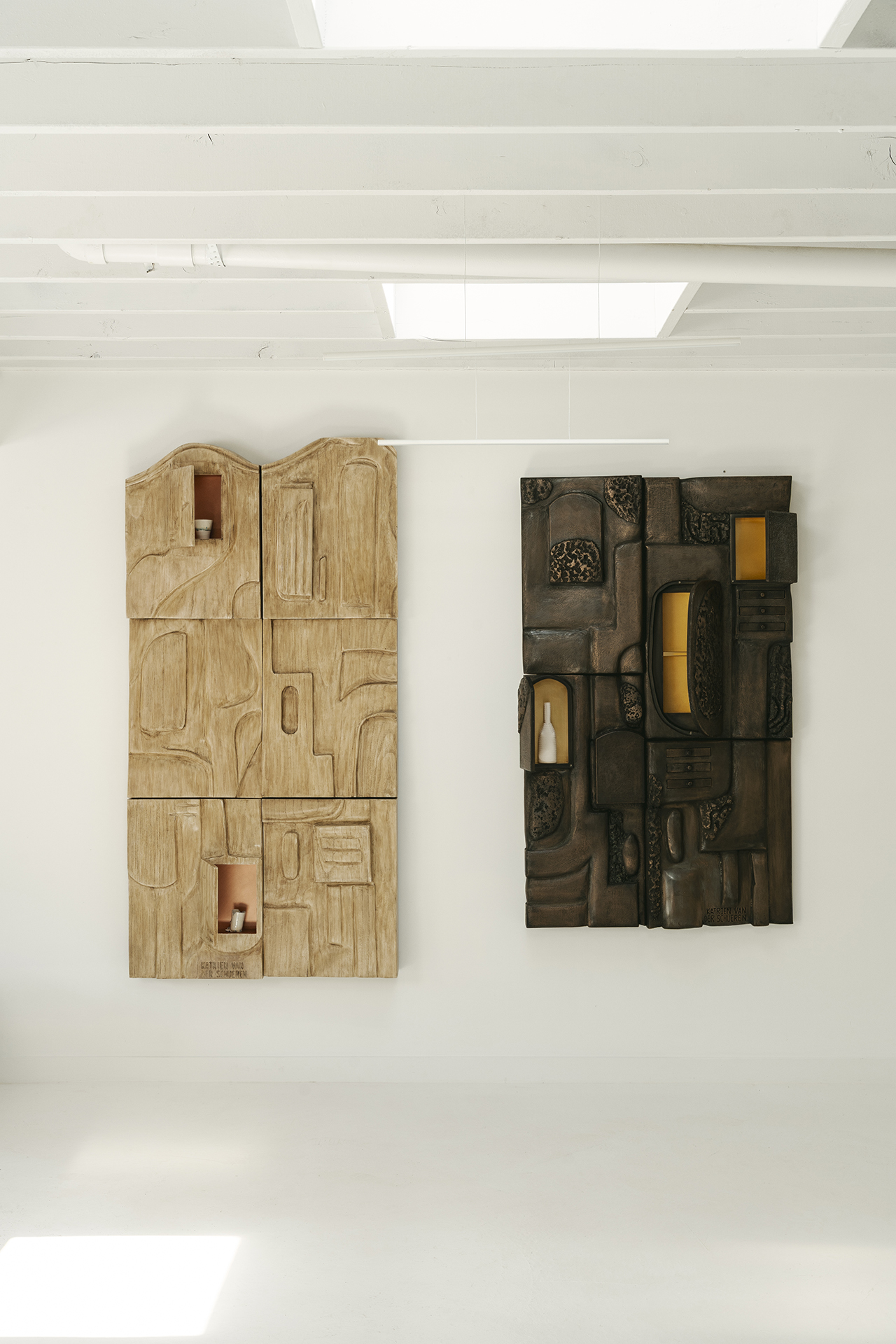
"The Ark of Us" is presented as part of the group exhibition In Her Hands: From Marble to Wood, which is on view at Onna House through July 12. This exhibition title itself speaks volumes, pointing to the transformative power of female artists working with elemental materials. While Van Der Schueren’s work primarily utilizes wood, stone, and other natural composites, the broader theme of the exhibition likely explores the diverse ways women artists engage with traditional and contemporary craft, shaping raw materials into evocative forms. The collective narrative of the exhibition emphasizes skill, innovation, and the unique perspectives that women bring to the realm of sculptural art.
The choice of East Hampton as a location also adds another layer of significance. Known for its vibrant art scene and discerning audience, it provides a sophisticated platform for artists to engage with collectors and enthusiasts who appreciate both historical depth and contemporary innovation. Onna House, through its focused curation and intimate setting, offers a refreshing alternative to conventional gallery experiences, fostering a deeper dialogue around the art it presents.
A Chronology of Presentation
Before arriving at Onna House, Katrien Van Der Schueren’s "The Ark of Us" series gained international recognition during its earlier presentation by Galerie JAG at PAD Paris in early April. PAD Paris, a prestigious art and design fair, is renowned for showcasing exceptional works of 20th-century art, design, and decorative arts. Its inclusion there underscored the works’ significant artistic merit and their ability to resonate within a highly curated, international context. This earlier showing established "The Ark of Us" as a series of considerable note, building anticipation for its subsequent exhibition in the United States. The journey from a major international art fair to the intimate setting of Onna House highlights the versatility and universal appeal of Van Der Schueren’s artistic vision, capable of thriving in diverse exhibition environments.
Artistic Implications and Broader Context
Katrien Van Der Schueren’s "The Ark of Us" is more than just an art exhibition; it is a meditation on memory, identity, and the evolving relationship between humanity and the objects we cherish. By drawing a direct lineage from the historical wunderkammer to a contemporary sculptural form, she prompts viewers to consider the enduring human impulse to collect, categorize, and preserve what is meaningful. In an increasingly digital and ephemeral world, Van Der Schueren’s tangible, hand-carved works serve as a powerful counterpoint, emphasizing the irreplaceable value of physical objects and the narratives they carry.
The concept of the "personal portrait" formed by collected artifacts is particularly poignant. It suggests that our identities are not singular, fixed entities, but rather complex tapestries woven from countless experiences, memories, and the objects that symbolize them. Each hidden chamber within her sculptures becomes a metaphor for the private spaces of our minds and hearts, where we store our most cherished, sometimes secret, stories.
Moreover, Van Der Schueren’s mastery of diverse materials and her commitment to pushing craft techniques elevate her work beyond mere aesthetics. She challenges the traditional hierarchies between art and craft, demonstrating that meticulous artisanal skill can be a powerful vehicle for profound artistic expression. Her "complexly detailed topographies" are not just visually engaging; they are invitations to explore the geological layers of human history and personal experience, suggesting that every surface holds a story waiting to be discovered.
In essence, "The Ark of Us" reaffirms the timeless human desire to make sense of the world, to preserve its wonders, and to craft a personal narrative through the tangible. Katrien Van Der Schueren has not merely created beautiful sculptures; she has crafted a contemporary mythology of personal curiosity, inviting each viewer to embark on their own journey of discovery and reflection.
To learn more about this captivating exhibition and other programming at this unique venue, visitors are encouraged to visit onnahouse.com.
Photography for the exhibition by Rodrigo Rize.







