
 Indra Kusuma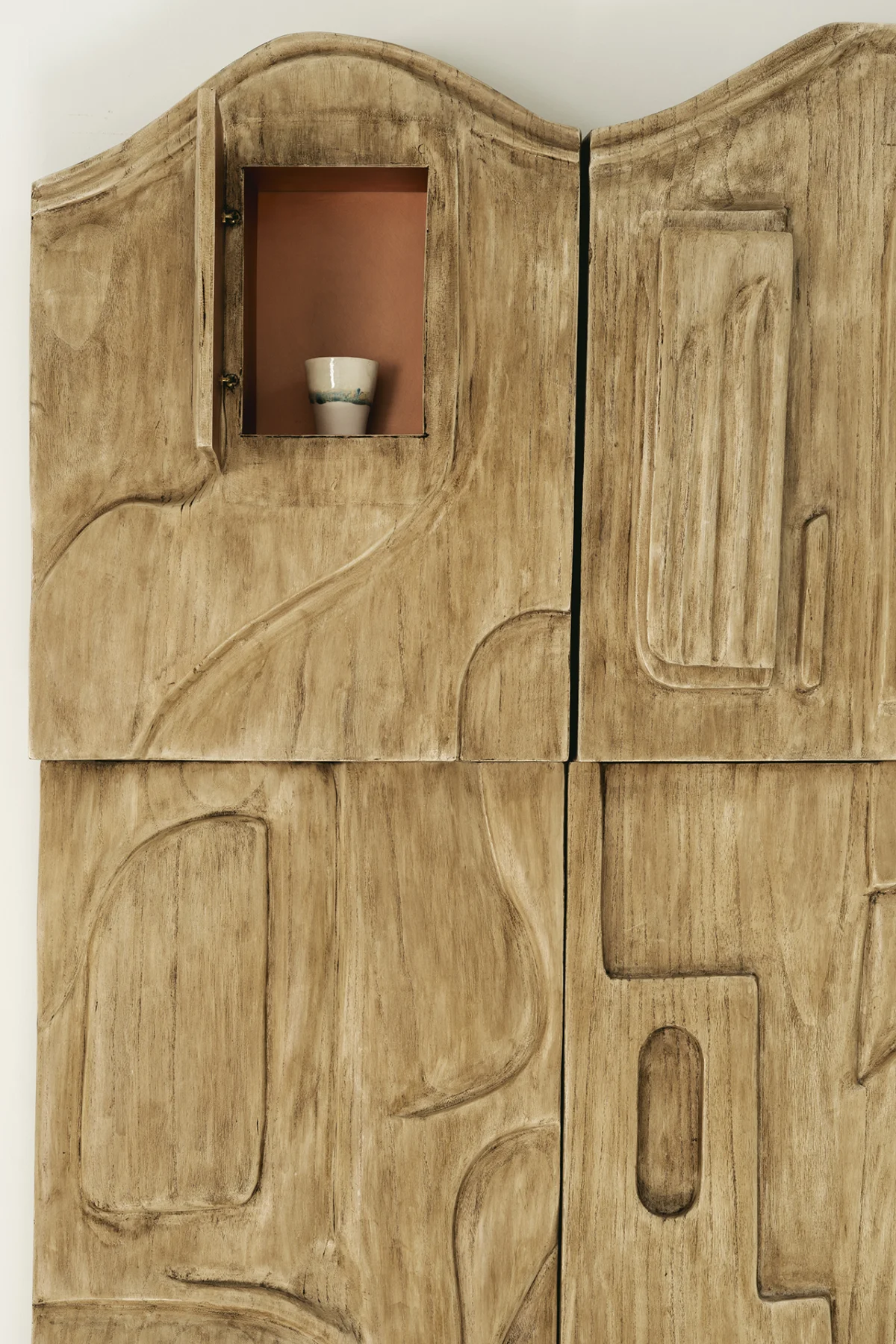
Emerging throughout Renaissance Europe as conspicuous displays of wealth and knowledge, wunderkammers, or cabinets of curiosity, contained carefully amassed collections of oddities, natural elements, and era-distinctive examples of material culture. These encyclopedic assemblages of religious relics, antiquities, scientific instruments, and exotic specimens were not merely repositories but meticulously curated microcosms of the known world, reflecting the boundless intellectual curiosity and burgeoning scientific spirit of their age. They were typically the reserve of particularly learned rulers, aristocrats, members of the clergy, and scholarly scientists, often housed within sumptuously adorned, holistically themed environments designed to impress and educate. The concept of the wunderkammer, literally "wonder-room," served as a precursor to modern museums, encompassing naturalia (natural history specimens), artificialia (human-made artifacts), scientifica (scientific instruments), and exotica (objects from distant lands).
The practice of collecting and displaying wonders can be traced back to antiquity, but it truly flourished in the 16th and 17th centuries. Princes and scholars across Europe, from Rudolf II of Habsburg in Prague to Ole Worm in Copenhagen, dedicated vast resources to building these private collections. Each wunderkammer was a unique reflection of its owner’s interests, intellect, and global connections. For instance, Rudolf II’s collection was legendary for its breadth, including not only precious stones and intricate automata but also rare scientific instruments and artworks by masters like Giuseppe Arcimboldo. These spaces were designed not just for storage but for contemplation, conversation, and the advancement of knowledge, embodying a holistic worldview where art, science, and nature were intrinsically linked. Visitors would embark on a guided tour, moving from one marvel to the next, each object telling a story, inviting wonder, and revealing new connections. The meticulous organization, often without strict taxonomic boundaries, sought to mirror the perceived order and diversity of the universe itself.
As time progressed and the Age of Enlightenment spurred a greater specialization of knowledge, the expansive, all-encompassing wunderkammer gradually gave way to more focused collections. Natural history specimens migrated to dedicated natural history museums, artworks to art galleries, and scientific instruments to specialized academies. Concurrently, and often in parallel, the spatial scale of personal collecting reduced significantly. The act of considered hoarding moved from dedicated rooms into more intimate furnishings: intricately compartmentalized cabinets. These "cabinets of curiosities" (sometimes still called wunderkammers, though on a smaller scale) allowed individuals to maintain a personal collection of cherished objects, albeit in a more discreet and manageable format. These smaller cabinets, often exquisitely crafted, became private sanctuaries for reflection, where personal narratives and significant mementos could be kept close, hidden behind elegant facades. This shift marked a move from public display of status and universal knowledge to a more private, introspective engagement with collected items, signaling a deeper, more personal connection to the objects themselves.
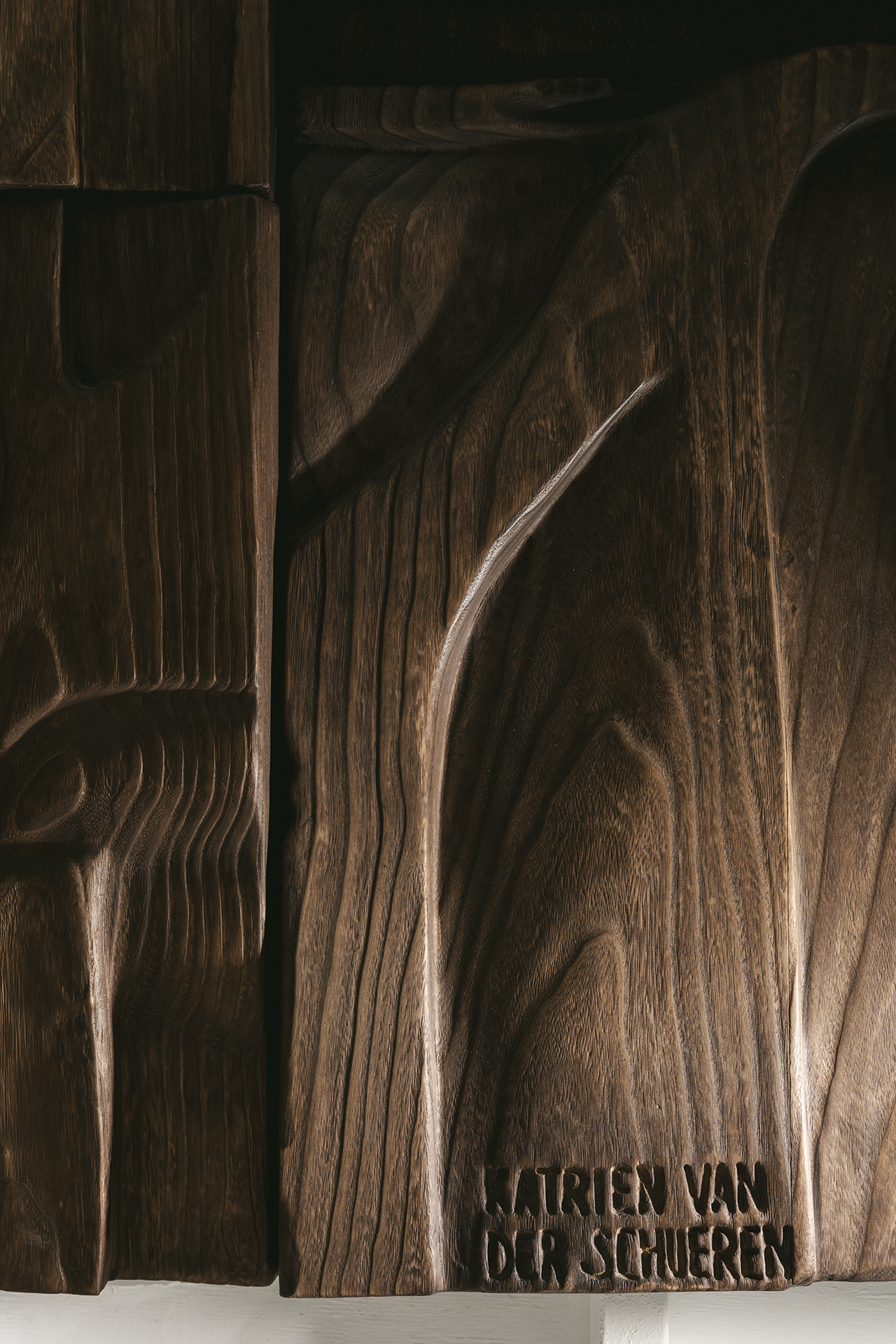
Returning to this age-old paradigm while also playing up that conceptual and physical shift is polymathic Belgian artist Katrien Van Der Schueren. Known for her distinctive approach to materiality and form, Van Der Schueren’s artistic practice consistently explores the interplay between ancient craft traditions and contemporary aesthetics. Her work often bridges the gap between sculpture and functional art, demonstrating a profound understanding of both historical context and modern interpretation. Educated in diverse fields, her "polymathic" nature is evident in her ability to seamlessly integrate various influences, from architectural elements to organic textures, into a cohesive artistic language. Her art is characterized by a tactile quality, inviting viewers to engage with the surfaces and hidden depths of her creations.
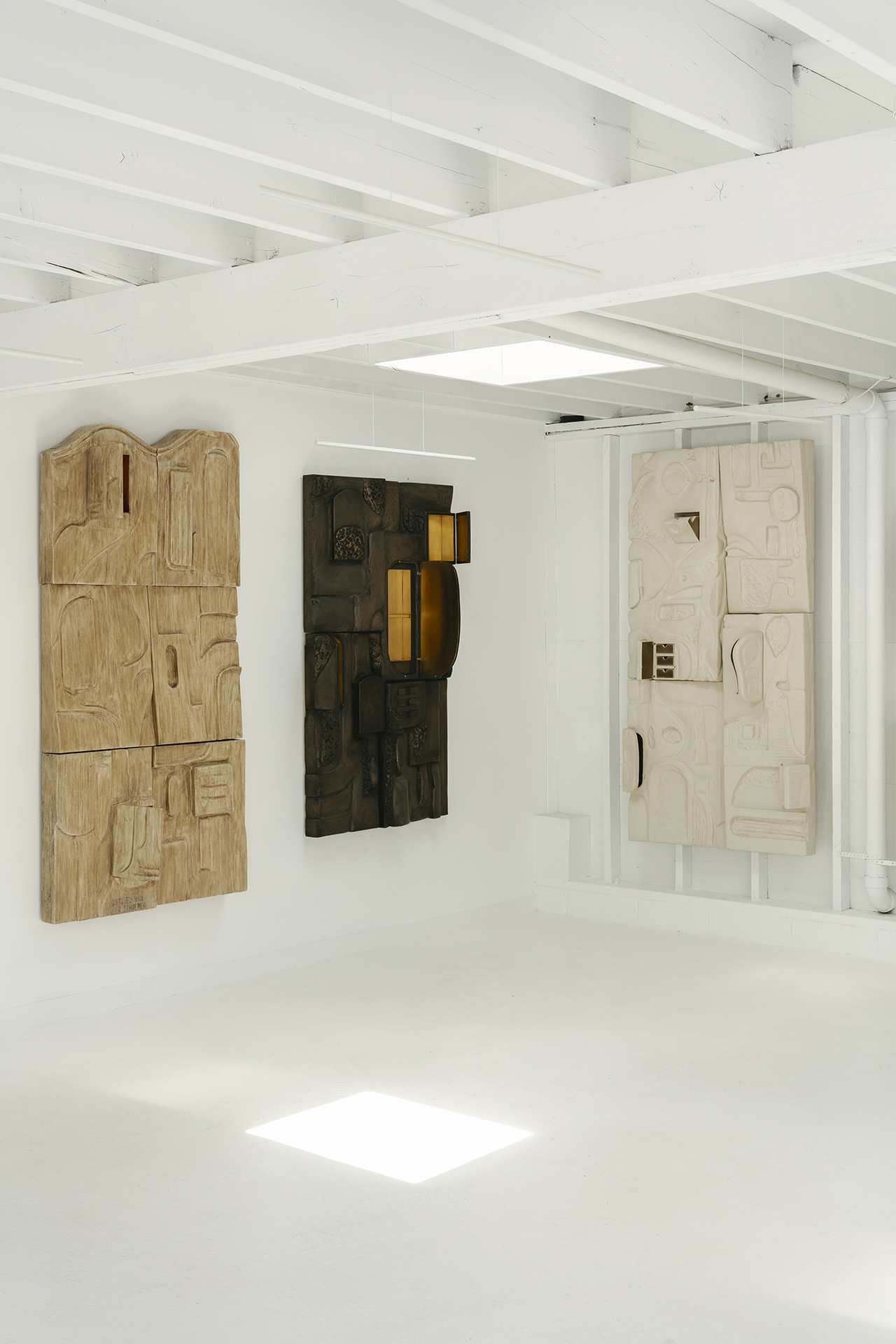
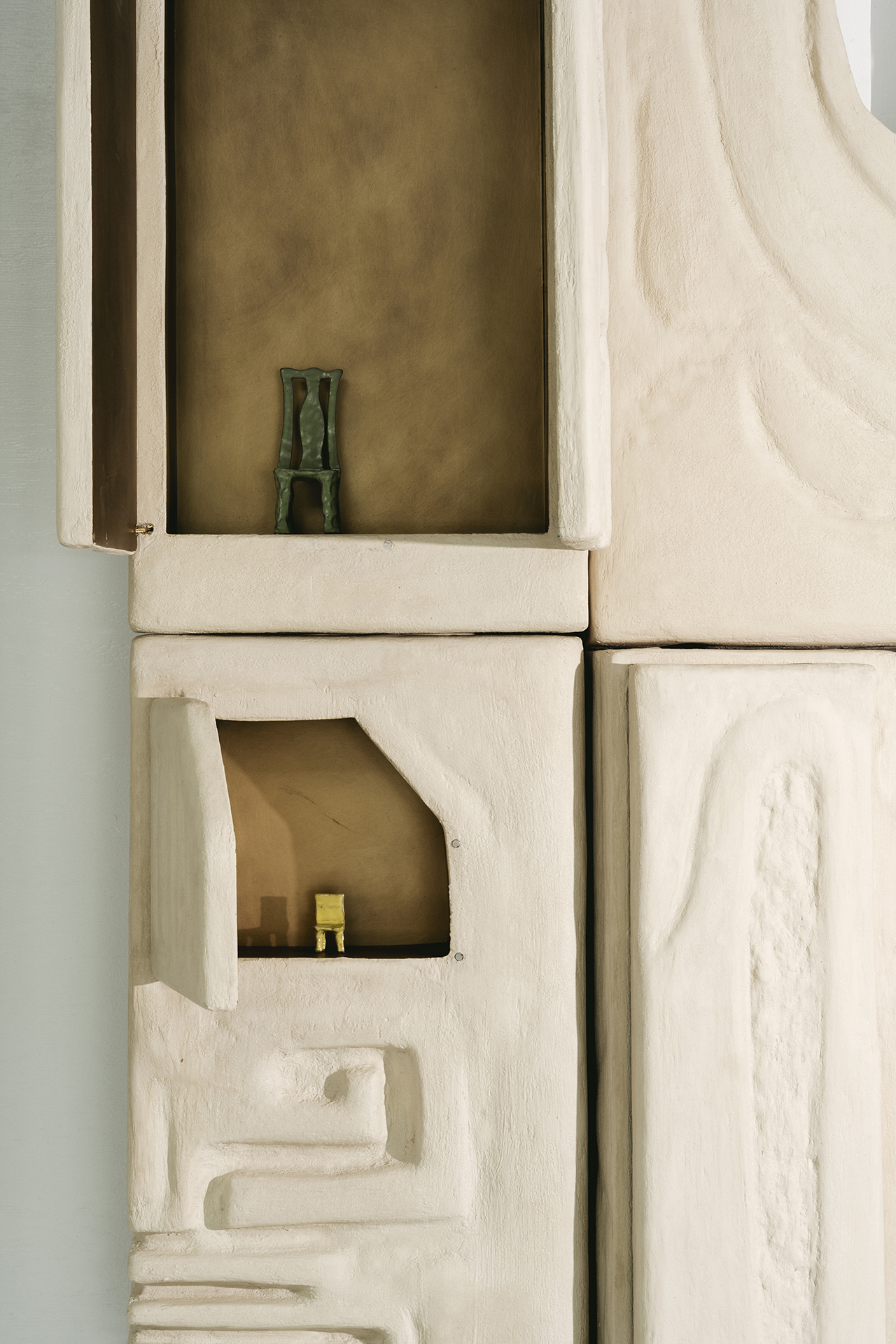
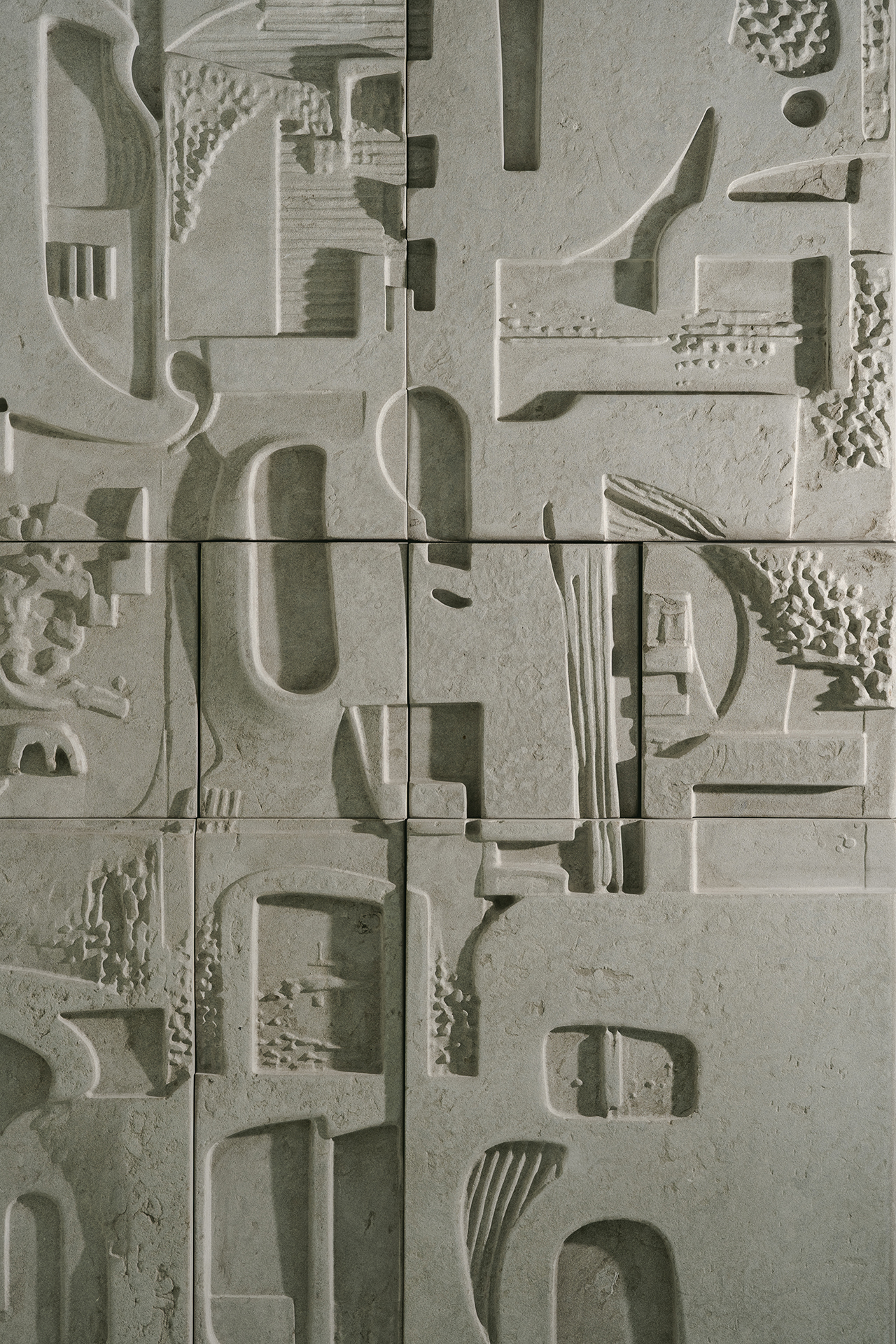
Rendered in her idiosyncratic, hand-carved fragments, the new "The Ark of Us" wall-sculpture series transforms the traditionally elite and showy wunderkammer practice into one that feels more widespread, intimately personal, and discreetly introspective. Each piece in the series functions as a contemporary artifact, a wall-mounted cabinet of secrets designed to hold cherished mementos rather than grand universal truths. The conceptual foundation of "The Ark of Us" rests on the idea of personal archiving – creating a tangible repository for individual memories, experiences, and the small, significant objects that embody them. This reinterpretation democratizes the wunderkammer, making its spirit accessible to anyone with a personal history to safeguard.
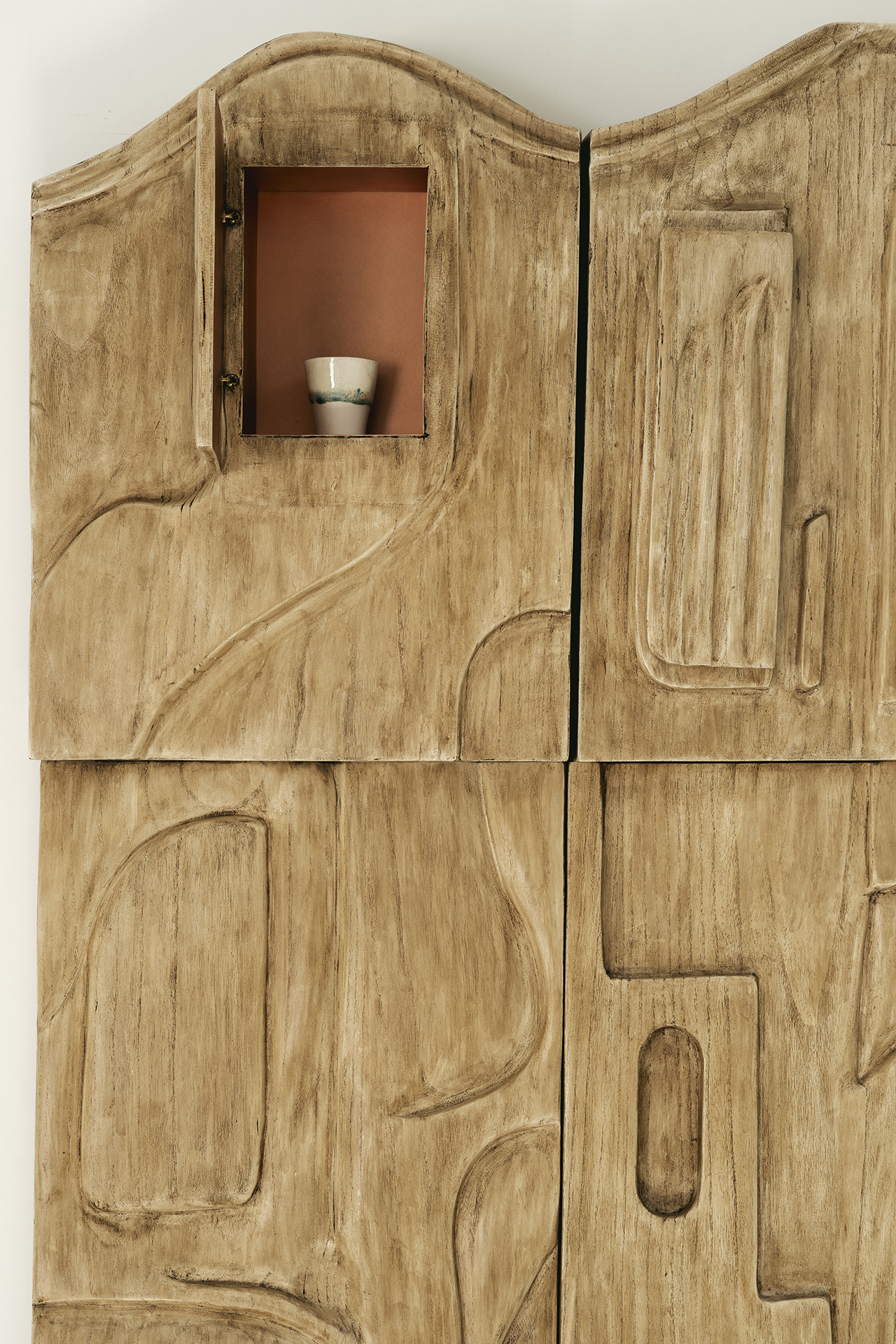
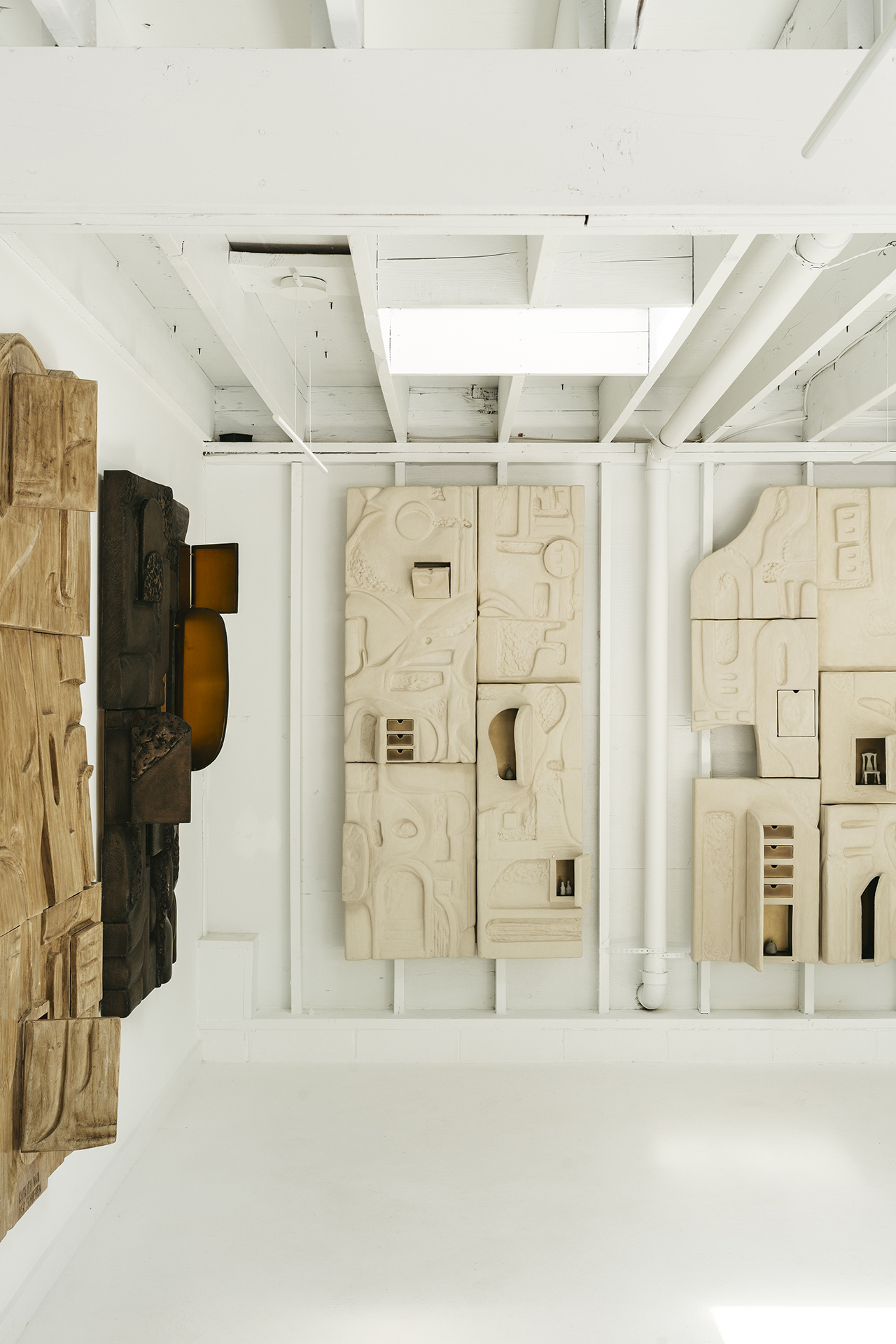
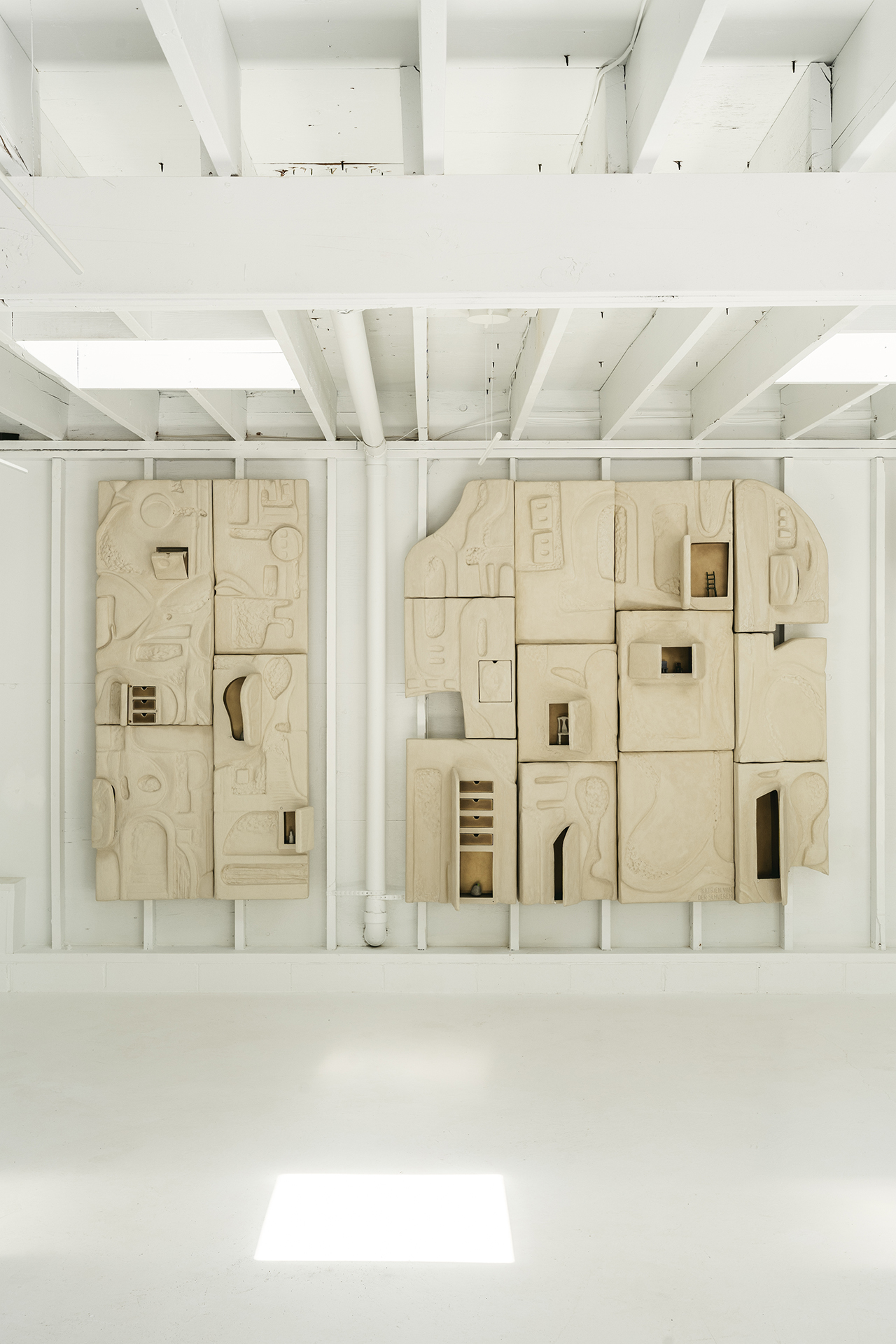
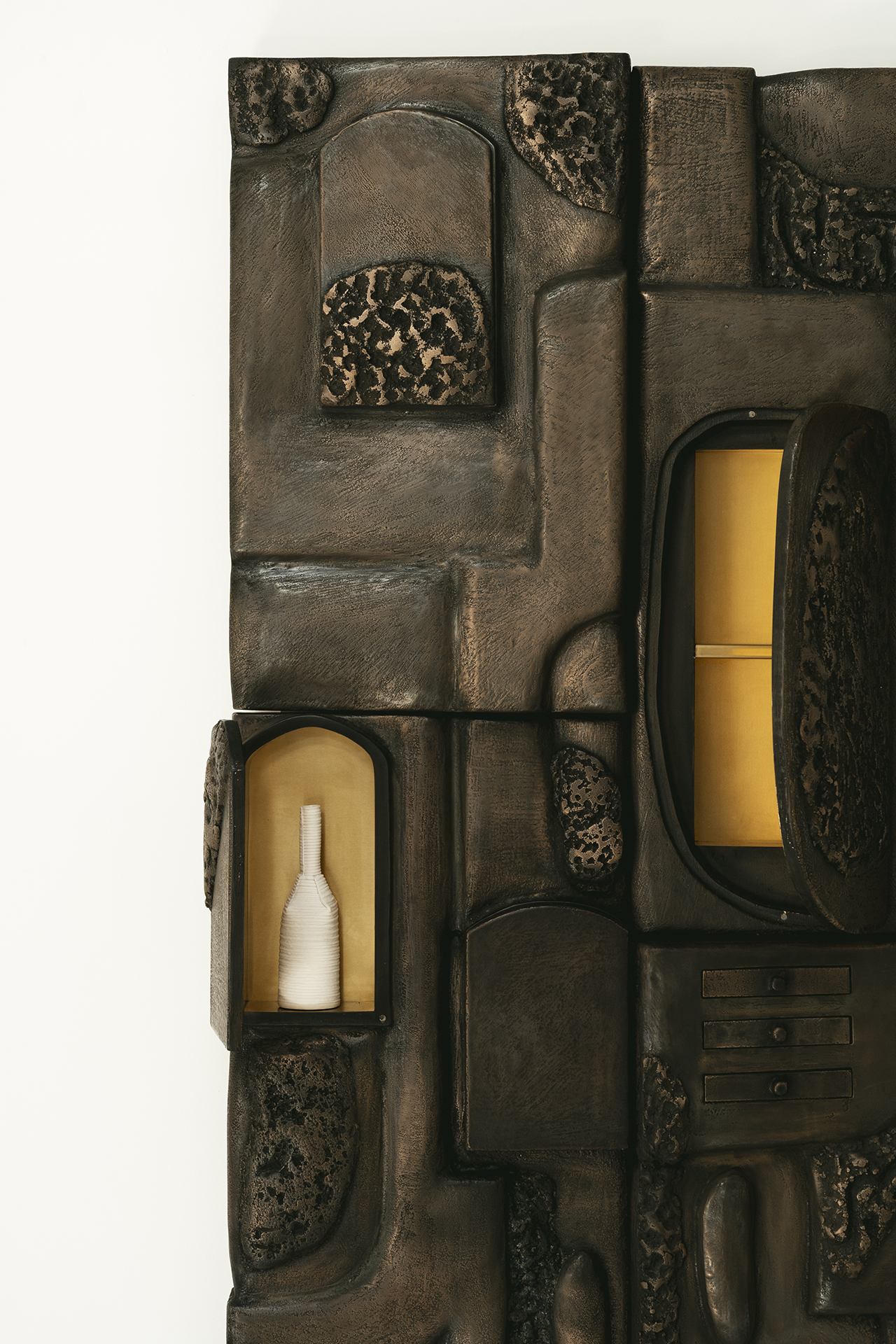
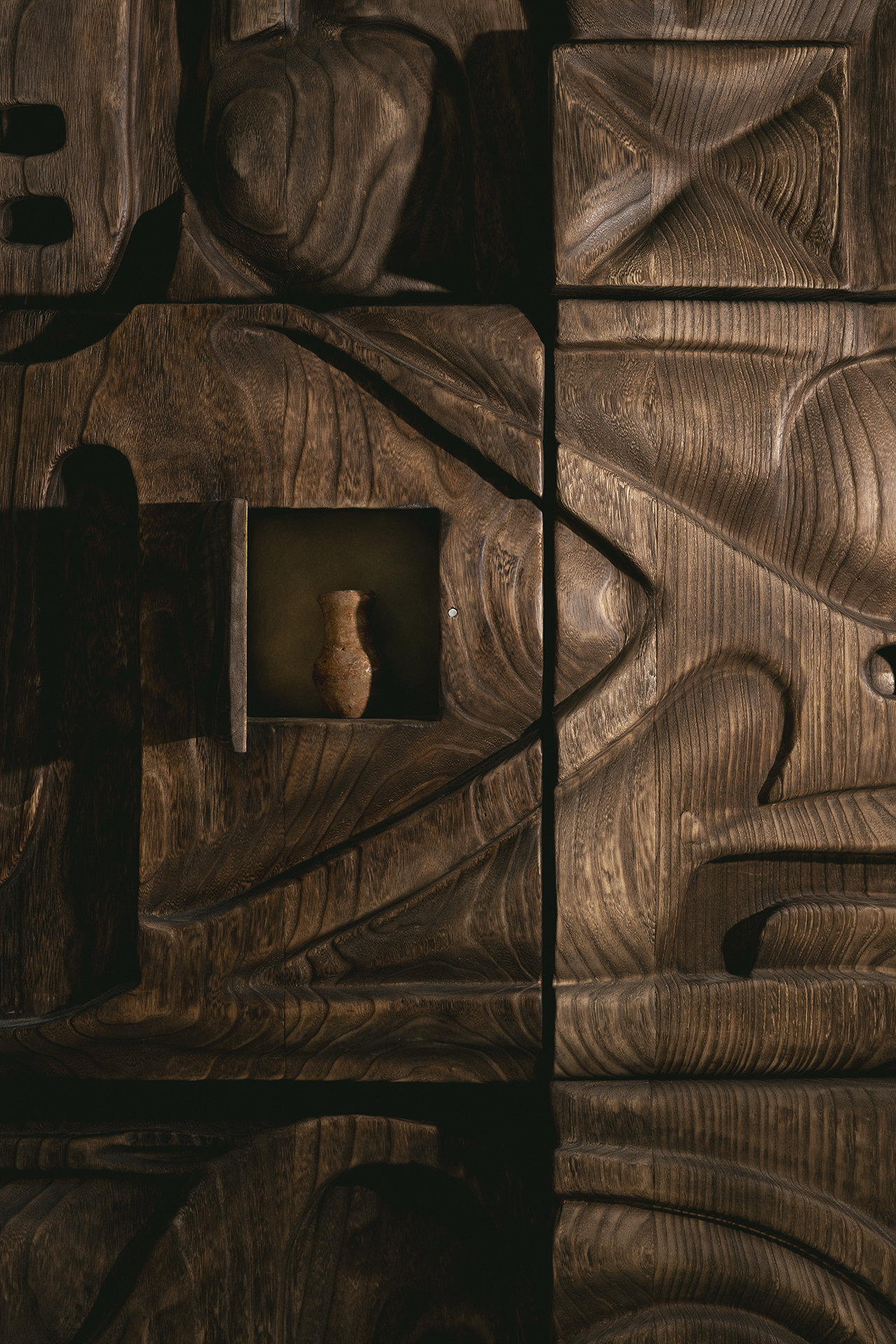
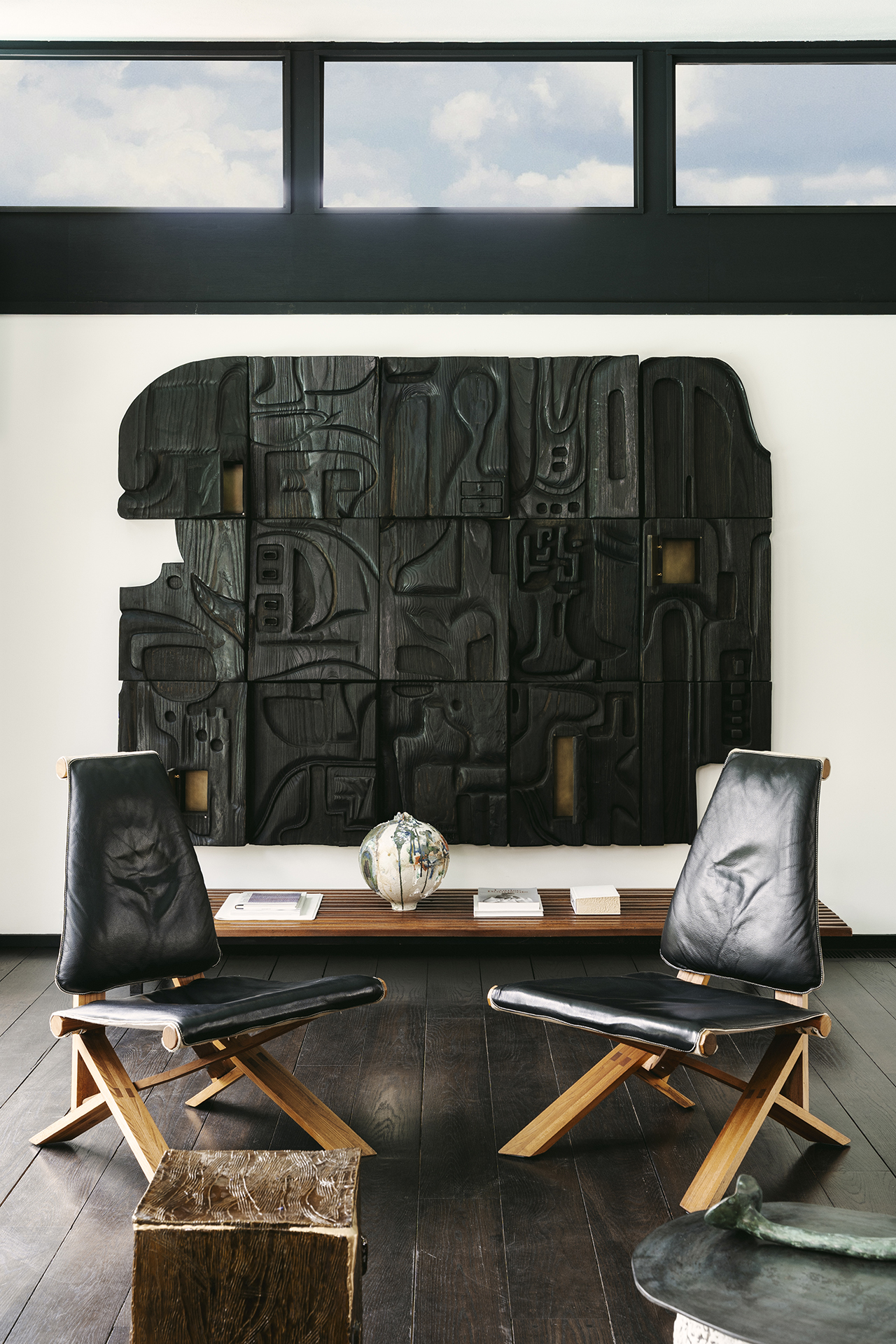
Though decidedly maximalist in aesthetic and formation, these puzzle-like reliefs conceal secret chambers, perfectly suited to hold anything meaningful one might want to store away for safekeeping. The visual complexity of the sculptures, with their intricate patterns and varied textures, draws the viewer in, hinting at the hidden narratives within. Each "fragment" or carved section contributes to a larger, unified composition, reminiscent of geological formations or ancient ruins, yet entirely modern in its execution. The sum of many parts, a single mural can conceptually become a portrait, composed of held artifacts that each represent a different lived experience. This allows the owner to imbue the artwork with their own stories, making it a dynamic, evolving piece that grows with their personal journey. The hidden compartments, often subtly integrated into the overall design, serve as discreet vessels for items that hold profound personal significance, transforming the wall sculpture into a deeply intimate object.
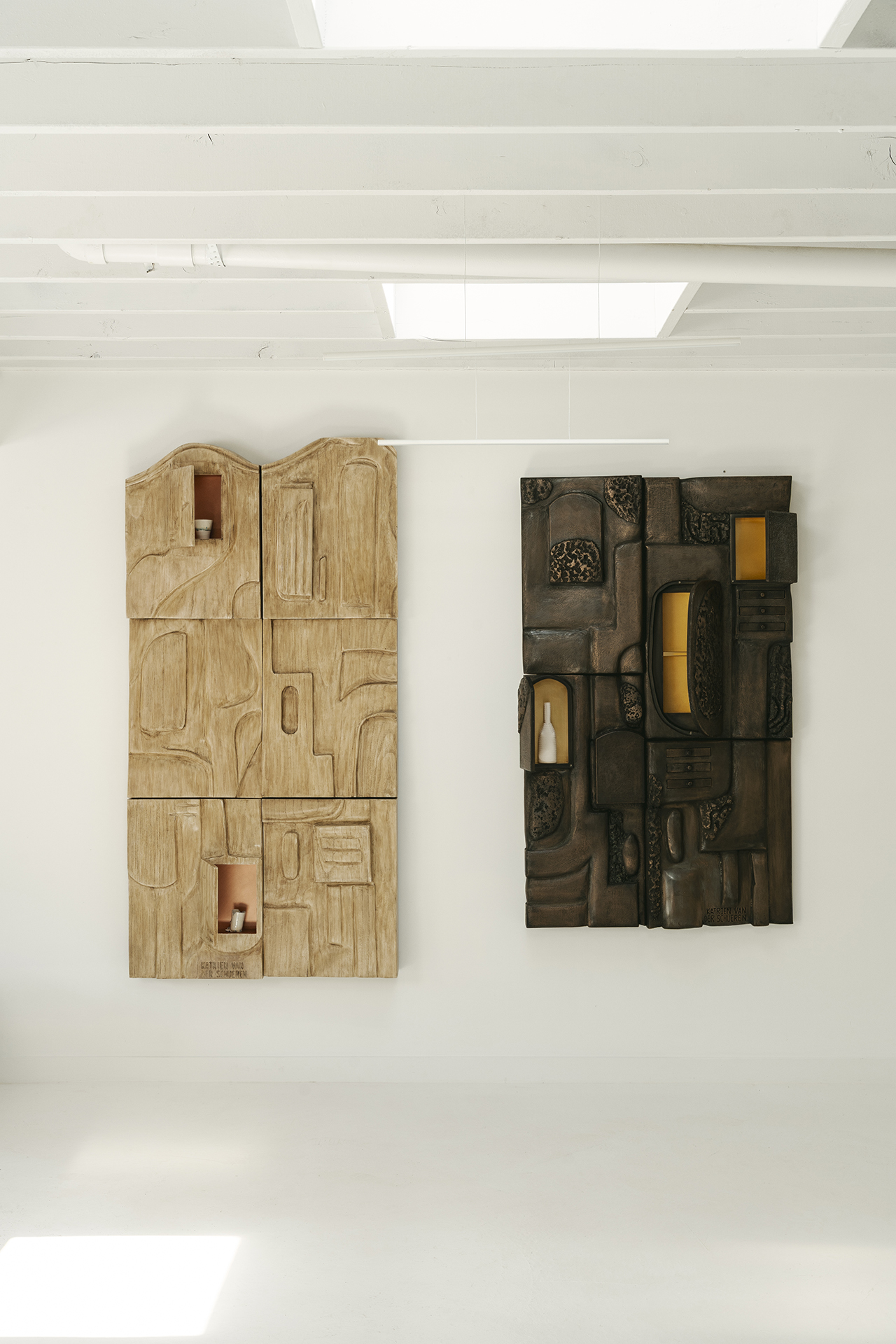
Van Der Schueren creates these unified, almost fossil-like compositions by physically cohering a diverse palette of natural materials, including wood, stone, metal, plaster, resin, and pigment. Her process involves an intensive manual technique of hand-carving, shaping, and assembling, which imbues each piece with a unique, organic quality. The choice of materials is deliberate, reflecting both the raw beauty of the natural world and the enduring legacy of craftsmanship. Wood, with its inherent warmth and grain, often forms the foundational structure, while layers of plaster, stone, and resin are meticulously applied and carved to create complex, multi-dimensional surfaces. Metal elements introduce accents of strength and refinement, and pigments are used to achieve subtle tonal variations and depth. Pushing the conventional limits of the craft techniques involved, she creates complexly detailed topographies—worlds in and of themselves. These detailed surfaces invite close inspection, revealing an intricate interplay of light and shadow that changes with the viewer’s perspective and the ambient illumination. The artist’s mastery of these varied materials allows her to evoke a sense of ancient geology and modern abstraction simultaneously, creating pieces that feel both timeless and deeply contemporary.
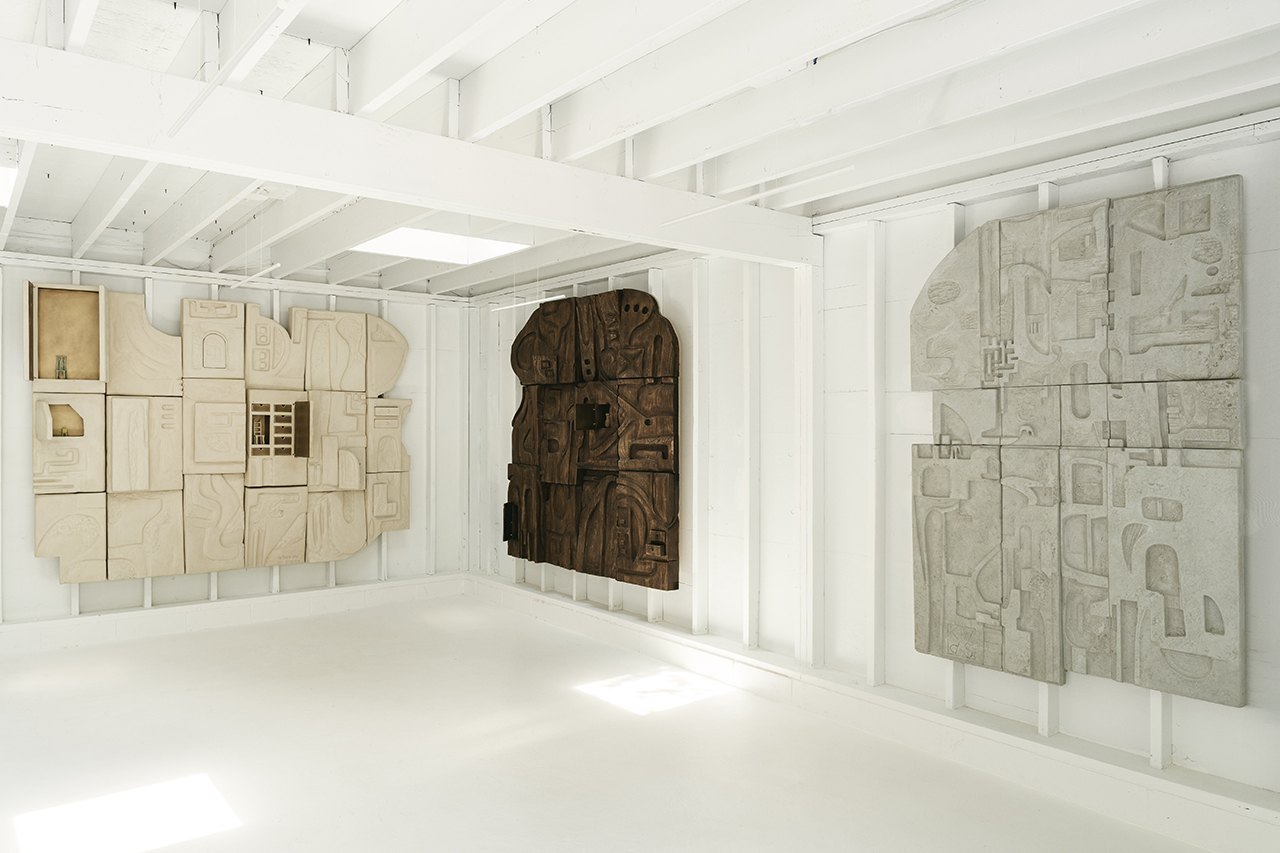
The "The Ark of Us" series by Katrien Van Der Schueren is currently presented at former fashion entrepreneur Lisa Perry’s residential gallery concept, Onna House, in East Hampton, New York. Onna House, established by Perry as a platform dedicated to showcasing the work of women artists, designers, and artisans, offers a unique and intimate setting for artistic engagement. Housed within a stunning modernist residence, the gallery aims to foster a dialogue between art, architecture, and daily living, creating an immersive experience for visitors. Perry’s vision for Onna House extends beyond mere exhibition; it seeks to celebrate female creativity and provide a space where art can be appreciated in a domestic context, blurring the lines between gallery and home. This environment perfectly complements Van Der Schueren’s work, which itself blurs the line between sculpture and functional object, between art and personal repository.
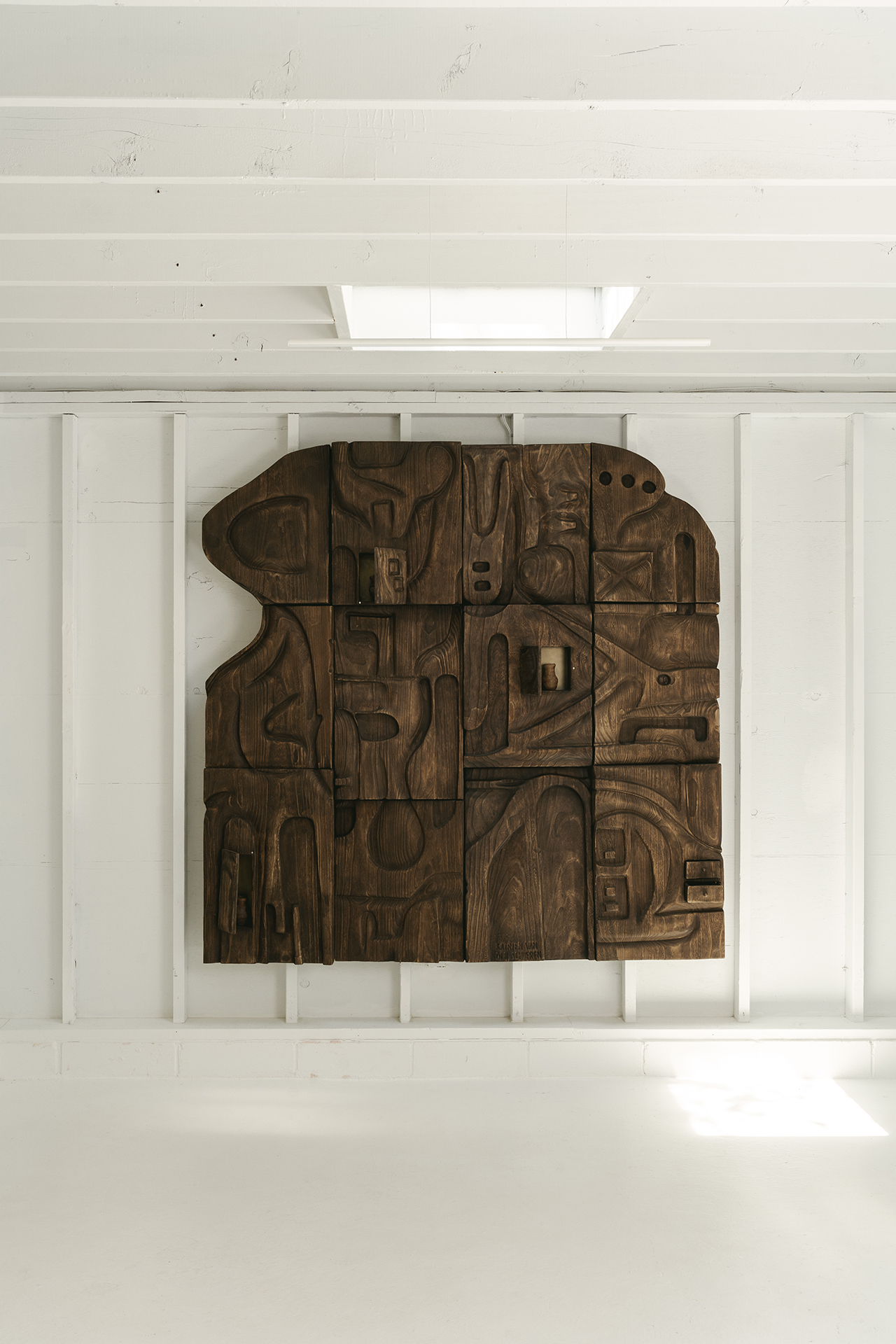
The intricately adorned panels—both architectonic and molten in their appearance—captivate against the stark white, modernist interior of Onna House. The clean lines and minimalist aesthetic of the gallery space provide a dramatic contrast to the rich textures and organic forms of Van Der Schueren’s sculptures, allowing their intricate details to stand out with striking clarity. They are strikingly articulated by natural light flooding in through floor-to-ceiling windows and large skylights, which highlights the depth and dimensionality of the carvings, making the surfaces appear almost alive as the light shifts throughout the day. The interplay of natural light and shadow further enhances the perception of hidden depths and secret spaces within the sculptures, inviting viewers to explore their enigmatic forms.
The works are presented as part of the compelling group exhibition In Her Hands: From Marble to Wood, which is on view through July 12. This exhibition thoughtfully explores the diverse ways women artists engage with traditional and contemporary sculpting techniques, utilizing materials that range from the classical elegance of marble to the organic versatility of wood. The overarching theme celebrates the tactile skill, innovative spirit, and conceptual depth that female artists bring to the medium of sculpture. Van Der Schueren’s contributions to In Her Hands serve as a powerful testament to the exhibition’s premise, showcasing her unique ability to transform raw materials into intricate, narrative-rich forms that challenge conventional notions of display and personal connection. The juxtaposition of her work with pieces by other accomplished female artists creates a rich dialogue on materiality, craftsmanship, and artistic expression within the realm of sculpture.
Before its current showing at Onna House, "The Ark of Us" series garnered significant attention when it was previously exhibited by Galerie JAG at PAD Paris in early April. This earlier presentation at a prestigious international art and design fair underscored the series’ appeal to a global audience and its recognition within the contemporary art market. The positive reception at PAD Paris highlighted the innovative nature of Van Der Schueren’s work and its ability to resonate with collectors and critics alike, further cementing her reputation as a significant voice in modern sculptural art. The consistent positive feedback across different curatorial contexts reinforces the profound impact and artistic merit of "The Ark of Us" series.
The broader implications of "The Ark of Us" series extend beyond its aesthetic appeal. In an increasingly digital world where memories are often stored intangibly, Van Der Schueren’s work champions the enduring human need for physical objects as anchors of personal history. It encourages a mindful engagement with our possessions, elevating them from mere objects to meaningful artifacts that encapsulate our journeys. The series challenges us to consider what we deem worthy of safekeeping and how these curated collections, however small or private, contribute to our sense of self and continuity. By reinterpreting the grand tradition of the wunderkammer into a contemporary, personal idiom, Katrien Van Der Schueren invites us to build our own "arks," vessels of personal wonder that navigate the currents of time, holding fragments of our unique "us" for safekeeping and contemplation. This profound re-contextualization not only enriches the discourse around collectible design and contemporary art but also offers a poignant commentary on memory, identity, and the timeless human desire to preserve what is most precious.
To learn more about this and other programming, visit onnahouse.com.
Photography by Rodrigo Rize.







