
 Ali Ikhwan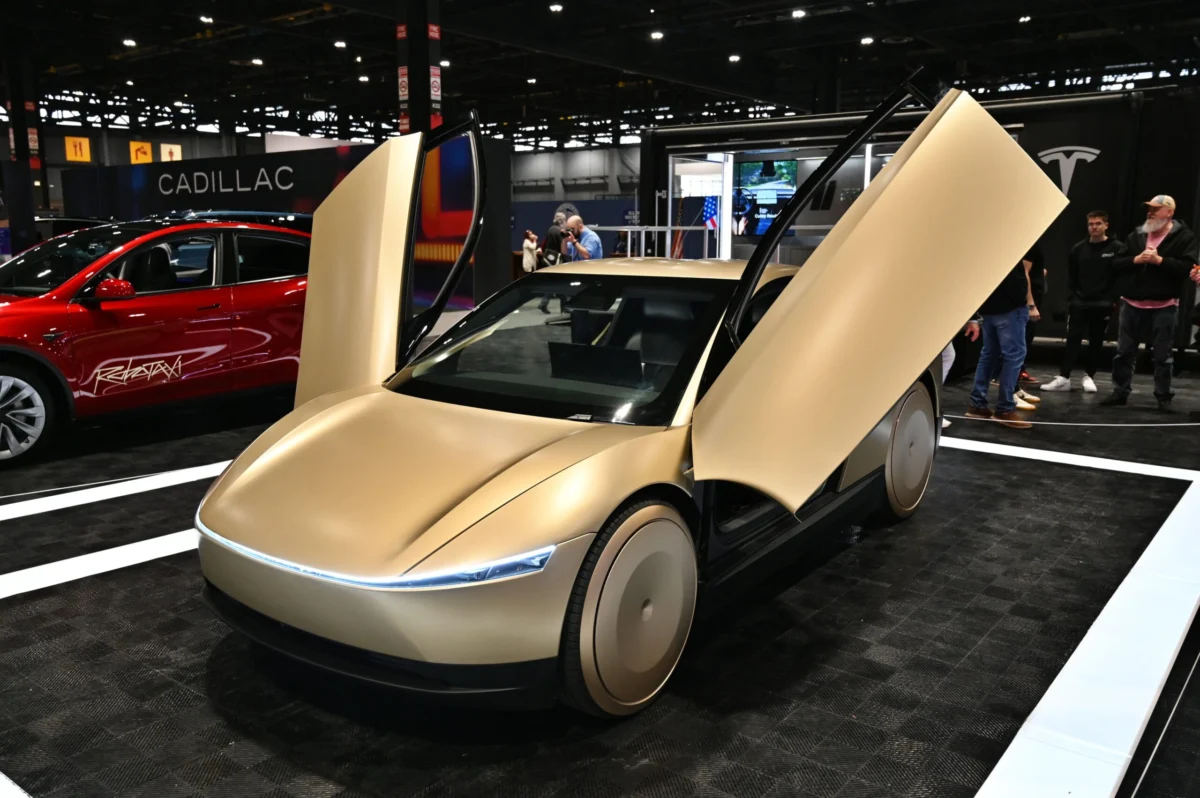
Tesla is currently developing a purpose-built, wheelchair-accessible autonomous vehicle (WAV), according to official testimony provided by a company representative to lawmakers in Washington, D.C. The announcement, made during a high-stakes legislative hearing, marks a significant expansion of Tesla’s autonomous driving strategy and signals a direct attempt to address long-standing criticisms regarding the inclusivity of emerging robotaxi technologies. India Herdman, a senior policy advisor for Tesla, confirmed the project’s existence on Monday during a DC City Council hearing focused on a controversial bill that could pave the way for widespread robotaxi operations within the District.
Herdman’s testimony provided a rare glimpse into Tesla’s internal product roadmap, which has increasingly shifted toward dedicated autonomous platforms rather than merely iterating on its existing consumer electric vehicle (EV) lineup. "We are in development for a purpose-built, wheelchair-accessible autonomous vehicle," Herdman told council members, emphasizing the social necessity of the project. She noted that the company is acutely aware of the systemic difficulties inherent in traditional paratransit systems. "We know that paratransit can be very difficult, and people who are confined to wheelchairs permanently should still be able to move around freely, so that is an active product being built by Tesla in Texas," she added.
While the confirmation of an "active product" suggests that Tesla has moved beyond the conceptual phase, Herdman did not provide a specific timeline for when the vehicle might reach production or enter public service. Tesla is notoriously known for extended lead times between product announcements and actual delivery—a trend seen with the Cybertruck and the Semi. However, the revelation that the project is being spearheaded at Tesla’s Texas facilities indicates that the company is leveraging its primary engineering and manufacturing hub to solve one of the most complex engineering challenges in the automotive industry: creating a vehicle that is both fully autonomous and compliant with the stringent physical requirements of wheelchair accessibility.
The Legislative Context and the DC Robotaxi Bill
The announcement occurred against the backdrop of a legislative debate in Washington, D.C., where local officials are weighing the benefits and risks of allowing autonomous vehicle (AV) companies to operate commercial services. The proposed bill aims to establish a framework for licensing, safety oversight, and data sharing for robotaxi fleets. A central point of contention for disability rights advocates and city planners has been whether these tech-driven services will exacerbate existing transportation inequalities or solve them.
For years, the disability community has expressed concern that the "app-based" revolution in transportation, led by companies like Uber and Lyft, initially bypassed riders who require wheelchair-accessible vehicles. By announcing a purpose-built WAV, Tesla appears to be positioning itself as a proactive partner to municipal governments, potentially smoothing the path for regulatory approval in major urban centers. If Tesla can provide a fleet that meets Americans with Disabilities Act (ADA) standards without the need for human-operated ramps or complex retrofitting, it could gain a significant competitive advantage in winning city contracts and operating licenses.
A Chronology of Tesla’s Path to Autonomous Accessibility
Tesla’s journey toward an accessible robotaxi has been marked by a series of incremental hints and software updates rather than a single major product launch. Understanding the timeline of these developments provides context for Herdman’s recent testimony:
- Late 2023: Tesla introduced an "Accessibility" tab within its dedicated Robotaxi application. At the time, the feature did not offer Tesla-branded rides but instead acted as a directory, pointing users toward third-party wheelchair-accessible transportation providers in their immediate area. The app included a placeholder message stating, "We are working on accessible rides."
- Fall 2023: In response to social media inquiries regarding the needs of the disabled community, CEO Elon Musk responded with a definitive "Absolutely" when asked if Tesla would develop solutions for handicapped and disabled passengers.
- October 2024: Tesla officially revealed the "Cybercab," a two-seater vehicle designed without a steering wheel or pedals. While the Cybercab itself was not designed as a WAV, the company used its "Robotaxi" social media accounts to highlight specific accessibility features, such as braille lettering on interior controls and a seating height designed to facilitate easier transfers for individuals with limited mobility.
- Present Day: Tesla’s current autonomous testing fleet, which operates in Austin, Dallas, Houston, and Miami, utilizes the Model Y. As a compact SUV, the Model Y lacks the internal volume and structural configuration necessary for standard wheelchair ramps or lifts, making the need for a "purpose-built" alternative clear.
The Competitive Landscape: Waymo, Cruise, and the Retrofit Challenge
Tesla is not the only player in the autonomous space facing pressure to provide accessible options. However, its competitors have struggled to deploy a truly driverless, fleet-wide WAV solution. Waymo, the Alphabet-owned company widely considered the industry leader, currently operates the most extensive commercial robotaxi service in the United States. Despite its technological lead, Waymo has yet to integrate a fully wheelchair-accessible vehicle into its standard driverless fleet.
At the same DC hearing, Matt Walsh, Waymo’s regional head of state and local policy, admitted to the difficulties of the task. Walsh explained that the company has struggled to find an existing vehicle platform that is both wheelchair-accessible and capable of supporting the complex array of sensors, lidars, and computers required for Waymo’s autonomous system. "To date, it’s my understanding that we haven’t been able to identify a platform that is fully wheelchair-accessible while also meeting the unique specifications to retrofit that vehicle with our technology," Walsh said, though he emphasized that the company is actively searching for such a platform.
Waymo has recently touted its "Zeekr-built Ojai" vehicle, which features a flat floor and low step-in height, but it remains a non-WAV. Other competitors, such as General Motors’ Cruise, have come closer but faced significant setbacks. In 2023, Cruise unveiled a prototype WAV based on its "Origin" platform, with plans for a 2024 rollout. However, a high-profile collision with a pedestrian in San Francisco led to a nationwide suspension of Cruise’s operations. Subsequently, General Motors halted funding for the Origin project entirely, leaving a vacuum in the market that Tesla now seeks to fill.
Technical and Regulatory Barriers to Autonomous Mobility
The development of a purpose-built WAV involves more than just adding a ramp to an existing car. It requires a fundamental rethinking of vehicle architecture. For a vehicle to be truly autonomous and accessible, it must handle the "end-to-end" experience without a human driver to assist with securing the wheelchair. This includes:
- Automated Securement: Current WAVs require a driver to hook "tie-downs" to the wheelchair to ensure it does not move during transit. An autonomous WAV would likely require a standardized docking system (such as those made by Q’Straint) that allows the wheelchair to lock into the floor automatically.
- Ramp Deployment: The vehicle must be able to detect the curb height and environment to deploy a ramp safely without obstructing pedestrian traffic or hitting obstacles.
- Interior Space: Electric vehicle batteries are typically located in the floor ("the skateboard"). For a WAV, this floor must be lowered to allow for head clearance, which creates significant packaging challenges for the battery and drivetrain.
From a regulatory standpoint, the Americans with Disabilities Act (ADA) mandates that transportation services cannot discriminate against individuals with disabilities. While the Department of Justice has historically focused on traditional transit, it has recently turned its attention to the tech sector. In September 2025, the DOJ filed a lawsuit against Uber, alleging that the company failed to reasonably modify its policies to accommodate riders with disabilities. This legal pressure serves as a warning to robotaxi operators: accessibility is not an optional feature but a legal requirement for large-scale urban operation.
Economic and Social Implications of Autonomous Paratransit
The potential impact of a Tesla-built autonomous WAV extends beyond corporate competition; it addresses a massive failure in current public infrastructure. Traditional paratransit services are often the only option for millions of Americans with mobility impairments, yet these services are frequently plagued by long wait times, restrictive "day-ahead" booking requirements, and high costs to taxpayers.
According to data from the National Aging and Disability Transportation Center, the cost per trip for specialized paratransit can exceed $30 to $50, much of which is subsidized by local governments. A fleet of autonomous WAVs could theoretically operate at a fraction of that cost, providing on-demand, 24/7 mobility that mirrors the convenience of standard ride-hailing services. By removing the cost of a human driver—the single largest expense in ride-hailing—Tesla could make independent travel affordable for a demographic that is disproportionately affected by poverty and unemployment due to transportation barriers.
Conclusion and Industry Outlook
Tesla’s confirmation of a purpose-built, wheelchair-accessible autonomous vehicle marks a pivotal moment in the evolution of the EV maker. It signals a shift from purely consumer-focused luxury goods to a broader "transportation-as-a-service" model that accounts for the complexities of urban planning and social equity.
However, the path to market remains fraught with challenges. Tesla must prove that its "Full Self-Driving" (FSD) software can handle the unique safety responsibilities of transporting passengers who may not be able to exit a vehicle quickly in an emergency. Furthermore, the company must deliver on its manufacturing promises—a feat that will be closely watched by lawmakers in Washington, D.C., and beyond. As the District of Columbia considers the future of its streets, Tesla’s commitment to accessibility may prove to be the deciding factor in whether the robotaxi revolution is welcomed or resisted. For now, the "active product" in Texas represents a significant, if unproven, promise to millions of people seeking a more mobile and independent future.







