Angie Faith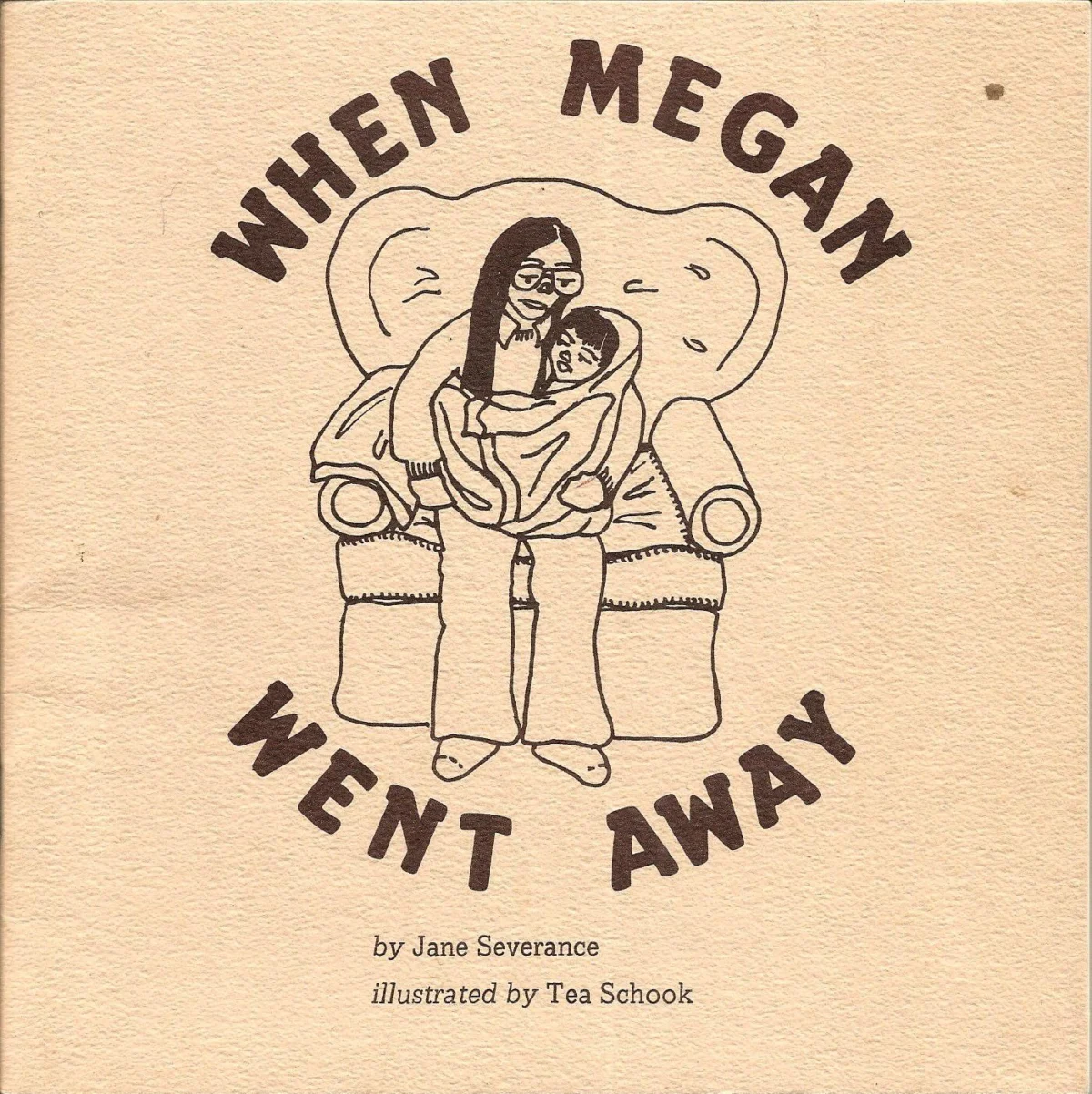
The evolution of LGBTQ children’s literature over the past five decades offers a unique window into changing societal attitudes, legal milestones, and the ongoing struggle for visibility. At the center of this historical preservation effort is the Tarpey-Schwed LGBT Families Children’s Book Special Collection, housed within the historic Mechanics’ Institute in San Francisco. Comprising over 200 titles published between 1969 and 2023, the archive serves as both a repository of rare literary works and a crucial sanctuary for material that has frequently faced censorship and marginalization.
As contemporary book bans and challenges to LGBTQ-themed curricula sweep across various school districts nationwide, institutions like the Mechanics’ Institute provide an essential infrastructure for protecting literary heritage. Through physical preservation, digital accessibility, and ongoing academic interest, the collection maps the trajectory of how queer families and individuals have been represented on the page—moving from cautious, self-published obscurity to mainstream, intersectional celebration.
Origins of the Collection and the Search for a Permanent Home
The archive originated from the personal endeavors of Randall Tarpey-Schwed, an antiquarian book collector and member of the Mechanics’ Institute. Alongside his husband, Tarpey-Schwed sought children’s literature that accurately reflected their own family structure to read with their daughters. Finding a distinct lack of representation in mainstream publishing, he began actively collecting early editions of LGBTQ-themed children’s books, prioritizing scarce and historically significant publications.
As the personal library expanded past 200 titles, Tarpey-Schwed recognized the necessity of finding a permanent, public-facing institution to house the material so researchers, families, and historians could access it. Finding a suitable institutional home, however, presented distinct challenges. Public libraries typically integrate donated volumes into general circulation systems, dispersing specialized collections across various subject headings and shelving them separately. Traditional historical archives, conversely, frequently decline to accept published books, focusing instead on unpublished manuscripts, correspondence, and ephemeral documents.
The Mechanics’ Institute offered an ideal alternative. Established in 1854, the institution predates the San Francisco public library system and stands as one of the West Coast’s oldest continuously operating cultural organizations, famed for hosting the oldest continuously operating chess club in the United States. Operating as an independent, member-funded nonprofit, the institute was uniquely positioned to accept the collection intact, protect it from the vulnerabilities of changing municipal administrations, and safeguard it amidst an era of rising book challenges and anti-LGBTQ censorship.
A Chronological Evolution: From 1969 to the Present

To understand the scope of the Tarpey-Schwed collection, researchers divide the trajectory of LGBTQ children’s literature into distinct chronological eras. Each period reflects different legal climates, publishing models, and social expectations regarding what children should read.
The Early Landmarks (1960s–1970s)
During the foundational years of the movement, representation was sparse, and traditional publishing houses universally avoided queer subject matter. Books from this era were almost exclusively self-published or released through small, independent alternative presses. Authors and illustrators working during this period often operated outside mainstream distribution networks, relying on grassroots community sales and specialty bookstores.
The Expansion of Same-Sex Parent Narratives (1980s–1990s)
Throughout the 1980s and 1990s, the market saw a gradual increase in picture books focusing on same-sex parents. However, these texts were predominantly adult-driven in their conception. Library manager Myles Cooper notes that many of these early books featured dense, complex text structures intended more to educate adults or reassure parents than to engage young readers on their own terms. Furthermore, narrative framing during this era often portrayed LGBTQ families as isolated, secretive, or unusual anomalies that required careful explanation to outsiders, such as teachers or peers.
The oldest picture book in the Tarpey-Schwed collection is Jane Severance’s 1985 work When Megan Went Away, illustrated by Tea Schook. The independently published book deals with a child processing the grief of her mother’s partner leaving their household. Unlike other books of the period that emphasized idyllic stability to prove the legitimacy of queer families, When Megan Went Away incorporated realistic emotional complexities and moody, atmospheric illustrations.
The Shift Toward Affirmation and Mainstream Acceptance (2000s–2010s)
Entering the 21st century, shifting legal precedents—culminating in the 2015 nationwide legalization of same-sex marriage—coincided with a broader cultural acceptance of diverse family structures. Publishing houses began moving past the defensive posture of earlier decades. Instead of merely arguing for the legitimacy of same-sex households, contemporary books increasingly centered on affirming the lived experiences of LGBTQ children themselves. Mainstream imprints began acquiring and promoting titles that normalized queer identities within everyday childhood settings.
The Intersectional and Complex Era (2020s–Present)
Recent years have marked an expansion into intersectional storytelling, acknowledging that queer children and families exist across diverse racial, cultural, and neurodivergent spectrums. Notable contemporary examples include Harry Woodgate’s Granddad’s Pride, which incorporates the history of the LGBTQ rights movement into a narrative about family and community; Allen R. Wells’s It’s Pride, Baby!, which follows a family attending a Black Pride celebration; and DeShanna Neal and Trinity Neal’s My Rainbow, illustrated by Art Twink, which tells the story of an autistic transgender girl searching for a gender-affirming and sensory-friendly hairstyle.
Current Landscape and Ongoing Gaps in Kidlit
Despite significant milestones over the past fifty years, literary analysts and collection managers emphasize that the field remains in its developmental stages. While representation for gay, lesbian, and transgender identities has expanded across traditional publishing houses, numerous identities under the broader 2SLGBTQIAA+ umbrella remain severely underrepresented.

Recent publishing developments illustrate both progress and persistent gaps. For instance, the release of Love Looks Like Lola by Cody Daigle-Orians, illustrated by Siân Coules-Milne, marked the first traditionally published picture book explicitly introducing children to asexual and aromantic identities. Meanwhile, identities such as Two-Spirit, intersex, and agender individuals have virtually no dedicated representation within mainstream children’s literature.
Cooper and other literary scholars argue that future academic inquiry must shift toward rigorous historical contextualization. While much of the contemporary writing surrounding LGBTQ children’s literature is reactive—designed to counter ongoing legislative restrictions and book bans—scholars suggest that examining the genre’s earliest, fragile beginnings provides a deeper framework for understanding current controversies and anticipating future trends.
Access, Preservation, and Institutional Support
The Tarpey-Schwed collection is structured to facilitate this type of scholarly and public research. The archive’s dedicated digital platform categorizes the library into several thematic pathways, including "Early Landmarks," "Families In Picture Books," "Challenges And Public Debate," "Small Presses And Publishing Networks," and "Translations And Editions." Each entry provides bibliographic metadata and contextual background to help researchers analyze the socio-political climate surrounding the book’s publication.
Access to the collection is maintained through a dual model. Members of the Mechanics’ Institute retain borrowing privileges for applicable materials, while non-members, researchers, and educators can schedule appointments to view the special collection in person at the San Francisco facility. Additionally, the institute continues to accept donations of historically significant works of LGBTQ children’s literature to expand the archive.
As public debates over intellectual freedom and representation persist, the preservation of these texts remains a vital undertaking. By maintaining an unbroken physical and digital record of how queer stories have been told to children since 1969, the Mechanics’ Institute ensures that the foundational chapters of this literary history are neither lost nor silenced, providing a resource for generations of readers, educators, and scholars to come.