Pranda Michaela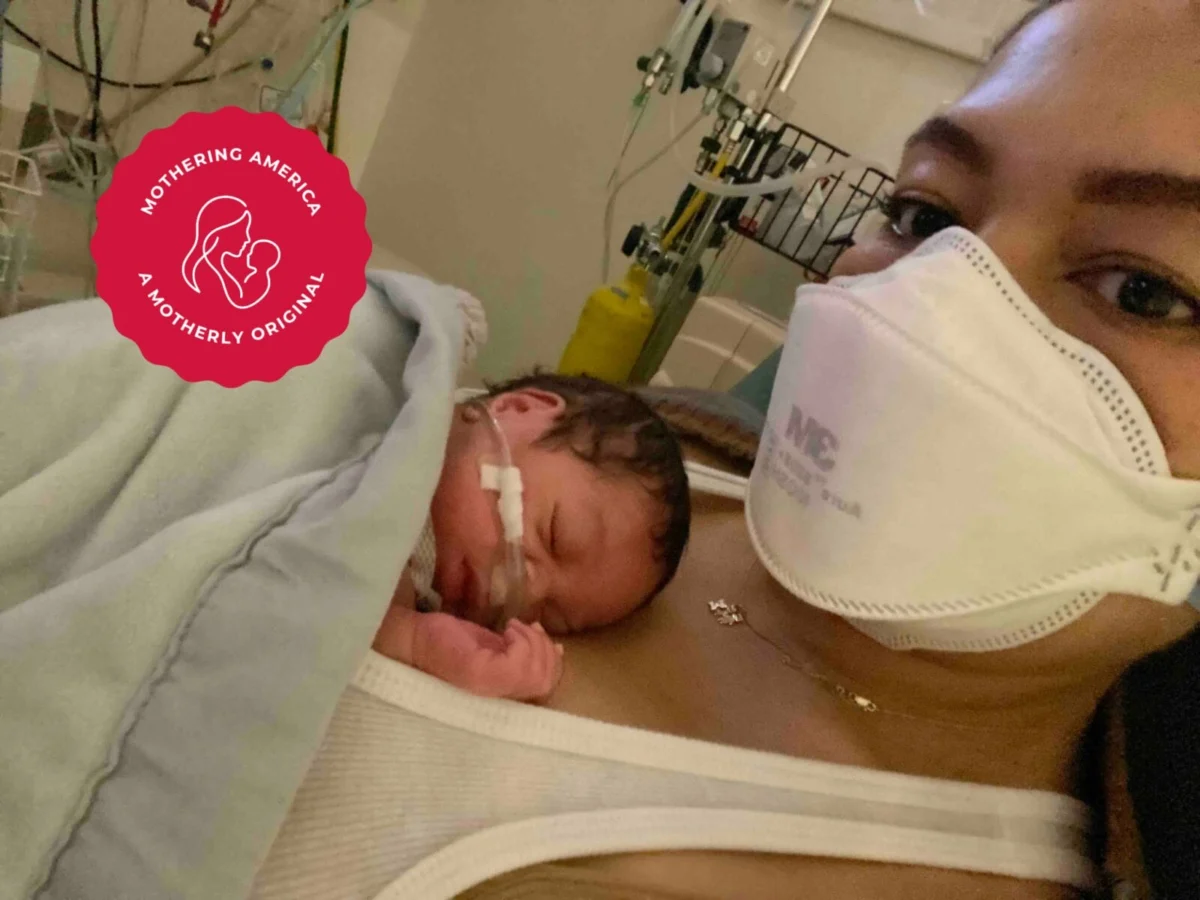
Stephanie Roberson’s second pregnancy was marked by the hallmark of a standard, healthy gestation: routine ultrasounds, favorable test results, and the typical anticipation of a growing family. That sense of security shattered abruptly on a quiet evening while she was tucking her two-year-old into bed. At 24 weeks, her water broke. What followed was a harrowing journey that would not only test the limits of neonatal medicine but also expose the profound fractures in the American support system for parents navigating the Neonatal Intensive Care Unit (NICU).
The incident occurred with disarming suddenness. Roberson recalls the visceral image of stepping off a towel she had placed beneath her, leaving behind two dry footprints on the floor—a stark, physical reminder of the volume of amniotic fluid lost. With her husband traveling for work and her mother visiting, the logistical scramble began immediately. Her doctor’s instructions were urgent: she required a facility with a higher level of NICU care, a designation that dictates the survival odds for infants born at the cusp of viability.
A Chronology of Survival
The medical reality of a 24-week gestation is fraught with uncertainty. Upon arrival at the hospital, Roberson was placed on strict bed rest. The subsequent days were defined by the clinical language of survival statistics. A neonatologist presented the grim probabilities: while medical advancements have pushed survival rates for infants born at 25 weeks to approximately 80 percent, the path forward is rarely linear.
Roberson’s preparation was a frantic attempt to exert control over an uncontrollable situation. She immersed herself in medical literature, learning the lexicon of prematurity—bronchopulmonary dysplasia, necrotizing enterocolitis, and intracranial hemorrhage. The psychological toll was compounded by the misplaced shame many mothers feel, an internal narrative of biological failure that often accompanies premature birth.
Thirteen days after her admission, at 25 weeks and 6 days, labor commenced. The birth of her son, Myles, was rapid. Despite his extreme prematurity, his first cries offered a flicker of hope. He was quickly whisked away to the NICU, marking the beginning of an 87-day ordeal.
The Daily Reality of the NICU
The NICU is a high-stakes environment characterized by constant sensory input—the rhythmic beeping of monitors, the hum of ventilators, and the hushed, urgent tones of medical staff. For Myles, the challenge was breathing. For 77 days, he suffered from frequent apnea, a condition where a premature infant’s underdeveloped brain temporarily forgets to signal the body to breathe. The treatment, caffeine therapy, is standard, yet it cannot mitigate the parental anxiety that accompanies every alarm.
Roberson’s experience was not isolated; it was communal. Within the NICU, parents become an unintentional support group, united by the shared trauma of witnessing their children struggle for existence. She observed families navigating the unbearable, including those who had to summon extended family members for final goodbyes—a reality of neonatal medicine that remains largely invisible to the public.
By the time of his discharge, Myles had defied the odds. He required no surgeries and no intubation, leading his neonatologist to characterize him as a "one-in-a-million" success story. Today, at four years old, he is thriving, having met and exceeded his developmental milestones. However, the legacy of that experience for Roberson is not just the joy of a healthy child, but a sharp awareness of the systemic inequality that dictates who survives and who flourishes.
The Economic and Systemic Burden
The financial and logistical architecture of the American healthcare system is not designed for the complexities of a long-term NICU stay. While Myles’s care cost nearly $1.5 million, Roberson’s insurance coverage—a luxury not afforded to all—limited her out-of-pocket expenses to approximately $1,300. Yet, the hidden costs are staggering. Research indicates that families with infants in high-level NICUs face thousands of dollars in out-of-pocket expenses for childcare for other siblings, parking, travel, and lost wages.
The most glaring gap, however, is the lack of a federal paid family and medical leave policy. While the Family and Medical Leave Act (FMLA) offers 12 weeks of job-protected, unpaid leave, it is insufficient for parents whose children may spend months in the hospital. According to the Kaiser Family Foundation, only 27 percent of U.S. workers have access to paid family leave. For many, the choice is binary: stay with a fragile newborn in the NICU or return to work to maintain financial solvency.
This structural failure creates a cascade of mental health crises. NICU parents are at a significantly higher risk of developing postpartum depression, anxiety, and post-traumatic stress disorder (PTSD). With approximately 75 percent of mothers suffering from perinatal mental health conditions going untreated due to provider shortages and insurance barriers, the societal cost is immense, manifesting in reduced workforce productivity and long-term healthcare expenditures.
Policy Reform and Collective Action
Recognizing the disparities between her own experience and those of the mothers she met in the NICU, Roberson transitioned from a participant to an advocate. In 2024, she joined the Chamber of Mothers, a national nonprofit focused on legislative reform regarding paid leave and maternal health.
The organization’s mission is rooted in the belief that maternal health is a matter of public policy rather than personal circumstance. Through its 52 chapters nationwide, the Chamber of Mothers is mobilizing to transform personal narratives into political leverage. Their efforts have already seen success at the state level; Colorado and Illinois have recently moved to include specific provisions for NICU leave within their state-enacted paid leave policies.
At the federal level, the conversation is shifting. Advocacy groups are pushing for legislation that would provide protected, paid time for parents with children in the NICU, recognizing that the "miracle" of a child’s survival should not be contingent upon the parents’ socioeconomic status.
Broader Implications for American Families
The case of NICU care acts as a microcosm for the broader state of maternal health in the United States. As of 2024, the U.S. remains the only high-income nation without a national paid family leave policy. The absence of such a policy forces families into a state of perpetual crisis during the most vulnerable periods of their lives.
Public health experts argue that the lack of institutional support for NICU families contributes to a cycle of poverty and poor health outcomes. When a mother is forced to return to work while her infant is still fighting for their life in a hospital, the trauma is compounded, affecting the long-term attachment and developmental trajectory of the child.
Furthermore, the disparate impact of these systemic failures is evident. Minority mothers and those in low-income brackets are disproportionately affected by the lack of paid leave and the prohibitive costs associated with NICU stays. This inequality contributes to the persistent, documented gaps in maternal and infant mortality rates across racial and economic lines in the United States.
As Stephanie Roberson notes, the reality of these disparities is "something that tears you open" once observed. The move toward legislative change is not merely an act of compassion; it is a fundamental shift toward acknowledging that family well-being is a cornerstone of economic stability. By advocating for federal standards, organizations like the Chamber of Mothers are attempting to bridge the gap between the medical advancements that save lives and the social policies that allow those lives to be lived with dignity.
The path toward a robust, supportive system for NICU families is long, requiring bipartisan consensus on issues that have historically been viewed through a partisan lens. However, as the stories of families like the Robersons gain visibility, the demand for policy that reflects the realities of 21st-century parenthood becomes increasingly difficult for legislators to ignore. The goal is clear: a society where the health of a child is not a luxury, but a baseline expectation guaranteed by sound public policy.