Sprout Social has long established itself as a premier enterprise-grade social media management and analytics platform. Renowned for its robust reporting capabilities, deep social listening tools, and seamless multi-departmental collaboration features, it remains a favorite for large marketing departments and enterprise organizations with substantial marketing budgets. However, its pricing structure—with solo user plans starting at $99 per month ($79 when billed annually) and team plans scaling upward from $249 per user per month ($199 annually)—places it firmly out of reach for many independent creators, small businesses, and growing agencies.

As organizations across industries face tightening marketing budgets and an increased demand to demonstrate measurable return on investment (ROI), marketers are increasingly seeking feature-rich, cost-effective alternatives. The modern social media management landscape offers a diverse array of platforms capable of matching—and in some cases exceeding—Sprout Social’s utility, often at a fraction of the cost or through accessible freemium models.
Evaluating the shift away from enterprise-tier platforms requires a comprehensive understanding of current market offerings, pricing dynamics, and specialized feature sets.

Market Context and the Shift Toward Accessible Social Media Tools
The demand for scalable social media management tools has accelerated rapidly as digital marketing transitions from a luxury operational expense to a core business driver. Historically, enterprise software dominated the market by locking advanced analytics, automated publishing workflows, and unified social inboxes behind expensive paywalls.
Industry analysts note that while tools like Sprout Social deliver exceptional value for large-scale operations handling thousands of daily customer service inquiries and complex multi-region campaigns, they present a steep financial barrier for smaller enterprises. For a mid-sized marketing team of five, adopting Sprout Social can easily exceed $1,000 per month in software licensing alone. This financial friction has fueled the rapid innovation and adoption of alternative platforms designed to democratize access to high-tier social media infrastructure.
Comparative Overview of Leading Sprout Social Alternatives
To assist organizations in selecting the most appropriate software for their specific operational workflows, the following matrix compares the leading market alternatives based on target use cases and starting price points.
| Tool | Best For | Starting Price |
|---|---|---|
| Buffer | Creators, small to mid-sized businesses, and growing agencies seeking flexibility and affordability. | Free (Paid plans from $6/channel/month) |
| Hootsuite | Large teams managing high-volume customer support and social engagement requests. | $149/user/month (14-day free trial) |
| Agorapulse | Marketing teams tasked with proving definitive social media ROI to executive leadership. | $99/user/month (30-day free trial) |
| Sendible | Growing agencies managing multiple client brands and workspaces efficiently. | $35/month (14-day free trial) |
| CoSchedule | Creators and integrated marketing teams managing comprehensive cross-channel strategies. | Free (Paid plans from $39/month) |
| Later | Brands combining an Instagram-centric visual presence with influencer marketing campaigns. | Free (Paid plans from $25/month) |
| Metricool | Marketing teams and agencies managing organic content alongside paid social ad campaigns. | Free (Paid plans from $25/month) |
| RecurPost | Video-heavy creators and brands leveraging evergreen content libraries and automation. | $9/month (14-day free trial) |
Detailed Analysis of Top Alternatives
1. Buffer: Best for Flexibility and Cost-Efficiency
Buffer remains one of the most reliable and enduring platforms in the social media management sector. Designed primarily for individual creators, small-to-medium businesses, and agile agencies, Buffer provides a streamlined user interface that avoids the operational bloat often associated with enterprise software.

- Pricing Structure: Features a genuinely free tier with zero financial commitment, while paid Essentials plans start at $6 per channel per month. Team-oriented plans begin at $12 per channel per month, offering a 20 percent discount on annual commitments.
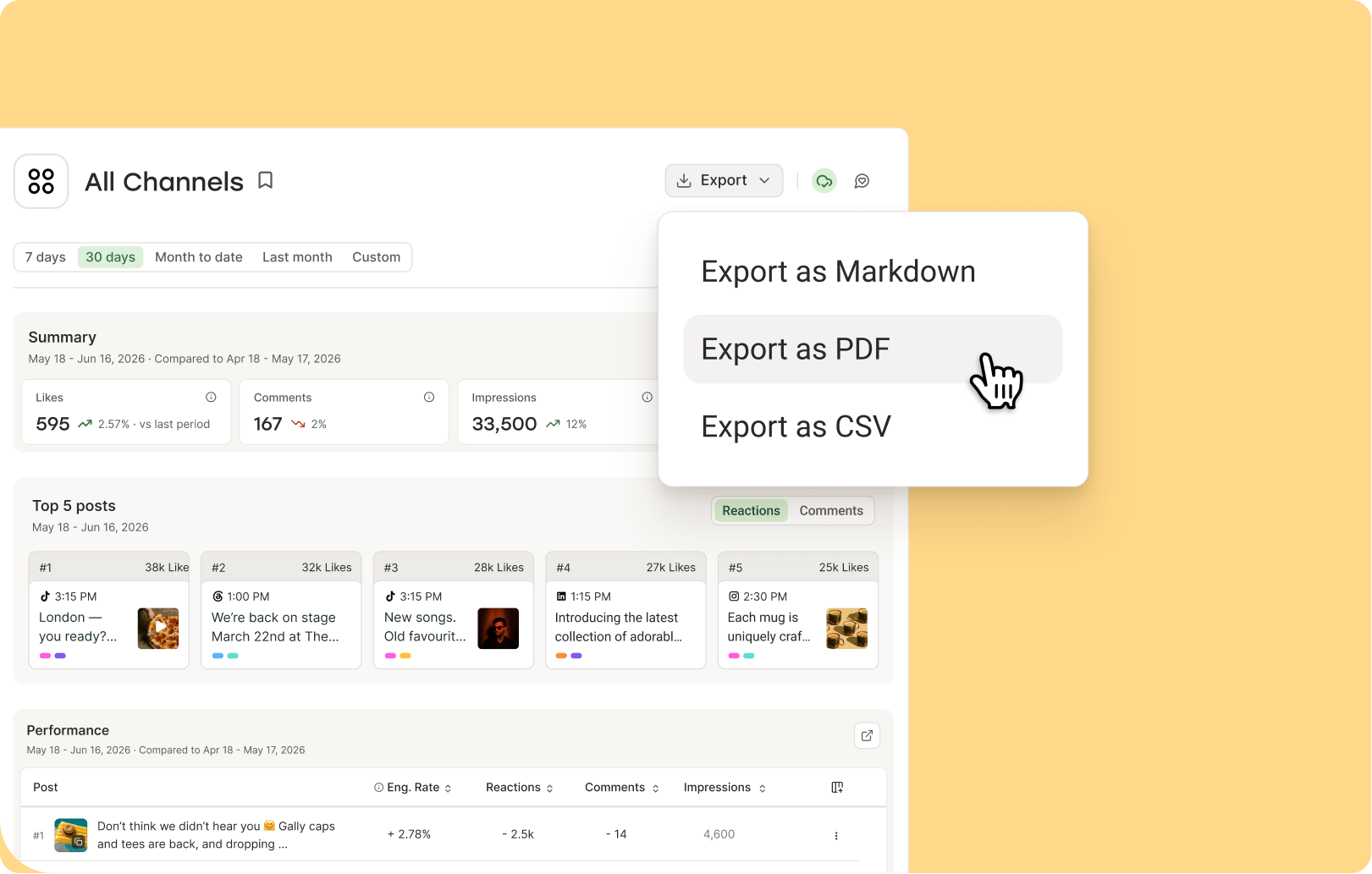
- Standout Features: Comprehensive multi-channel scheduling, an integrated AI Assistant for content generation and ideation, and granular export options (Markdown, PDF, and CSV) for performance insights. Buffer’s free tier allows users to connect up to three social channels and maintain up to 30 queued posts simultaneously.
2. Hootsuite: Best for High-Volume Enterprise Support
For organizations where social media functions as a primary customer service channel, Hootsuite provides an advanced infrastructure capable of handling massive inbound messaging volume.
- Pricing Structure: Starts at $149 per user per month (billed monthly) for up to 10 social channels, with annual billing discounts ranging from 20 to 34 percent. A 14-day restricted trial is available.
- Standout Features: A unified social inbox with robust team assignment protocols, internal note-taking capabilities, and direct integrations with enterprise helpdesk solutions like Zendesk. It also supports over 100 native integrations, including Canva, HubSpot CRM, and Monday.com.
3. Agorapulse: Best for ROI Measurement and Executive Reporting
Agorapulse targets mid-to-large marketing teams that must rigorously justify marketing expenditures to executive leadership by demonstrating concrete financial returns.
- Pricing Structure: Paid plans begin at $99 per user per month for up to 10 social channels, supported by a 30-day free trial and a 20 percent annual discount.
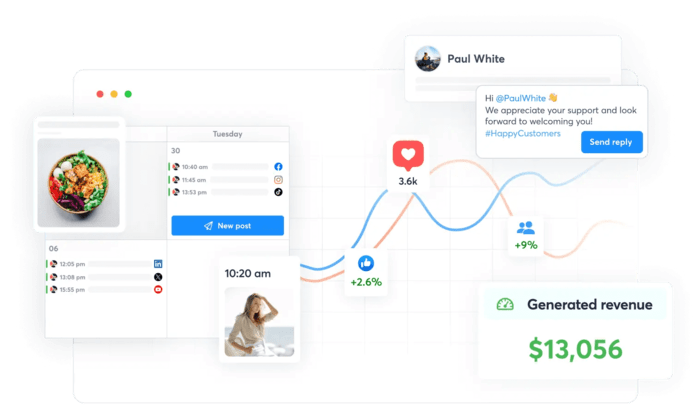
- Standout Features: Advanced revenue-tracking metrics that link social media engagement directly to lead generation and sales conversion. It also includes deep social listening capabilities, custom approval workflows, and comprehensive automated reporting tools.
4. Sendible: Best for Multi-Client Agency Workspaces
Sendible is engineered specifically to meet the complex demands of digital marketing agencies managing multiple independent client brands under one roof.
- Pricing Structure: Starts at $35 per month for a single workspace encompassing up to six social channels, backed by a 14-day free trial and a 15 percent annual discount.
- Standout Features: Unlimited user seats across all plans, segregated client workspaces, white-label reporting options, and the proprietary Client Connect portal which grants clients controlled, limited access to review and approve campaigns.
5. CoSchedule: Best for Unified Content Marketing Calendars
CoSchedule bridges the gap between traditional social media scheduling and broad content marketing management, making it an ideal solution for content-heavy organizations.
- Pricing Structure: Offers a free tier alongside paid plans starting at $39 per month for up to three social channels. Annual commitments reduce costs by $10 per month.
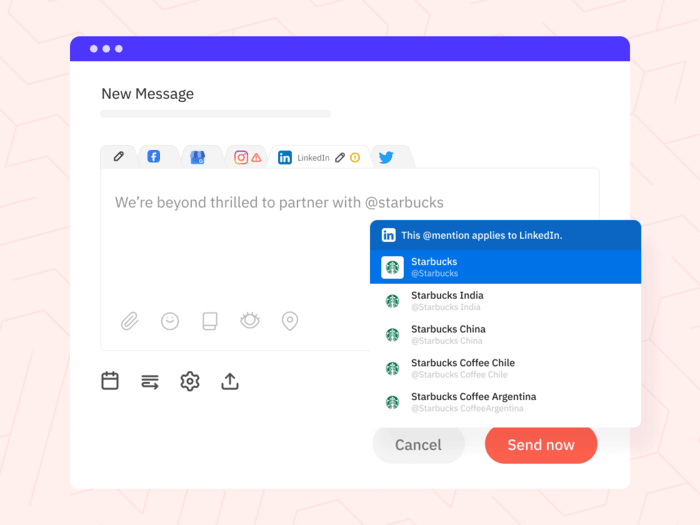
- Standout Features: A centralized marketing calendar that unifies social media publishing with blogging platforms like WordPress, email marketing systems such as Mailchimp and ActiveCampaign, and internal project management milestones.
6. Later: Best for Visual-First and Influencer Marketing Campaigns
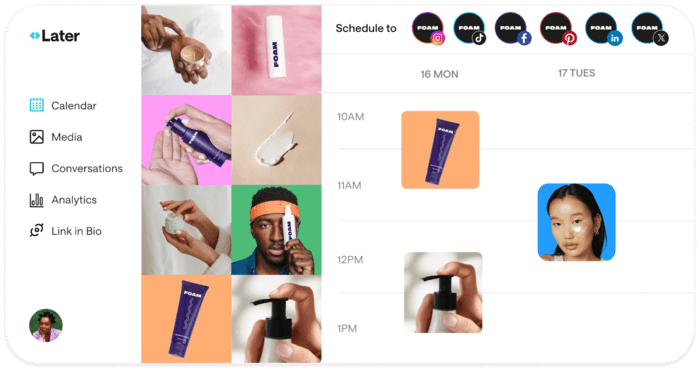
Originating as a dedicated Instagram scheduling tool, Later has evolved into a comprehensive platform optimized for visual brand presentation and creator partnerships.
- Pricing Structure: Includes a free tier and paid plans starting at $25 per month for up to eight social channels, with a 25 percent discount applied to annual billing.
- Standout Features: A drag-and-drop visual content planner for grid aesthetics, optimal posting time recommendations, automated hashtag suggestions, and a specialized influencer marketing suite designed to manage end-to-end creator partnership campaigns.
7. Metricool: Best for Integrated Paid and Organic Social Management
Metricool caters to modern marketing professionals who oversee both organic community building and paid advertising campaigns across major digital networks.
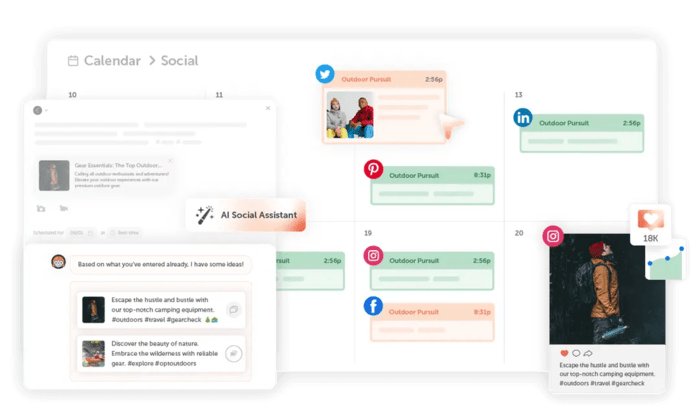
- Pricing Structure: Features a free tier and paid subscriptions starting at $25 per month covering up to five distinct brands, with a 20 percent discount for annual prepayments.
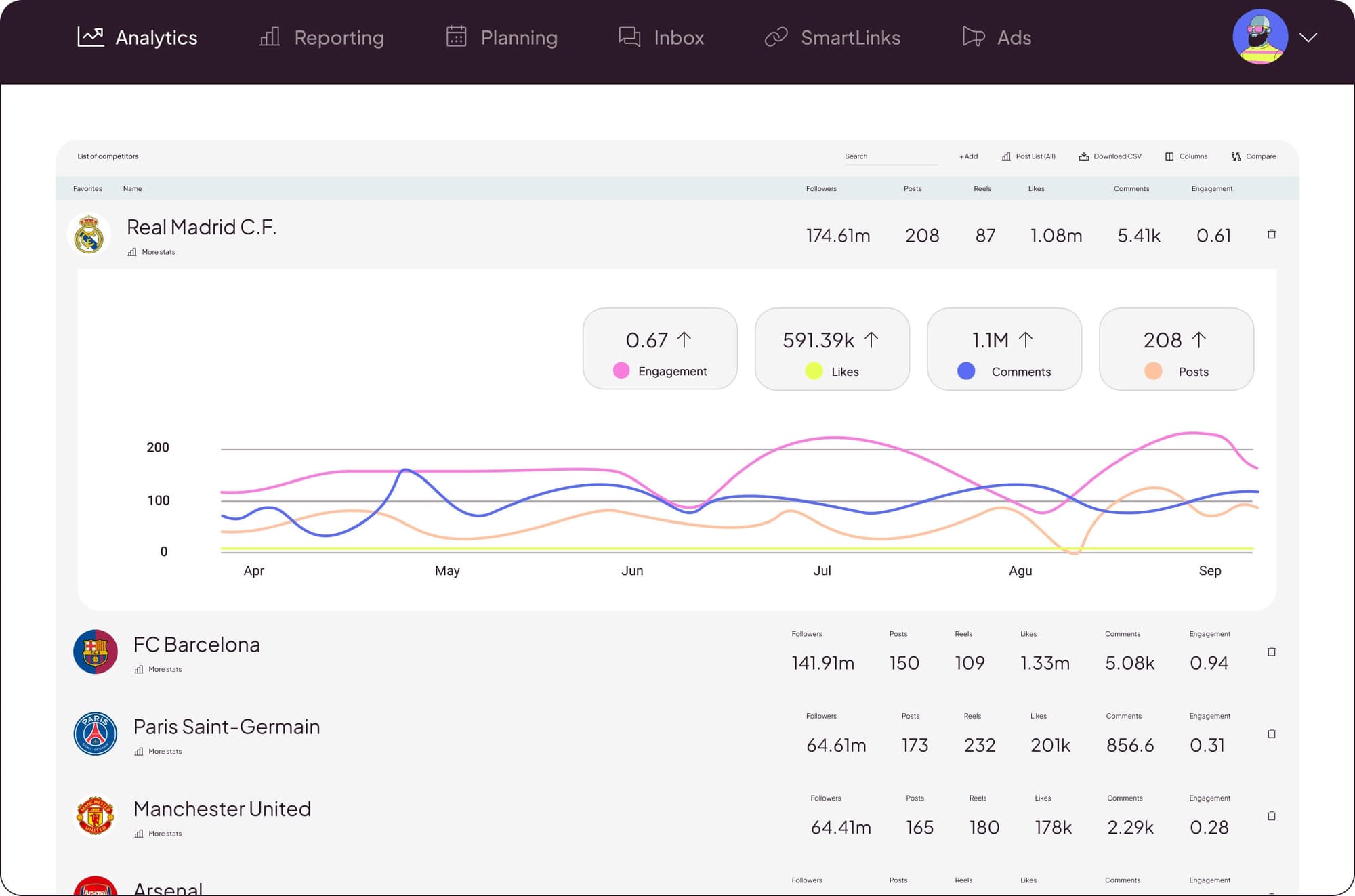
- Standout Features: Cross-platform publishing alongside native management tools for Meta, Google, and TikTok advertising campaigns. Additional utilities include heatmap-based optimal posting time analytics, comprehensive competitor tracking, and localized hashtag analysis.
8. RecurPost: Best for Video-Centric and Evergreen Content Strategies
RecurPost specializes in maximizing content lifespan through automated evergreen content libraries, advanced video handling, and direct messaging automations.
- Pricing Structure: Begins at $9 per month for two social accounts, supported by a 14-day free trial and an annual billing structure that grants two months free.
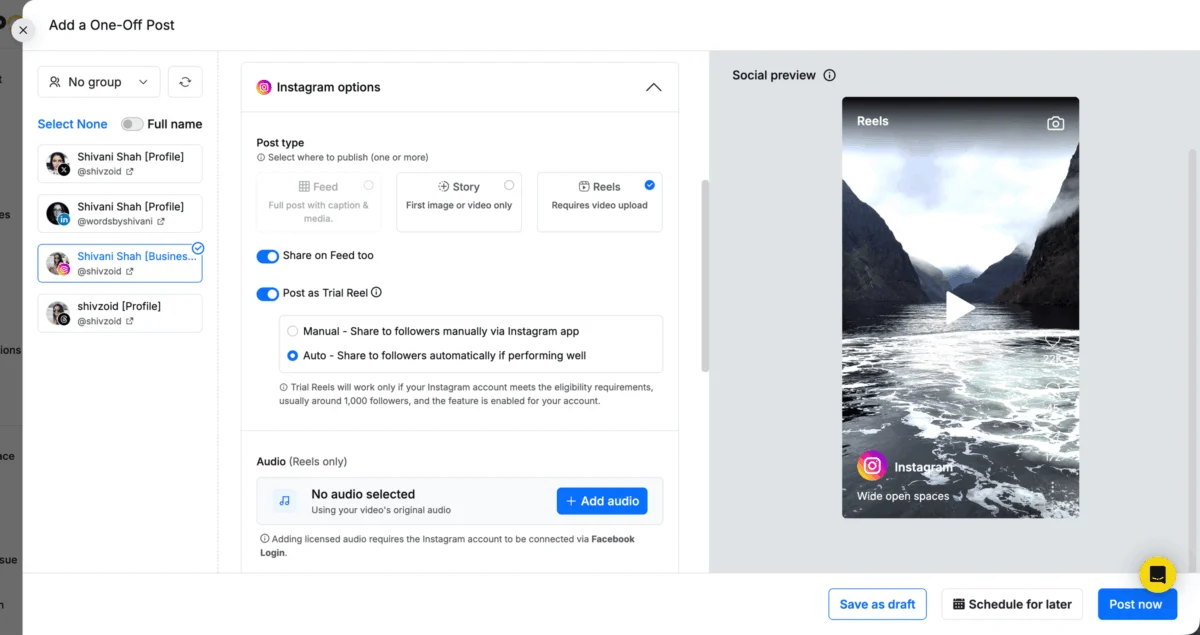
- Standout Features: Deep platform-specific video integration, including Reel trial posts, licensed audio additions, and product tagging for Instagram; full video publishing for YouTube; and granular privacy controls, comment management, and duet/stitch enablement for TikTok.
Strategic Considerations for Migrating Away from Sprout Social
Transitioning from an enterprise-grade platform like Sprout Social to a more economical alternative requires careful operational planning to ensure continuity in publishing schedules and historical analytics tracking.
Data Preservation and Migration Protocols
Industry experts strongly recommend maintaining active subscriptions on both platforms concurrently during a brief transition window. Users should export all historical performance data, content asset libraries, and scheduled queue items before canceling enterprise contracts. While certain platforms, such as Buffer, possess the technical capacity to backfill published post data within platform API limits, others require users to rebuild their content archives from scratch.
Evaluating Organizational Fit
When selecting a replacement tool, decision-makers must evaluate four core variables:
- Budget Constraints: Determining whether a free tier, low-cost creator plan, or team-tier license aligns with quarterly financial forecasts.
- Channel Requirements: Confirming native support for the specific social networks utilized by the brand (e.g., emerging platforms like Bluesky, Mastodon, or niche networks like Twitch).
- Collaborative Workflow: Assessing whether the team requires multi-tier approval workflows, client portals, or task-assignment mechanisms.
- Analytical Depth: Establishing whether the organization requires high-level engagement metrics or advanced financial attribution modeling.
By conducting systematic trials—most platforms offer 14-to-30-day evaluation windows—marketing teams can empirically assess user interface intuitiveness and functional alignment before committing long-term resources.