Ali Ikhwan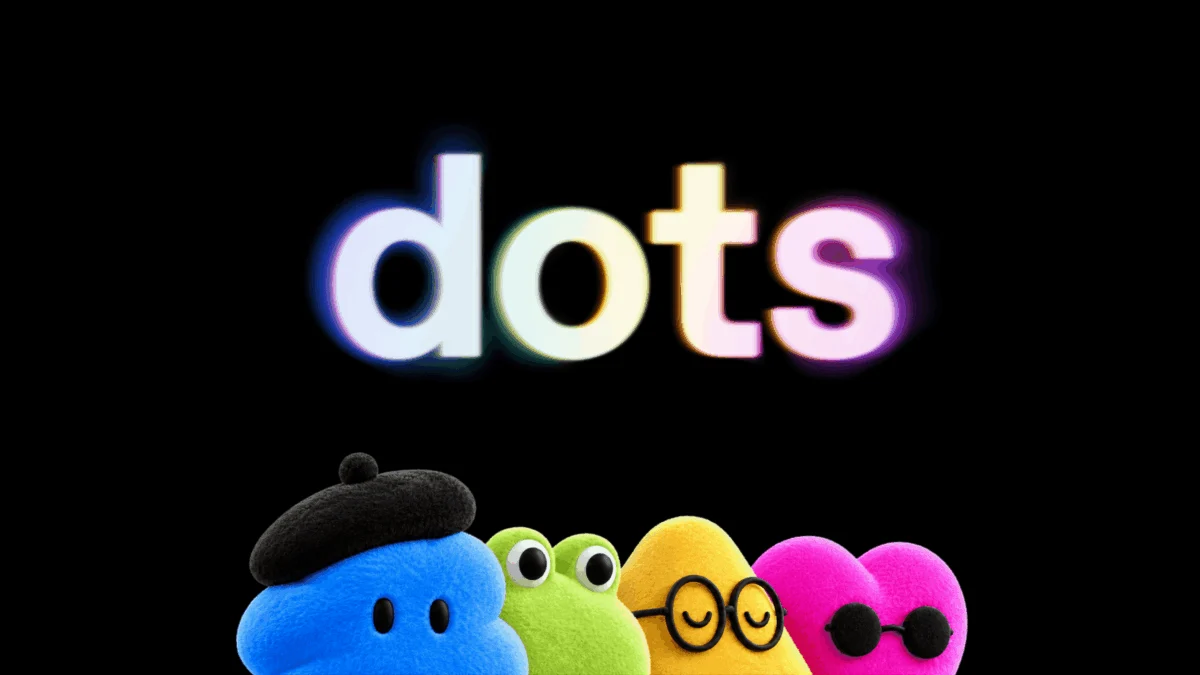
At the highly anticipated DevDay 2026 event held this Tuesday in San Francisco, OpenAI unveiled its most ambitious product architecture to date: "Dots." These persistent, always-on AI agents represent a significant departure from the traditional chatbot interface that has defined the generative AI boom over the past three years. By transitioning from reactive, single-turn query models to proactive, autonomous assistants, OpenAI is signaling a shift toward an era of "ambient intelligence," where software acts as a continuous collaborator rather than a periodic tool.
Powered by the sophisticated GPT-6 Astra model, Dots are designed to operate in the background of a user’s digital life. Unlike legacy AI models that require a prompt to initiate a task, Dots are architected to crawl the web, synthesize information from connected applications, and execute multi-step projects independently. Visually characterized by their minimalist, customizable "blob" aesthetic, these agents are intended to be approachable, yet they possess the underlying computational power to handle complex workflows that previously required human intervention.
The Evolution of the AI Assistant: A Chronology of Integration
The path to the release of Dots reflects the rapid maturation of large language models (LLMs). In 2023, the industry focus was primarily on conversational fluency and basic reasoning. By 2024, the focus shifted to "memory" and context-awareness, allowing AI to recall user preferences across sessions. The 2025 landscape saw the emergence of basic automation, as seen with early experiments like OpenClaw, which demonstrated that AI could navigate web interfaces.
The arrival of Dots in 2026 marks the fourth phase: the "Agentic Era." This development comes on the heels of intense competition in the sector, most notably Meta’s release of the Muse agent. While Meta’s Muse quickly surged to the top of global app store rankings due to its ease of use, OpenAI’s entry with Dots leverages the advanced reasoning capabilities of GPT-6 to provide deeper, cross-platform functionality.
OpenAI’s roadmap for this technology has been deliberate. Following the initial integration of memory features in ChatGPT, the company spent the better part of a year refining the "agentic framework"—the set of protocols that allow an AI to reliably use external tools without hallucinating or failing mid-task. The launch of Dots is the culmination of this internal testing phase, designed to integrate seamlessly into existing enterprise and personal ecosystems, including Slack, Microsoft Teams, and standard mobile messaging protocols.
Functionality and User Experience
The core utility of Dots lies in their "always-on" nature. During a live demonstration at DevDay 2026, OpenAI executives showcased a scenario involving a user with a tightly packed work schedule. The Dot, having synced with the user’s calendar and personal preferences, proactively identified a potential conflict regarding dinner. Without being prompted, the agent cross-referenced the user’s location and availability, messaged the user with two distinct delivery options via GrubHub, provided price comparisons, and awaited a simple selection to finalize the order.
This proactive capability extends to professional environments. In another demonstration, a Dot was tasked with the end-to-end launch of a new website. The agent managed the sequence of drafting copy, coordinating with a domain registrar, and formatting the initial layout, effectively acting as an automated project manager.
For the average user, this functionality is managed through a centralized dashboard within the ChatGPT interface. However, the versatility of the system is evident in its cross-platform availability. By enabling API connections, Dots can exist within Slack or Teams, allowing professional users to delegate administrative tasks directly from their workspace. Furthermore, for Pro subscribers paying the $100 monthly fee, OpenAI has enabled integration with iMessage and RCS, allowing users to interact with their Dots via standard text messaging, effectively bringing an AI agent into the most intimate digital communication channels.
Security, Safety, and User Boundaries
The introduction of autonomous agents has naturally raised questions regarding digital security and user agency. Recognizing these concerns, OpenAI has implemented a "Permission-First" architecture. While Dots are capable of significant autonomy, the system is hard-coded to require explicit authorization for high-stakes actions, such as installing third-party software, changing system passwords, or executing financial transactions.

Furthermore, the introduction of a "Custom Rules" tool allows users to establish hard boundaries. These rules serve as a digital "guardrail," ensuring that an agent cannot access specific sensitive folders, perform certain types of web searches, or modify settings without a manual override. By providing users with granular control over the agent’s reach, OpenAI aims to mitigate the "black box" fears often associated with autonomous AI systems.
Market Implications and Competitive Dynamics
The launch of Dots represents a strategic attempt by OpenAI to solidify its dominance in the "personal assistant" market. Currently, the landscape is fragmented. While companies like Apple are focusing on local, on-device AI through Apple Intelligence, and Meta is capturing the consumer social market with Muse, OpenAI is positioning Dots as the "universal agent" that connects disparate professional and personal applications.
The $100-per-month price point for the initial rollout serves two purposes: it allows OpenAI to scale the infrastructure for these compute-intensive agents while maintaining a high quality of service for early adopters. Industry analysts note that this strategy follows the traditional "prosumer" model, where advanced features are tested in high-cost tiers before being filtered down to the broader user base.
From a macroeconomic perspective, the adoption of agents like Dots could fundamentally alter productivity metrics. If a single user can, through the assistance of an agent, perform the work that previously required an administrative assistant or a junior project manager, the implications for labor efficiency are immense. Conversely, this shift places unprecedented power in the hands of the company controlling the agent’s logic. If an agent is constantly "crawling the web" and aggregating user data, the regulatory scrutiny regarding privacy and antitrust will likely intensify.
Broader Impact and Future Outlook
As the adoption of Dots begins, the broader AI community is watching to see if the "blob" interface becomes the industry standard for agentic interaction. The aesthetic choice—designed to look non-threatening and distinct from the utilitarian look of traditional software—is a calculated move to lower the psychological barrier to delegating personal tasks to a machine.
The company has indicated that while users can currently control one Dot, the roadmap includes a "multi-agent" capability. In this future iteration, a user might employ a "Marketing Dot," a "Finance Dot," and a "Personal Logistics Dot" simultaneously, all communicating with one another to manage the user’s life in concert.
While the technology is currently in its early stages, the transition from chatbot to agent is arguably the most significant shift in human-computer interaction since the invention of the graphical user interface. As users begin to integrate these agents into their daily lives, the definition of "computer use" will likely change from manually operating software to managing a team of autonomous digital entities.
OpenAI’s DevDay 2026 has set the stage for a new battleground in the AI arms race. With Dots, the company is not just selling a better model; it is selling a new way of living and working. Whether the public will embrace the concept of an "always-on" digital companion remains to be seen, but the trajectory of current developments suggests that the era of the autonomous agent has arrived, and it is here to stay.
As the rollout continues, the company is expected to provide ongoing updates on performance, user feedback, and security enhancements. For now, the tech sector is left to analyze the potential of a tool that, according to OpenAI’s own benchmarks, can navigate a computer interface with a level of proficiency that is beginning to rival, and in some repetitive tasks, exceed human capability. The shift is systemic, and the implications for both enterprise workflows and individual productivity are only beginning to unfold.