rifanmuazin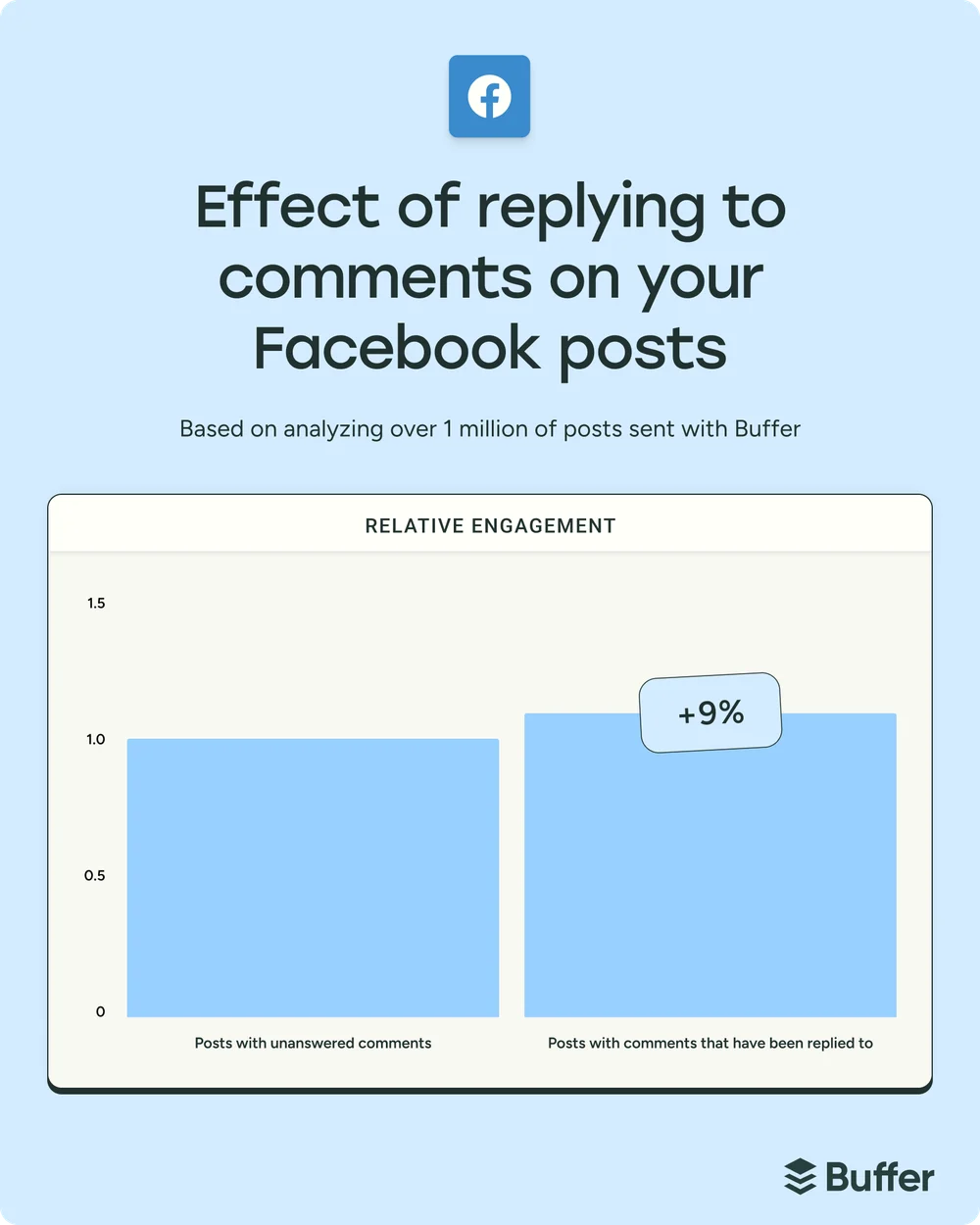
A comprehensive new study by Buffer’s data science team has revealed that creators and businesses who actively respond to comments on their Facebook posts experience an average increase of 9.5% in reactions, underscoring the platform’s enduring emphasis on meaningful interactions. This statistically significant finding, derived from an analysis of over one million Facebook posts, offers a clear, actionable strategy for individuals and organizations seeking to enhance their reach and engagement on the social media giant. While seemingly modest compared to engagement lifts observed on newer platforms, this single-digit percentage gain holds substantial weight on a network boasting over three billion monthly active users, translating into potentially millions more interactions globally.
Contextualizing the Findings: Why 9.5% Matters on Facebook’s Scale
The 9.5% uplift in reactions on Facebook, encompassing likes, loves, hahas, wows, sads, and angries, might initially appear less dramatic than the 42% boost identified on Threads or the 30% increase on LinkedIn in the same cross-platform study. However, this comparison requires careful contextualization. Facebook operates as a mature, expansive, and highly saturated digital ecosystem, vastly different from the nascent or professionally focused environments of Threads and LinkedIn, respectively. On a platform where content velocity is immense and algorithmic competition for user attention is fierce, even a fractional improvement in engagement can yield significant cumulative benefits.
For creators, small business owners, and marketers, Facebook represents an unparalleled frontier for audience discovery and community building due to its sheer scale. Despite its maturity, the platform remains a cornerstone of many digital strategies. The challenge, as many creators attest, lies not in Facebook’s user base, but in penetrating its vastness to connect with a meaningful segment of those users. The study’s lead, Julian Winternheimer, a senior data scientist at Buffer, highlighted that a consistent single-digit lift across such a massive dataset is far from negligible. It signals an underlying algorithmic preference that creators can strategically leverage without requiring substantial budget increases or radical shifts in content strategy. This insight is particularly valuable given the persistent struggles many creators face in achieving consistent content performance and reaching even a tiny fraction of Facebook’s colossal audience.
Facebook’s Evolving Landscape and Creator Focus
Facebook’s journey from a college social network to a global digital behemoth has been marked by continuous evolution, particularly in its algorithmic architecture. In the mid-2010s, Facebook began to explicitly prioritize "meaningful interactions" in its News Feed algorithm. This shift was a response to the growing volume of passive content consumption and a desire to foster deeper, more authentic connections among users. The algorithm was designed to favor content that sparked genuine conversations and back-and-forth exchanges over mere passive scrolling or one-way broadcasting.
This algorithmic pivot has profound implications for creators. For years, the platform has battled perceptions of declining organic reach and an increasingly competitive environment. In response, Facebook (now Meta) has invested heavily in supporting the creator economy, launching new features, monetization tools, and educational resources aimed at empowering individuals to build sustainable careers on its platforms. The introduction of features like Creator Studio, various monetization options, and enhanced analytics dashboards all underscore Facebook’s commitment to retaining and attracting top talent. However, understanding the nuances of the algorithm remains paramount for creators to truly succeed. The Buffer study offers a data-backed glimpse into one such nuance.
The current digital landscape is also characterized by intense competition from newer platforms like TikTok, YouTube Shorts, and Instagram Reels, which have popularized short-form video content and direct creator-audience interaction. In this environment, Facebook continually refines its strategies to remain relevant and valuable. The emphasis on "meaningful interactions" through comments and replies aligns perfectly with this broader strategy, encouraging community engagement that fosters loyalty and extends content visibility.
The Rigorous Methodology Behind the Data
To uncover the true impact of replying to comments, Buffer’s senior data scientist, Julian Winternheimer, employed a sophisticated analytical approach. The study involved analyzing approximately one million Facebook posts that had received at least one comment, sourced from a diverse array of accounts spanning various sizes and niches. This extensive dataset provided a robust foundation for drawing statistically sound conclusions.
Crucially, the methodology moved beyond simple comparisons of pages that reply versus those that don’t, which can be misleading due to inherent differences in audience size, content quality, and posting frequency. Instead, Winternheimer utilized a fixed-effects regression model. This advanced statistical technique allowed for each Facebook account to serve as its own control. By comparing an account’s performance when it replied to comments against its performance when it did not reply, the model effectively held constant all unique characteristics of that account—such as audience demographics, niche, location, and overall posting frequency. This approach isolated the effect of replying to comments from other confounding variables, providing a much clearer picture of causation. The core question shifted from "Do pages that reply get more engagement?" to "Does this specific Facebook Page perform better when it replies versus when it doesn’t?"
To further validate the findings, a Z-score analysis was conducted as a secondary check. This method measured how far above or below "normal" each post performed for its specific account. The congruence of results from both the fixed-effects regression model and the Z-score analysis significantly increased confidence in the study’s conclusions, demonstrating that the observed pattern was consistent and not an artifact of a single analytical approach.
It is important to note the scope and limitations of the study. While the pattern of increased engagement with replies showed up across all six platforms analyzed (including Instagram, LinkedIn, Threads, YouTube, and TikTok), the study measures "reactions" specifically (likes, loves, etc.) rather than total engagement. This deliberate choice was made to avoid circularity; including comments in an engagement metric that is designed to test the effect of comments would skew the results. Furthermore, while the statistical analysis strongly suggests a correlation, proving absolute causation in a complex system like a social media algorithm is always challenging. It remains a possibility that posts performing well naturally attract more activity, motivating creators to reply more frequently. However, the cross-platform consistency of the findings lends considerable weight to the hypothesis that replying does indeed drive engagement.
Statistical Significance and Nuances of the Data
The study concluded that posts with replied-to comments received approximately 9.5% more reactions on average across over one million posts from 97,427 Facebook profiles. This effect was found to be statistically significant with a p-value of less than 0.001 (p < 0.001), indicating a very low probability that the observed effect occurred by random chance.
The Z-score analysis further corroborated this, showing that roughly 53.8% of Facebook Pages performed better when they replied to comments. This means posts with creator replies tended to hover slightly above an account’s typical performance baseline, while posts without replies often remained at or below that baseline. While this 53.8% majority is slimmer than what was observed on Instagram (63%) or LinkedIn (83%), it still represents a clear tilt in favor of active engagement. This more modest majority aligns with Facebook’s broader, more mature engagement patterns, where user behavior is more varied and established compared to newer, more conversation-centric platforms.
Interestingly, the study initially revealed a misleading insight when looking at raw median numbers: posts without replied-to comments appeared to have slightly higher median reactions (22) than those with replies (16). This apparent contradiction underscores the importance of rigorous statistical analysis. Without controlling for variables like page size and activity levels—which the fixed-effects model did—such raw comparisons blend vastly different accounts, leading to inaccurate conclusions. Once these crucial differences were accounted for, the positive impact of replies became evident.
Decoding the Algorithm: Why Replies Matter
The 9.5% lift in reactions on Facebook is not merely a statistical anomaly; it is deeply rooted in how Facebook’s algorithm operates and its underlying objectives. The platform’s algorithm is engineered to prioritize content that fosters "meaningful interactions," and comments, especially those that evolve into back-and-forth conversations, are a primary signal of such engagement. When a creator replies to a comment, they are not just being polite; they are actively contributing to a conversation thread, signaling to the algorithm that the post is sparking genuine discussion, not just passive consumption.
Several mechanisms likely contribute to this enhanced performance:
- Extended Visibility: Each reply keeps a post "active" in the News Feed longer. The algorithm interprets ongoing conversation as a sign of continued relevance, potentially resurfacing the post for the commenter’s connections or for other users who have previously engaged with the page. This extended lifecycle can lead to more opportunities for new reactions.
- Relationship Signals: Facebook’s algorithm tracks the interaction history between individual accounts and pages. Consistent replies from a creator to a user’s comments build a stronger "relationship signal." Over time, the platform is more likely to show future content from that creator to the engaging user, creating a positive feedback loop that compounds audience loyalty and visibility.
- Social Proof and Authenticity: An active comment section, especially one where the creator or brand is visibly participating, serves as powerful social proof. It signals that there is a real person or responsive entity behind the page, fostering a sense of community and approachability. Users are more inclined to stop scrolling, read comments, and react to a post when they perceive an active, authentic presence from the content creator.
- Algorithmic Reinforcement: The very act of generating a reply and subsequent comments feeds the algorithm with more data points indicating high engagement. This can lead to increased distribution and visibility, particularly in the critical initial hours after a post goes live, when algorithmic weighting for early engagement is highest.
Strategic Implications for Creators and Marketers
For creators, marketers, and small businesses managing Facebook Pages, these findings offer a clear and immediate strategic imperative: prioritize comment engagement. While the 9.5% lift might seem modest in isolation, its consistency across a vast dataset on a platform of Facebook’s scale means it can translate into significantly greater reach and audience growth over time. Unlike many other platform-specific tactics that require new tools, budgets, or complex strategy overhauls, replying to comments is a fundamental, zero-cost activity that can be implemented instantly.
This insight reinforces the broader trend in digital marketing towards authentic, two-way communication. In an era where audiences crave genuine connection and transparency, simply broadcasting content is no longer sufficient. Active participation in conversations builds rapport, fosters community, and signals to both the algorithm and the audience that the creator values their input.
Actionable Strategies for Enhanced Engagement
Managing comments across multiple social media platforms can feel overwhelming, akin to a full-time job. However, integrating a systematic approach can make it manageable and effective:
- Time Block Your Replies: Instead of attempting to respond to every comment as it arrives, which can be unsustainable, dedicate specific time blocks each day for engagement. For instance, two 10-15 minute windows—mid-morning and early evening—can capture comments from diverse time zones and user habits. This structured approach prevents comment management from becoming a reactive, chaotic task.
- Prioritize Meaningful Conversations: Not all replies are created equal. A simple "thanks!" is polite but does little to extend the conversation. Focus on replies that invite further interaction:
- Ask Follow-Up Questions: "That’s a great point, what are your thoughts on X related to that?"
- Add Value: "You’re right, we actually explored that in more detail in our blog post on Y."
- Acknowledge and Validate: "I appreciate you sharing that perspective, it really makes us think about Z."
These types of replies keep the conversation flowing and provide more meaningful signals to the algorithm.
- Reply While the Post is Fresh: Facebook’s algorithm, like most others, gives significant weight to early engagement. If possible, aim to respond to comments within the first few hours of a post going live. This early interaction can provide an initial boost to the post’s distribution, increasing its chances of reaching a wider audience before its organic reach naturally tapers off. This strategy highlights the importance of aligning posting times with a creator’s availability to engage.
- Utilize Centralized Management Tools: For creators and teams managing multiple social accounts, bouncing between native apps can be inefficient and distracting. Tools like Buffer’s "Community" tab consolidate comments from various platforms into a single dashboard, allowing users to reply directly without getting pulled into the distracting feeds of individual platforms. Such tools often include features like "Comment Score" or similar metrics that track reply consistency, helping to establish engagement as a regular habit rather than an sporadic effort.
Conclusion: The Enduring Power of Authentic Connection
Julian Winternheimer’s cross-platform analysis, encompassing millions of posts, solidifies a crucial truth in the ever-evolving landscape of social media: authentic engagement remains a cornerstone of success. While Facebook’s 9.5% reaction lift sits at the lower end of the spectrum compared to more conversation-first networks, its significance cannot be overstated. On a platform characterized by immense scale and diverse engagement patterns, a consistent, statistically proven boost in reactions provides a tangible advantage.
The overarching takeaway is refreshingly simple: success on social media doesn’t always require cracking secret algorithms or employing complex loopholes. Often, it boils down to the fundamental principle of reciprocity – showing up for the audience who has shown up for you. While a 9.5% lift isn’t guaranteed for every single Facebook Page (the study found approximately 54% of profiles saw positive effects), the odds are demonstrably in favor of those willing to invest time in genuine interaction. In the long run, even a modest, consistent boost in reactions on a platform with Facebook’s reach can translate into substantial growth, enhanced visibility, and a more loyal, engaged community. This study serves as a powerful reminder that in the digital age, human connection, facilitated by active participation, continues to be an invaluable currency.