Michael Sholeh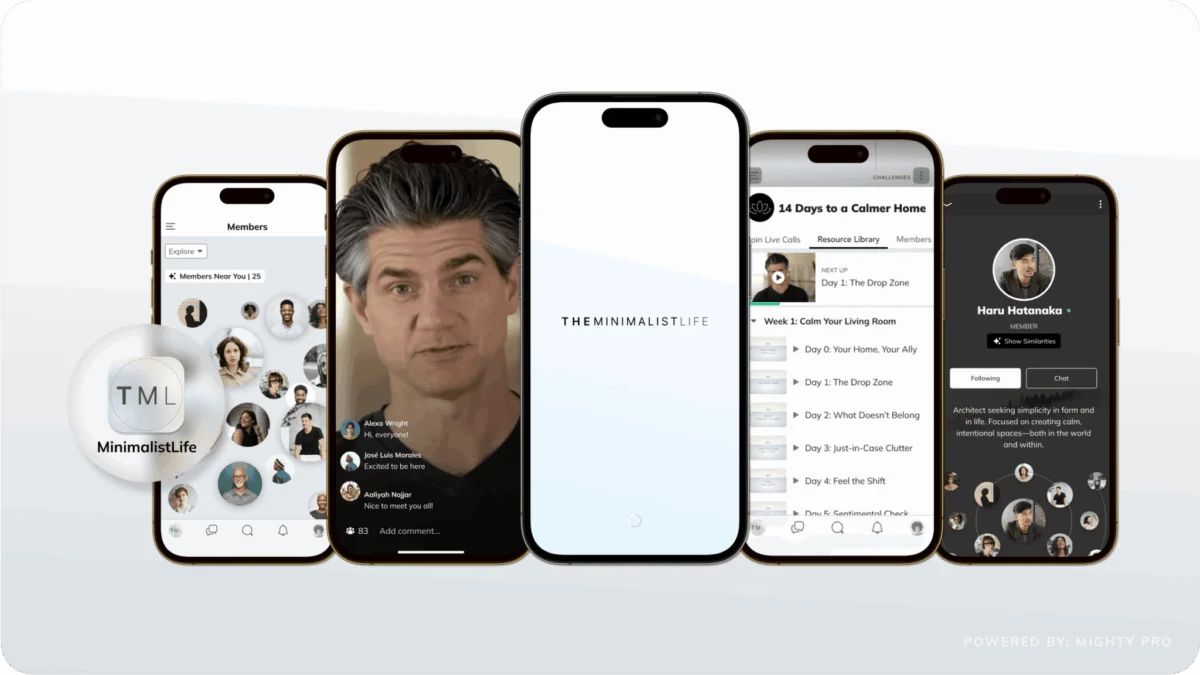
The Evolution of a Movement: From Blog to Global Influence
The announcement marks a major milestone in a journey that began in 2008. At that time, Joshua Becker was a suburban father in Vermont who, after a frustrating weekend spent cleaning his garage, realized that his possessions were draining his time and energy away from his family. This epiphany led to the creation of Becoming Minimalist, a blog that eventually became a cornerstone of the voluntary simplicity movement. Over the nearly two decades that followed, Becker’s work helped redefine minimalism for a mainstream audience, moving the concept away from stark, ascetic lifestyles and toward a philosophy of "intentional promotion" of the things that matter most.
Since its inception, the platform has grown into a multifaceted media entity. Becker’s books, including The More of Less and The Minimalist Home, have reached hundreds of thousands of readers, while his YouTube channel has garnered a significant global following. The "Uncluttered" course, a 12-week guided program, served as the primary vehicle for home transformation for nearly 100,000 individuals. However, internal feedback and longitudinal observations of the minimalist community revealed a consistent challenge: while many individuals could successfully clear physical clutter in a burst of motivation, maintaining those habits against the tide of modern consumerism remained a formidable obstacle.
Addressing the Challenge of Long-Term Sustainability
The core motivation behind "The Minimalist Life" is the recognition that education alone is often insufficient for permanent lifestyle changes. In his announcement, Becker noted that the most frequent inquiry from his audience involved the struggle to maintain momentum after an initial decluttering phase. The new community is structured to provide ongoing accountability, shifting the focus from the "what" of minimalism—such as how to organize a closet—to the "how" of living intentionally over months and years.
This shift reflects broader trends in the "creator economy," where digital educators are increasingly moving away from static content in favor of "Community-as-a-Service" (CaaS) models. By fostering a private environment for human interaction, Becker aims to counteract the limitations of AI-generated content and social media algorithms, which he suggests can sometimes dilute the personal and human elements of lifestyle transformation. The community is designed to address multiple facets of life, including financial management, scheduling, digital habits, and interpersonal relationships, applying minimalist principles to non-physical areas of existence.
Supporting Data: The Socioeconomic Context of Minimalism
The demand for programs like Becker’s is supported by a growing body of socioeconomic data regarding consumer habits and psychological well-being. According to data from the Self-Storage Association, the U.S. self-storage industry has grown into a nearly $45 billion market, with approximately one in ten American households renting a unit to store excess belongings. This trend persists despite the fact that the average size of a new American home has increased by approximately 1,000 square feet over the last 40 years.
Furthermore, research from the UCLA Center on Everyday Lives of Families (CELF) has demonstrated a direct correlation between high "object density" in the home and elevated levels of cortisol, a primary stress hormone, particularly in women. The study found that many homeowners feel overwhelmed by the sheer volume of their possessions, which they perceive as a "crushing weight" of unfinished chores. Becker’s move to create a long-term support system aligns with these findings, suggesting that the psychological benefits of minimalism require constant reinforcement to withstand a culture that rewards accumulation.
Strategic Chronology and Launch Details
The launch of "The Minimalist Life" follows a deliberate timeline of development and community feedback.

- 2008 – 2015: Establishment of Becoming Minimalist as a leading voice in the intentional living space; publication of early e-books and the launch of the blog.
- 2016 – 2023: Release of major traditionally published books and the launch of the "Uncluttered" course, which focused on room-by-room physical decluttering.
- 2024 – Early 2025: Development of the community platform based on feedback regarding the "maintenance phase" of minimalism.
- June 2025: Official opening of "The Minimalist Life" community.
The platform is currently offering a "founding member" rate of $18 per month or an annual subscription of $180, which includes two months free. This promotional pricing is scheduled to remain in effect until June 30, after which the standard membership rates are expected to be implemented. The program emphasizes human-to-human interaction, monthly themes, and direct access to Becker and other experts in the field.
Broader Implications for the Personal Development Industry
The transition of Becoming Minimalist into a membership-based community has broader implications for the personal development and wellness industries. It signals a move toward holistic lifestyle integration rather than niche problem-solving. While early minimalism was often criticized as a "rich person’s hobby" or a purely aesthetic choice, the modern iteration—as championed by Becker—is increasingly viewed as a tool for financial freedom and mental health.
By expanding the scope of his teachings to include finances and schedules, Becker is positioning minimalism as a solution to "time poverty" and debt. Data from the Federal Reserve indicates that American household debt reached record highs in 2024, with credit card balances seeing significant year-over-year increases. Minimalist practitioners often cite debt reduction as a primary benefit of reduced consumption, making the financial component of Becker’s new community a timely addition for a population facing economic volatility.
Institutional and Community Response
While official statements from competing platforms have not been released, the response within the intentional living community has been largely positive. Proponents of the move argue that the "siloed" nature of online courses often leads to a "completion bias," where users feel they have finished their journey once the last video is watched. A membership model, conversely, acknowledges that lifestyle changes are cyclical and require periodic recalibration.
Analysts in the digital media space suggest that Becker’s 17-year "long game" has provided him with a level of trust and brand equity that is rare in the fast-paced influencer market. By offering a private community, he is also insulating his audience from the "noise" of traditional social media platforms, which are often built on the very advertising and consumerist triggers that minimalists seek to avoid.
Analysis of the Human Element in a Digital Age
A notable aspect of Becker’s announcement is the emphasis on "human interaction" in an era increasingly dominated by artificial intelligence. As AI-driven lifestyle apps and automated decluttering checklists become more prevalent, "The Minimalist Life" bets on the value of shared human experience and empathy. This approach addresses the isolation that individuals often feel when adopting a counter-cultural lifestyle like minimalism.
The community aims to serve as a "third space"—a social environment separate from the home and the workplace—where individuals can discuss the nuances of intentional living without the pressure of external societal expectations. For Becker, the goal is to ensure that minimalism remains a "way of life" rather than a "messy house" fix.
As the June 30 deadline for founding membership approaches, the success of this new venture will likely be measured not just by enrollment numbers, but by the long-term retention of its members. If successful, "The Minimalist Life" could serve as a blueprint for other long-standing digital creators looking to provide deeper, more sustainable value to their audiences in an increasingly cluttered digital and physical world. Joshua Becker’s 17-year journey from a frustrated father in a garage to a community leader suggests that while the "what" of minimalism is simple, the "how" of living it remains a profound and ongoing human endeavor.