The realm of social media management tools is dominated by a few key players, and among the most recognized are Buffer and Hootsuite. These platforms consistently emerge at the forefront of discussions for individuals and organizations seeking to streamline their social media presence, offering robust features for scheduling, analytics, and engagement. However, despite their shared core functionalities, their fundamental design philosophies and target user bases diverge significantly, making the choice between them less about which is "best" and more about which aligns precisely with specific operational needs and strategic objectives.
The Evolution of Social Media Management and Market Positioning
The landscape of social media marketing has undergone a profound transformation since the early 2010s. What began as a nascent field of digital communication quickly evolved into a critical component of brand building, customer service, and market intelligence. This increasing complexity – managing multiple platforms, diverse content formats, audience engagement, and performance analytics – necessitated the rise of specialized tools. Buffer, founded in 2010, emerged with a focus on simplifying content scheduling and empowering individual creators and small businesses to maintain a consistent online presence without significant overhead. Hootsuite, established earlier in 2008, positioned itself as a more comprehensive solution, catering to the intricate demands of larger enterprises and marketing agencies with extensive teams and multifaceted campaigns. This foundational difference in target audience has guided their respective product developments, pricing models, and feature sets, resulting in two distinct offerings within the competitive social media management software market.
Pricing Structures: A Key Differentiator
Cost often serves as the initial filter for potential users, and here, Buffer and Hootsuite present markedly different approaches that reflect their intended markets. Understanding these models is crucial for anticipating both initial outlay and long-term scalability costs.
Buffer’s Accessible Pricing Model:
Buffer distinguishes itself with a highly accessible entry point. It offers a "forever-free" plan, allowing users to connect up to three social media channels and schedule a limited number of posts per channel. This free tier is a significant draw for solopreneurs, emerging creators, and very small businesses testing the waters of social media consistency. Paid plans for Buffer begin at an economical rate, typically structured on a per-channel basis. For instance, paid plans can start around $5-6 per month per social channel when billed annually. A notable aspect of Buffer’s "Team" plan is its provision for unlimited users, meaning that as a team expands, the cost remains tied to the number of social channels managed, not the number of collaborators. This model offers exceptional value for growing teams that need collaborative features without incurring escalating per-user fees.
Hootsuite’s Enterprise-Oriented Pricing Model:
In contrast, Hootsuite does not offer a free plan. Its entry-level paid plans typically start at a significantly higher price point, often around $99 per user per month when billed annually. This immediate barrier to entry signals its focus on users with dedicated budgets. Hootsuite’s pricing scales primarily with the number of users and the depth of features required. While it offers a 30-day free trial for its standard and advanced plans, users are expected to commit to a substantial monthly or annual fee thereafter. For large organizations, this per-user model can lead to considerable expenses, particularly for teams exceeding a handful of members. However, these costs are often justified by the advanced functionalities and robust enterprise-grade support that Hootsuite provides, which are indispensable for large-scale operations.
Implications of Pricing:
The divergence in pricing strategies has clear implications. Buffer’s model fosters organic growth and experimentation, making it an attractive option for startups, freelancers, and small businesses looking for cost-effective solutions. Its per-channel pricing allows for predictable scaling. Hootsuite’s model, conversely, necessitates a larger budget commitment but promises a comprehensive suite of tools designed to meet the complex, often multi-departmental needs of larger corporations and agencies. For a two-person team managing two social media channels, Buffer could cost as little as $12-24 per month, whereas Hootsuite would be closer to $198 per month, highlighting the stark financial difference and target market alignment.
Ease of Use and User Experience
Beyond pricing, the user interface and overall experience play a crucial role in adoption and productivity. A tool that is intuitive and quick to learn allows users to focus on strategy rather than technical navigation.
Buffer’s Streamlined Simplicity:
Buffer is lauded for its clean, minimalist interface and straightforward onboarding process. New users can typically connect social accounts, establish a posting queue, and begin scheduling content within minutes of signing up. The platform’s design prioritizes ease of use, minimizing clutter and guiding users through essential workflows. Integrations with popular content creation tools like Canva, Unsplash, Dropbox, and Google Drive are seamlessly embedded, allowing users to access and incorporate media without leaving the Buffer environment. This focus on simplicity and efficiency ensures a rapid ramp-up for individuals and small teams, enabling them to execute their content strategy quickly.
Hootsuite’s Comprehensive Complexity:
Hootsuite, while powerful, presents a steeper learning curve. Its expansive feature set, including advanced capabilities like paid post management, social listening streams, and intricate analytics dashboards, means there’s more to navigate. Users often report needing dedicated time to explore its various sections, understand feature locations, and configure workflows to their specific needs. The platform’s design reflects its capacity to handle a wide array of social media demands under one roof, but this comprehensiveness can initially feel overwhelming. While its knowledge base is extensive, the initial investment in learning the platform is higher, making it more suitable for dedicated social media managers and teams willing to invest in training and setup. Both platforms, however, excel in providing visual social media content calendars and queue systems for organized post planning.
Supported Social Media Channels
The breadth of supported social networks is a critical factor, as businesses operate across diverse platforms. Both tools offer extensive coverage but with nuanced differences.
Buffer’s Organic Focus:
Buffer supports a broad range of organic social media management across platforms including Instagram, Facebook (Pages and Groups), X/Twitter, LinkedIn, TikTok (personal and business accounts), Pinterest, Google Business, Mastodon, YouTube Shorts, Threads, and Bluesky. It also offers a "Start Page" for link-in-bio functionality and Shopify integration. Buffer’s strength lies in its comprehensive support for organic content distribution across these varied networks, including niche platforms like Mastodon and Bluesky, reflecting its appeal to individual creators and those experimenting with newer social spaces.
Hootsuite’s Hybrid Approach:
Hootsuite also supports a wide array of popular channels, including Instagram (business and creator profiles only), Facebook (Pages only), X/Twitter, LinkedIn, TikTok, Pinterest (image only), YouTube, Threads, Bluesky, and WhatsApp. A key differentiator for Hootsuite is its inclusion of tools for managing paid ad campaigns on Facebook, LinkedIn, and X/Twitter, alongside organic posting. While its organic support is robust, its Pinterest integration is more limited (image-only), and it supports WhatsApp, which Buffer currently does not. The absence of Google Business Profile management in Hootsuite is also a notable distinction, as this is crucial for local businesses.
Content Planning and Scheduling Capabilities
The core of any social media management tool lies in its ability to facilitate efficient content creation and scheduling. Both Buffer and Hootsuite provide essential features, but their approaches to content planning, AI assistance, and bulk operations reveal their differing philosophies.
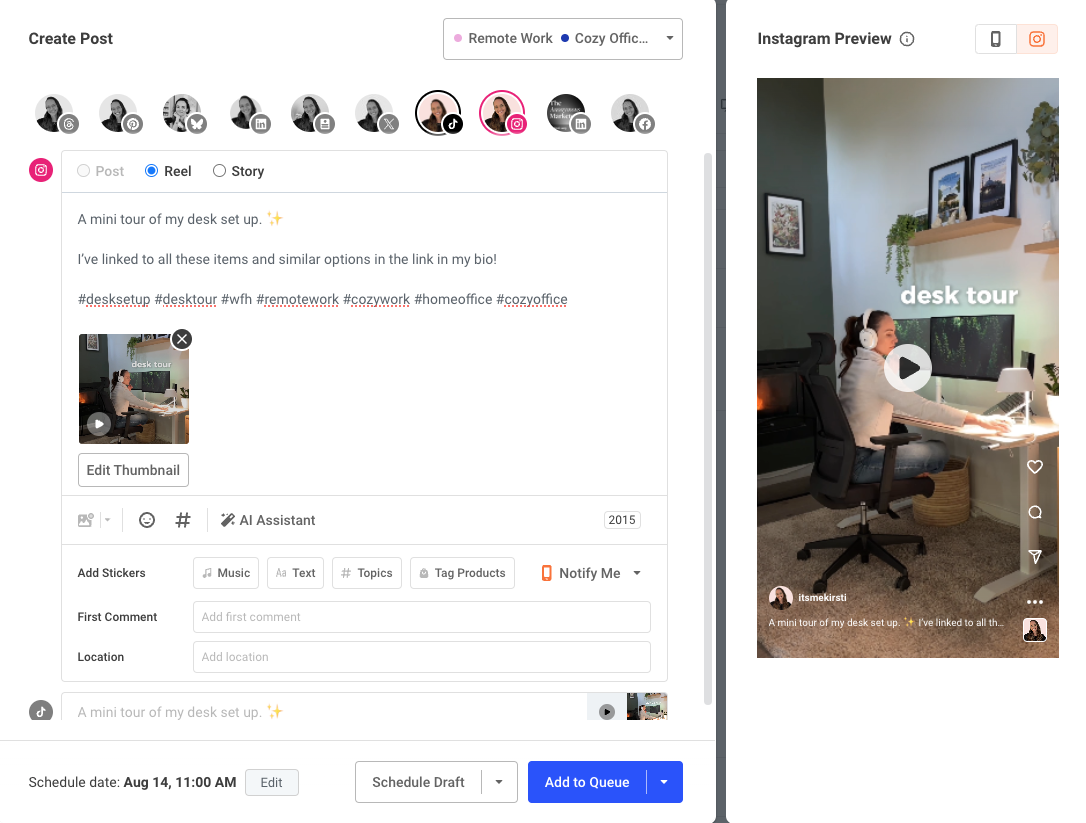
Cross-Platform Posting: Both platforms allow users to draft a single post and adapt it for simultaneous publication across multiple connected accounts. This includes the ability to tweak text, images, and other elements for each specific channel, ensuring content is optimized for platform-specific nuances without requiring users to start from scratch.
Bulk Scheduling: For high-volume content strategies, bulk scheduling is invaluable. Buffer allows the upload and scheduling of up to 100 posts at a time via a CSV file on its paid plans, with no limit on the total number of posts that can be queued. This capacity is generally sufficient for creators and small to medium-sized teams. Hootsuite offers a higher bulk upload cap of 350 posts but reserves this feature for its Advanced or Enterprise plans, clearly targeting larger organizations with intensive publishing schedules.
AI Assistance: AI integration in content creation is a growing trend.
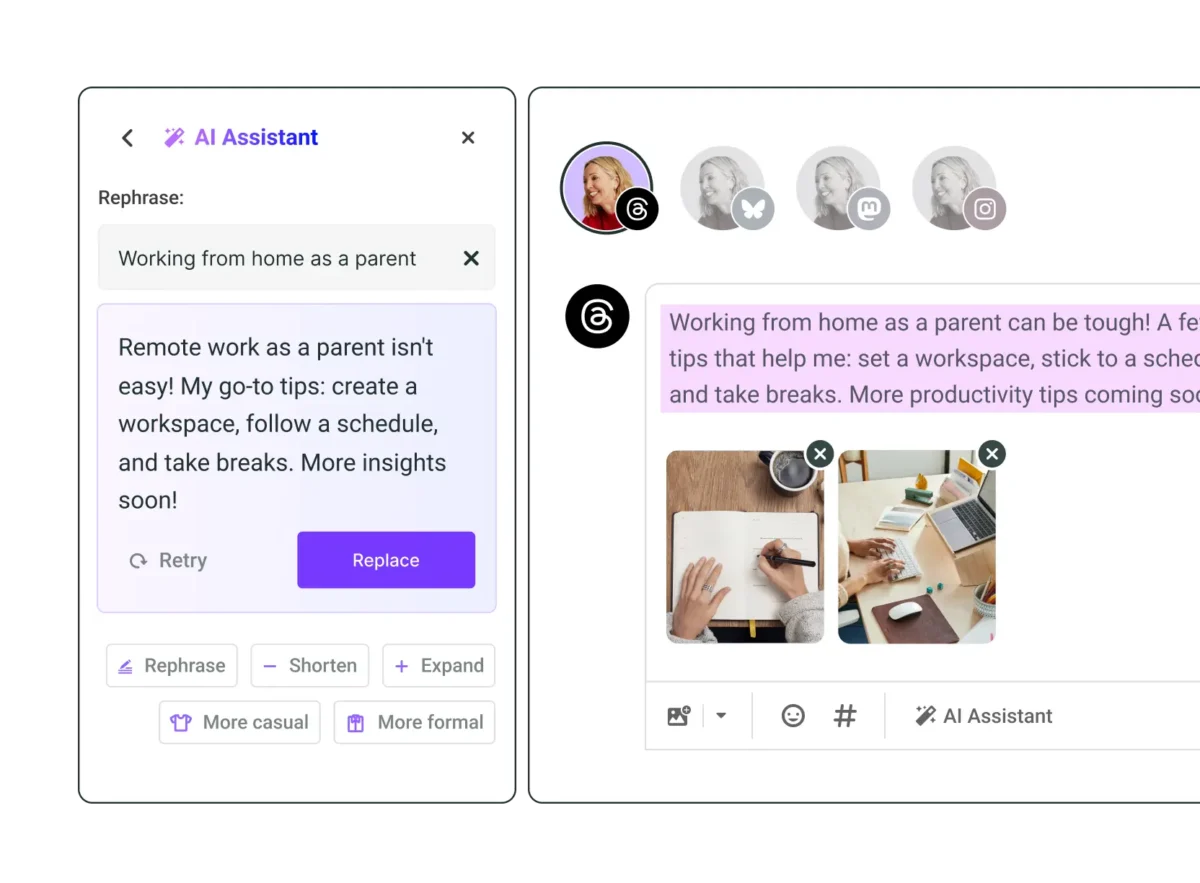
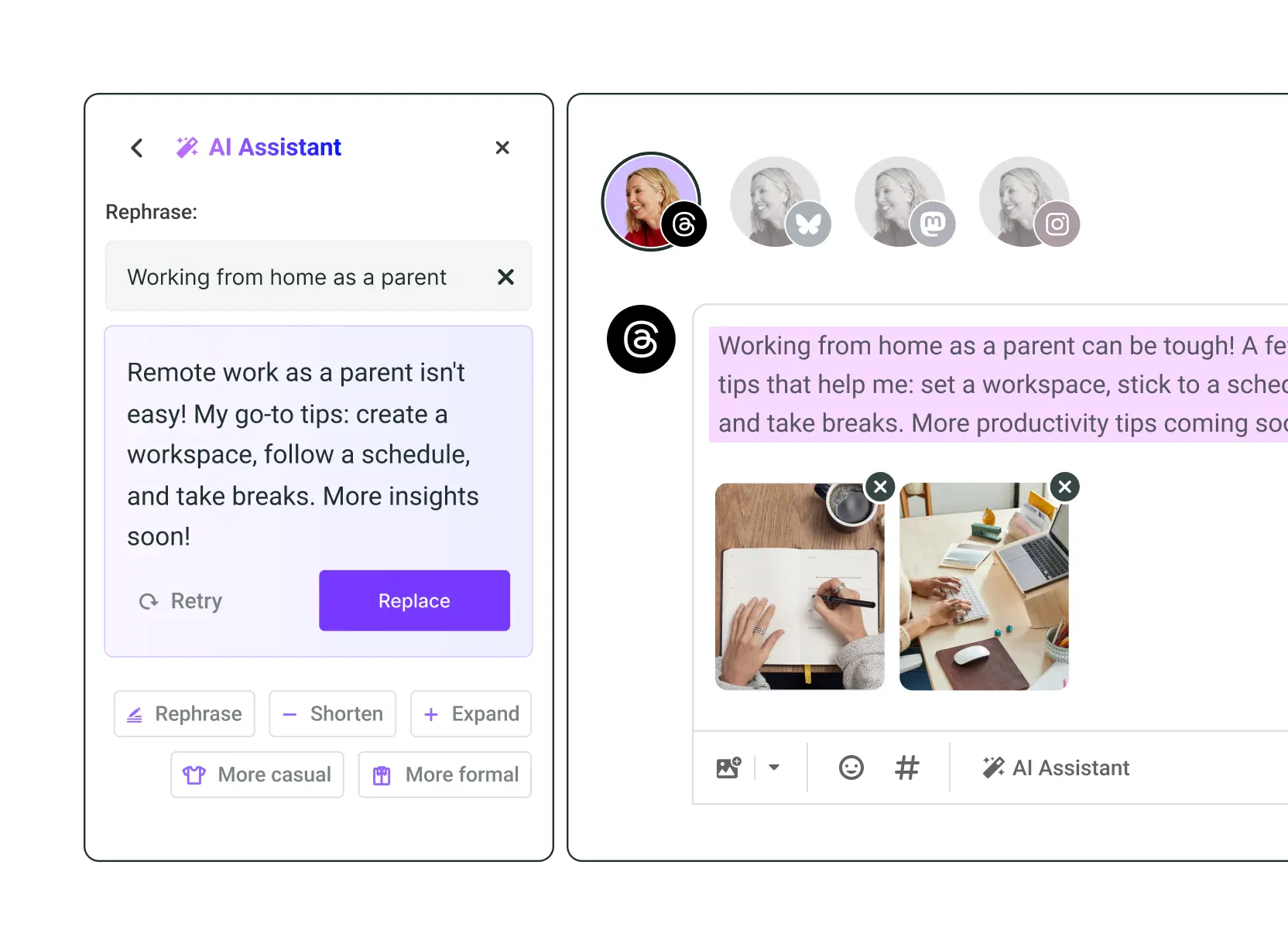
- Buffer’s AI Assistant is accessible across all plans, including the free tier, and offers unlimited usage. It assists with brainstorming ideas, repurposing existing content, and drafting posts directly within the composer, removing concerns about credit limitations. Buffer’s public API also supports advanced AI workflows, enabling custom integrations with tools like ChatGPT or Claude for automated content generation and scheduling.
- Hootsuite’s OwlyWriterAI, available on paid plans, offers a broader suite of AI-powered tools, including campaign idea generation and content repurposing based on trending topics. However, it operates with token limits, requiring users to be more strategic about its usage. Hootsuite’s API is also available but is primarily geared towards enterprise-level custom integrations.
Short-Form Video & Pinterest Specifics: A notable limitation in Hootsuite is its inability to select cover images or thumbnails for Instagram Reels from Creator accounts or TikTok videos, which can be a deal-breaker for creators focused on visual branding. Furthermore, Hootsuite requires Pinterest Pins to be created and scheduled separately, unlike other platforms where crossposting is more direct.
Calendar Views: Both offer calendar views, but their granularity differs. Buffer’s calendar provides channel-specific post details in both week and month views, offering a clear overview of planned content. Hootsuite’s calendar shows post details in its week view, while the month view indicates post status and volume per day but lacks platform-specific details, which can require more clicking to ascertain.
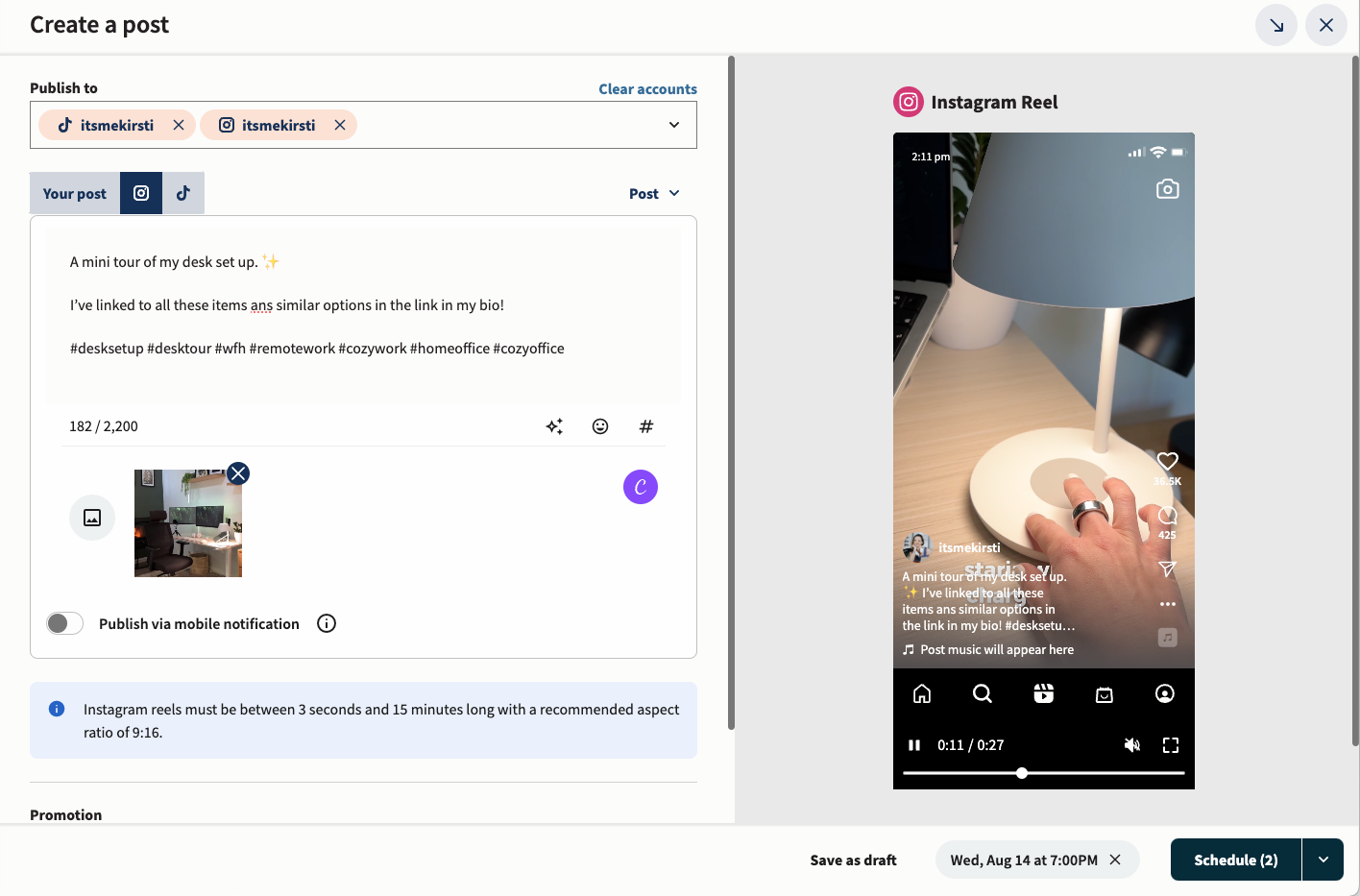
Hashtag Management: Buffer does not embed hashtag recommendations directly into its composer but offers a free, external Instagram hashtag generator. Inside the app, it provides a hashtag manager for saving and organizing groups of hashtags, streamlining their inclusion in posts. Hootsuite, conversely, features hashtag recommendations built directly into its composer, offering real-time suggestions.
Dedicated Content Planning Spaces:
- Buffer’s Create Space acts as a centralized ideas hub, allowing users to store post concepts, text snippets, and media. It supports tags and a Kanban board view for organization, and integrates templates and the AI Assistant to quickly transform ideas into drafts.
- Hootsuite’s planning features are more AI-centric. OwlyGPT functions as a chatbot, providing personalized suggestions for campaigns, posts, video scripts, or entire drafting schedules based on connected brands. While there isn’t a dedicated "ideas hub" like Buffer’s, users can save posts as drafts as a workaround.
Engagement and Social Listening Capabilities
Effective social media management extends beyond scheduling; it encompasses active engagement with the audience and monitoring brand mentions. Here, the tools offer distinct approaches that cater to different scales of interaction.
Buffer’s Community-Focused Engagement:
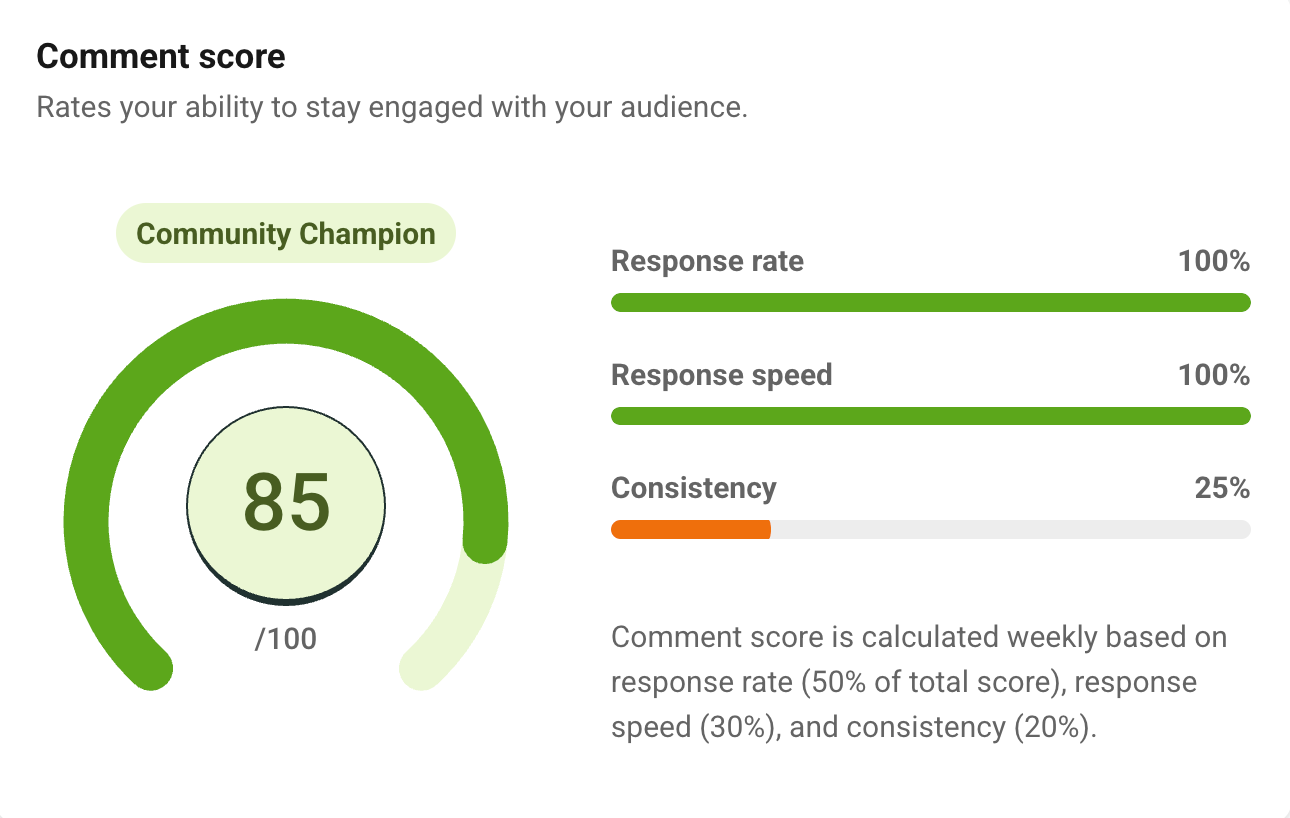
Buffer’s "Community" feature is designed to foster genuine audience connections. It centralizes conversations, allowing users to respond to comments and messages directly within the platform. The AI Assistant can offer suggestions for replies, aiding in maintaining conversation flow. For recurring questions, users can save templated responses. A unique aspect is the "comment score" for each channel, providing a metric for response speed and consistency, helping users identify areas for improved engagement. The Community tool also leverages AI to analyze audience responses, offering insights and suggesting new post ideas or ways to sustain interaction.
Hootsuite’s Advanced Inbox and Social Listening:
Hootsuite’s "Inbox 2.0" functions as a robust conversation management system, akin to a customer support dashboard. It aggregates comments and direct messages from connected platforms into a unified view, allowing teams to respond efficiently. Key features include the ability to assign messages to team members, route conversations to appropriate departments, and set up automated responses. Inbox 2.0 also includes mini-CRM functionalities, allowing users to update conversations with contact details like email addresses and phone numbers. However, advanced features such as automated routing rules and detailed conversation tagging are typically exclusive to Hootsuite’s enterprise-tier plans.
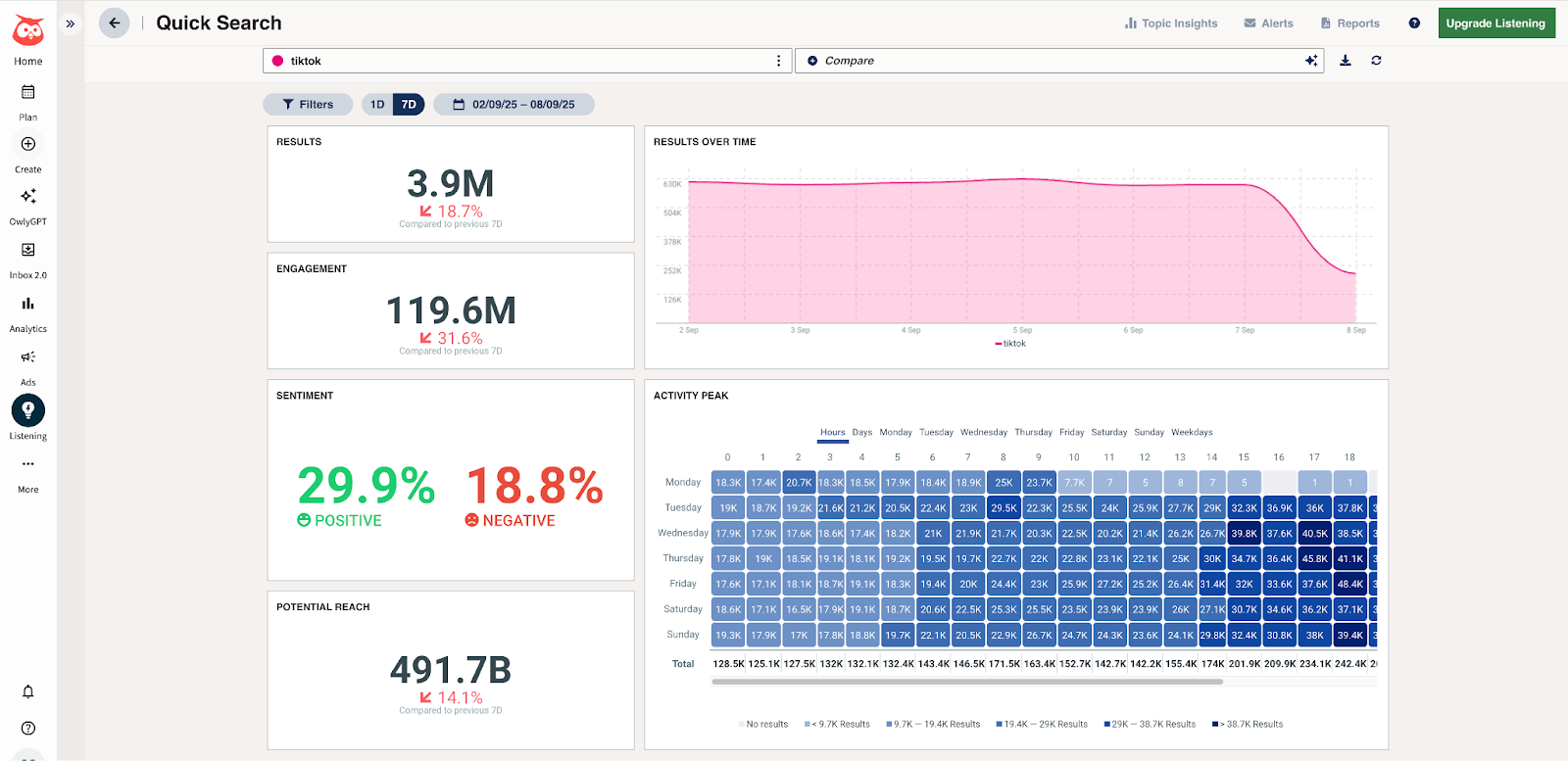
A significant advantage for Hootsuite is its dedicated social listening tool. This feature allows users to track mentions of their company or brand, monitor industry trends, and gauge sentiment. While "basic" social listening features are available on some paid plans, full access to its comprehensive capabilities (e.g., in-depth sentiment analysis, competitive tracking) is reserved for the price-on-request Enterprise plan. Buffer currently does not offer a dedicated social listening tool. This makes Hootsuite a stronger choice for organizations requiring extensive brand monitoring, crisis management, and competitive intelligence.
Analytics, Insights, and Reporting
Understanding content performance is paramount for refining social media strategy. Both platforms provide analytics, but their depth and actionable insights differ based on their target users.
Buffer’s Actionable Analytics:
Buffer Analytics offers an intuitive and easy-to-interpret overview of post performance across all supported social media channels. On paid plans, it provides in-depth metrics for Facebook Pages, Instagram Business and Creator accounts, X/Twitter, and LinkedIn Pages. Buffer excels in not just presenting data but also providing actionable recommendations through its "Answers" tab. This feature analyzes performance data and offers specific suggestions for improving content strategy, audience engagement, and overall social media performance. This "interpretive" layer is highly beneficial for creators and small businesses who may lack dedicated data analysts, allowing them to quickly grasp what’s working and how to optimize. Users can also easily create custom social media reports by selecting relevant metrics.
Hootsuite’s Comprehensive Enterprise Analytics:
Hootsuite provides the core analytics found in Buffer, such as post performance tracking, audience growth metrics, and recommended publishing times. However, its analytics suite extends significantly for larger teams. Hootsuite offers tools to track the performance of paid ad campaigns across Facebook, Instagram, LinkedIn, and X/Twitter – a feature currently absent in Buffer. Furthermore, Hootsuite includes industry benchmarking, allowing businesses to compare their performance against sector averages, and competitive benchmarking, which enables tracking the performance of up to five competitors on Standard plans and up to 20 on Advanced plans. These advanced analytical capabilities are crucial for large enterprises that need to justify social media spend, report on market positioning, and conduct detailed competitive analysis. The complexity and depth of Hootsuite’s analytics are tailored for strategic decision-making at scale.
Team Collaboration Features
For any organization with multiple individuals contributing to social media, effective team collaboration features are essential. These include managing access, permissions, and approval workflows.
Buffer’s Streamlined Team Management:
Buffer’s team management is designed for simplicity and efficiency. Its Team plans allow for an unlimited number of users, a significant advantage for growing teams that want to avoid escalating costs based on headcount. Access levels are straightforward:
- Admin: Full control over all social channels, settings, and billing.
- Manager: Can schedule and publish posts, respond to comments, and view analytics.
- Contributor: Can draft posts, which require approval from an Admin or Manager before publishing.
This flexible system allows for clear roles and an efficient approval workflow, making it suitable for small to medium-sized teams where collaboration needs to be fluid and cost-effective.
Hootsuite’s Layered Enterprise Collaboration:
Hootsuite is built from the ground up for large, complex organizational structures. It employs a multi-tiered system: "Organizations" represent the highest level, under which multiple "Teams" can be created, each managing specific "Channels." This intricate structure allows for granular control over who sees and manages what. Within teams, permission levels can be highly customized, defining who can publish directly, who requires approval, and who has access only to the inbox. Hootsuite also features a "Content Library" specifically for saving templates and media files, ensuring brand consistency across diverse teams. While incredibly powerful for managing large, distributed social media marketing departments, Hootsuite’s pricing model, which scales with the number of users, means that these advanced collaboration features come at a premium, especially for teams exceeding the five-user limit on standard plans.
Integrations and API
The ability to integrate with other tools in a marketing tech stack can significantly enhance efficiency and workflow.
Buffer’s Focused Integrations and Flexible API:
Buffer offers integrations with essential content creation tools like Canva, Google Drive, Dropbox, and Unsplash. It also connects with Shopify for e-commerce management, which is a niche but valuable integration for online businesses. Buffer’s public API is available on all plans, including the free one, enabling users to build custom automations and connect Buffer with other tools in their ecosystem, fostering flexibility for those with development capabilities or specific workflow needs.
Hootsuite’s Extensive Integration Library:
Hootsuite boasts a far more extensive integration library, connecting with over 100 third-party applications. This includes popular tools for CRM (e.g., Salesforce), customer service (e.g., Zendesk), content management, and analytics. This vast array of integrations makes Hootsuite a preferred choice for large organizations that operate with a complex and diverse tech stack, requiring seamless data flow and functionality across multiple platforms. Its API is also geared towards enterprise-level custom integrations, supporting complex workflows for larger organizations.
Conclusion: Choosing the Right Tool for Your Strategy
The choice between Buffer and Hootsuite ultimately hinges on an organization’s size, budget, team structure, and specific social media marketing objectives. There is no universally "better" tool; rather, there is the right tool for the right context.
Choose Buffer if:
- You are a solopreneur, creator, small business, or a lean marketing team with budget constraints.
- You prioritize ease of use, a clean interface, and quick onboarding.
- Your primary need is efficient organic content scheduling, basic engagement, and clear, actionable analytics.
- You benefit from a free plan or a per-channel pricing model that allows for unlimited team members.
- You value integrated AI assistance without usage limits for content generation.
- You require support for niche platforms like Mastodon or Google Business Profile management.
Choose Hootsuite if:
- You are part of a large marketing team, agency, or enterprise-level organization.
- You require advanced features such as social listening, competitive benchmarking, and paid ad management.
- You need granular team permissions, complex approval workflows, and centralized content libraries for brand consistency across multiple departments.
- Your budget allows for a higher per-user cost in exchange for comprehensive functionality and enterprise-grade support.
- You need extensive integrations with a wide range of third-party business tools (CRM, customer service, etc.).
- You manage significant customer service interactions through social media and require a robust, CRM-like inbox.
Both Buffer and Hootsuite are powerful social media management tools that have carved out distinct niches in the market. Buffer’s emphasis on accessibility, simplicity, and cost-effectiveness makes it an ideal partner for individuals and small businesses seeking to establish a consistent and engaging social media presence. Hootsuite’s robust feature set, advanced analytics, and comprehensive collaboration tools solidify its position as a go-to solution for large enterprises navigating the complexities of multi-faceted social media strategies. By carefully evaluating these distinctions against their own operational needs, businesses can make an informed decision that best supports their digital marketing goals.
FAQ about Buffer vs. Hootsuite
Is Buffer actually free?
Yes, Buffer offers a perpetual free plan. This plan allows users to connect up to three social media channels, schedule a limited number of posts, utilize the AI Assistant for content generation, and access basic analytics without any cost or expiration date. For users requiring more channels or advanced features like engagement tools and in-depth analytics, paid plans are available starting at approximately $6 per month per channel (when billed annually).
Does Hootsuite have a free plan?
No, Hootsuite does not currently offer a free plan. While it provides a 30-day free trial for its Standard and Advanced paid plans, continued use of the platform after the trial period requires a paid subscription.
Is Buffer cheaper than Hootsuite?
Generally, yes. Buffer’s paid plans are structured on a per-social channel basis, starting around $5-6 per month per channel (billed annually), and its Team plan allows for unlimited users. Hootsuite’s paid plans, however, start at a significantly higher price point, often around $99 per user per month (billed annually), and costs escalate with each additional user. This makes Buffer a more affordable option, particularly for individual creators, solopreneurs, and small businesses, especially given its free plan.
Why do people use Buffer instead of Hootsuite?
Users often choose Buffer for its user-friendly interface, ease of setup, and cost-effectiveness. It provides core social media management features such as scheduling, analytics, content planning (Create Space), and unlimited AI assistance without the complexity or higher price tag typically associated with enterprise-focused platforms. Its unlimited user capacity on Team plans and its forever-free option make it highly appealing to creators, small businesses, and lean marketing teams who prioritize simplicity and value.
Do Buffer and Hootsuite integrate with other tools?
Both platforms support third-party integrations, though the extent of their libraries differs. Buffer integrates with essential content creation tools like Canva, Google Drive, Dropbox, and Unsplash, and offers a public API for custom automations. Hootsuite boasts a more extensive integration library, connecting with over 100 applications, including major CRM (e.g., Salesforce) and customer service platforms (e.g., Zendesk), making it better suited for organizations with complex tech stacks and broad integration requirements.