
In the modern digital publishing economy, the traditional model of writing a weekly newsletter, hitting the "publish" button, and hoping for the best is no longer sufficient to sustain audience growth. For Kevin Indig, author of the widely read Growth Memo, content creation has evolved into a sophisticated, data-driven operation. Reaching more than 29,000 founders, in-house marketing leads, and executives each week, Indig’s publication relies heavily on a systematic approach to repurposing long-form research, leveraging micro-blogging platforms, and integrating cutting-edge artificial intelligence to automate distribution.
Indig brings a decade of high-level operational experience from tech heavyweights including Shopify, G2, and Atlassian. Today, as an independent growth advisor, he consults for major industry players such as Meta, Airbnb, and Reddit. Operating at this elite intersection of corporate strategy and technical SEO, Indig immerses himself in deep data analysis daily. His findings frequently challenge conventional wisdom regarding how search engines and artificial intelligence are fundamentally altering the discovery and consumption of digital content.
However, producing original, highly technical research is only a fraction of the equation. According to Indig, the fundamental bottleneck for modern creators is not ideation or writing, but distribution. Without a repeatable, automated framework, even the most thoroughly researched publication risks vanishing into the digital noise mere hours after launch.
The Challenge of Content Longevity in Digital Publishing
The lifecycle of a digital newsletter article has historically presented a steep efficiency challenge for independent creators. An author may invest upward of forty hours conducting proprietary research, analyzing market trends, drafting copy, and formatting charts. Once published, the piece typically experiences a brief surge of reader engagement spanning twenty-four to forty-eight hours before disappearing into chronological archives.

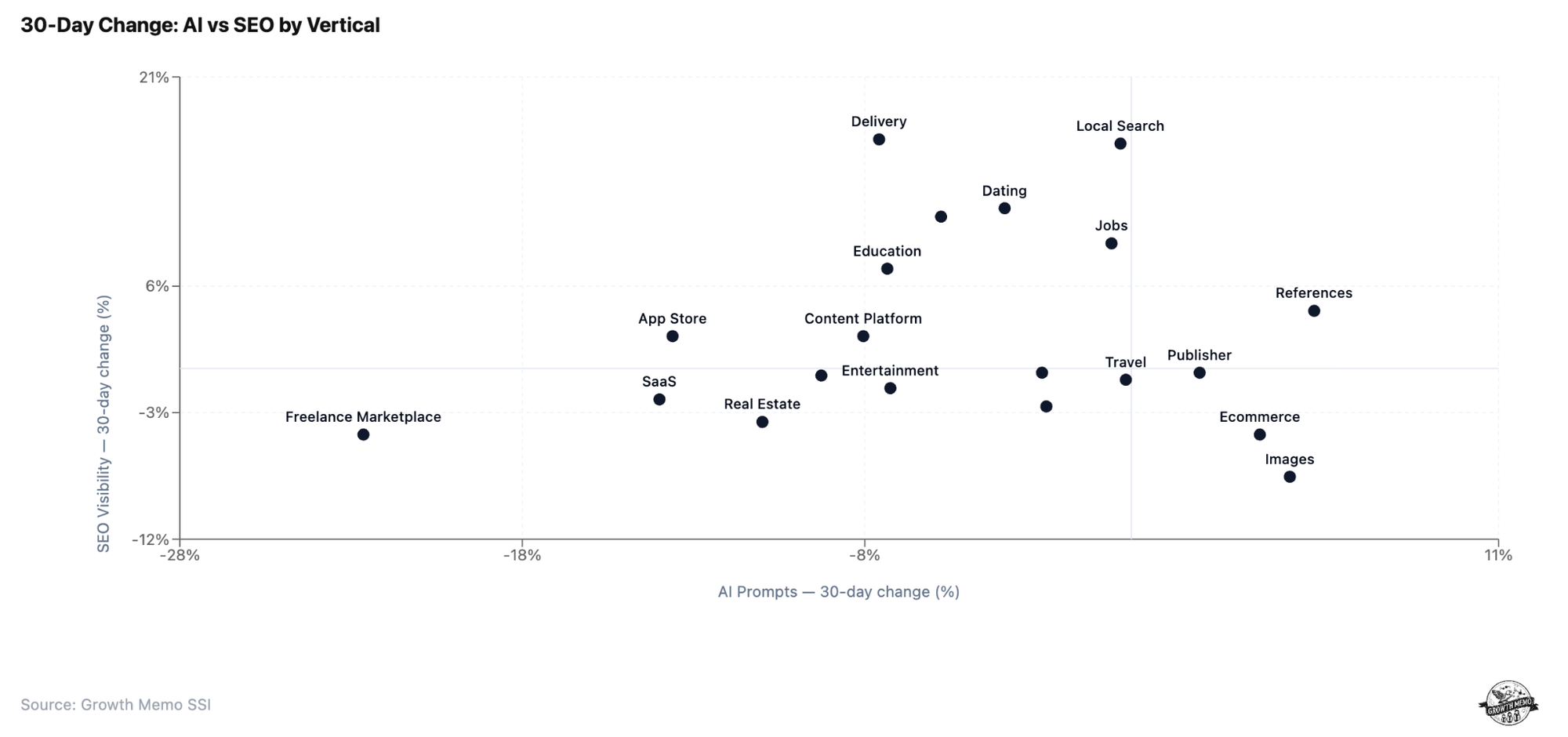
To combat this diminishing return on time invested, Indig treats each edition of the Growth Memo not as a single, isolated post, but as a modular week-long content campaign. This strategy mirrors enterprise-level content repurposing frameworks, translating them down to the individual creator economy. Rather than letting complex insights sit dormant behind a paywall or email gate, Indig and his team dissect each memo into granular components. A single newsletter yields multiple distinct assets: key data visualizations, standalone statistical findings, and provocative industry questions designed to spark debate across professional networks.
This modular approach ensures that the labor-intensive core research continues to generate visibility, drive inbound traffic, and convert prospective subscribers days after the initial release. Yet, executing this multi-channel strategy manually while managing a demanding consulting schedule for global tech giants requires strict operational discipline and advanced tooling.
Prototyping Ideas via Substack Notes
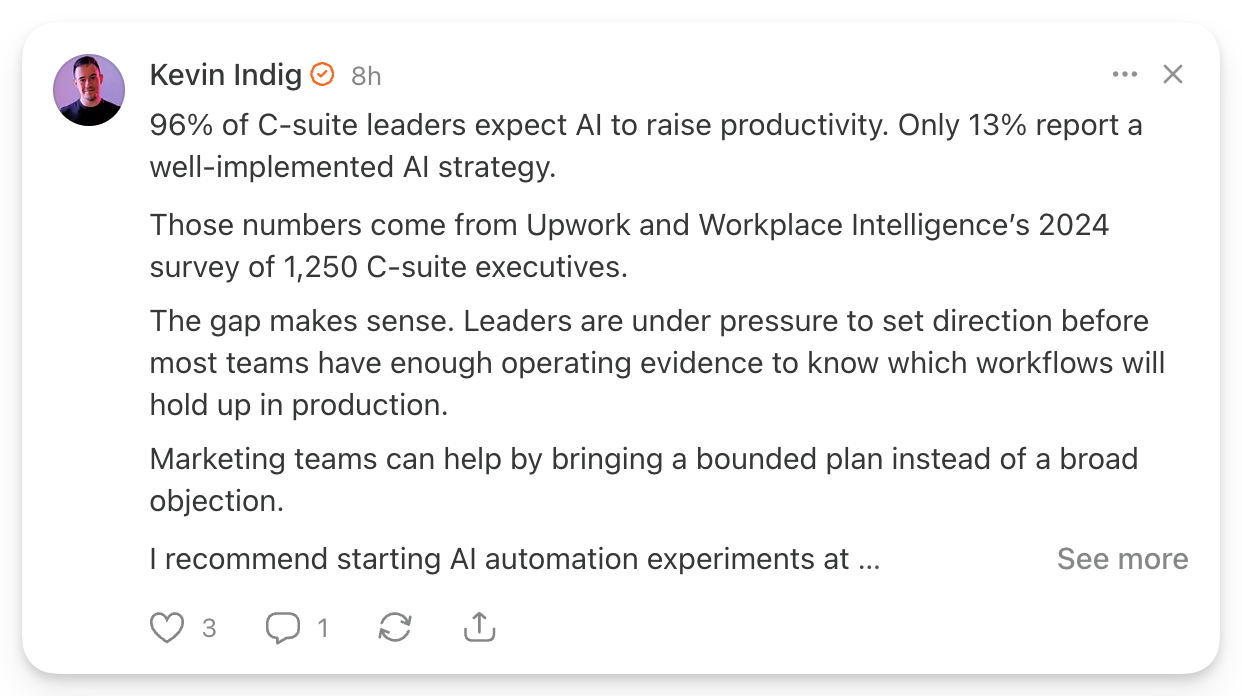
Before committing an entire week of specialized research to a single overarching theme, Indig utilizes Substack Notes as a real-time validation sandbox. Substack Notes functions as a micro-blogging environment where creators can publish short-form thoughts, preliminary charts, video snippets, and conceptual teasers ahead of formal publication.
For Indig, this low-friction medium serves as an empirical testing ground. While drafting a comprehensive Growth Memo requires days of focused data synthesis, crafting a Note takes only minutes. By posting early-stage hypotheses, emerging client insights, or intriguing data anomalies to Notes, Indig can gauge audience reception instantly. Topics that elicit high engagement, robust comment threads, and widespread sharing are rapidly prioritized for full-length newsletter development.
This workflow mitigates the risk of spending days producing content that fails to resonate with the target demographic. By treating audience feedback as a predictive indicator of demand, Indig ensures that every major edition of the Growth Memo addresses topics with pre-validated commercial and intellectual interest.
Streamlining Operations Through Automated Distribution
Maintaining a consistent publishing cadence across multiple channels while juggling a heavy travel itinerary and continuous client commitments necessitates robust workflow automation. Indig relies on Buffer, a prominent social media management platform, to plan, coordinate, and automatically execute his promotional schedule.
Because Indig is frequently out of the office, traveling for advisory engagements or engaged in back-to-back client consultations, real-time manual posting is impractical. Buffer allows Indig and his operational team to batch-prep distribution materials in advance. With the recent integration of Substack Notes directly into Buffer’s channel ecosystem, creators can now schedule short-form updates alongside cross-posts to platforms like X (formerly Twitter), LinkedIn, Threads, and Bluesky from a single centralized dashboard.
According to internal estimates provided by Indig, this systematic batching and automated scheduling saves him between two and three hours of operational labor every week. More importantly, it removes the cognitive friction of remembering to promote content, guaranteeing that every essay receives optimal visibility regardless of the author’s physical location or schedule density.
Leveraging Artificial Intelligence and Model Context Protocol
A defining element of Indig’s modern publishing workflow is the incorporation of advanced artificial intelligence, specifically through Buffer’s implementation of the Model Context Protocol (MCP). MCP allows external AI models and coding assistants to connect directly with a user’s social media and publishing data infrastructure.
Indig employs Codex, OpenAI’s advanced coding and reasoning assistant, pointing the tool directly at his historical publishing data within Buffer. By analyzing past post-performance metrics, engagement rates, and content structures, Codex assists Indig in identifying which thematic angles resonated most strongly with readers. Furthermore, the AI acts as an interactive brainstorming partner, analyzing historical trends to suggest future writing topics and optimal phrasing for upcoming distribution campaigns.
This synthesis of historical performance data and large language model capabilities represents a significant maturation in how independent creators approach content strategy. By transforming raw analytics into actionable, AI-driven editorial prompts, creators can bypass writer’s block and align their future output precisely with proven audience demand.
Strategic Implications for the Creator Economy
Indig’s multi-layered workflow offers a blueprint for independent writers, newsletter operators, and B2B marketers navigating an increasingly crowded digital landscape. As audience attention fragments across numerous social networks and aggregators, the traditional approach of organic, manual distribution is no longer viable for scaling a modern media business.
Industry analysts note that successful creators are increasingly adopting a "software-defined" operational model. By combining niche expertise, rapid low-friction ideation (via platforms like Substack Notes), automated scheduling infrastructure (via tools like Buffer), and predictive analytics (via AI integrations), solo operators can achieve output volumes and audience reach traditionally reserved for mid-sized media companies.
For new and established creators alike, the core takeaway is clear: success in modern publishing requires viewing content not as a finite piece of writing, but as a scalable, modular asset class. Whether scaling to 30,000 subscribers or launching a brand-new publication, establishing a predictable routine supported by automation and data-driven insights remains the defining factor separating stagnant projects from sustainable growth businesses.