The mechanics of how language propagates through human populations have long fascinated Dr. Danny Hieber, a professional linguist whose academic pursuits focus heavily on documenting and revitalizing endangered Indigenous languages. In his daily research, Hieber studies a fundamental sociological and cognitive phenomenon: how a newly coined term or lexical shift originates within an isolated micro-community, gains momentum through iterative repetition, and eventually embeds itself so deeply into the cultural lexicon that its historical origin becomes entirely obscured. Ironically, Hieber has engineered a digital distribution model for his own enterprise that mirrors this very linguistic process. Through a systematic repurposing framework, he transforms a single weekly newsletter into a sprawling web of hundreds of thousands of micro-touchpoints distributed globally across the digital ecosystem.
Hieber is the creator and principal author behind Linguistic Discovery, a prominent weekly publication hosted on Substack that explores the empirical science, historical evolution, and vast global diversity of human languages. While the core publication operates on a traditional long-form newsletter schedule, its author’s digital footprint spans a diverse array of modern communication channels. Today, Hieber maintains an aggregate following exceeding one million users distributed across Substack Notes, Meta’s Threads and Facebook, X (formerly Twitter), Instagram, TikTok, and YouTube. His specific demographic penetration is particularly notable in visual-first environments, boasting roughly 320,000 followers on Instagram and an additional 217,000 active subscribers on TikTok. Balancing this extensive cross-platform media enterprise alongside demanding, full-time linguistic fieldwork requires an advanced operational architecture—one that relies heavily on automation and centralized scheduling infrastructure.
The Content Multiplication Framework
At the heart of Hieber’s publishing strategy is an exhaustive repurposing workflow designed to maximize the return on investment for every hour spent writing. Rather than treating each social media platform as an independent creative burden requiring bespoke content generation from scratch, Hieber approaches his weekly newsletter as a comprehensive master archive. Once a fresh edition of Linguistic Discovery is published, he initiates an intensive extraction process.
Every standalone data point, graphic asset, historical example, direct quotation, and complex linguistic concept embedded in the long-form text is methodically harvested. These raw components are then re-engineered to fit the native constraints of various digital formats. Theoretical concepts transform into concise microposts intended for text-driven environments like Substack Notes, Threads, X, and Facebook. Visually compelling linguistic comparisons are reformatted into swipeable carousel graphics for Instagram. Meanwhile, deeper analytical explanations or fascinating lexical anomalies are scripted, filmed, and edited into short-form vertical videos optimized for TikTok, Instagram Reels, and YouTube Shorts.
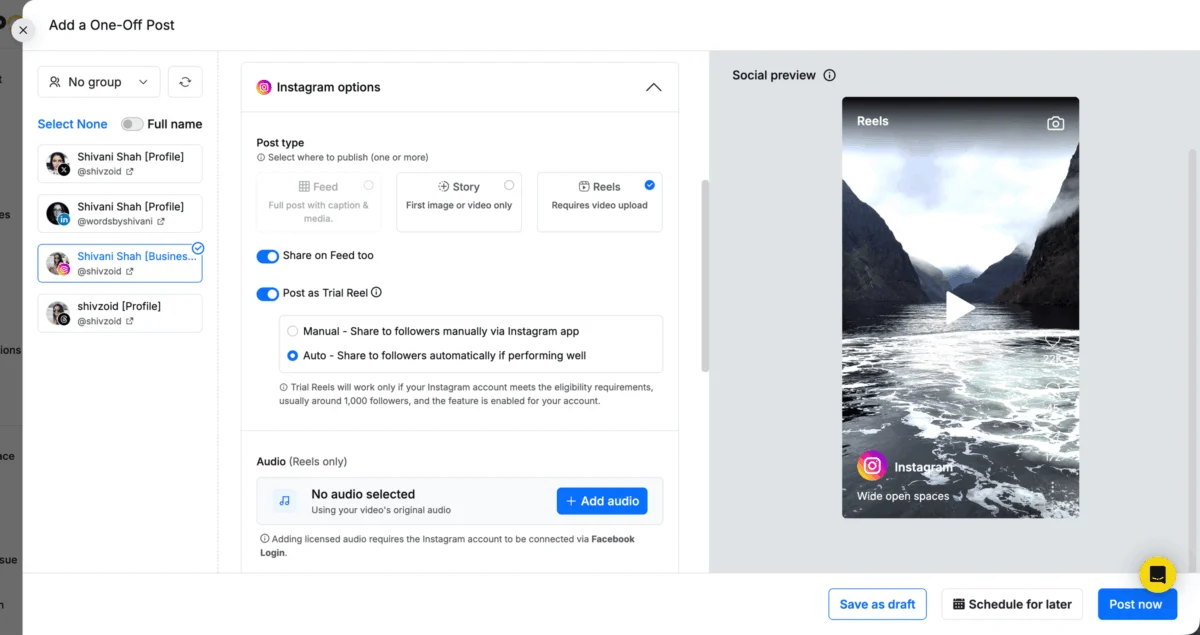
Critically, every single derivative asset is engineered with a built-in conversion mechanism. Regardless of whether a user encounters Hieber’s work via a brief textual note or a 30-second vertical video, the content invariably concludes with a targeted call to action. Viewers are directed back to the specific source document via a direct hyperlink: "If you want to learn more about [topic], check out this newsletter issue." Once this massive batch of dozens of distinct assets is generated and aligned with corresponding links, Hieber uploads the entire repository into Buffer, scheduling the content to deploy automatically in a staggered sequence across the subsequent weeks.
Buffer as a Centralized Distribution Hub
For a solo creator managing academic commitments and digital media expansion simultaneously, manual execution across seven distinct platforms represents an insurmountable operational barrier. Hieber mitigates this challenge by treating Buffer not merely as a scheduling utility, but as the central command center for his entire media ecosystem.
"I think of Buffer like my content distribution center: all my content gets scheduled there, and then Buffer sends it to all my platforms, or notifies me to post," Hieber explains.
In digital media operations, platform APIs frequently impose strict technical limitations preventing third-party applications from executing direct, fully automated publishing for certain content types or native features. When encountering these platform-specific bottlenecks, Buffer’s workflow architecture bridges the gap. The application organizes the necessary assets—including pre-formatted text captions, high-resolution graphic files, direct links, and posting instructions—and dispatches a manual notification to the creator at the designated publishing timestamp. This turns a potentially disruptive, multi-step publishing chore into a frictionless, seconds-long confirmation process.
Furthermore, Hieber leverages centralized engagement tools to streamline audience interaction. By utilizing Buffer’s consolidated community management features, he can monitor and reply to incoming comments across disparate social networks from a single unified interface. This centralized approach drastically reduces the cognitive load associated with digital publishing, allowing Hieber to circumvent the traditional platforms entirely for day-to-day operations. By avoiding direct navigation to the native apps, he successfully shields himself from the architectural distractions, algorithmic rabbit holes, and chronic doomscrolling engineered into modern social media applications.
Mental Health, Consistency, and Creative Freedom
The structural shift toward automated centralization has yielded profound secondary benefits, transforming Hieber’s relationship with digital creation. For many independent publishers and digital creators, the relentless demand for algorithmic visibility creates an environment ripe for psychological fatigue and chronic burnout. Creators frequently feel legally or psychologically chained to their publishing calendars, compelled to check platform analytics obsessively and generate daily content under high-stress conditions.
Hieber reports that adopting a centralized scheduling workflow fundamentally reversed these symptoms of digital exhaustion. By maintaining a robust publishing queue stocked several weeks in advance, he has cultivated structural insulation against the unpredictability of daily life.
"It might seem strange to say, but Buffer has done wonders for my mental health. It frees me from the stress of feeling chained to my content schedule, and the need to check in on my content every day," Hieber notes. "I no longer have to worry about missing a day or two because I trust that Buffer will send the content out for me. It’s greatly reduced my feeling of burnout."
From a growth perspective, this reliable cadence directly satisfies the algorithmic preferences of major digital platforms, which heavily reward consistent publishing behaviors. Simultaneously, it fosters sustained psychological trust with an audience that learns to anticipate regular, high-value insights. For fellow writers and independent creators hesitant to adopt automated management tools, Hieber offers a perspective centered on creative liberty rather than mere corporate efficiency. He argues that automated queuing systems liberate creators from the logistical friction of posting, enabling them to capture ephemeral creative ideas as they strike, drop them safely into a holding queue, and immediately return to deep analytical work without logistical anxiety.
Strategic Evolution on Substack Notes
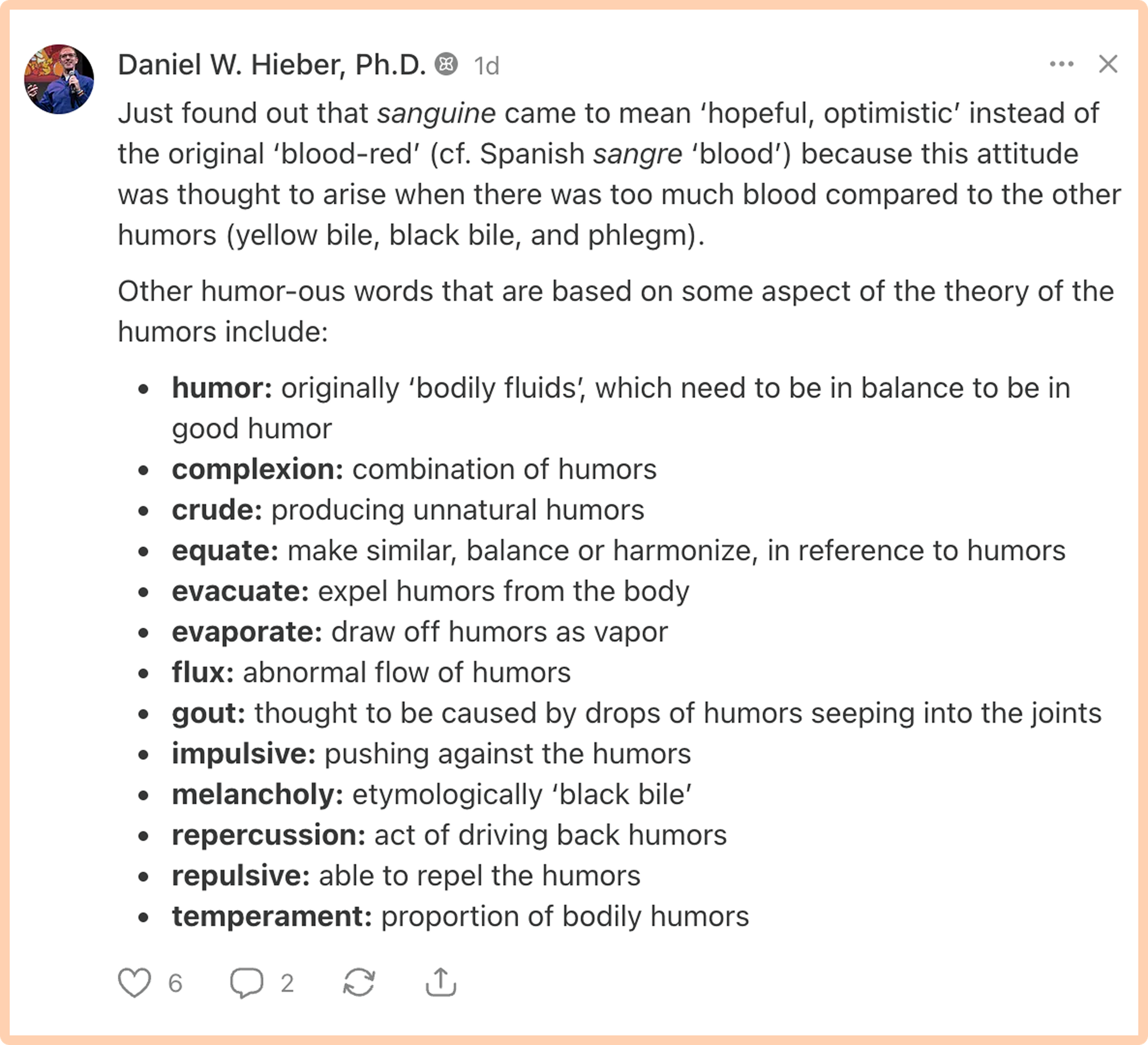
As Hieber’s audience has scaled, his editorial strategy has matured in tandem, particularly regarding his utilization of Substack Notes. During the initial phases of expanding his digital footprint, Hieber’s micro-blogging strategy relied heavily on aggregated news, current events, and the sharing of newly published academic research within the broader linguistic community. Over time, however, internal metrics and qualitative audience feedback prompted a strategic pivot toward proprietary intellectual property and personal synthesis.
"I realized that most of my Substack readers follow me not so much for the latest news and research, but for what I have to say about it," Hieber observes. "My strength as a writer, and the reason people value my newsletter, is my ability to explain and synthesize, not because I’m aggregating links."
By shifting his Notes strategy away from external aggregation and toward original editorial commentary, Hieber transformed his micro-posts into potent top-of-funnel conversion tools. Because Substack Notes can now be seamlessly integrated into Buffer’s multi-channel queue alongside cross-platform assets destined for X, LinkedIn, Threads, and Bluesky, Hieber maintains total editorial alignment. Every short-form observation, theoretical critique, and structural breakdown flows through the exact same distribution pipeline, driving interested readers directly toward free subscriptions and paid conversions on his primary newsletter.
The Broader Implications for Digital Publishing and Academia
Hieber’s operational model offers a compelling case study for the modernization of academic communication. Historically, academic research has suffered from a profound distribution gap: highly rigorous, transformative discoveries regarding human culture and historical linguistics frequently remain trapped behind paywalled academic journals or dense monographs, inaccessible to the general public. By mastering the mechanics of short-form digital distribution, Hieber bridges this institutional divide, translating complex phonetic, syntactic, and historical analyses into digestible, highly engaging digital media formats.
The integration of advanced scheduling technology within this framework highlights an evolving truth in modern content economics: creative output and administrative logistics must be strictly decoupled. For independent subject-matter experts, educators, and researchers seeking to build sustainable public audiences, relying on sheer willpower and real-time manual posting is an unsustainable strategy.
Looking ahead, Hieber’s operational capacity is poised to face new demands. The linguist is currently in the foundational developmental stages of writing a comprehensive trade book on popular linguistics. As this longer-term literary project advances over the coming year, Hieber plans to systematically integrate book-related developmental content, behind-the-scenes research anecdotes, and thematic excerpts into his existing distribution pipeline. By routing these future assets through his established Buffer infrastructure, he demonstrates how independent writers can successfully scale complex, multi-format media enterprises while preserving the deep focus required for rigorous, specialized intellectual labor.