
 Indra Kusuma
The world of contemporary design is currently witnessing a profound dialogue between global heritage and modern innovation, exemplified by the recently expanded "NKYINKYIM A CASA" collection, a collaborative endeavor between lifestyle entrepreneur Armando Cabral and the iconic Swiss furniture manufacturer USM. This significant offering reinterprets centuries-old Portuguese weaving traditions from the Alentejo region, integrating them into USM’s revered Haller System through a series of meticulously crafted furnishings. The collection, which includes a daybed, love chair, bookshelf, side table, and valet wardrobe, transcends mere utility, serving as a powerful testament to the value of cross-cultural exchange and the inherent capacity of furniture to embody both personal narrative and collective cultural expression. For Cabral, a figure whose journey spans the apex of international modeling to the helm of a burgeoning lifestyle brand, this fresh addition to the Haller System is a deeply personal reflection of his own multinational upbringing and a deliberate effort to imbue modular design with soul and story.
The Genesis of a Cross-Cultural Vision: Armando Cabral’s Journey
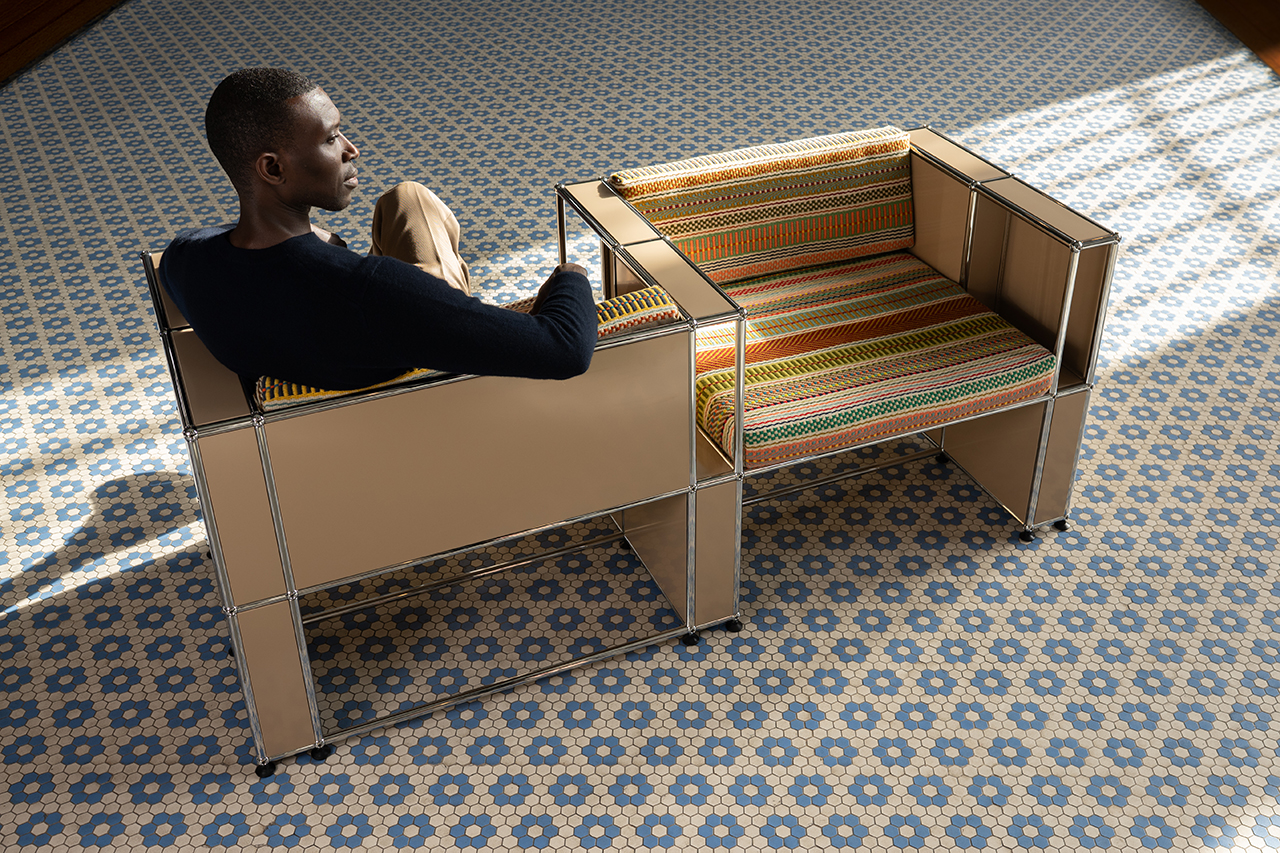
Armando Cabral’s life trajectory provides the foundational narrative for "NKYINKYIM A CASA." Born in Guinea-Bissau, raised in Portugal, educated in London, and now firmly established in New York, Cabral’s personal reference points are as diverse as they are interconnected. This multifaceted background has been a driving force behind his eponymous brand, initially celebrated for its sophisticated footwear and accessories, and now extending its aesthetic into the realm of interior design. His transition from a top-ranked model, gracing runways and campaigns for some of the world’s most prestigious fashion houses, to a discerning lifestyle entrepreneur, underscores a deliberate pivot towards creating enduring products that resonate with a global, culturally aware consumer. His brand philosophy consistently emphasizes quality, timelessness, and a subtle fusion of African and European influences, themes that are profoundly articulated in this latest collaboration.
The nomenclature of the eight-piece collection itself is a direct reflection of this cross-cultural philosophy. "NKYINKYIM," the initial word, is derived from an Adinkra symbol, a visual language deeply rooted in the traditions of the Akan people of Ghana and Côte d’Ivoire in West Africa. This particular symbol, often translated as "twistings" or "zigzag," represents the intricate and often challenging paths of progress, adaptability, and the ability to overcome adversity, both individually and collectively. It speaks to life’s journey, its unexpected turns, and the dynamic interplay of experiences that shape identity. Paired with "A Casa," the Portuguese phrase meaning "at home," the collection’s title, "NKYINKYIM A CASA," beautifully encapsulates the essence of navigating a complex world while ultimately finding a sense of belonging and cultural synthesis within one’s personal space. This thoughtful naming not only grounds the collection in profound cultural references but also invites users to reflect on their own journeys and the meaning of ‘home.’
USM Haller System: A Canvas of Modernist Purity
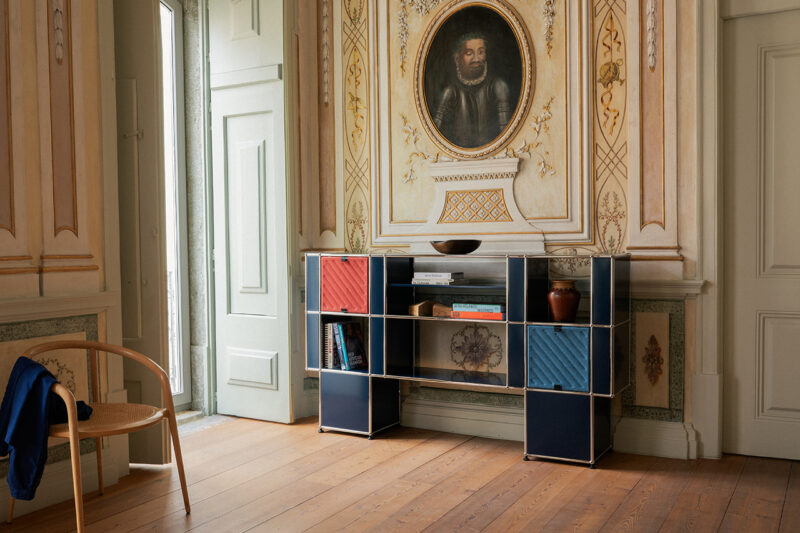
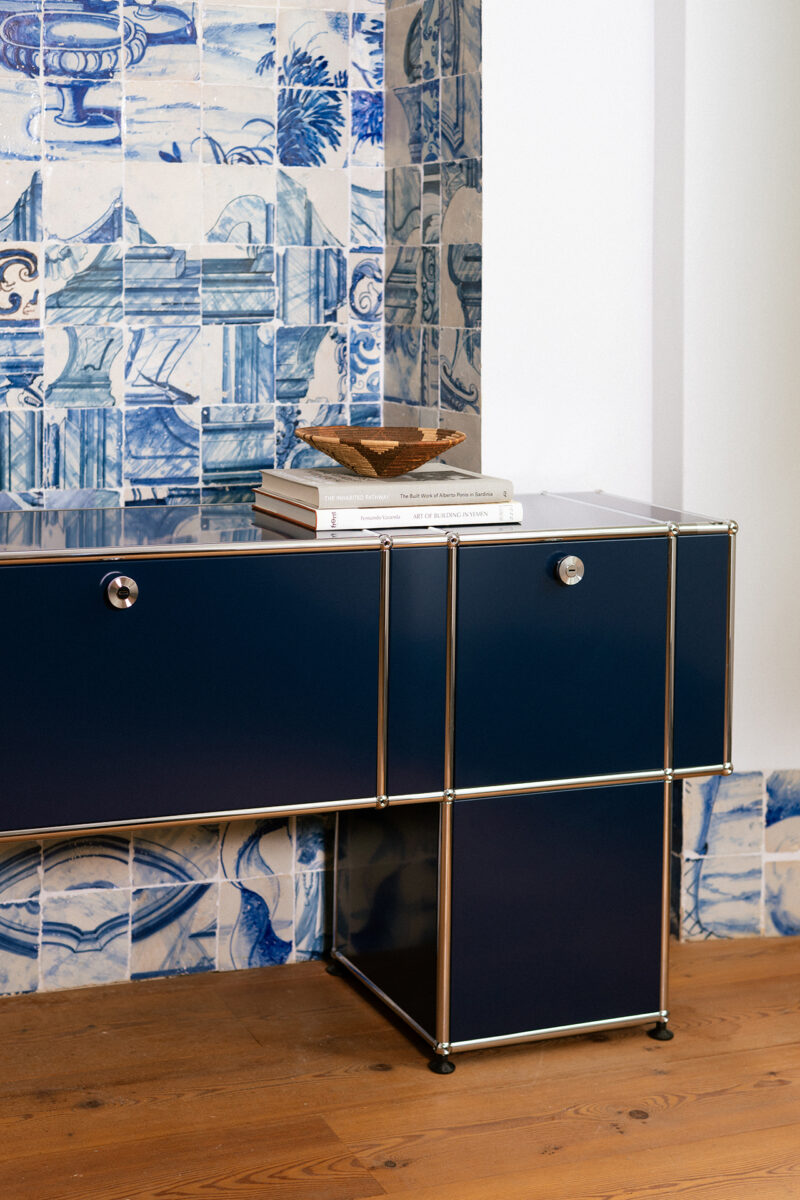
The choice of USM’s iconic Haller System as the structural backbone for this collection is strategically significant. Conceived in 1963 by Swiss architect Fritz Haller and Paul Schärer, the Haller System revolutionized office and residential furniture with its modular, customizable design. Its aesthetic, characterized by chrome-plated steel tubes and connector balls forming an open framework, complemented by steel insert panels, reflects a hyper-rationalist mindset. This philosophy, born out of post-World War I modernism, prioritizes functionality, efficiency, and adaptability, often perceived as neutral or universal in its design language. Indeed, the pared-back, form-follows-function ethos embodied by this modular solution is emphatically Swiss: precise, hyper-efficient, and timelessly elegant.
Over the decades, the Haller System has achieved cult status in the design world, celebrated for its versatility and enduring appeal. It has been a favored choice for architects, designers, and discerning consumers alike, gracing everything from corporate boardrooms to minimalist homes. Despite its seemingly neutral and almost industrial aesthetic, the Haller System possesses a profound sophistication, serving as an ideal canvas for various interpretations and collaborations. USM has, in recent years, actively engaged in partnerships that push the boundaries of its modular system, allowing designers to inject new colors, textures, and cultural narratives while maintaining the integrity of its core design principles. This approach has allowed the Haller System to remain perpetually relevant, adapting to evolving design sensibilities without compromising its foundational identity.
The Fusion: Reinterpreting Tradition within Modernity
The collaboration with Armando Cabral represents a particularly compelling instance of this evolutionary strategy. Cabral’s vision was to infuse the Haller System’s structural purity with the vibrant heritage of Portuguese Alentejo weaving. This ancient craft, primarily concentrated in the Alentejo region of southern Portugal, is renowned for its hand-loomed textiles, typically made from wool, featuring intricate geometric patterns and a rich, earthy color palette. These weaving traditions are not merely decorative; they are deeply intertwined with the region’s agricultural history, community life, and a sense of enduring craftsmanship passed down through generations.
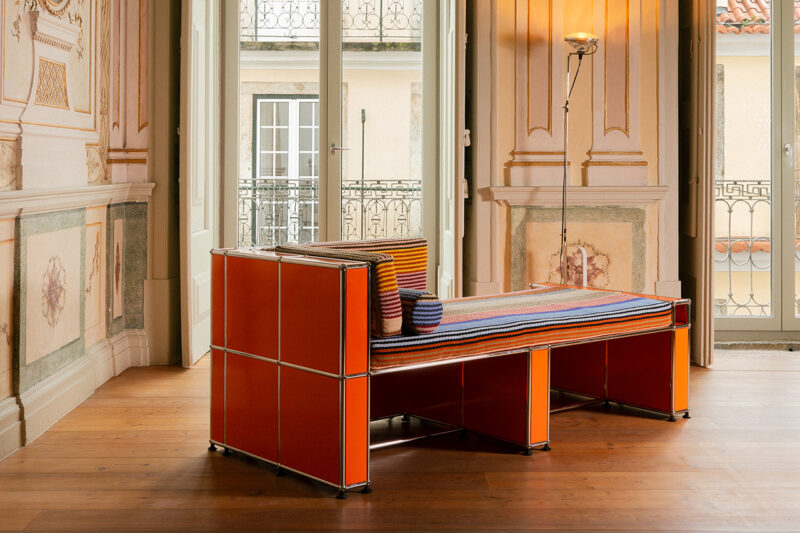
Cabral’s reinterpretation for "NKYINKYIM A CASA" involved abstracting these traditional patterns, translating their multi-directional stripes and geometric motifs into modern fabrics for cushions and upholstery. This process required a delicate balance: honoring the essence of the Alentejo tradition while adapting it to a contemporary context and the sleek lines of the USM system. The result is a collection where the cushions, wrapped in these elaborate fabrics, become focal points, breathing warmth, texture, and cultural depth into the otherwise minimalist framework of the USM pieces.
Cabral articulated his approach, stating, "To me, the modular nature of USM’s designs symbolizes the way each component forms a cohesive, functional structure." This perspective allowed him to work within the inherent confines of the Haller System, experimenting with color palettes and asymmetrical compositions. The challenge was not to overpower the USM aesthetic but to integrate the new elements seamlessly, creating a dialogue rather than a disruption. The success of this approach is evident in how the collection integrates effortlessly with other components of the Haller System, expanding its potential use and function even further. It is, in essence, a subtle provocation for the viewer and user to reconsider the broader capabilities and expressive potential of furniture.
Detailed Elements of the Collection and Their Significance
The "NKYINKYIM A CASA" collection comprises several distinct pieces, each thoughtfully designed to embody the overarching themes of cultural exchange and functional artistry:
- The Uno Bookcase: This piece exemplifies Cabral’s ability to imbue functional storage with artistic intent. Utilizing the Haller System’s characteristic steel tube-and-connector-ball structure, the bookcase takes on an unexpected shape, evoking geometric symbolism. Accented by colored insert panels that echo the collection’s textile palette, it transforms a utilitarian object into a sculptural element, inviting interaction and contemplation.
- The Bassarel Love Chair: A standout piece, the Bassarel Love Chair boldly reprises the age-old tête-à-tête typology. Historically, a tête-à-tête (French for "head-to-head") chair design features two seats arranged so that occupants face each other, often with a shared armrest or backrest that encourages intimate conversation without direct, confrontational eye contact. Cabral’s rendition updates this classic form, placing two chairs side by side but facing opposite directions, facilitating more nuanced and perhaps "gossipy" exchanges. This thoughtful design choice underscores the collection’s focus on human connection and the subtle dynamics of social interaction within a living space.
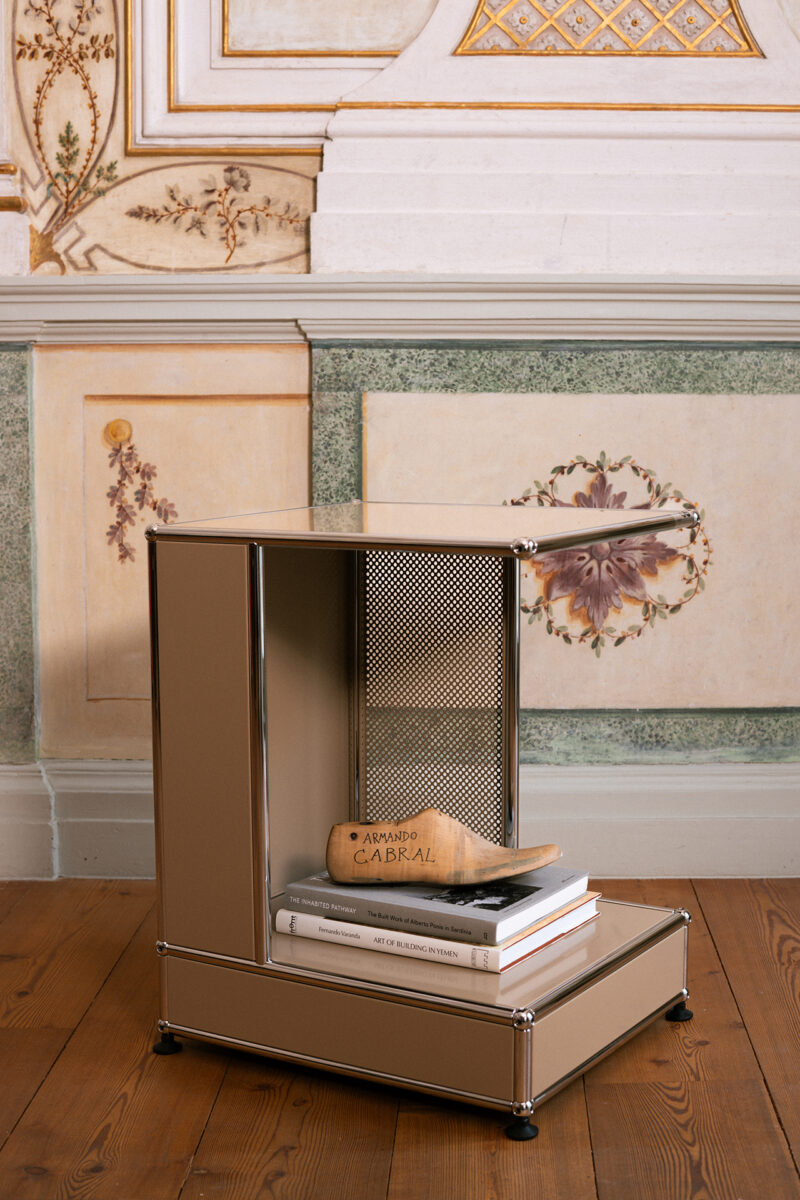
- Daybed, Side Table, and Valet Wardrobe: These additional pieces complete the collection, offering versatility for various domestic environments. The daybed provides a locus for relaxation and reflection, adorned with the signature striped cushions. The side table, minimalist yet impactful, can serve as a display surface for personal artifacts, further emphasizing the theme of cultural expression. The valet wardrobe, a more specific piece, speaks to Cabral’s background in fashion and his understanding of personal grooming and organization, translating this into a refined, functional furniture item.
Throughout the collection, a coherent balance is struck between visual appeal and practical attributes. The playful yet refined fashion of the pieces ensures they are not just objects of design but active participants in creating a culturally rich and comfortable home environment.
Broader Implications and Future Trajectories
The "NKYINKYIM A CASA" collection holds significant implications for both Armando Cabral’s brand and USM, as well as for the wider design industry. For Cabral, it marks a confident expansion into the home goods sector, solidifying his brand as a comprehensive lifestyle purveyor. It showcases his distinctive vision to bridge cultural divides through design, offering a unique proposition in a competitive market. This move could also pave the way for future collaborations and deeper explorations into interior textiles and home accessories under his brand.
For USM, the collaboration reaffirms the Haller System’s unparalleled adaptability and its capacity to evolve beyond its initial modernist strictures. It demonstrates that a system initially conceived for hyper-rational efficiency can become a vibrant vehicle for cultural storytelling and artistic expression. Such partnerships allow USM to reach new audiences, particularly those interested in culturally informed design, and to remain at the forefront of design innovation while honoring its heritage. This strategy aligns with a broader trend in the luxury and design sectors where heritage brands seek to rejuvenate their appeal through creative alliances with contemporary designers who bring fresh perspectives and diverse cultural influences.

The collection also contributes meaningfully to the global design discourse. In an increasingly interconnected world, designers are actively exploring how to integrate diverse cultural narratives into contemporary forms. "NKYINKYIM A CASA" stands as a compelling example of how traditional crafts and ancient symbols can be recontextualized within modern industrial design, creating products that are both aesthetically pleasing and rich in meaning. It champions the idea that home furnishings can be more than mere objects; they can be repositories of memory, expressions of identity, and catalysts for cross-cultural understanding. Through this collaboration, Cabral and USM invite us to view our homes not just as physical spaces, but as evolving reflections of our multifaceted selves and the interconnected world we inhabit. The collection, photographed by Inês Silva Sá, captures this essence, presenting the pieces in ornate, light-filled settings that underscore their ability to integrate into diverse architectural contexts while retaining their unique cultural voice.







