Angie Faith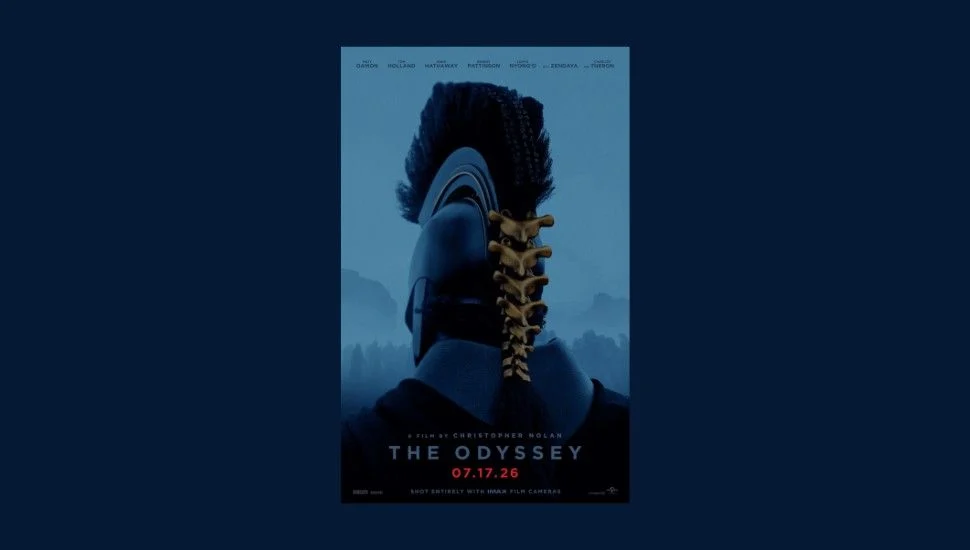
Christopher Nolan’s ambitious cinematic adaptation of Homer’s epic poem, "The Odyssey," has landed in theaters, drawing widespread critical acclaim ahead of its official release tomorrow. Early reviews paint a picture of a visually stunning and thematically rich blockbuster, with many critics hailing it as a monumental achievement in filmmaking. The film, which has been shrouded in secrecy throughout its production, is already generating significant buzz for its scale, visual effects, and Nolan’s signature complex storytelling.
A Grand Vision Unveiled
Industry publications and major newspapers have begun to publish their assessments, with an overwhelming consensus pointing towards a triumphant cinematic experience. Guy Lodge of Variety describes the film as "A genuinely grand, gutsy vision," emphasizing its relentless pace and spectacular set pieces. Lodge notes that "Every few minutes, it seems, it throws at its audience another mighty setpiece that, in almost any other summer studio spectacle, would be a climactic standout." This suggests a film packed with unforgettable moments designed to captivate and thrill audiences on a grand scale. The near three-hour running time, often a point of contention for epic films, appears to be well-utilized, packed with action and spectacle that keeps viewers engaged.
Hillary Busis of Vanity Fair offers a similarly enthusiastic review, highlighting the film’s ability to surprise and resonate. She states, "The craziest thing about The Odyssey is that Nolan’s interpretation absolutely sticks the landing, adding an unexpected dimension to one of our culture’s most told and retold sagas." Busis praises the film’s blend of blockbuster entertainment with intellectual depth, calling it "a character study disguised as a blockbuster." This juxtaposition suggests that Nolan has managed to translate the profound themes of homecoming, identity, and perseverance inherent in Homer’s original work into a compelling modern narrative, appealing to both cinephiles and a broader audience. The "awesome effects" and "bravura set pieces" are clearly present, but it is the mature and thoughtful approach to the narrative that seems to have truly impressed reviewers.
Manohla Dargis of The New York Times delves deeper into Nolan’s directorial style, noting his strategic use of visual grandeur. "Nolan employs beauty strategically, using it to seduce viewers into stories that can seem needlessly byzantine to some – especially by impoverished mainstream industry standards – more the provenance of the art house than the multiplex." This observation implies that Nolan is not shying away from the complexities of the source material, presenting a narrative that challenges viewers while remaining accessible. Dargis further asserts that Nolan "asks us to dream bigger," positioning "The Odyssey" as a film that transcends typical genre fare. She concludes her assessment by calling it "a classic in every sense, a transporting affirmation of the art and a work of pure cinema," a powerful endorsement that elevates the film beyond mere entertainment to a significant artistic statement.
The Long Road to the Screen: A Chronology
The journey of "The Odyssey" to the silver screen has been a long and arduous one, marked by years of development and intense anticipation. While specific production timelines are often closely guarded secrets by Nolan and his production team, the conceptualization and development of such an ambitious project would typically span several years.
- Early Development (Circa 2020-2021): It is likely that Nolan began exploring the possibility of adapting "The Odyssey" during or shortly after the release of his previous acclaimed film, "Tenet." This period would have involved extensive script development, conceptual art, and the initial stages of securing rights and financing. Nolan’s penchant for grand, epic narratives and his interest in complex human journeys make "The Odyssey" a natural fit for his directorial sensibilities.
- Pre-Production and Casting (Circa 2022-2023): Once the script was solidified, pre-production would have commenced, involving the meticulous planning of sets, locations, and visual effects. Casting for such a high-profile project would have been a crucial and likely lengthy process, with Nolan known for his ability to attract top-tier talent. The specific actors portraying Odysseus, Penelope, and the various mythical creatures and gods would have been a subject of intense speculation within the industry.
- Principal Photography (Circa 2023-2024): Filming for a production of this magnitude would have required an extensive shooting schedule, potentially spanning multiple continents to capture diverse landscapes and create immersive environments. Nolan’s commitment to practical effects, combined with cutting-edge CGI, would have been a hallmark of this phase. Reports of large-scale set construction and intricate logistical planning likely characterized this period.
- Post-Production (Circa 2024-2026): The extensive post-production phase, encompassing editing, visual effects, sound design, and scoring, is where the film truly takes shape. Nolan’s collaboration with composer Ludwig Göransson, who has scored his previous films, was a highly anticipated aspect of the production. The intricate layering of sound and visuals that defines Nolan’s work would have been a primary focus during this stage.
- Marketing and Release (2026): The final months leading up to the release would have seen a carefully orchestrated marketing campaign, including trailer releases, press junkets, and early screenings for critics. The film’s premiere and subsequent theatrical release mark the culmination of this multi-year endeavor.
Supporting Data and Industry Context
The cinematic adaptation of classic literature has a long and varied history, with some adaptations achieving monumental success while others have struggled to capture the essence of their source material. Nolan’s "The Odyssey" enters this landscape with the added weight of the director’s established reputation for creating thought-provoking, commercially successful blockbusters that often redefine genre expectations.
Films like Peter Jackson’s "The Lord of the Rings" trilogy demonstrated the immense potential of adapting epic fantasy narratives, achieving critical and commercial triumph and earning billions at the box office. More recently, Denis Villeneuve’s "Dune" has been lauded for its faithful yet innovative adaptation of Frank Herbert’s dense science fiction novel, further validating the appetite for ambitious literary adaptations.
Christopher Nolan’s filmography, which includes titles like "Inception," "The Dark Knight" trilogy, and "Interstellar," consistently performs well at the global box office, with his films often grossing upwards of $800 million worldwide. His ability to blend intellectual depth with high-octane spectacle has cultivated a dedicated fanbase eager for his next cinematic offering. The reported budget for "The Odyssey" is not yet public, but given the scale and scope of Nolan’s previous productions, it is safe to assume it represents a significant investment, likely in the hundreds of millions of dollars. The success of "The Odyssey" will not only be measured by critical reception but also by its box office performance, which will be closely watched by Hollywood studios as a barometer for the viability of large-scale literary adaptations.
Inferred Reactions and Broader Impact
While official statements from actors and producers involved in "The Odyssey" have been limited due to Nolan’s notoriously secretive production methods, the overwhelmingly positive early reviews suggest a high degree of satisfaction among those who have seen the film. The actors involved, likely including a cast of both established stars and emerging talent, would have faced the challenge of embodying iconic characters within Nolan’s distinctive directorial framework. Their performances are likely to be a focal point of discussion as the film enters wider release.
The broader impact of "The Odyssey" on the cinematic landscape is likely to be significant. By tackling such a foundational work of Western literature, Nolan is not only introducing a new generation to Homer’s epic but also potentially revitalizing interest in classical storytelling. His approach, as described by critics, seems to bridge the gap between intellectual cinema and mainstream blockbuster appeal, a feat that few directors can consistently achieve. The film’s success could embolden other studios to invest in more ambitious adaptations of classic literature and mythology, moving beyond established franchises.
Furthermore, "The Odyssey" arrives at a time when the film industry is continually seeking ways to engage audiences in a competitive entertainment market. Nolan’s track record suggests that this film will be a major draw, potentially setting new box office records and sparking widespread cultural conversation. The film’s exploration of themes such as resilience, the challenges of homecoming, and the nature of heroism are timeless and could resonate deeply with audiences navigating their own modern-day journeys and trials. The "impoverished mainstream industry standards" mentioned by Dargis could be challenged by Nolan’s vision, pushing the boundaries of what is considered commercially viable in blockbuster filmmaking.
The film’s release tomorrow is poised to be a major event in the entertainment calendar, with anticipation high for what is being hailed as a definitive cinematic interpretation of a story that has captivated humanity for millennia. The critical reception thus far sets a strong precedent, suggesting that "The Odyssey" is more than just a film; it is an event that promises to redefine epic filmmaking for a new era.