Reynand Holland
The journey of parenthood, while profoundly rewarding, is inextricably linked to a significant environmental and health challenge: the sheer volume of waste generated by infants. On average, a single baby will utilize approximately 6,000 diapers within their first two years of life. This statistic, staggering in its scale, highlights the substantial ecological footprint associated with conventional diapering practices. While reusable cloth diapers have long been presented as an alternative, their practicality for modern, busy households often proves elusive, leaving many parents to rely on disposable options. However, the environmental burden is not the sole concern; traditional single-use disposable diapers also present considerable health risks, stemming from their material composition and the chemicals they contain.
The very construction of conventional disposable diapers warrants scrutiny. From the petroleum-based plastics that form their outer layers to the synthetic fragrances often incorporated to mask odors, a multitude of components raise health and environmental red flags. Research has linked certain chemicals found in these diapers, such as phthalates and volatile organic compounds (VOCs), to a range of adverse health outcomes. These include potential endocrine disruption, which can interfere with hormonal regulation, and reproductive system development. Furthermore, prolonged skin contact with these materials and chemicals has been associated with acute skin irritations, rashes, and in more severe cases, has been a subject of investigation in relation to long-term health concerns. The regulatory landscape surrounding diaper safety is also notably limited. The Consumer Product Safety Commission, for instance, mandates testing for lead in diapers but does not require comprehensive testing for a broad spectrum of potentially harmful chemicals, including carcinogens and endocrine-disrupting compounds. This regulatory gap leaves a significant portion of the chemical makeup of commonly used diapers unexamined for safety.
The aftermath of diaper use typically involves their disposal as municipal solid waste. This practice contributes to the ever-growing volume of landfill waste, a significant environmental issue with long-term implications for land use, resource depletion, and greenhouse gas emissions. Each week, as bins overflow with discarded diapers, the scale of this problem becomes visually apparent, prompting a growing awareness among parents and environmental advocates alike.
This pervasive issue was precisely what spurred Tony Patron, co-founder of Dyper, and his business partner to seek a viable solution. The realization that their own household waste was disproportionately dominated by plastic diapers served as the catalyst for innovation and the eventual establishment of Dyper, a company committed to developing safer, high-performance, and non-toxic diapering alternatives. Their entrepreneurial endeavor is rooted in a direct response to the observable waste crisis and a desire to mitigate the associated health risks.
Pushing for Change in a Landfill-Bound Industry

Patron’s personal experience as a new father, coupled with his background as an engineer, provided him with the unique perspective and technical acumen to address the diaper waste problem. His initial efforts involved exploring collaborations with existing manufacturers of compostable diapers. However, these discussions evolved into a strategic merger, leading to the formation of Dyper. This new entity was designed with a singular focus: to engineer and produce non-toxic, biodegradable diapers that effectively reduce both household waste and the broader environmental impact.
The product development team at Dyper dedicates considerable effort to ensuring that nearly all components of their diapers are biodegradable. While acknowledging that certain technological elements, such as the fasteners, are not yet fully biodegradable, the company strives to minimize the use of non-biodegradable materials wherever possible. Patron emphasizes the company’s commitment to performance, stating, "Our goal is to provide a diaper that performs equally to any other diaper on the market in terms of absorbency, fit, and comfort, and ensuring that we don’t have any skin irritation." This dual focus on environmental responsibility and functional excellence is a cornerstone of Dyper’s philosophy.
Dyper’s commitment to sustainability begins with its material sourcing. The diapers are primarily constructed from plant-based materials, including bamboo and eucalyptus fibers. These fibers are sourced from suppliers certified by the Forest Stewardship Council (FSC), ensuring responsible forest management practices. The viscose bamboo used in Dyper diapers is also sourced from an Oeko-Tex certified supplier, a standard that guarantees the absence of harmful substances in textiles. To foster transparency and empower informed consumer choices, Dyper meticulously labels each layer of its diapers with its specific components. This level of detail allows environmentally conscious parents to understand exactly what materials are in contact with their baby’s skin. The brand’s dedication to bio-based content is further validated by its certifications: Dyper diapers are Certified USDA BioPreferred with 55% plant-based content, and their accompanying wipes achieve an impressive 95% USDA BioPreferred certification.
Beyond material composition, Dyper’s product integrity is reinforced by rigorous testing. The diaper products themselves meet Oeko-Tex standards, signifying their safety for human use. Furthermore, Dyper has achieved the DermaTest 5-Star Certification, a prestigious accreditation that independently verifies the diapers’ hypoallergenic properties and confirms they will not cause skin reactions. This multi-faceted approach to material selection, transparency, and independent certification underscores Dyper’s commitment to creating a superior product that prioritizes both baby’s health and environmental well-being.
Plants Over Plastic
The core ethos driving Dyper’s mission is succinctly captured by their slogan: "Plants over plastic for happy babies." This philosophy translates into a tangible product that eschews harmful chemical additives commonly found in conventional diapers. By prioritizing plant-based materials, Dyper’s diapers are formulated to be free from phthalates, latex, parabens, and other potential irritants that can affect a baby’s delicate skin. The natural fibers used are inherently gentler, reducing the likelihood of allergic reactions and discomfort. Moreover, the emphasis on responsibly sourced materials provides parents with the assurance that their choice supports ethical and sustainable production practices.
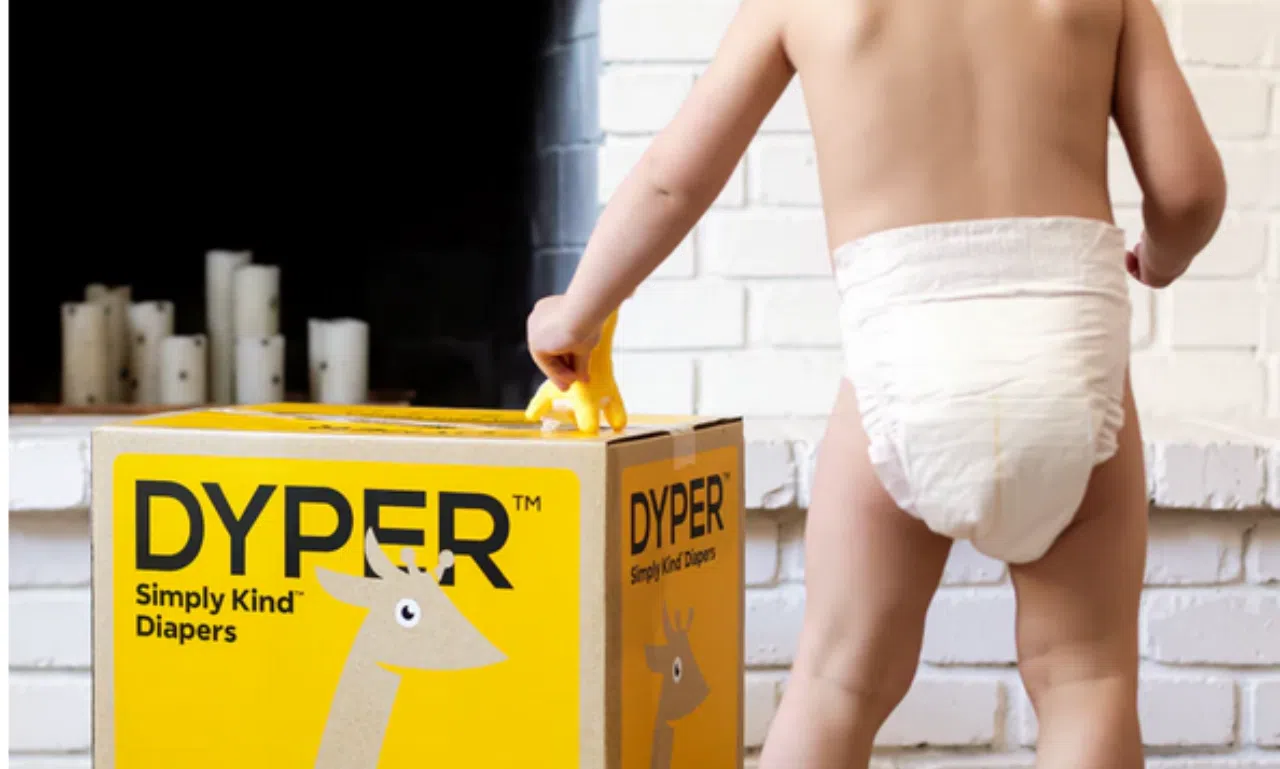
The benefits of Dyper’s approach extend beyond the baby’s skin and the environment. The diapers are engineered for high performance, aiming to prevent leaks and rashes, thereby contributing to a baby’s overall comfort and happiness. This focus on functionality ensures that parents do not have to compromise on effectiveness when choosing a sustainable option.
A significant innovation offered by Dyper is its optional REDYPER program. This service, available in select regions, provides a convenient solution for the disposal of used diapers and wipes. Through partnerships with regional composting facilities, Dyper facilitates the composting of materials that can break down within a 14 to 16-week timeframe. Materials that are not suitable for composting are responsibly removed and managed. This program represents a crucial step towards a circular economy for diaper waste, diverting substantial quantities of material from landfills. As of the latest available data, the REDYPER program has successfully diverted over 14 million pounds of waste from landfills, demonstrating a tangible impact on waste reduction efforts.
Dyper’s "plants over plastic" philosophy is also integrated into its packaging. The company actively seeks out and utilizes sustainable packaging materials wherever feasible, further minimizing its environmental footprint throughout the product lifecycle. This holistic approach to sustainability, from raw materials to disposal, positions Dyper as a leader in the conscious parenting movement.
Making Diapering Easy and Sustainable
Dyper offers a flexible purchasing model to accommodate the diverse needs of parents. Products can be acquired through convenient subscriptions or as one-time purchases, available in a comprehensive range of sizes. For parents in areas where the REDYPER service is available, the company offers weekly or bi-weekly pickup of used diapers and wipes, simplifying the composting process. This integrated service model aims to remove logistical barriers that might otherwise deter parents from adopting more sustainable diapering practices.
By choosing Dyper, consumers are not merely selecting a diaper; they are making a conscious decision to support a company committed to sustainability, transparency in its product offerings, and the provision of superior baby care. This commitment extends to the rigorous testing and certification processes that ensure the safety and efficacy of their products, providing parents with peace of mind. The brand’s proactive approach to addressing the environmental and health challenges associated with diapering positions it as a forward-thinking solution for the modern family. The impact of this initiative is not only measured in the pounds of waste diverted but also in the growing awareness it fosters among consumers regarding the importance of sustainable choices in everyday life, particularly concerning the well-being of their children and the health of the planet.