The strategic selection of a social media management tool is a foundational decision for any entity aiming to cultivate a robust and consistent online presence. In an era where digital engagement is paramount, these platforms serve as the indispensable command centers from which brands, businesses, and individual creators orchestrate their digital narratives, connect with their target demographics, and meticulously track performance metrics. The imperative for an effective "home base" to manage social operations cannot be overstated, demanding a solution that balances ease of use, adaptive flexibility, and fiscal prudence. Among the prominent contenders in this competitive sphere, Buffer and Later frequently emerge as leading choices, each presenting distinct methodologies for post scheduling, audience interaction, and analytical insights. This guide undertakes a detailed, objective comparison of these two platforms, scrutinizing their core features, pricing structures, and operational philosophies to empower informed decision-making for diverse brand requirements.
The Evolving Ecosystem of Social Media Management
The journey of social media management tools mirrors the rapid evolution of social media itself. In the early 2010s, as platforms like Facebook and Twitter gained widespread adoption, businesses grappled with the manual complexities of managing multiple accounts. This nascent period saw the emergence of basic scheduling tools, offering a much-needed respite from round-the-clock posting. Over the past decade, the landscape has transformed dramatically. The proliferation of new platforms—Instagram, TikTok, LinkedIn, Pinterest, and more recently, Threads, Bluesky, and Mastodon—each with its unique content formats and audience behaviors, has exponentially increased the complexity for marketers.
Today, a robust social media management tool is no longer a luxury but a necessity, tasked with streamlining diverse functions from content creation and scheduling to audience engagement and performance analytics. Industry reports indicate a sustained growth in social media marketing expenditure, projected to increase by over 15% annually, signaling the critical role these platforms play in modern business strategy. A recent survey highlighted that over 70% of marketers identify consistent content delivery and engagement tracking as their biggest challenges, underscoring the demand for comprehensive solutions that simplify these intricate processes. It is against this backdrop of escalating digital demands that tools like Buffer and Later have continually refined their offerings, striving to provide scalable and intuitive solutions for a dynamic market.
Buffer vs. Later: A Feature-by-Feature Deep Dive
A granular examination of Buffer and Later reveals a strategic divergence in their feature sets, reflecting their distinct target audiences and operational philosophies. Understanding these differences is crucial for users to align a tool’s capabilities with their specific marketing objectives.
1. Platform Support and Integration:
The breadth of social media platforms supported by a management tool directly impacts its utility for multi-channel strategies.
- Buffer: Demonstrates a broader reach, integrating with Instagram (supporting Creator, Business, and Personal profiles), Facebook (Pages and Groups), X/Twitter, LinkedIn, TikTok, Pinterest, Google Business Profile, Mastodon, YouTube Shorts, Threads, and Bluesky. This extensive list caters to brands requiring a truly omni-channel approach, particularly those venturing into newer or niche platforms.
- Later: While strong in its core focus, supports Instagram (Business and Creator Profiles only), Facebook (Pages only), Threads, Pinterest, TikTok, LinkedIn, YouTube Shorts, and Snapchat. Its absence of X/Twitter, Bluesky, Mastodon, and Google Business Profile analytics might be a limiting factor for certain users. However, its inclusion of Snapchat offers a distinct advantage for brands targeting younger demographics on that specific platform.
2. Content Creation and Scheduling:
Both platforms excel at streamlining content workflows, but with notable distinctions in their approach to post limits, customization, and bulk operations.
- Scheduling Flexibility: Both Buffer and Later enable users to draft and schedule posts across multiple accounts simultaneously, offering customization options for captions and media per network. They also feature pre-defined time slots, a common convenience for maintaining consistent posting schedules.
- Post Volume: Buffer offers remarkable flexibility, allowing 10 scheduled posts per channel on its free plan and unlimited scheduling on all paid plans. This is a significant advantage for high-volume content creators or agencies. Later, conversely, imposes limits even on paid plans: 30 posts per profile per month on Starter, 180 on Growth, with unlimited scheduling reserved for its highest-tier Scale plan. This tiered approach could lead to unexpected cost escalations for rapidly expanding operations.
- Hashtag Management: Later provides a feature for saving captions and offers AI-generated hashtag suggestions. Buffer, however, features a dedicated hashtag manager for organizing groups of hashtags and offers a free, publicly accessible Instagram hashtag generator, emphasizing accessibility and efficient content optimization.
- Bulk Scheduling: Buffer’s support for bulk scheduling up to 100 posts from a CSV file on paid plans is a game-changer for large-scale campaigns or content calendars managed in spreadsheets, drastically reducing manual effort. Later currently lacks this CSV-based bulk scheduling functionality, necessitating more manual input for extensive content plans.
- Channel Grouping: Both platforms offer channel grouping. Buffer’s "Channel Groups" allow users to save combinations of social accounts for simultaneous publishing. Later’s "Social Sets" serve a similar purpose, bundling profiles tied to a single brand or client. However, Later’s rigid structure of one profile per platform within a social set can complicate management for brands with multiple accounts on the same platform.
- Instagram Specifics: Later’s visual planner, offering an Instagram grid preview with drag-and-drop media from a library, is a strong suit for visually-driven brands. Buffer also provides an Instagram grid preview, though without direct drag-and-drop onto the calendar. Critically, Buffer supports posting to personal Instagram profiles via notifications and offers auto-publishing for both creator and business profiles, whereas Later has limitations for personal profiles and creator story auto-publishing.
3. AI-Assisted Content Generation:
The integration of Artificial Intelligence is revolutionizing content creation, and both platforms have embraced this trend, albeit with different access models.
- Buffer’s AI Assistant: Distinguishes itself by offering unlimited AI usage across all plans, including the free tier. This democratic access allows users to generate ideas, refine captions, and repurpose content without concern for credit limitations, fostering continuous content innovation.
- Later’s AI-powered Ideas Tool: Is exclusive to paid plans and operates on a credit system. Users consume credits for generating captions or content ideas, and exceeding these monthly allocations necessitates additional credit purchases, which could introduce variable costs.
4. Capturing Ideas and Content Planning:
Effective content strategy begins with robust idea management.
- Buffer’s Create Space: Functions as a flexible ideas hub, allowing users to collect and organize notes, snippets, links, and media. Its Kanban-style board facilitates a seamless transition from concept to publication. Furthermore, Buffer’s browser extension and Feeds feature (pulling content from RSS, blogs, and YouTube) provide comprehensive external content curation capabilities.
- Later’s Idea Space: Leans heavily on AI, generating content pillars and initial post ideas based on brand descriptions. While structured and AI-driven, it appears more narrowly focused on AI-generated prompts rather than comprehensive storage and organization of diverse content inputs.
5. Audience Engagement and Community Management:
Direct interaction with the audience is vital for community building.
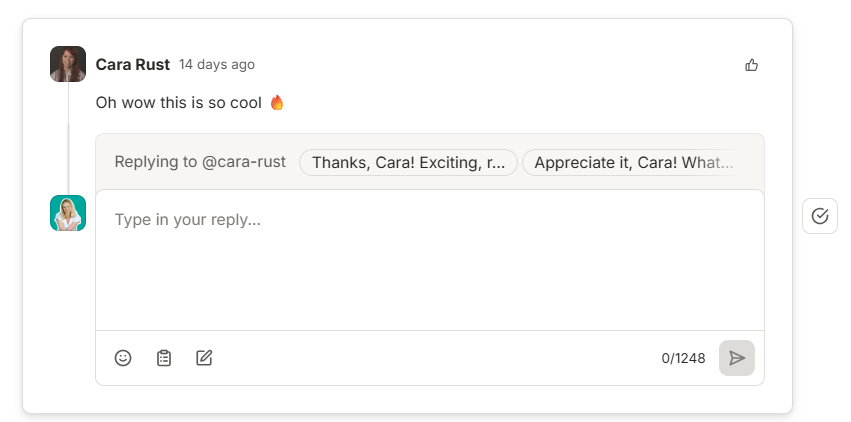
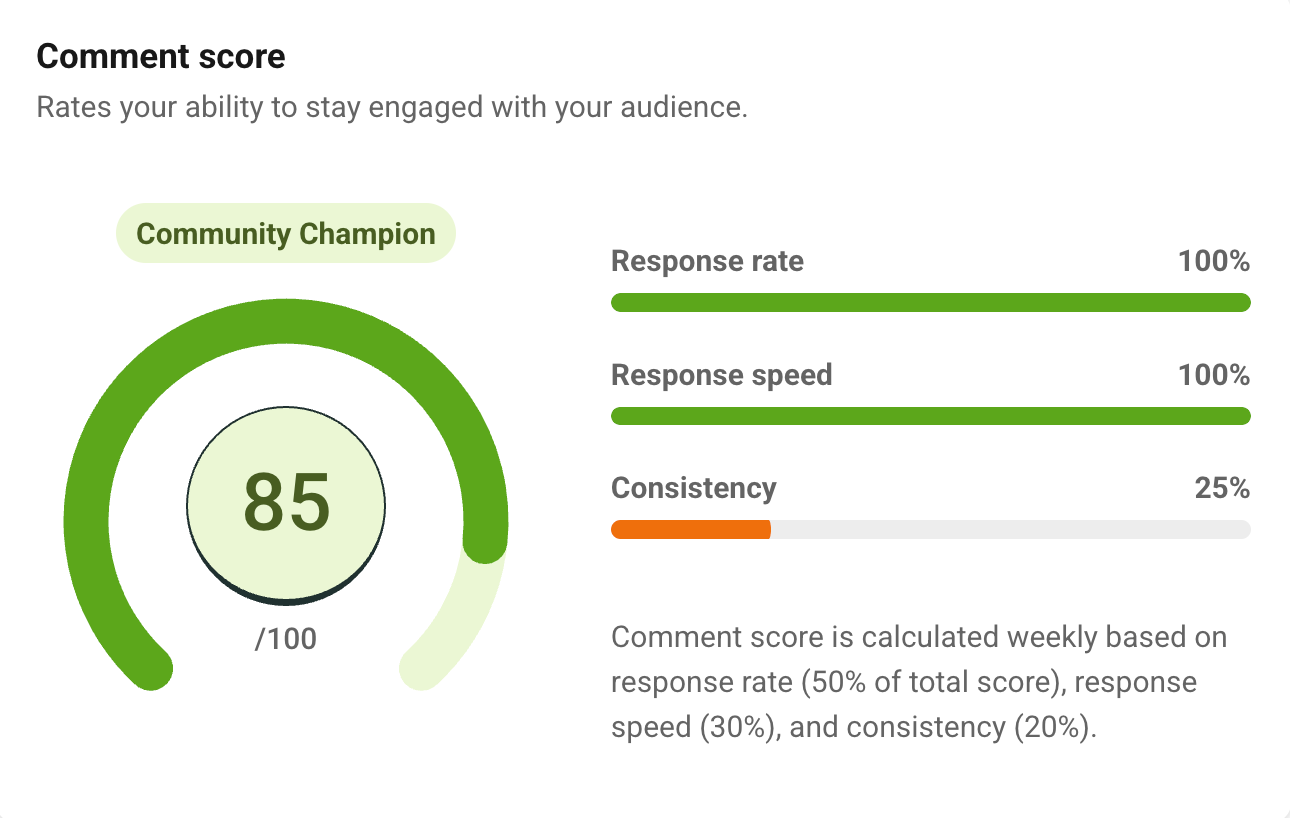
- Buffer’s Community Feature: Is accessible on all plans, including the free tier. It centralizes comments and conversations, offering AI-generated response suggestions and saved replies for FAQs. A unique "comment score" tracks response speed and consistency, providing actionable insights into engagement performance.
- Later’s Social Inbox: Consolidates Instagram/Facebook DMs and comments, and TikTok comments, for team plans. It includes a useful feature for hiding spam or inappropriate comments directly from the inbox. Later also offers a social listening tool, but this is an additional paid add-on for Scale plan users, offering brand mention tracking, trending topics, and competitive benchmarking at a variable cost.
6. Analytics, Insights, and Reporting:
Performance measurement is crucial for optimizing social media strategy.
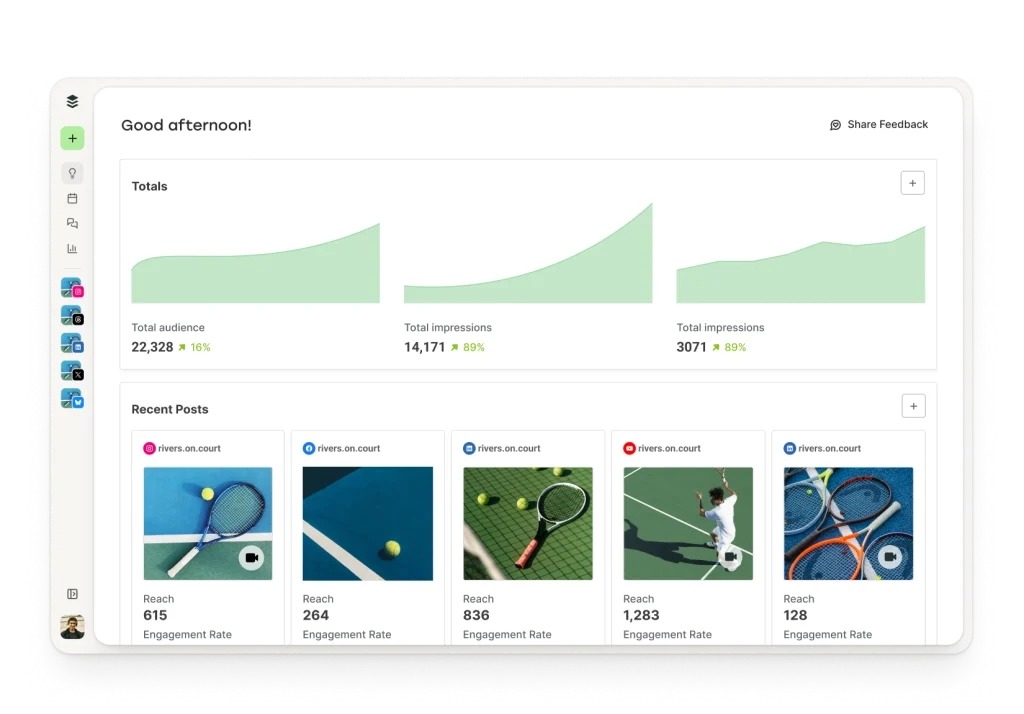
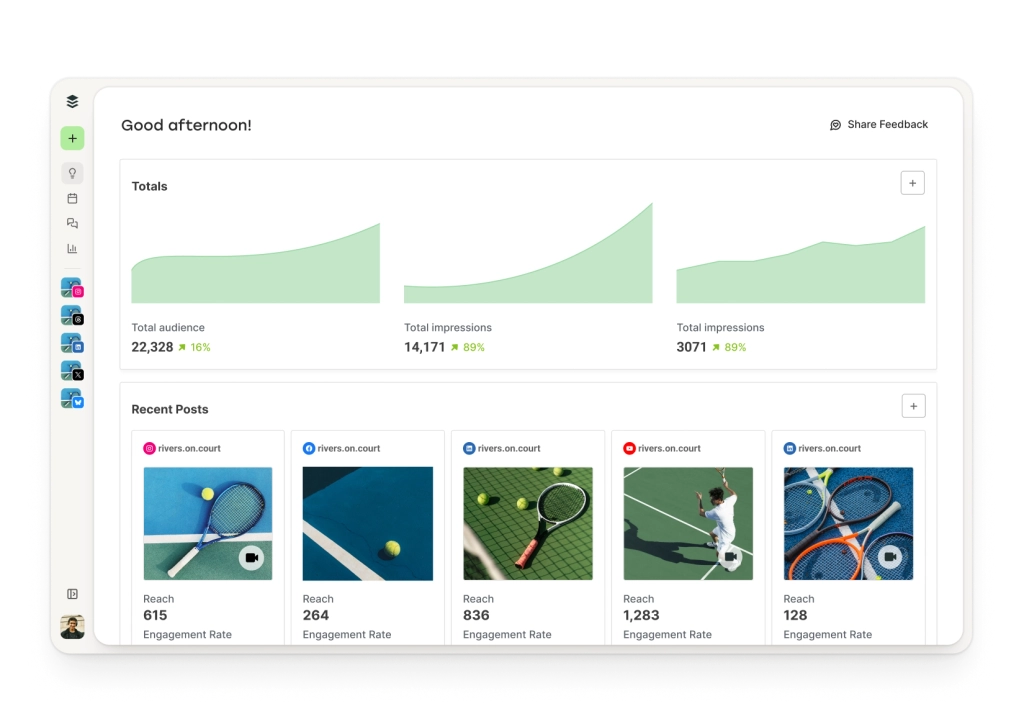
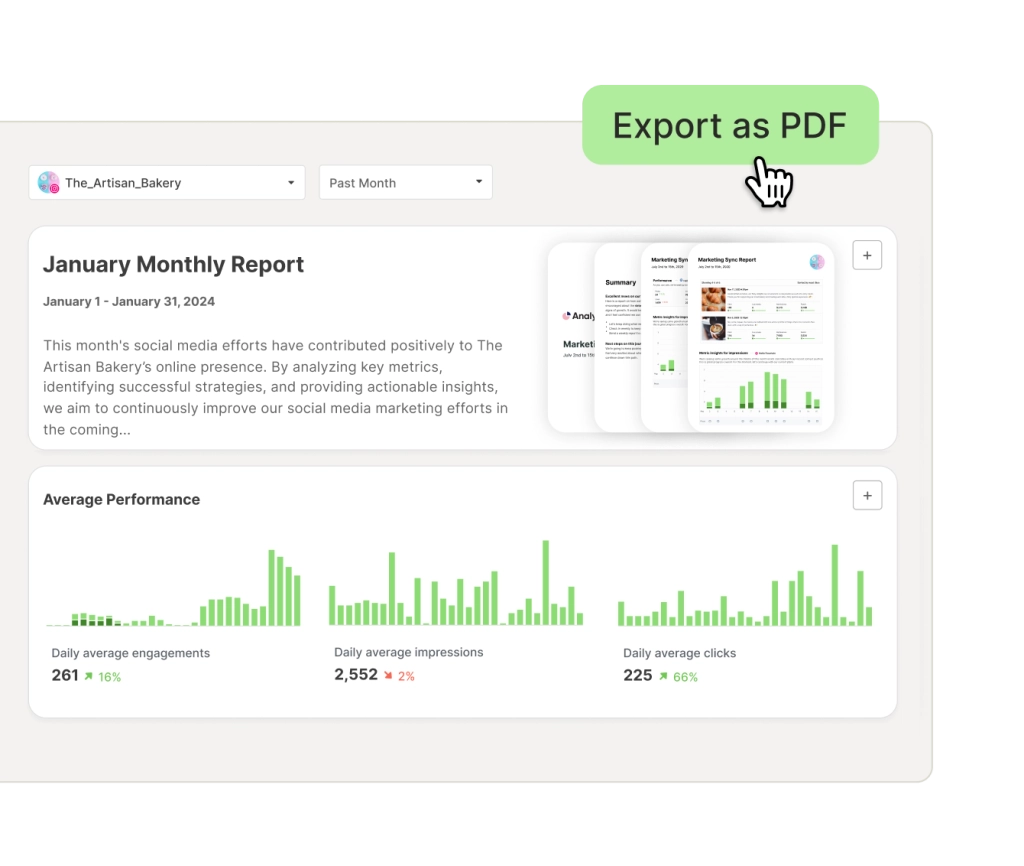
- Buffer’s Analytics: Provides basic post analytics on all supported channels, even on the free plan. Advanced analytics, available from the Essentials plan, offer deeper insights for Facebook Pages, Instagram Business/Creator accounts, X/Twitter, and LinkedIn Pages, including a cross-channel overview. Buffer’s "Answers" tab offers personalized recommendations, transforming raw data into actionable strategies. Customizable PDF reports with branding options are also available.
- Later’s Analytics: Offers in-depth performance insights for Instagram Business/Creator profiles, Facebook Pages, TikTok, Threads, and Pinterest. It provides granular audience demographics (gender, location, age) and identifies optimal posting times based on follower activity. Cross-channel analytics are restricted to the highest-tier plan. While direct PDF reports are not an option, data can be downloaded as CSV files, and a shareable Instagram performance report link is available for the past 90 days. Notably, Buffer offers analytics for X/Twitter and LinkedIn profiles, which Later does not. Conversely, Later provides analytics for TikTok, Threads, and Pinterest, where Buffer currently does not.
7. Link-in-Bio Tools:
Both platforms offer dedicated tools to optimize the single clickable link in social media profiles.
- Buffer’s Start Page: Is highly flexible, allowing users to create custom landing pages with multiple blocks of various content types (text, images, videos, image grids, buttons, email signup forms). This modularity allows for diverse content showcases and direct email list building.
- Later’s Link in Bio Page: Features an image banner carousel and supports social profiles, buttons, and an email signup form. However, it generally restricts users to one block per content type (e.g., only one YouTube video, no custom graphic alongside it). A unique integration with affiliate marketing platform Mavely allows for direct conversion of links into affiliate links for supported brands. Buffer users can still add affiliate links, but it requires manual input from the affiliate network.
Pricing Models and Economic Implications
Cost is often the decisive factor, and Buffer and Later present fundamentally different pricing philosophies that carry significant implications for users, particularly as their operations scale.
Buffer Pricing:
Buffer’s pricing model emphasizes flexibility and transparency. Paid plans start at a competitive $6/month (billed annually). Crucially, Buffer allows users to select and pay only for the specific social channels they need.
- Free Plan: Includes 3 social channels/accounts.
- Essentials Plan: Starts at $6/month per channel (billed annually) for one user.
- Team Plan: Starts at $12/month per channel (billed annually) and includes unlimited users. This is a major differentiator for agencies and growing teams, as the cost does not increase with additional team members.
Buffer’s approach directly addresses the needs of users who might only manage a few specific platforms, avoiding forced bundling of unused services.
Later Pricing:
Later’s pricing begins higher, starting at $25/month (billed annually) for its Starter plan, and its structure is based on "social sets" and user accounts.
- No Free Plan: A significant barrier to entry for individual creators or small businesses exploring options.
- Starter Plan: $25/month (billed annually) for one user and one "social set."
- Growth Plan: $45/month (billed annually) for two users and one "social set."
- Scale Plan: $80/month (billed annually) for four users and one "social set."
- Social Sets: Each social set includes one account from each supported platform (Instagram, Facebook, Threads, Pinterest, TikTok, LinkedIn, YouTube Shorts, Snapchat). This bundled approach means users pay for a full set even if they only need a few channels.
- Additional Costs: If a user needs multiple accounts on the same platform (e.g., two Instagram profiles), they must purchase additional social sets, significantly increasing the cost. Additional users beyond the plan’s allowance also incur extra charges ($5 per user/month, or $3.75 billed annually).
Implications for Different User Segments:
- For Creators: Buffer’s free plan (3 channels) or paid plans at $5/month per channel (annually) offer substantial value. Later’s Starter plan at $18.75/month (annually) for one social set is a higher entry point. If a creator manages, for example, a personal brand on LinkedIn and a business page on LinkedIn, Buffer’s channel-based pricing is more economical than Later requiring a full additional social set.
- For Teams/Agencies: Buffer’s Team plan with unlimited users at a channel-based price is highly attractive. An agency managing two channels for a client, with an unlimited team, would pay $20/month (annually). Later’s equivalent for two channels and two users (Growth plan) would be $37.50/month (annually), escalating further with more channels or users due to its social set and per-user pricing.
Free Trials:
Both platforms offer 14-day free trials of their paid plans, allowing users to test functionalities before commitment. Buffer also offers a permanent free plan, which serves as an extended trial for basic needs.
Team Collaboration and Scalability
Effective team collaboration is paramount for agencies, marketing departments, and growing businesses.
- Buffer’s Team Management: Offers a straightforward approach with unlimited users on its Team plan. It provides two user roles: Manager (full access) and Contributor (drafting/scheduling with approval). Permissions can be granularly set for specific social accounts, ensuring controlled access without adding per-user costs. The recent introduction of a public API on all plans further enhances integration with custom workflows and internal systems, a critical feature for scalable operations.
- Later’s Team Management: Utilizes "access groups" to manage permissions for social profiles, media libraries, and calendars. While useful for segregating client work, the rigidity of tying access groups to full social sets (one profile per platform) can create complexities and additional costs if multiple accounts on the same platform are needed. Roles include Admin, Editor (publish/schedule), and Creator (draft only). Later’s shared media library, allowing users to upload, label, and create alt text for media, is a notable advantage for visual content-heavy teams.
Specialized Features: Influencer Marketing
Beyond core social media management, Later has ventured into specialized areas.
- Later’s Influencer Marketing Product: Offered as a separate, unpriced product, targets brands and agencies looking to run influencer campaigns, manage relationships, and measure results. It includes features like Shopify integration for product seeding and optional creative support from Later’s team. Creators using Later’s scheduling tools gain access to a "Creator hub" for media kit creation, campaign applications, and collaboration management.
- Buffer’s Focus: Buffer explicitly states its focus remains on core publishing, engagement, and analytics for creators, small businesses, and solopreneurs, aiming for sustainable growth without delving into separate influencer marketing tools.
Strategic Implications and Conclusion
The choice between Buffer and Later ultimately hinges on a brand’s specific strategic priorities, budget constraints, and operational scale.
Buffer might be the optimal choice for:
- Budget-Conscious Users/Startups: Its generous free plan and flexible channel-based pricing, especially the unlimited users on its Team plan, offer superior cost-efficiency for growing teams.
- Omni-Channel Strategists: Support for a wider array of platforms, including X/Twitter, Google Business Profile, Mastodon, and Bluesky, makes it ideal for brands seeking comprehensive digital coverage.
- High-Volume Content Operations: Unlimited scheduling on paid plans and robust bulk scheduling capabilities are invaluable for large campaigns or content calendars.
- AI-Driven Content Creation: Unlimited access to AI tools across all plans fosters continuous content experimentation and efficiency without additional costs.
- Engagement-Focused Brands: The Community feature, available on all plans, with AI-driven response suggestions and comment scoring, provides actionable insights for fostering strong audience relationships.
- Teams Requiring Flexibility: Unlimited user accounts on its Team plan remove scalability barriers for agencies and large marketing departments.
Later might be the preferred solution for:
- Visually-Centric Brands: Its strong emphasis on visual planning, particularly for Instagram and Pinterest, with features like the drag-and-drop visual calendar, caters effectively to brands where aesthetics are paramount.
- Instagram and TikTok-First Strategies: Deeper analytics for TikTok and its specific Instagram features (though with some profile limitations) align well with brands prioritizing these platforms.
- Brands Exploring Influencer Marketing: Its integrated (or add-on) influencer marketing product offers a streamlined approach for managing collaborations, a feature not present in Buffer.
- Structured Content Planning: The AI-driven content pillars and idea generation provide a structured starting point for content creation.
In essence, Buffer positions itself as a versatile, cost-effective, and highly scalable solution for broad social media management, emphasizing flexibility and extensive platform support with a strong AI integration. Later, conversely, carves a niche as a powerful tool for visually-driven content strategies, particularly on Instagram and TikTok, with specialized offerings for influencer marketing. Both platforms exemplify the ongoing innovation in social media management, continually adapting to the dynamic demands of the digital age. Brands and marketers are advised to leverage the available free plans and trials to conduct a hands-on evaluation, ensuring the chosen tool not only meets current needs but also supports future growth and strategic objectives. For further inquiries or assistance with Buffer, the team can be reached at [email protected].