

The journey from a meticulously crafted visual concept to its public debut across diverse social media platforms has historically been a fragmented and momentum-draining process for creative professionals. Designers often find themselves navigating a labyrinth of manual steps: downloading high-resolution files, switching to a separate scheduling tool, re-uploading assets, composing bespoke captions for each platform, making platform-specific adjustments, and finally, hitting ‘post.’ This multi-stage manual transfer, a significant impediment to efficiency, is precisely the chasm that Daniel Futerman and his co-founder sought to close with the development of a pivotal Buffer integration within their AI design workspace, Hiding Elephant. This strategic collaboration promises to redefine content workflows for designers, agencies, and social teams globally, leveraging Buffer’s robust API to deliver an unprecedented level of creative control and publishing fluidity.
The Creative-to-Publishing Chasm: A Persistent Industry Challenge
In the contemporary digital landscape, where visual content reigns supreme and social media serves as the primary conduit for brand-consumer interaction, the demand for high-quality, on-brand assets is insatiable. However, the operational reality for creative teams has often been fraught with inefficiencies. Industry reports frequently highlight that content creators and social media managers spend a substantial portion of their working hours—some estimates suggesting upwards of 30-40%—on administrative tasks directly related to content distribution rather than pure creative output. This includes repetitive actions like reformatting images for different aspect ratios, drafting unique captions tailored to the nuances of Twitter (now X), LinkedIn, Instagram, and Facebook, and manually queuing posts. This laborious ‘stretch between finishing a design and going live’ not only consumes valuable time but also stifles creative flow, often forcing designers to detach from their work prematurely to manage distribution logistics. The economic implications are significant; time spent on manual distribution is time not spent on ideation, refinement, or strategic creative development, directly impacting productivity and potential revenue. For agencies managing multiple client accounts, this challenge is amplified exponentially, necessitating a solution that consolidates and automates these disparate steps.
Hiding Elephant: Pioneering AI Design with Precision and Control
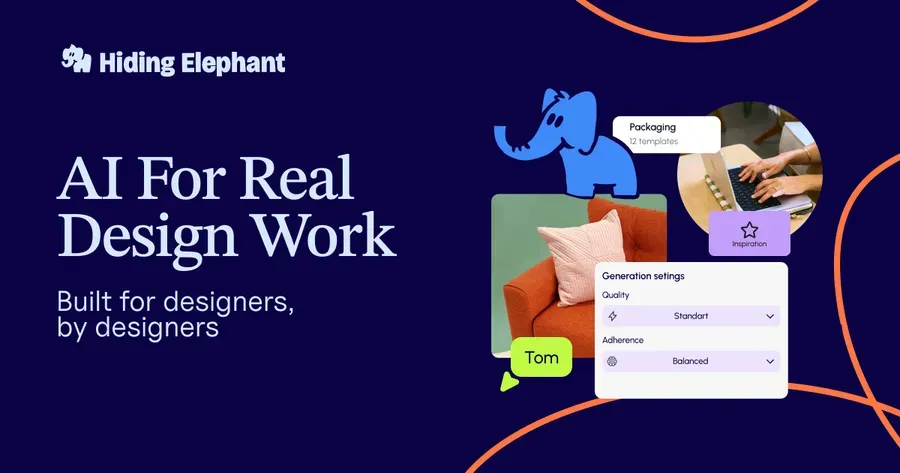
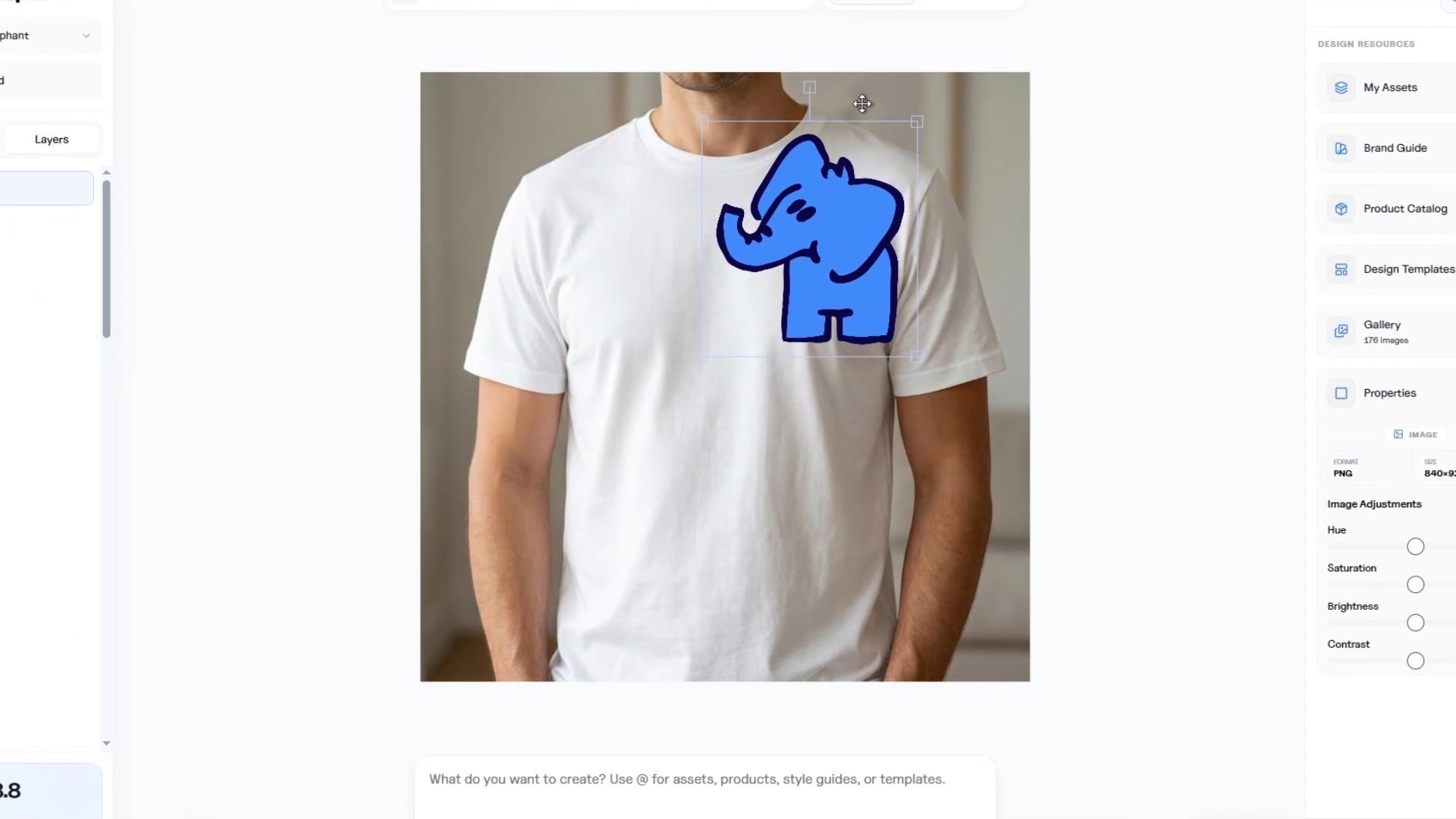
At the heart of this innovation lies Hiding Elephant, an AI design workspace meticulously engineered by designers, for designers. Founded by Daniel Futerman, whose background includes running a successful motion design studio, Amigo Motion, Hiding Elephant was born from a deep understanding of the creative process and the inherent tension between AI’s raw speed and a designer’s need for granular control. Futerman, like many in the creative community, was initially captivated by the rapid generative capabilities of AI but quickly became frustrated by its limitations in delivering precise, detailed outputs. For instance, attempting to generate a specific shirt design with exact shapes, layouts, and intricate details often proved elusive with early AI tools, which excelled at broad ideation but fell short on execution fidelity.
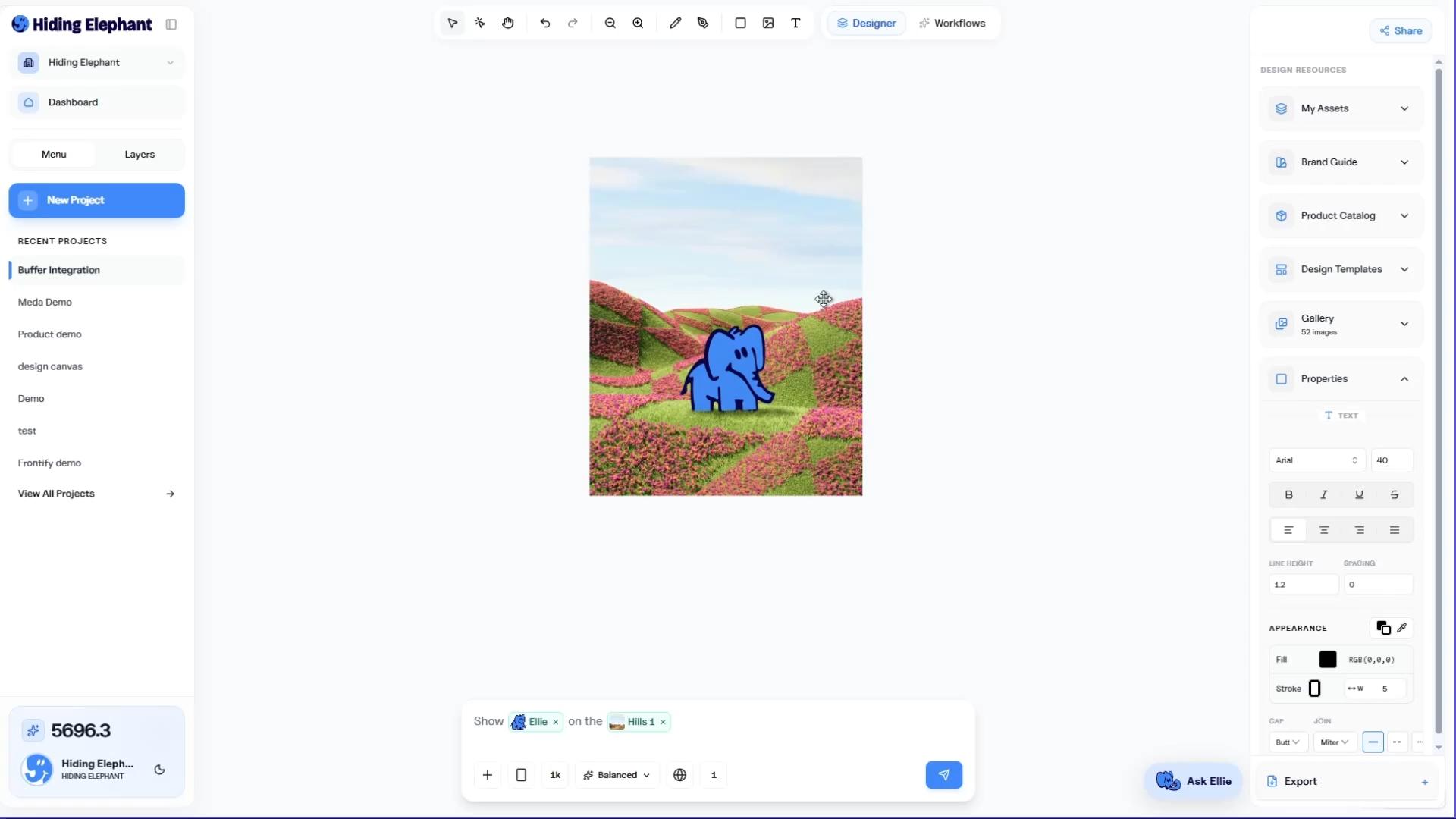
Hiding Elephant addresses this critical gap by harmoniously blending cutting-edge AI image and video generation with a comprehensive suite of professional editing tools. Its robust platform incorporates vector tools, automation workflows, live collaboration features, shared asset libraries, and a sophisticated brand intelligence layer. This holistic approach empowers e-commerce brands, advertising agencies, and dedicated social media teams to produce high-volume, on-brand content at an accelerated pace, critically without relinquishing control over the finer details that define brand identity. The platform’s philosophy is rooted in the belief that AI should augment human creativity, providing designers with powerful tools for exploration and iteration while ensuring they retain ultimate artistic dominion.
The Strategic Imperative: Why Buffer Became Indispensable
While Hiding Elephant excelled at empowering teams to create stunning visuals, Daniel Futerman was acutely aware that "content creation only gets you halfway." The ultimate utility of any visual asset lies in its effective distribution and engagement with its target audience. For Hiding Elephant’s primary user base—agencies, e-commerce brands, and social media teams—publishing content to social media platforms isn’t merely an auxiliary function; it is a core business imperative. Social channels are indispensable for building brand awareness, driving product visibility, fostering community engagement, and maintaining a consistent presence in front of their audiences.
The absence of an integrated publishing mechanism meant that once a visual was perfected within Hiding Elephant, users were compelled to exit the platform and engage in the aforementioned multi-step manual distribution process. This created an undeniable friction point in the workflow, undermining the very efficiency gains offered by Hiding Elephant’s AI-powered design capabilities. Recognizing this bottleneck, the decision to integrate with a leading social media management platform like Buffer became not just logical, but strategically essential. Buffer, with its long-standing reputation for reliable scheduling and multi-platform publishing, presented itself as the ideal partner to complete the content lifecycle within Hiding Elephant’s ecosystem.
A Deep Dive into the Integration’s Transformative Capabilities
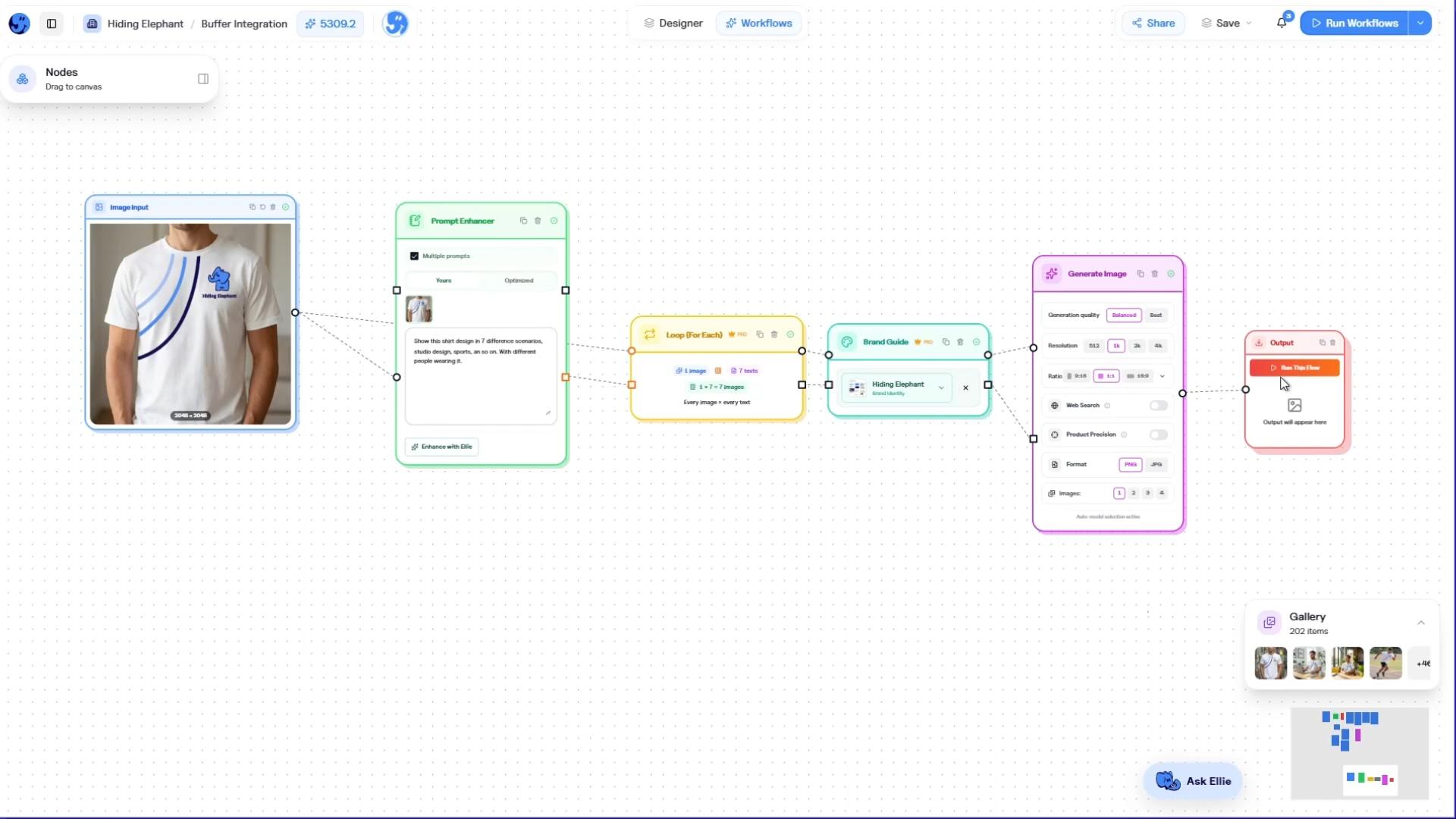
The integration between Hiding Elephant and Buffer represents a paradigm shift in content creation and distribution. Once connected, users can seamlessly generate on-brand images and videos within Hiding Elephant’s AI canvas, instantly reframe them to suit various platform-specific aspect ratios (e.g., square for Instagram, wide for LinkedIn, vertical for TikTok/Reels), and then, with a single click, push these assets directly to their connected social accounts via Buffer.
However, the integration’s power extends far beyond mere file transfer. Hiding Elephant’s proprietary "brand intelligence" layer is a game-changer. This sophisticated AI engine not only analyzes the visual content but also draws upon its understanding of the brand’s established voice, tone, and visual style. Armed with this comprehensive context, it then autonomously generates platform-specific captions. This means a visually identical asset can be accompanied by a concise, hashtag-rich caption for X, a more detailed and professional narrative for LinkedIn, and an engaging, visually descriptive text for Instagram, all crafted to resonate with the unique audience and conventions of each platform.
This intelligent captioning feature holds particular significance for creative agencies and marketing teams juggling multiple client brands. An agency managing five distinct e-commerce brands can configure Hiding Elephant’s brand intelligence for each client. This enables them to rapidly create a suite of on-brand visuals, instantly generate captions tailored to each brand’s unique voice, automatically adapt content for various social platforms, and then dispatch everything directly to Buffer’s scheduling queue. Alternatively, content can be saved as drafts within Buffer for internal review and approval, ensuring brand consistency and compliance across all client deliverables without the manual overhead. This capability dramatically reduces the potential for human error in maintaining brand guidelines and frees up creative personnel to focus on high-level strategy and artistic innovation.
The Technical Foundation: Building on Buffer’s Robust API
The decision to build on Buffer’s API was a calculated one, underscoring Buffer’s commitment to fostering a vibrant ecosystem of integrated tools. Daniel Futerman candidly states, "Buffer’s API and documentation are clear, so getting everything up and running was straightforward." The core integration, a testament to the clarity and efficiency of Buffer’s developer tools, was completed in less than a week. The subsequent period was dedicated to rigorous testing, quality assurance, and refining the user experience, ensuring a seamless and intuitive workflow for designers.
A key advantage cited by Futerman was Buffer’s ability to abstract away the inherent complexities of direct social platform integrations. Connecting to each social media platform individually would necessitate managing separate OAuth authentication flows, adhering to diverse rate limits, accommodating varied media specifications, and navigating platform-specific APIs. This fragmented approach would impose an enormous and ongoing maintenance burden on Hiding Elephant’s engineering team, diverting valuable resources from core product development. Buffer, by contrast, consolidates all these disparate requirements behind a single, unified API. This strategic choice allowed Hiding Elephant to "focus on what makes Hiding Elephant unique"—its AI-powered design capabilities—while entrusting the intricate mechanics of social media publishing to Buffer, a platform explicitly designed and maintained for this purpose. This exemplifies the power of the API economy, where specialized services can integrate to create more powerful, comprehensive solutions without each partner having to reinvent the wheel.
Tangible Benefits: Reshaping the Creative Workflow
The practical implications of this integration are profound and immediately tangible. The cumbersome old workflow—create in Hiding Elephant, download, re-upload to Buffer, write the post, repeat for each asset—is now superseded by a fluid, continuous process: create, generate ready-to-share posts with intelligent captions, and publish across all desired channels in one integrated flow.
The most evident benefit is the significant time savings. By eliminating multiple manual steps, creative teams can dramatically accelerate their content production and distribution cycles. Beyond mere speed, Daniel Futerman emphasizes a more critical outcome: consistency. Because Hiding Elephant’s brand intelligence layer is embedded in the process, the generated posts inherently align with the brand’s established voice, visual style, and the overarching campaign context. This ensures a cohesive brand narrative across all touchpoints, an essential factor in building strong brand recognition and trust. Industry research consistently demonstrates that brands with consistent presentation across all platforms can see an increase in revenue by as much as 20%. This integration directly facilitates such consistency, transforming what was once a manual, error-prone task into an automated, intelligent operation.

Future Horizons: AI-Powered Performance and Video
Looking ahead, Hiding Elephant’s roadmap is ambitious, with a strong near-term focus on enhancing its video capabilities. Video content is undeniably one of the most compelling formats for capturing audience attention and narrating engaging stories in the digital realm. The team is dedicated to building out advanced video creation and editing tools, alongside workflows designed to produce higher-quality, more impactful video assets.
For the Buffer integration specifically, Futerman envisions an even smarter, more deeply integrated workflow. Future enhancements could include syncing with past Buffer posts to glean insights from historical performance data, tapping into hashtag efficacy, and analyzing engagement metrics. These invaluable insights could then be fed back into Hiding Elephant’s brand intelligence layer, informing the generation of future captions, refining brand messaging, and even influencing the creative direction of the content itself. The ultimate objective is to establish a truly closed-loop system, seamlessly connecting creative production with performance analytics, thereby empowering teams to not only create faster but also to make sharper, data-driven creative decisions based on what demonstrably resonates with their audience. This evolution would mark a significant leap towards truly intelligent content marketing.
The "Elephant in the Room" Addressed: AI as an Ally, Not a Replacement

The evocative name "Hiding Elephant" carries a deliberate double meaning. In the nascent stages of AI’s integration into the creative world, the "elephant in the room" was the pervasive concern that artificial intelligence would inevitably supplant human designers and artists. Daniel Futerman and his team staunchly advocate for a different philosophy. "AI should enhance creativity, not replace the creative process," he asserts. "We believe the best results happen when humans stay in control, and AI helps them explore ideas, iterate faster, and bring their creative vision to life."
The Buffer integration perfectly embodies this ethos. It consciously leaves the core creative decision-making firmly in the hands of the designer, while strategically automating and simplifying the arduous, non-creative tasks associated with content distribution. By alleviating the administrative burden, designers are liberated to devote more energy to innovation, artistic expression, and strategic thinking. This partnership reinforces the vision of AI as a powerful co-pilot, an invaluable assistant that amplifies human potential rather than diminishes it. On a personal note, Daniel Futerman, a long-time Buffer user himself, expressed genuine enthusiasm for this partnership, viewing it as a natural evolution of tools he values.
Broader Industry Implications and Conclusion
The collaboration between Hiding Elephant and Buffer signifies a critical step forward in the evolution of creative technology and social media marketing. It highlights a growing trend towards "design-to-publish" solutions that prioritize end-to-end workflow efficiency. For the creative industry, it heralds a future where AI tools are not just generative but also deeply integrated and contextually aware, enabling designers to work smarter, not just faster. For social media management, it elevates the process from mere scheduling to intelligent, brand-aligned content distribution, driven by data and creative intent.
This partnership also underscores the increasing importance of robust, developer-friendly APIs in fostering innovation across diverse software ecosystems. Buffer’s API serves as a testament to how open platforms can empower third-party developers to build complementary services that significantly enhance user value. For developers seeking to integrate social publishing capabilities into their tools without incurring the substantial overhead of maintaining individual platform integrations, Buffer’s API remains an exemplary resource, accessible via developers.buffer.com. For individual content creators and small businesses simply looking for a more efficient way to manage their own multi-channel content distribution, Buffer continues to offer a comprehensive free plan, making professional social media management accessible to all. The Hiding Elephant-Buffer integration stands as a compelling case study of how intelligent automation, when applied thoughtfully, can bridge workflow gaps, enhance creative output, and ultimately, drive greater brand consistency and market impact.