A recent comprehensive analysis of nearly two million YouTube videos, conducted by social media management platform Buffer, has uncovered distinct and evolving optimal posting times for long-form content and YouTube Shorts, offering crucial insights for creators and marketers aiming to maximize audience engagement. This extensive study, building upon previous research, highlights a significant shift in viewer behavior and algorithmic preferences, emphasizing that a one-size-fits-all approach to publishing on YouTube is no longer effective.
The Shifting Landscape of YouTube Engagement
In the increasingly competitive digital content sphere, securing early engagement is paramount for a video’s success on YouTube. Beyond compelling content quality, factors such as a captivating title, an eye-catching thumbnail, and strategic posting times collectively influence a video’s visibility and algorithmic favorability. YouTube’s sophisticated recommendation engine relies heavily on initial engagement signals—clicks, watch time, and likes—to determine whether to promote content more broadly across the platform. Consequently, understanding and leveraging optimal posting windows can provide a tangible advantage, an "easy box to tick" compared to the extensive effort invested in content creation itself.
Buffer’s latest analysis delves into the performance of 1.8 million videos, encompassing both traditional long-form content and the rapidly growing short-form video format, YouTube Shorts. By meticulously measuring the median engagement across every hour and day of the week, the study has pinpointed patterns that diverge significantly from previous findings and, critically, between the two content formats. The data suggests that audience habits are not static; rather, they are continuously shaped by algorithmic updates, evolving digital consumption patterns, and broader societal shifts.
Key Findings: Long-Form Videos vs. YouTube Shorts
The headline finding from Buffer’s research reveals a stark contrast in peak engagement times:
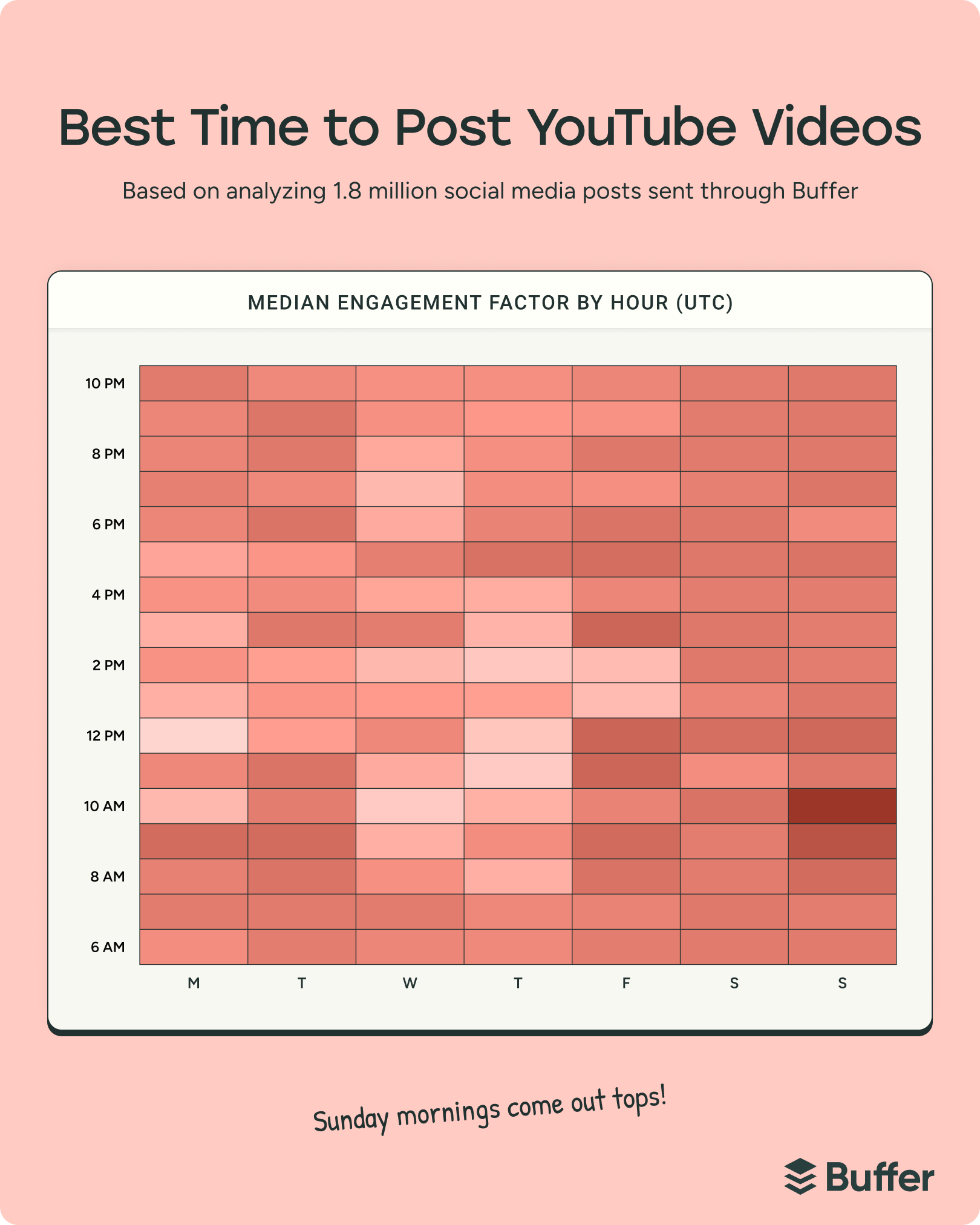
- Long-Form Videos: The undisputed best time to post long-form YouTube videos is Sunday at 10 a.m. (local time). This slot demonstrated the highest engagement across the entire week, by a significant margin. Generally, morning hours between 8 a.m. and 11 a.m. proved most effective for longer content.
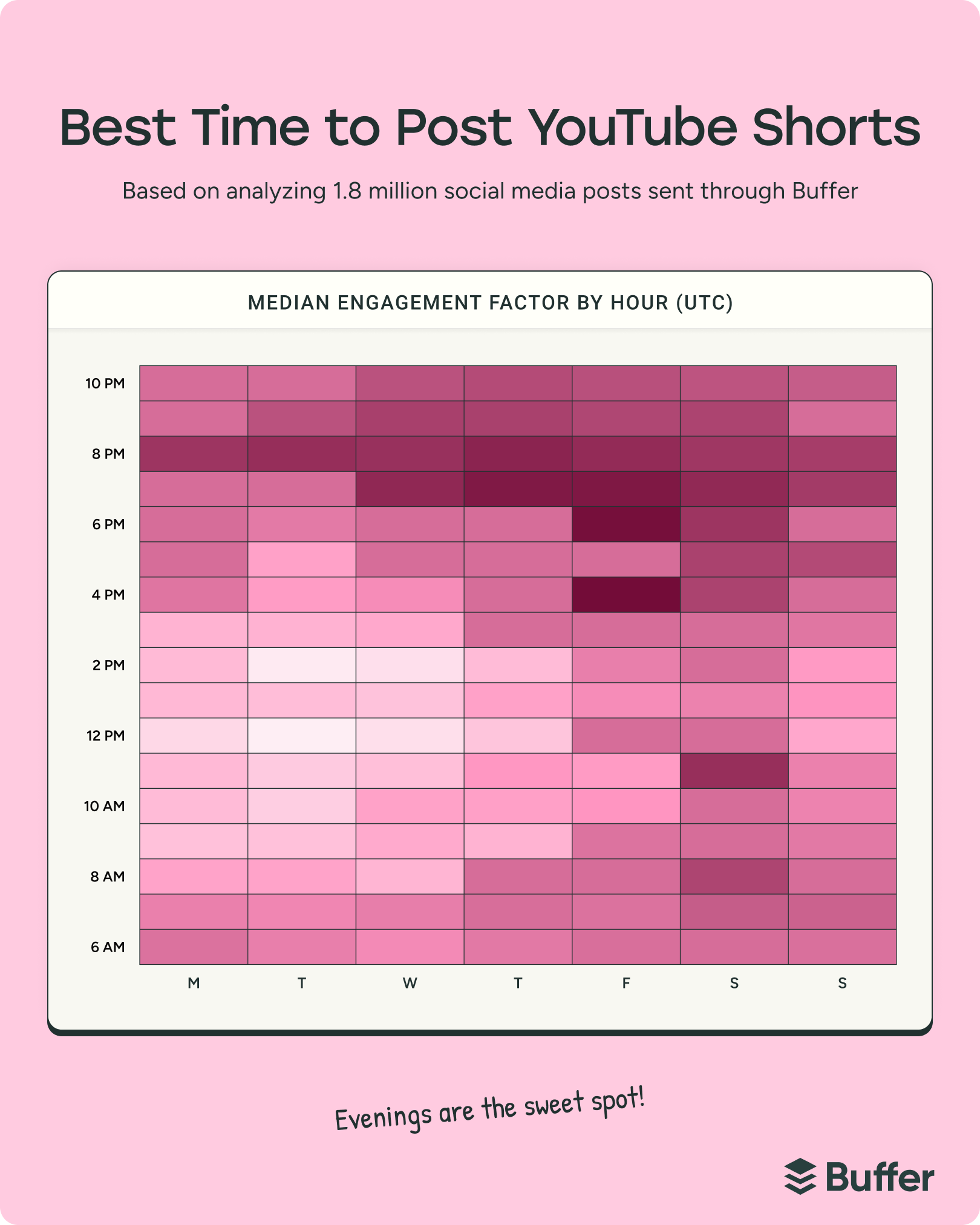
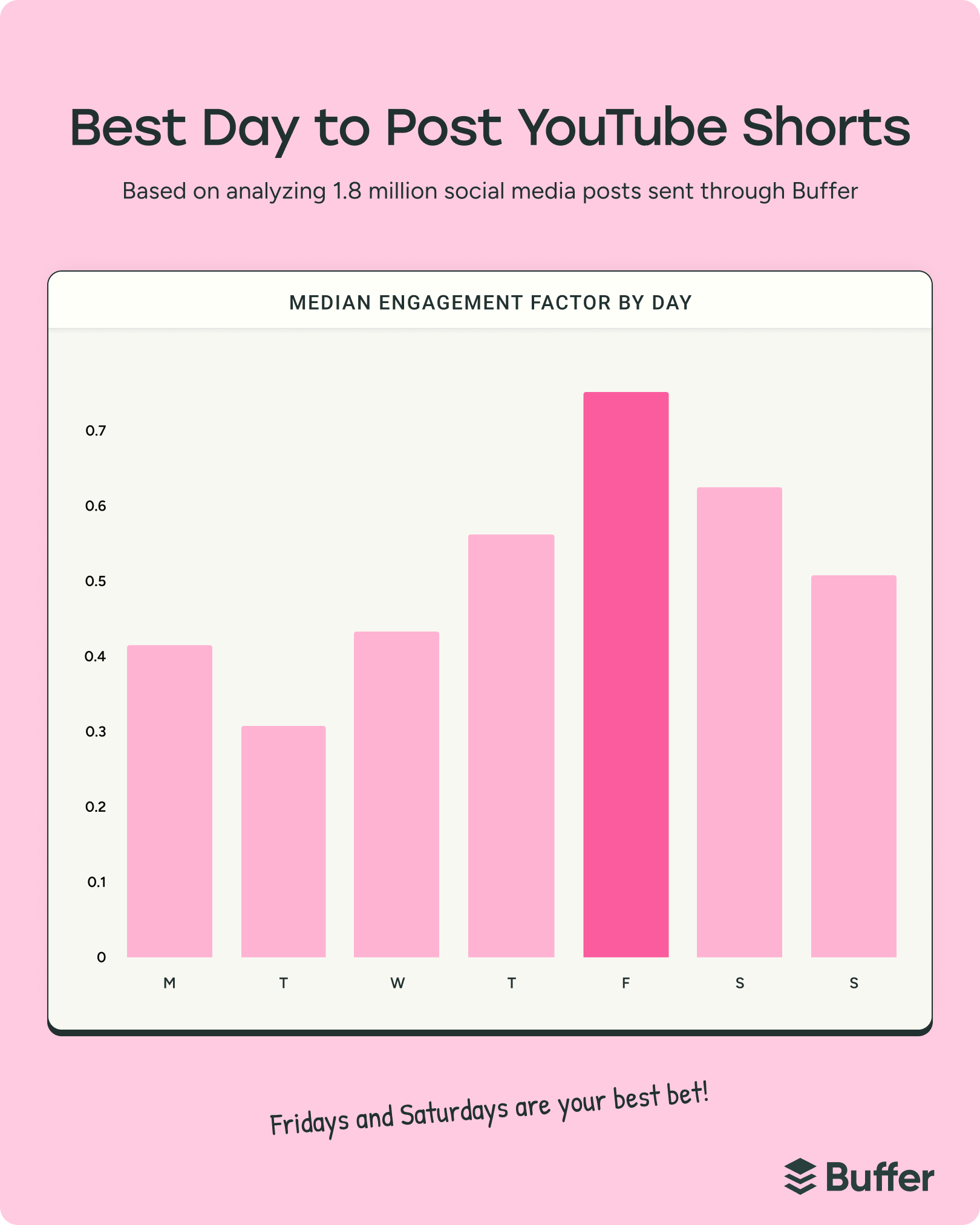
- YouTube Shorts: In a complete departure, YouTube Shorts perform best on Friday evenings, specifically at 4 p.m., 6 p.m., and 7 p.m. (local time). Friday stands out as the optimal day for Shorts, with engagement peaking in the later hours.
This divergence underscores a fundamental difference in how audiences consume these formats and how YouTube’s algorithm distributes them. Long-form videos often require a dedicated viewing session, making weekend mornings—when viewers typically have more leisure time—an ideal window. Shorts, conversely, are consumed in quick bursts, often serving as a form of casual entertainment or a winding-down activity at the end of a busy week or day.
Evolution of Posting Patterns: A Chronological View
Buffer’s previous analyses, including one conducted in 2025, indicated different trends, with late afternoon (3–5 p.m.) on weekdays often cited as the sweet spot for long-form content. The current findings represent a notable reversal, where mornings, especially on weekends, now dominate. This shift can be attributed to several factors:
- Algorithmic Refinements: YouTube’s algorithm is constantly updated to better serve content that resonates with user preferences. Changes in how the algorithm prioritizes "fresh" content versus "evergreen" content, or how it interprets early engagement signals, could influence these patterns.
- User Behavior Evolution: The COVID-19 pandemic, for instance, dramatically altered online consumption habits, potentially normalizing more daytime and weekend viewing. Furthermore, increased device saturation and diverse content options mean users might be less tethered to traditional viewing schedules.
- Rise of Short-Form Content: The introduction and aggressive promotion of YouTube Shorts, mirroring the success of platforms like TikTok, has created a new consumption dynamic. This new format caters to different user needs and viewing habits, thereby fragmenting attention and altering peak times for longer videos. As Shorts are continuously resurfaced by YouTube’s recommendation engine over days or even weeks, their initial publish time is less "make-or-break" than for long-form content, which relies more heavily on an immediate algorithmic push.
The current study’s decision to separate data for long-form videos and Shorts is a direct response to these evolving dynamics, providing more accurate and actionable recommendations for creators managing diverse content portfolios.
Deep Dive into Long-Form Video Performance
For content creators focusing on in-depth narratives, tutorials, or extended entertainment, understanding the specific daily nuances for long-form videos is crucial:
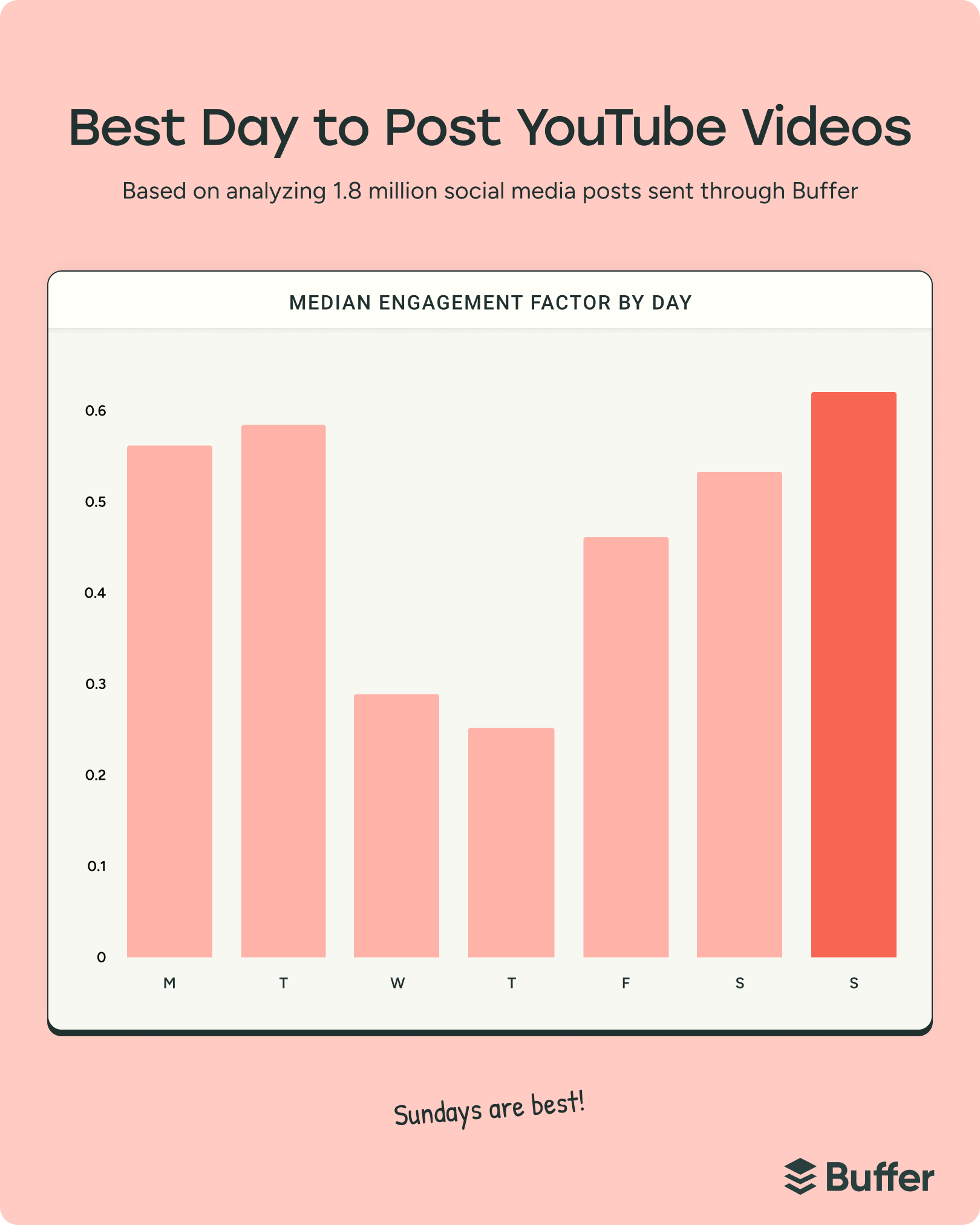
- Sunday: The clear winner, with 10 a.m. achieving a remarkable 0.95 engagement factor. Other strong slots include 9 a.m. (0.80) and 12 p.m. (0.67). This suggests that Sunday mornings are prime time for viewers seeking relaxed, longer-form content consumption.
- Tuesday: Emerges as the strongest weekday for long-form uploads. Peak times are 9 a.m., 11 a.m., and 8 a.m., indicating that early to mid-morning captures a receptive audience, perhaps during commutes or early work breaks.
- Monday: Starts the week strong, with 9 a.m. as the best slot, followed by 10 p.m. and 7 a.m. Viewers seem to enjoy kicking off their week with YouTube content, with a secondary late-evening window for uploads.
- Friday: An interesting anomaly, with midday (12 p.m.) outperforming morning slots, boasting one of the highest engagement factors (0.70) of the entire week. This could reflect viewers winding down for the weekend, seeking content during their lunch breaks.
- Saturday: Moderate and consistent engagement throughout the day, with 12 p.m., 10 a.m., and 3 p.m. as top slots. It’s a reliable day for channels whose audience skews towards weekend viewing.
- Wednesday & Thursday: These are identified as the weakest days for long-form video engagement. While some pockets exist (Wednesday 7 a.m., 3 p.m., 5 p.m.; Thursday 5 p.m., 6 p.m., 7 a.m.), engagement generally dips significantly during midday and early afternoon. Creators might consider re-evaluating their schedule on these days or strategically timing uploads to these smaller peaks. Thursday at 2 p.m., for instance, recorded one of the lowest engagement factors (0.11) of the week.
The general trend for long-form content leans heavily towards morning uploads, particularly on the weekends. This pattern suggests a shift in how audiences integrate YouTube into their weekly routines, favoring more focused viewing during periods of increased personal time.
In-Depth Analysis of YouTube Shorts Performance
The meteoric rise of YouTube Shorts has necessitated a distinct analytical approach. Buffer’s data illuminates unique engagement patterns for this format:
- Friday: The undisputed champion for Shorts, with 4 p.m., 6 p.m., and 7 p.m. taking the top three slots. This reinforces the idea of Shorts as "end-of-week unwind" content.
- Saturday: Follows Friday as a strong day, with evening slots again dominating, though 11 a.m. breaks into the top three, suggesting a morning window for short-form content on the weekend.
- Thursday: Also performs well for Shorts, especially in the evening.
- Evenings Dominate: Unlike long-form videos, YouTube Shorts consistently see peak engagement in the evenings, generally between 6 p.m. and 11 p.m. This aligns with the common behavior of scrolling through short-form content to relax or fill brief idle moments.
- Worst Times: Afternoons, between 12 p.m. and 5 p.m., generally show lower engagement for Shorts, with Friday afternoon being a notable exception where it actually performs strongly.
- Weakest Days: Tuesday and Monday are the weakest days for posting YouTube Shorts. Channels focusing solely on Shorts would benefit from prioritizing the latter half of the week, with Friday as a cornerstone.
This clear distinction in performance between long-form videos and Shorts means that creators publishing both formats have an advantage: they can strategically stagger their uploads, scheduling long-form content for morning uploads and Shorts for evening drops, without competing for their own audience’s immediate attention.
Methodology and Universal Applicability
Buffer’s analysis was based on a massive dataset of 1.8 million videos, providing a robust statistical foundation. The "median engagement" metric was used to ensure that outlier viral successes or failures did not skew the overall trends, providing a more reliable indicator of typical performance. A crucial aspect of this study is that the recommended times are universally applicable in the viewer’s local time zone, thanks to mathematical normalization performed by Buffer’s data scientists. This eliminates the guesswork of time zone conversions for a global audience.
Implications for Content Creators and Marketers
While these general recommendations offer a powerful starting point, industry experts consistently stress that successful YouTube strategy is multifaceted. "Timing can open the door, but content quality keeps the audience inside," notes a leading digital marketing strategist. For creators and brands, the insights from Buffer’s study translate into several actionable strategies:
- Strategic Scheduling: Implement the recommended peak times as a baseline for new content. For hybrid channels, leverage the non-overlapping peak times to publish both long-form and Shorts effectively throughout the week.
- Algorithmic Advantage: Posting during active hours increases the likelihood of picking up early engagement signals (clicks, watch time, likes). These signals are critical for YouTube’s algorithm to identify content that resonates and recommend it more widely, amplifying reach.
- Adaptation and Testing: Recognize that these are general trends. The unique characteristics of a channel’s specific audience may necessitate further refinement. This leads to the critical step of leveraging YouTube’s native analytics.
Finding Your Channel’s Unique Optimal Time with YouTube Analytics
Even with broad industry data, personalized optimization remains key. YouTube Studio provides creators with robust, real-time analytics to understand their specific audience’s behavior:
- Access YouTube Studio: Navigate to studio.youtube.com. This is the central hub for managing your channel, uploading content, and monitoring performance.
- Navigate to Analytics: Click the "Analytics" tab on the left-hand side. This dashboard offers insights into viewership, watch time, subscriber growth, and overall engagement.
- Explore the Audience Tab: Within Analytics, select the "Audience" tab. Here, creators can uncover valuable demographic information, viewer location, and other content their audience consumes.
- Identify "When Your Viewers Are On YouTube": Scroll down to find this critical heatmap report. It visually displays your audience’s most active times on YouTube, represented by darker purple shades, set in your local time zone. The lightest purple areas indicate least active times.
This heatmap is a dynamic tool, updating every 28 days, meaning optimal times for a specific channel can shift. Creators should regularly consult this report, comparing it against the broader industry trends provided by Buffer, to fine-tune their posting schedule. It’s recommended to experiment by posting an hour or two before peak audience activity to allow YouTube time to process and index the video, ensuring it’s ready for immediate consumption when viewers come online.
Beyond Timing: A Holistic Approach to YouTube Success
While optimal posting times offer a significant boost, they are merely one component of a comprehensive YouTube strategy. The ultimate success of a video hinges on a confluence of factors:
- Content Quality: Engaging, valuable, and well-produced content remains the bedrock of any successful channel.
- Compelling Titles and Thumbnails: These are the first impression and critical for driving click-through rates (CTR). They must accurately represent the content while sparking curiosity.
- Audience Engagement: Actively interacting with comments, fostering a community, and responding to viewer feedback can significantly boost loyalty and watch time.
- Consistency: Regular uploads, even if not daily, help maintain audience interest and provide consistent signals to the YouTube algorithm.
- SEO Optimization: Using relevant keywords in titles, descriptions, and tags helps YouTube understand the content and recommend it to interested viewers.
- Promotional Strategy: Sharing videos across other social media platforms and embedding them on websites can expand reach beyond YouTube.
In conclusion, Buffer’s latest analysis provides invaluable, data-driven guidance for navigating the complex world of YouTube content optimization. By recognizing the distinct consumption patterns for long-form videos and Shorts, and by combining these broad insights with personalized data from YouTube Studio, creators and marketers can significantly enhance their chances of securing early engagement, ultimately boosting their content’s visibility and long-term success on the platform. The dynamic nature of digital media necessitates continuous learning and adaptation, making ongoing analysis and strategic refinement essential for thriving in the evolving YouTube ecosystem.