
 Ali Ikhwan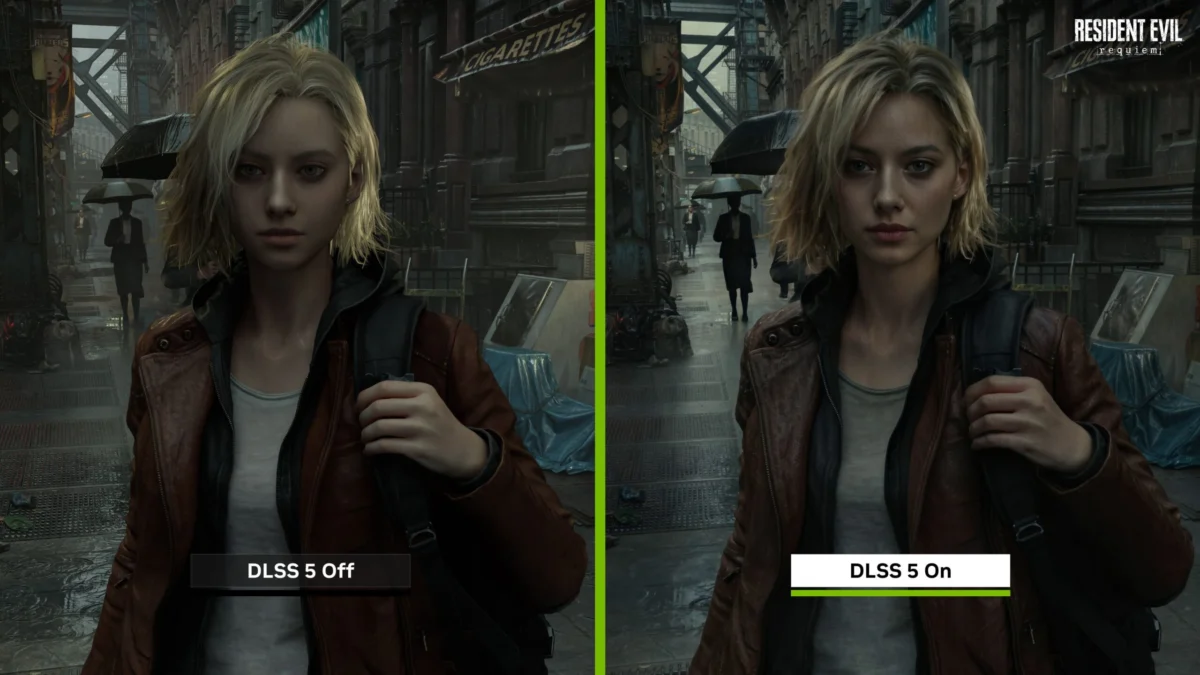
Nvidia Corporation utilized its annual GPU Technology Conference (GTC), an event frequently characterized as the "Super Bowl of AI," to unveil the fifth iteration of its Deep Learning Super Sampling (DLSS) technology. While previous versions of the software focused on performance optimization through spatial upscaling and frame interpolation, DLSS 5 introduces a paradigm shift by utilizing generative artificial intelligence to reconstruct and enhance character faces in real-time. This technological leap, intended to bridge the gap between real-time rendering and cinematic photorealism, has instead ignited a firestorm of criticism from the gaming community, digital artists, and software developers who argue the technology compromises artistic intent and introduces unwanted visual distortions.
The Evolution of Deep Learning Super Sampling
To understand the significance of DLSS 5, it is necessary to examine the trajectory of Nvidia’s proprietary AI technologies since their inception in 2018. The original DLSS 1.0 was designed as an alternative to traditional anti-aliasing, using a neural network to upscale lower-resolution images to match the native resolution of a display. This allowed users to achieve higher frame rates without the heavy computational tax of native 4K rendering.
By 2020, DLSS 2.0 introduced a generalized AI model that no longer required training for specific games, significantly improving temporal stability and image clarity. In 2022, the release of the Ada Lovelace architecture brought DLSS 3, which introduced "Frame Generation." This feature used Optical Multi-Frame Generation to create entirely new frames between rendered ones, effectively doubling or tripling frame rates in CPU-bound scenarios. DLSS 3.5 followed, introducing "Ray Reconstruction," which replaced hand-tuned denoisers with an AI model to improve the quality of ray-traced effects.
DLSS 5 represents the first time Nvidia has moved beyond the "structure" of a frame into the "content" of the frame. Rather than simply refining pixels or predicting motion, the generative AI in DLSS 5 actively interprets what a character’s face should look like, adding micro-details, skin pores, and lighting nuances that were never part of the original game assets or the developer’s initial artistic vision.
The GTC Demonstration and Technical Ambition
At GTC, Nvidia demonstrated DLSS 5 running on a high-end configuration featuring dual GeForce RTX 5090 graphics cards. The demonstration showcased several high-profile titles, including Capcom’s Resident Evil Requiem, Ubisoft’s Assassin’s Creed, and Bethesda’s Starfield. According to Nvidia, the goal is to provide a "generative AI glow-up" that transforms standard character models into photorealistic avatars.
The technology works by analyzing the geometry and texture data of a character and then overlaying a generative layer that simulates high-fidelity skin shaders and complex lighting. Kevin Bates, CEO and creator of the open-source Arduboy handheld, noted the sheer technical audacity of the project. Bates observed that such high-level generative tasks were previously reserved for massive cloud-based server farms. The prospect of Nvidia distilling this capability into a consumer-grade graphics card by late 2024 is a feat of engineering that signals the company’s dominance in the AI hardware sector.
However, the ambition of the project is precisely what has caused friction. Unlike upscaling, which attempts to represent the developer’s work more clearly, generative AI creates new information. This "generative rubicon" means that the AI is effectively making creative decisions on behalf of the user, sometimes without the explicit consent or input of the original game designers.
Public Backlash and the "Yassification" Controversy
The reaction to the DLSS 5 demonstration on social media and gaming forums was swift and largely negative. Critics pointed to a phenomenon they described as "yassification"—a slang term referring to the use of beauty filters to make faces appear more traditionally attractive, often at the expense of character personality or realism.
In the Resident Evil Requiem demonstration, observers noted that the female protagonist’s features were significantly altered. Her eyes appeared larger, her lips fuller, and her skin texture was smoothed to a degree that many felt resembled a "Snapchat filter" or an Instagram "glamour filter." This led to accusations of "AI slop," a term used to describe low-effort or aesthetically unappealing AI-generated content that lacks the nuance of human craft.
Beyond the aesthetic changes, technical artifacts were also visible in the official promotional material. During a segment featuring a soccer match, the generative AI struggled to distinguish between the foreground and background, resulting in visual glitches where the goal net appeared to clip through the ball before impact. These "hallucinations"—a common problem in generative AI—suggest that while the technology can create stunning stills, its application in high-speed, interactive environments remains prone to error.
The Artist’s Perspective: A Loss of Intent
The primary concern among industry professionals is the devaluation of artistic intent. James Brady, a veteran game artist whose credits include Call of Duty: Modern Warfare 3, expressed concern that the technology overrides the "shape language" and design choices made by character artists. Every scar, wrinkle, and facial asymmetry in a character model is typically a deliberate choice meant to convey history, personality, or emotion. By "correcting" these features to look more photorealistic or conventionally attractive, the AI may be stripping away the very elements that make a character memorable.
Raúl Izquierdo, an independent game developer based in Mexico, echoed these sentiments, stating that AI often fails to respect the specific art direction of a project. Not every game strives for photorealism; many rely on stylized aesthetics that could be ruined by an AI model trained to prioritize realistic skin textures and lighting.
Furthermore, there is a growing concern regarding the "one-size-fits-all" nature of the technology. Because DLSS 5 is implemented at the driver or hardware level, it can be applied across a wide variety of games. This creates a situation where a single AI model’s "preferences" for facial structure and lighting are superimposed onto the work of thousands of different artists, potentially homogenizing the visual identity of modern gaming.
Developer Responses and the Question of Optimization
Perhaps the most surprising aspect of the DLSS 5 reveal was the reaction from the developers whose games were used in the demo. Reports indicate that teams at Capcom and Ubisoft were not briefed on the specific visual changes the AI would apply to their characters. Many found out about the "generative glow-up" at the same time as the general public, leading to internal frustration within these studios.
Marwan Mahmoud, a developer at Incrypt, suggested that the industry’s increasing reliance on AI upscaling is a double-edged sword. While these tools allow games to run on hardware that would otherwise struggle, there is a risk that developers will stop focusing on traditional optimization. If a game can simply be "fixed" by DLSS 5, there is less incentive to spend the months required to optimize engine code or refine character models.
This sentiment is shared by Sterling Reames, a developer with experience at Striking Distance Studios and Zynga, who noted that players ultimately want "better games," not just more complex filters. The consensus among many developers is that DLSS should remain a tool for performance, not a replacement for art direction.
Corporate Stance and Market Implications
In the wake of the criticism, Nvidia CEO Jensen Huang remained steadfast in his defense of the technology. Responding to the backlash, Huang suggested that critics and gamers were "completely wrong" about the utility and future of DLSS 5. From Nvidia’s perspective, the transition to generative AI is an inevitable evolution of computing. The company views the "Uncanny Valley"—the point at which an artificial representation becomes "off-putting" because it is nearly, but not quite, human—as a hurdle that can only be cleared with more data and more processing power.
Nvidia’s aggressive push into generative graphics is also a strategic move to maintain its massive lead over competitors like AMD and Intel. While AMD’s FSR (FidelityFX Super Resolution) and Intel’s XeSS offer competitive upscaling solutions, neither has yet ventured into the realm of generative character reconstruction. By defining the future of graphics as "AI-generated," Nvidia forces the rest of the industry to play catch-up on a field where Nvidia holds the most patents and the most powerful hardware.
However, critics like Izquierdo point out that the current implementation of DLSS 5 seems designed to sell new hardware rather than improve the player experience. The fact that the demo required two RTX 5090s suggests that the "democratization" of this technology is still far off. If the technology were used to make older, weaker hardware (such as the RTX 20-series) perform better, the reception might have been more positive. Instead, it is being marketed as a premium feature for the ultra-enthusiast market.
Conclusion: Living in Jensen’s World
The debut of DLSS 5 marks a turning point in the relationship between hardware manufacturers and software creators. For decades, the role of the graphics card was to render the instructions of the developer as faithfully as possible. With the advent of generative AI, the graphics card has become a co-creator, one that has the power to alter the appearance of a game in ways the original artists never intended.
As Kevin Bates noted, this technology may soon become the industry standard, regardless of current objections. As AI models become more sophisticated and the "hallucinations" and "yassification" effects are refined, the friction between AI and human artistry may fade into the background. For now, however, DLSS 5 stands as a controversial milestone—a testament to Nvidia’s technical prowess and a stark reminder of the tensions inherent in the AI revolution. Whether gamers eventually embrace these "generative glow-ups" or continue to reject them as "AI slop" will likely determine the visual landscape of the next generation of interactive entertainment.







