The landscape of social media management tools is dominated by a few key players, with Buffer and Hootsuite frequently emerging as top contenders for businesses seeking to streamline their digital presence. Both platforms offer robust features for scheduling, analytics, and engagement, proving invaluable for maintaining consistency across diverse social channels. However, a deeper examination reveals that while their core functionalities overlap, their design philosophies, pricing structures, and target user bases diverge significantly, making the choice between them less about which is "best" and more about which aligns precisely with an organization’s specific needs and scale.
The Evolving Imperative of Social Media Management
In an era where digital communication is paramount, social media has transcended its origins as a personal networking tool to become a critical pillar of business strategy. Companies across all sectors now leverage platforms like Instagram, Facebook, X (formerly Twitter), LinkedIn, and TikTok for brand building, customer engagement, lead generation, and market research. This exponential growth in social media activity has, in turn, fueled the demand for sophisticated management tools capable of handling the complexities of multi-platform presence. Industry reports indicate that global spending on social media advertising and marketing tools has seen a compound annual growth rate exceeding 20% in recent years, underscoring the vital role these platforms play. For businesses, effective social media management is no longer a luxury but a strategic imperative to remain competitive and connected with their audience.
A Brief Chronology of Social Media Management Tools
The journey of social media management tools began in the late 2000s, coinciding with the rapid popularization of platforms like Facebook and Twitter. Early tools primarily focused on basic scheduling and cross-posting. Hootsuite, founded in 2008, quickly established itself as a pioneer, offering a comprehensive dashboard for managing multiple social profiles. Its early adoption by larger enterprises and agencies set a precedent for its focus on scalability and advanced features. Buffer, launched in 2010, entered the market with a more streamlined approach, emphasizing simplicity, intuitive scheduling, and a user-friendly interface. This foundational difference in initial market positioning has largely shaped their respective trajectories, with Hootsuite evolving into a powerhouse for large-scale operations and Buffer becoming a favored choice for individual creators and growing businesses. Over the past decade, both platforms have continually adapted to the introduction of new social networks, the rise of video content, and the integration of artificial intelligence, reflecting the dynamic nature of the digital marketing ecosystem.
Core Differentiators: Tailored Solutions for Distinct Audiences
At their heart, Buffer and Hootsuite serve different segments of the market. Buffer has carved out a niche catering primarily to small to medium-sized businesses (SMBs), solopreneurs, and individual content creators. Its design ethos prioritizes ease of use, affordability, and features directly relevant to smaller teams or single users managing their organic social media presence. Conversely, Hootsuite has positioned itself as an enterprise-grade solution, targeting large corporations, marketing agencies, and extensive social media marketing teams that require robust functionalities, complex workflows, and comprehensive reporting across numerous accounts and users. This fundamental difference is reflected across every aspect of their offering, from pricing models to feature depth and integration capabilities.
Pricing and Accessibility: A Major Divergence
Cost is often a primary determinant in tool selection, and here Buffer and Hootsuite present a stark contrast. Buffer famously offers a generous "forever-free" plan, allowing users to connect up to three social channels and schedule up to ten posts per channel at any given time. This accessibility makes it an attractive entry point for nascent businesses, individual creators, or those experimenting with social media management without significant upfront investment. Paid plans for Buffer begin at a highly competitive rate of $6 per month per channel (when billed annually), scaling up with the number of connected channels. A significant advantage for teams using Buffer is its unlimited user capacity on its Team plan, meaning costs grow with channels, not with the number of team members.
Hootsuite, on the other hand, operates on a fundamentally different pricing model. It does not offer a free plan, requiring users to commit to a paid subscription from the outset. Its entry-level paid plans start at a substantially higher $99 per user per month (billed annually), with costs escalating rapidly as more users are added. For a team with two users and two social media channels, for instance, Hootsuite’s monthly cost could be $298, whereas Buffer would be $24 per month with unlimited users on its Team plan. This per-user pricing model, while common in enterprise software, can be a significant barrier for smaller organizations.
Both platforms do offer free trials to allow prospective users to test their features. Buffer provides a 14-day trial for its Essentials and Team plans, complementing its permanent free tier. Hootsuite extends a 30-day trial for its Standard and Advanced plans, after which users are automatically charged the respective monthly fees. This trial period is crucial for larger teams to assess the complexity and suitability of Hootsuite’s extensive feature set before committing financially. The implications of these pricing structures are clear: Buffer aims for broad accessibility and incremental scaling for growing entities, while Hootsuite targets organizations with larger budgets and a clear need for enterprise-level functionality, where the per-user cost is justifiable by the scale of operations and depth of features.
Feature Overview: A Comparative Deep Dive
Beyond pricing, the specific features offered by Buffer and Hootsuite highlight their distinct target audiences.
Supported Social Media Channels:
Both platforms support a wide array of popular social networks including Instagram, Facebook, X/Twitter, LinkedIn, TikTok, and Threads. However, there are notable differences in niche platform support and specific functionalities:
- Buffer’s Broader Reach: Buffer extends its support to Pinterest, Google Business Profiles, Mastodon, Bluesky, YouTube Shorts, and even Shopify for e-commerce integration. It also allows management of Instagram Creator, Business, and Personal profiles, and Facebook Pages and Groups.
- Hootsuite’s Enterprise Focus: Hootsuite supports YouTube, Pinterest (image-only posts), Threads, Bluesky, and WhatsApp. It primarily focuses on Instagram Business and Creator profiles and Facebook Pages, reflecting a corporate marketing emphasis. Hootsuite also integrates paid ad campaign management for Facebook, LinkedIn, and X/Twitter, a critical feature for larger marketing budgets that Buffer currently does not offer.
Content Planning and Scheduling:
The core functionality of any social media management tool lies in its ability to facilitate content planning and scheduling. Both Buffer and Hootsuite provide essential tools like calendar views, bulk scheduling, and crossposting.
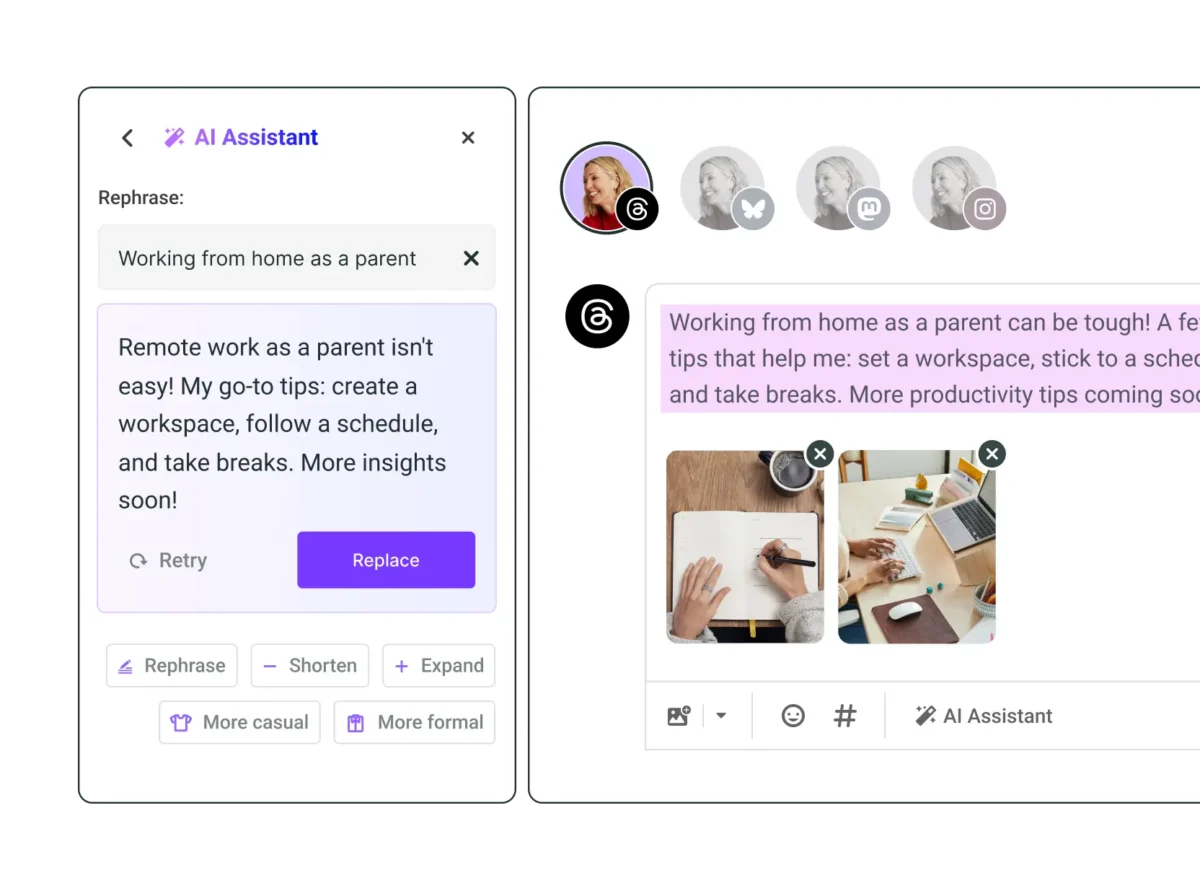
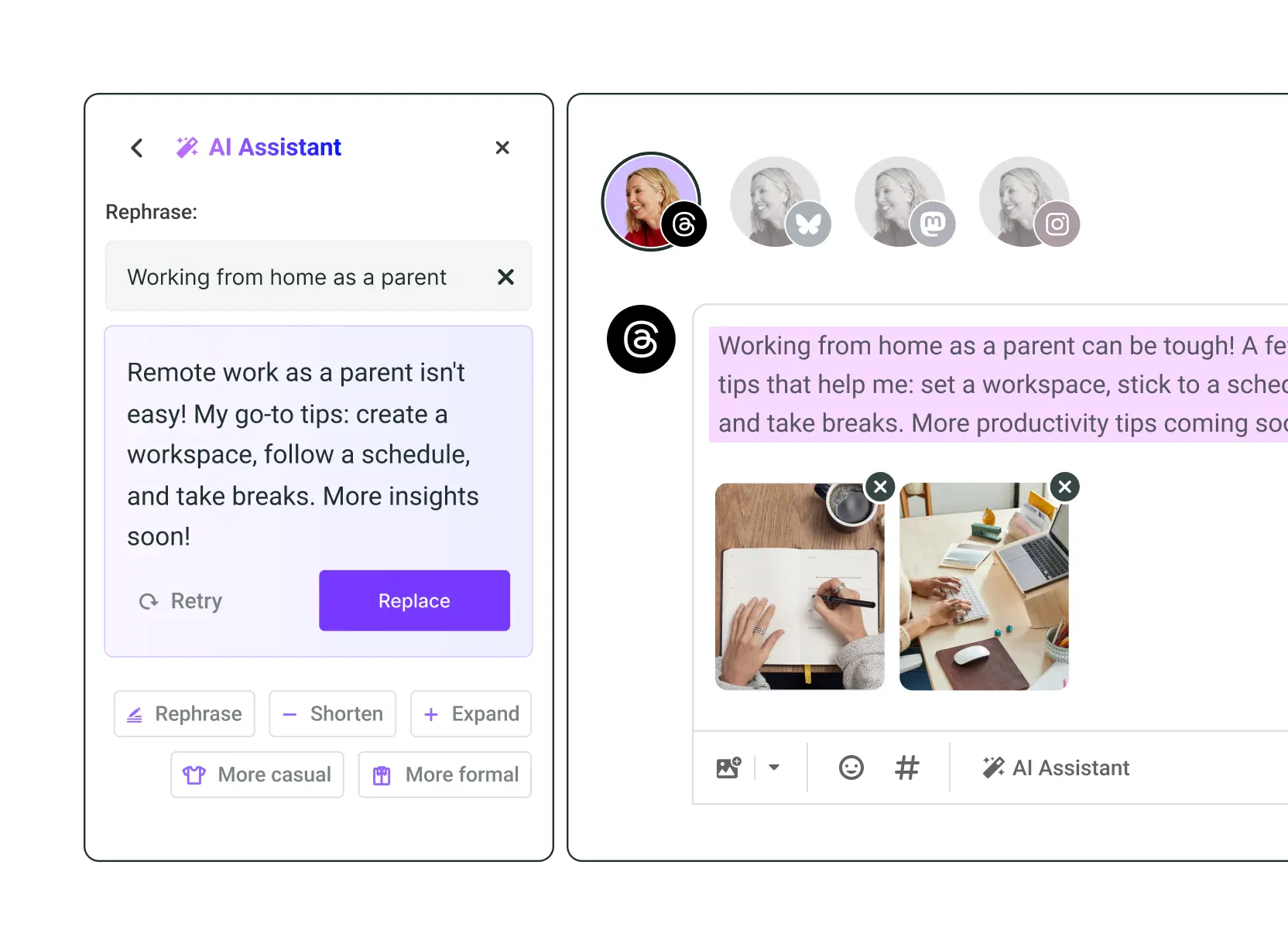
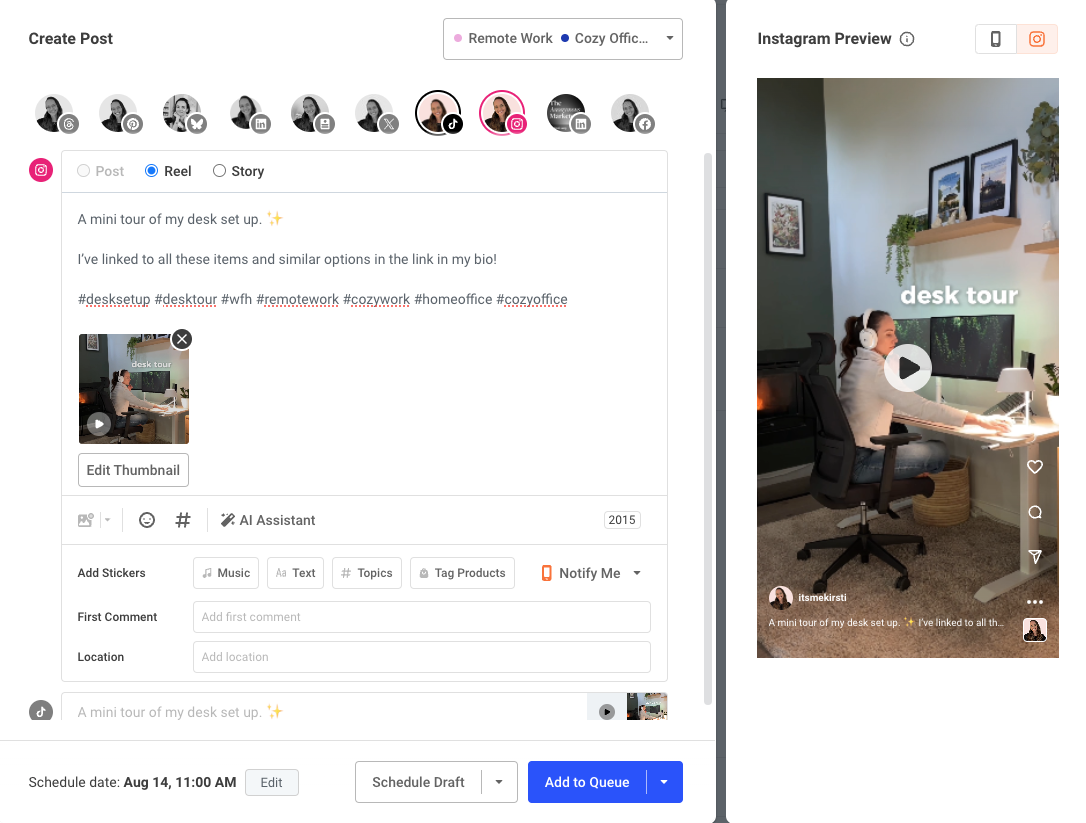
- Buffer’s Create Space and AI Assistant: Buffer streamlines content planning with "Create Space," a dedicated hub for storing post ideas, text, and media. This acts as a content library, organized with tags and a Kanban board view, making it easy to manage content pipelines. Its integrated AI Assistant is available on all plans, including the free tier, with unlimited usage for brainstorming, repurposing content, and drafting posts. This democratic access to AI-powered content generation is a significant advantage for creators and small businesses operating with limited resources. Buffer also offers an open API for custom AI workflows, allowing integration with tools like ChatGPT or Claude.
- Hootsuite’s OwlyGPT and Bulk Capacity: Hootsuite’s content planning leans heavily on its AI chatbot, OwlyGPT, available on paid plans with token limits. OwlyGPT offers personalized suggestions, campaign idea generation, and content repurposing based on trending topics. While powerful, its limited access makes it less universally available than Buffer’s AI. For bulk scheduling, Hootsuite boasts a higher cap of 350 posts per upload (on Advanced or Enterprise plans), compared to Buffer’s 100 posts (on paid plans, with no limit on the total queue). This higher capacity caters to large enterprises with extensive content calendars.
- User Interface and Experience: Buffer is praised for its clean, intuitive interface, enabling quick onboarding and immediate content publishing. Its integrations with Canva, Unsplash, Dropbox, and Google Drive simplify the creative process. Hootsuite, while powerful, has a steeper learning curve due to its extensive features and dashboard complexity, often requiring users to consult its knowledge base.
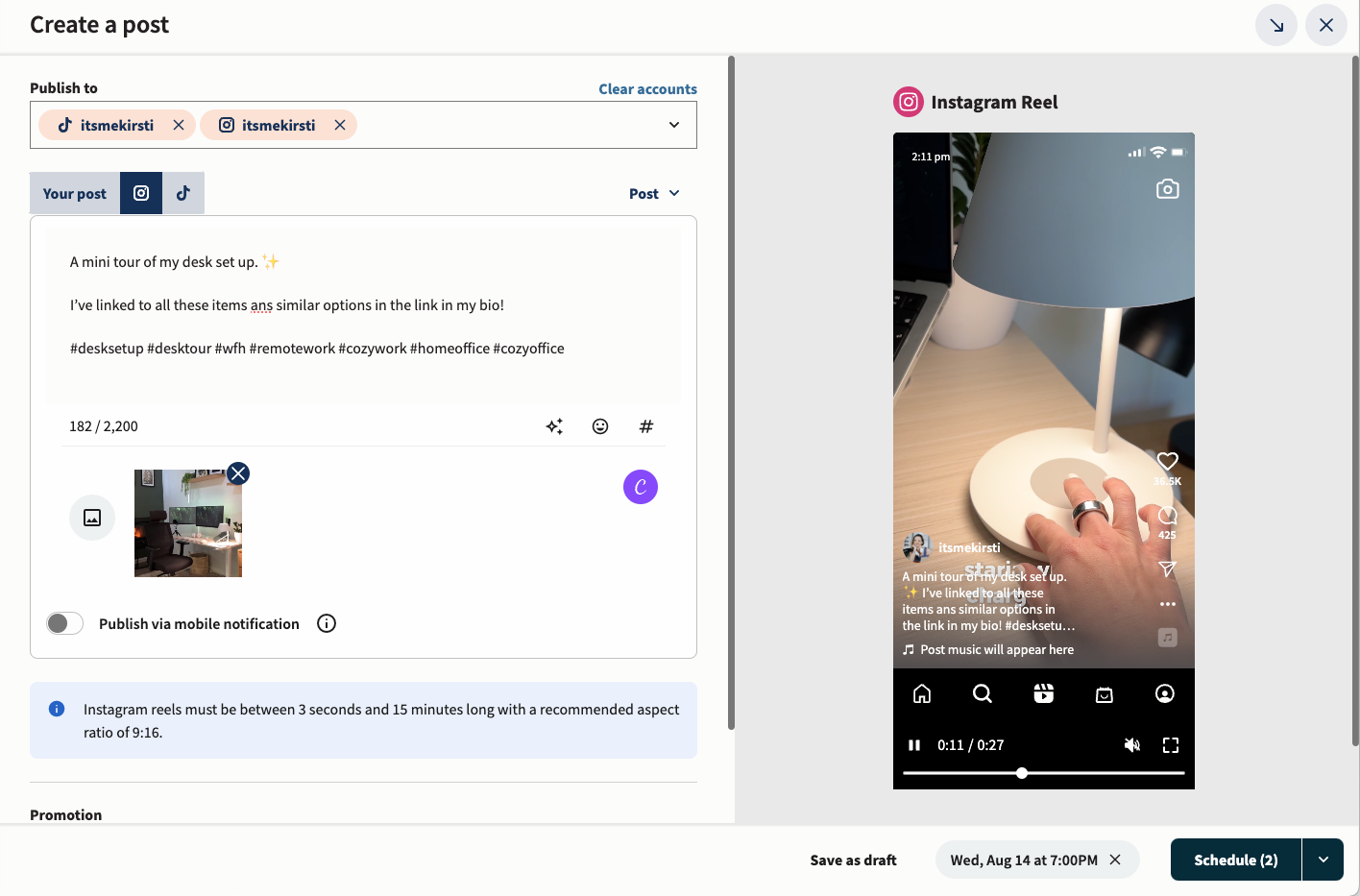
- Specific Posting Nuances: Hootsuite lacks direct control over cover images/thumbnails for Instagram Reels from Creator accounts or TikTok videos, which can be a drawback for creators focused on visual branding. It also requires separate creation for Pinterest Pins, unlike other platforms where crossposting is more direct. Buffer’s calendar views offer channel-specific post details in both week and month views, providing a clear overview, while Hootsuite’s month view shows post status but not platform specifics.
Engagement Features: Connecting with Audiences
Effective engagement is crucial for community building and customer service. Both tools offer features to manage interactions, but their approaches differ.
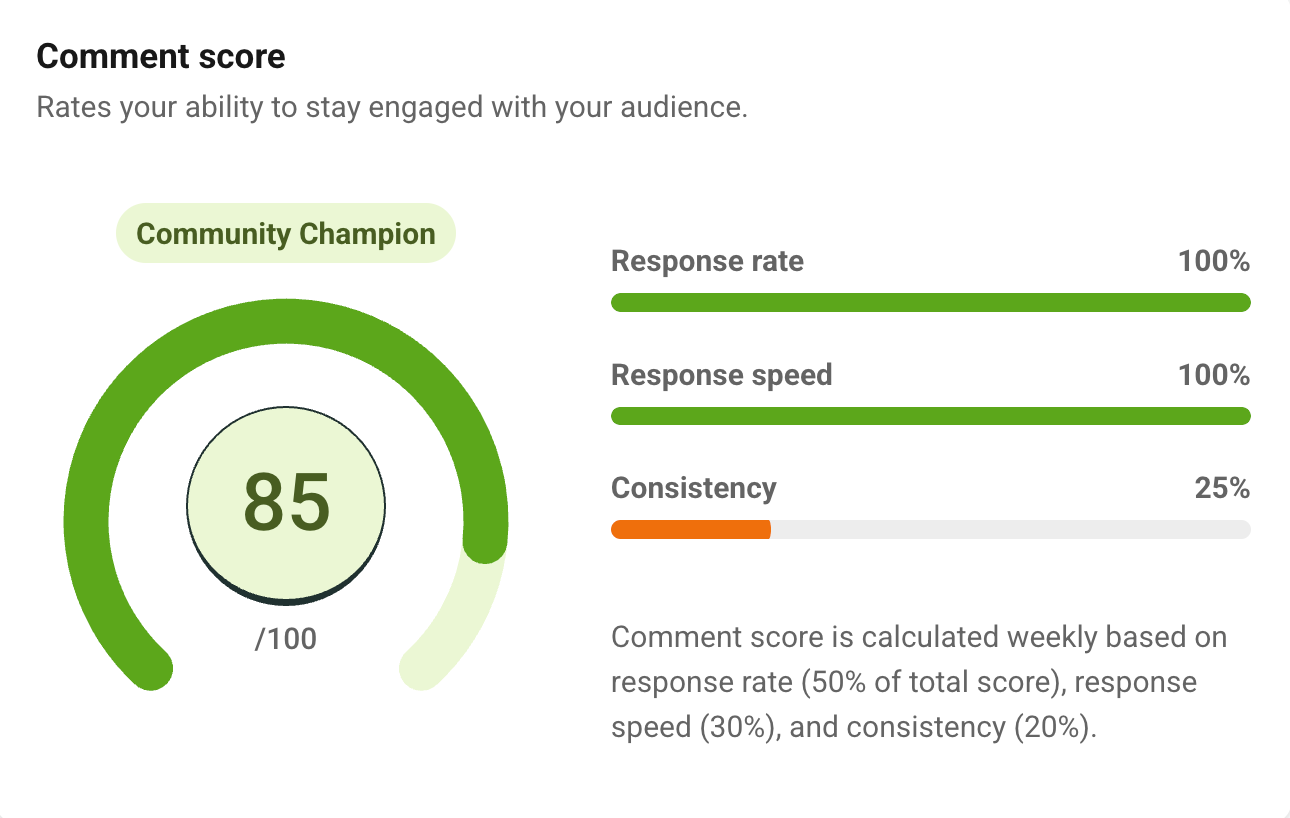
- Buffer’s Community Focus: Buffer’s "Community" feature is designed for authentic audience connection. It consolidates conversations, offers AI Assistant suggestions for replies, and allows saving of common responses. A unique "comment score" provides insights into response speed and consistency, helping users identify areas for engagement improvement. The AI also analyzes audience reactions to posts, suggesting new content ideas and engagement strategies. This focus on building relationships aligns well with solopreneurs and creators.
- Hootsuite’s Inbox 2.0 and Social Listening: Hootsuite’s "Inbox 2.0" functions as a comprehensive customer support tool, consolidating comments and direct messages from multiple platforms. It supports assigning messages to team members, automated routing, and even acts as a mini CRM by allowing the storage of user contact information. While powerful for large customer service teams, advanced features like detailed conversation tagging are typically reserved for its custom-priced Enterprise plan. Hootsuite also excels in social listening, offering tools to track brand mentions, sentiment, and trending topics, with full access predominantly on its Enterprise plan. This feature is invaluable for large organizations requiring deep market insights and reputation management.
Analytics, Insights, and Reporting:
Understanding content performance is vital for strategic adjustment. Both platforms offer analytics, but with varying degrees of depth and focus.
- Buffer’s Actionable Insights: Buffer’s analytics are designed for clarity and actionable insights. It provides post-level analytics for all supported channels and offers in-depth metrics for Facebook Pages, Instagram Business/Creator accounts, X/Twitter, and LinkedIn Pages on paid plans. A standout feature is the "Answers" tab, which not only displays metrics but also provides specific, data-driven recommendations for improving performance. This guided approach to analytics is highly beneficial for users who need help interpreting data and translating it into strategy, reflecting Buffer’s commitment to empowering smaller teams.
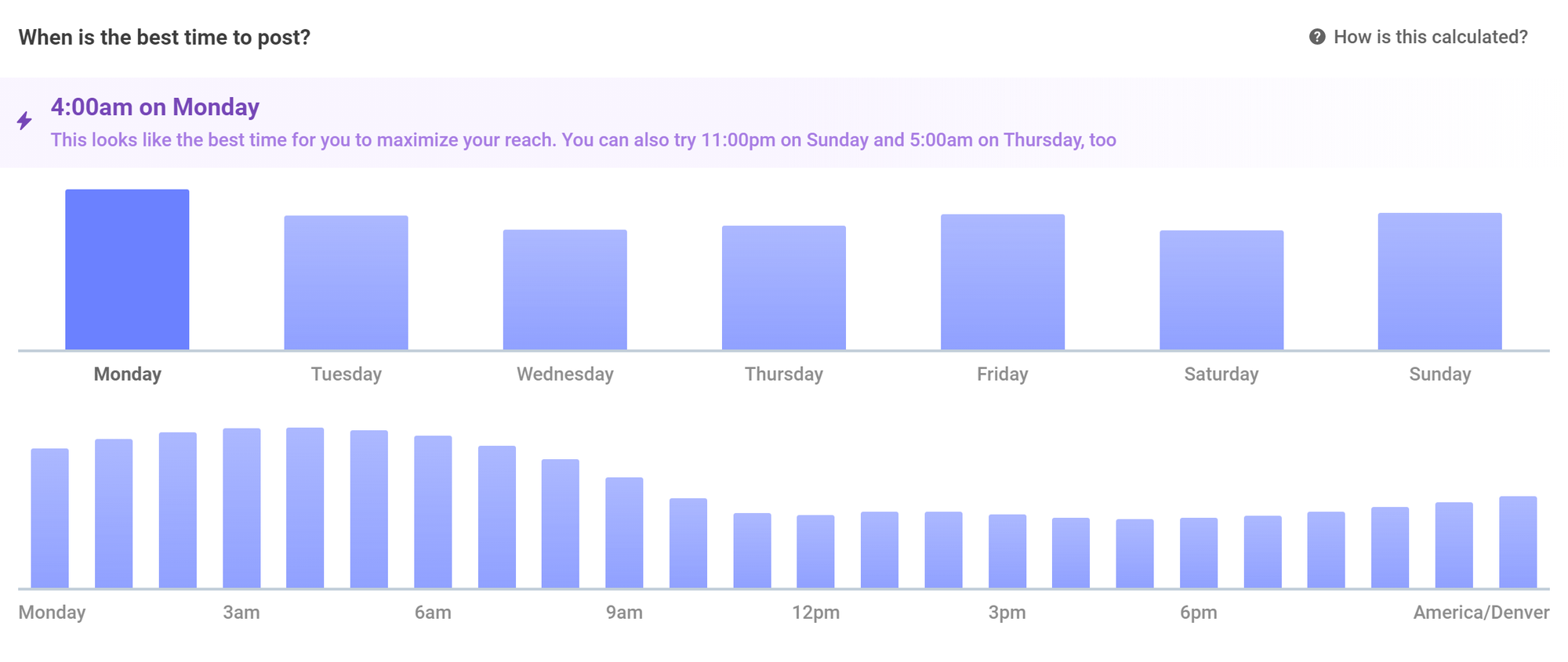
- Hootsuite’s Enterprise-Grade Reporting: Hootsuite provides core analytics on post performance, audience growth, and optimal publishing times. Its true strength lies in its advanced reporting capabilities tailored for larger teams. This includes tracking paid ad performance across Facebook, Instagram, LinkedIn, and X/Twitter – a significant advantage for companies running integrated organic and paid social campaigns. Hootsuite also offers industry benchmarking, allowing comparison against sector averages, and competitive benchmarking (up to 20 competitors on Advanced plans), providing crucial context for market positioning and competitive strategy. These features are indispensable for large marketing departments that need to justify ROI and report on market share.
Team Collaboration and Workflow Management:
For organizations with multiple stakeholders, efficient team collaboration features are paramount. Both Buffer and Hootsuite address this, but with different levels of complexity and granularity.
- Buffer’s Streamlined Team Management: Buffer offers straightforward team management, allowing unlimited users on its Team plans. Access levels are clear and concise: "Admin" (full control), "Editor" (can draft and schedule, but needs approval for publishing), and "Contributor" (can draft posts for approval). This system is flexible enough for most small to medium-sized teams, enabling efficient content approval workflows without unnecessary complexity.
- Hootsuite’s Layered Enterprise Structure: Hootsuite is built for intricate team structures. It uses a layered system of "organizations," "teams," and "social accounts" to manage permissions. Organizations are the highest tier, containing multiple teams. Teams can be assigned specific social accounts, and members within those teams can have granular permissions, from full publishing rights to limited inbox access or mandatory approval workflows. Additionally, Hootsuite offers a "Content Library" for shared templates and media assets across teams. While powerful for large, departmentalized marketing teams, this complexity comes with a higher cost per user, reflecting its design for large-scale enterprise deployments where precise control and oversight are non-negotiable.
Strategic Implications and Market Positioning
The distinct strategies of Buffer and Hootsuite have broader implications for the social media management market. Buffer’s focus on affordability, ease of use, and a robust free plan democratizes social media management, making professional tools accessible to a wider audience of entrepreneurs and small businesses. This strategy allows it to capture a significant share of the rapidly growing creator economy and lean marketing teams. Its emphasis on actionable insights and unlimited AI usage further empowers these users to achieve tangible results without needing extensive technical expertise or large budgets.
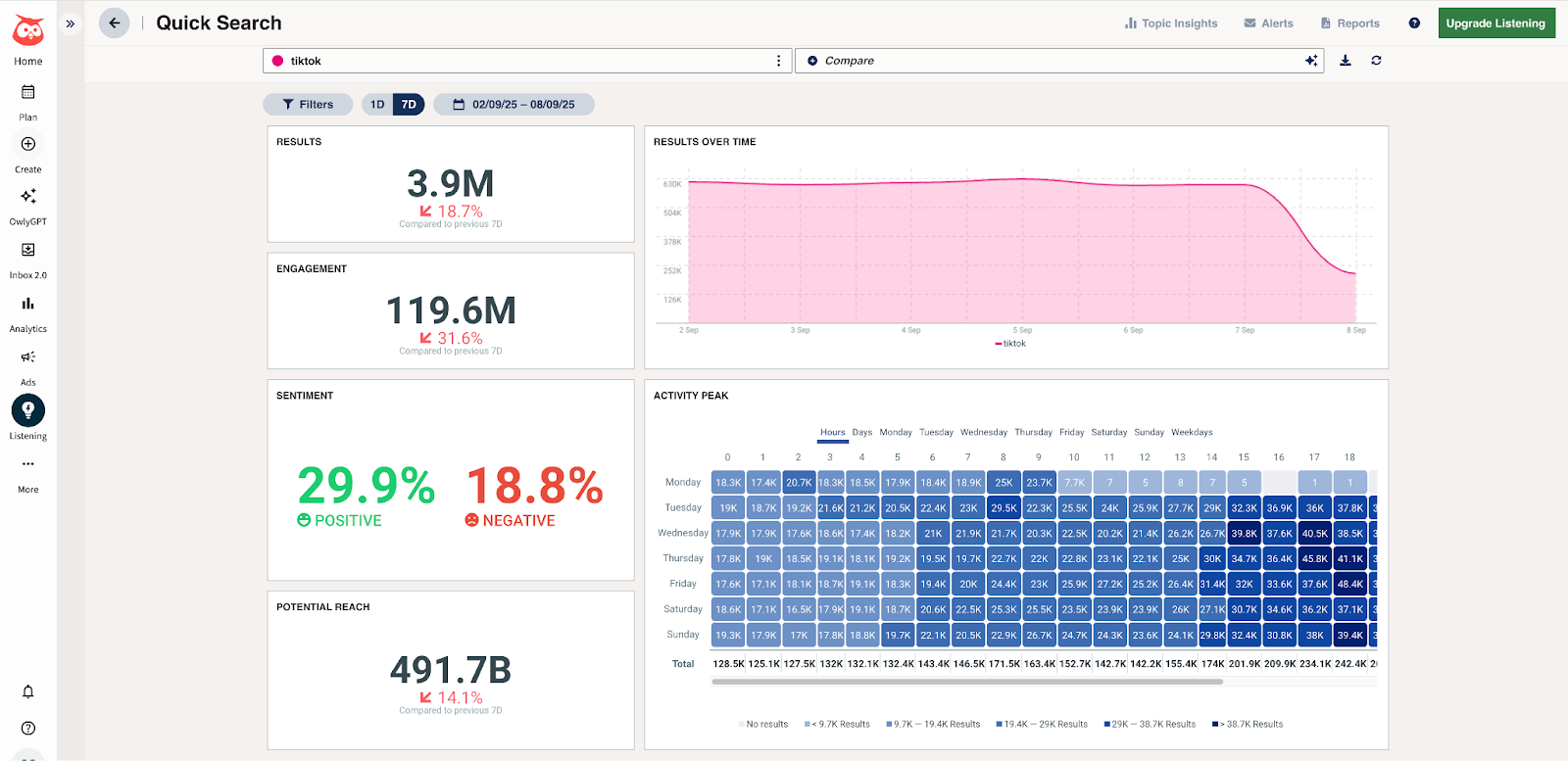
Hootsuite, conversely, solidifies its position as a leading solution for complex enterprise needs. Its comprehensive suite of features, including advanced social listening, competitive benchmarking, and paid ad management, addresses the sophisticated demands of large corporations and agencies. While its higher price point and steeper learning curve might deter smaller entities, these attributes are considered investments by larger organizations seeking an all-encompassing platform for multi-faceted social media strategies, regulatory compliance, and extensive reporting. The ability to manage vast numbers of accounts and users with granular permissions is critical for maintaining brand consistency and operational efficiency across global teams.
Conclusion: Choosing the Right Tool for Your Ambitions
Ultimately, the choice between Buffer and Hootsuite hinges on an organization’s specific scale, budget, and strategic priorities. There is no universally "best" tool, but rather the "right" tool for a particular context.
-
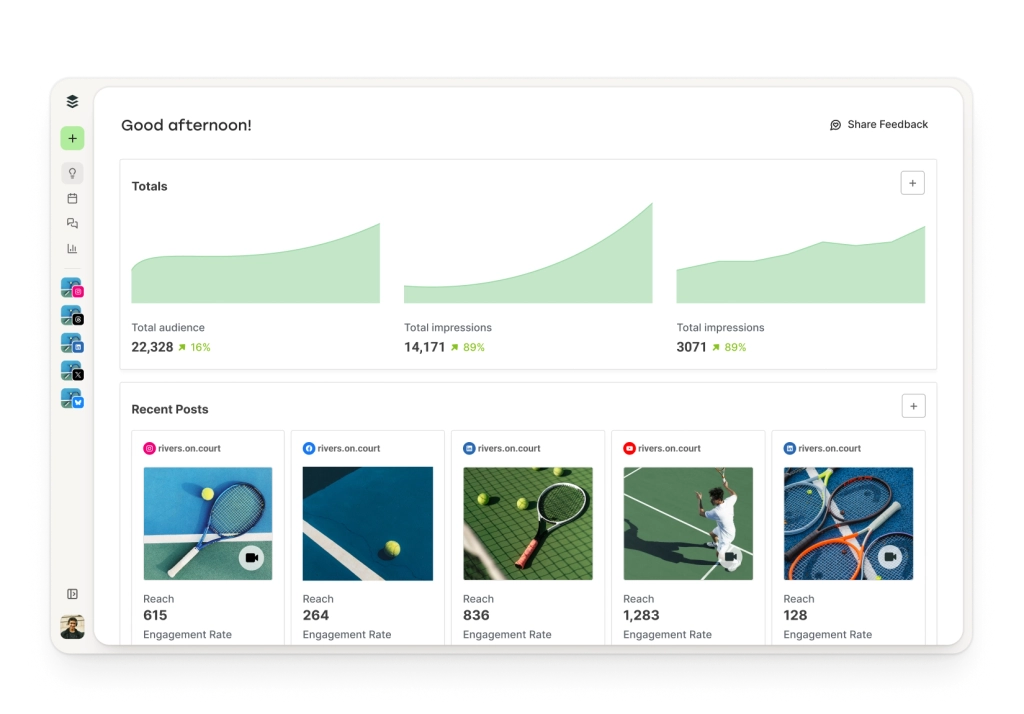
Choose Buffer if: You are an individual creator, solopreneur, a small to medium-sized business, or a lean marketing team. Buffer’s strengths lie in its exceptional affordability (including a robust free plan), user-friendly interface, per-channel pricing model with unlimited team members, and accessible AI assistance. It prioritizes efficiency, ease of use, and actionable insights, making it ideal for those who want to maximize their social media impact without getting bogged down by complex features or prohibitive costs. Its focus on organic growth and community building resonates deeply with smaller entities focused on authentic audience engagement.
-
Choose Hootsuite if: You represent a large marketing team, a corporate enterprise, or an agency managing numerous clients. Hootsuite is designed for scale and complexity, offering advanced features such as comprehensive social listening, competitive and industry benchmarking, integrated paid ad management, and highly granular team permissions. Its robust reporting capabilities and ability to handle extensive workflows make it suitable for organizations with significant social media budgets, a need for deep analytical insights, and complex team structures requiring meticulous oversight. The investment in Hootsuite is often justified by the breadth of its functionality and its capacity to integrate into a wider enterprise tech stack.
For those exploring alternatives or requiring niche functionalities not explicitly covered by either platform, a broader market review of social media management tools is always recommended. However, for a significant majority of businesses navigating the digital landscape, the decision between Buffer and Hootsuite boils down to a clear understanding of their operational scale and strategic intent.
Frequently Asked Questions about Buffer vs. Hootsuite
Is Buffer actually free?
Yes, Buffer offers a perpetual free plan. This plan allows users to connect up to three social media channels, schedule posts, utilize the AI Assistant for content generation, and access basic analytics, all without any expiration date or cost. For enhanced features and more channels, paid plans begin at $6 per month per channel (billed annually).
Does Hootsuite have a free plan?
No, Hootsuite does not currently provide a free plan. While new users can access a 30-day free trial for its Standard and Advanced plans, continued use of the platform necessitates a paid subscription.
Is Buffer cheaper than Hootsuite?
Generally, yes. Buffer’s paid plans start at a significantly lower price point of $5 per social channel per month (when billed annually), and it offers a free plan. Hootsuite’s paid plans start at $99 per user per month (billed annually), making it a considerably more expensive option, particularly for individual users or small teams.
Why do people use Buffer instead of Hootsuite?
Many users opt for Buffer due to its user-friendliness, affordability, and rapid setup time. It delivers essential social media management functionalities—scheduling, analytics, content planning via Create Space, and AI-powered assistance—without the complexity or higher cost typical of enterprise-focused platforms. Buffer is particularly favored by creators, small businesses, and lean marketing teams seeking an efficient and cost-effective solution for organic social media growth.
Do Buffer and Hootsuite integrate with other tools?
Both platforms support third-party integrations, though the extent of their integration libraries differs. Hootsuite offers a broader ecosystem, integrating with over 100 applications including CRM systems like Salesforce, customer service tools like Zendesk, and design platforms like Canva, making it well-suited for organizations with a diverse tech stack. Buffer integrates with key content creation tools such as Canva, Google Drive, Dropbox, and Unsplash, and also connects with Shopify for e-commerce, focusing on streamlining the content creation and publishing workflow for its target audience.