Cintya Tara Annisa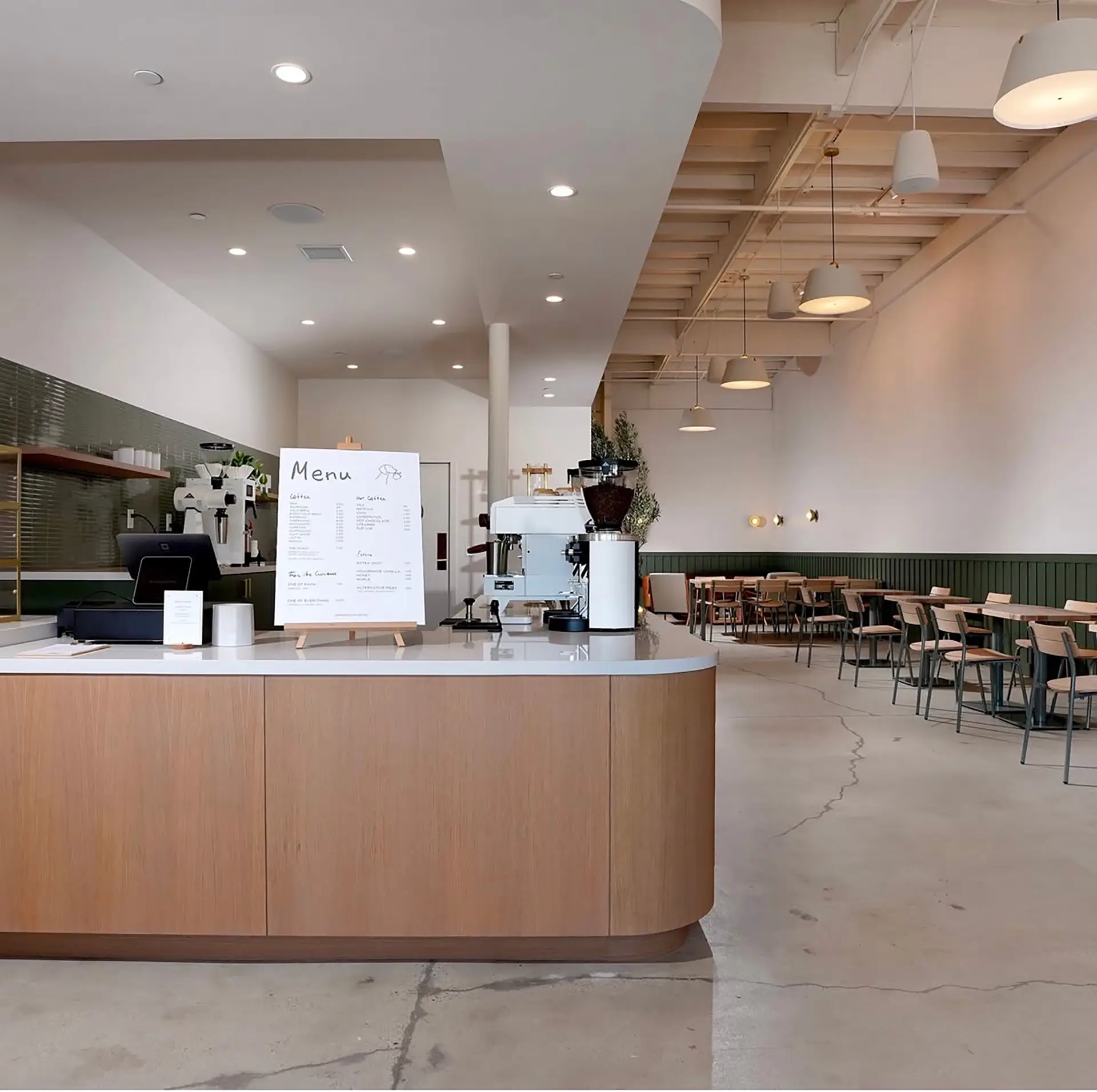
The landscape of the Southern California specialty coffee market underwent a significant expansion on May 22, 2026, with the official opening of Bird Dog Coffee in Orange County. Founded by Kaitlyn Forster, the establishment represents a shift toward the "multi-roaster" business model, a strategy that prioritizes the curation of diverse coffee profiles over the traditional single-roaster partnership. Named after Scout, a bird dog whose presence serves as the brand’s visual and philosophical anchor, the cafe aims to blend high-end technical precision with a neighborhood-centric atmosphere. The project was featured as part of the 2026 Build-outs of Coffee, a prestigious industry showcase presented by DONA, Pacific Barista Series, and La Marzocco, highlighting the most innovative new cafe designs and concepts globally.
The Philosophical Foundation of Bird Dog Coffee
The inception of Bird Dog Coffee was driven by three core pillars: coffee quality, community engagement, and intellectual curiosity. According to Forster, the brand identity was inspired by the natural instincts of a bird dog—exploration and discovery. This ethos is translated into the cafe’s operational model, which avoids the static nature of single-origin exclusivity. Instead, the shop functions as a rotating gallery for world-class coffee roasters, allowing the staff to educate consumers on the nuances of various roasting styles and geographical origins.
The concept of hospitality at Bird Dog Coffee is designed to be inclusive rather than intimidating. While the technical standards behind the bar are rigorous, the front-of-house experience is tailored to encourage patrons to "slow down" and engage with the craft. This approach mirrors a broader trend in the 2026 specialty coffee industry, where the "third wave" focus on technicality is being balanced with a "fourth wave" emphasis on the human element and the social environment of the cafe.
Design and Aesthetic Execution
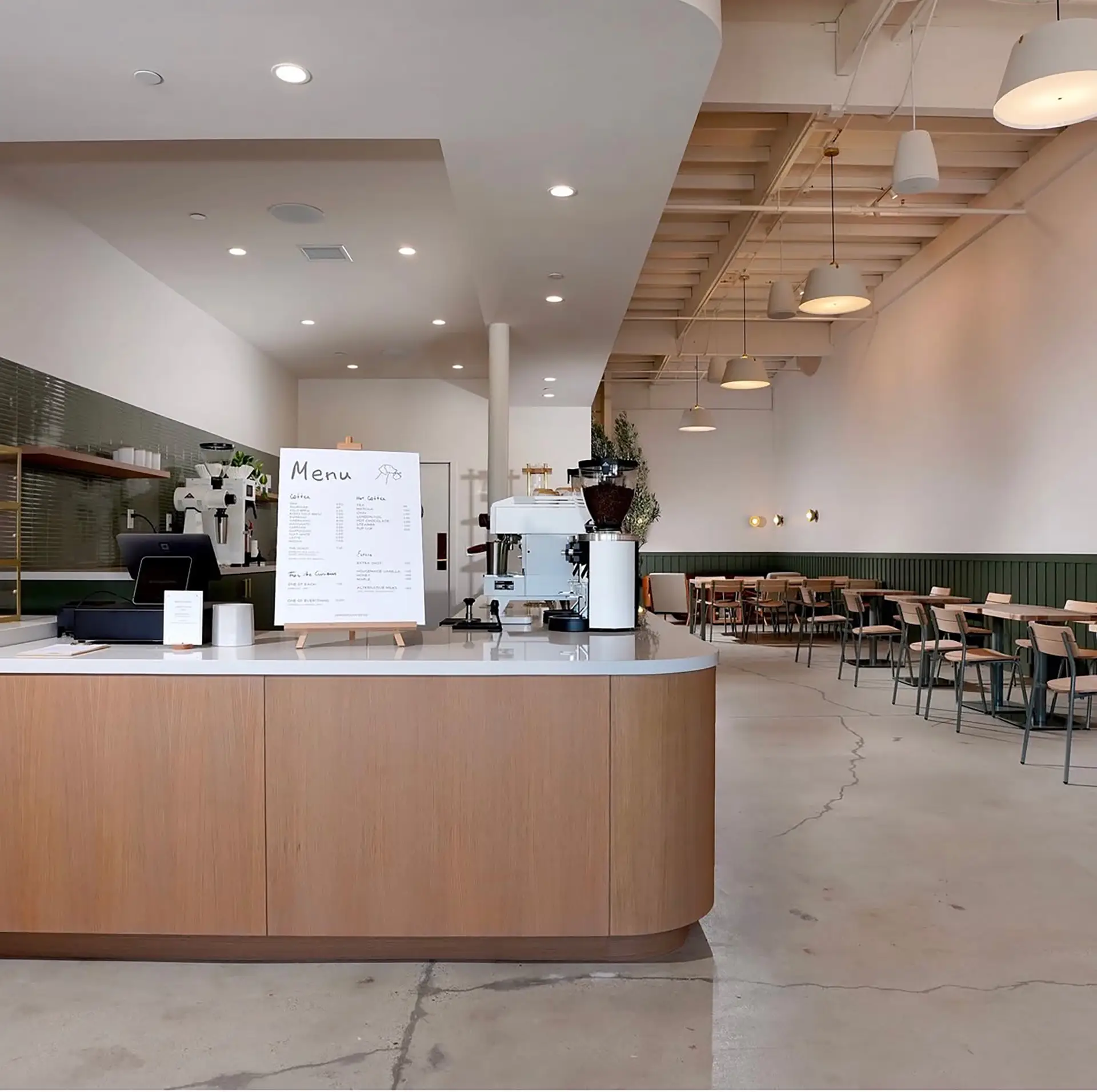
The physical build-out of the Orange County space was a meticulous process that transformed an empty shell into a highly functional workspace. Forster’s vision for the interior focused on intentionality and calm, utilizing a design language that emphasizes minimalism without sacrificing warmth. The material palette consists of clean lines, warm woods, and white matte quartz countertops, punctuated by subtle green accents that evoke the outdoor, exploratory nature of the brand’s namesake.
The layout was engineered to optimize workflow, ensuring that equipment placement serves the efficiency of the baristas while remaining accessible to the view of the customer. In modern cafe design, the "open bar" concept is increasingly popular as it demystifies the brewing process. Bird Dog Coffee adopts this transparency, allowing customers to observe the precision required for high-level extraction. The use of matte surfaces and natural wood reflects a departure from the industrial, "cold" aesthetics that dominated the early 2010s, moving instead toward a residential-inspired "soft minimalism" that promotes longer dwell times for customers.
The Multi-Roaster Strategy and Partner Portfolio
At the heart of Bird Dog Coffee’s business model is its status as a multi-roaster cafe. This model is notoriously difficult to execute due to the logistical complexities of managing multiple accounts, shipping schedules, and varying dial-in requirements for different beans. However, it offers a distinct competitive advantage by providing customers with a variety that a single-roaster shop cannot match.
For the launch and initial months of operation, Bird Dog Coffee has curated a selection of some of the most respected names in the global roasting community:
- Sweet Bloom Coffee Roasters (Lakewood, Colorado): Known for their "producer-centric" approach, Sweet Bloom is a frequent choice for high-end multi-roaster shops due to their clarity of flavor and ethical sourcing transparency.
- Heart Coffee Roasters (Portland, Oregon): A pioneer of the light-roast style in the United States, Heart brings a Scandinavian-influenced precision to the menu, focusing on acidity and floral notes.
- La Cabra (Aarhus, Denmark): As an international partner, La Cabra represents the "Modern Bright" roasting philosophy, often pushing the boundaries of what is possible in terms of clarity and sweetness in light roasts.
- Touchy Coffee (Troy, New York): A more boutique addition, Touchy Coffee is recognized for its vibrant branding and focus on unique, often overlooked microlots.
By rotating these roasters, Bird Dog Coffee ensures that its menu remains a dynamic educational tool for the Orange County community.
Technical Innovation and Precision Equipment
To maintain the high standards required by their roasting partners, Bird Dog Coffee invested in a suite of advanced brewing technologies. The center of the espresso program is the La Marzocco Linea PB. This machine is an industry standard for high-volume, high-precision environments, featuring integrated scales and programmable doses that allow baristas to maintain consistency during peak hours.
In addition to traditional espresso service, the cafe features two specialized pieces of equipment that distinguish it from standard neighborhood shops:
- The Poursteady: This automated pour-over system allows for the precise replication of manual brewing variables—water temperature, flow rate, and pulse timing—across multiple cups simultaneously. This technology solves the primary challenge of manual pour-overs in a commercial setting: the inconsistency and labor-intensiveness of hand-pouring.
- Kyoto-Style Cold Brew Tower: Unlike standard immersion cold brew, which can sometimes result in a muddy or overly chocolatey profile, the Kyoto-style slow-drip process uses a gravity-fed system to drip cold water through a bed of coffee over 12 to 24 hours. This results in a beverage with extreme clarity, highlighting the delicate top notes of the coffee, similar to a fine wine or spirit.
These investments indicate a commitment to the "craftsmanship through technology" movement, where automation is used not to replace the barista, but to free them to focus more on grind adjustment and customer interaction.
Sustainability and Ethical Sourcing
Sustainability in the 2026 coffee market is no longer an optional "add-on" but a foundational requirement for consumer trust. Bird Dog Coffee addresses this by vetting its roasting partners based on their environmental and social impact. By working with companies like Sweet Bloom and La Cabra, Forster ensures that the green coffee being served is purchased at prices well above the "C-market" (commodity) price, often through direct trade relationships that provide stability for farmers in origin countries such as Ethiopia, Colombia, and Kenya.
Furthermore, the multi-roaster model allows the cafe to pivot quickly to roasters who are responding to specific climate challenges, such as those experimenting with regenerative organic agriculture or carbon-neutral shipping methods. Internally, the shop’s operations prioritize waste reduction through thoughtful production practices and the selection of durable, high-quality materials in the build-out phase to minimize the need for future renovations or replacements.
Chronology of Development
The journey of Bird Dog Coffee from concept to reality followed a structured timeline typical of high-end specialty builds:
- Late 2024 – Early 2025: Conceptualization and brand identity development. This included the decision to name the shop after Scout and the selection of the "multi-roaster" model.
- Mid-2025: Site selection in Orange County and the commencement of the design phase. Forster worked to ensure the layout would accommodate the specific requirements of the Poursteady and Kyoto towers.
- Late 2025 – Q1 2026: Construction and equipment installation. This period involved "constant adjustments" to the workflow to ensure the baristas could operate efficiently behind the matte quartz counters.
- May 22, 2026: Official opening to the public. The launch was met with significant local interest, bolstered by the brand’s unique dog-friendly marketing and high-end coffee reputation.
Market Analysis and Industry Implications
The opening of Bird Dog Coffee is a microcosm of a larger trend within the Orange County retail sector. Once dominated by large chains and traditional "second-wave" cafes, the region has seen a surge in boutique, high-concept establishments. The success of Bird Dog Coffee suggests that there is a growing demographic of consumers in the "OC" who are willing to pay a premium for transparency, variety, and specialized brewing methods.
From an economic perspective, the multi-roaster model serves as a hedge against the volatility of the coffee supply chain. If one roaster faces supply issues or quality dips, a shop like Bird Dog can seamlessly transition to another partner without alienating its customer base. However, this model also requires a higher level of staff training, as baristas must be knowledgeable about multiple roasting profiles and origins at any given time.
The inclusion of Bird Dog Coffee in the 2026 Build-outs of Coffee series also underscores the importance of aesthetic branding in the digital age. The integration of "Scout" into the brand’s visual identity—including t-shirts and social media content featuring the dog enjoying "pup cups"—creates an emotional connection with the community that transcends the product itself. In a saturated market, this "lifestyle" branding is often the deciding factor in long-term customer loyalty.
Conclusion
Bird Dog Coffee represents the next evolution of the specialty cafe in Southern California. By combining a sophisticated multi-roaster program with cutting-edge brewing technology and a warm, intentional design, Kaitlyn Forster has created a space that appeals to both the coffee connoisseur and the casual neighborhood visitor. As the industry continues to navigate the complexities of sustainability and technological integration, Bird Dog Coffee stands as a model for how a modern coffee business can remain rooted in community while pushing the boundaries of the craft. Its successful launch on May 22, 2026, marks a new chapter for the Orange County coffee scene, one defined by curiosity, quality, and the spirit of exploration.