Cintya Tara Annisa
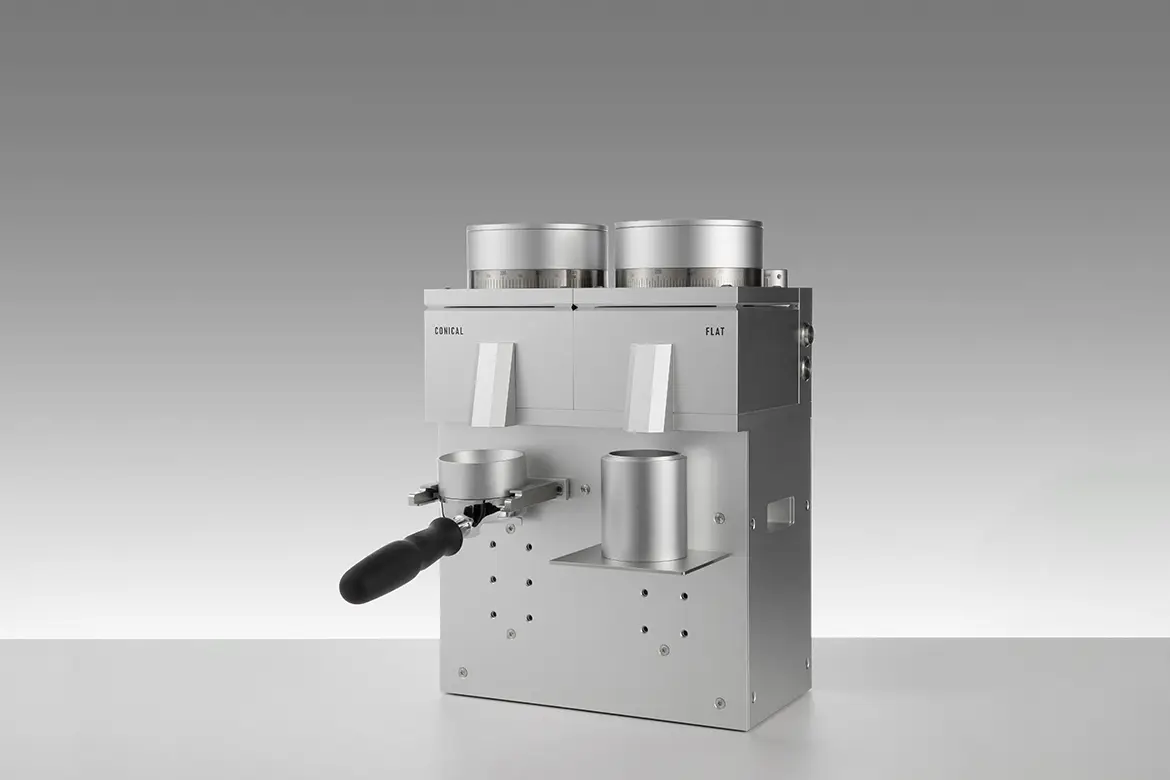
Option-O, the Australian-based coffee equipment manufacturer known for its precision-engineered grinding solutions, has officially announced the launch of its most ambitious project to date: the LAGOM GDS. Standing for “Grinding Dynamics Study,” the GDS represents a significant departure from traditional grinder design by integrating two distinct burr systems into a single, high-performance unit. This dual-grinder system is specifically engineered to resolve the long-standing debate within the specialty coffee community regarding the merits of conical versus flat burrs, offering a versatile platform for what the company describes as "hardcore coffee enthusiasts." Priced at $3,450 USD, the LAGOM GDS is positioned at the pinnacle of the prosumer and professional market, with the initial production run scheduled for delivery in September of this year.
The release of the LAGOM GDS comes at a pivotal moment for Option-O. Having spent a decade establishing a reputation for design-focused equipment, the company was recently named the qualified filter grinder sponsor for the 2026 World Brewers Cup. This global recognition underscores the brand’s shift from a niche manufacturer to a major player in the international specialty coffee arena, challenging established industry titans like Mazzer, Baratza, and Mahlkönig.
The Technical Evolution of Grinding Dynamics
At the core of the LAGOM GDS is a sophisticated mechanical architecture designed to provide unparalleled control over the grinding process. Unlike standard grinders that force a choice between burr geometries, the GDS houses both a 100mm conical burr set and a 102mm flat burr set. This configuration is powered by a robust 1,650-watt brushless DC motor, a choice of power plant that ensures high torque even at low speeds, which is essential for maintaining consistency across various roast profiles and bean densities.
The engineering specifications of the GDS are tailored for precision. The conical burr set operates within an adjustable range of 100 to 500 RPM, a range optimized for generating the bimodal particle distribution often associated with traditional espresso. In contrast, the 102mm flat burrs—among the largest currently available in a consumer-facing unit—operate between 200 and 2,000 RPM. This high-speed capability, combined with the flat geometry, is designed to produce the unimodal distribution required for high-clarity pour-over brewing and modern, "turbo" style espresso shots.
Furthermore, the LAGOM GDS features a micron-level grind size adjustment mechanism. This allows users to make minute changes to the distance between burrs, providing the granularity needed to "dial in" coffee with scientific precision. The inclusion of a magnetic accessory system further enhances the workflow, allowing for seamless transitions between a portafilter holder for espresso and a dosing cup stand for filter coffee.
Resolving the Conical versus Flat Burr Debate
For years, the specialty coffee industry has been divided by the "conical versus flat" discourse. Conical burrs are traditionally praised for their ability to produce a "syrupy" body and a complex, textured mouthfeel, often referred to as the "god shot" in espresso circles. This is largely due to the bimodal distribution of coffee grounds—where the presence of "fines" (smaller particles) restricts water flow and contributes to body.
Flat burrs, conversely, are the tool of choice for those seeking flavor clarity and transparency. By producing a more uniform, unimodal particle size, flat burrs allow for higher extraction yields without the bitterness often associated with uneven grinding. This makes them ideal for light-roast coffees and tea-like pour-over extractions where individual flavor notes—such as jasmine, bergamot, or stone fruit—need to be highlighted.
The LAGOM GDS acknowledges that these distinctions are not absolute. By providing both systems in one machine, Option-O aims to eliminate "analysis paralysis" for the consumer. Enthusiasts no longer need to choose one style of brewing over the other; they can experiment with how different burr geometries affect the same coffee bean. For those who are exclusively focused on filter coffee, the GDS also offers a "flat-flat" configuration, allowing for a specialized setup that prioritizes maximum uniformity.
A Decade of Engineering: The History of Option-O
The development of the LAGOM GDS is the culmination of ten years of research and development by the Melbourne-based manufacturer. Since its inception, Option-O has focused on addressing the specific pain points of home baristas and professional competitors. Their previous models, such as the Lagom P64 and the P100, gained a cult following for their low-retention designs and aesthetic minimalism.
A key milestone in the company’s history was the development of their proprietary pre-grinding coffee crushing system. This innovation was designed to break down coffee beans into uniform fragments before they entered the flat burrs, significantly improving the consistency of the final grind. This focus on "grinding dynamics" became the namesake for the GDS.
The timeline of Option-O’s rise is marked by a series of strategic moves:
- 2014-2016: Initial research into low-retention grinding and brushless motor integration.
- 2018-2020: Launch of the Lagom P64, which became a benchmark for the "single-dosing" movement in home espresso.
- 2022: Introduction of the P100, featuring 98mm flat burrs, catering to the ultra-high-end enthusiast market.
- 2024: Announcement of the LAGOM GDS and the confirmation of the World Brewers Cup sponsorship for 2026.
By securing the sponsorship for the World Brewers Cup, Option-O has effectively validated its technology on the world’s most demanding stage. The Brewers Cup focuses on the craft of filter coffee, where grind uniformity is the single most important factor in a competitor’s success.
Market Positioning and Economic Context
The $3,450 price point of the LAGOM GDS places it in a specialized category of "luxury" coffee equipment. While this price exceeds the budget of the average coffee drinker, it remains competitive within the "end-game" grinder market. Competitors such as the Weber Workshops EG-1 or the Kafatek Monolith often occupy similar price brackets.

Industry analysts suggest that the market for high-end home coffee equipment has seen sustained growth since 2020. As more consumers invest in premium beans, the demand for hardware that can extract the full potential of those beans has increased. The LAGOM GDS targets a specific demographic: the "prosumer" who treats coffee brewing as a form of sensory exploration or a "fetishistic" pursuit of perfection, as noted in the initial product reveal.
Option-O’s decision to offer a limited initial run for September delivery suggests a controlled manufacturing process, likely aimed at maintaining strict quality control standards. In the high-end market, where tolerances are measured in microns, the ability to scale production while maintaining precision is a significant challenge.
Broader Impact and Industry Implications
The introduction of the LAGOM GDS is likely to influence future grinder designs across the industry. By proving that a dual-burr system is commercially viable and technically feasible in a relatively compact footprint, Option-O may trigger a new trend in "hybrid" grinding technology.
From a professional standpoint, the GDS offers a unique tool for coffee roasters and quality control labs. The ability to test a single roast on both conical and flat burrs simultaneously allows for a deeper understanding of how a coffee will perform in different consumer environments. This "study-based" approach to grinding aligns with the broader movement toward data-driven brewing, where variables like water chemistry, temperature profiling, and particle distribution are meticulously tracked.
Furthermore, the 1,650-watt motor and the high-RPM capabilities of the flat burr set suggest that the GDS could potentially handle the high-volume demands of a specialty cafe, provided the workflow accommodates single-dosing. While primarily marketed to enthusiasts, the machine’s durability and specification list make it a candidate for "pop-up" bars and high-end catering where versatility is a premium.
Conclusion
The LAGOM GDS is more than just a new product; it is a statement of intent from Option-O. By blending massive 100mm+ burrs, high-wattage motor technology, and a dual-geometry configuration, the company is catering to the most demanding segment of the coffee world. It is a machine built for discovery, encouraging users to move beyond the traditional boundaries of espresso and filter coffee.
As the industry looks toward the 2026 World Brewers Cup, the LAGOM GDS stands as a testament to the rapid innovation occurring within the Australian coffee scene. For those who view coffee brewing as an experimental playground, the GDS offers a level of control and flexibility that was previously unavailable in a single unit. While the cost of entry is high, the promise of a "one-stop" solution for the ultimate coffee extraction makes it one of the most significant hardware releases of the decade. For the dedicated enthusiast, the pursuit of the "god shot" or the perfect pour-over may have just found its most powerful ally.