Clara Fransiska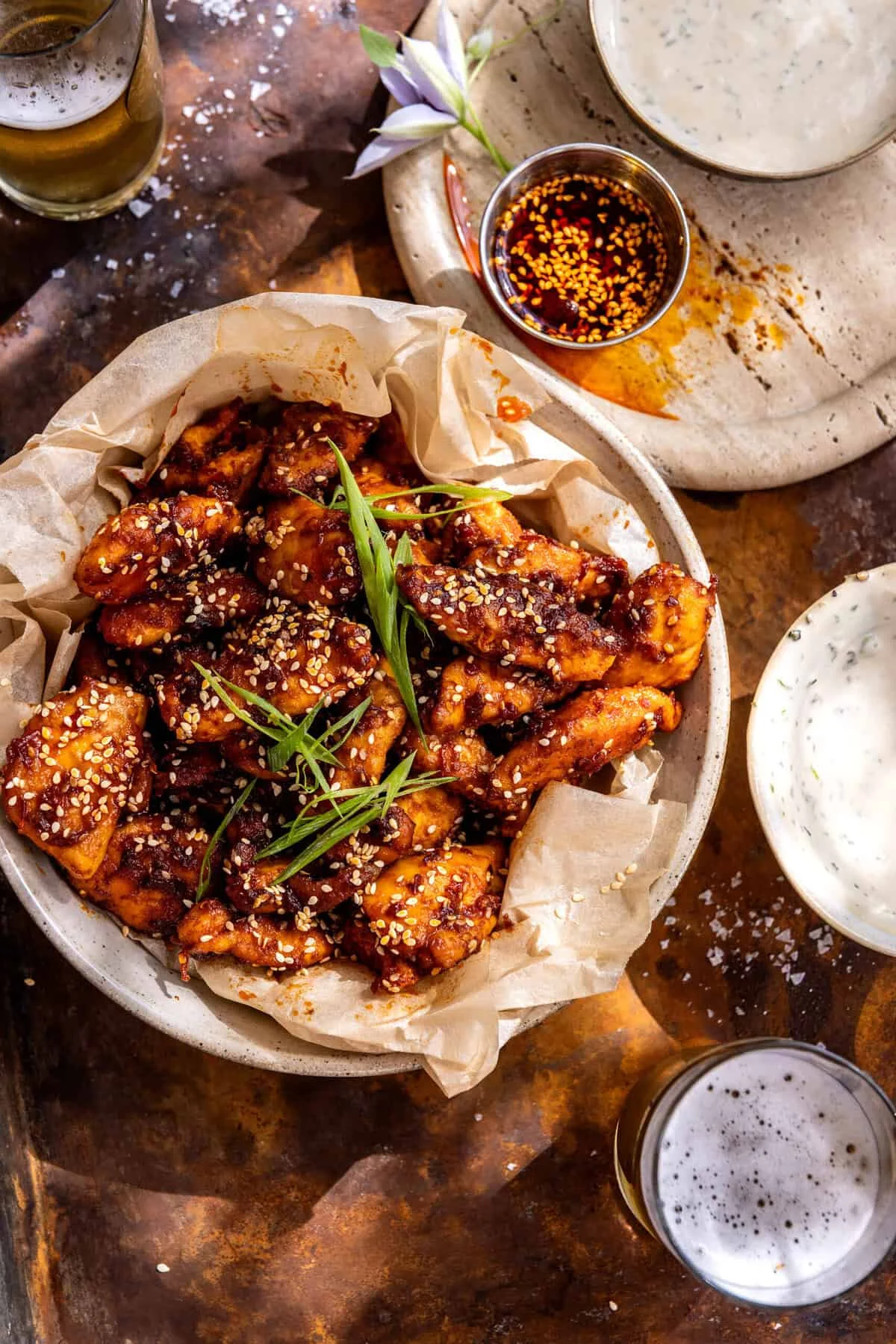
A new culinary innovation is rapidly gaining traction in home kitchens, offering a dynamic blend of sweet, spicy, and savory flavors. The Baked Sticky Honey Harissa Chicken, a recipe that has recently emerged on the food blog scene, promises a weeknight meal solution that is both accessible and sophisticated. This dish centers on creating crispy, oven-baked chicken pieces coated in a rich, sticky sauce made from honey and harissa, a North African chili paste. It is presented as an easy-to-prepare sheet pan dinner, designed for maximum flavor with minimal effort, suitable for both casual family dinners and more elaborate entertaining occasions.
The recipe, attributed to the popular food blog Half Baked Harvest, highlights a straightforward approach to preparing chicken. The foundational step involves coating bite-sized chicken pieces with a blend of common pantry spices such as smoked paprika, onion powder, garlic powder, salt, and pepper. A light dusting of flour is then added, a technique described as crucial for achieving a desirable crispiness in the oven without heavy breading. This allows the sauce to adhere effectively to each piece. The chicken is then baked at a high temperature, typically around 20 minutes, until it is cooked through and achieves a satisfying crispness.
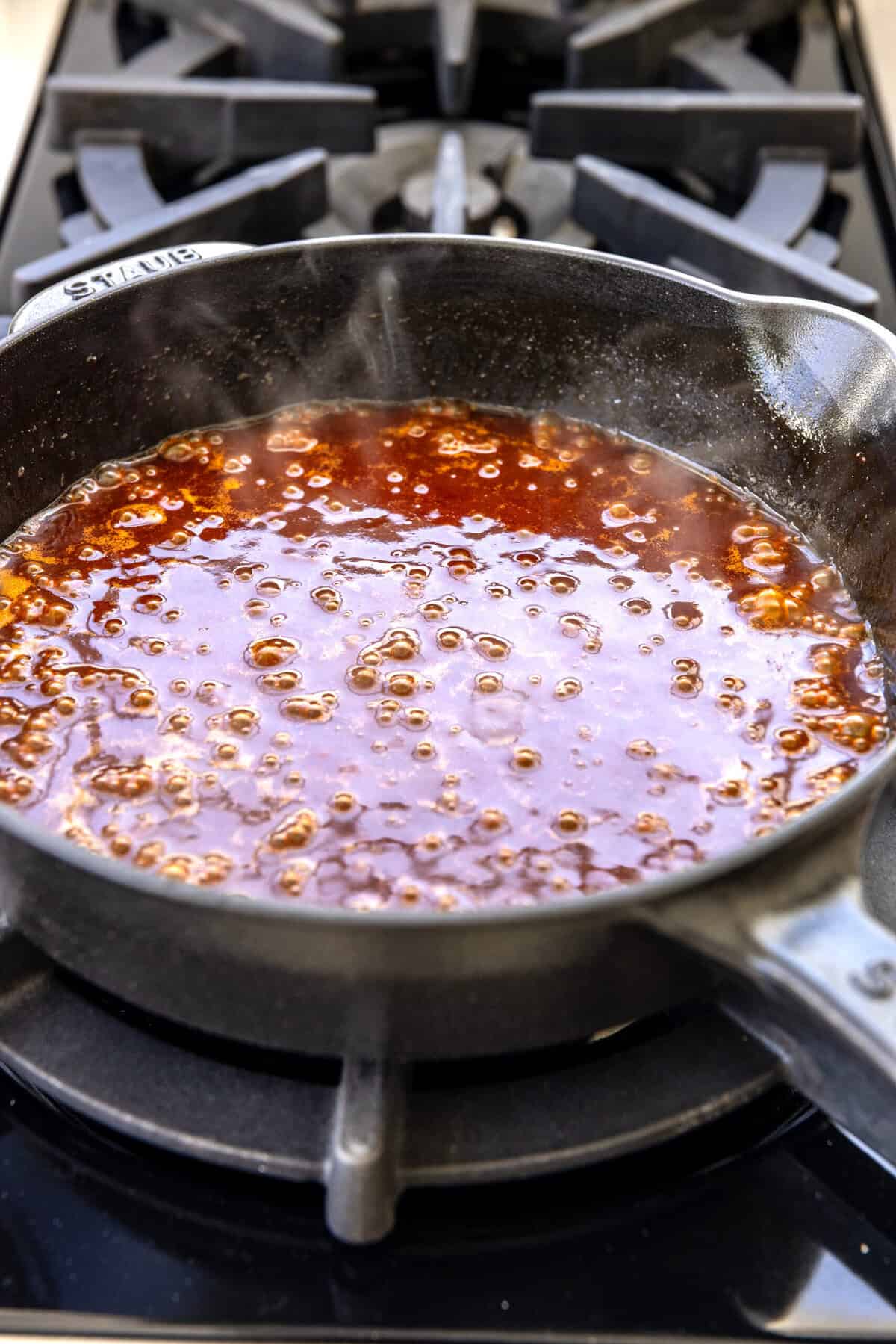
Concurrently, the star of the dish, the sticky honey harissa sauce, is prepared. This involves simmering butter, garlic, harissa paste, balsamic vinegar, and honey in a skillet until the mixture slightly thickens and develops a glossy sheen. A pinch of sea salt is added to balance the flavors. The resulting sauce is characterized by its complex profile: spicy from the harissa, sweet from the honey, tangy from the balsamic vinegar, and savory from the garlic and butter.
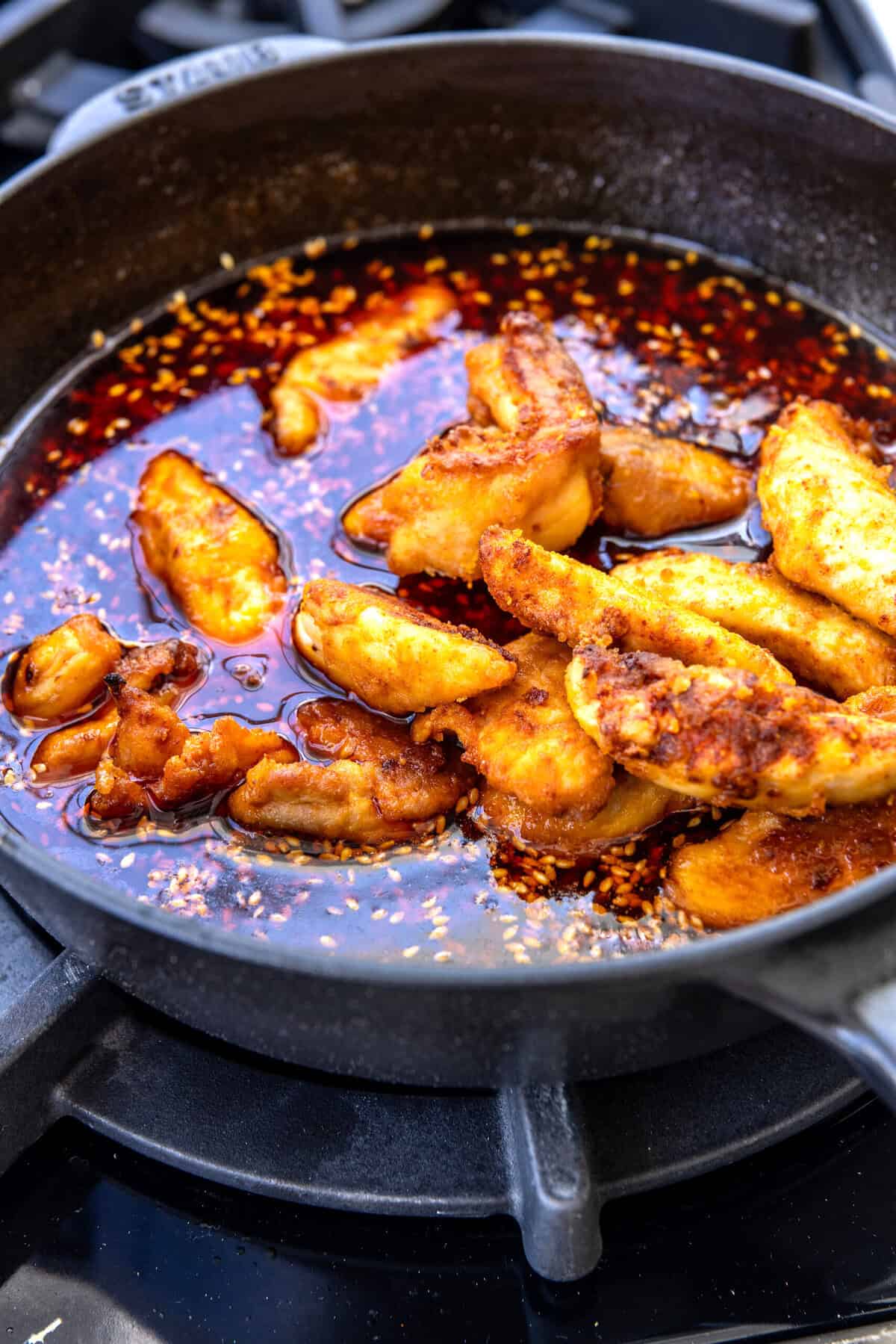
Upon removing the chicken from the oven, it is immediately tossed with the warm sauce, ensuring that every piece is thoroughly coated. This step is critical in melding the textures and flavors, with the crispy chicken acting as a perfect vehicle for the rich, sticky glaze.
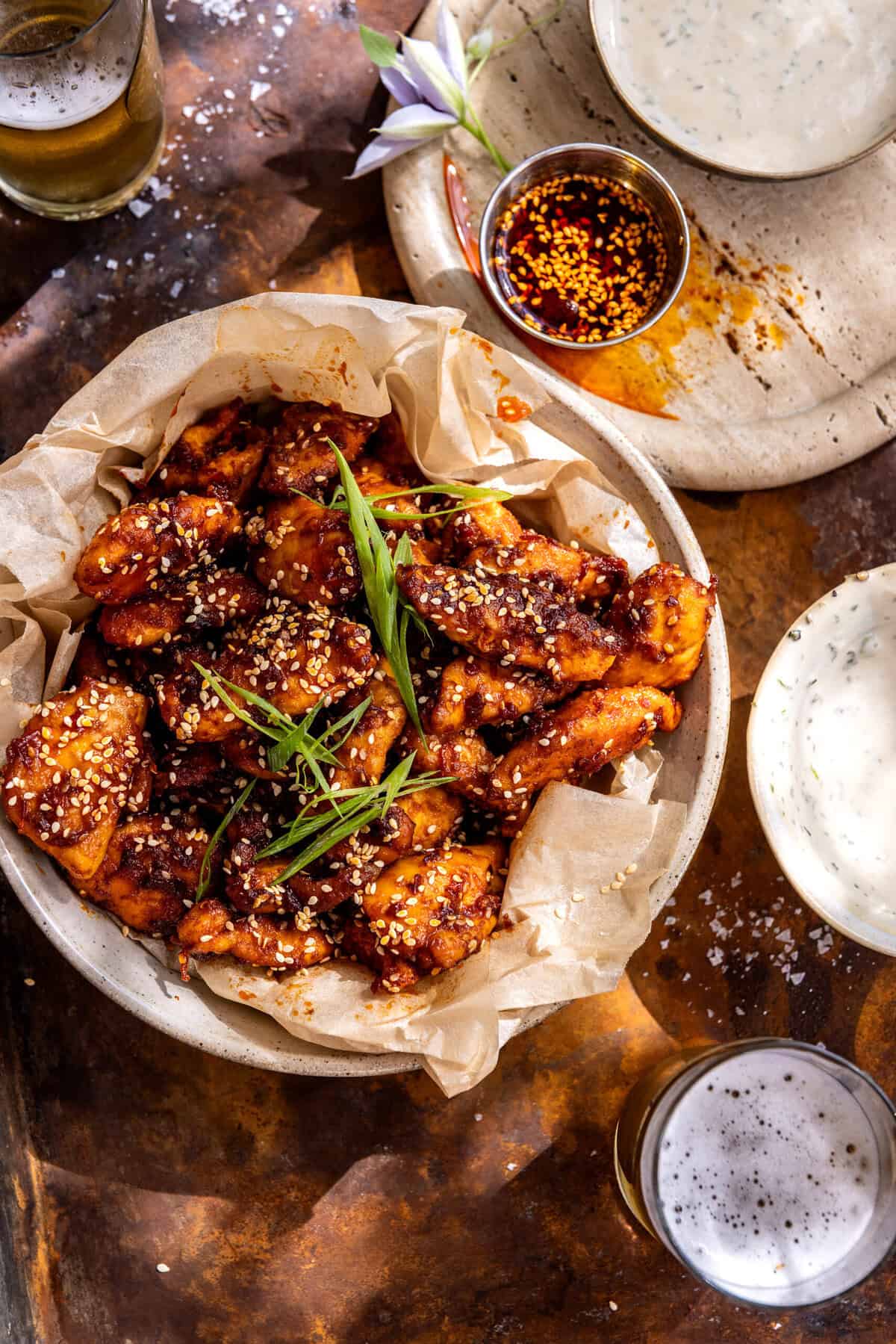
Complementing the main dish is a Tahini Ranch dressing, presented as a lighter, yet equally flavorful alternative to traditional ranch. This dressing is made by whisking together tahini, dried herbs, lemon juice, and seasonings until a creamy consistency is achieved. The tahini lends a subtly nutty undertone, differentiating it from conventional ranch while maintaining its herbaceous and tangy characteristics.
The recipe suggests serving the Sticky Honey Harissa Chicken with a variety of accompaniments, including homemade fries, rice, or steamed vegetables like broccoli. A final garnish of sesame seeds and thinly sliced green onions is recommended to add textural contrast and a fresh visual appeal.
The emergence of such recipes reflects broader culinary trends that emphasize convenience, bold flavors, and accessible ingredients. Harissa, in particular, has seen a surge in popularity in recent years, moving from niche specialty markets to mainstream grocery stores. Its complex flavor profile, offering both heat and depth, makes it a versatile ingredient for a wide range of dishes. The combination of honey and harissa taps into the popular sweet-and-spicy flavor profile that has become a staple in contemporary cuisine.
The "sheet pan dinner" format, as employed by this recipe, aligns with the demands of modern lifestyles, where time-efficient meal preparation is highly valued. By consolidating the cooking process onto a single pan, cleanup is minimized, and the active cooking time is significantly reduced. This approach has been widely adopted by home cooks and professional chefs alike, demonstrating its effectiveness in delivering satisfying meals with ease.
Background and Context of the Recipe’s Emergence
While the specific origin date of this particular recipe is noted as May 4, 2026, its underlying concept draws from a long history of utilizing spiced honey and chili pastes in various global cuisines. Harissa, a staple in North African cooking, particularly in Tunisia and Algeria, has a rich heritage dating back centuries. It is traditionally made from roasted red peppers, garlic, olive oil, and a blend of spices, often including caraway, coriander, and cumin. Its adaptability has allowed it to transcend its regional origins, finding favor in international culinary landscapes.
Honey has also been a fundamental sweetener and flavor enhancer across cultures for millennia. Its pairing with spicy elements is a well-established culinary practice, found in dishes ranging from Korean gochujang-glazed chicken to American barbecue sauces. The specific combination of honey and harissa in this recipe represents a modern fusion, capitalizing on the growing appreciation for nuanced flavor profiles that balance sweetness, heat, and savory notes.
The rise of food blogging and social media platforms has played a significant role in the dissemination of recipes like the Sticky Honey Harissa Chicken. These platforms provide a direct channel for chefs and home cooks to share their creations, garnering immediate feedback and widespread adoption. The visual appeal of dishes, often enhanced by professional food photography, further contributes to their popularity, enticing a broader audience to try them.
Timeline of Preparation and Cooking
The recipe is designed for efficiency, with a total preparation and cooking time of approximately 40 minutes.
- Prep Time (20 minutes): This phase involves cubing the chicken, tossing it with spices and flour, and preparing the ingredients for the sauce and dressing.
- Cook Time (20 minutes): This includes the time the chicken spends in the oven and the brief simmering period for the sauce.
This compact timeline makes it an ideal candidate for a weeknight meal, fitting into busy schedules without compromising on flavor or quality.
Analysis of Culinary Implications
The success and popularity of recipes like the Baked Sticky Honey Harissa Chicken suggest several broader culinary implications:
- Accessibility of Global Flavors: The recipe democratizes complex flavors, making dishes that were once considered exotic or time-consuming to prepare, accessible to the average home cook. The increasing availability of ingredients like harissa in supermarkets further supports this trend.
- Emphasis on Flavor Balance: The dish exemplifies the modern palate’s preference for balanced flavor profiles. The interplay of sweet, spicy, tangy, and savory elements creates a dynamic and satisfying taste experience.
- Efficiency in Home Cooking: The continued dominance of simplified cooking methods, such as sheet pan dinners, underscores the ongoing demand for convenience without sacrificing culinary quality. This approach allows for greater participation in home cooking, even for individuals with limited time or culinary expertise.
- Influence of Digital Platforms: The rapid spread and adoption of such recipes highlight the transformative impact of digital media on food culture. Food blogs and social media serve as crucial hubs for culinary innovation and information exchange.
While the provided text does not include direct statements from specific individuals or organizations regarding this recipe, its widespread sharing across culinary platforms implies a positive reception from home cooks and food enthusiasts. The format of the original article suggests it is a recipe published by a food blogger, indicating that the "related parties" would primarily be the blog’s readership and the wider online food community. The implication is that this recipe has resonated with individuals seeking flavorful, convenient, and modern meal solutions. The structure of the original article, including its mention of affiliate links and a privacy policy, points to a commercial food blogging operation, where such recipes are tested and shared with an audience for engagement and potential revenue generation.
In conclusion, the Baked Sticky Honey Harissa Chicken represents a confluence of popular culinary trends: global flavors, efficient preparation methods, and the power of digital dissemination. Its straightforward approach and vibrant taste profile position it as a compelling option for contemporary home cooks seeking to elevate their weeknight dining experiences.