
 Ali Ikhwan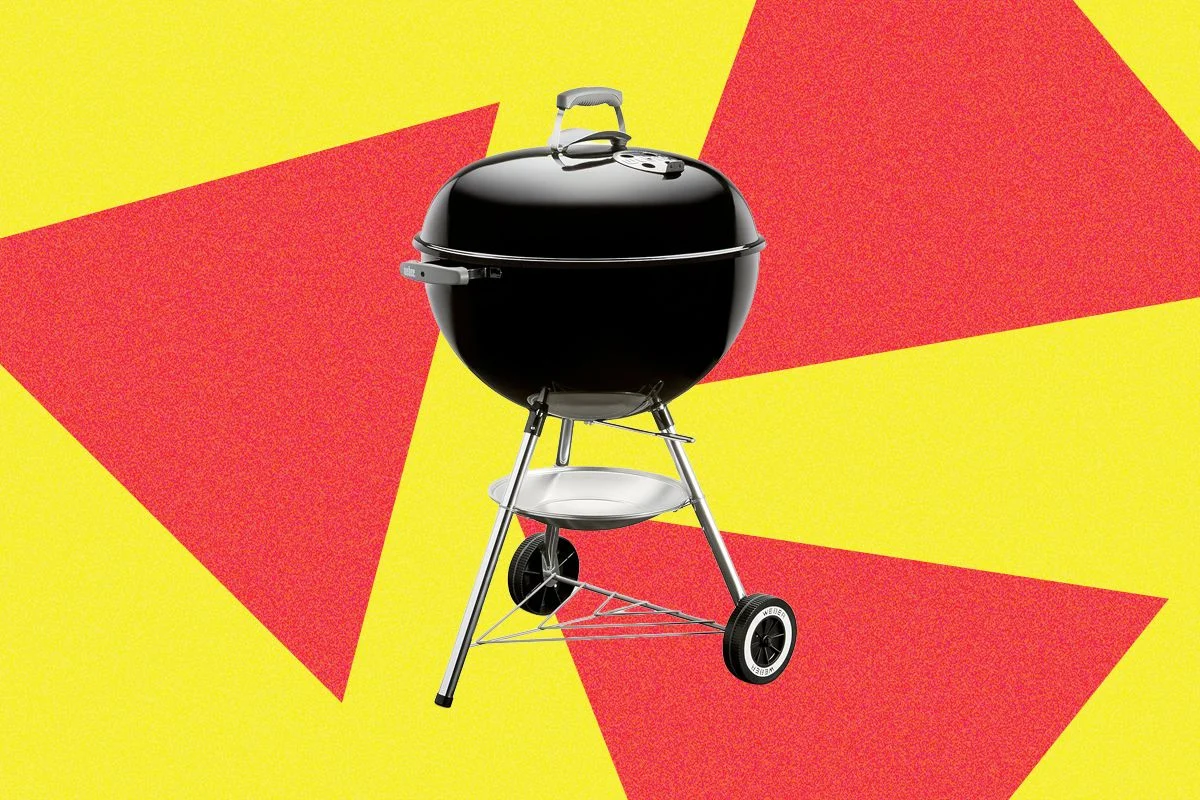
The landscape of backyard culinary technology is undergoing a significant transformation as outdoor cooking enthusiasts increasingly transition from manual heat management to automated, data-driven precision. For decades, the art of charcoal grilling was defined by a "primal" connection to fire and smoke, requiring a delicate understanding of airflow, fuel placement, and ambient conditions. However, the emergence of aftermarket smart technology is now allowing consumers to retrofit traditional "dumb" grills—such as the ubiquitous Weber Kettle or the ceramic Kamado Joe—with sophisticated sensors and airflow modulators. This shift represents a broader trend in the consumer appliance industry where modularity and digital integration are becoming the primary drivers of product longevity and performance.
The Evolution of Charcoal Precision
The fundamental challenge of charcoal grilling has always been temperature stability. Unlike gas grills, which utilize a constant flow of fuel, or indoor ovens, which use thermostats to cycle heating elements, a charcoal fire is a living entity that responds dynamically to oxygen. Achieving "perfection" in long-form cooks, such as brisket or pork butt, traditionally required constant vigilance over vent positioning to balance waning embers against nourishing oxygen.
In the last decade, the outdoor cooking market saw the rise of all-in-one smart cookers, such as high-end pellet smokers from brands like Recteq and Traeger. These machines, often retailing for upwards of $1,000, utilize built-in probes and internal fans to maintain set temperatures. While effective, these integrated systems introduce multiple failure points; if the proprietary software or a specific internal sensor fails, the entire unit may become inoperable.
The emerging alternative is the "smart retrofit" movement. By applying the same logic used to turn a standard vehicle into a high-performance machine, companies are developing external controllers that can be swapped or upgraded without replacing the grill itself. This approach appeals to both the budget-conscious griller and the technophile who values "future-proof" hardware.
Market Context and Consumer Trends
The global charcoal grill market remains a robust sector of the outdoor living industry. According to market research data, charcoal units continue to hold a significant share of the global grill market, which was valued at approximately $4.7 billion in 2022 and is projected to grow at a compound annual growth rate (CAGR) of 4.5% through 2030. The enduring popularity of the Weber Kettle—often cited as the best-selling charcoal grill in history—provides a massive installed base for aftermarket tech companies.
Industry analysts suggest that the rise of smart adapters is a response to the "Internet of Things" (IoT) fatigue. Consumers are increasingly wary of "black box" appliances with short lifespans. Modular upgrades allow users to retain the durable, low-tech steel or ceramic shells of their grills while benefiting from modern PID (Proportional-Integral-Derivative) controllers—the same technology found in high-end laboratory equipment and premium espresso machines.
Key Technological Innovations: The Aftermarket Leaders
Several key players have emerged in the smart retrofit space, each targeting different segments of the grilling population.
1. Spider Grills Venom: The Weber Specialist
The Spider Grills Venom, priced at approximately $280, is designed specifically for the 22-inch and 26-inch Weber Kettle. Its primary innovation is the integration of a PID temperature controller that mounts directly to the grill’s bottom vent.
Technically, the Venom functions by measuring temperature differentials moment by moment. Rather than reacting to a drop in heat after it occurs, the predictive algorithm adjusts a variable-speed fan to modulate oxygen flow. In field tests, the device has shown an ability to maintain temperatures with remarkable accuracy, often within a 25-degree margin even at high searing temperatures of 475 degrees Fahrenheit. The device requires a 2.4 GHz Wi-Fi signal for app connectivity, highlighting a common challenge in smart home expansion: outdoor signal strength.
2. ChefsTemp ProTemp S1: Modular Versatility
For owners of ceramic grills, such as the Big Green Egg or Kamado Joe, the ChefsTemp ProTemp S1 offers a modular solution. Ceramic grills are prized for their thermal mass, which allows them to hold heat for extended periods. However, this same trait makes them difficult to cool down if the temperature overshoots the target.

The ProTemp S1 system consists of four distinct wireless components: a digital hub that replaces the stock dome thermometer, wireless meat probes, a phone app, and a "Breezo" fan that attaches to the lower intake vent. While the modularity allows the system to fit a wide range of brands—including Primo, Akorn, and Vision—it also increases the complexity of the setup, as multiple devices must remain charged and synchronized via Bluetooth or Wi-Fi.
3. Weber Connect Smart Grilling Hub: The Purist’s Entry Point
For grillers who remain skeptical of automated fans, the Weber Connect Smart Grilling Hub serves as a non-invasive monitoring system. Launched in 2020, this device acts as a centralized bridge between the meat and the user’s smartphone. It does not control the fire, but it provides the data necessary for the user to make manual adjustments. This "Luddite-friendly" approach focuses on the "science of the cook" by providing step-by-step instructions and flip alerts based on internal meat temperatures.
Chronology of Smart Grilling Milestones
The path to the modern smart grill has been defined by several key technological releases:
- 2010–2015: The rise of basic Bluetooth-enabled meat thermometers, allowing users to monitor internal temperatures from a short distance.
- 2018: The introduction of cloud-connected thermometers, removing distance limitations via Wi-Fi.
- 2020: Major brands like Weber and Big Green Egg release official smart hubs (Weber Connect) and fan controllers (Egg Genius), signaling mainstream acceptance of the technology.
- 2022–2024: The emergence of third-party "deep integration" tools like the Spider Venom, which provide oven-like automation for classic charcoal hardware.
Technical Deep Dive: Airflow and Oxygenation
The core mechanism of these smart devices is the control of the combustion rate. In a standard charcoal grill, heat is regulated by manual intake (bottom) and exhaust (top) vents. Opening the vents increases oxygen, which accelerates combustion and raises the temperature.
Smart controllers automate this by:
- Sensing: An ambient probe at the grate level sends real-time data to the controller.
- Processing: The PID controller calculates how much air is needed to reach or maintain the set point.
- Actuating: A fan pulses or runs at variable speeds to force air into the charcoal bed.
This automation is particularly effective for "low and slow" cooking (225°F to 250°F), where manual adjustment is most difficult. By maintaining a steady oxygen supply, the tech prevents the "temp swings" that can dry out meat or lead to stalled cooking times.
Official Responses and Industry Implications
While some traditionalists argue that automation removes the "soul" of barbecue, manufacturers have leaned into the trend. Weber’s recent move to launch its own line of smart upgrades suggests that the company views digital integration as a necessary evolution rather than a threat to its classic designs.
Representatives from the industry note that smart technology is expanding the demographic of charcoal users. By lowering the barrier to entry—specifically the steep learning curve of fire management—more casual cooks are willing to attempt complex, multi-hour recipes that were previously the domain of dedicated pitmasters.
Impact on Longevity and Sustainability
The broader implication of the "dumb grill, smart tech" movement is its impact on sustainability. High-end electronic grills often have a lifespan dictated by their most fragile component: the circuit board. When the electronics fail, the entire 200-pound steel unit may end up in a landfill.
Conversely, the modular approach promotes a "right to repair" philosophy. If a Spider Venom controller fails after five years, the owner can replace the $280 unit while keeping the original Weber Kettle, which can last for decades. This decoupling of the "brain" from the "body" of the appliance represents a more sustainable model for the consumer electronics and home goods industries.
Conclusion: The Future of the Backyard
As we move further into the 2020s, the distinction between "smart" and "dumb" grills will likely continue to blur. The success of aftermarket controllers proves that consumers desire the flavor of charcoal with the convenience of an indoor range. While the "Zen" of manual fire-tending will always have its adherents, the data suggests that the future of the American backyard is one of precision, connectivity, and modularity. For the average griller, the goal remains unchanged: high-quality results with minimal waste. Smart technology is simply the latest tool to help achieve that primal end.







