Muhammad Hendra
In an increasingly complex and rapidly evolving global landscape, the capacity to find strength and resilience within the familiar, and subsequently use that stable foundation to explore and engage with the unfamiliar, has emerged as a critical psychological and societal imperative. This foundational principle underpins advanced mindfulness practices, particularly the cultivation of a "Don’t-Know Mind," a state of open, unbiased awareness advocated by experts like Dr. Sará King, a distinguished neuroscientist, political and learning scientist, medical anthropologist, and certified meditation instructor. Her work emphasizes the profound interplay between individual meditative practice and its broader implications for collective well-being and social justice, particularly in fostering an adaptive approach to an unpredictable world.
The Foundational Role of Embodied Presence
Before embarking on any profound exploration of mental states, the establishment of a supportive physical and physiological foundation is paramount. In meditation, this often begins with deliberate attention to posture, not merely as a rigid requirement but as a means to create an internal environment conducive to sustained awareness and comfort. The instruction to align the body in a way that feels "as supportive as possible" is a crucial initial step. This seemingly simple act is deeply rooted in neuroscientific principles. A stable, comfortable posture minimizes physical distractions and reduces somatic stress signals, allowing the practitioner’s attentional resources to be directed inward and outward more effectively.
From a physiological perspective, proper posture can optimize respiratory function, promoting deeper, more regulated breathing, which in turn activates the parasympathetic nervous system. This activation induces a state of calm and readiness, counteracting the "fight or flight" response often triggered by uncertainty or discomfort. The familiarity of one’s own body, grounded and present, becomes the initial anchor, a point of strength and resilience from which to launch into less familiar mental territories. This embodied awareness serves as a consistent reference point, a "home base" that provides psychological security when confronting novel or challenging experiences, both internal and external. Without this initial grounding, attempts to cultivate advanced states of mind can be fraught with agitation or resistance, undermining the very purpose of the practice.
Embracing the "Don’t-Know Mind": A Paradigm Shift
The concept of a "Don’t-Know Mind" represents a radical departure from conventional cognitive patterns, which often prioritize certainty, categorization, and the immediate application of existing knowledge. Originating in contemplative traditions, particularly Zen Buddhism, the "beginner’s mind" or "don’t-know mind" encourages an approach to experience without preconceived notions, judgments, or the overlay of past conditioning. It is a deliberate suspension of intellectual conclusions, a commitment to seeing things afresh, as if for the first time. This state is not about ignorance or apathy; rather, it is an active, engaged curiosity coupled with humility, acknowledging the inherent limitations of one’s current understanding.
Psychologically, cultivating a "Don’t-Know Mind" directly addresses cognitive biases that often impede clear perception and effective problem-solving. Confirmation bias, for instance, leads individuals to seek out and interpret information in a way that confirms their existing beliefs. The "Don’t-Know Mind" actively challenges this, promoting an unbiased reception of data and experience. Similarly, it counteracts the tendency towards premature closure, allowing for a more thorough and nuanced understanding before forming opinions or making decisions. In a world saturated with information and opinion, the ability to temporarily set aside one’s own frameworks and truly listen, observe, and absorb without immediate judgment is invaluable. It fosters intellectual flexibility, adaptability, and an enhanced capacity for learning from diverse perspectives.
Neuroscientific Underpinnings of Open Awareness
Modern neuroscience offers compelling insights into the mechanisms through which mindfulness practices, including the "Don’t-Know Mind," influence brain function. Research into brain plasticity demonstrates that sustained mental training can structurally and functionally alter neural networks. Studies have shown that mindfulness meditation can lead to increased gray matter density in areas associated with attention, emotional regulation, and self-awareness, such as the prefrontal cortex and the insula. These regions are critical for executive functions, including cognitive flexibility and the ability to shift attention.
The default mode network (DMN), a set of brain regions active when the mind is at rest or engaged in self-referential thought (mind-wandering, rumination, planning), is often implicated in rigid thinking and a strong sense of self-identity tied to past experiences and future projections. Mindfulness practices have been shown to reduce DMN activity, suggesting a shift away from habitual thought patterns and towards a more present-moment awareness. This reduction in DMN activity correlates with a decrease in self-referential processing and an increase in attentional control, facilitating the open, receptive state characteristic of a "Don’t-Know Mind." By disengaging from the incessant narrative of "what I know" or "what I believe," individuals can access a more expansive and less biased mode of perception. Dr. King’s expertise as a neuroscientist lends significant weight to the understanding of these intricate brain-mind connections, highlighting how internal states are not merely subjective experiences but are rooted in observable neural dynamics.
From Individual Practice to Collective Insight: Social Implications
Dr. Sará King’s multifaceted background bridges the gap between individual psychological states and their broader societal ramifications. Her work as a political and learning scientist, medical anthropologist, and social entrepreneur underscores the profound impact of cultivating a "Don’t-Know Mind" on collective awareness and social justice. In the realm of social justice, rigid beliefs, implicit biases, and an unwillingness to critically examine one’s own perspective are significant barriers. A "Don’t-Know Mind" encourages individuals to approach complex social issues with an open heart and mind, questioning ingrained assumptions, listening deeply to marginalized voices, and recognizing the systemic nature of inequality without immediately defaulting to defensive or predetermined positions.
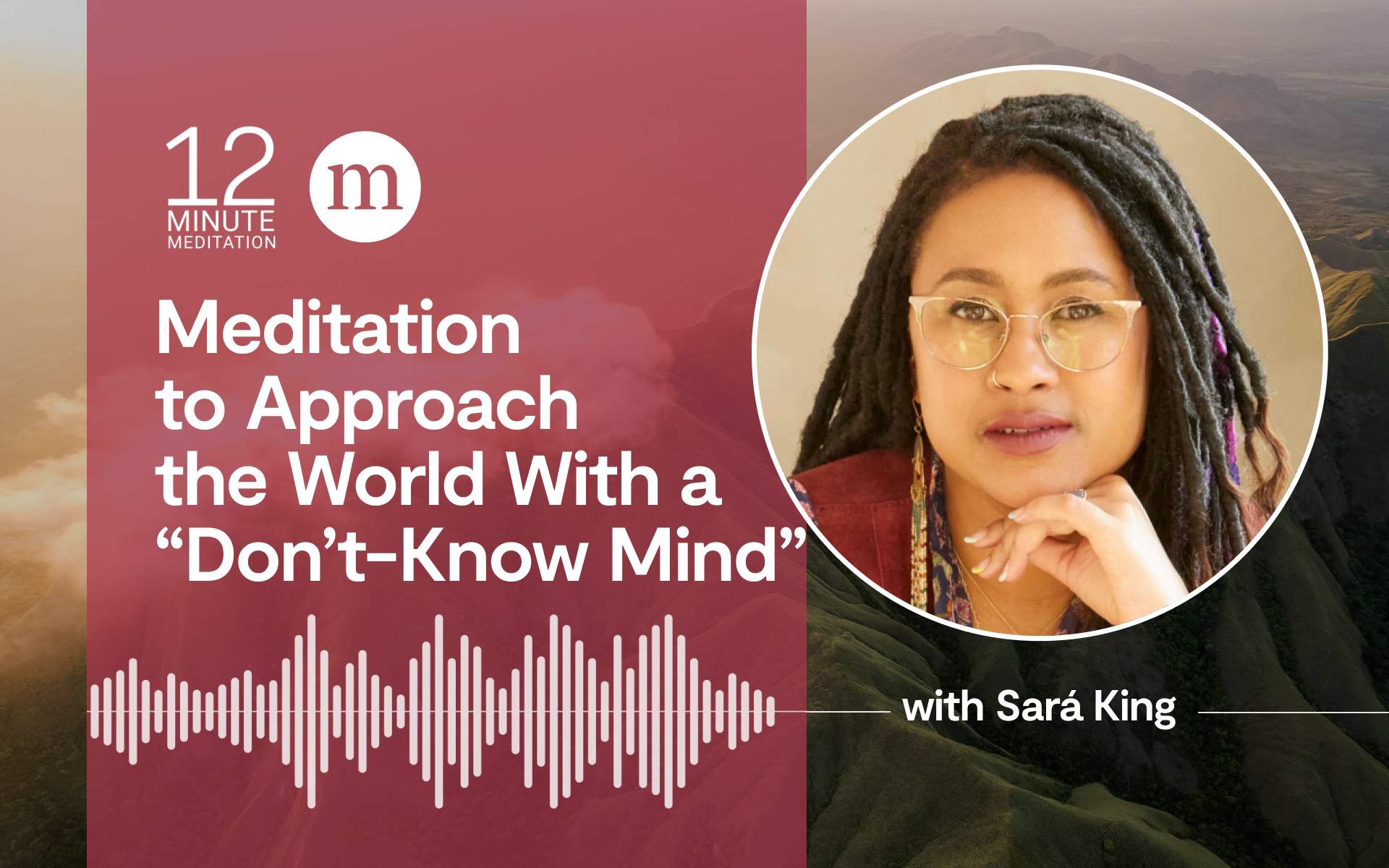
As a learning scientist, Dr. King understands that true learning often requires unlearning. The "Don’t-Know Mind" creates the optimal conditions for this, enabling individuals and groups to assimilate new information, challenge long-held paradigms, and adapt to evolving social and ethical landscapes. In political science, this approach fosters more constructive dialogue, reduces polarization, and encourages collaborative problem-solving by moving beyond entrenched ideological stances. By acknowledging the limits of one’s own understanding, stakeholders can engage in more empathetic and effective negotiation, working towards solutions that genuinely serve the collective good rather than narrow self-interests. This aligns with Dr. King’s emphasis on the relationship between individual and collective awareness as it relates to well-being, positing that a more mindful citizenry is a more just and adaptive one.
Navigating Uncertainty: Lessons from Global Crises
The relevance of a "Don’t-Know Mind" becomes particularly evident in times of unprecedented global crisis, such as the COVID-19 pandemic. The initial stages of the pandemic were characterized by extreme uncertainty, rapidly changing information, and the collapse of familiar routines and assumptions. In such an environment, an attachment to "knowing" or demanding immediate, definitive answers often led to anxiety, misinformation, and ineffective responses. The capacity to embrace the unknown, to adapt to new data as it emerged, and to acknowledge the evolving nature of the threat was crucial for public health officials, policymakers, and individuals alike.
As highlighted by Mindful.org’s founding editor Barry Boyce, the pandemic underscored the "ever-present balance between personal independence and our natural interdependence." This recognition of interconnectedness is inherently facilitated by a "Don’t-Know Mind." When faced with a global health crisis, understanding that individual actions have collective consequences requires transcending a purely individualistic perspective. It demands an open mind to scientific consensus, a willingness to adjust personal behaviors for the common good, and an empathetic understanding of the diverse impacts on different communities. The pandemic served as a stark, real-world lesson in the necessity of cognitive flexibility and the dangers of rigid adherence to pre-existing beliefs in the face of novel threats. The ability to suspend judgment and remain open to new information and changing circumstances was a hallmark of effective adaptation.
Cultivating Cognitive Flexibility and Empathy
Beyond crisis response, the "Don’t-Know Mind" is a powerful tool for cultivating both cognitive flexibility and empathy. Cognitive flexibility, the ability to switch between different ways of thinking and adapting to new information, is a cornerstone of intelligence and resilience. By intentionally stepping away from the need to label, categorize, or immediately understand, practitioners train their minds to be more agile, less prone to rigid thinking, and more open to creative solutions. This mental agility is invaluable in any field, from scientific research to artistic creation to strategic business planning.
Furthermore, approaching the world with a "Don’t-Know Mind" is a gateway to deeper empathy. When one suspends their own assumptions and biases, they create space to truly listen to and understand the experiences of others, particularly those from different backgrounds or with differing perspectives. This is not passive reception but an active, curious engagement that seeks to understand the "other" on their own terms, without imposing one’s own interpretative framework. In an increasingly polarized world, the ability to genuinely empathize across divides is critical for fostering dialogue, reconciliation, and constructive social change. Dr. King’s work in medical anthropology further illuminates how cultural contexts shape understanding and well-being, making the "Don’t-Know Mind" essential for navigating cross-cultural interactions with sensitivity and respect.
The Role of Community and Interconnectedness
While meditation is often perceived as an individual pursuit, Dr. King’s emphasis on "community alternative medicine" and the relationship between individual and collective awareness highlights its communal dimension. The strength and resilience found in familiarity can extend beyond the individual body to the familiarity of a supportive community. Shared practice, communal learning, and collective reflection amplify the benefits of the "Don’t-Know Mind." When a group collectively commits to open inquiry, to suspending judgment, and to genuinely seeking shared understanding, the potential for innovation, collaborative problem-solving, and enhanced social cohesion is significantly increased.
Community alternative medicine often thrives on this collective wisdom and shared experience, moving beyond conventional paradigms to explore holistic well-being. This requires an inherent "Don’t-Know Mind" from both practitioners and recipients, an openness to different modalities and an acknowledgment that healing can manifest in diverse forms. The interconnectedness highlighted by the pandemic serves as a poignant reminder that individual well-being is inextricably linked to the health and resilience of the broader community and ecosystem. Cultivating a "Don’t-Know Mind" on a collective scale allows societies to grapple with complex, systemic challenges—from climate change to social inequality—without falling back on simplistic answers or entrenched divisions.
A Path Forward: Integrating Mindfulness into Modern Life
In conclusion, the practice of leveraging strength and resilience from familiarity to explore the unfamiliar through a "Don’t-Know Mind" is far more than a meditative technique; it is a sophisticated cognitive strategy with profound implications for individual flourishing and societal progress. Dr. Sará King’s comprehensive expertise across neuroscience, social sciences, and contemplative practices provides a compelling framework for understanding this approach. By systematically cultivating embodied presence as a stable foundation, consciously suspending preconceived notions, and engaging with the world with open curiosity, individuals can enhance their cognitive flexibility, deepen their empathy, and navigate uncertainty with greater wisdom.
This approach is not merely about personal peace but about equipping individuals and communities with the mental agility necessary to confront complex challenges, foster genuine understanding, and drive meaningful social change. In an era demanding unprecedented adaptability and nuanced comprehension, the "Don’t-Know Mind" stands as a vital tool for fostering a more resilient, empathetic, and ultimately, more just world. Its integration into education, leadership, and public discourse offers a promising path toward collective well-being in the face of ongoing global transformation.